
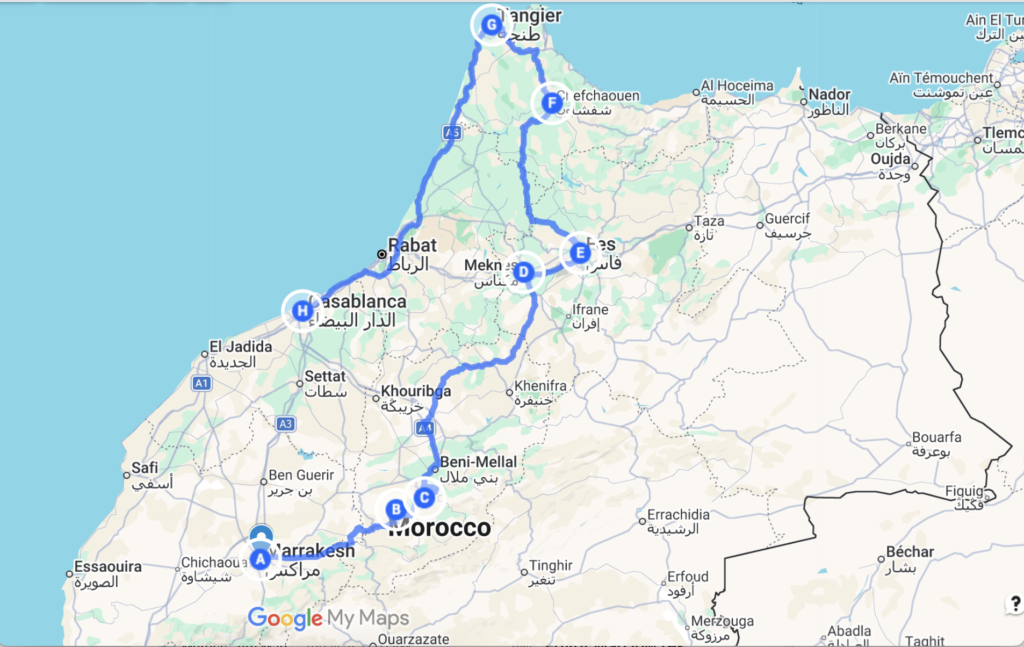
Note: I’ve added maps for orientation to previous blogs.
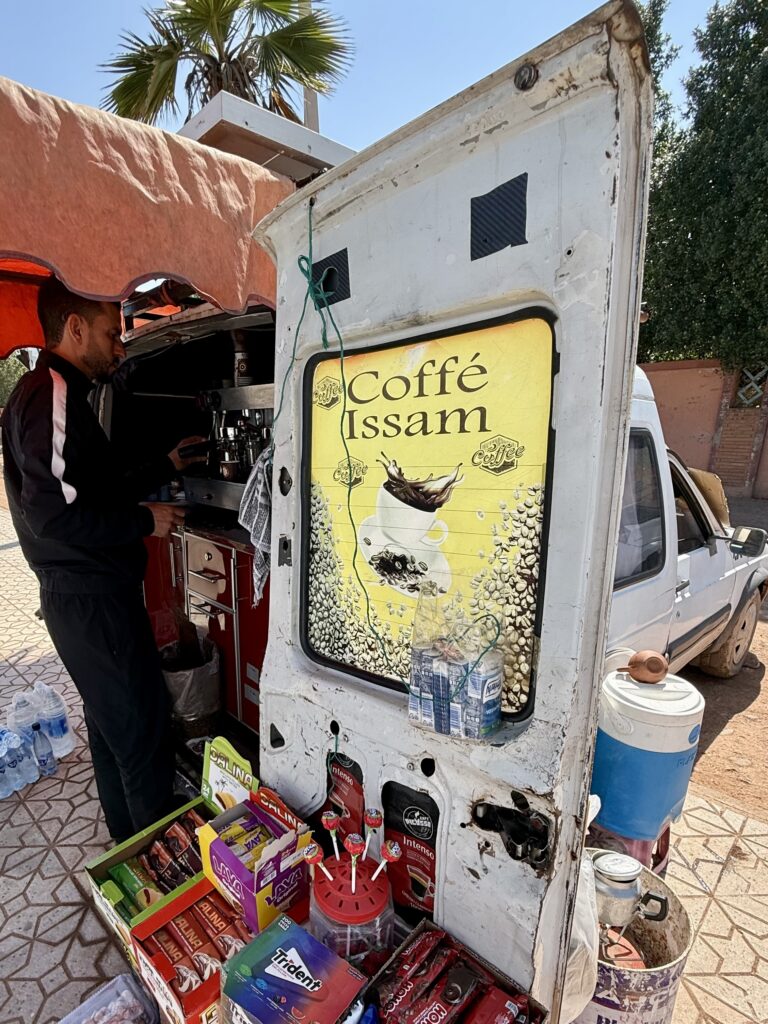
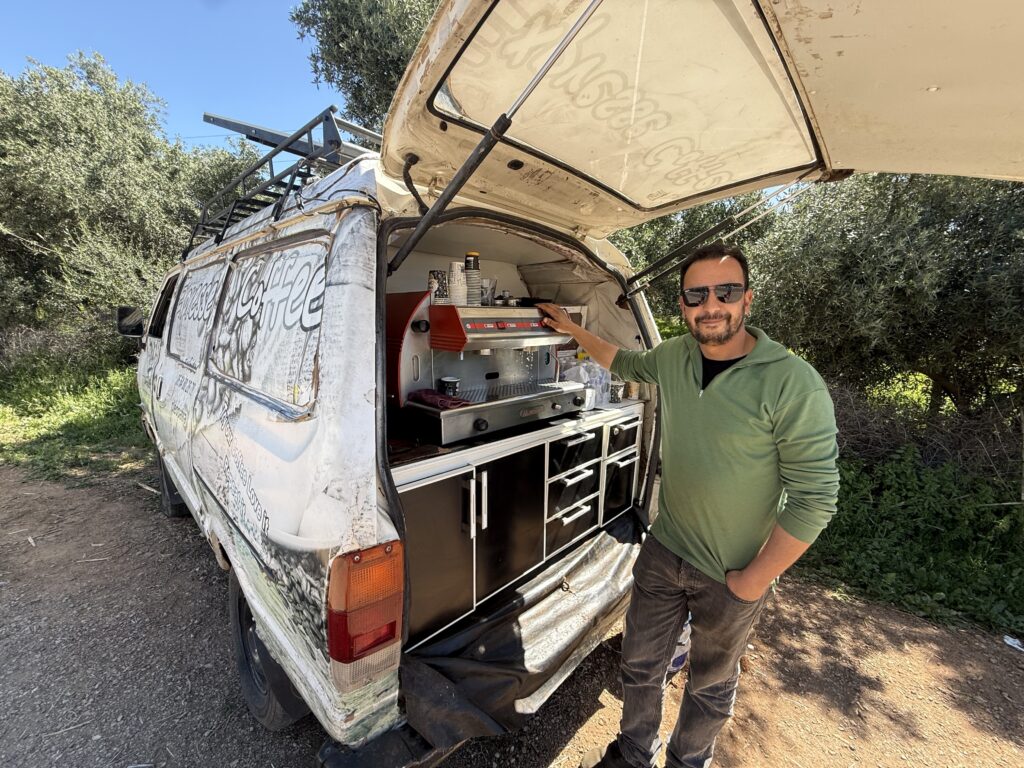
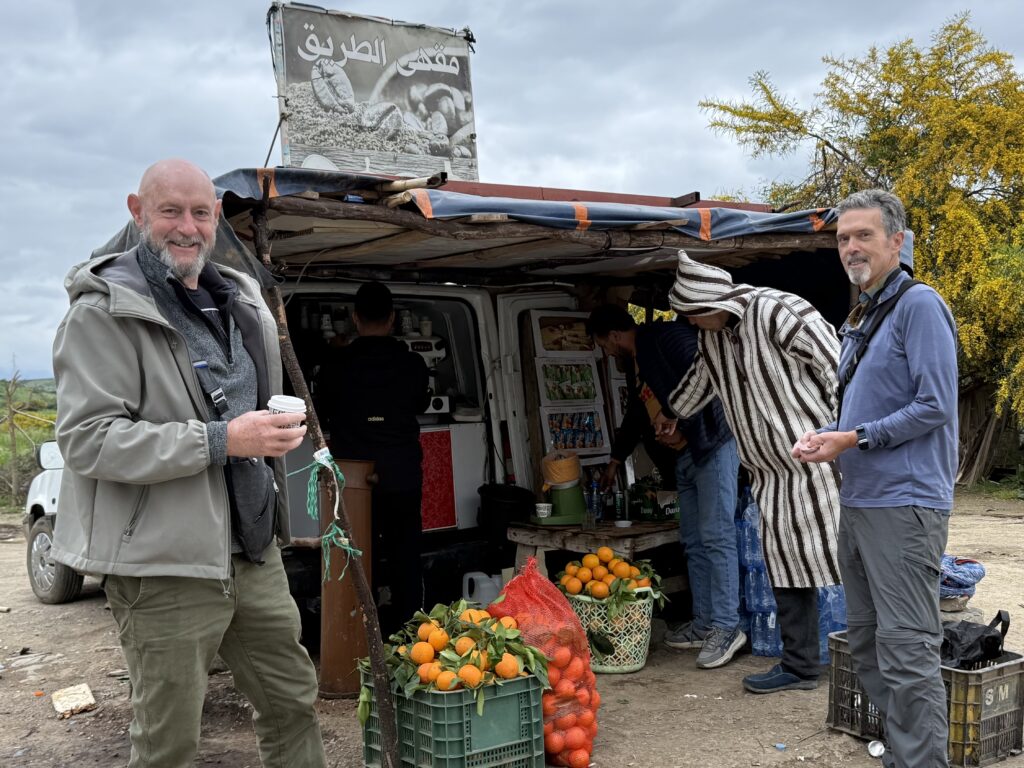
After the chaos of Marrakech, it feels good to drive in the countryside in our rented wheels. To help us motor, there are great coffee entrepreneurs along the roadside selling espresso-based drinks out of their solar-powered hatchbacks for about $1. Each product is unique – no standard Starbucks fare here – and we’re up for finding the ultimate expression of java.
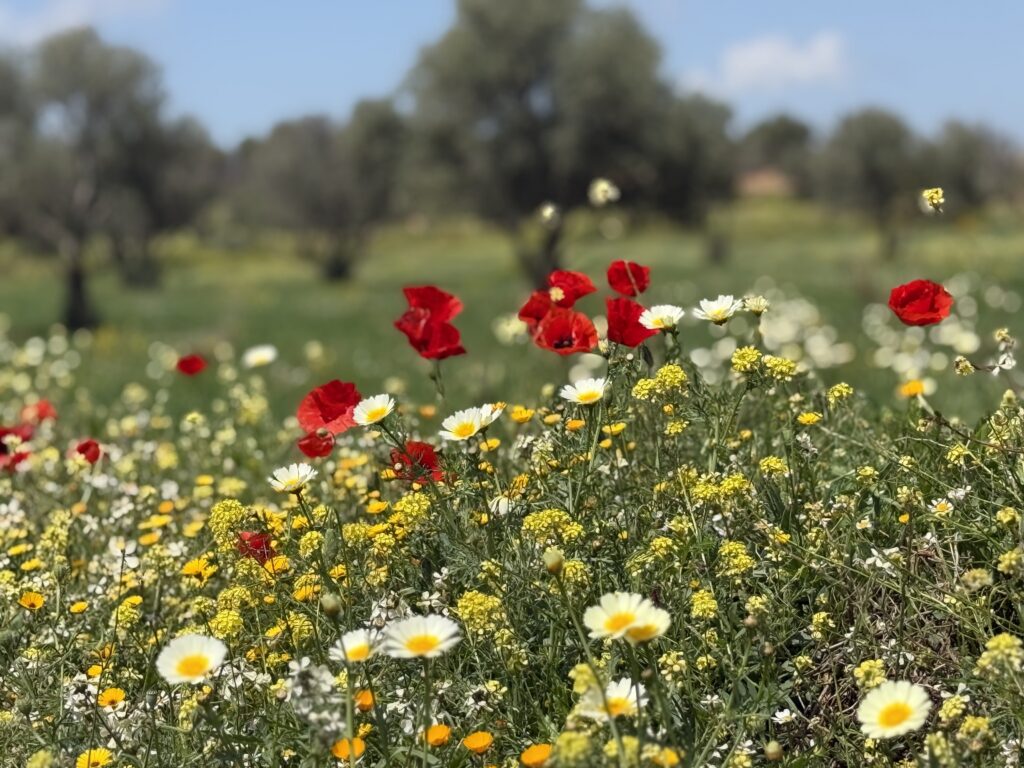
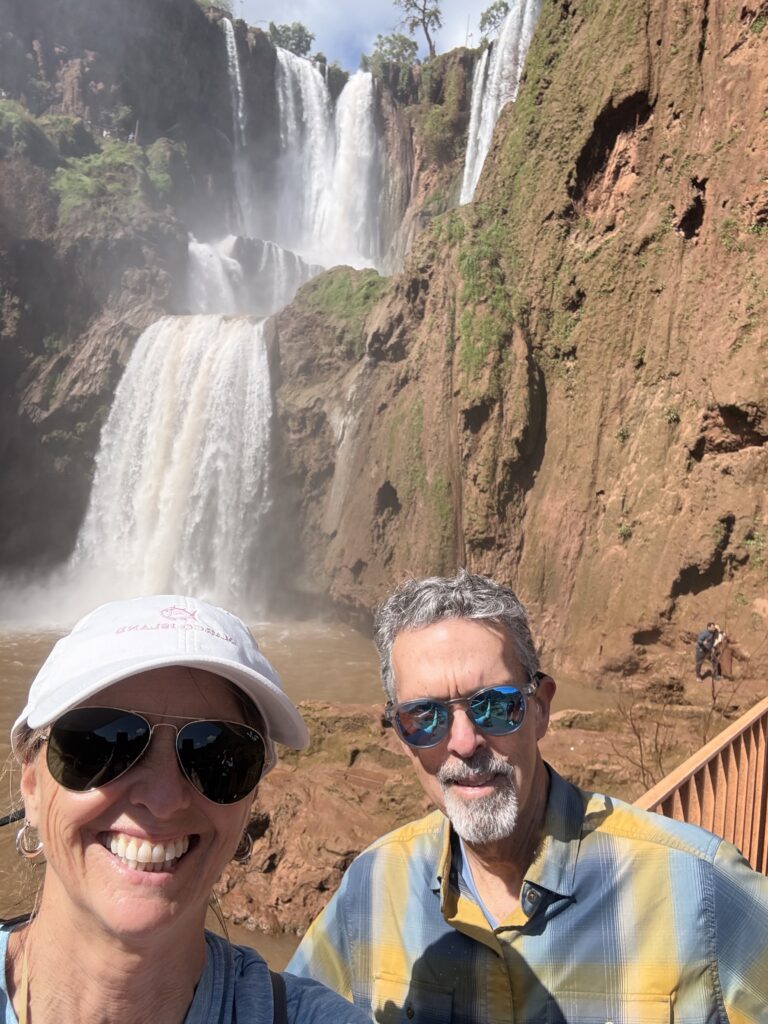
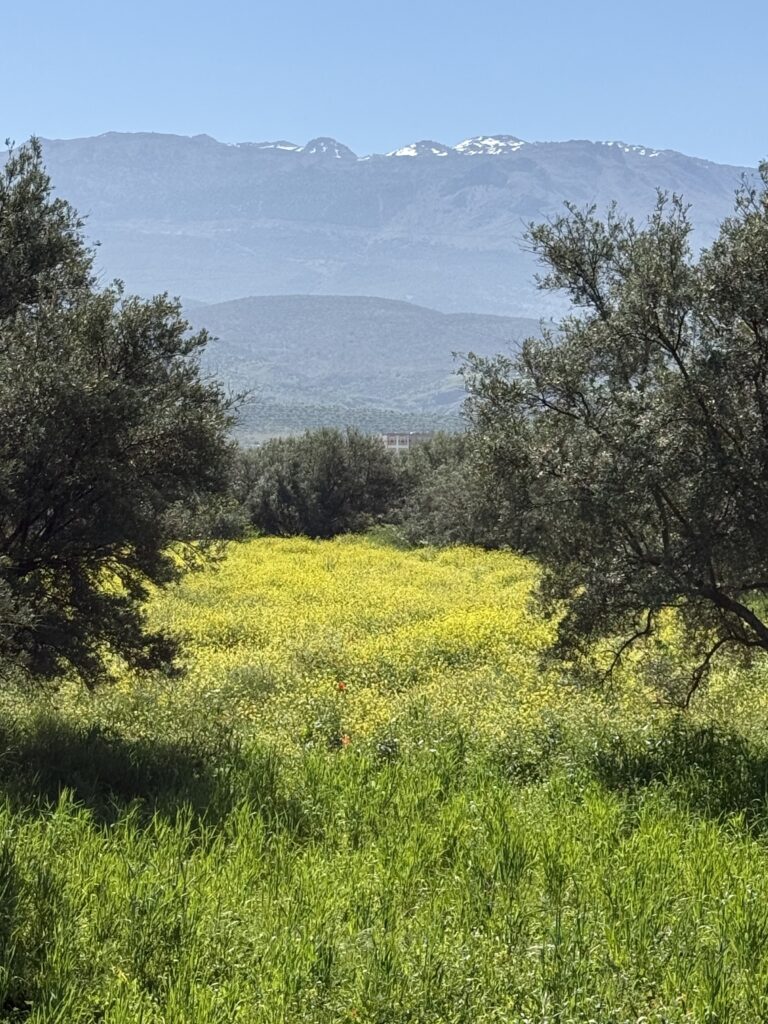
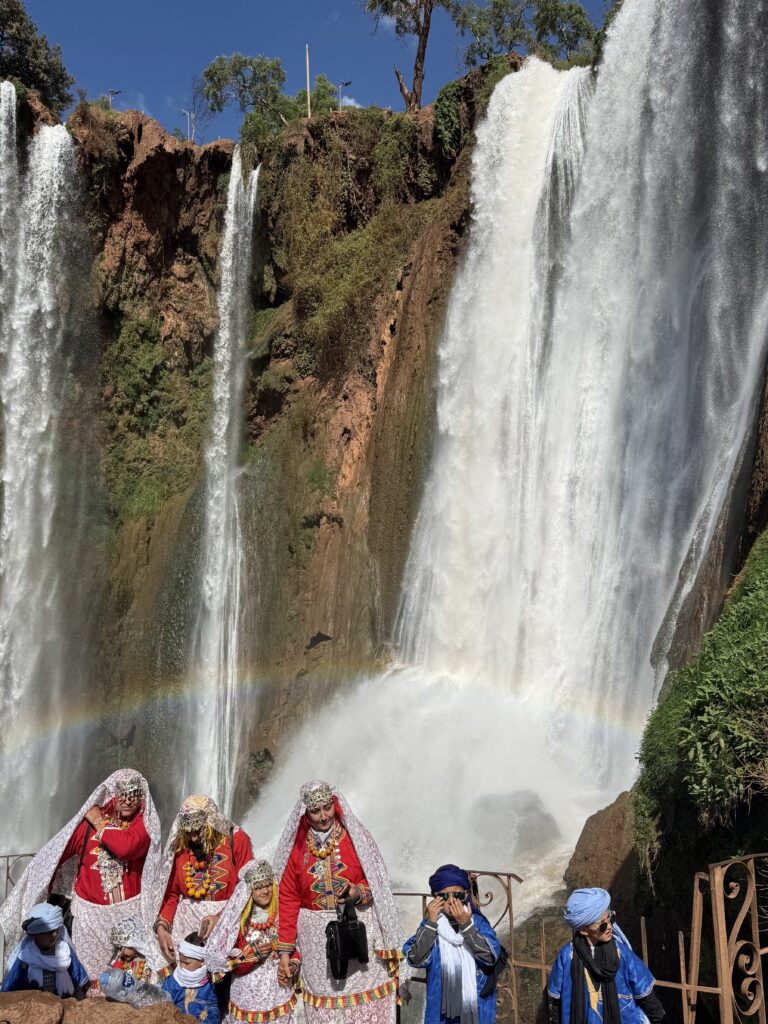
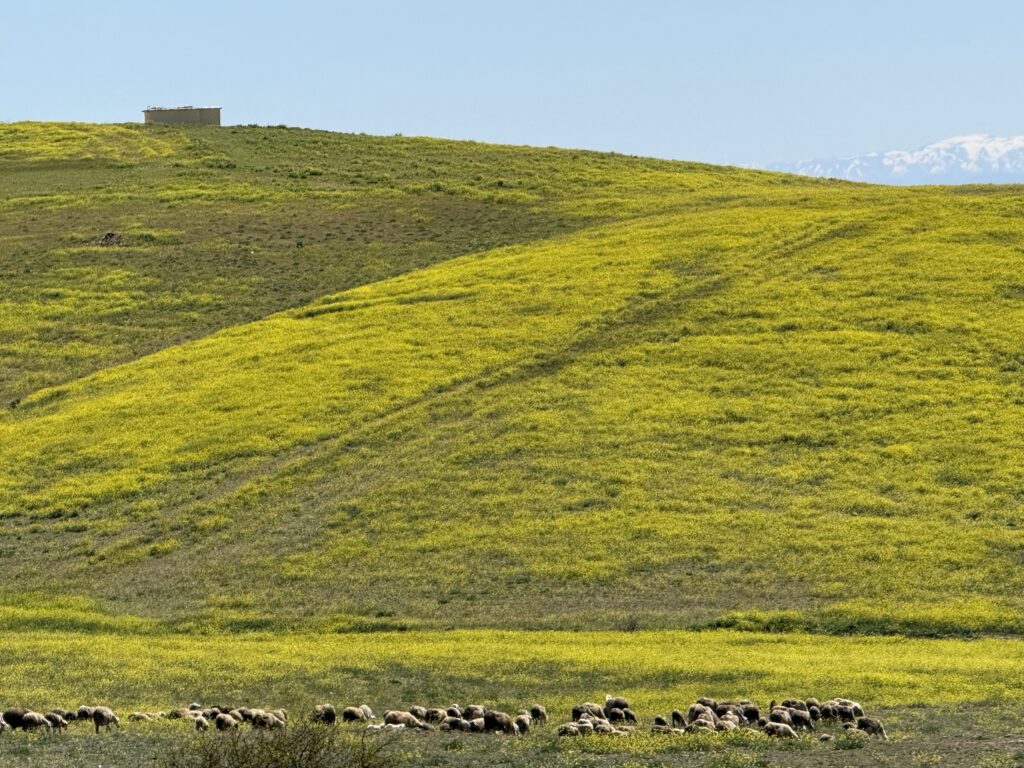
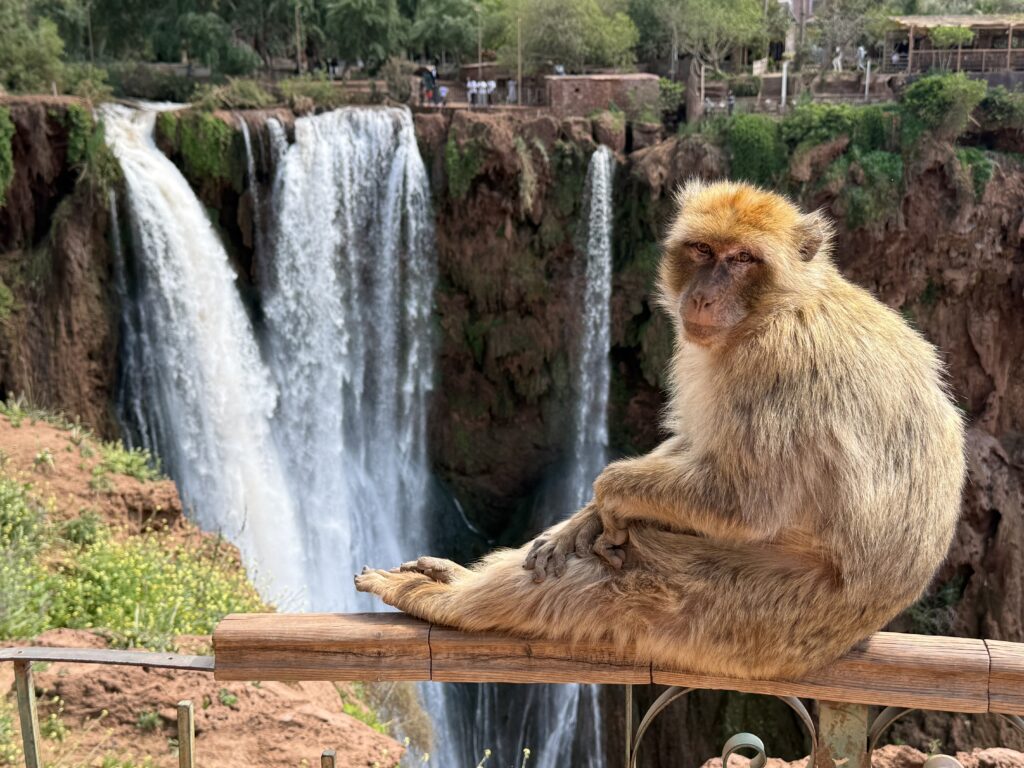
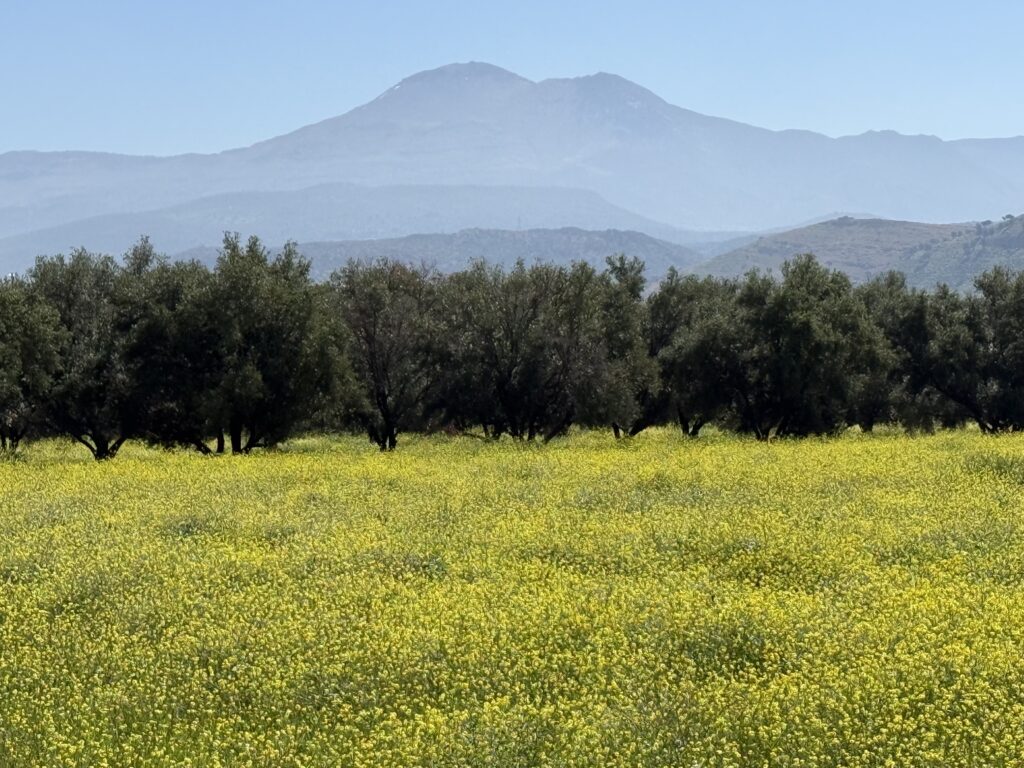
After 7 years of drought, Morocco received a deluge of rain this winter, with the local reservoir going from 8>92% capacity in just 4 months, but heavy rains also caused hardship with landslides, collapsed roofs, and flooding. For us it means our destination Ouzoud Waterfalls will be brimming and the hillsides are ablaze with wildflower blooms including yellow mustard, white daisies, and red poppies as well as purples, oranges, and blues! The locals are picnicking everywhere enjoying the beautiful spring weather. The only downside of driving are the rigorous and frequent speed traps which collect $15/ticket if even 1 kph over the limit. We manage to sweet talk our way out of the first ticket, thinking we’re so savvy, but we quickly get to a score of 1-1 on tickets. Souvenirs!
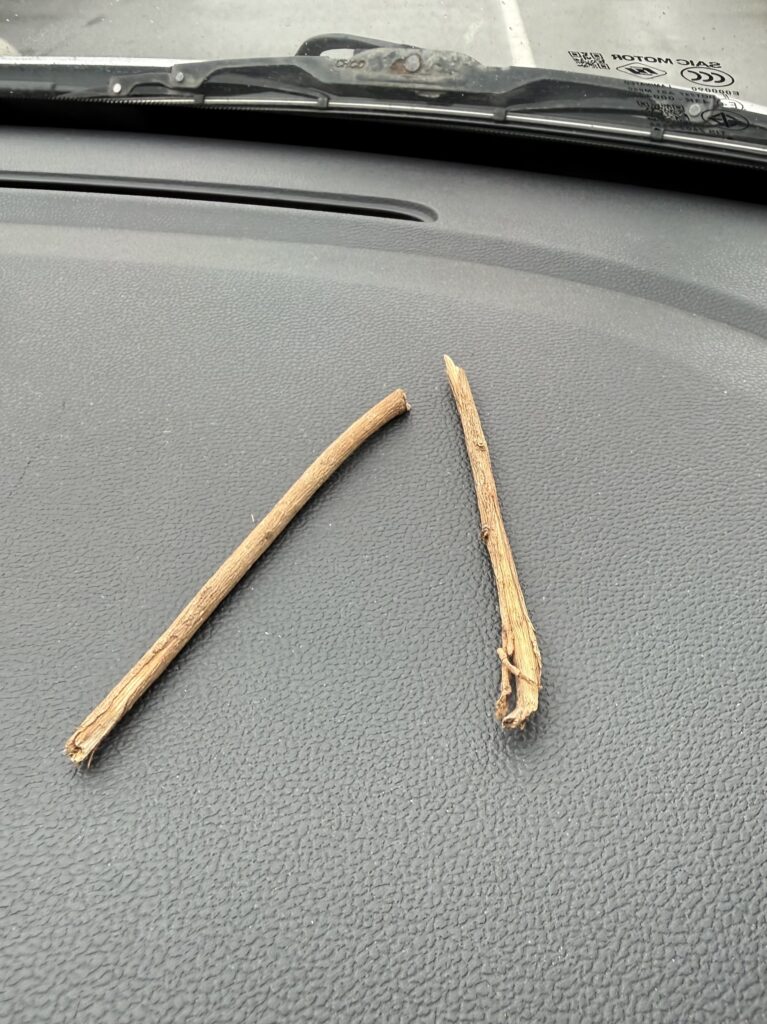
In the sweet town of Meknes we park our car in a lot and sort out the charges with the locals, to whom I prepay for 2 nights. Receipt? He grabs a stick and puts it on the dashboard. But I paid for 2 nights! He breaks the stick in half. “Berber receipt” he says! The next day another parking attendant (loose term) tries to charge me for the 2nd night but he accepts our two dashboard sticks as a receipt. Our riad neighbors got a daisy receipt. It doesn’t get any better than this. Our motto: Meknes? Heck yes!
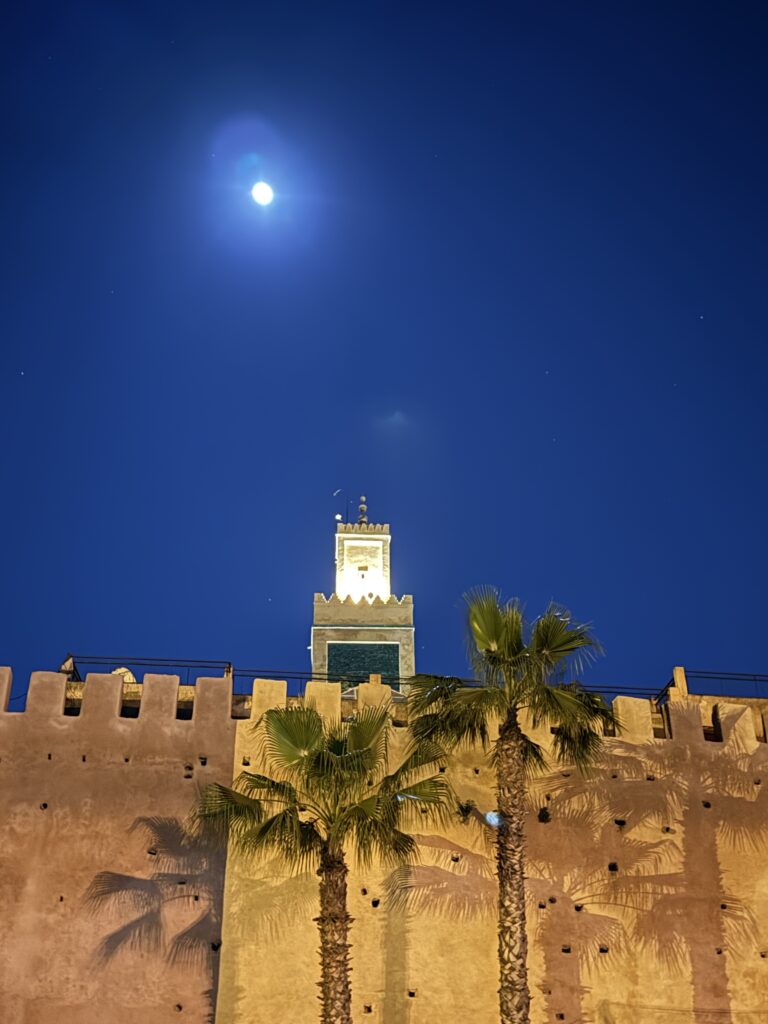
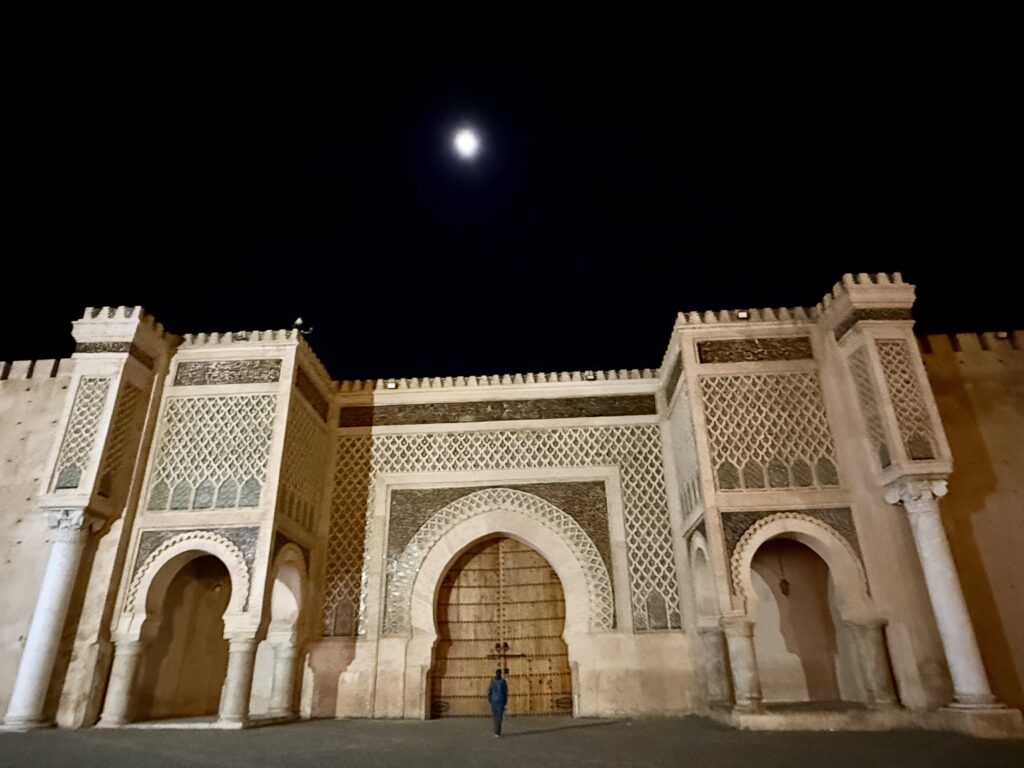
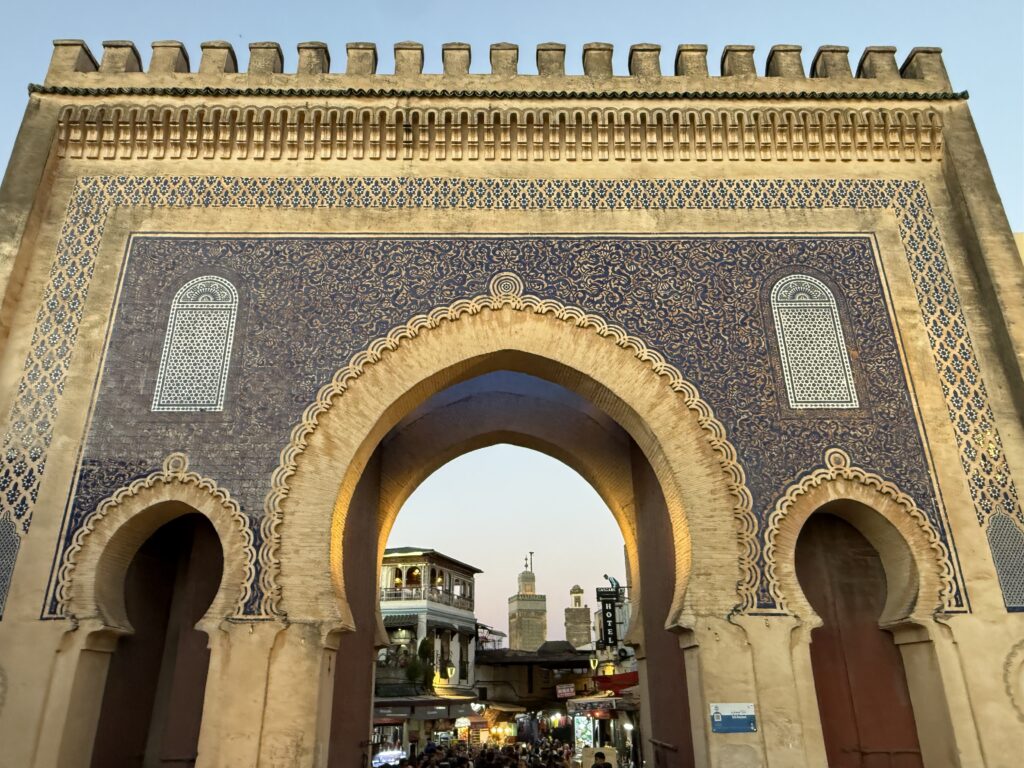
Meknes is another right-sized town with a manageable medina where you see the same faces and build connections. The town is famous for the Bab Mansour gate, perhaps the most beautiful in Morocco, as part of the architectural development by Sultan Soulay Ismail to make Meknes the capital, the Versailles of Morocco. Being of mixed race, Arab + black concubine, he garnered deep allegiance from his subjects during his 55-year reign, longest to date in Morocco, despite being ruthless and thousands died under his leadership. He pushed back the Ottoman Turks and the British out of Tangier with his fierce armies and enslaved the under class to build Meknes into an architectural wonder. Most impressive of all, he had a harem of over 500 women and fathered 1,171 children per the Guiness Book of World Records! Now that’s a legacy!
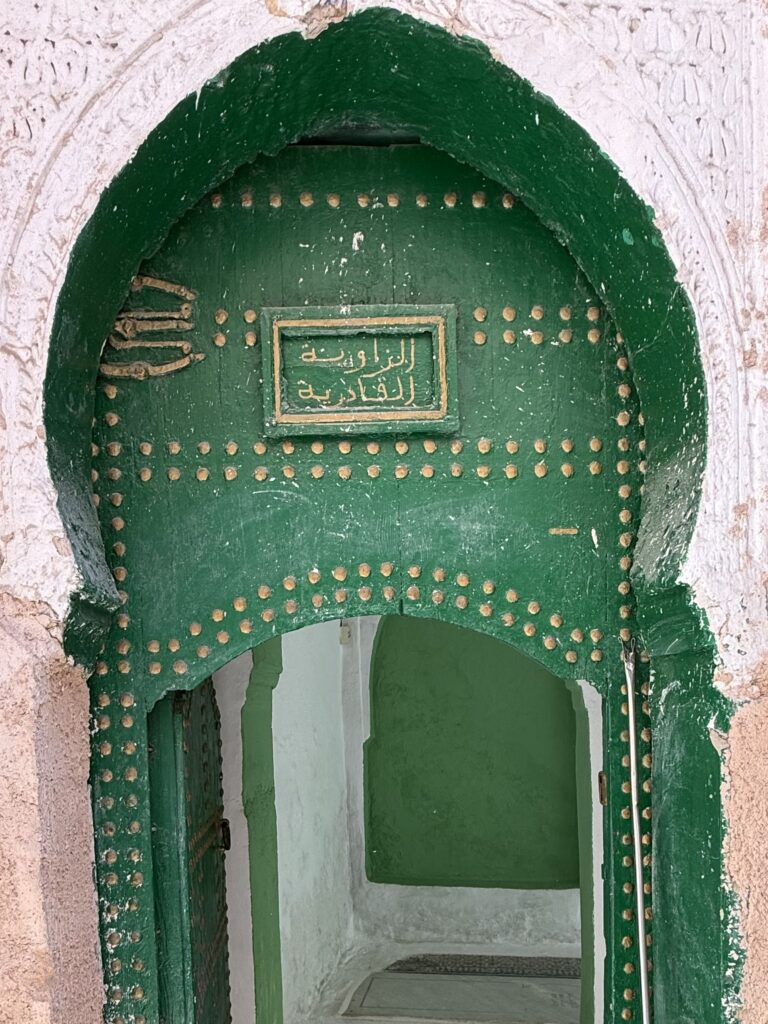
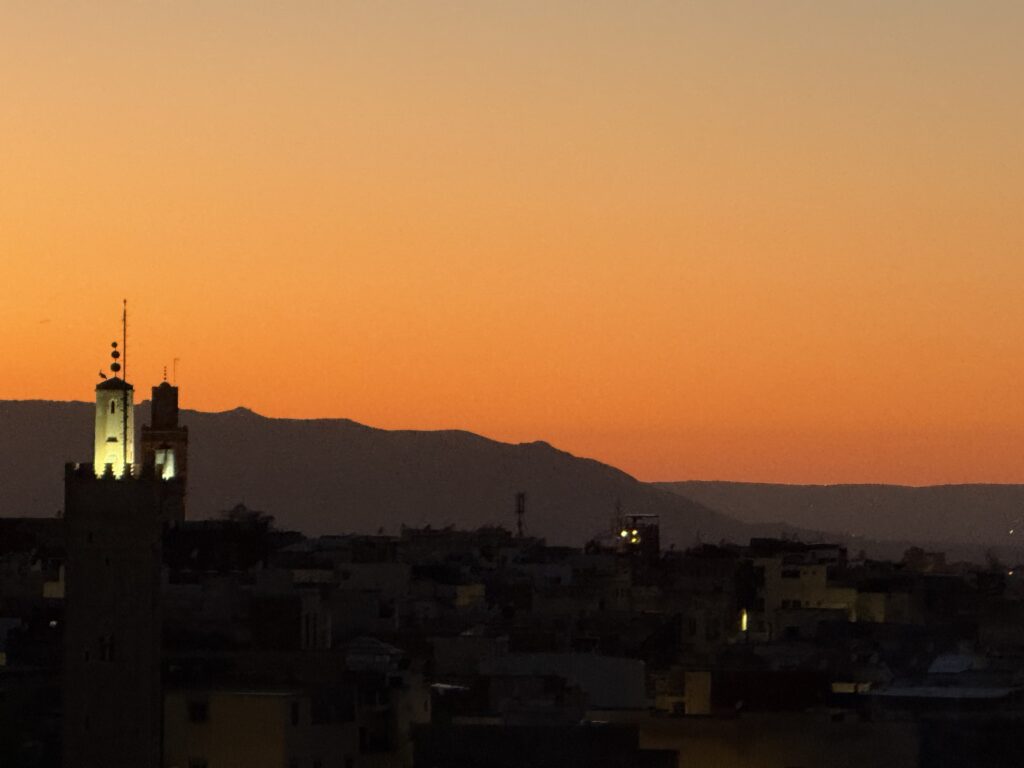
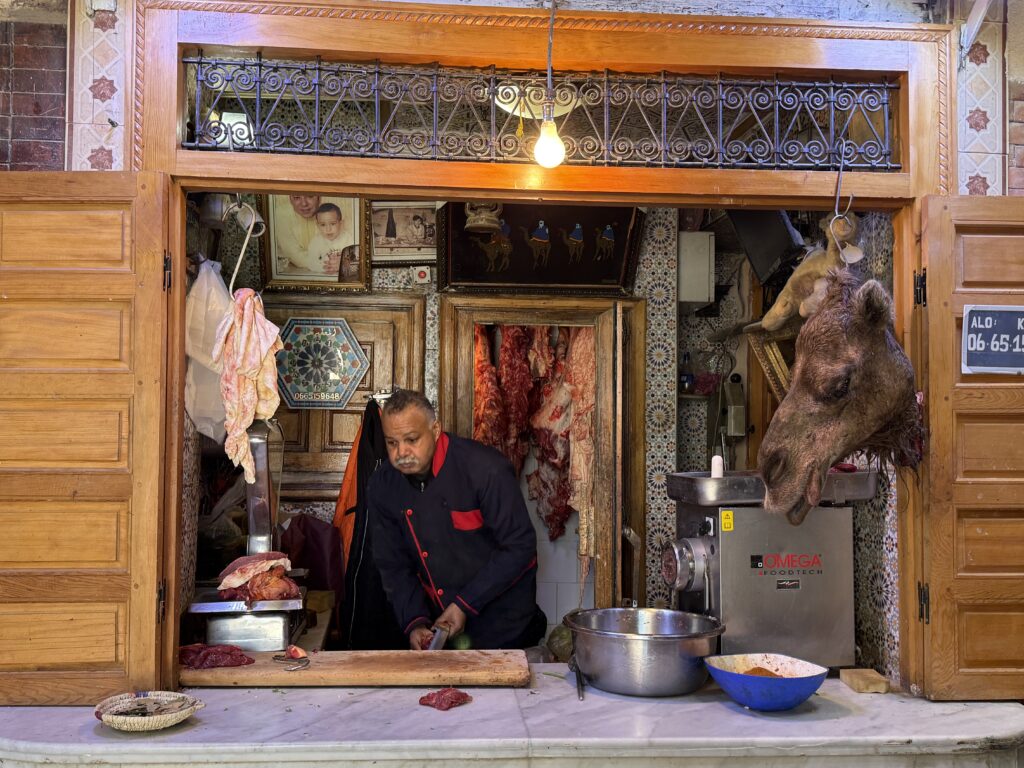
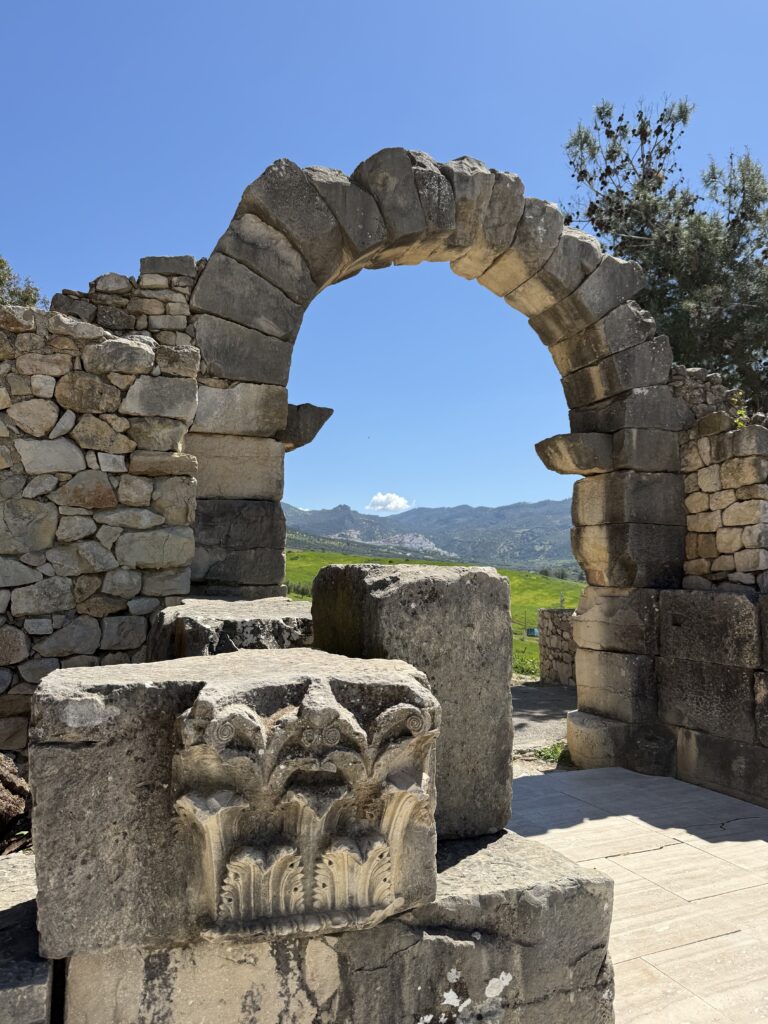
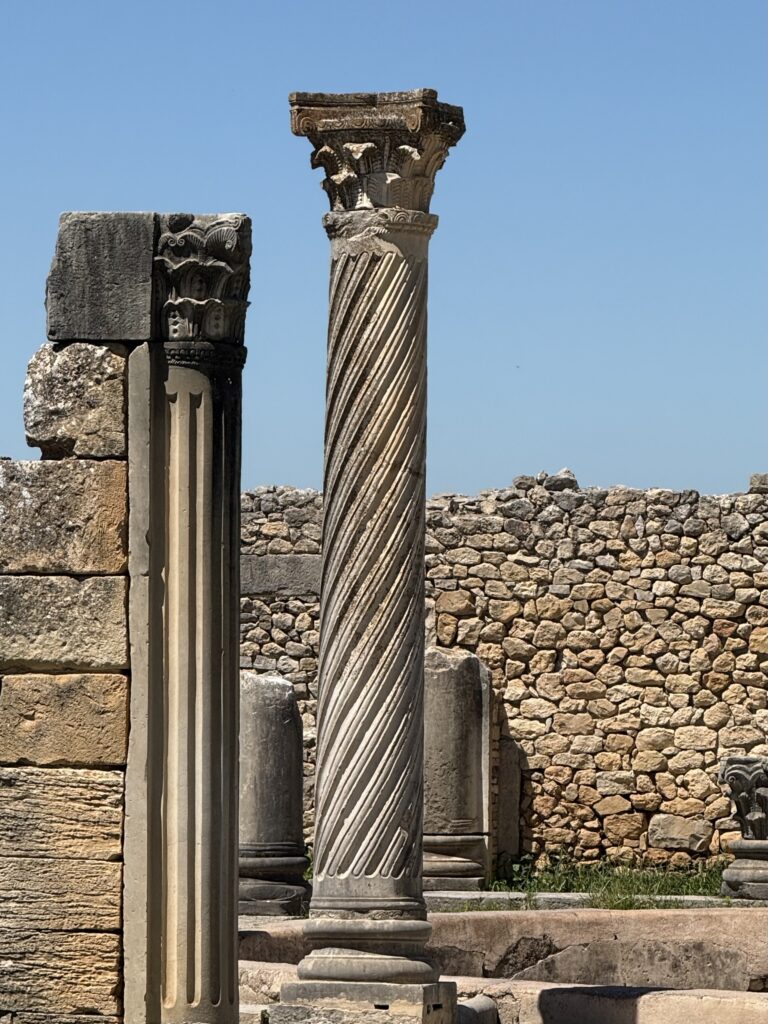
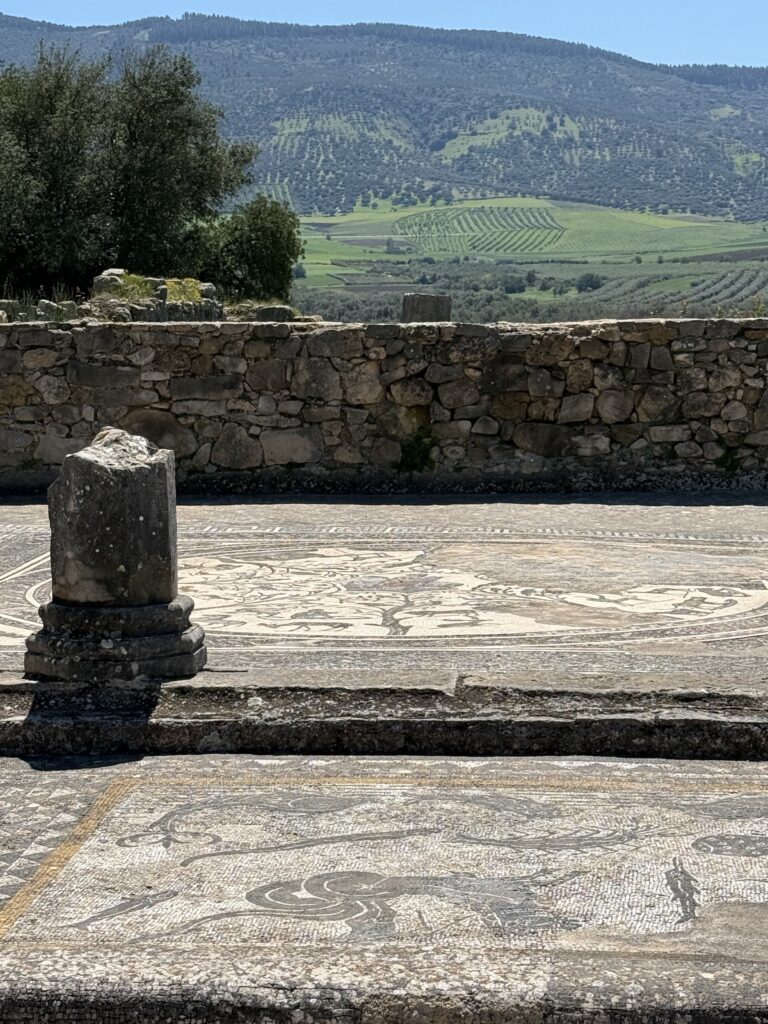
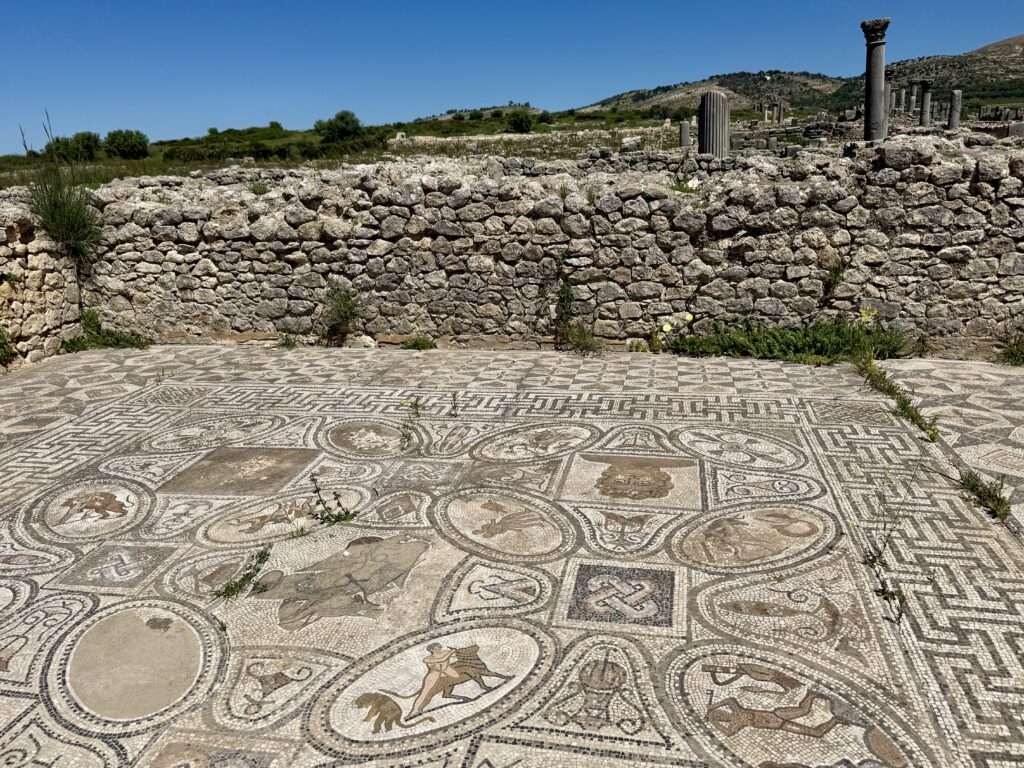
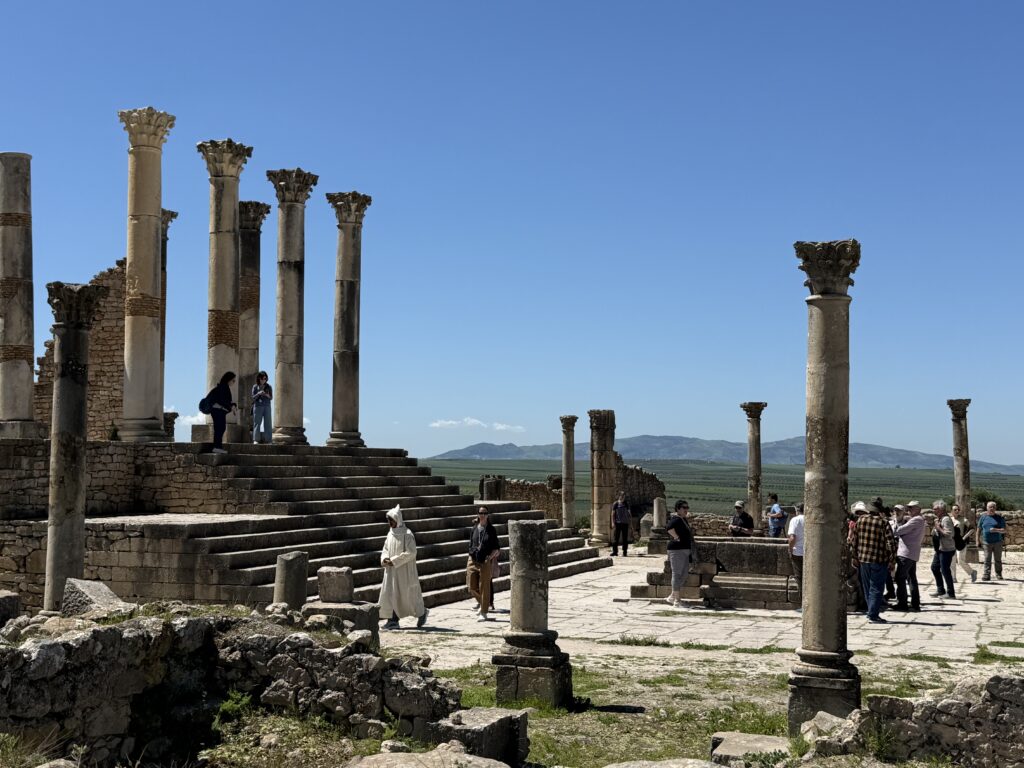
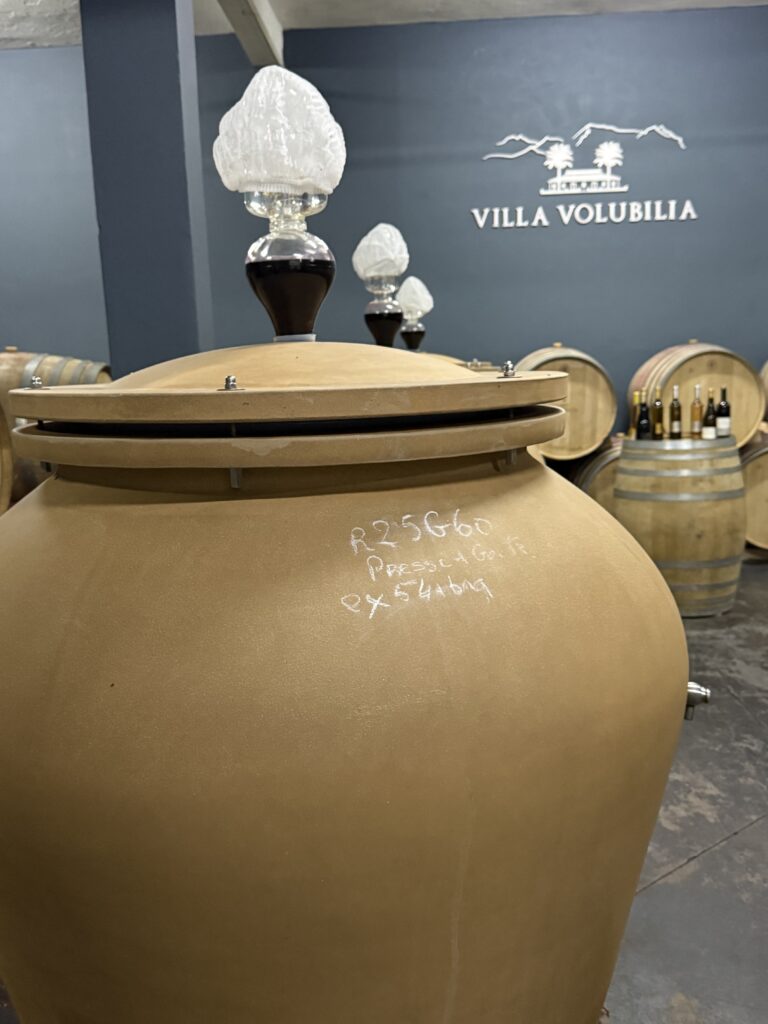
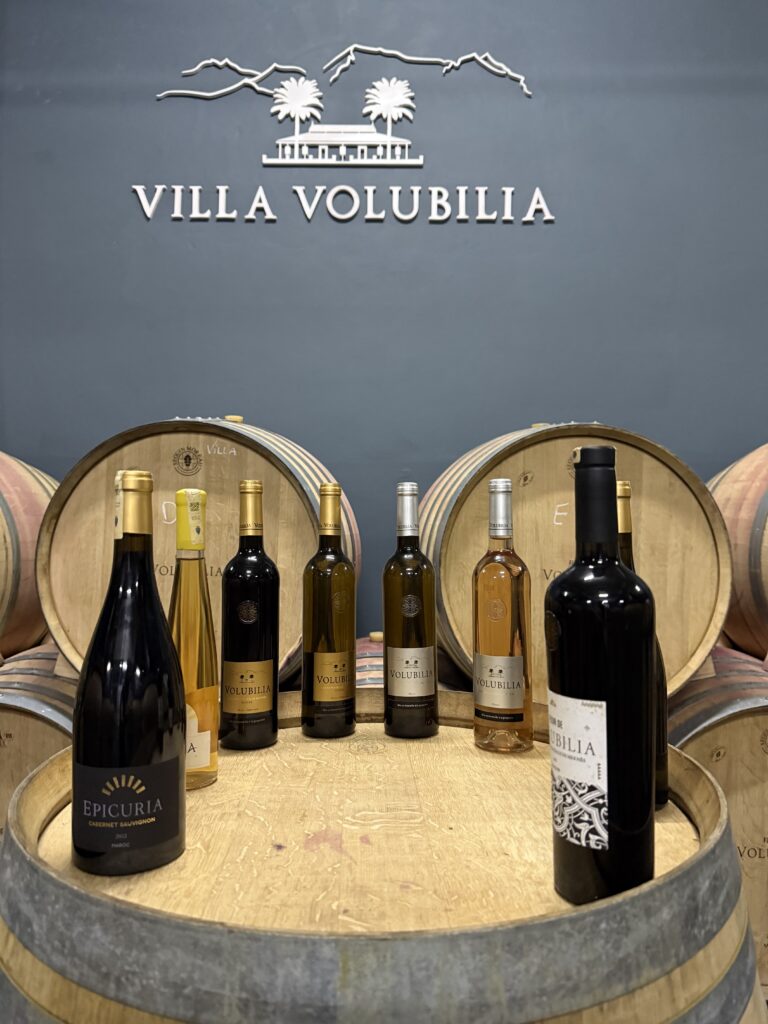
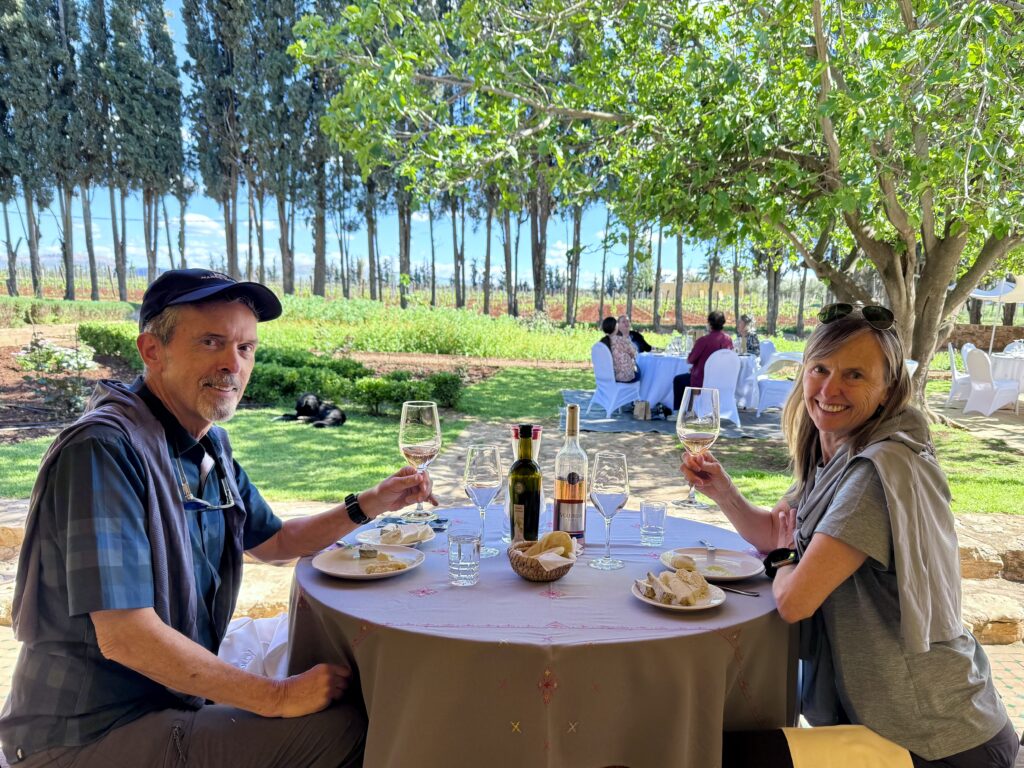
We tour the quiet Roman ruins of Volubilis, the furthest south they ventured in Morocco, then go wine tasting at Villa Volubilia, French owned by two Bordeaux families. With low expectations, we are pleasantly surprised by the quality and the overall experience. The region is known for Vin Gris and their Rosé and Cab/Syrah blend were also great, and my senses relax in the familiar territory.
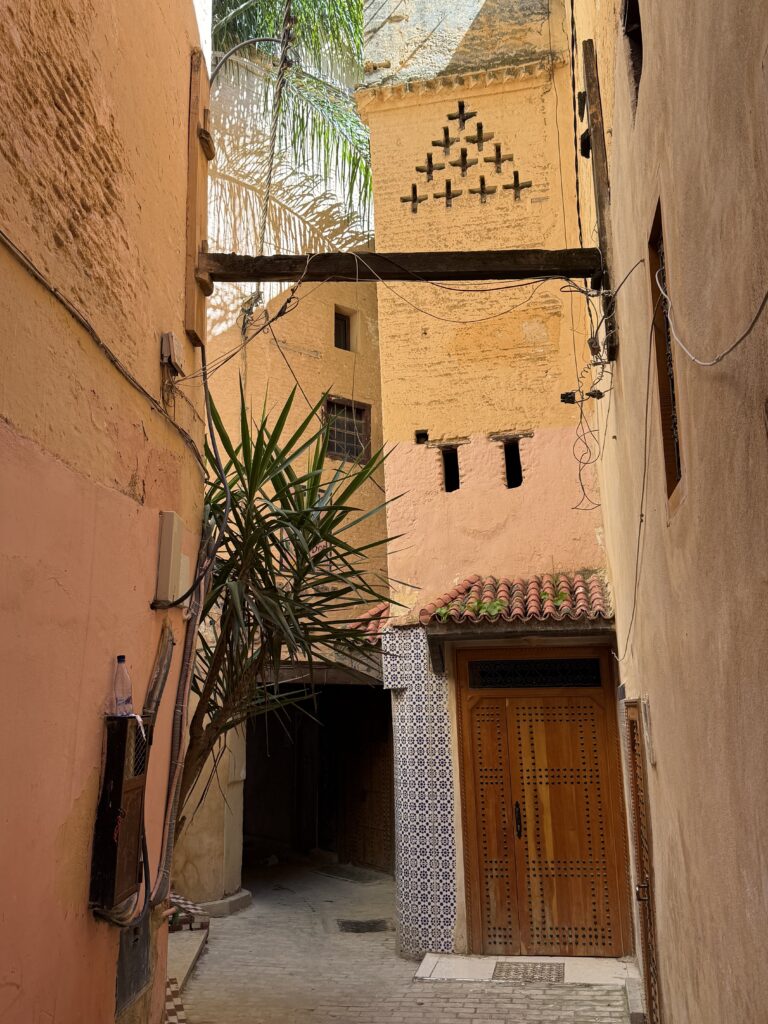
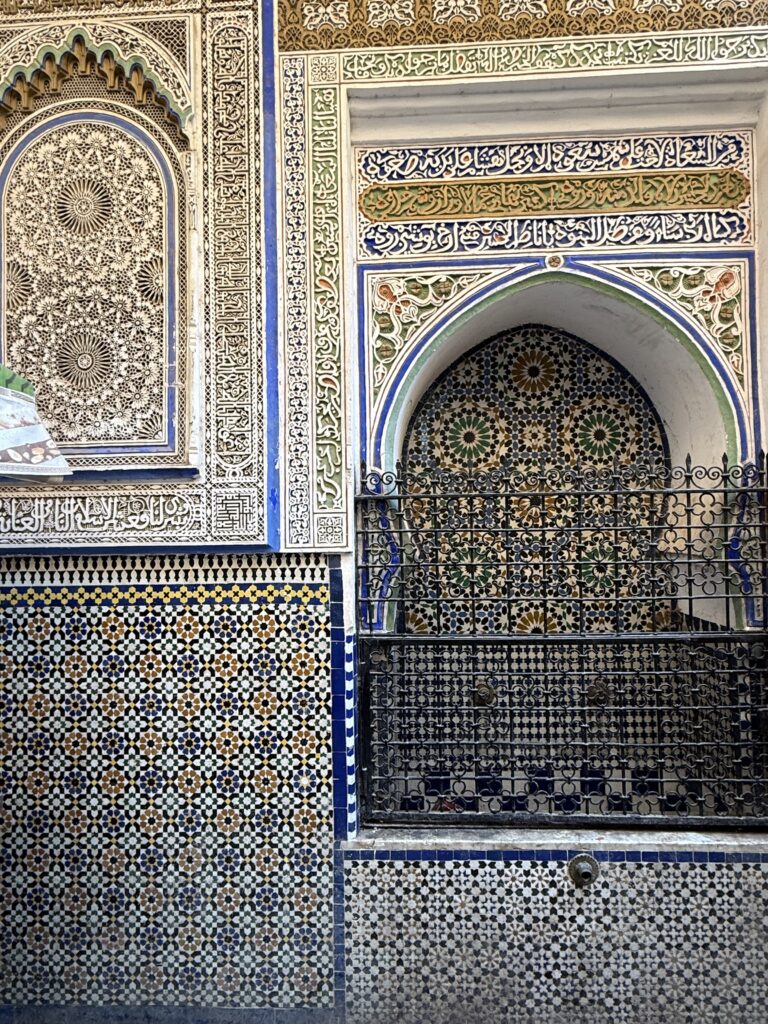
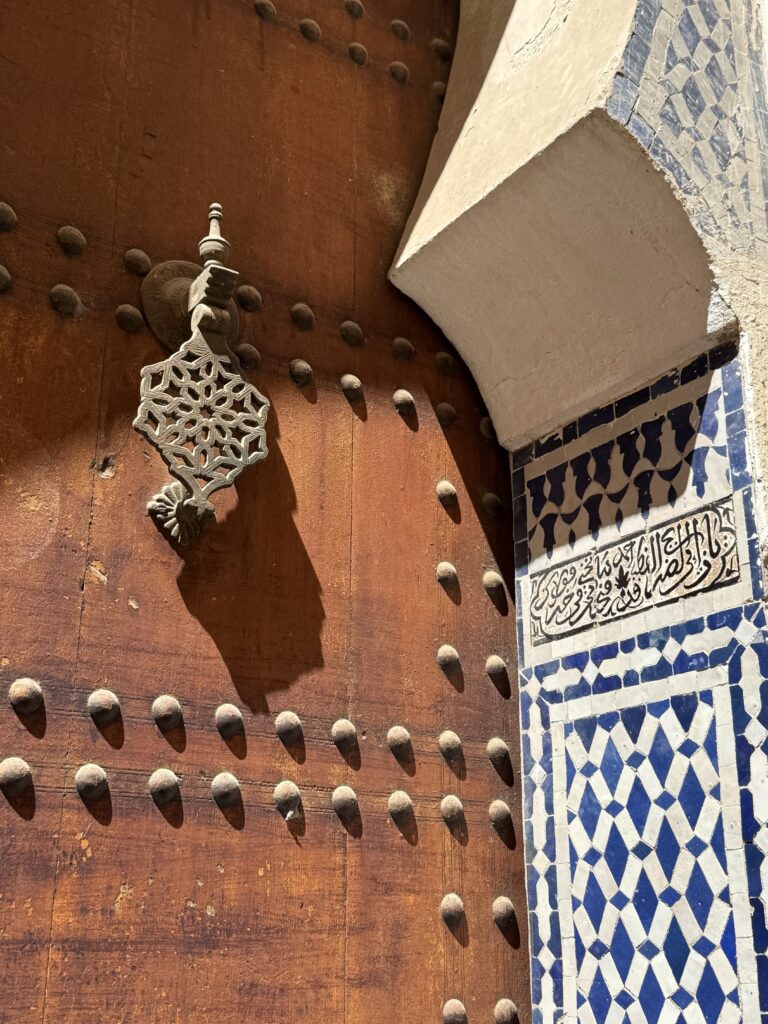
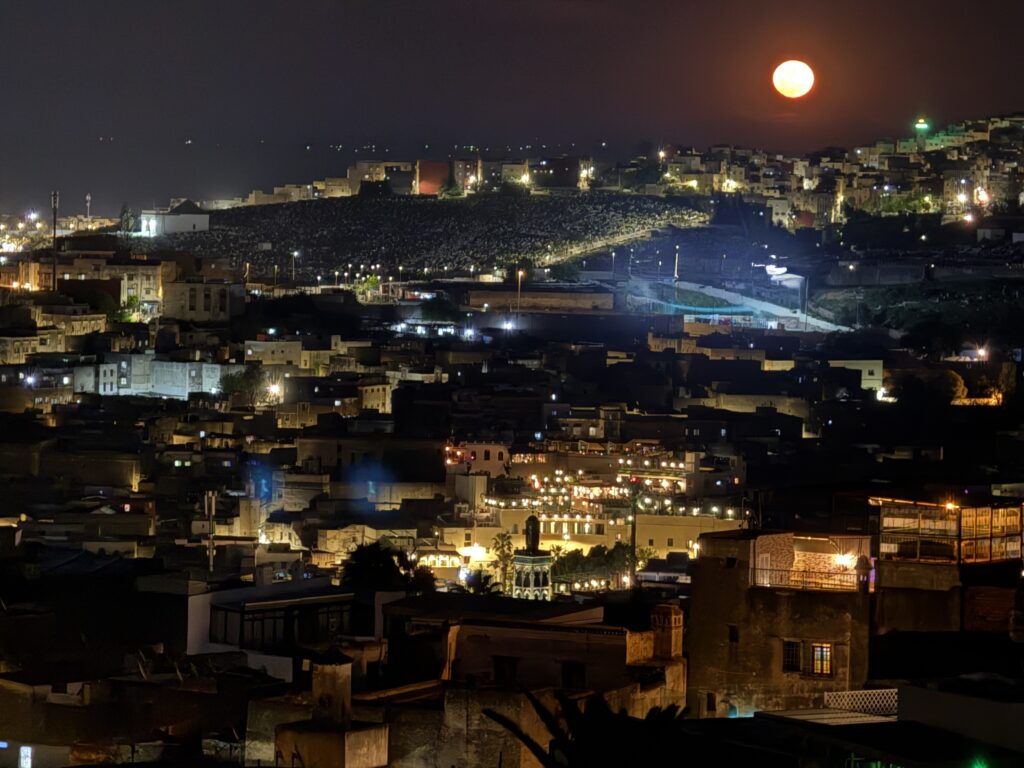
Fes was my favorite 40 years ago when I first visited Morocco and it remains a gem, or as Anaïs Nin succinctly wrote “Fes is a drug.” The medina is a maze of over 9,000 alleys, some no wider than your shoulders, so memorizing your riad location at the heart of it all is critical where online maps become useless. If lost, young men are more than welcome to guide you home for a tip, sometimes falsely claiming that you’re going the wrong way. One guy even said “There’s nothing down that street – just Muslim people!” which made us cry with laughter.
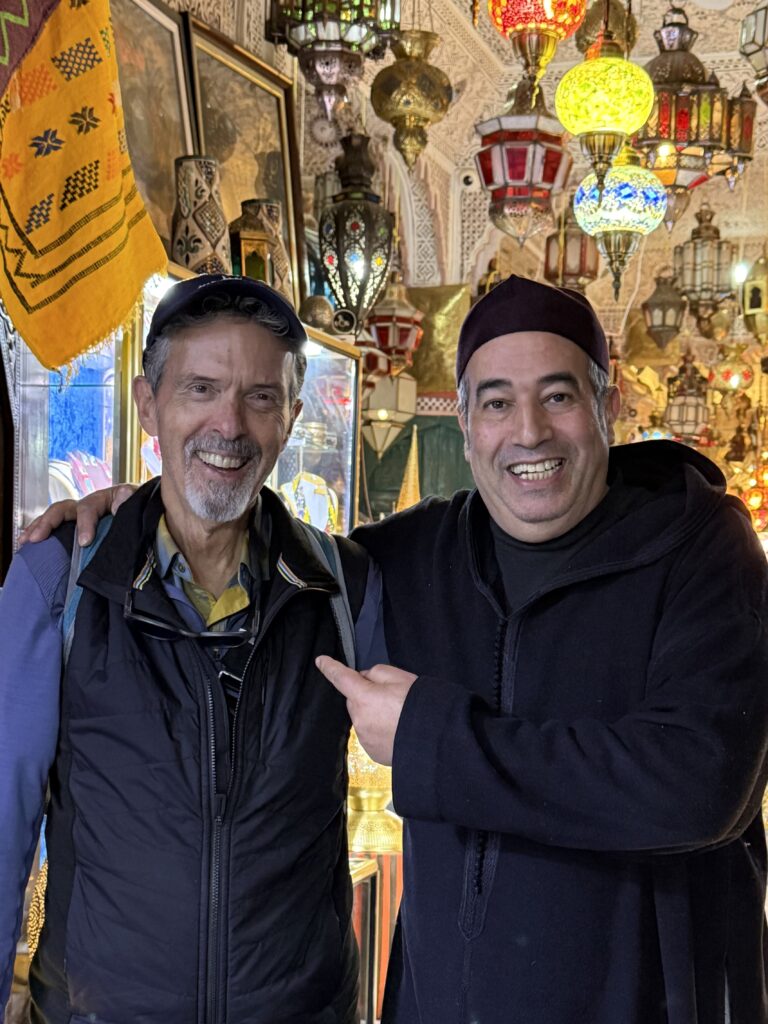
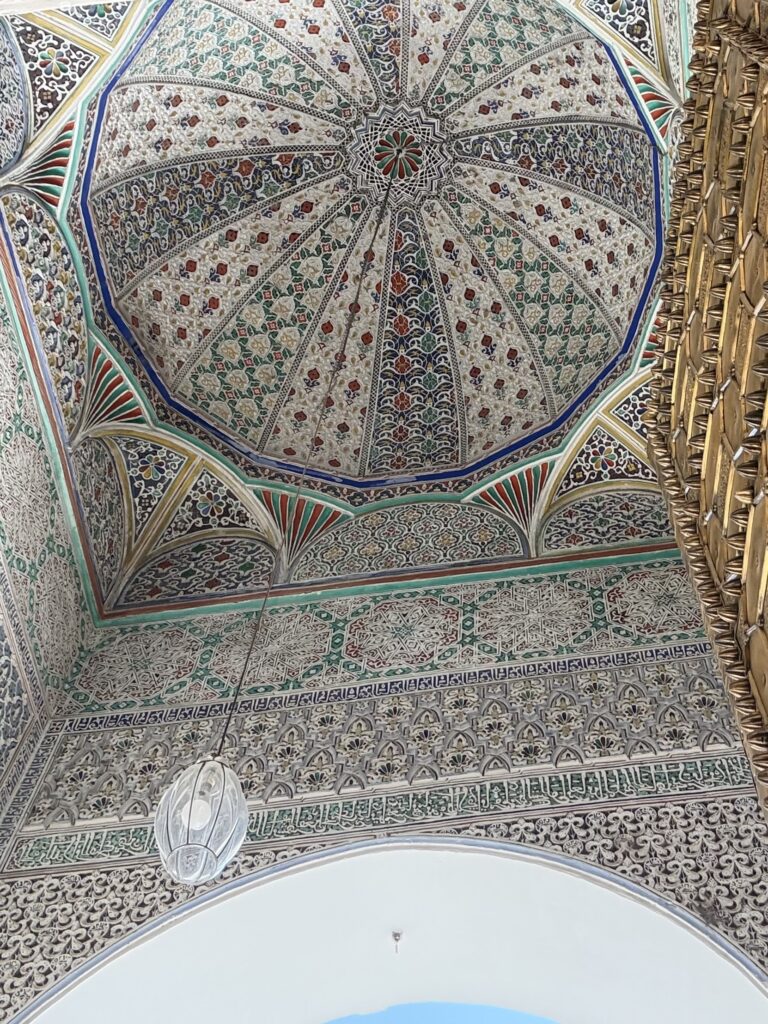
Back in Marin, we’d hired Taskrabbit.com Ahmed Tazi for multiple moves (DM me for contact info) and, originating from Fes, he connects us with his parents who show us incredible hospitality. His father Nourdine gives a personal tour of the medina, including the University Al Quaraouiyine, founded in 857 and the oldest continually operating higher learning institution in the world, and Chouara Tannery, with its open pits prepping and staining hides for leathercraft to fill the souks, and even his childhood home. In a locals alley he engages a tailor handsewing a djellaba (the Moroccan cloak), so I show the tailor the djellaba I bought 40 years earlier, and the tailor discusses his craft extensively with Nourdine with obvious passion for his profession, engaging like old friends. That’s part of the essence of life in the medina where everyone rubs shoulders regularly in the tight alleyways and there’s camaraderie and community by default from this constant interaction. Even for us in these tight corners sprinkling Arabic for good effect breaks the tourist wall and builds meaningful moments. Wishing a store team crammed into a closet for a quick shared meal Bismillah (Bon Appetit), they offer up the first bite to me which is delicious, and when descending a packed street alongside a heavy cart which bumps me gently, the driver says Pardon and I reply Mafeesh Moshkela (No Problem). He turns to me with wide eyes and the most exuberant grin on his face and repeats my words, shocked and thrilled at my response. It’s a momentary interaction as I duck behind him to head off but his facial expression is seared in my memory.
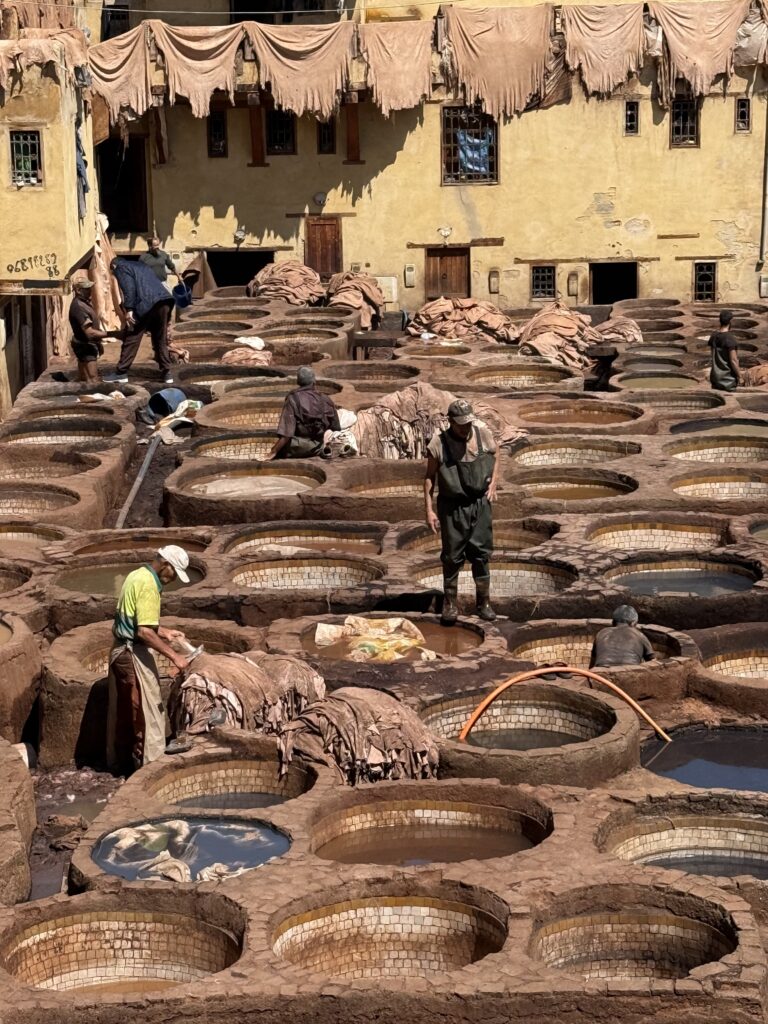
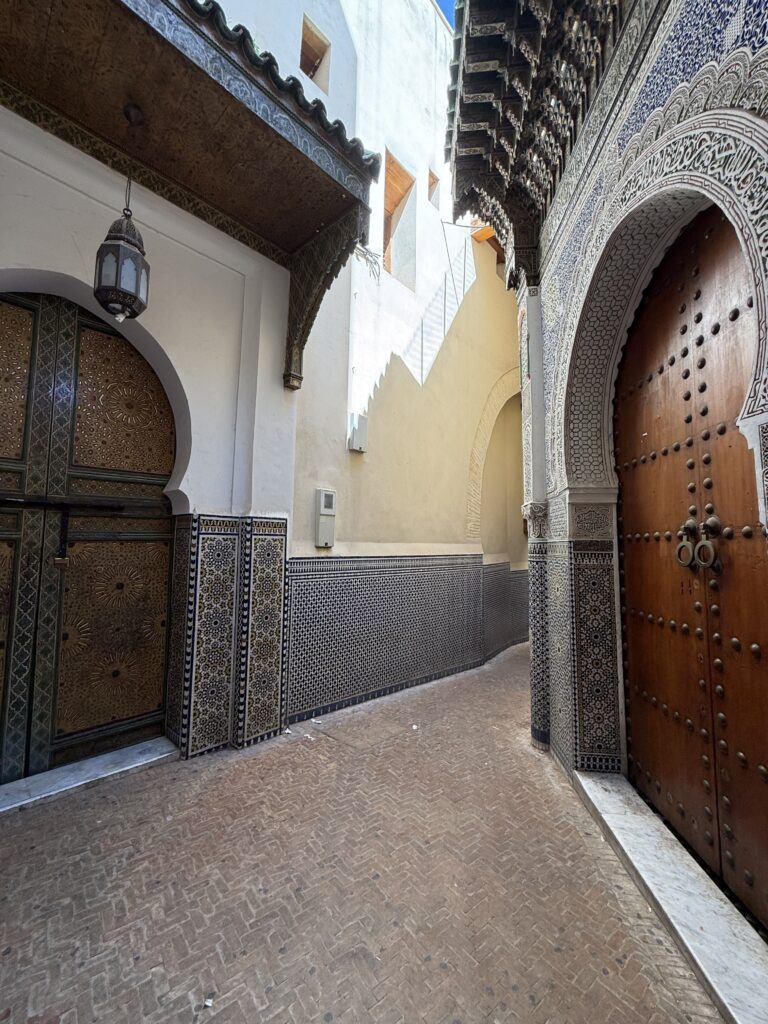
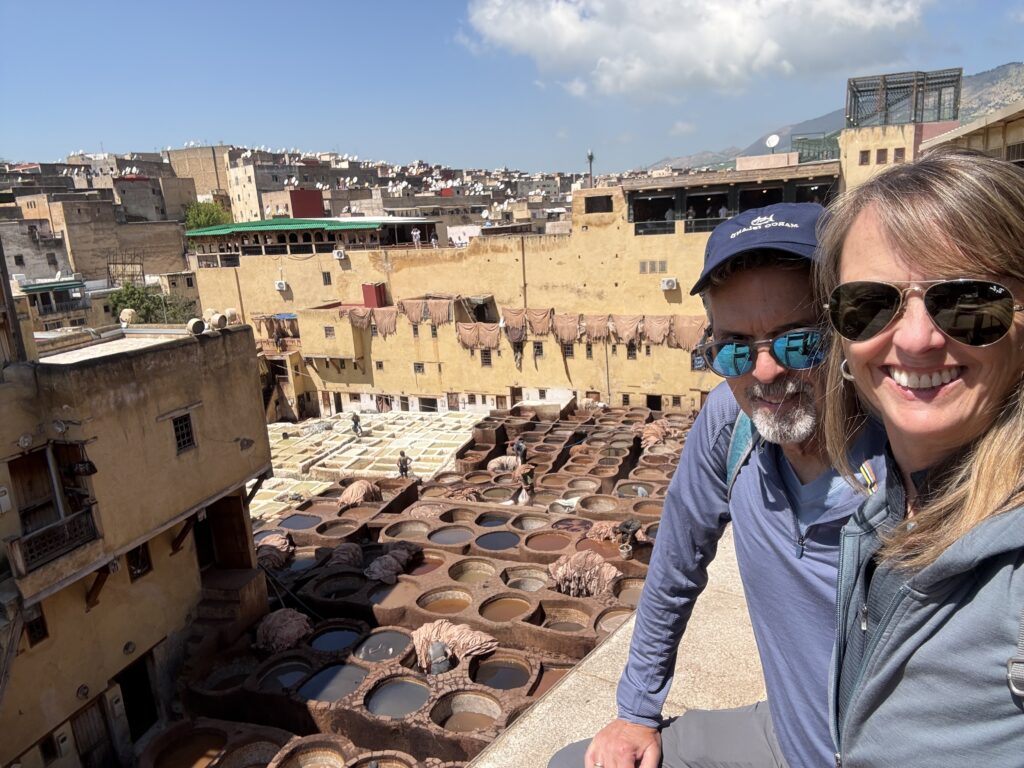
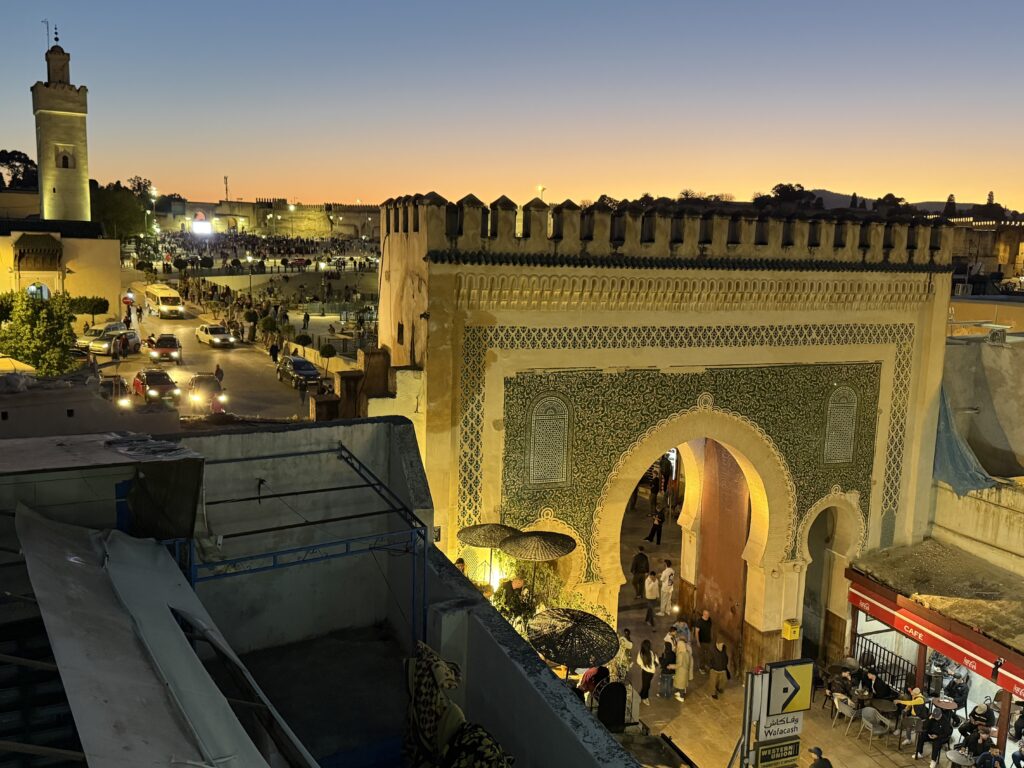
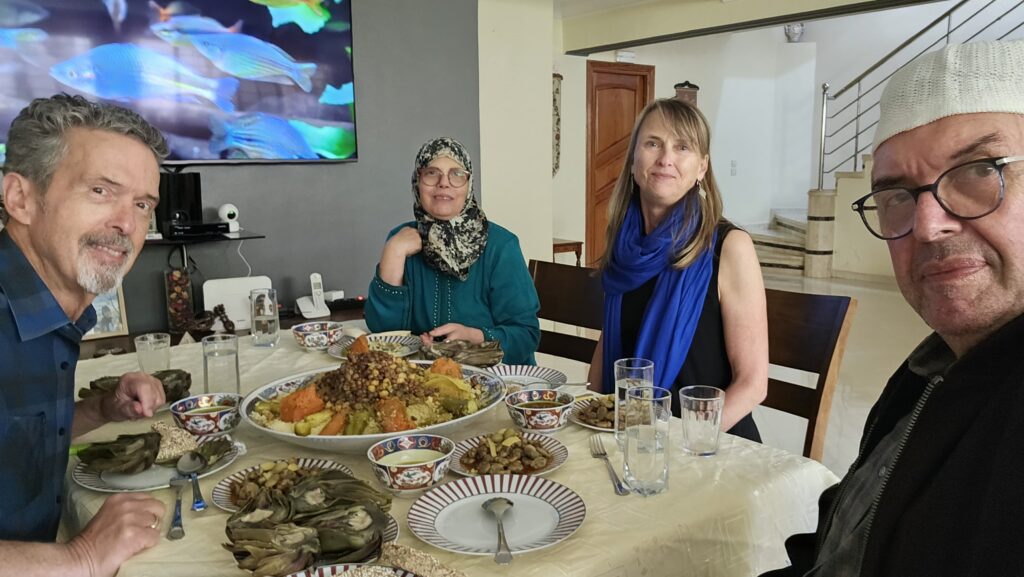
On Friday, the holy day, we have the very special treat of sharing couscous, the post prayers tradition, in Ahmed’s family home outside the medina. Bright, sunny, and calm, it is a welcomed contrast to our daily experiences and in mostly French we discuss travel, their backgrounds, and even their former hobby raising canary songbirds for competition. Our souls are filled to the brim upon our return.
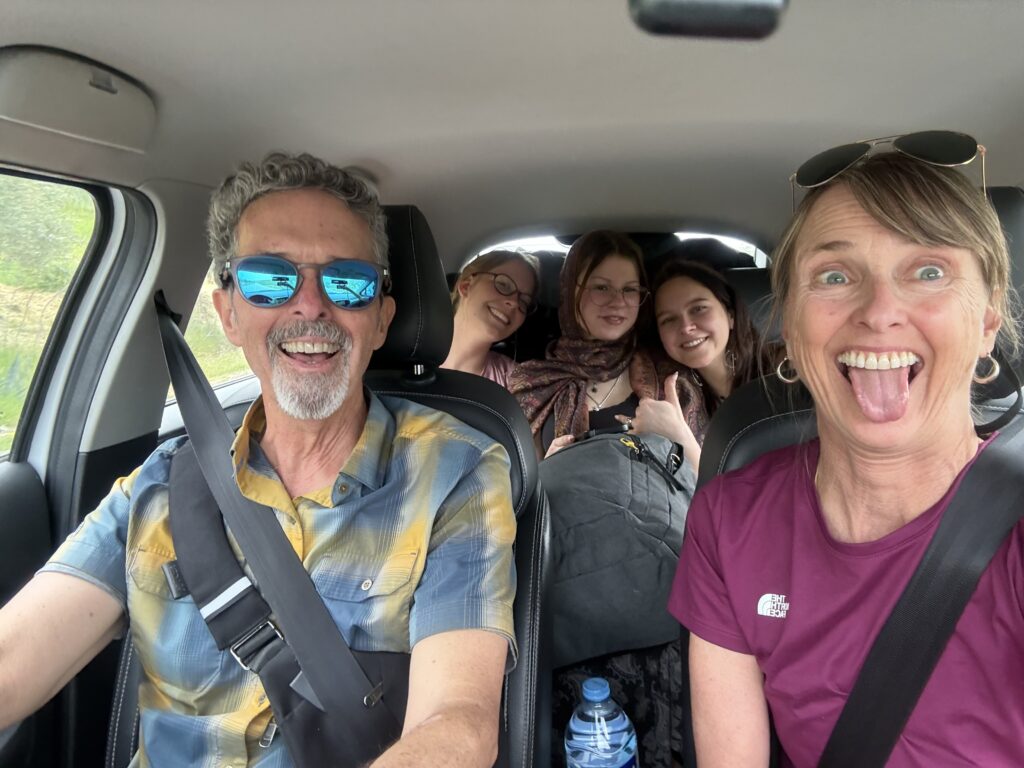
We head north to Chefchaouen, the Blue Pearl of Morocco, picking up 3 hitchhikers from Europe who cram in the backseat grateful.
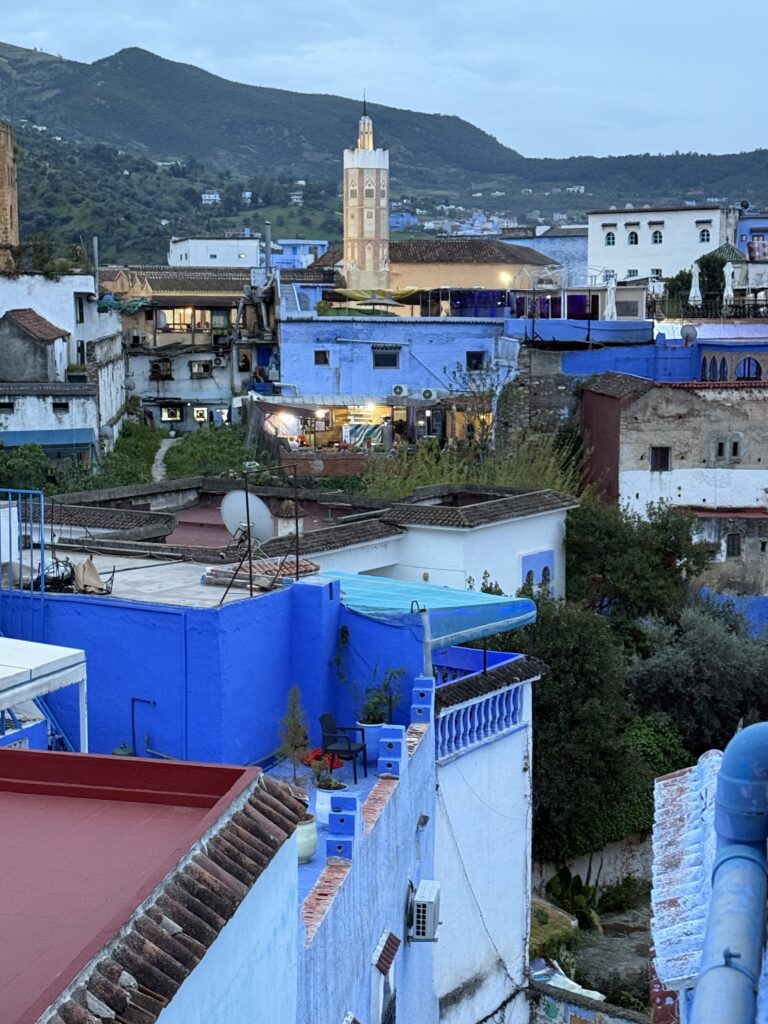
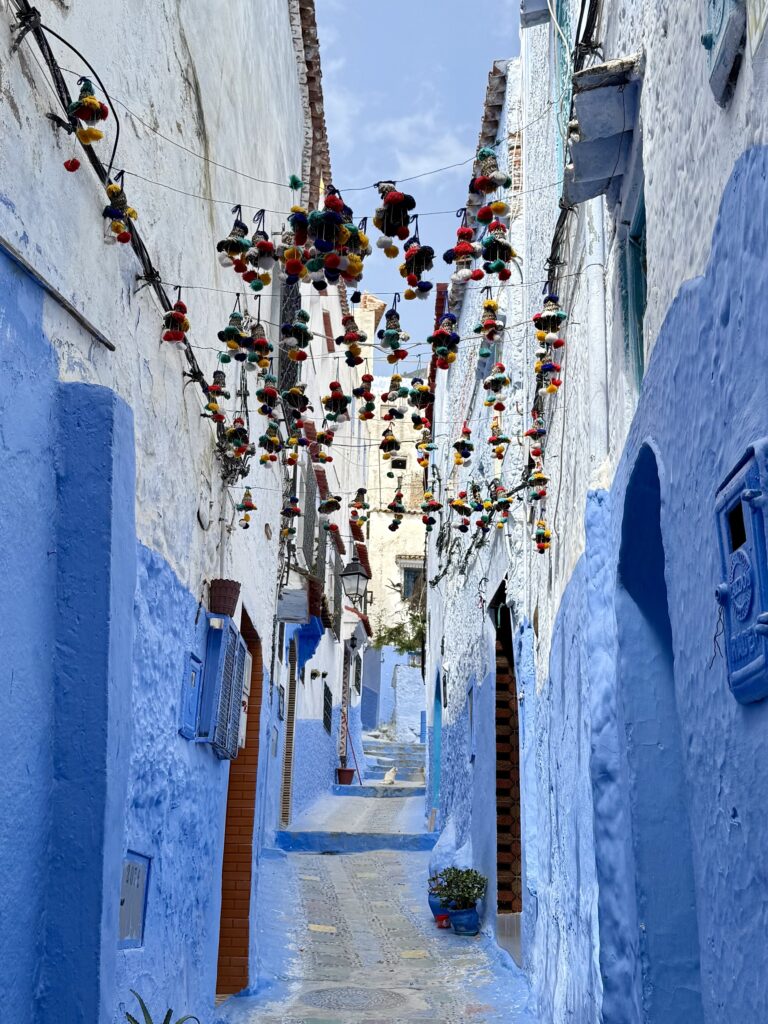
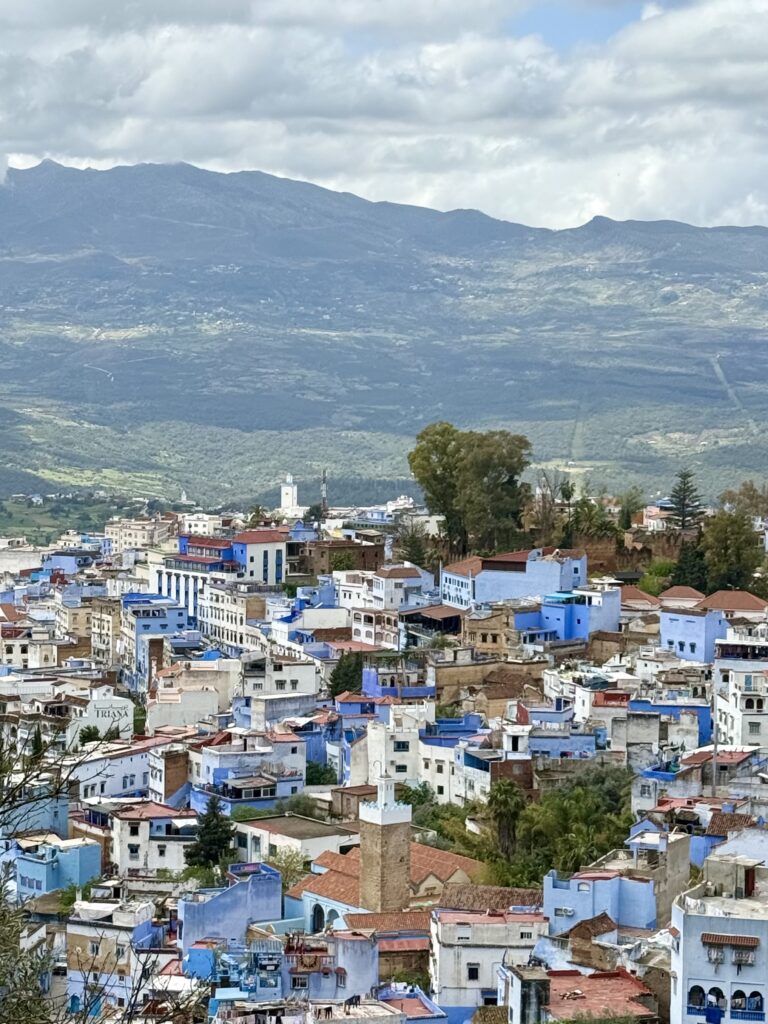
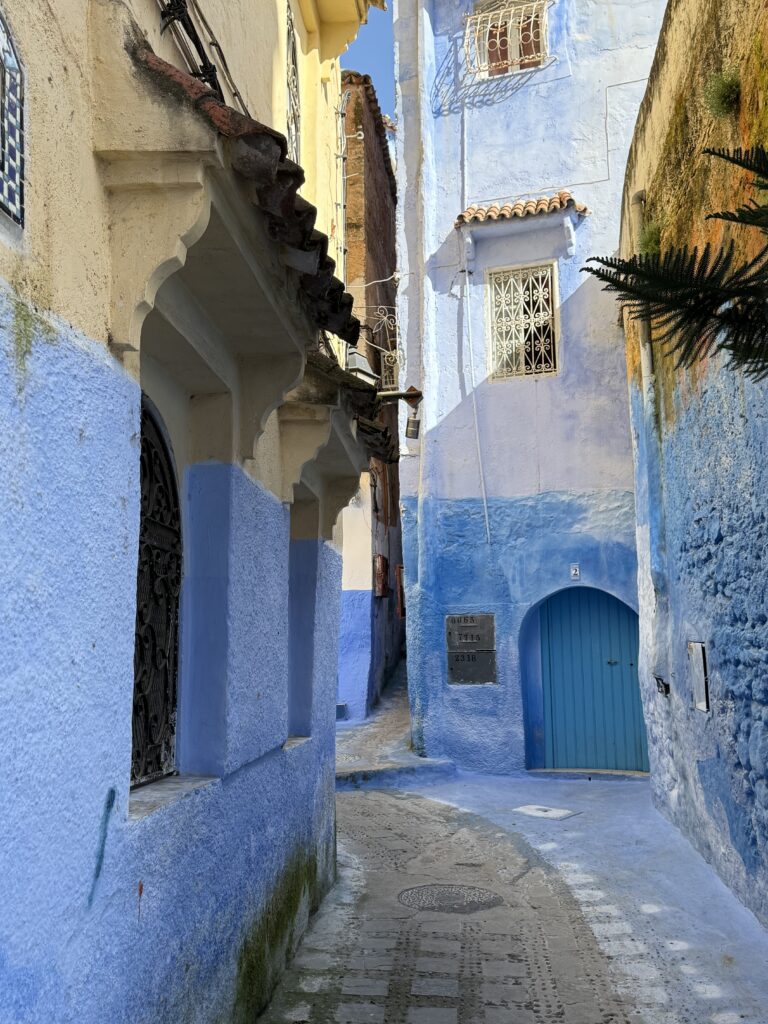
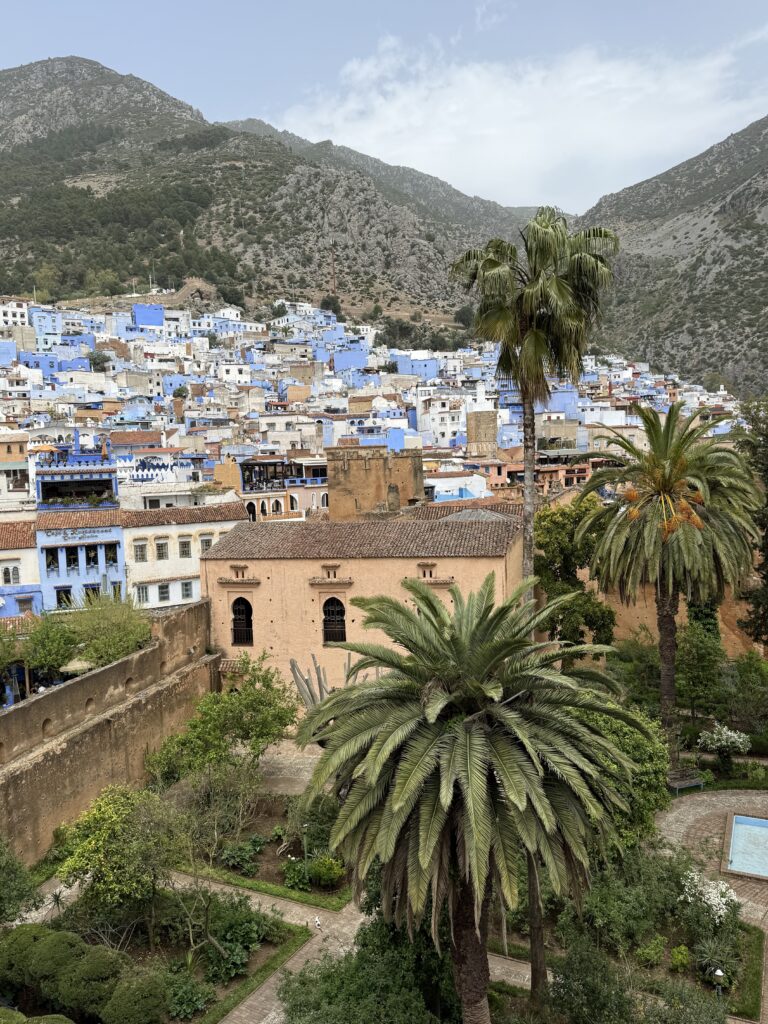
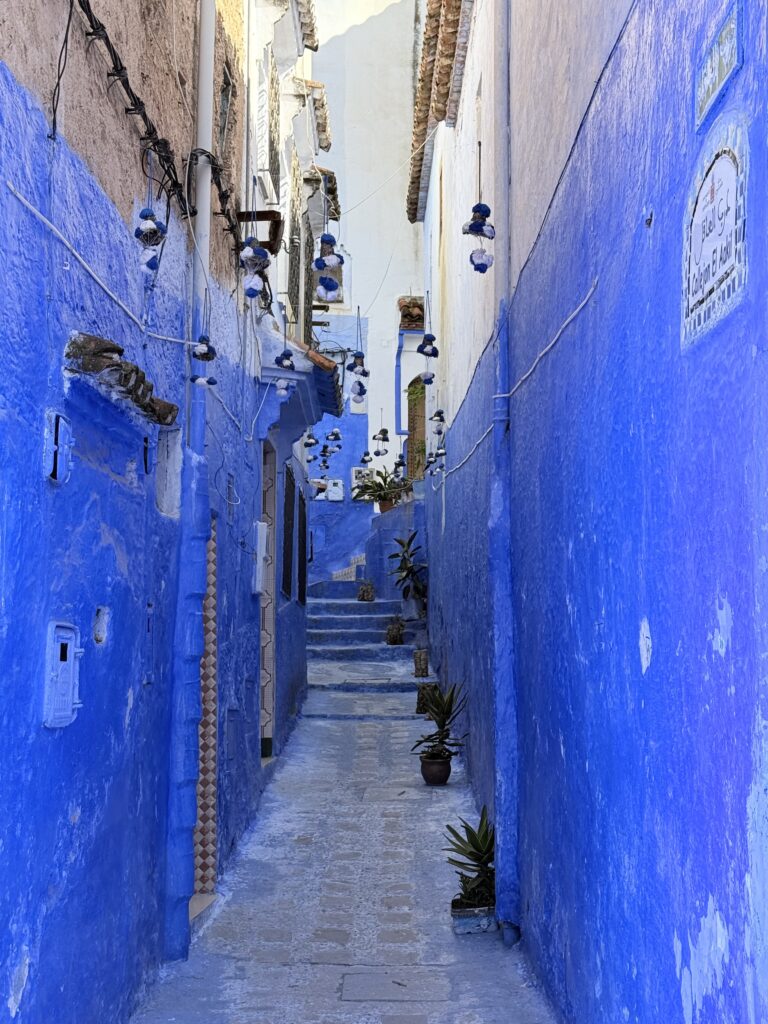
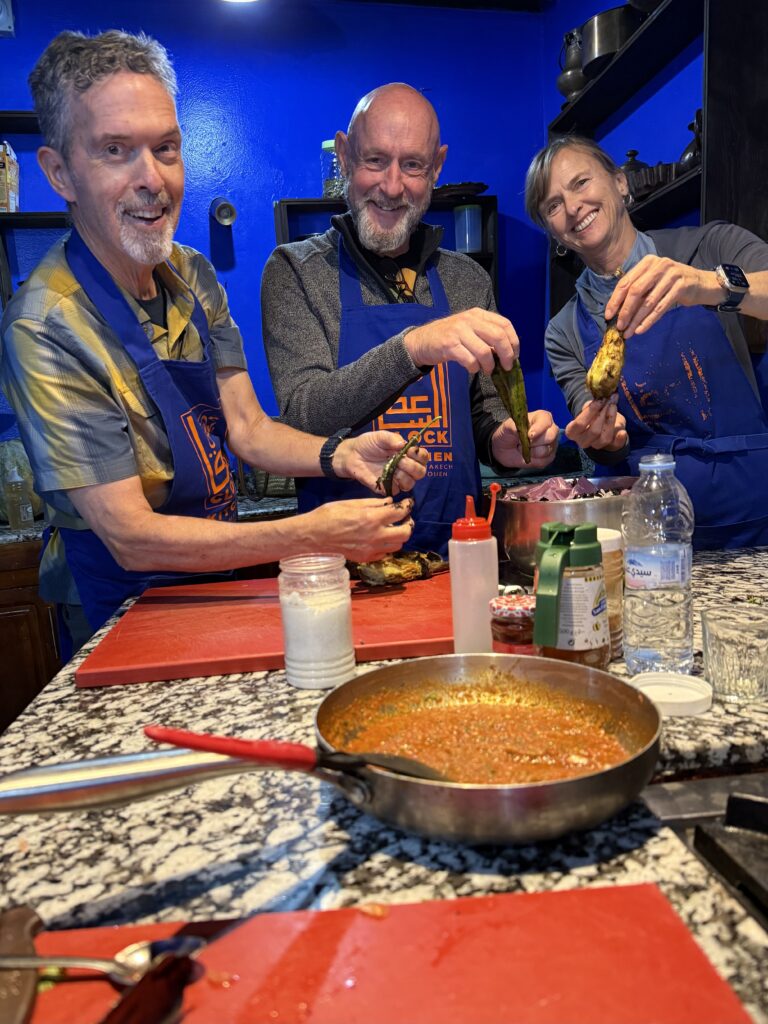
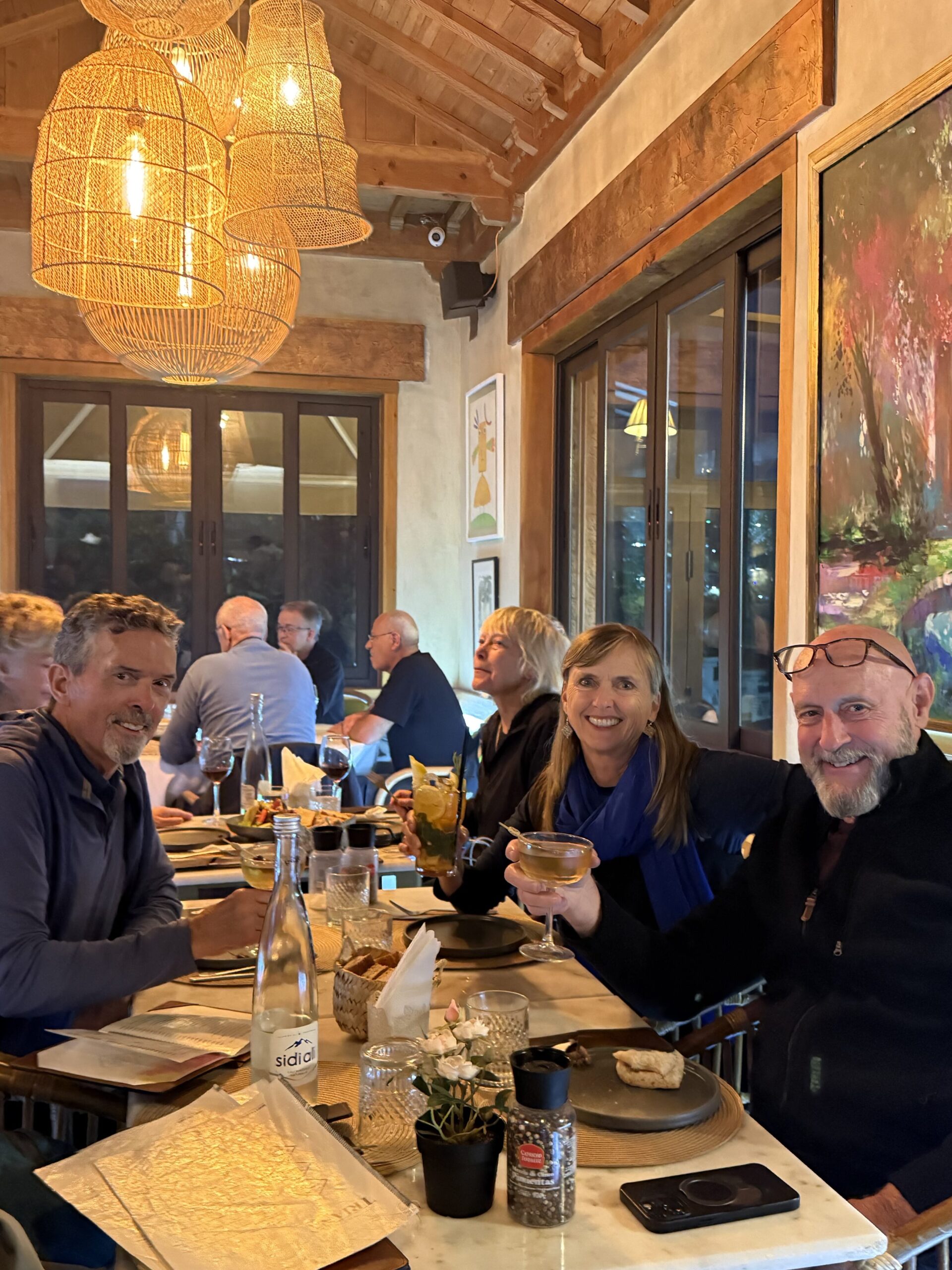
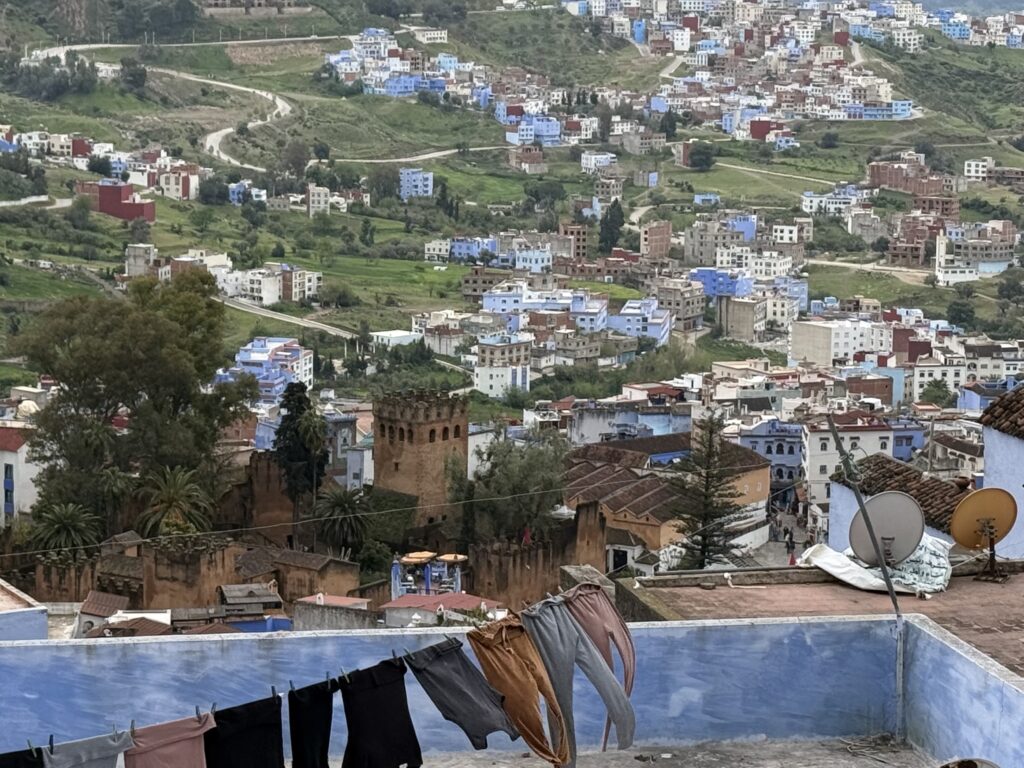
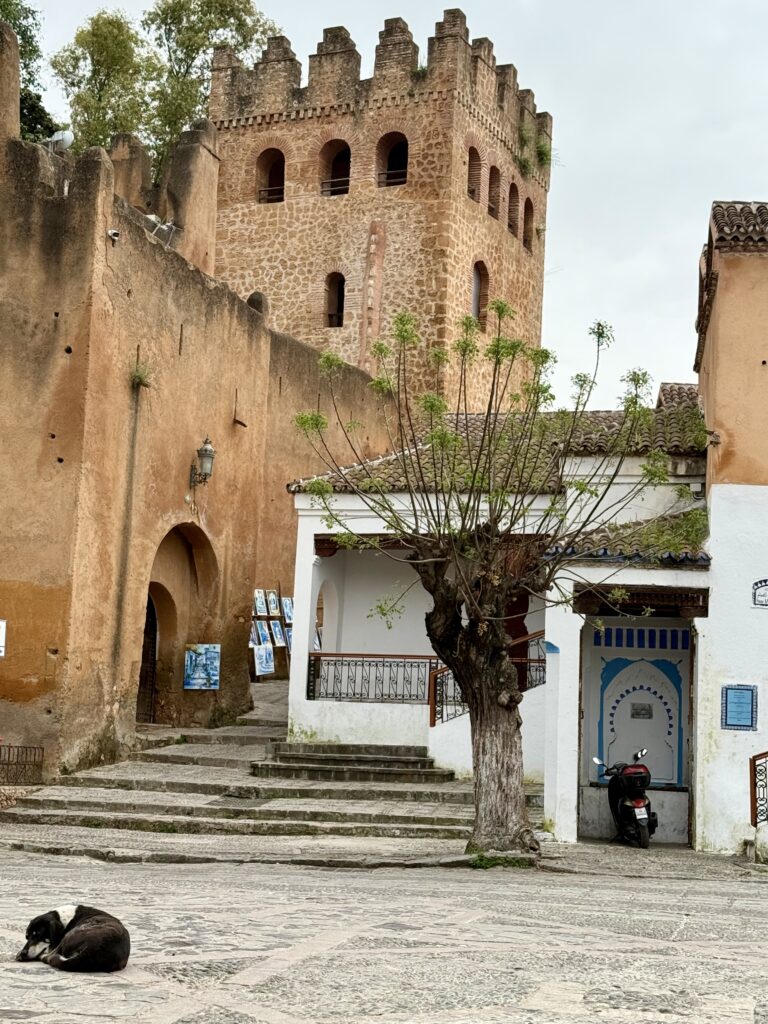
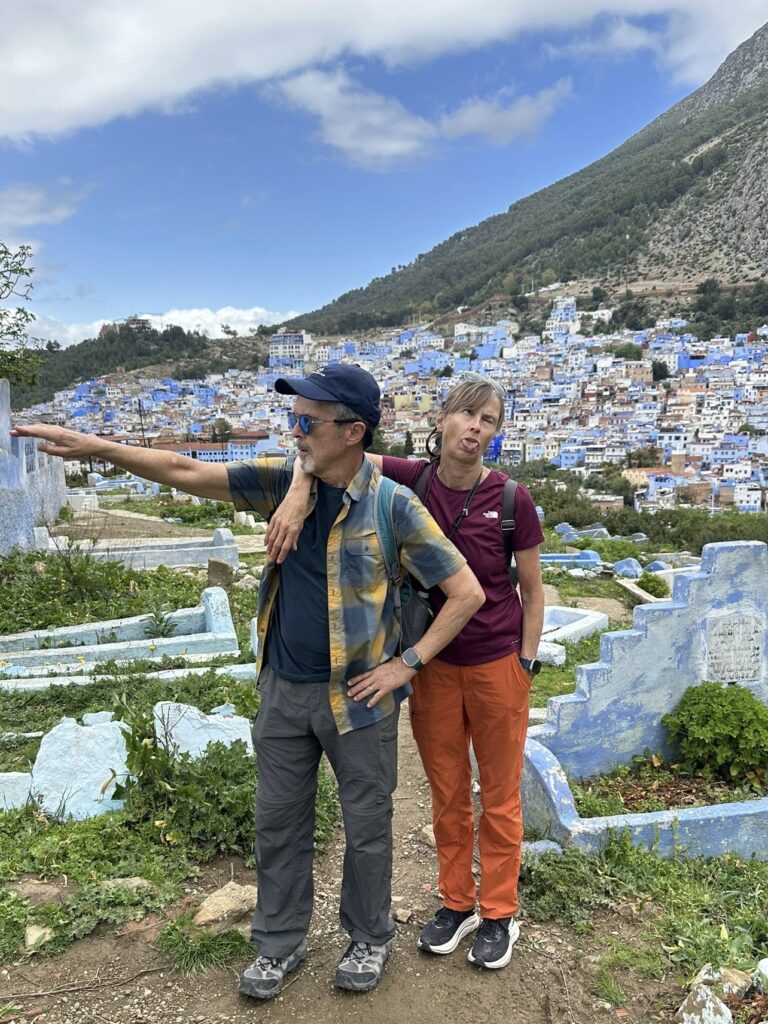
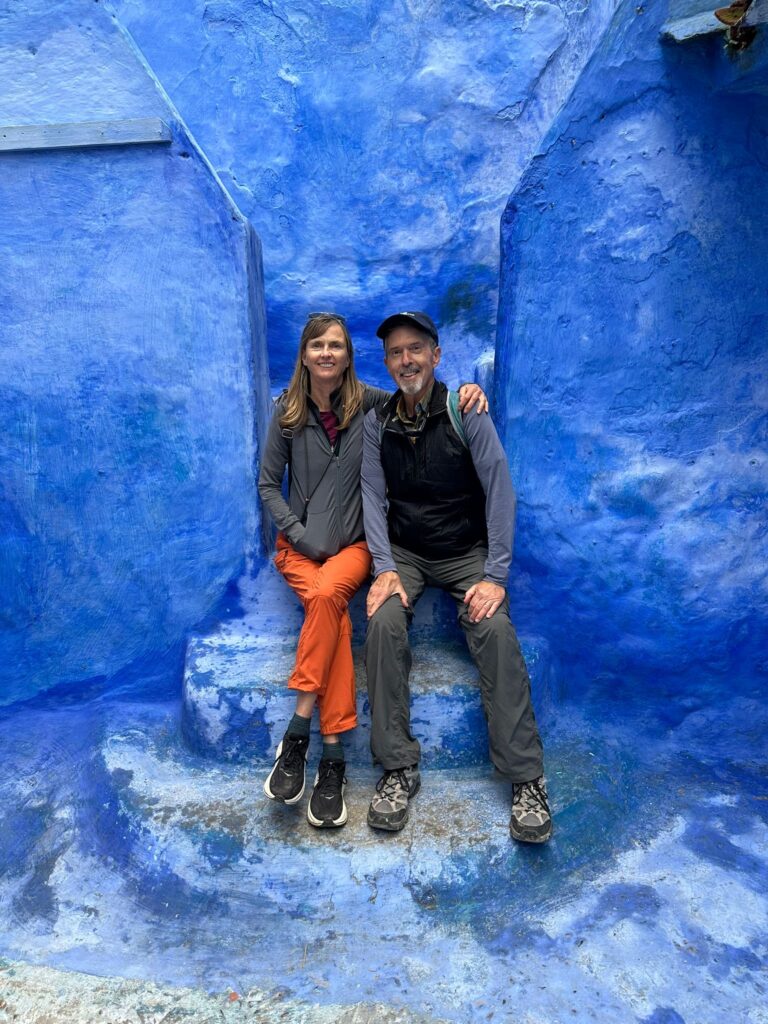
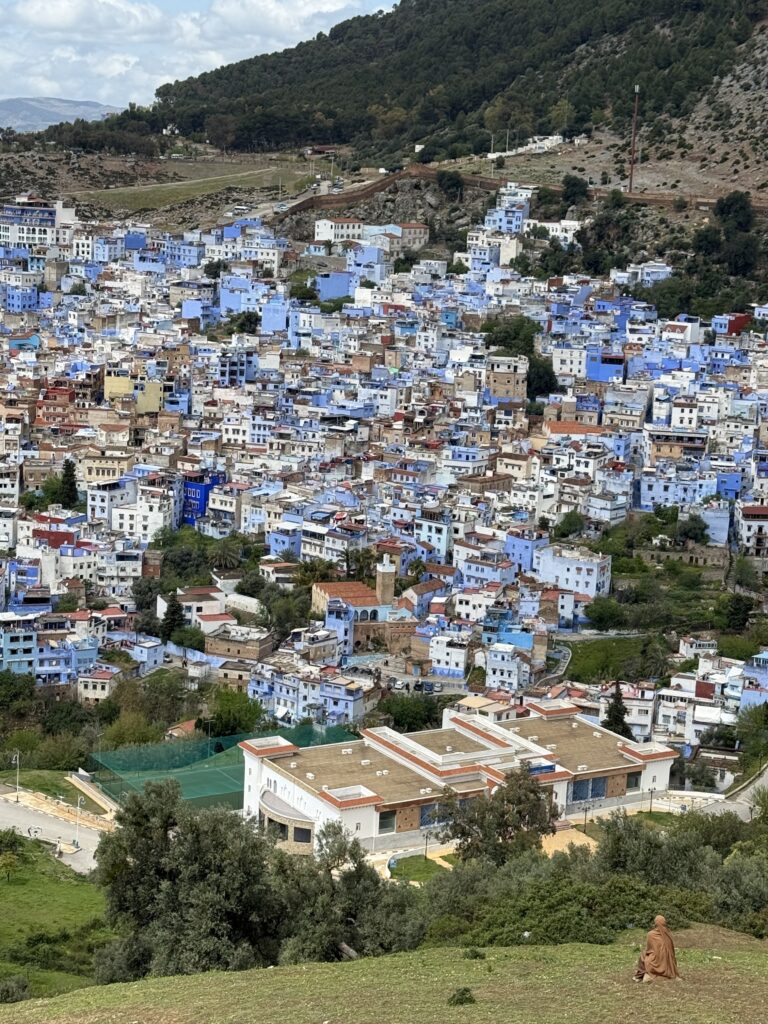
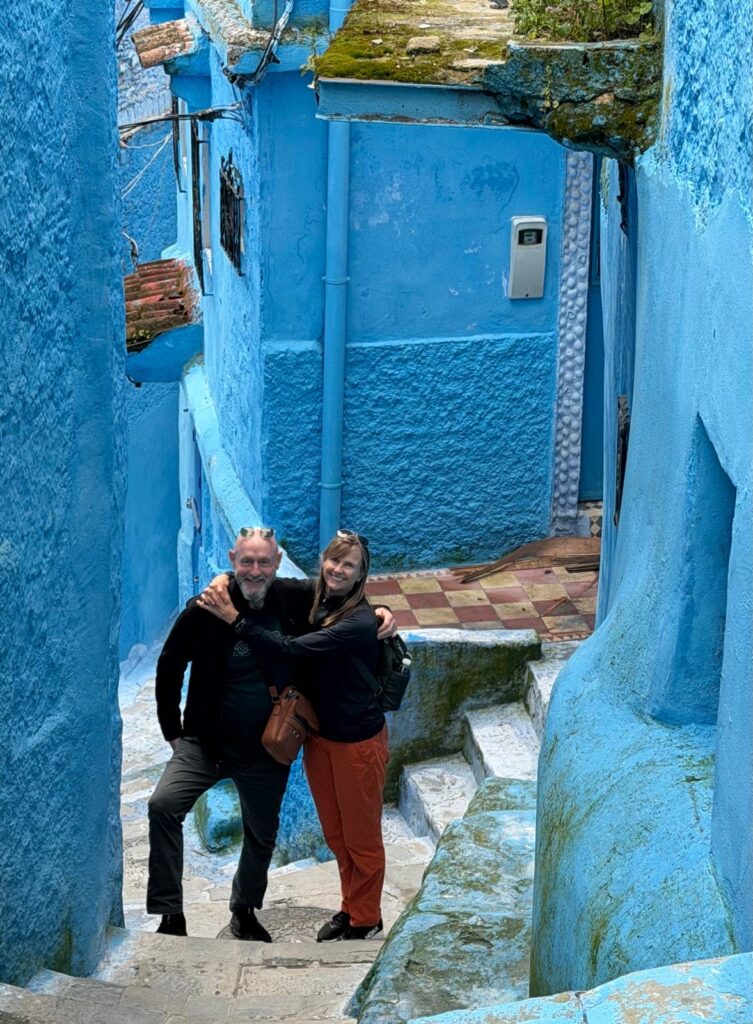
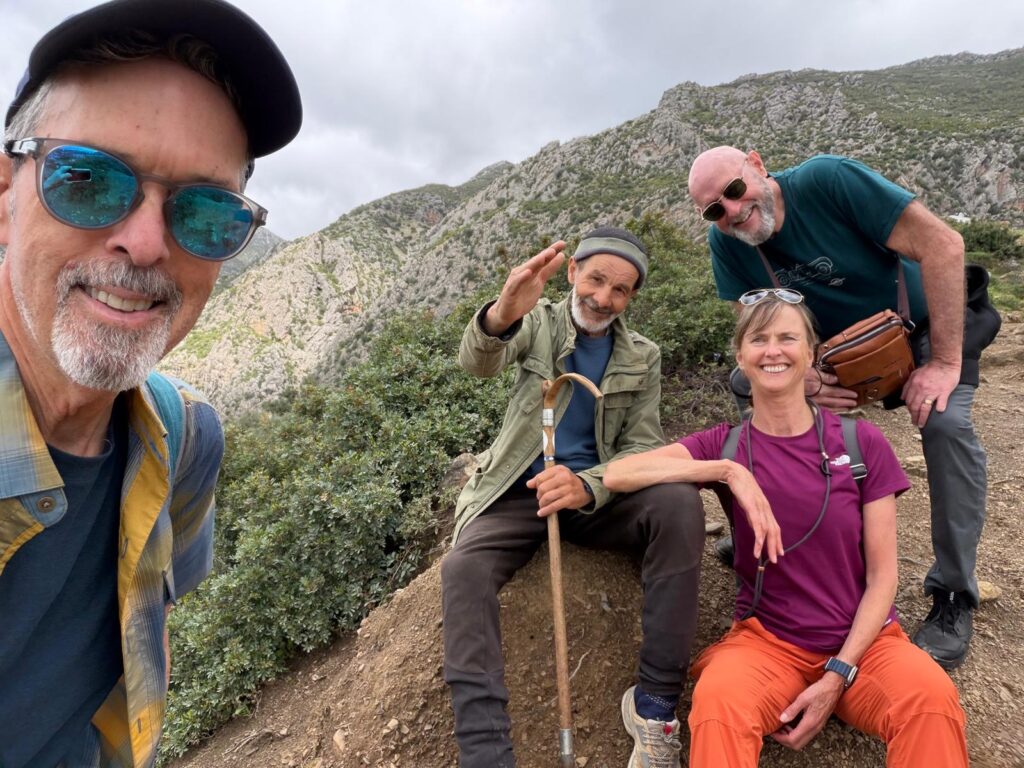
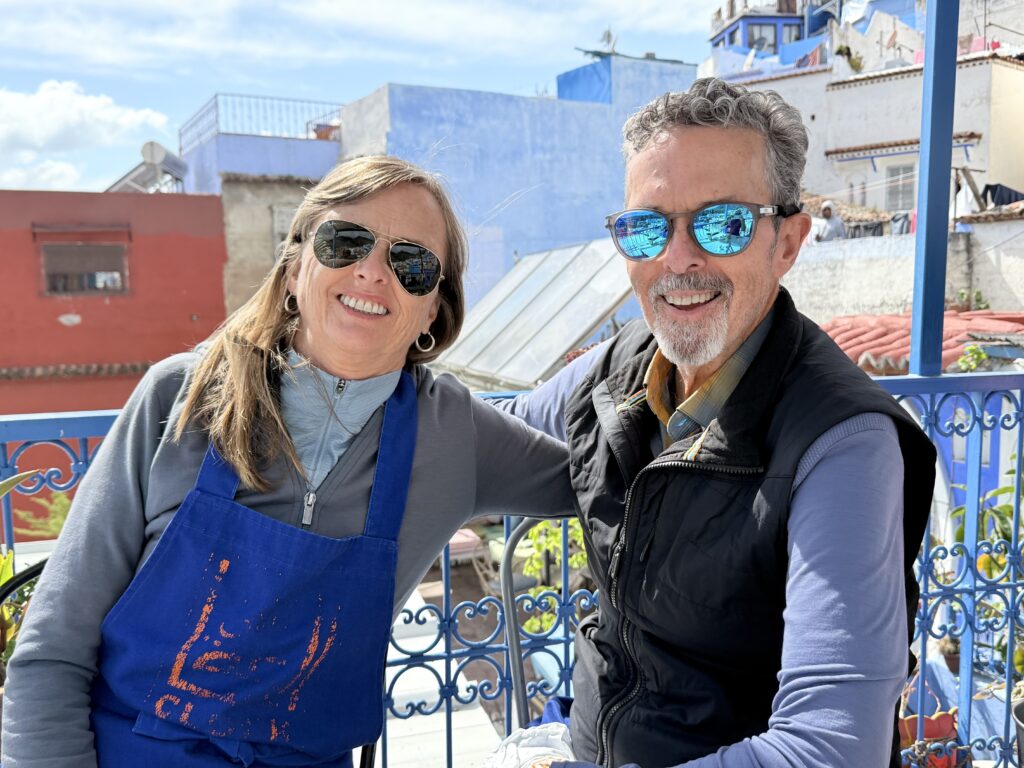
This picturesque city nurtures its look to great effect, offering up a chill vibe to boot and a welcomed contrast to the depths of the Fes medina. Riads in the medina are built inward towards a center courtyard, but our property boasts a top deck with views of cats jumping across tiled rooftops and pigeons nesting, and our eyes rejoice. Our friend and former colleague from Mountain Travel Sobek Tom treks down from his home in Lisbon to share our roost, the first person to meet us on the road, and we revel in food and wine, hikes and hills, stories of the past and plans for the future.
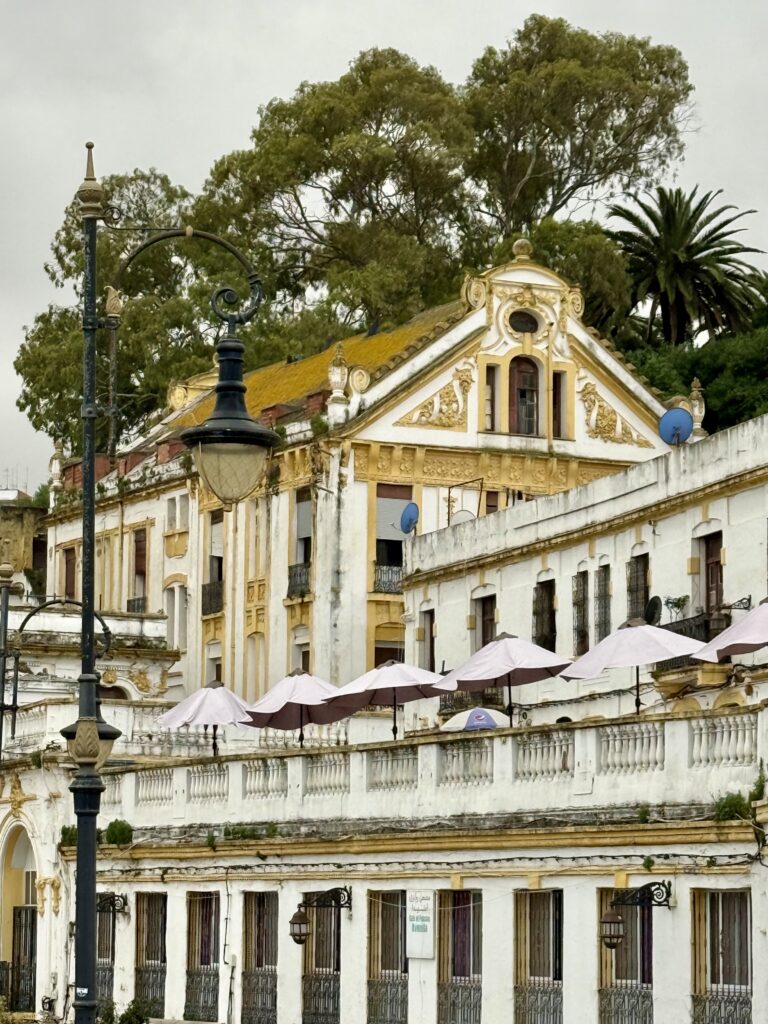
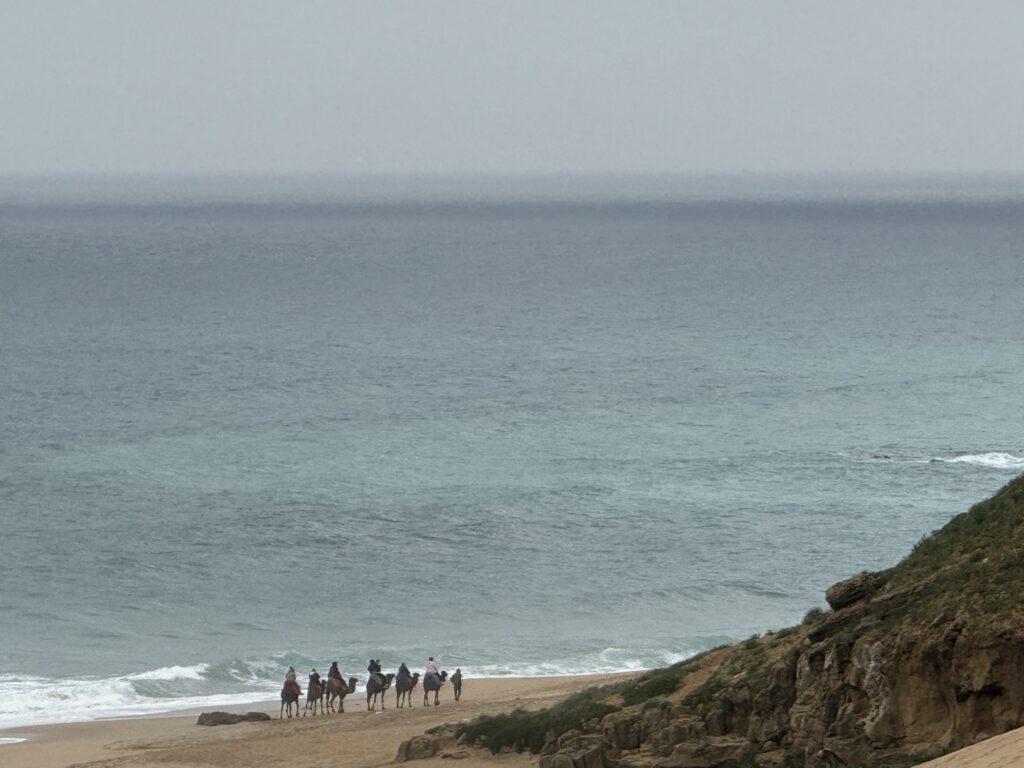
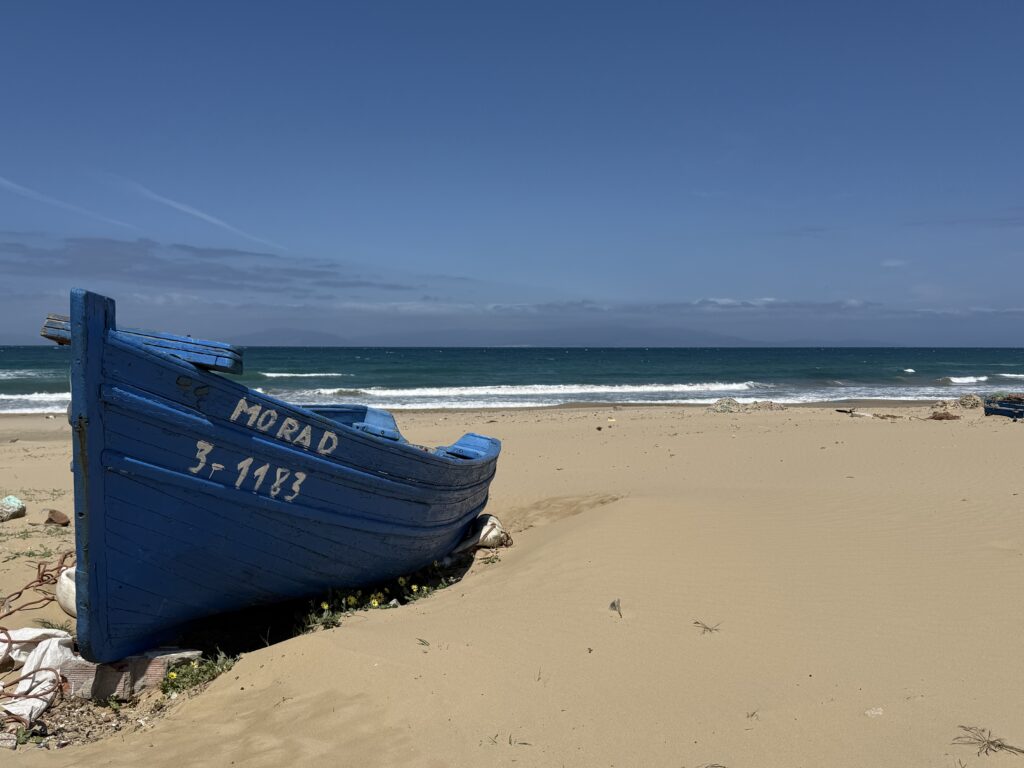
Driving Tom to the airport, we enjoy an overnight in Tangier, soaking in the modern upgrades around us. The rocky coastline along the Atlantic reminds us of California, except for the tourist camel caravan on the beach. These are brackish waters where Morocco and Europe meld, as reflected in the taller buildings and robust port, our expansive apartment overlooking the beaches and bay (washer/dryer & bidet!), and the young women lunching next to us: one wearing a hijab, another a mini skirt and others in ripped jeans, all gabbing in a mixture of Arabic and English among themselves, a generational transition. From our barista to our apartment receptionist, there’s an English fluency, a world savviness, and drive to make something of their lives. Being so close to Europe, which we see just across the straits, they should have lots of opportunities.
The Tangier area is one worth further exploration with beaches, green valleys, hillside dwellings, and a vibrant medina – a cultural melting pot with a diversity of flavors, languages, history, and perspectives both old and new.
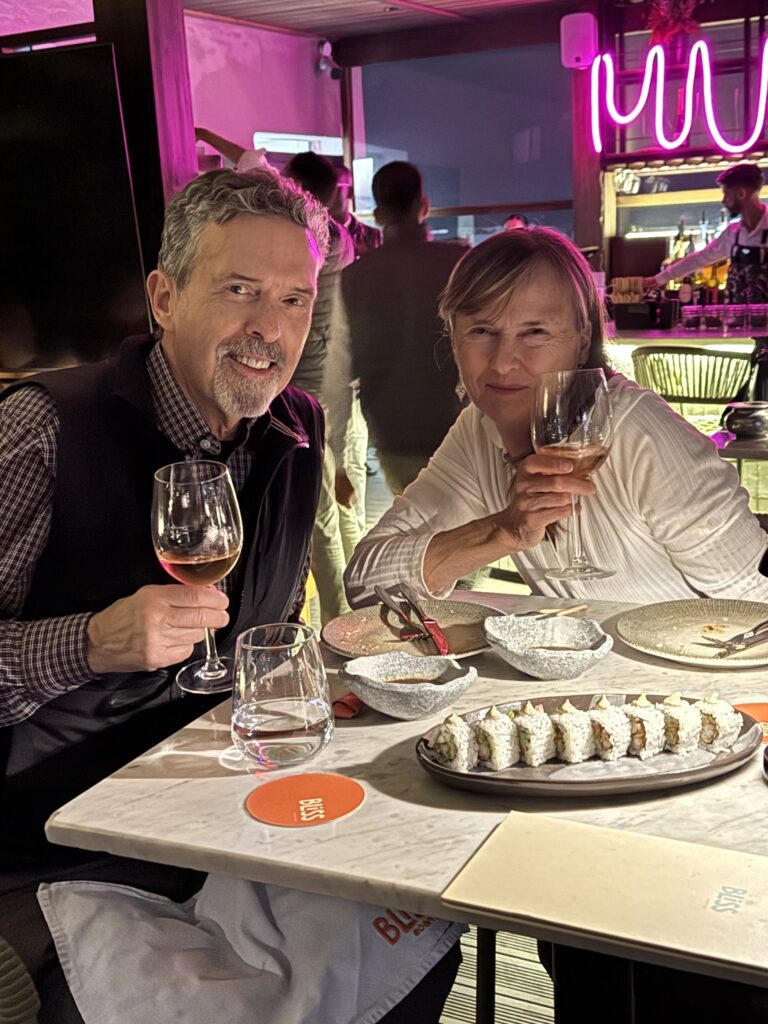
Our final Moroccan destination Casablanca is a sprawling maze of highways, city streets, and traffic lights and our launching pad out of Morocco. Sitting at a high top on the rooftop enjoying sushi and rosé with a DJ in the corner among a tony crowd, it feels the transition has started.
In summary here is how I anthropomorphize the cities of Morocco that we’ve visited:
- Essaouira – your grandfather who’s lived a quiet and fulfilling life
- Marrakech – your crazy cousin who took you to your first nightclub
- Fes – your sophisticated uncle who’s educated and worldly
- Meknes – your jovial best friend next door who is like a brother
- Chefchaoen – your beautiful sister who’s an online influencer
- Tangier – your eccentric aunt with an alternative lifestyle
- Casablanca – your older brother who moved to the big city and never returned
Next up: South Africa
Ah, so nice to see Tom Stanley with the two of you…..I wish I saw this earlier so I could ask you to give him a hug from me. I so loved that you anthropomorphized the cities of Morocco. Chris and I do that all the time with the birds that come to our home.
What a salve to the soul to read about your adventures…and your photos and recordings… magnifique!
Thanks again Lisa! I’ll share your thoughts with Tom and know that he received lots of hugs while he was with us! It was a real joy to hang together – special treat while on the road. xoxo
Great and brave of you to get a car and drive so far on your own! Looks like you had a ball and some incredible experiences. You know that Kristy Larsen lived in Meknes for many years. She may still split her time between Meknes and Colorado. I’ve lost touch with her, but she settled in Meknes with her horse after she left the Peace Corps. How great that Tom made the trek from Lisbon to see you! I’m sure it was nice to have a touch of home. Always fun to meet up with old friends while on the road. Susan-I’m impressed with your Arabic! Enjoy South Africa! Can’t wait for your next post!
Thanks Linda – I never worked with Kristy but met her at Kerstin’s bday bash in the Wine Country hosted by her Swedish Mafia girlfriend – Kristy was letting out the Berber shrill calls to great effect! It was a gift to have Tom make the trek to us and we reveled in the familiarity. Let me just add that Brian and I are having so much fun on these adventures!xo