
Forty years ago Morocco stole my heart – it was my first Muslim country and it rocked this New Englander to the core with its authentic exoticism, from the serpentine souks in the Medina, the call to prayer during sunset on the rooftop, and the tanneries of Fes and the hokey snake charmers of Marrakech all stayed with me and I was reticent to return to a modernized sanitized shell. However I am happy to report that Morocco has retained its old world essence and the soul of the country remains well intact.
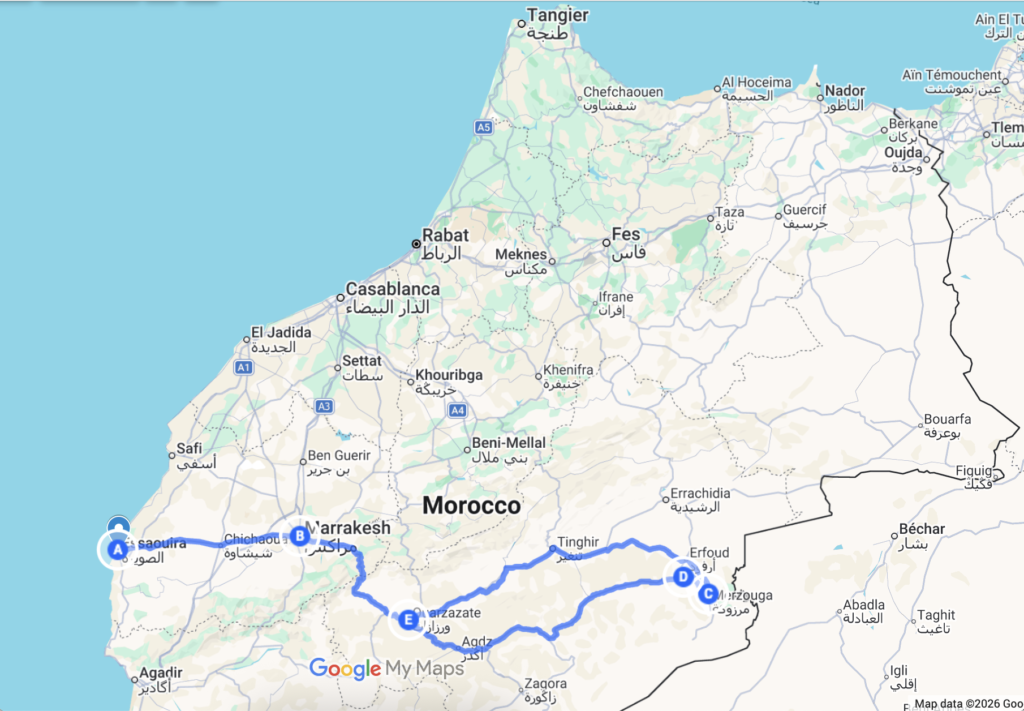
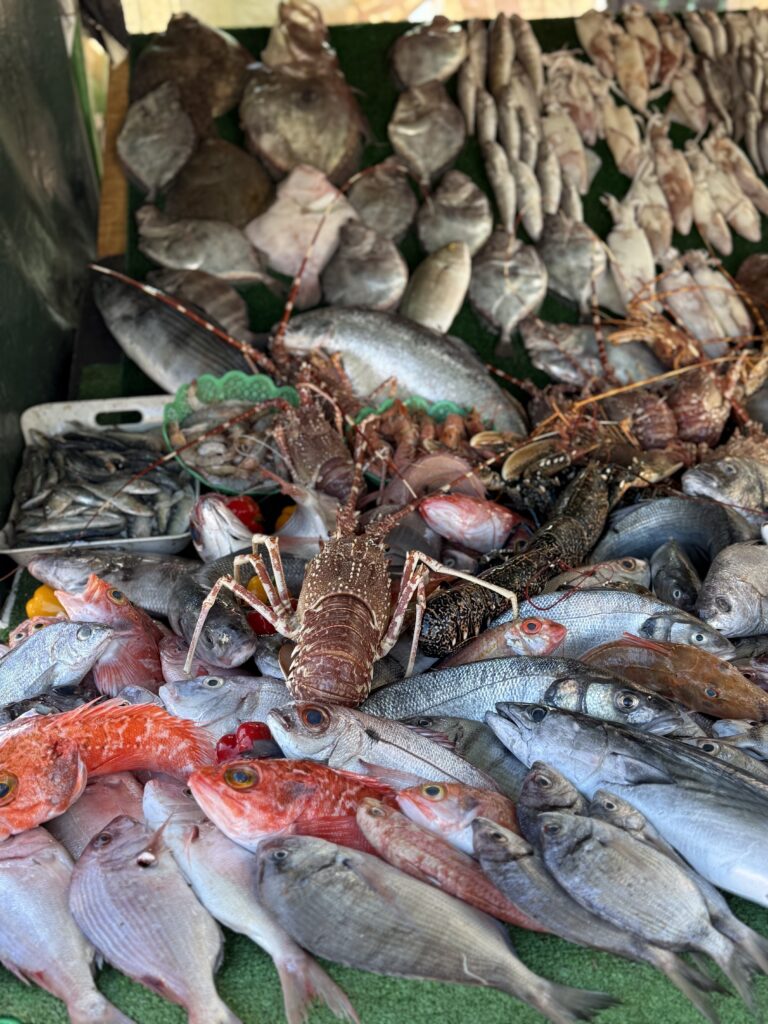
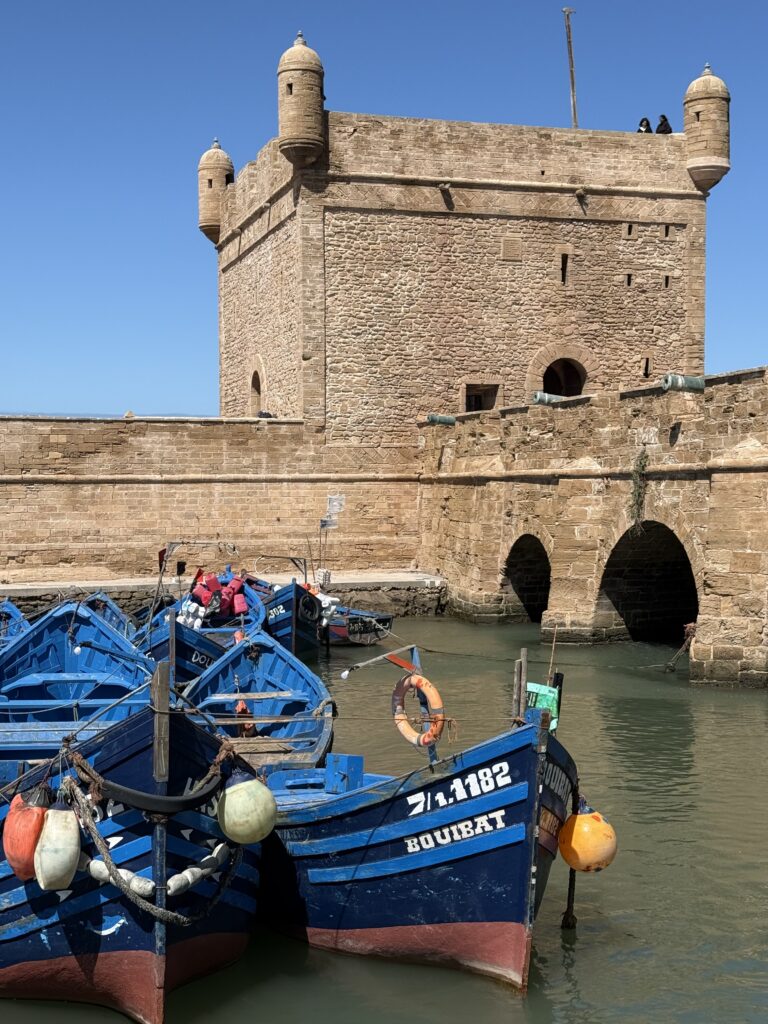
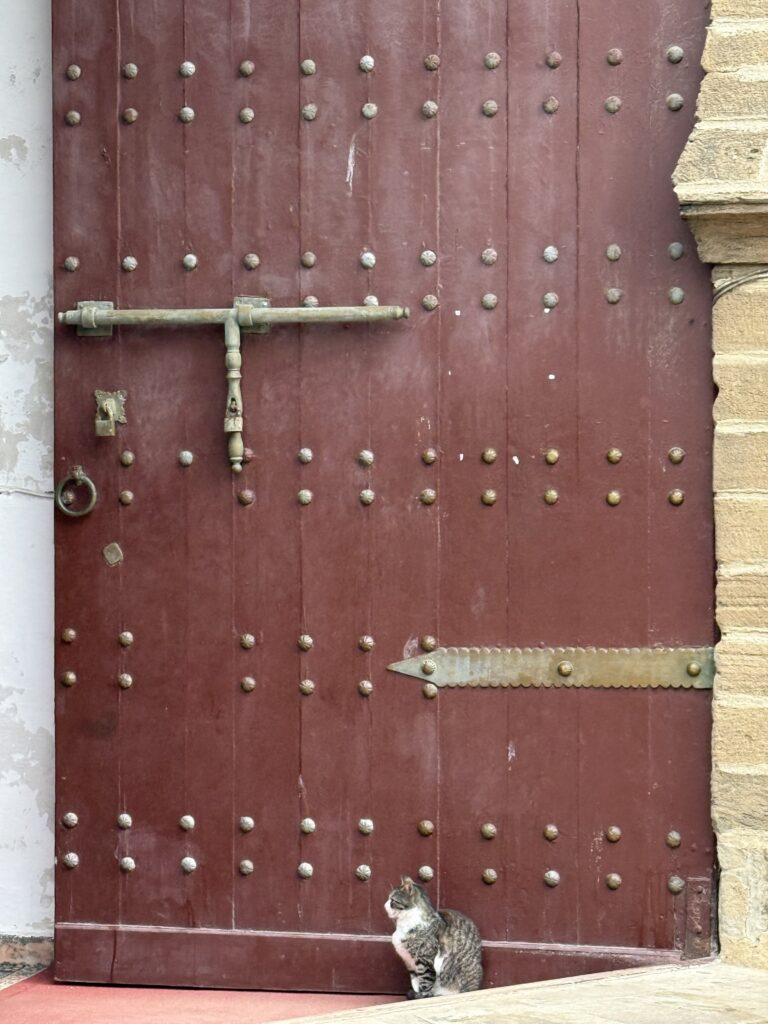
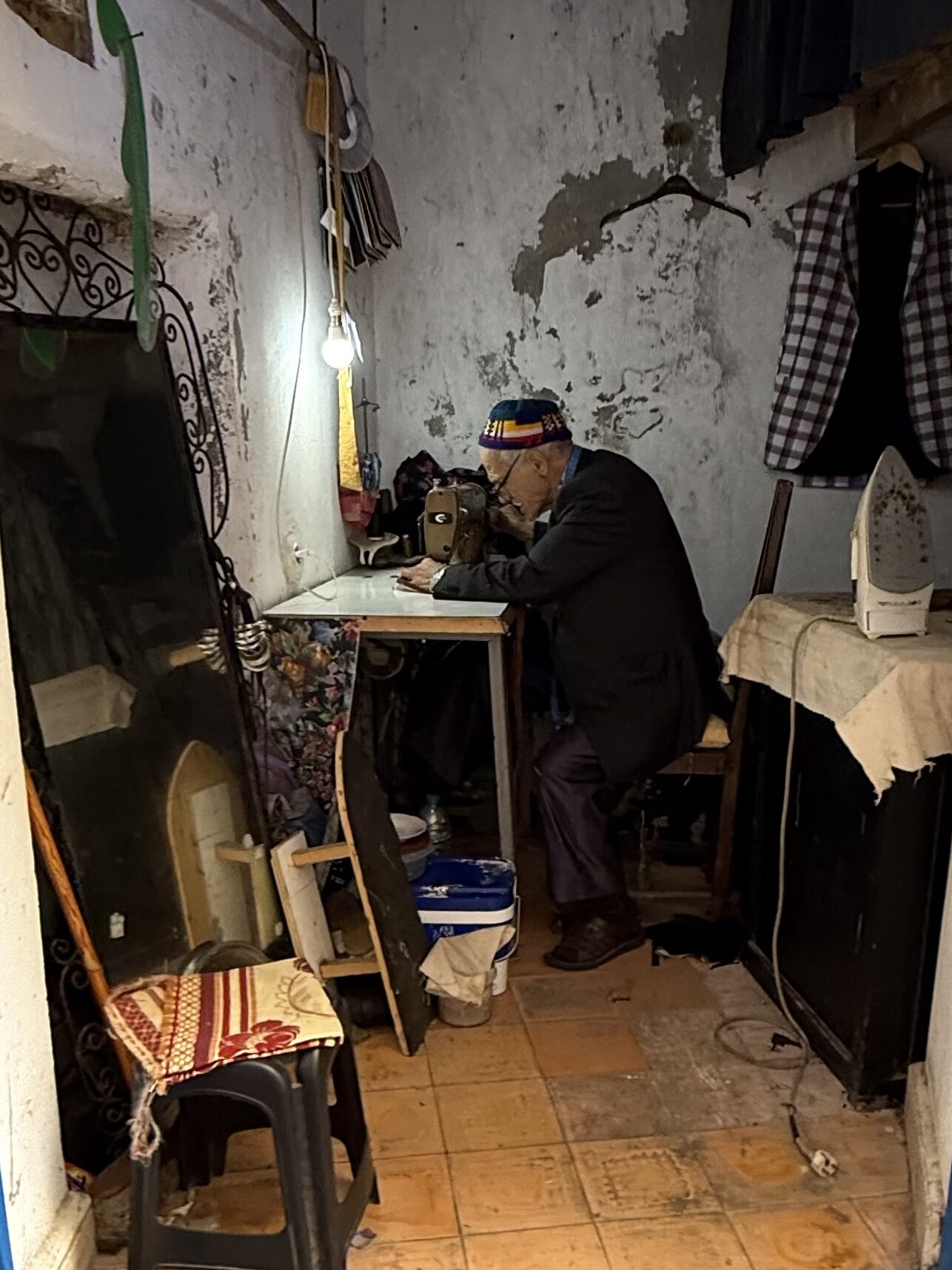
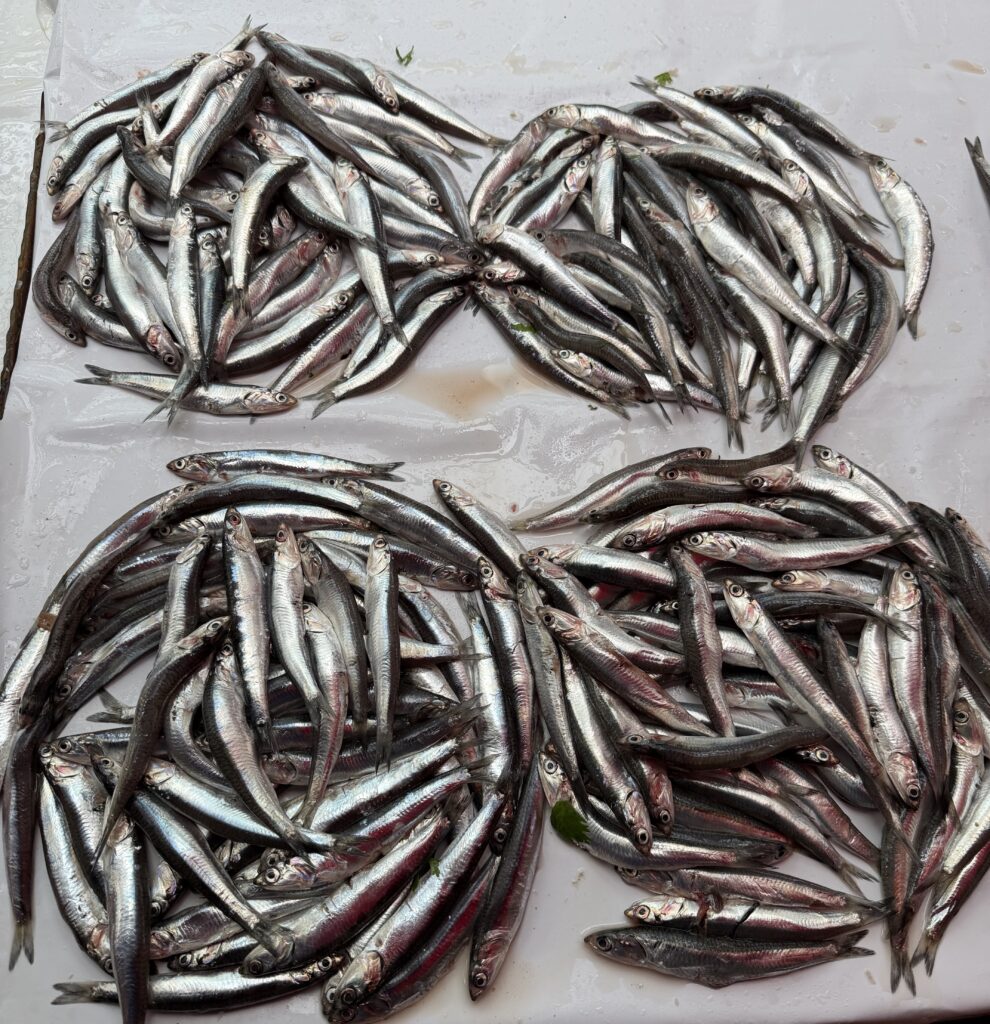
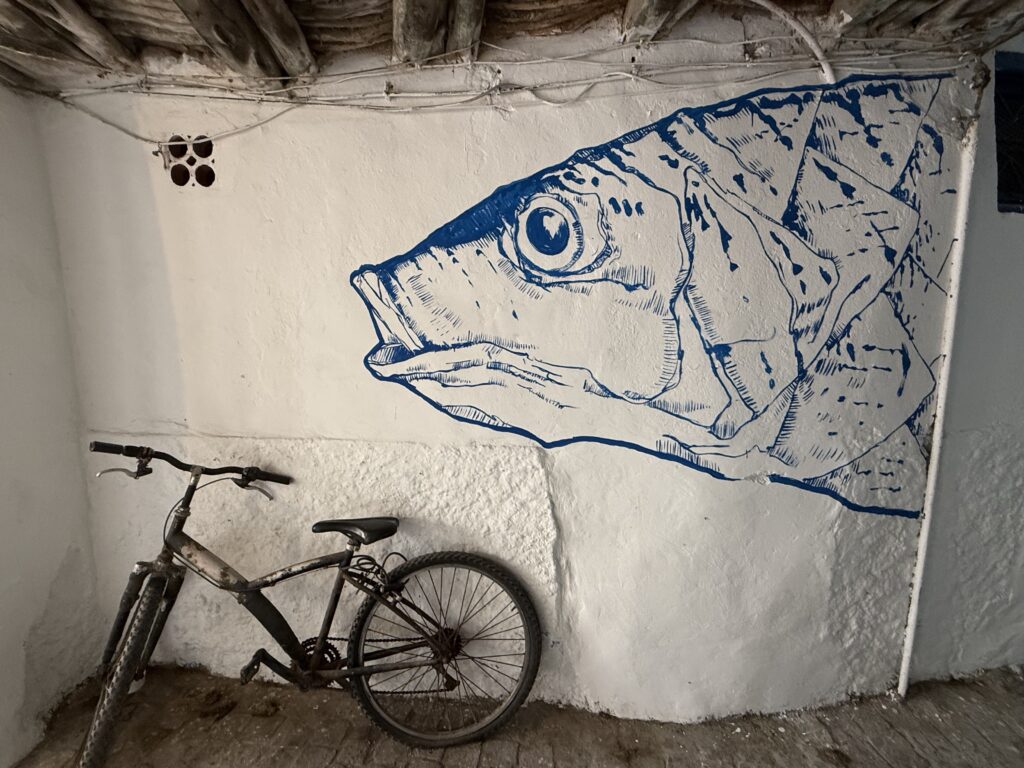
We start our visit in right-sized Essaouira, a charming fishing village on the Atlantic coast. Since this is Brian’s first visit to Morocco, it’s fun to watch him marvel at the medieval passageways with low ceilings, twists and turns, filled with donkeys, cats, and all sorts of humanity. This chill town has tourism in check, maintaining a strong local heartbeat at least during this shoulder season. Known for its beach and sunshine, we encounter rainy days which map well to our need to rest after coming down with colds ftom nippy Istanbul. On a clear day, we visit the colorful port offering freshly-caught seafood for purchase and grilling on spot as well as the ramparts of the ancient fort with cannons braced for action. Being a more rural city, there is a devout Islamic bend with many burka clad women and men with wear spots on their foreheads from prostrations which they can accentuate with beauty products to appear more devout. Every Muslim country interprets the Koran differently and Morocco has a relaxed interpretation – women can wear what they want, and some women may wear the burka simply for anonymity, say if they have to work. With Eid approaching, the end of Ramadan, the local markets are bustling with shopping for meal ingredients, sweets, and new clothing and gifts for the kids. Like Christmas, the town goes quiet for a day to celebrate then slowly reopens with families strolling late into the night in their new garb. The country will take nearly two weeks before all business is back to normal, a proper holiday.
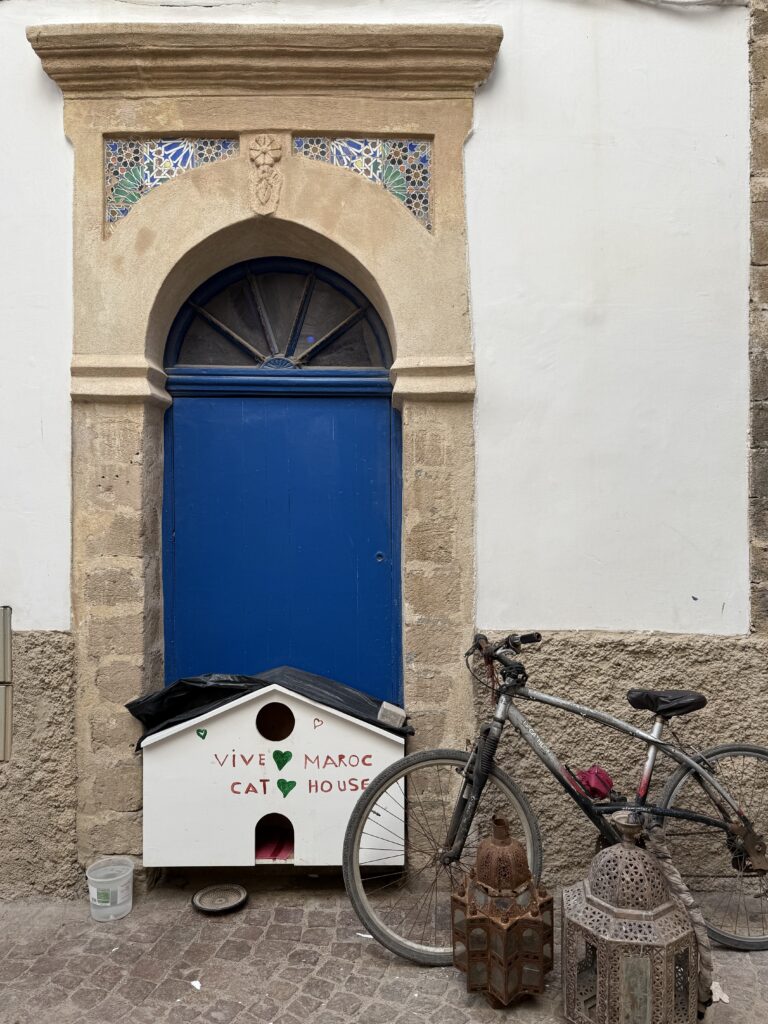
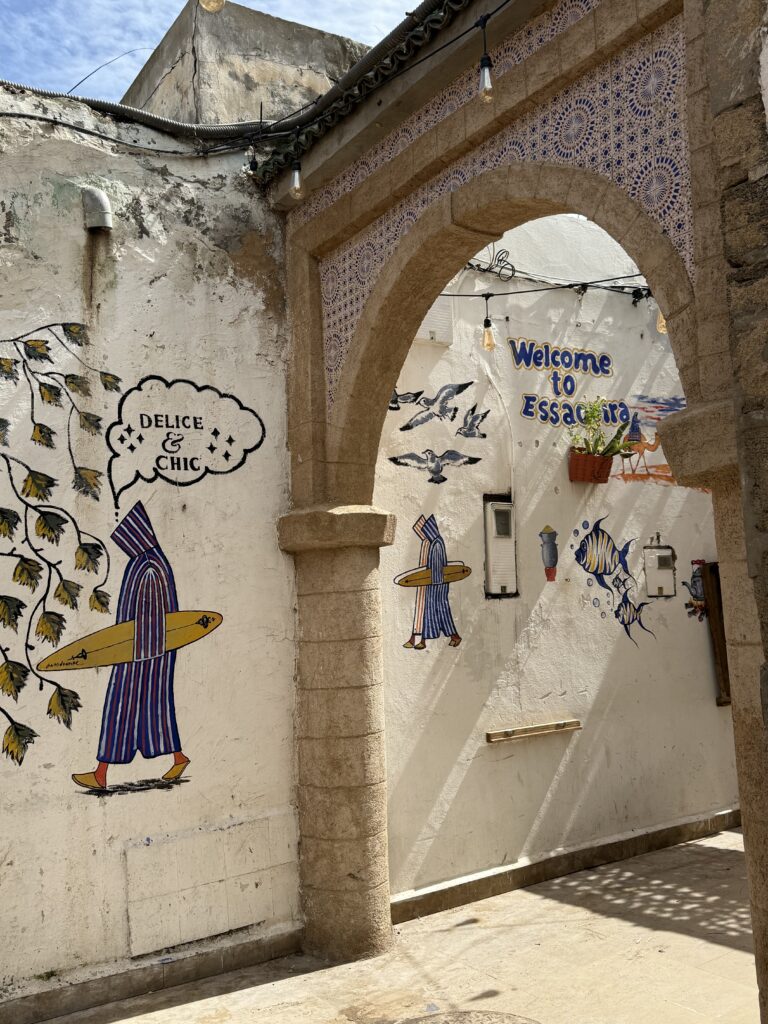
I now have an arsenal of languages for engagement in this former French colony, sprinkling in some catchy Arabic phrases to connect on multiple levels. For the past few years they’ve started prioritizing English in elementary school, adding French in middle school, to adjust to global language demands and colonization separation.
Throughout our Arab travels, restaurants may offer animations aka entertainment which vary significantly in content and quality, and little Essaouira fully delivers with impressive fire juggling, Berber musicians (gnaoua 3 string guitar and qraqeb castanets), oud guitar (11 strings), and even Charlie Chaplin tableside magic tricks.
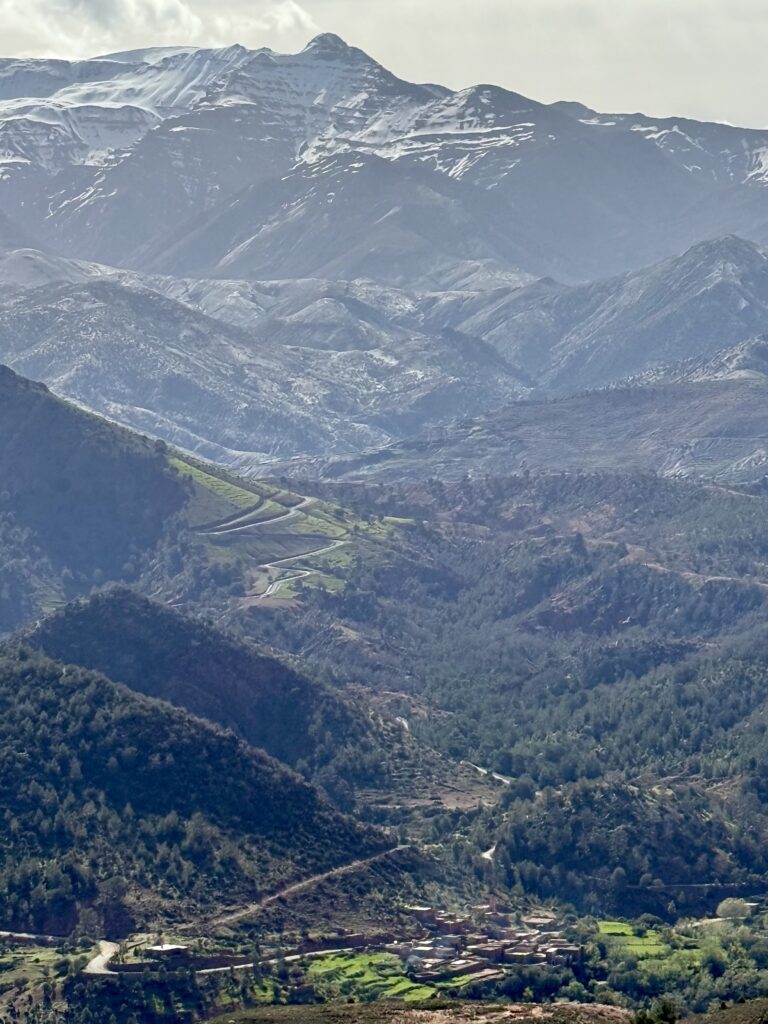
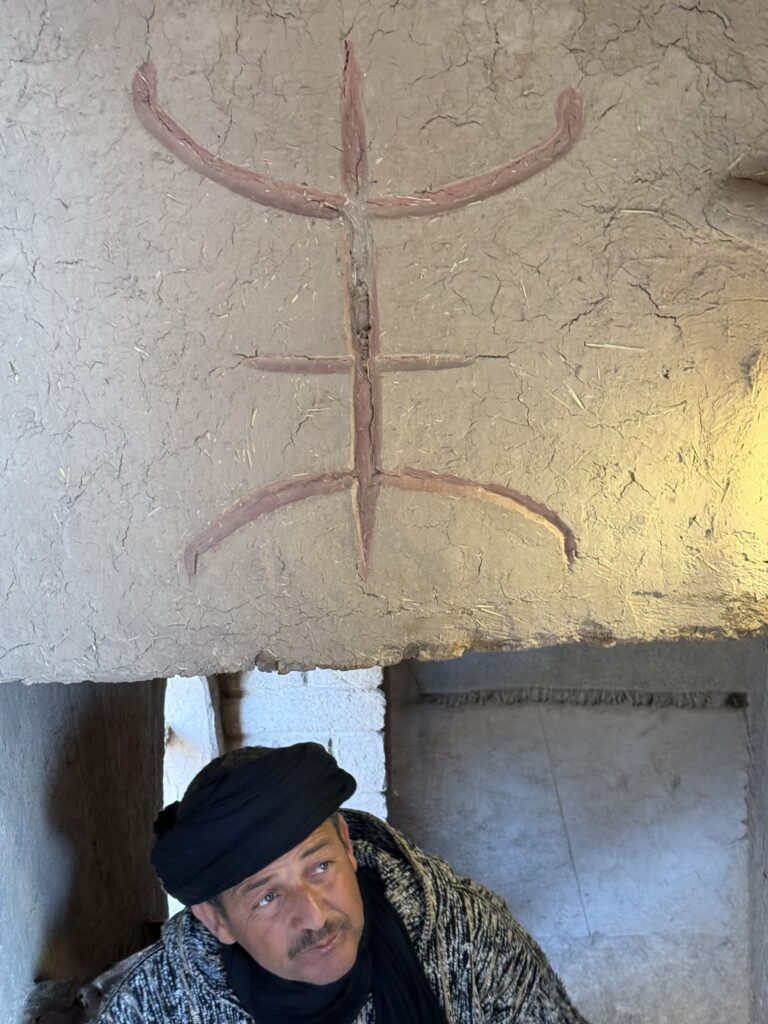
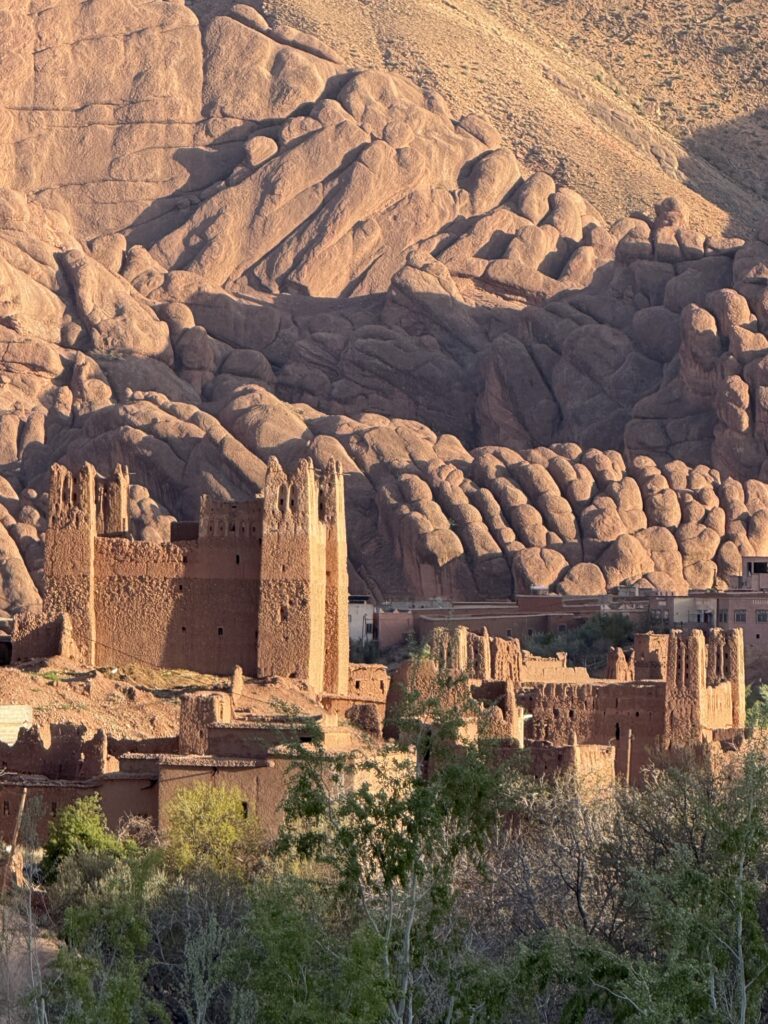
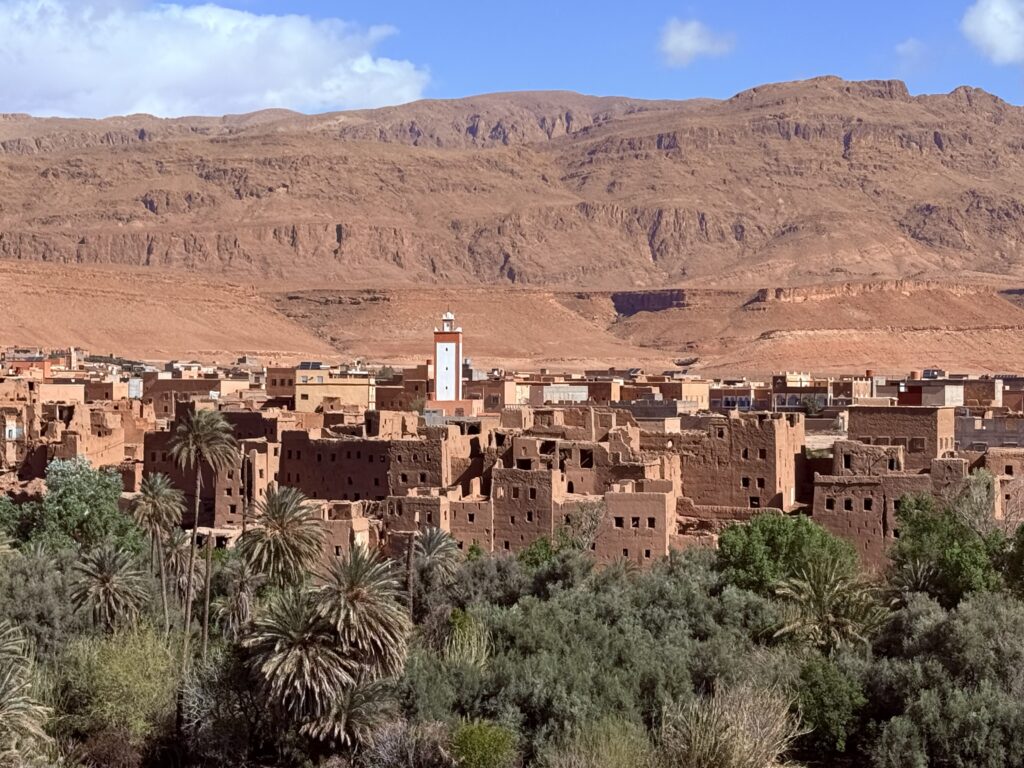
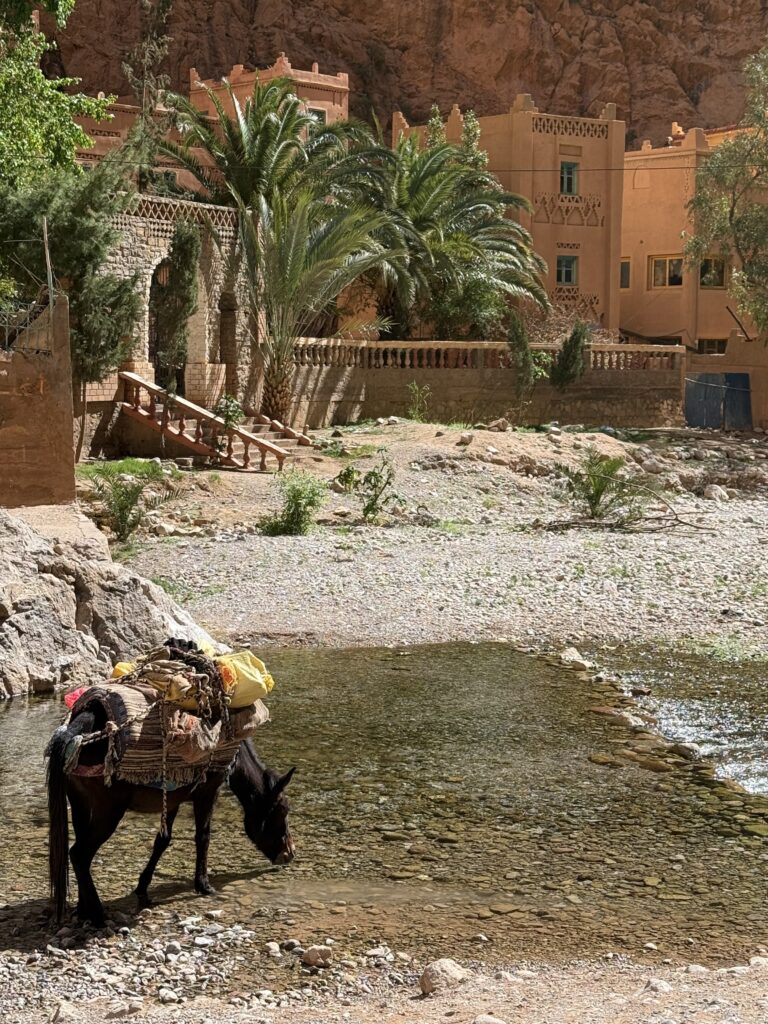
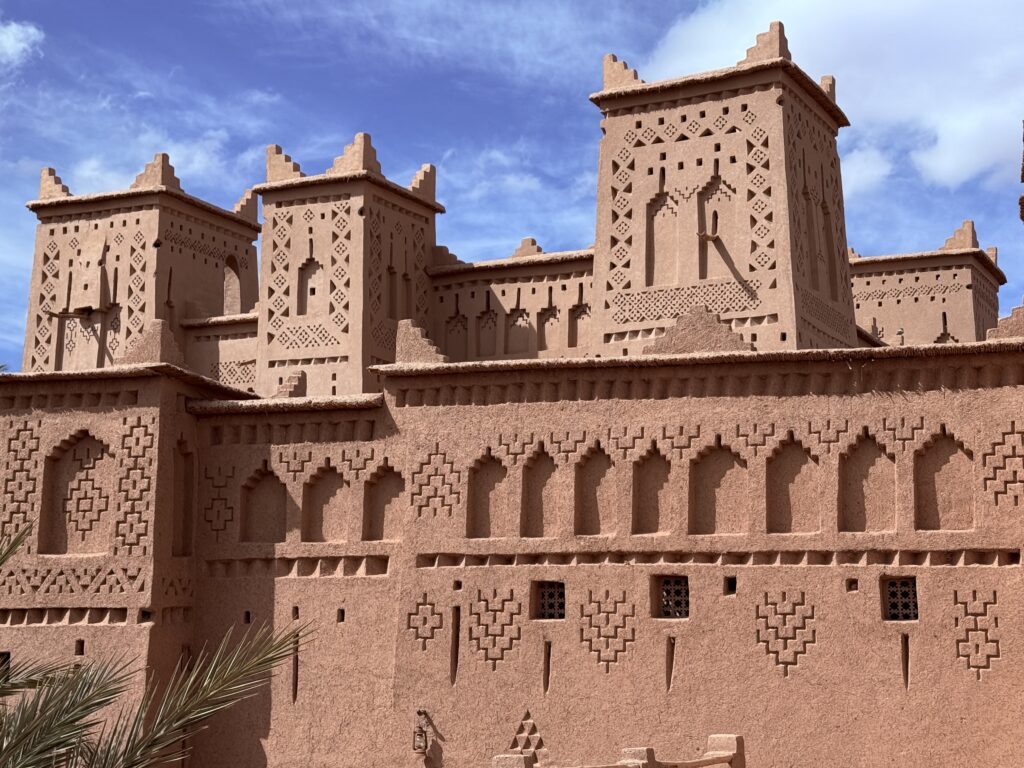
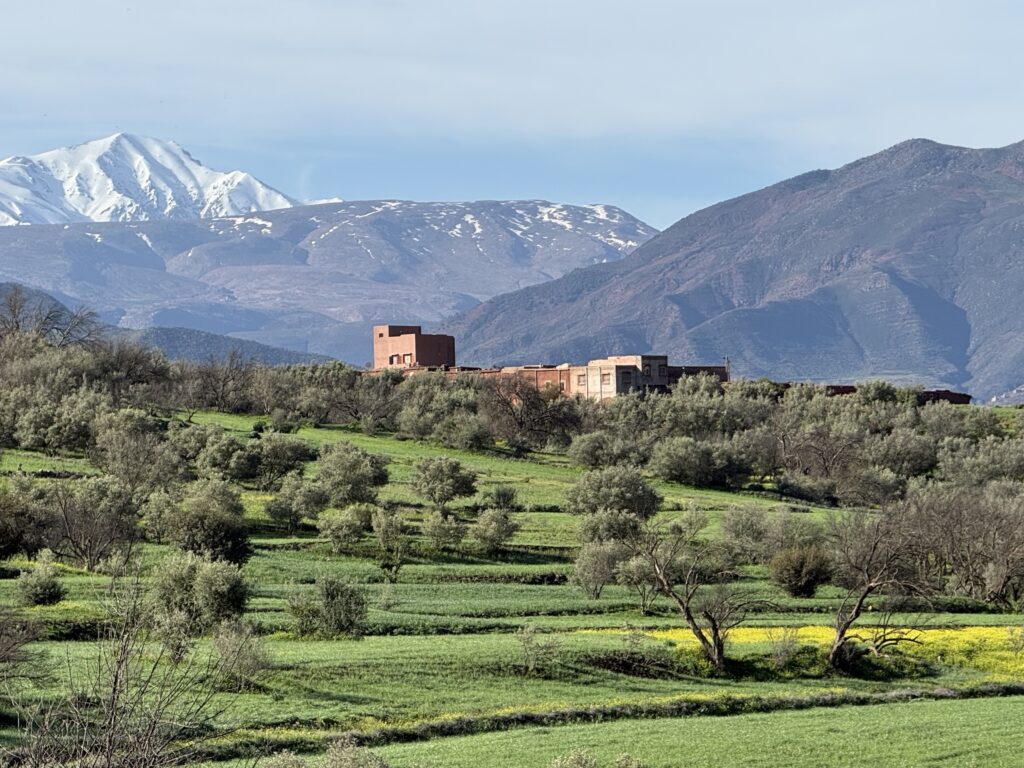
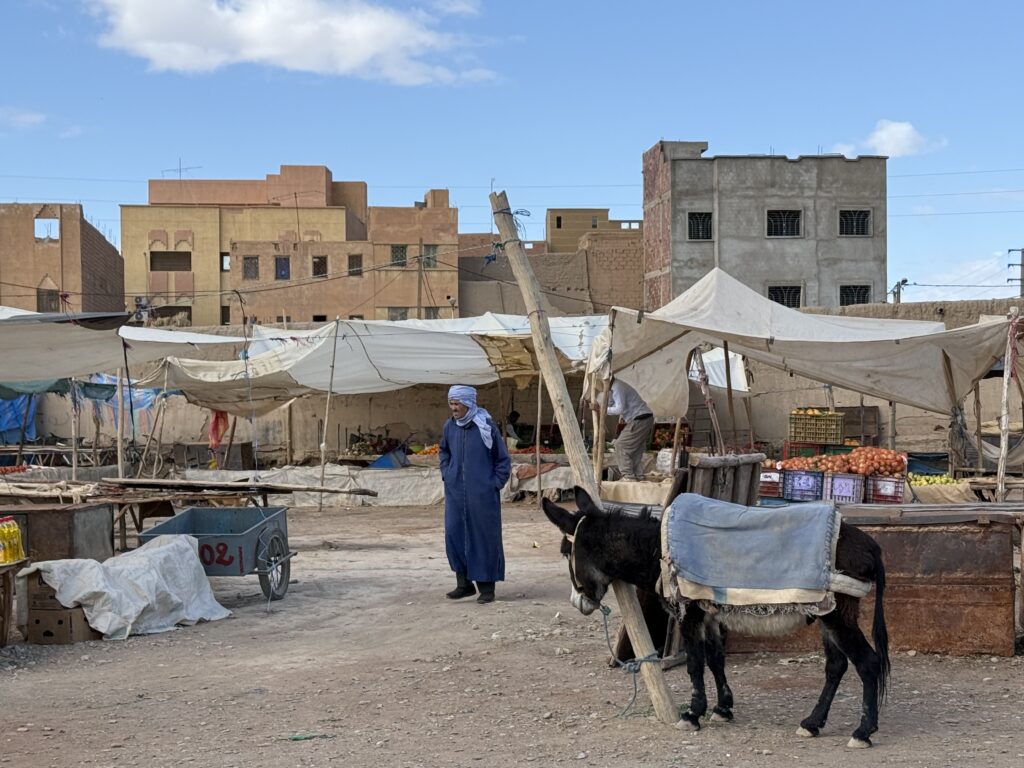
After a quick repositioning night in Marrakech, we head off with our private driver Mohammed (of course! Anyone counting?) over the High Atlas Mountains. The countryside is verdant with green grasses and yellow mustard flowers accented with red adobe homes and crumbing structures against a backdrop of snow capped peaks. Mohammed is of Amazigh (the preferred, authentic term for Berber) descent, raised nomadically which historically means living in tents in the Atlas valleys in the summer with their herds and moving to caves in the lowlands in the winter, and he never attended school being the only son and eldest. He clearly earned his license at the Inshallah School of Driving and I strategically sit behind his seat to avoid witnessing his maneuvers. We cross the rugged Tizi-n-Tichka pass at 2,260 meters, part of the Sahara trade route, and dropping down the south side the terrain quickly turns arid. We stop at the Amridil Casbah dating from the 1600’s and featured on their historical currency. A Casbah (or castle) is a home for a large family with multiple wives and this Casbah, previously the setting for some movies, including scenes from Lawrence of Arabia, housed 50 people, and included a kitchen for each wife, a madrassa (school), a mosque, and a riad (garden). Nearby Todras Gorge has a natural spring which lures the nomads from the dry surroundings, including an Amazigh with burros during our visit, and Dades Valley features the strangely-named Monkey Fingers stone formations caused by wind and erosion.
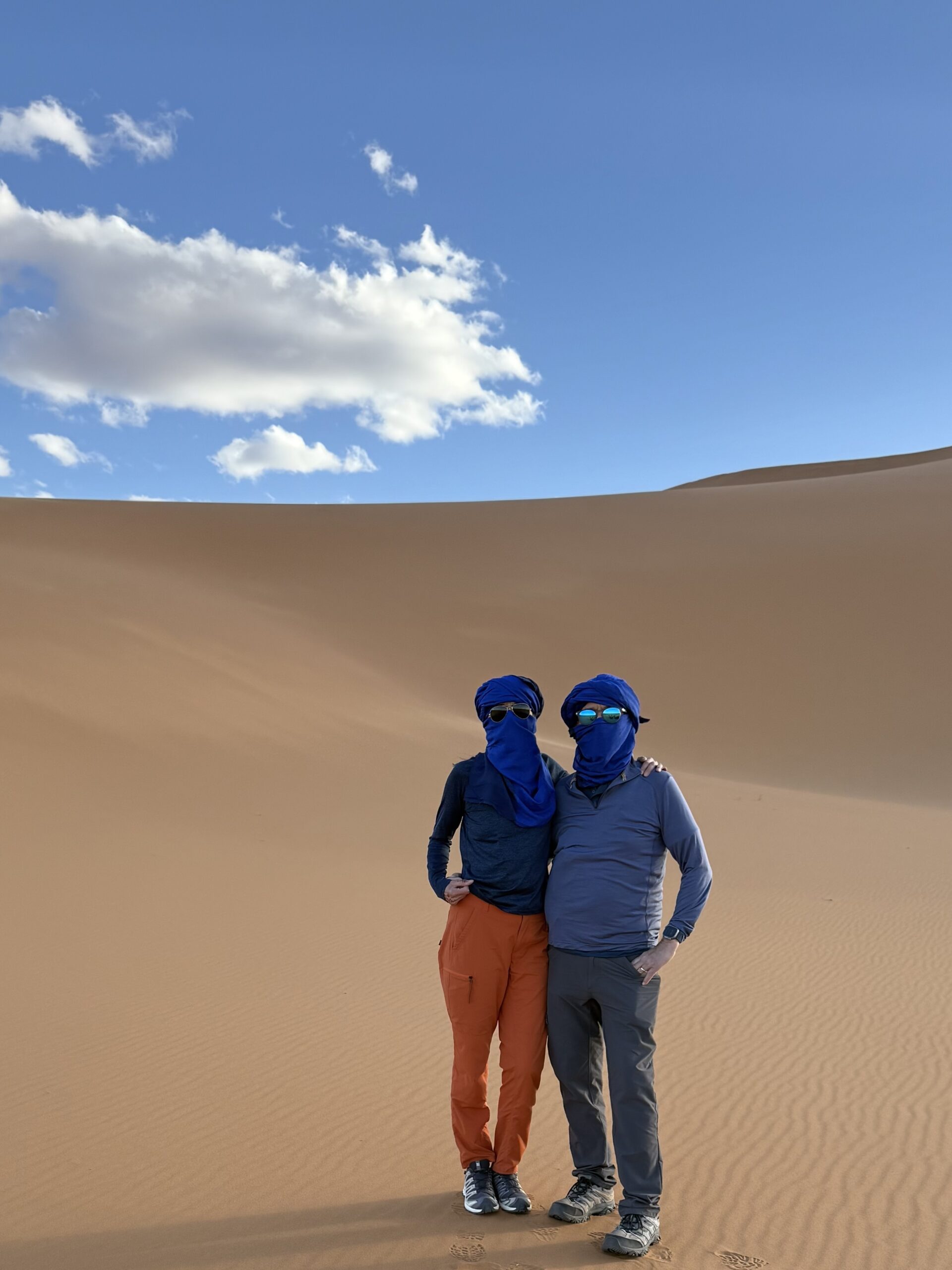
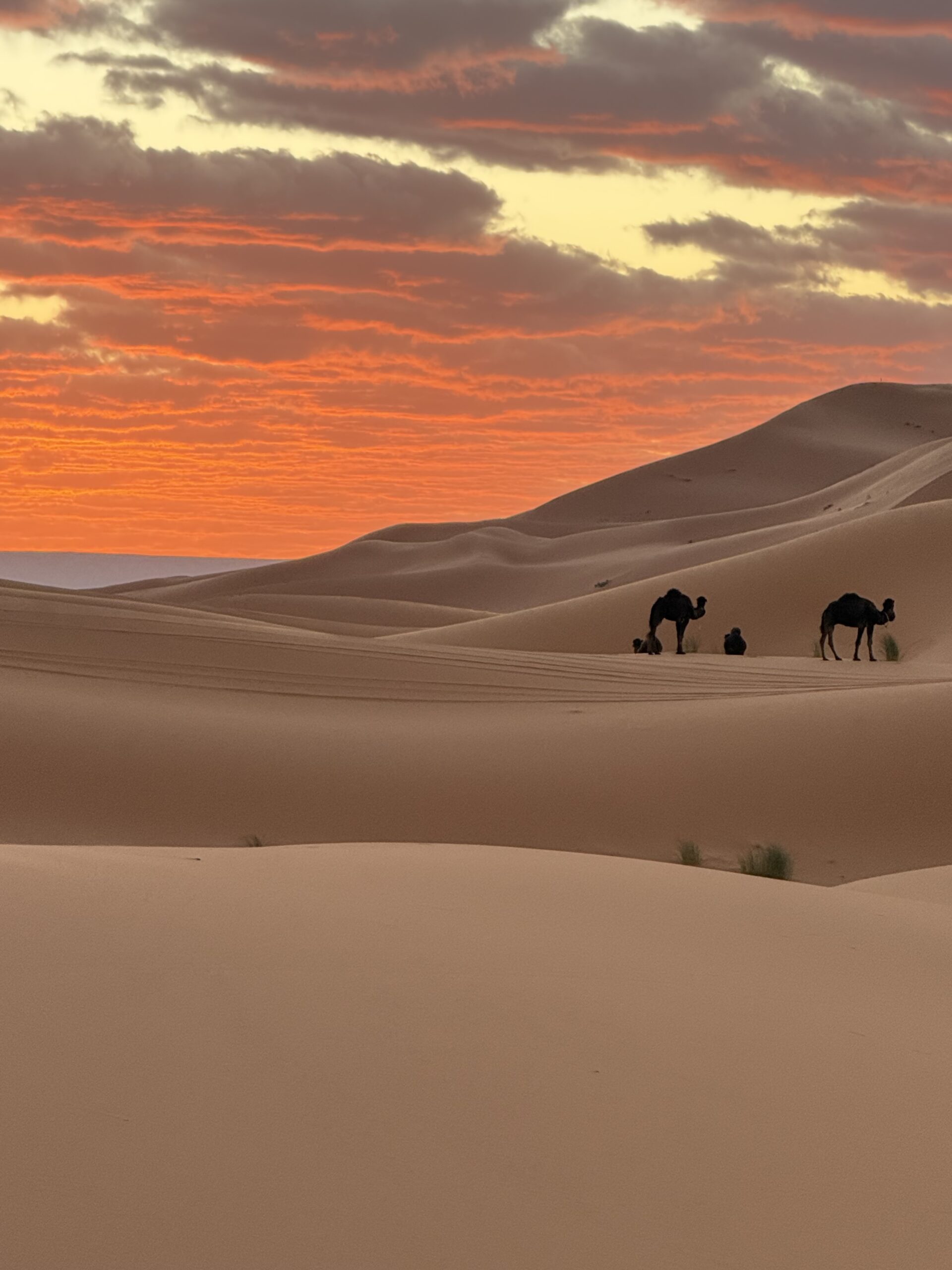
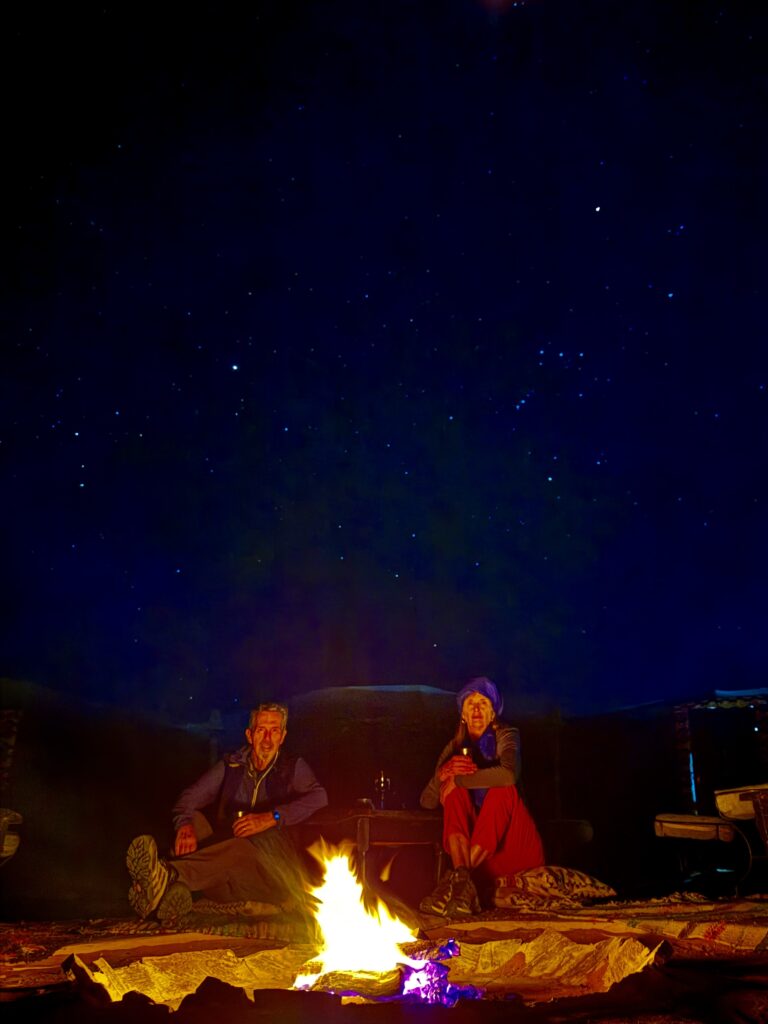
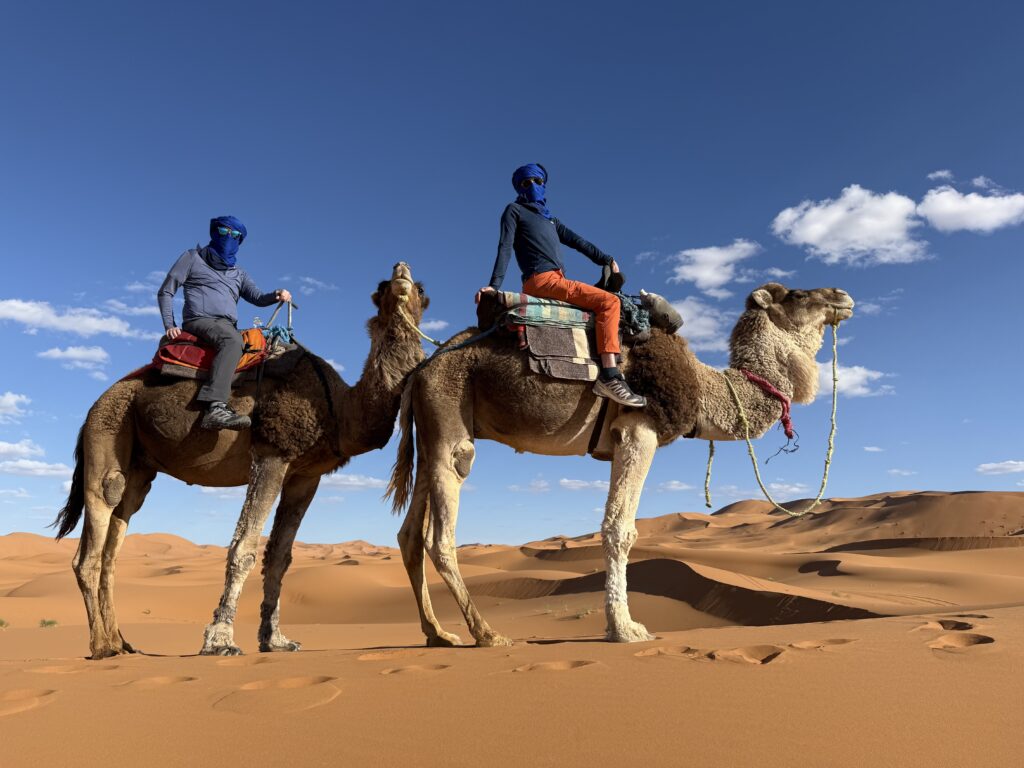
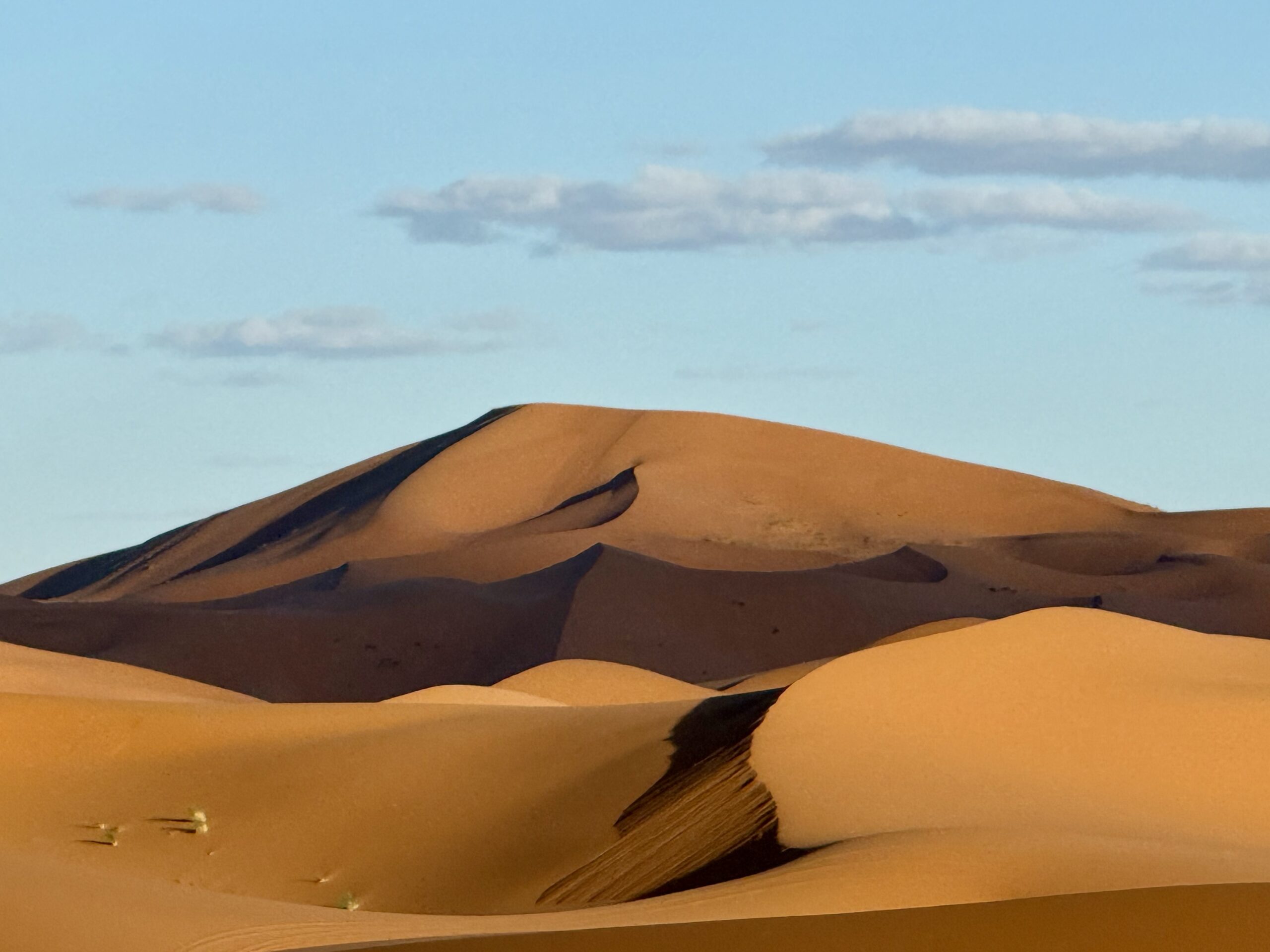
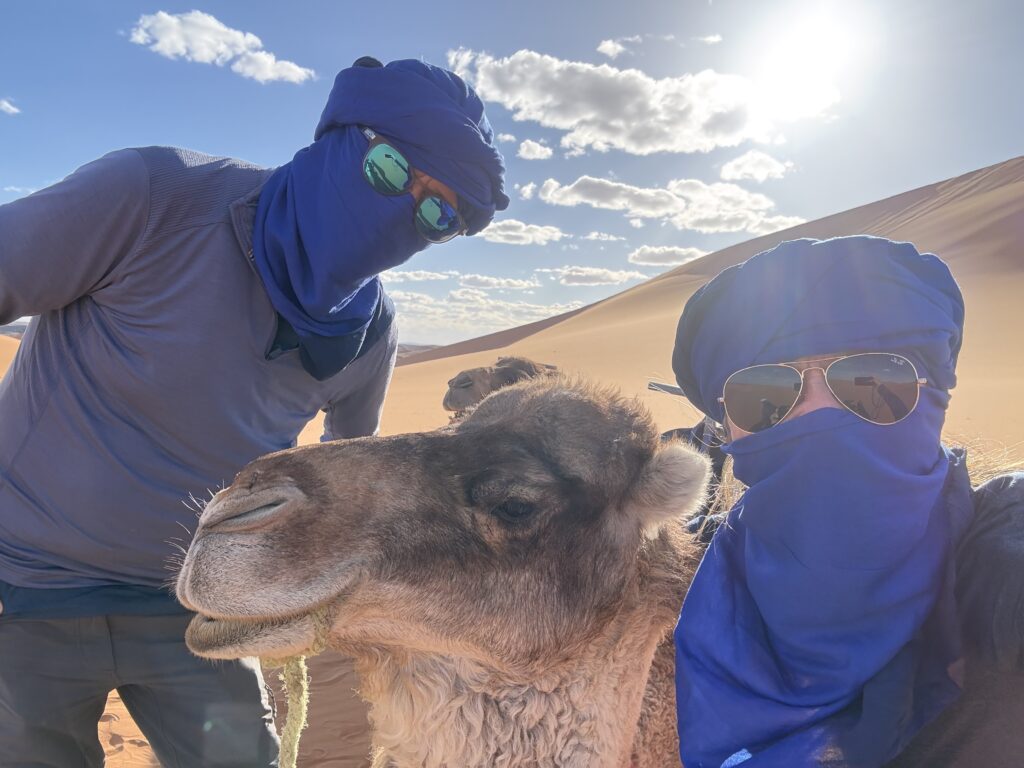
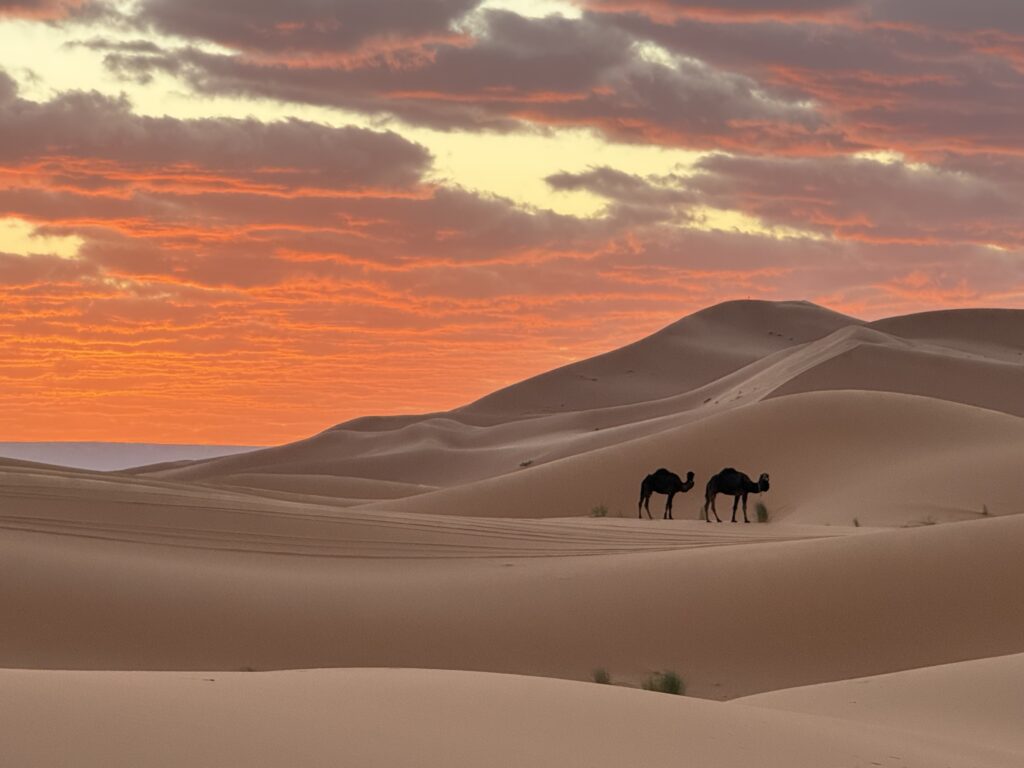
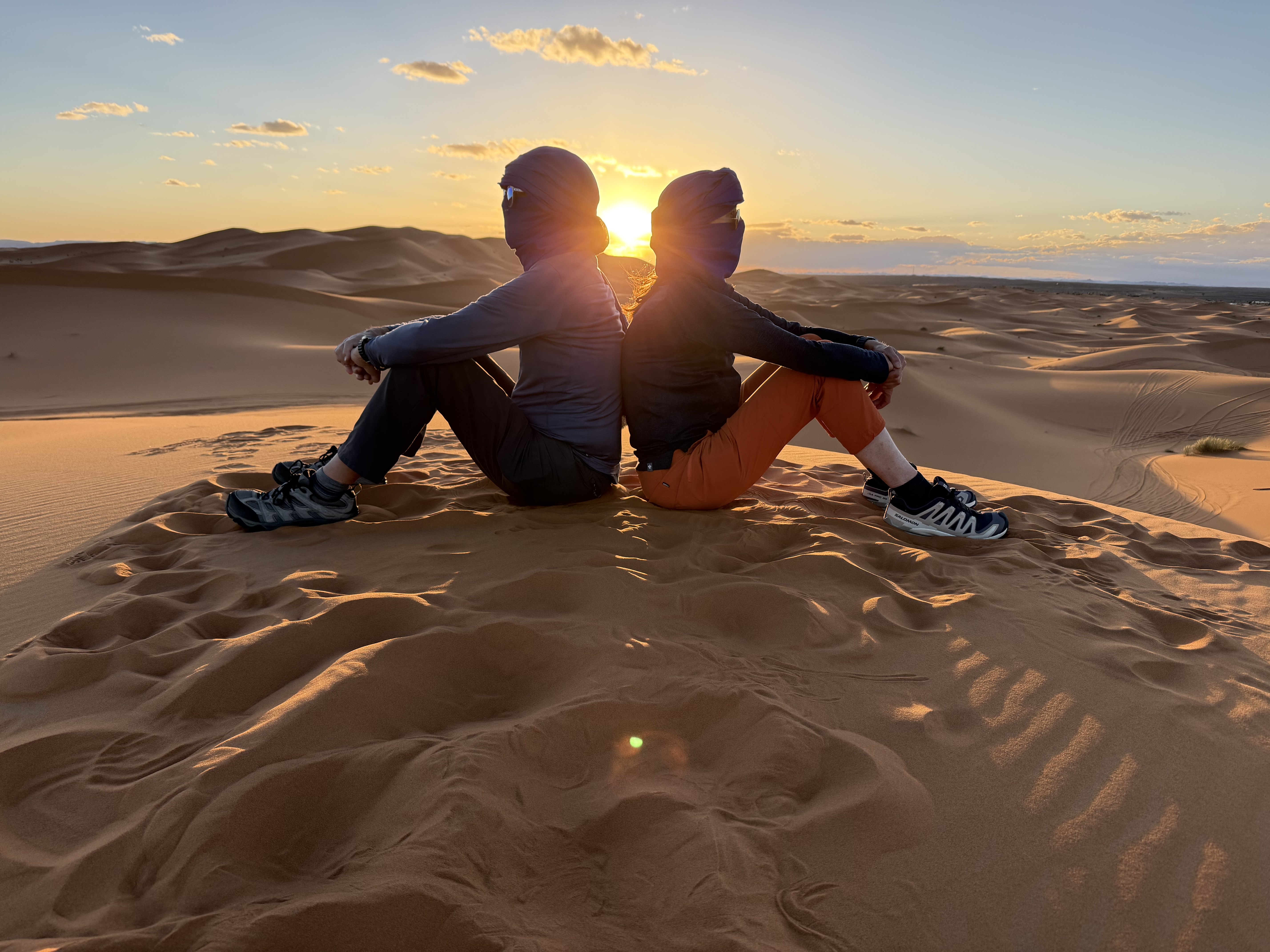
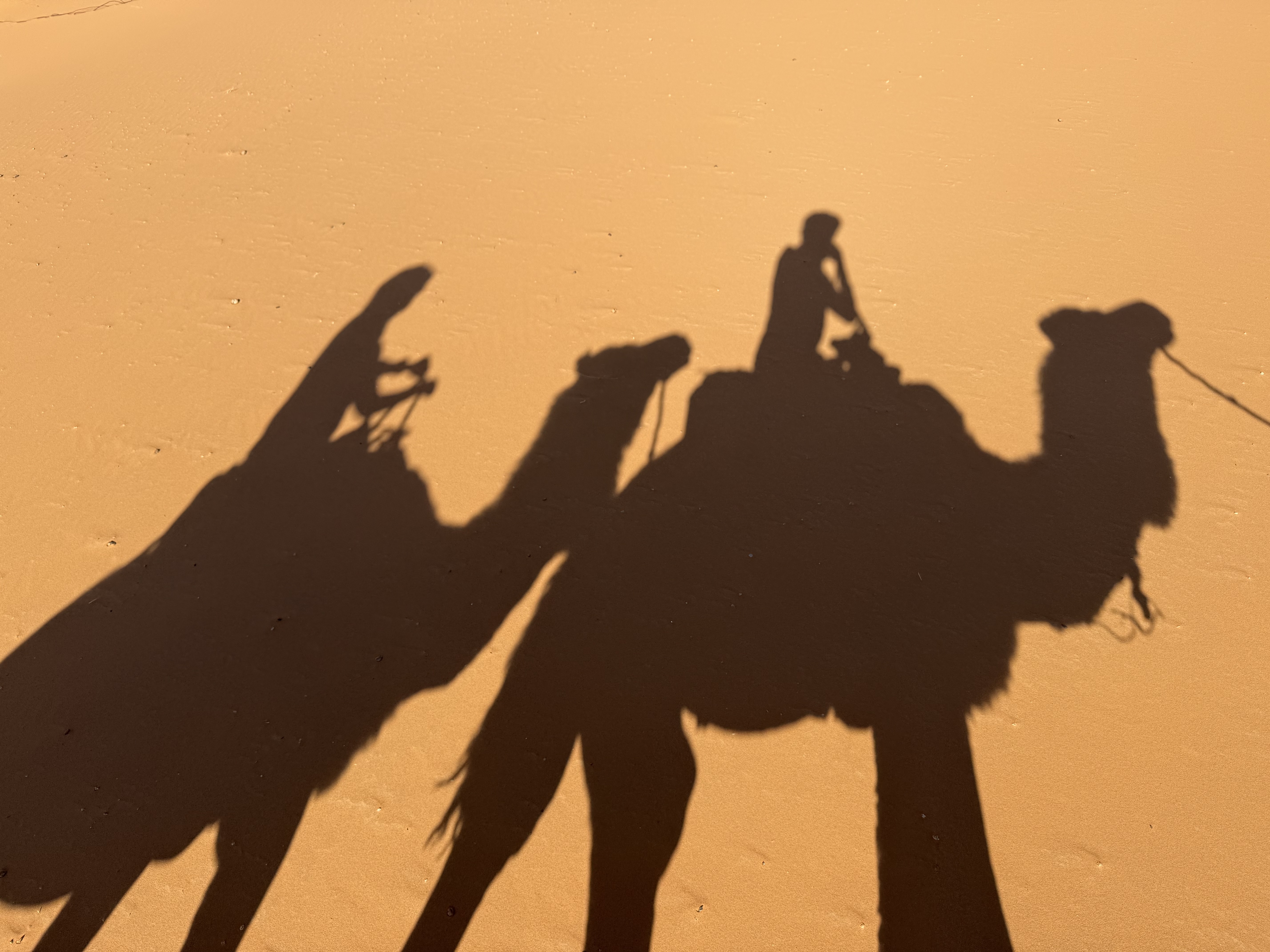
When we arrive at our desert camp, we are the only guests so receive VIP treatment. Erg Chebbi are the classic sand dunes seen in Lawrence of Arabia and many other films on the northern edge of the Sahara. Our dromedaries (single humped camels) mount the sandy hillsides with ease, led by our barefoot guide, and we lounge in the sunset enjoying the solitude and peacefulness of the vistas. At night we embarrassingly attempt playing the Amazigh instruments under the endless stars, and at sunrise I hike alone into the dunes to capture magical moments.
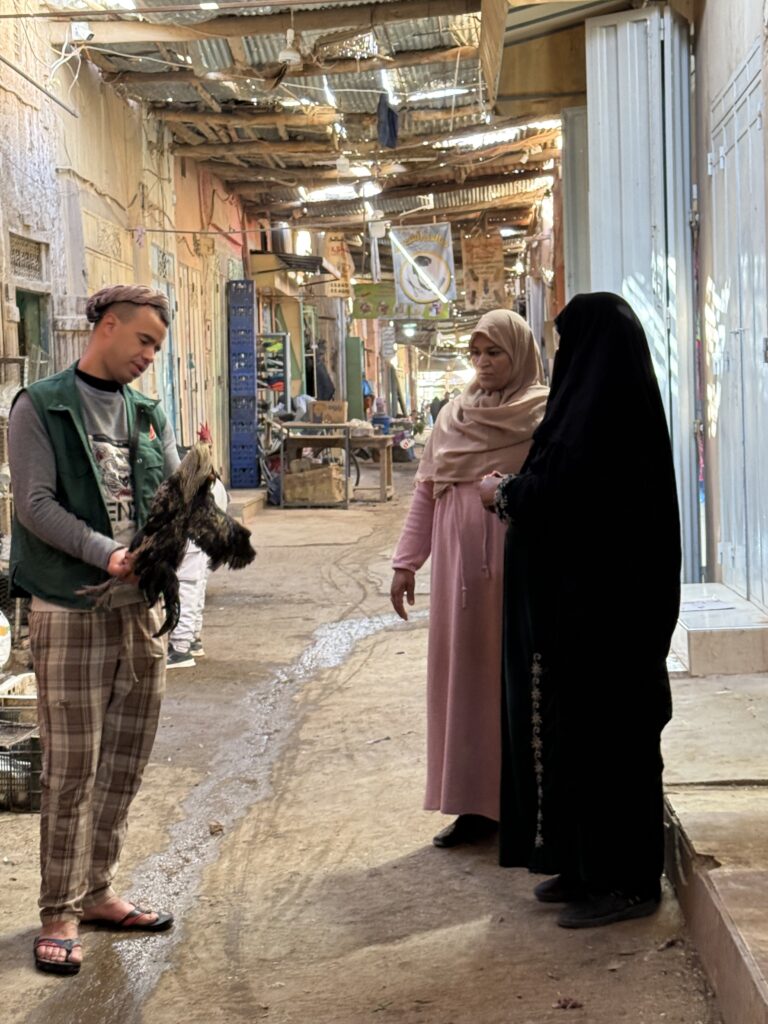
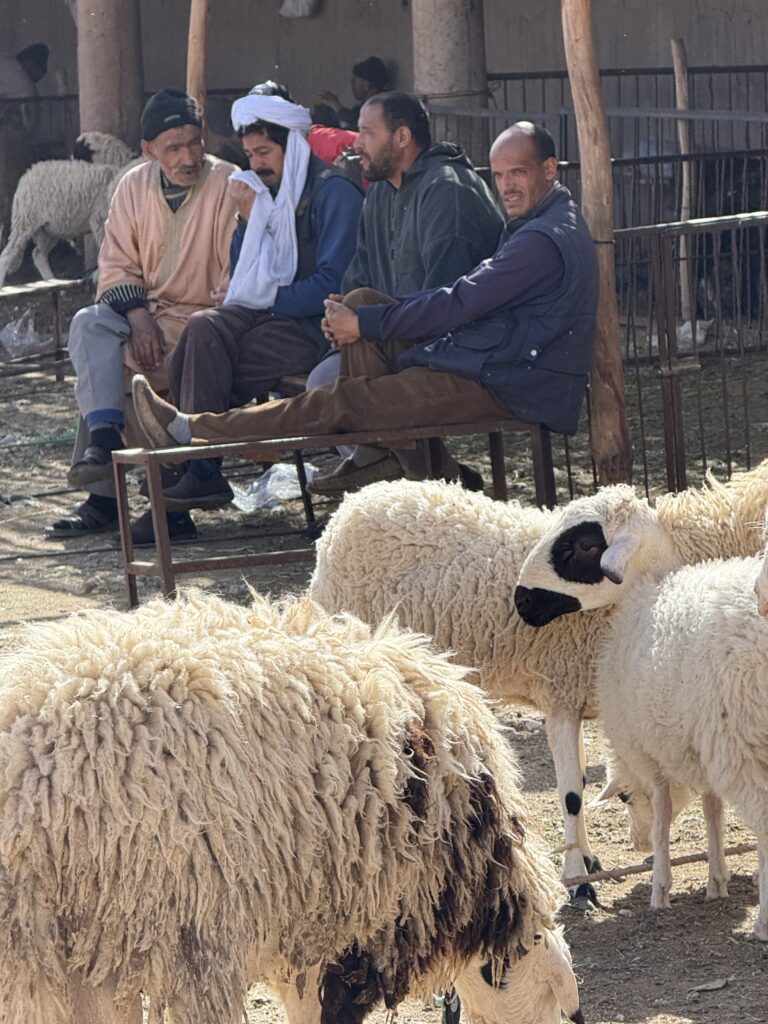
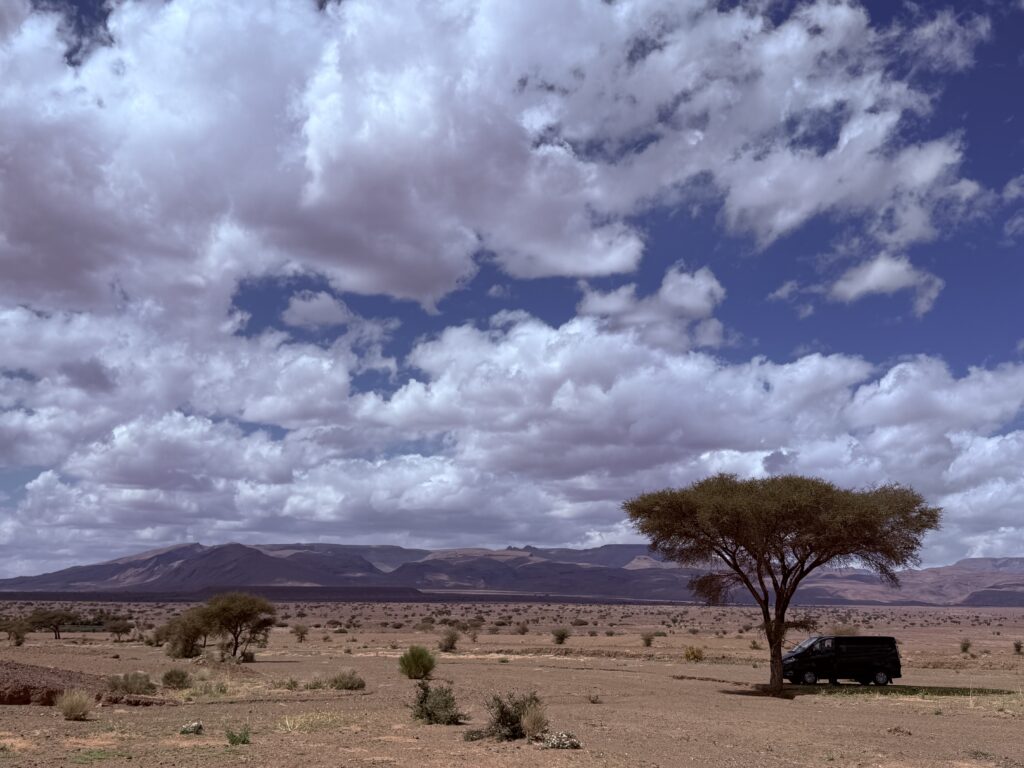
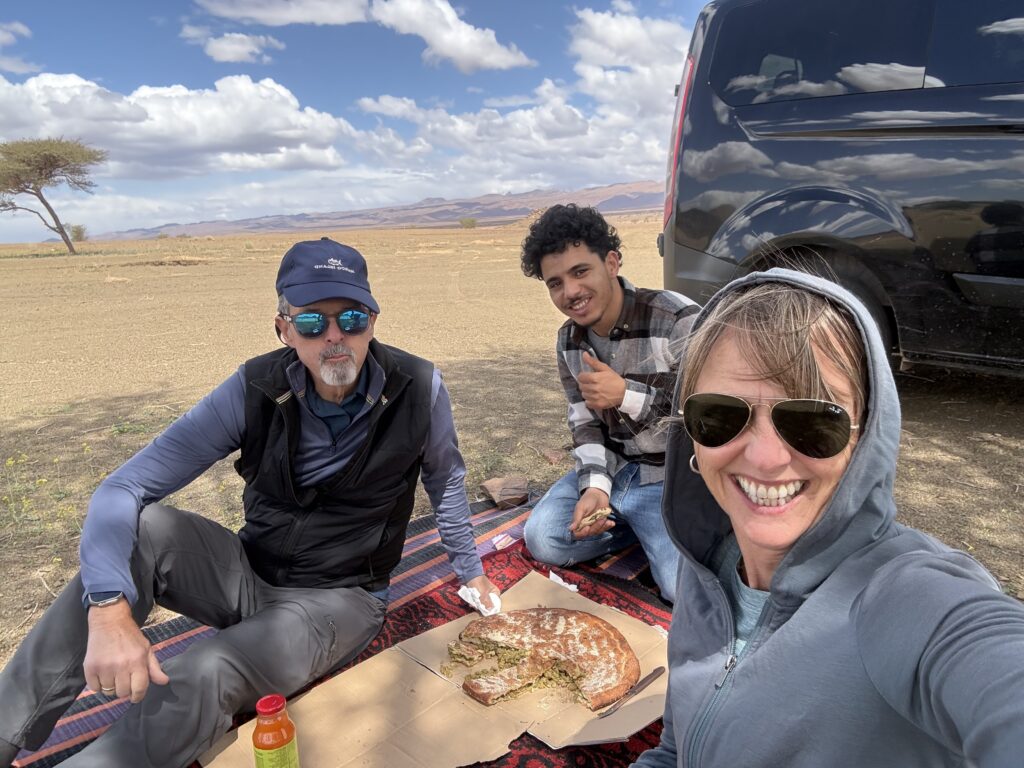
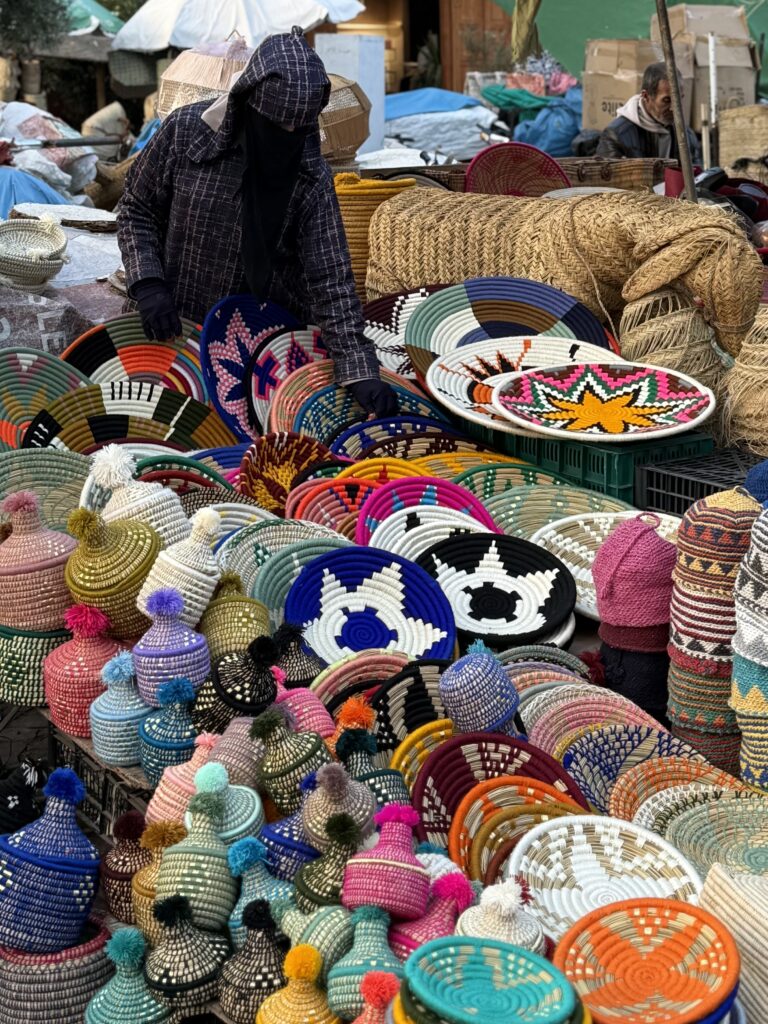
We head next to the Rissani souk on market day. The souk is the original Target selling everything imaginable including sheep, goats, cows (expensive), rabbits, chickens, turkeys, fruits and vegetables, shoes with tire treads for soles, tagine pots, outfits, and even furnishings. There is a section for buying clothing donated from foreign countries, think Goodwill rejects, which is how you see a kid wearing a Harvard sweatshirt and other incongruent logos. Many Muslims do not want their photo taken for religious reasons, and this rural area is adamant, making this photo-rich environment a tease. We order a Madfouna for the road, like a large calzone of meat, almonds, and spices, which we watch being made and enjoy as a picnic lunch under an acacia tree enjoying the vast terrain.
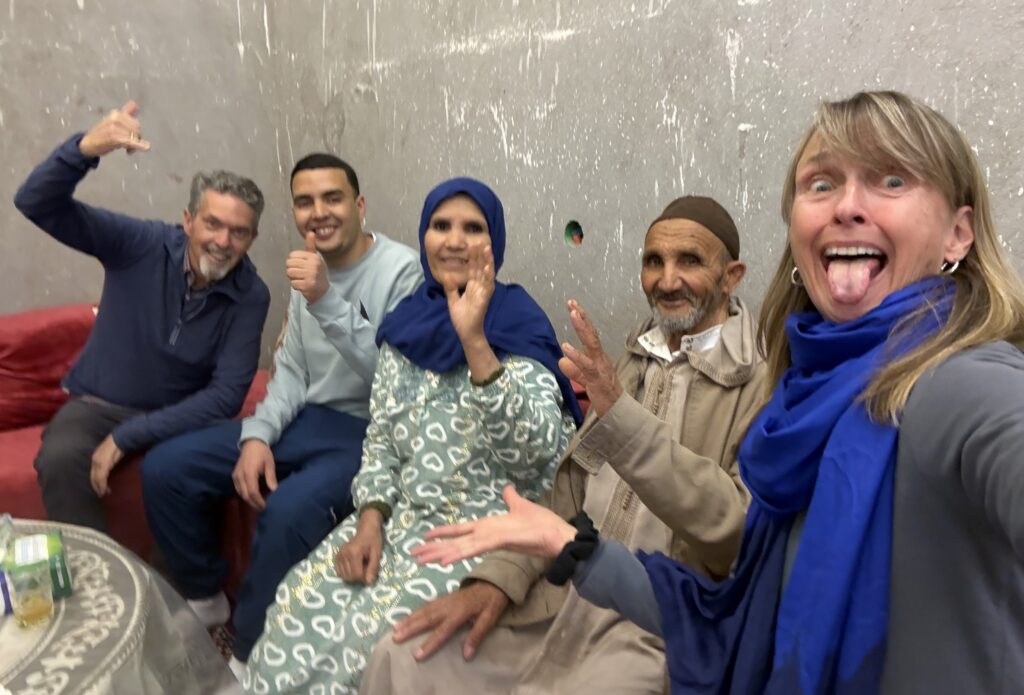
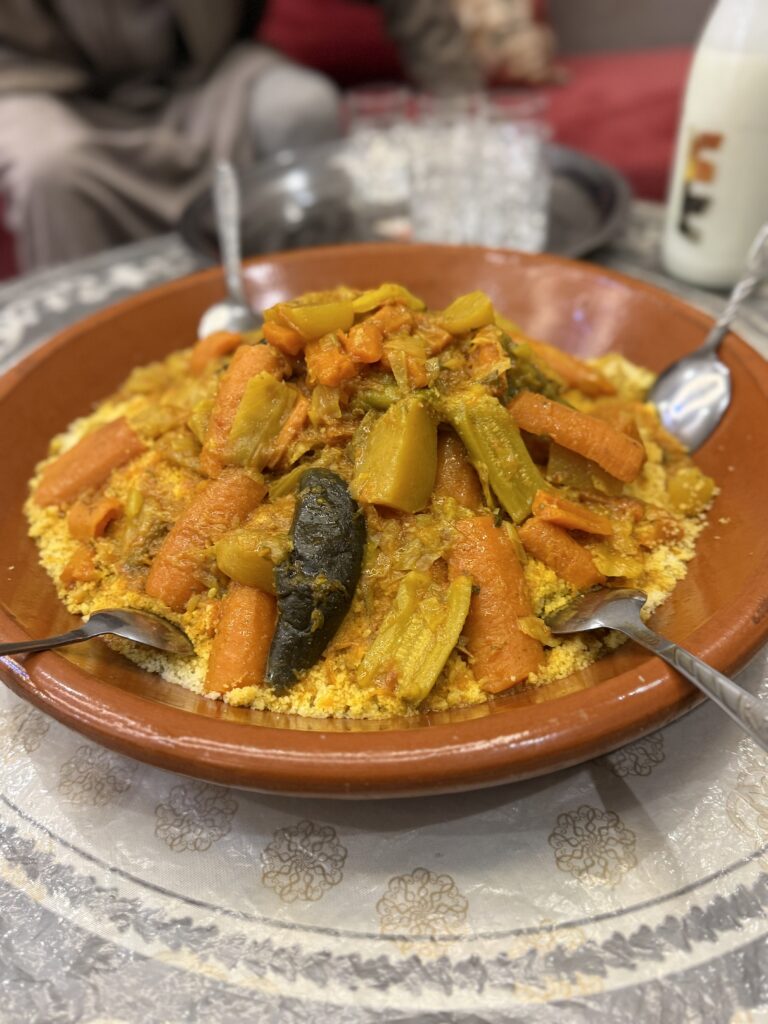
In Ouerzazate we are hosted for a couscous dinner by the family of our receptionist Ayoub at our riad in Marrakech where we’d spent a night repositioning before the Sahara. With no overlapping languages, we communicate smoothly via Google Translate, discussing their home remodel (we can relate!) with impressive plaster ceiling decor which was the dad’s profession and decorated with the mom’s Berber handmade rugs, as well as of course football and Morocco’s star player Hakimi. Ayoub FaceTimes in a few times with FOMO. All eating out of a massive platter of couscous which is covered in a pile of steamed vegetables, meat, garbanzo beans, and broth, we finish with cookies and mint tea which they teach Brian to make, inserting the largest chunk of sugar I’ve ever seen. We are so grateful to be invited into their home so graciously.
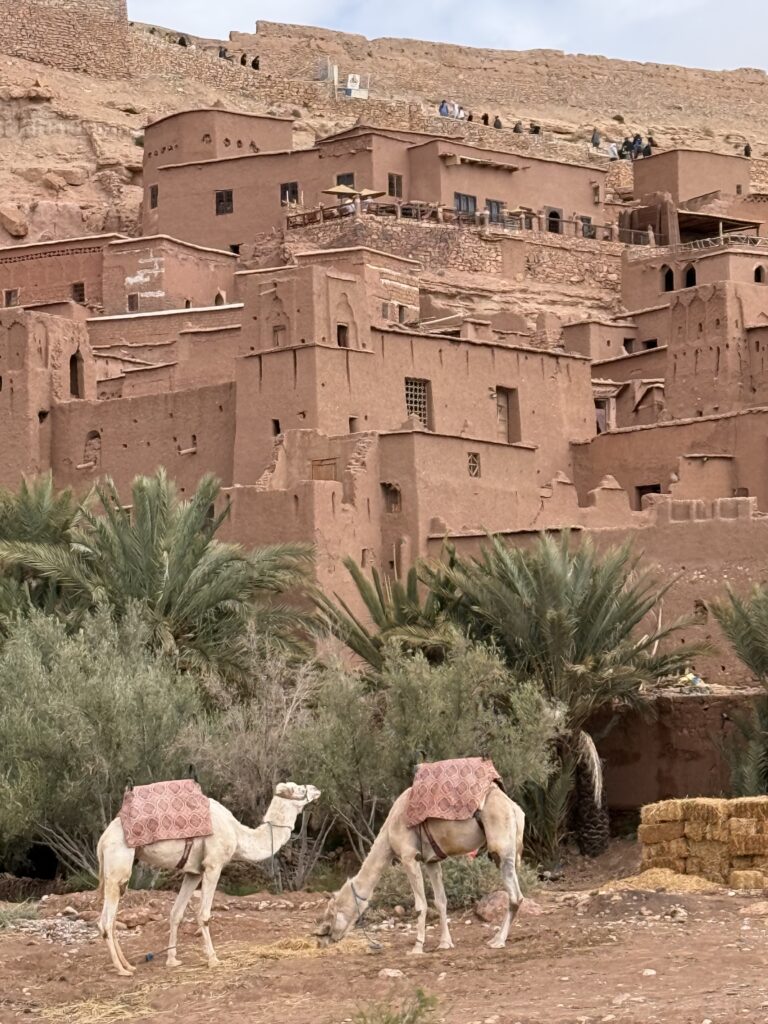
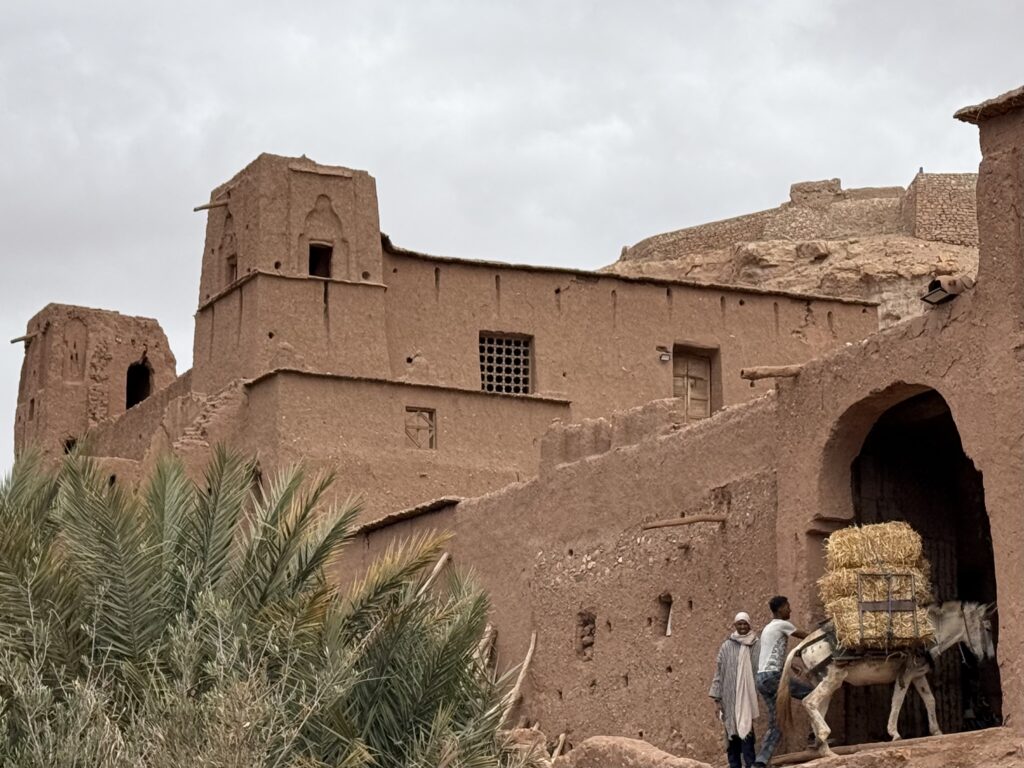
Ouerzazate is the film-making capital of Morocco and the Atlas Studios tour is fascinating, showing film sets from The Mummy, Game of Thrones, Black Hawk Down, The Rock, Kundun, Aladdin and others from the over 300 movies shot here, and we even got to make our our trailer for Cleopatra! Down the road the UNESCO site Aït Ben Haddou ksar (fortified village) also hosted many film sets and was part of the trans-Sahara trade route for caravans.
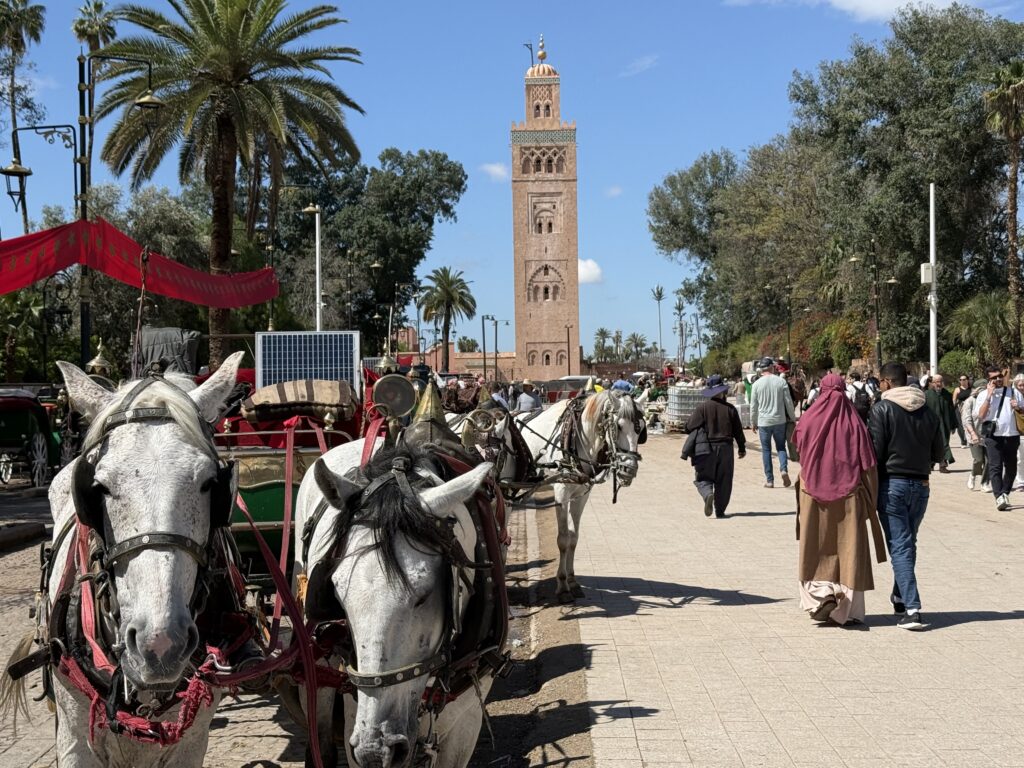
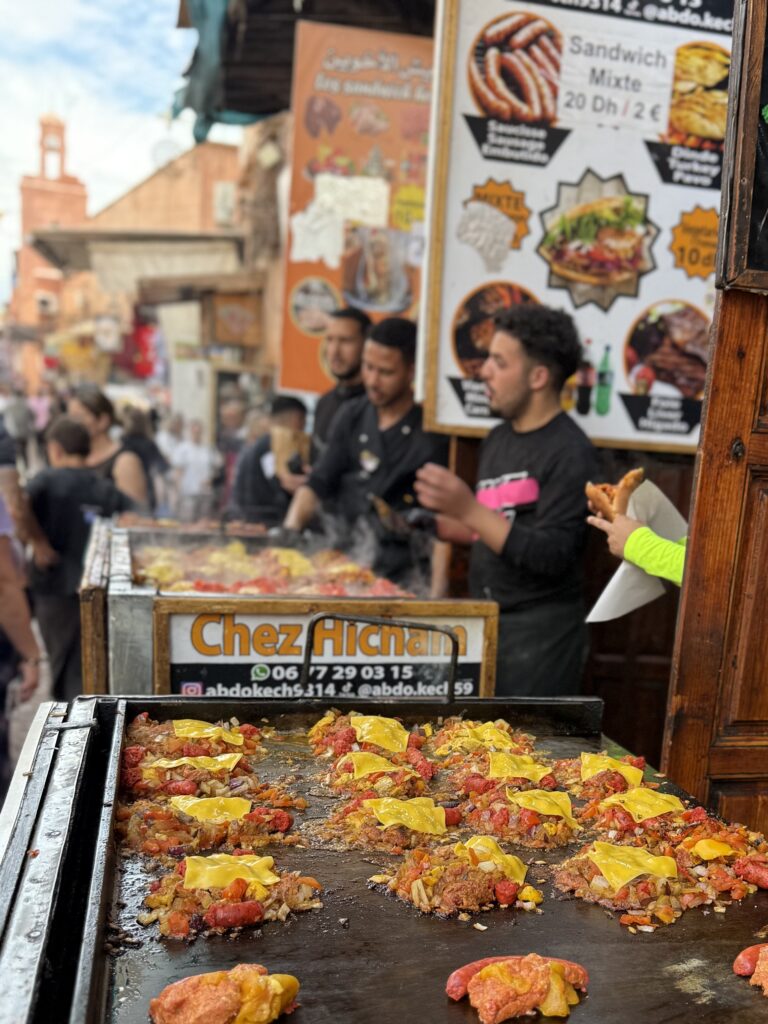
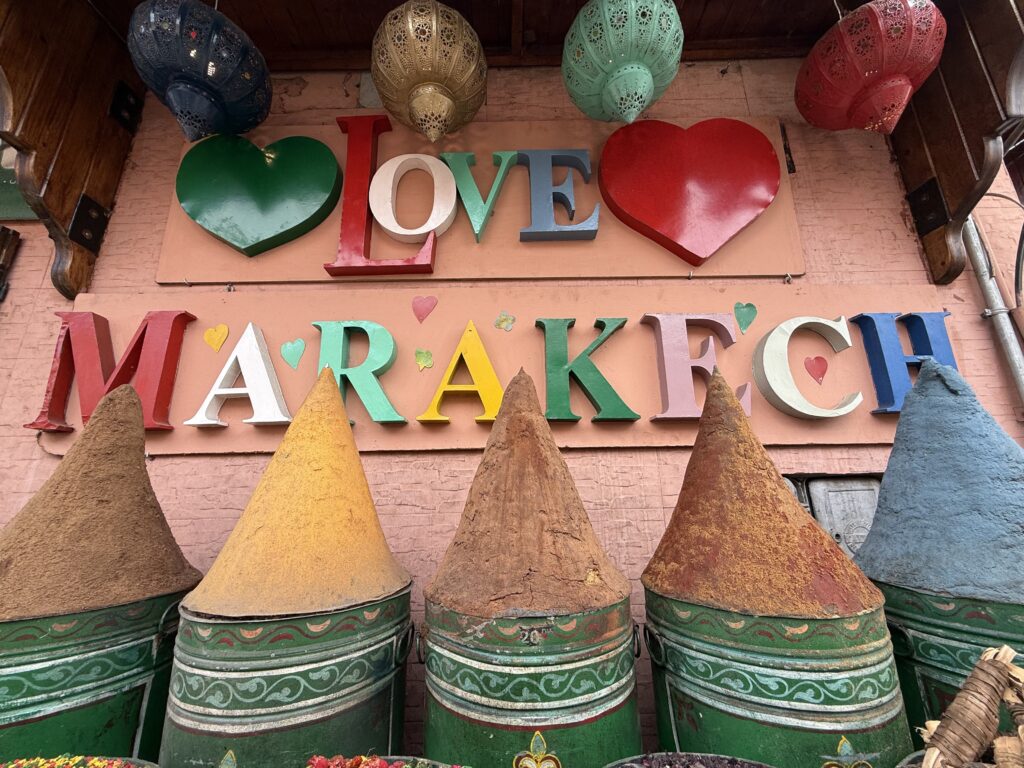
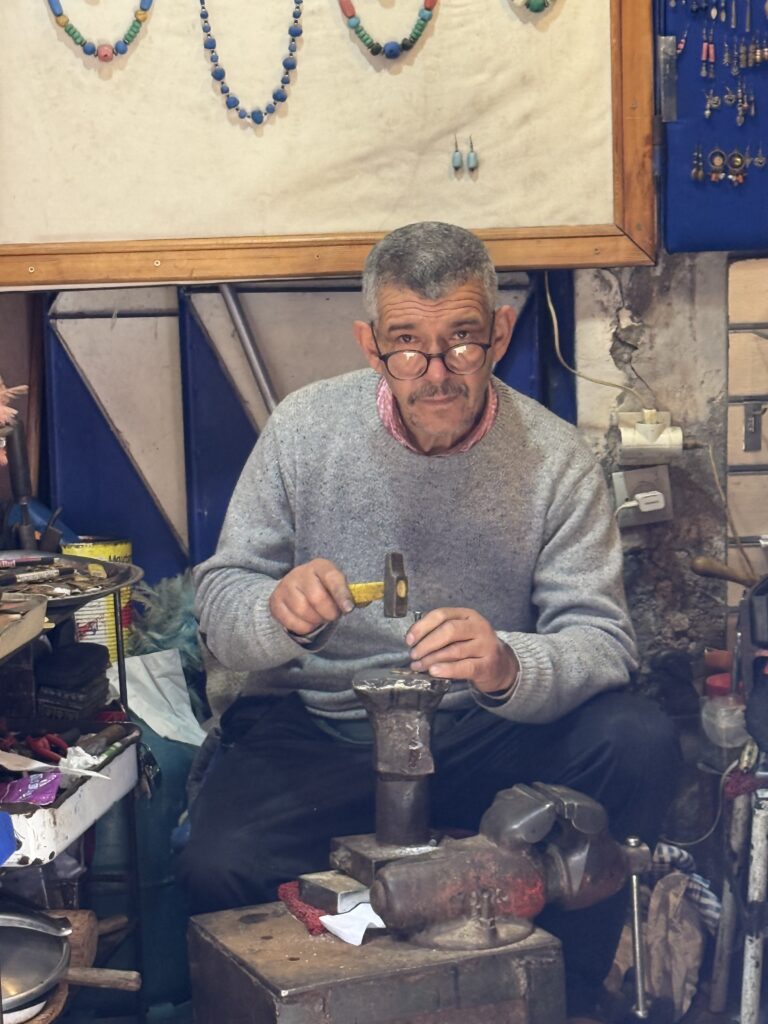
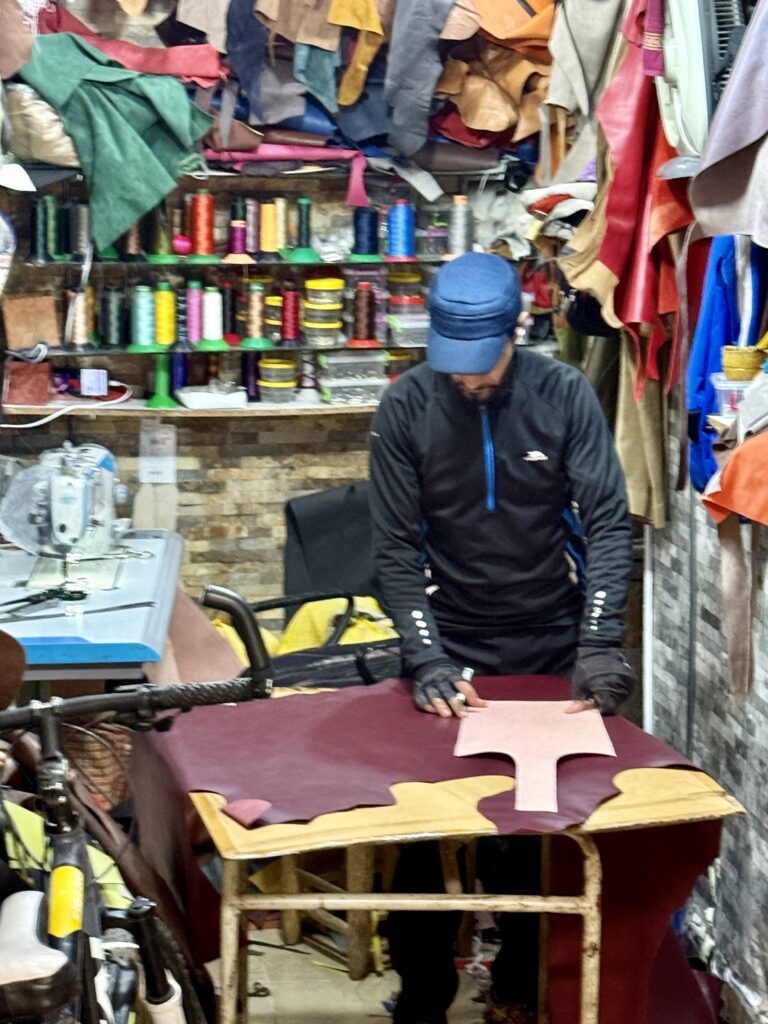
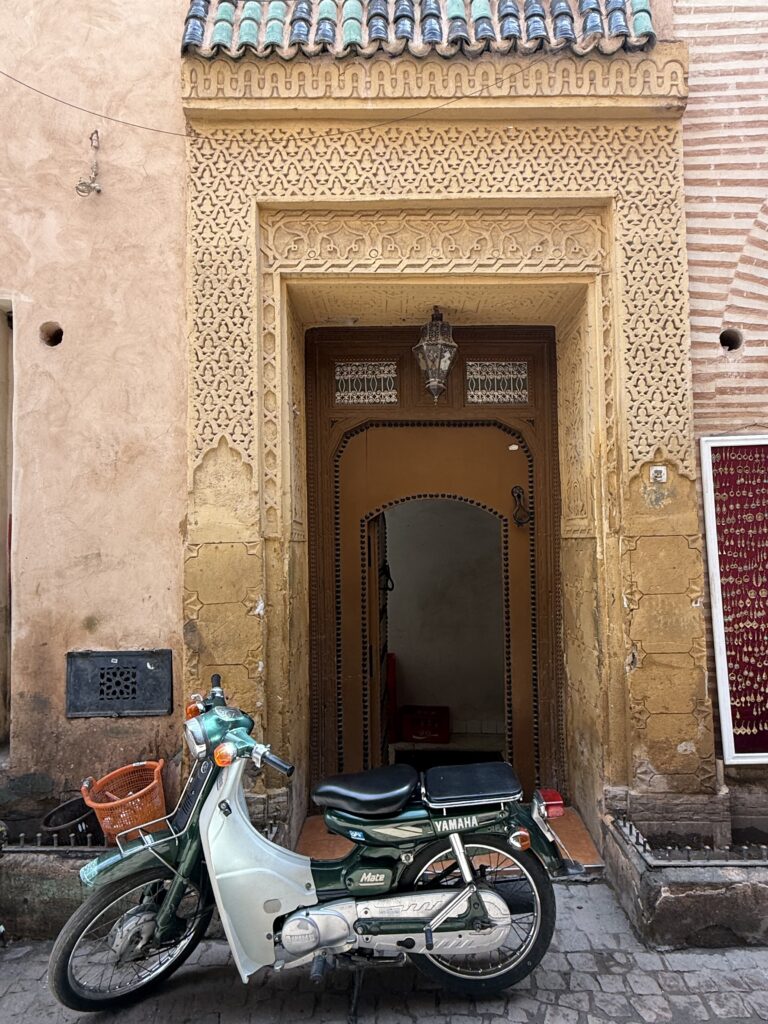
We plunge next into the chaos of Marrakech with its dense medina filling the senses and the nonstop cacophony of humanity. Jemaa El-Fnaa Square is the heartbeat of the city where locals and tourists alike gather for entertainment, filled during the day with snake charmers and monkey performers and at night with food stalls and community games, always a vibrant scene. The medina is a labyrinth of alleyways of shops, food stalls, and services with clogged pathways challenging by filled carts, tourists, bikes, and what I call the Medina Motorcycle Mafia – illegal in all medinas but not enforced in Marrakesh, charging through the thick of it with abandon. I miss the donkeys moving product from one shop to another unattended – the original Waymo – from my previous visit, of which I only see once this time.
Through a friend we get invited to the newly renovated, soon to open, high end Riad Sa’eed which takes our breath away – stay tuned! On their rooftop we enjoy cocktails with the call to prayer (a contradiction in Islamic culture) watching lighting flashes cutting the dark skyline. We also enjoy the beautiful Jardín Majorelle gardens of Yves Saint Laurent and his partner Pierre Bergé, both buried onsite.
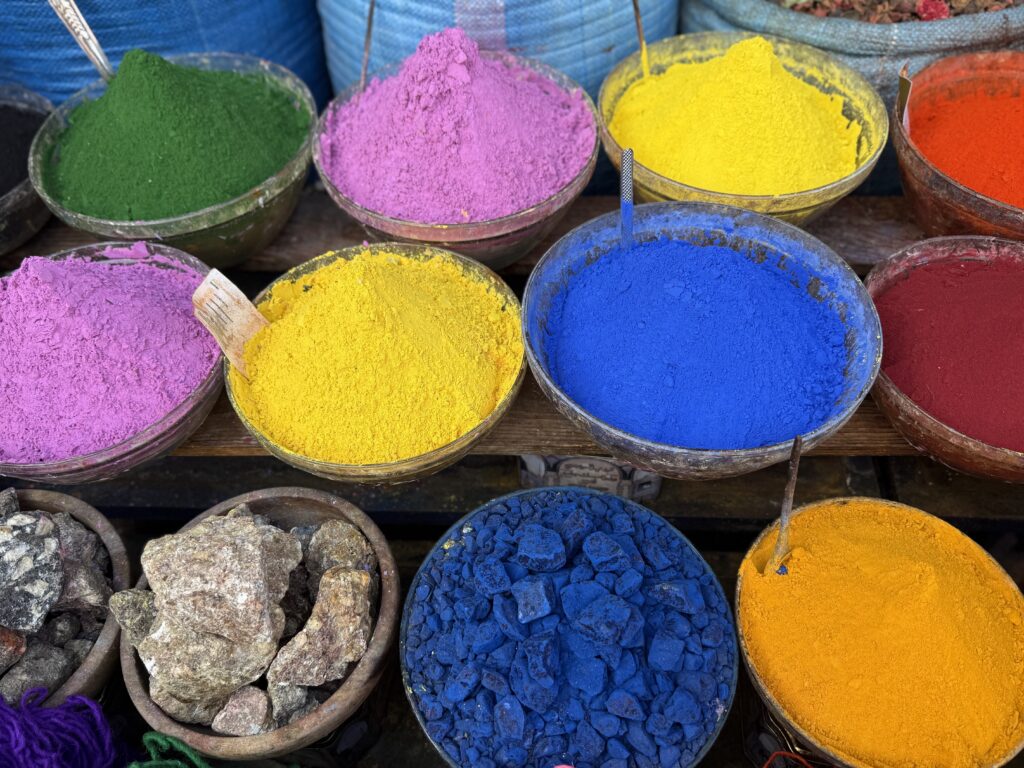
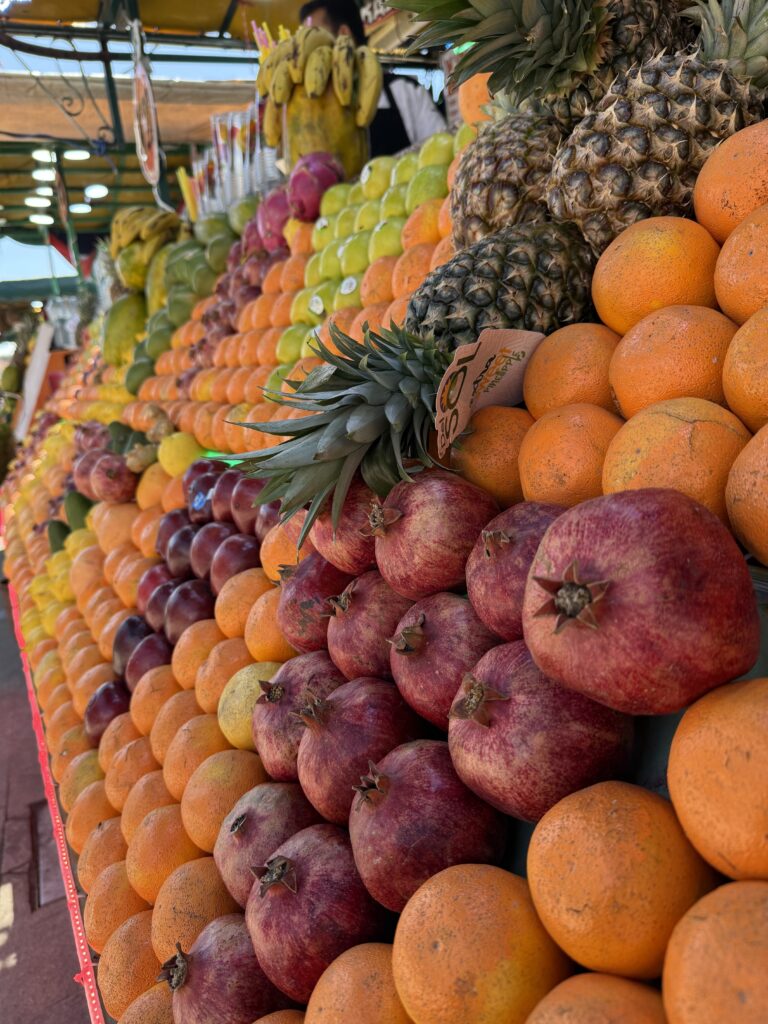
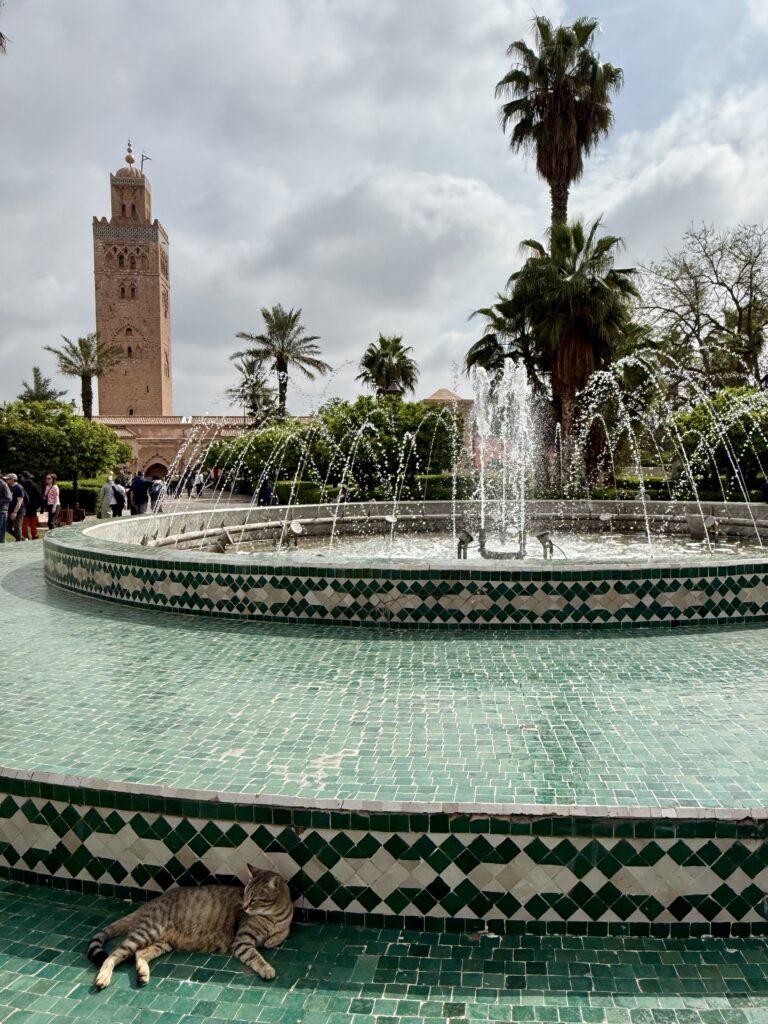
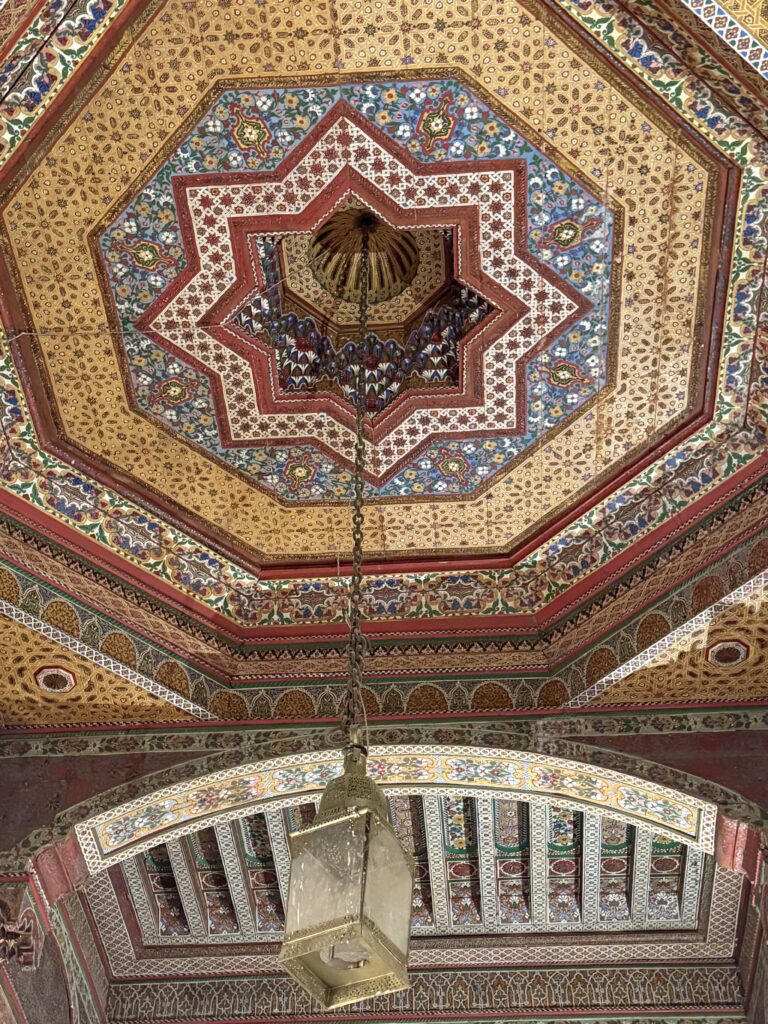
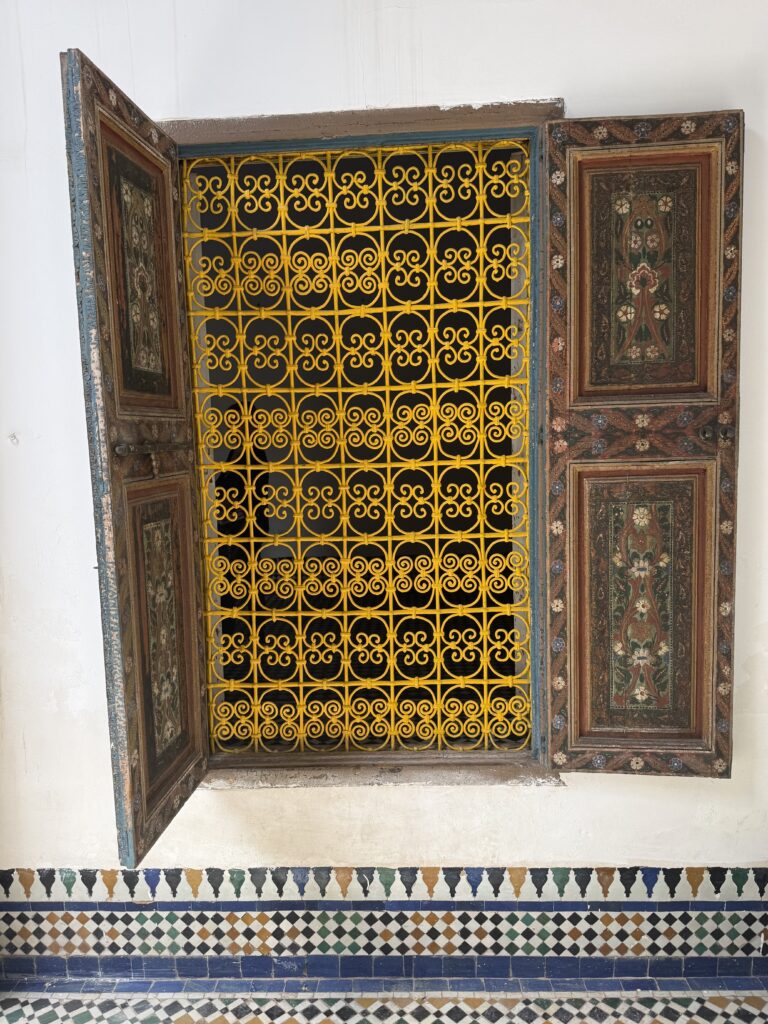
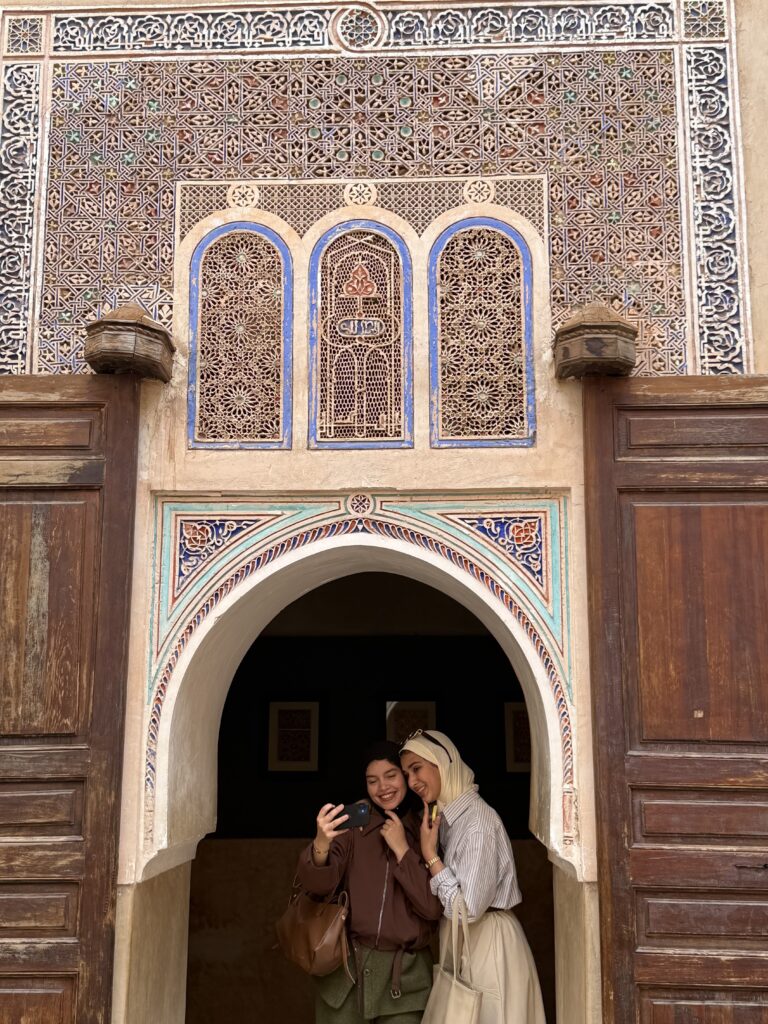
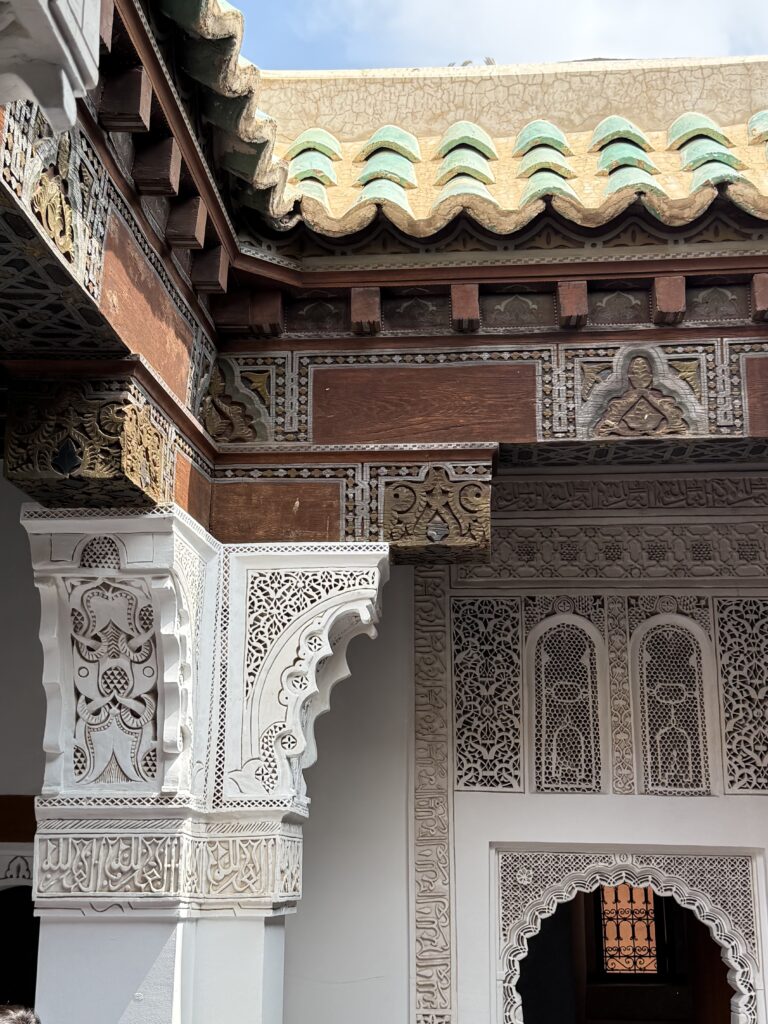
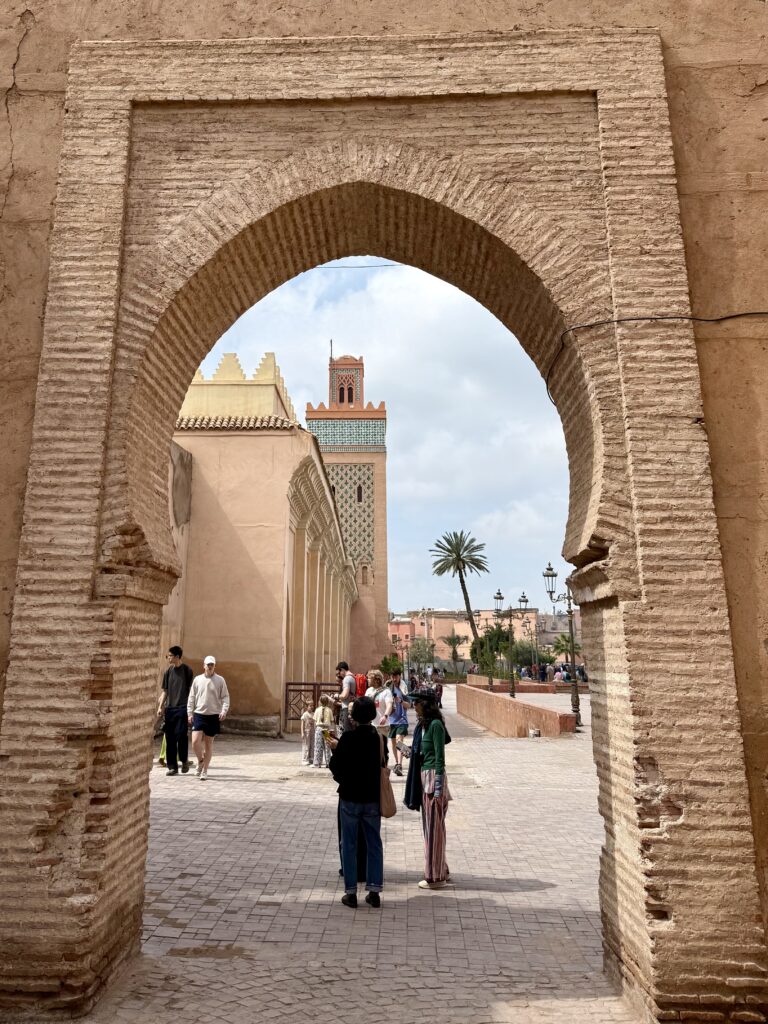
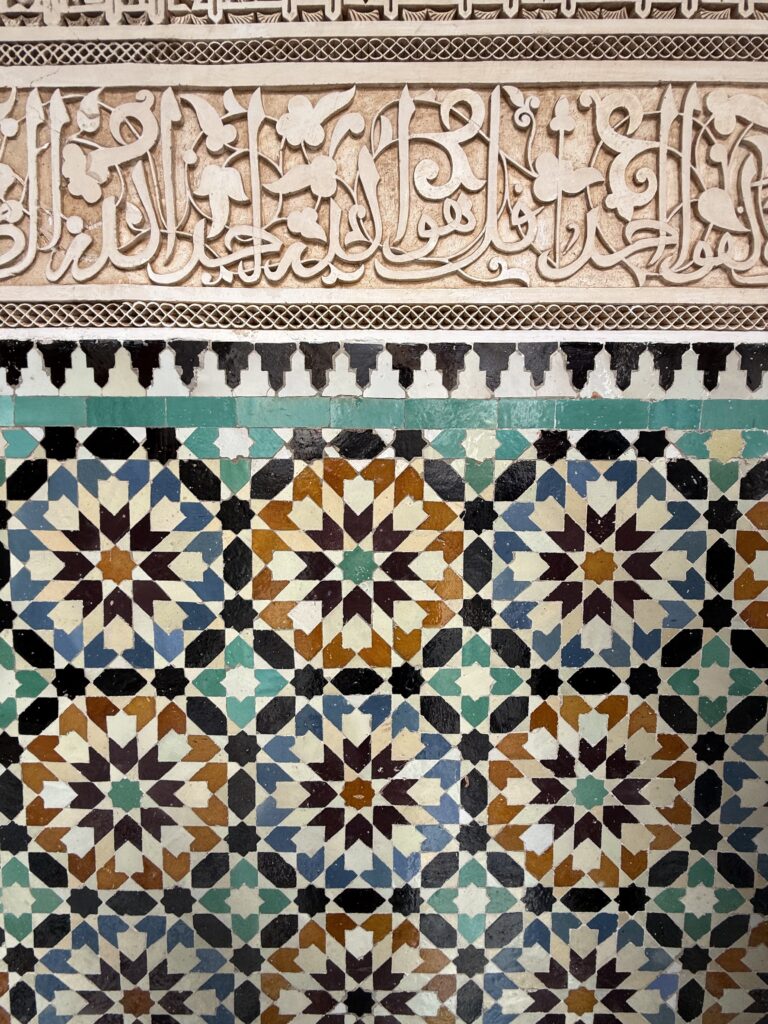
Marrakech will challenge and entice you with its onslaught of colors, smells, sounds, and flavors all in your face, and I soak it up. There is such beauty in the ancient structures with their intense craftsmanship, such as the El Bahia Palace or the Madrassa Ben Youssef, including zeltjee (mosaics), tadelakt (plaster wall carvings), and tazouaqt (painted wooden ceilings), all specialties of the Amazigh people. Faith is deeply woven into their community with abundant mosques and deep practice, but Allah is everywhere so they pray when and where they feel the calling. The call to prayer 5 times per day throughout the day from the minarets, and the first chant of the day includes the phrase Praying is better than sleeping, trying to roust the faithful. They used to hang a white flag on the minaret for visual notification of call to prayer (now there’s an app for that), still implemented for religious holidays. Despite the chaos, there’s also a harmony of spirit here and a fluidity to the vibrancy. They We plunge next into the chaos of Marrakech with its dense medina filling the senses and the nonstop cacophony of humanity. Jemaa El-Fnaa Square is the heartbeat of the city where locals and tourists alike gather for entertainment, filled during the day with snake charmers and monkey performers and at night with food stalls and community games, always a vibrant scene. The medina is a labyrinth of alleyways of shops, food stalls, and services with clogged pathways challenged by filled carts, tourists, bikes, and what I call the Medina Motorcycle Mafia – illegal in all medinas but not enforced in Marrakesh, charging through the thick of it with abandon. I miss the donkeys moving product from one shop to another unattended – the original Waymo – from my previous visit, of which I only see once this time.
Through a friend we get invited to the newly renovated, soon to open, high end Riad Sa’eed which takes our breath away – stay tuned! On their rooftop we enjoy cocktails with the call to prayer (a contradiction in Islamic culture) watching lightning flashes cutting the dark skyline. We also enjoy the beautiful Jardín Majorelle gardens of Yves Saint Laurent and his partner Pierre Bergé, both buried onsite.
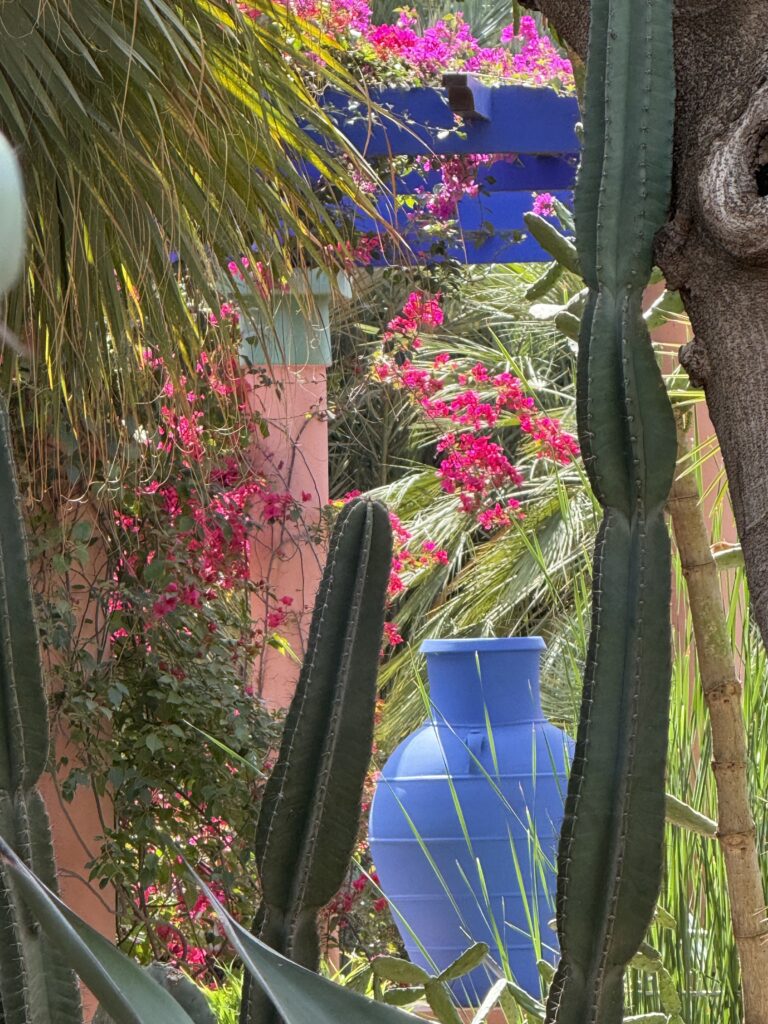
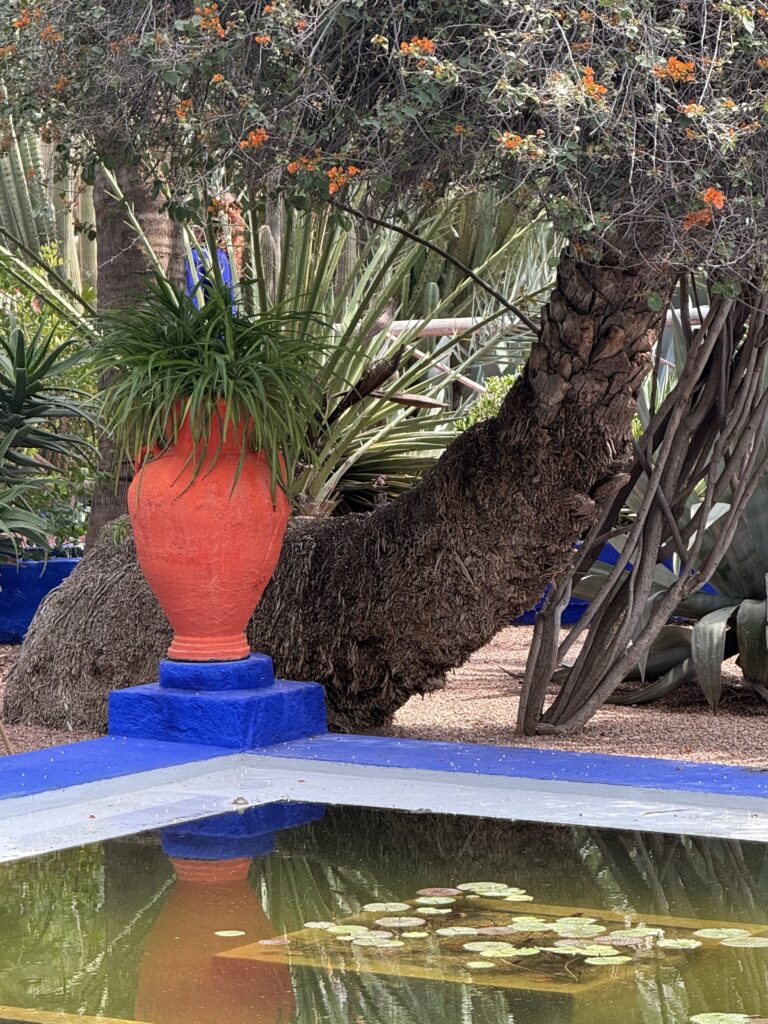
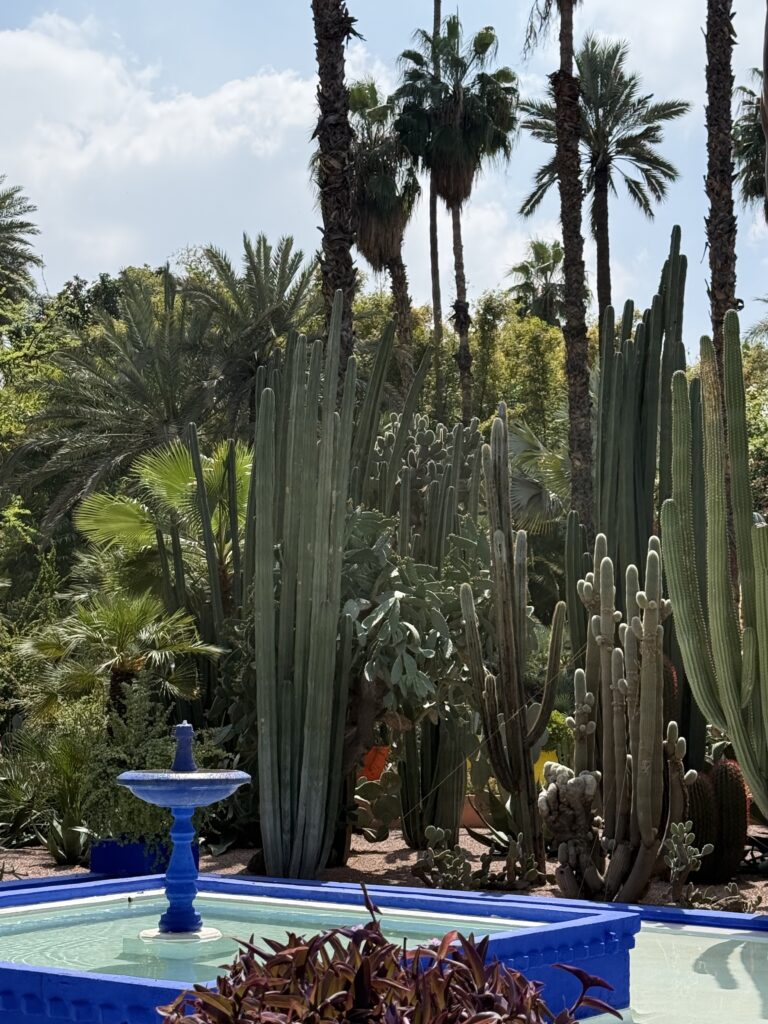
Marrakech will challenge and entice you with its onslaught of colors, smells, sounds, and flavors all in your face, and I soak it up. There is such beauty in the ancient structures with their intense craftsmanship, such as the El Bahia Palace and the Madrassa Ben Youssef, including zeltjee (mosaics), tadelakt (plaster wall carvings), and tazouaqt (painted wooden ceilings), all specialties of the Berber (Amazigh) people. Faith is deeply woven into their community with abundant mosques and deep practice, but Allah is everywhere so they pray when and where they feel the calling. The call to prayer 5 times per day throughout the day from the minarets, and the first chant of the day includes the phrase Praying is better than sleeping, trying to roust the faithful. They used to hang a white flag on the minaret for visual notification of call to prayer (now there’s an app for that), still implemented for religious holidays. Despite the chaos, there’s also a harmony of spirit here and a fluidity to the vibrancy. They have code words for the intermarriages, calling the desert people Espresso for their dark color, the Marrakech residents Cappuccino for their Arab/Berber mix, and the northerners Latte for their mix with Europeans. We wind up our time in Marrakech, with full bellies and spirits, grabbing a rental car and head north.
Next up – Morocco: Northern Regions
Great trip Susan and Brian! We did it in 2011 when we were living in Barcelona. Almost the same exact itin, starting in Essouria, driving down to the desert and ending up in Marrakech.
Will look forward to your next post.
Stay safe and have fun!!
Linda
Thanks for the feedback Linda! Morocco is an amazing country. Thx for the update! xo
Susan & Brian: We are so loving your posts. We too enjoyed Essouira, Marrakesh & Fez on a trip with the boys and other family when they were young, and your marvelous descriptions of the sights, sounds, tastes and feelings, bring it all back. Funny story that you’ll appreciate—soon after returning from the trip, we were heading out to ski at Northstar, I believe, and the sound of the lift raving up reverberated through the village as we walked to the mountain. Jake, about age 6 at the time, called out, quite seriously, “it’s the Call to Prayer”! In our world, he was right! Anyhoo, we so admire and appreciate your experiences traveling the world, and sharing such detail and images with those of us at home. Sending much love. 💗Ashley & Ken
The call to prayer – that’s the best! That’s one call to prayer that would get me out of bed at 5am – on a powder day!
Sending lots of love back atchya!
xo
Your photos of the desert blew me away, Susan! It’s not a landscape I’m usually interested in but your pics captured what I imagine must be the magic of it beautifully. You mention having full bellies but don’t write much about the food you’re having! Throw us foodies a bone (pun intended!). Love seeing you guys on the camels and just soaking in the world. Xo
Thanks Meghan! Love your feedback and will add more food bits to the content. Brian is our resident food hound, with his phone filled with shots of every meal, home and abroad, so it’s been captured! Last night’s meal here in Tangier was right out of an Anthony Bourdain segment! Thanks for your input on Sri Lanka which I need to start planning. Big hugs! xo
I love your travel diary, and your photos are unbelievable! All of it is interesting and inspirational!
Glad to hear! You’re inspiring me now! 😊
What an incredible journey to see & hear! Your descriptive posts & photos are incredible.
My father worked in Morocco in the early 50’s, as an engineer helping to build roads. I can just imagine how he would delight reading your posts and hearing your recordings. He also spoke French. I would love to visit someday!
Lisa – great to hear from you and how amazing that your dad was here in the 50’s! What an amazing experience he must have had! He would be pleased to know that the roads here are fantastic – well engineered and a delight to drive on, for the most part. With the winter rains there were some landslides and potholes but not as bad as I would have imagined. Your dad trained the future road builders of Morocco to good effect! xoxo