
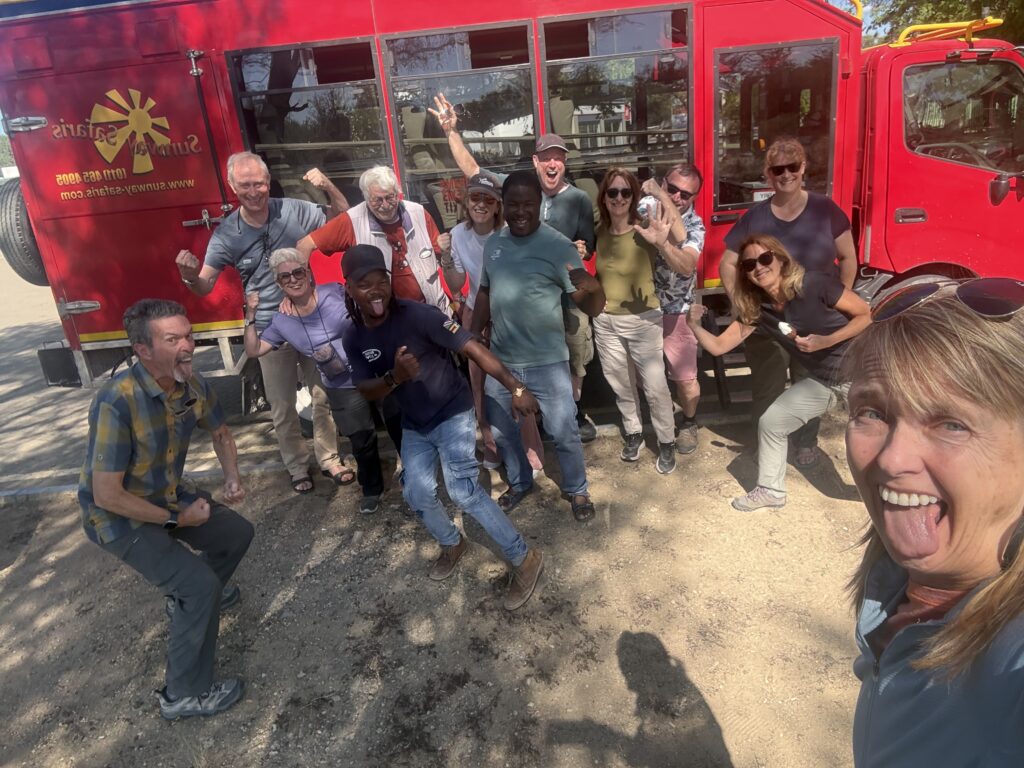
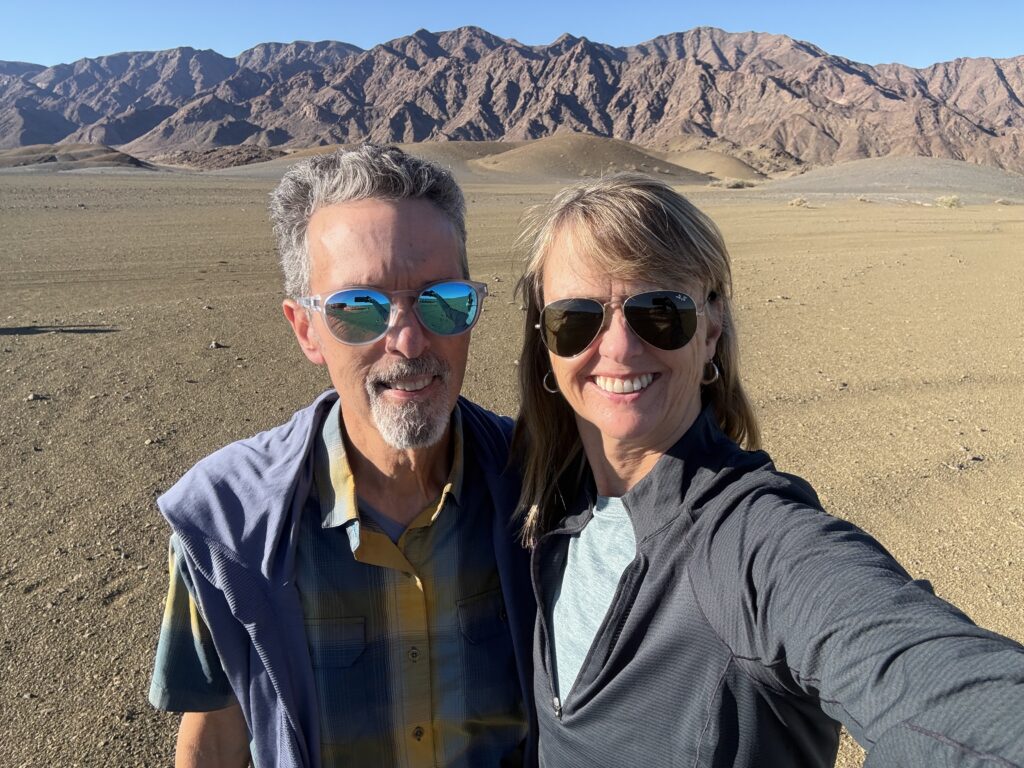
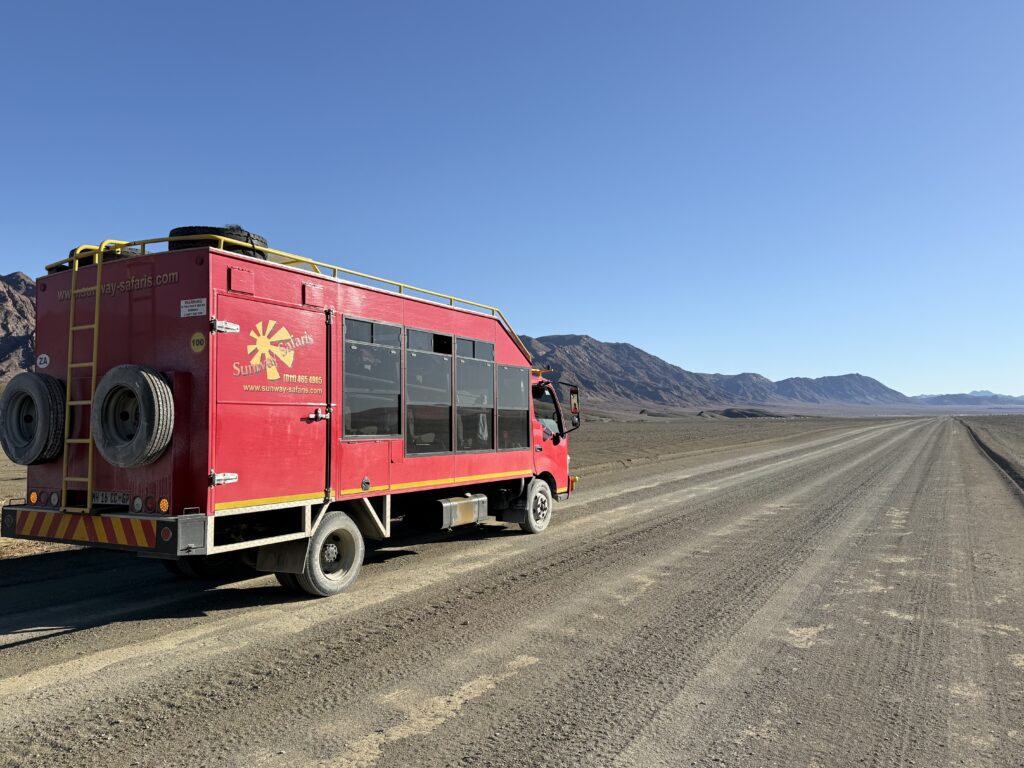
For the next phase of our journey, we join a group overland tour operated by Sunway Safaris, booked through African Overland Tours out of Cape Town where our contact Tammy became a lifeline and, over a raucous dinner, she tells us how she used to run these overland trips for Drifters, doing all the driving, cooking, car repair, client management, tour guiding, and general problem solving by herself for their camping trips – she’s the real deal! We’re glad that our tour includes both a driver, Jonas, and a guide, Collen, who work nonstop on our lodge-based program. Considering the vastness of our target countries – Namibia and Botswana – outsourcing is the way to go, and it’s a relief to hand over the keys, the research, the logistics, and the meals to someone else to sort out. We drive an average of 5.5 hrs per travel day in a purpose-built overland vehicle nicknamed the Red Elephant which is self sufficient with water storage, fridge, camping gear including chairs and tables and if needed tents and sleeping bags and has large windows that can be lowered for optimal viewing. Our group of 12 hail from Norway, Belgium, England, Italy, and New Zealand and are all congenial and travel savvy. Group travel does mean a faster pace with early mornings, moving as a group, so there’s fewer local interactions but we carve them out when we can.
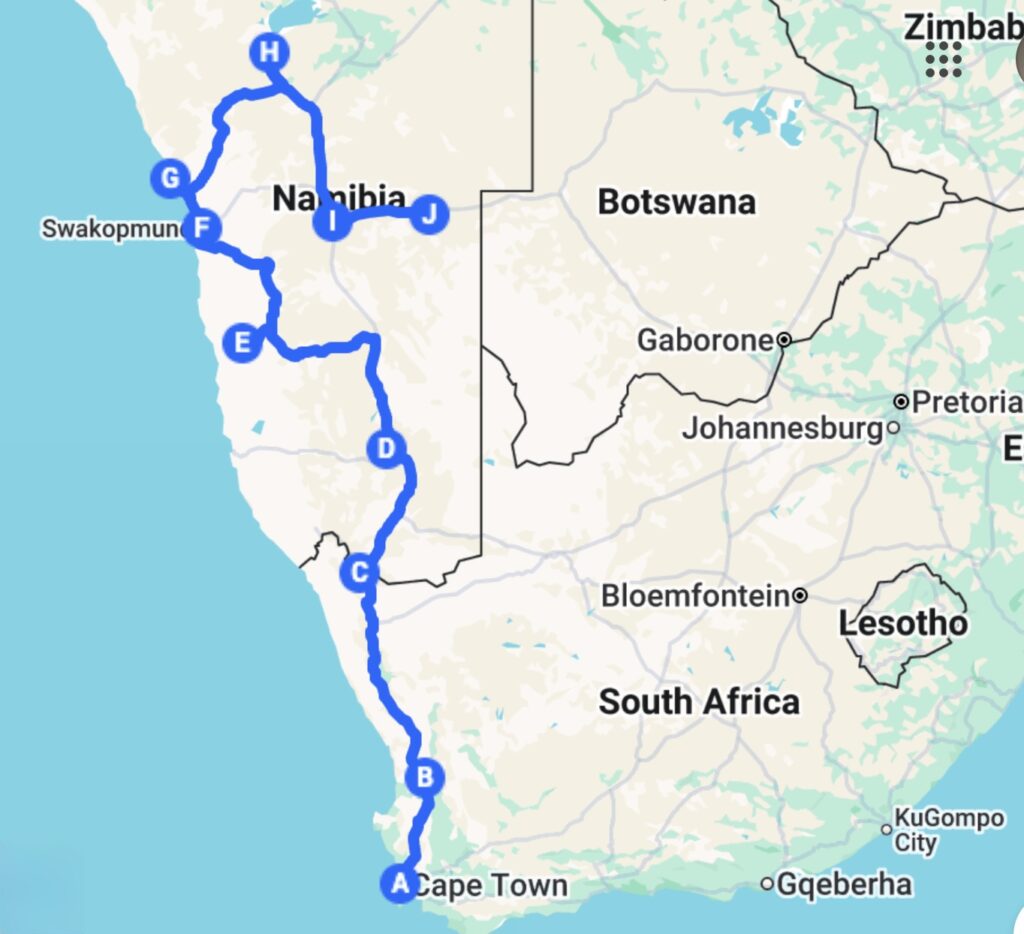
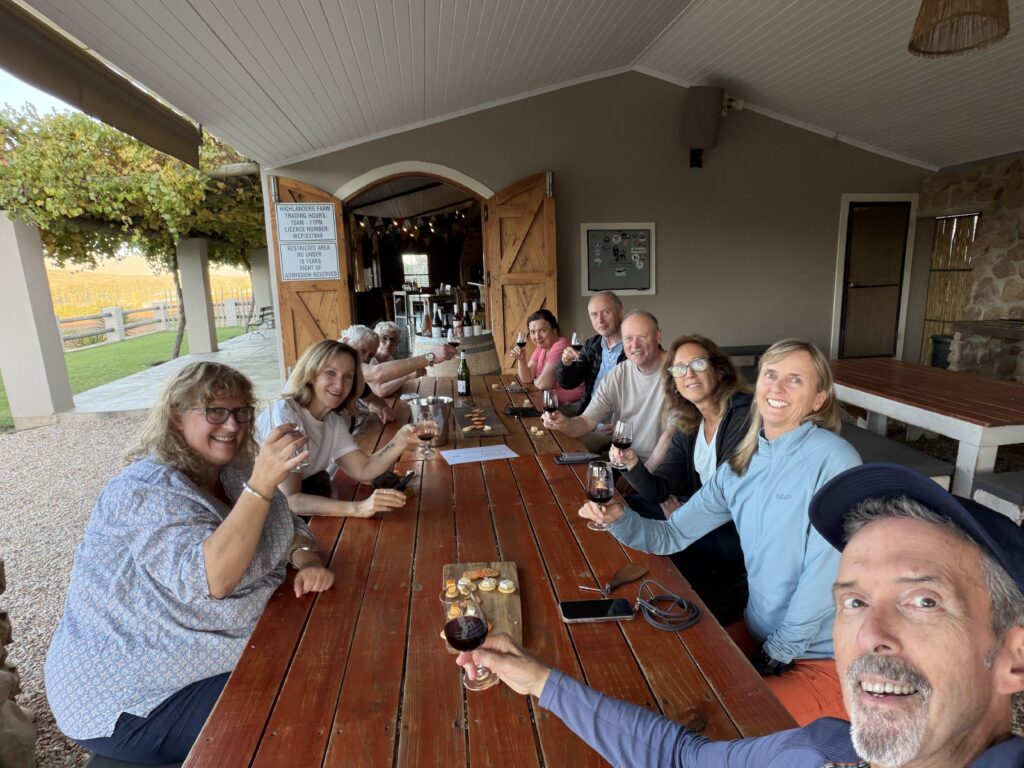
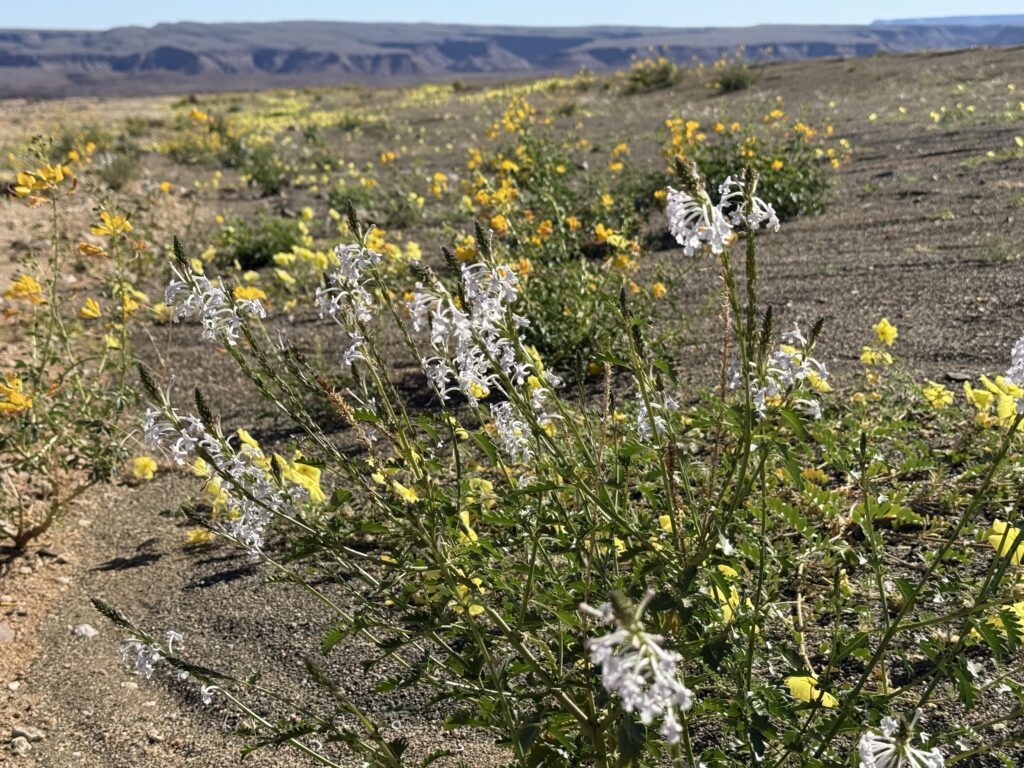
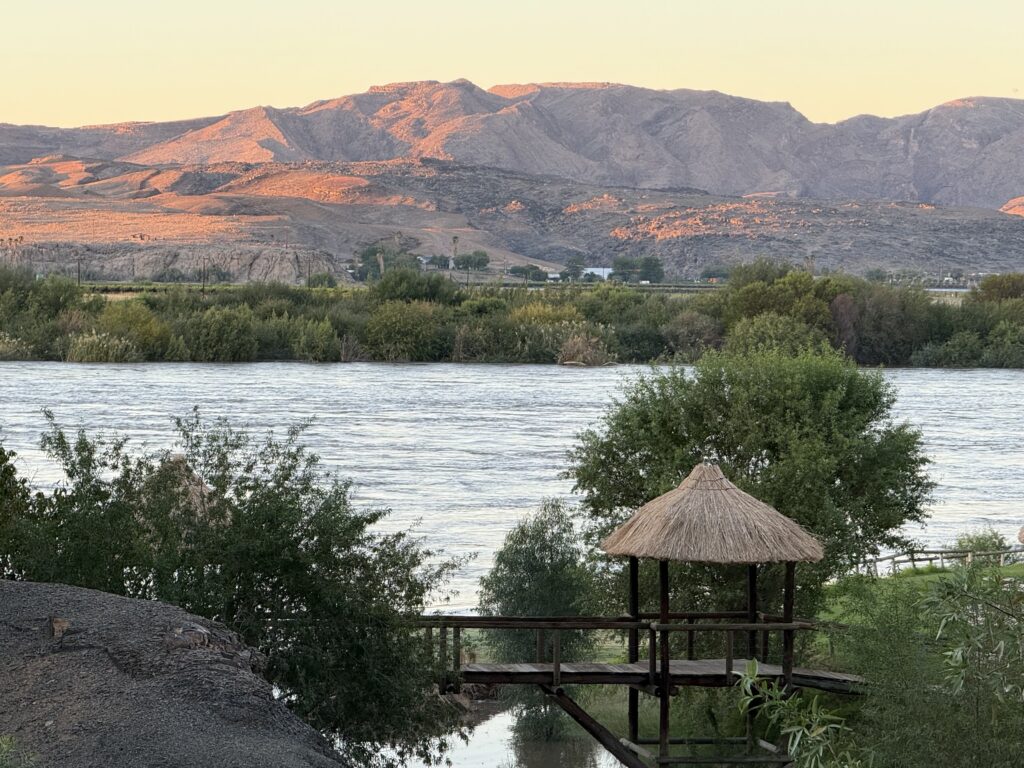
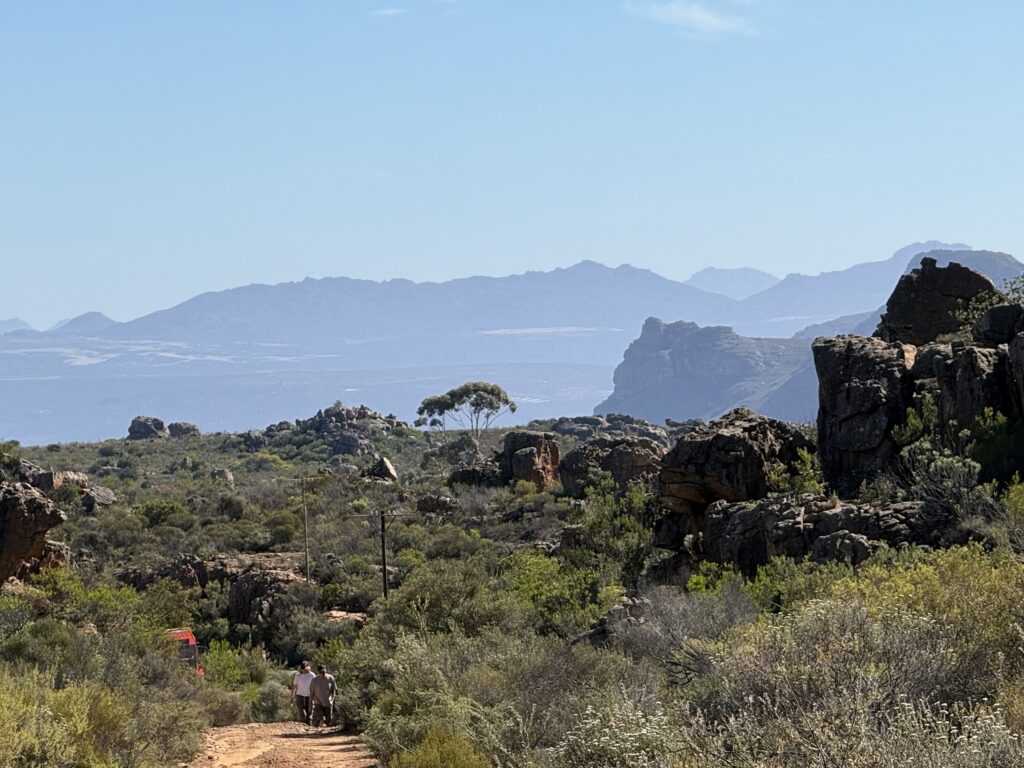
After a sightseeing day in Cape Town, we drive northwest towards Namibia, through the rocky Cederberg Wilderness, stopping at Highlanders Winery and Lodge for wine tasting in the setting sun, validation that we’re on the right trip! As we learned in South Africa, this region and Namibia experienced unprecedented rains this season, as evidenced by partially submerged trees in the swollen rivers. but also a profusion of wildflowers and a more lush environment in these naturally dry areas. We were supposed to kayak on the Gariep River, which originates as the Orange River in the Drakensberg mountains of eastern South Africa and acts as a natural border with Namibia as it winds west towards the Atlantic, but the heavy flow would have spit us into the ocean well downstream unceremoniously. Agriculture is grateful for the generous rains including the nearby grape and date palm farms. The local township, with their corrugated sheet metal and bamboo thatched homes, supplies the migrant workers securing 3 month grape picking jobs, but one worker I spoke with is now unemployed, living in the township and not motivated to return home near the Angola border where the 7 year drought brought on famine and the recent rains mean a lot of work rebuilding their farm, so he lingers planning his next move. There are many young men like him, listless without employment, some hustling to make a Namibian dollar or worse causing trouble, contributing to continued security vigilance on our trip. Namibia has a literacy rate of 90% but also an unemployment rate of 55% leading to underutilized and frustrated human resources. Our guides ask us to not give food or money to the many kids that approach with hands outstretched to avoid school demotivation. Locals from the township ask us of the Iran war status, saying it’s caused their prices to skyrocket making life even harder.

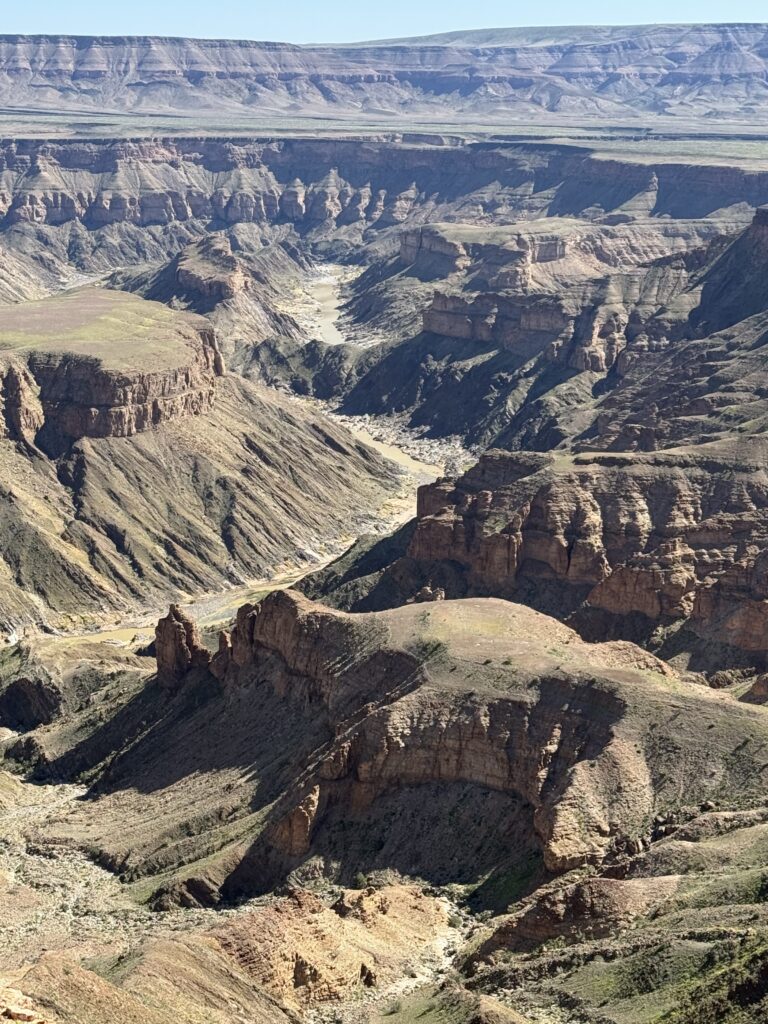
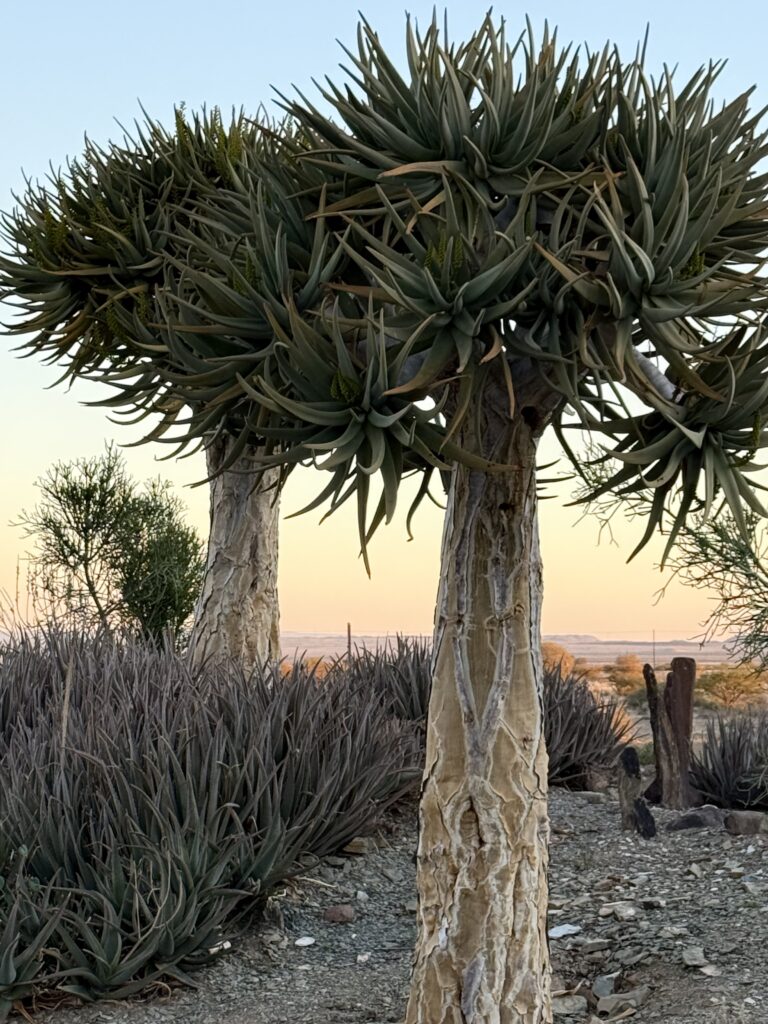
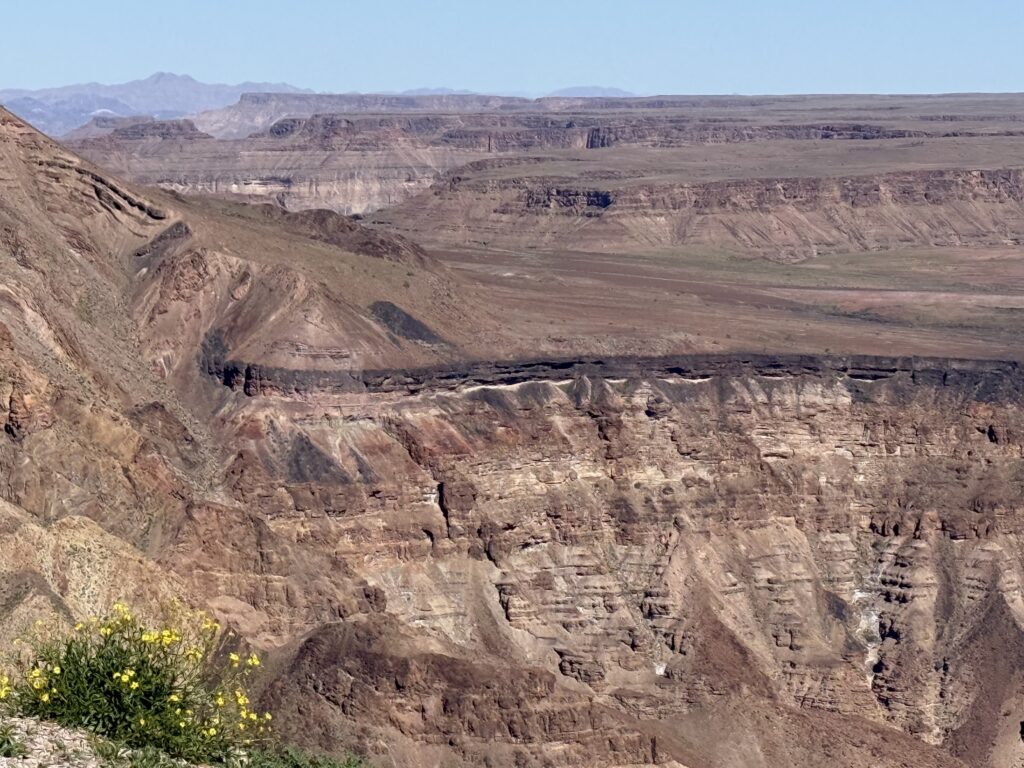
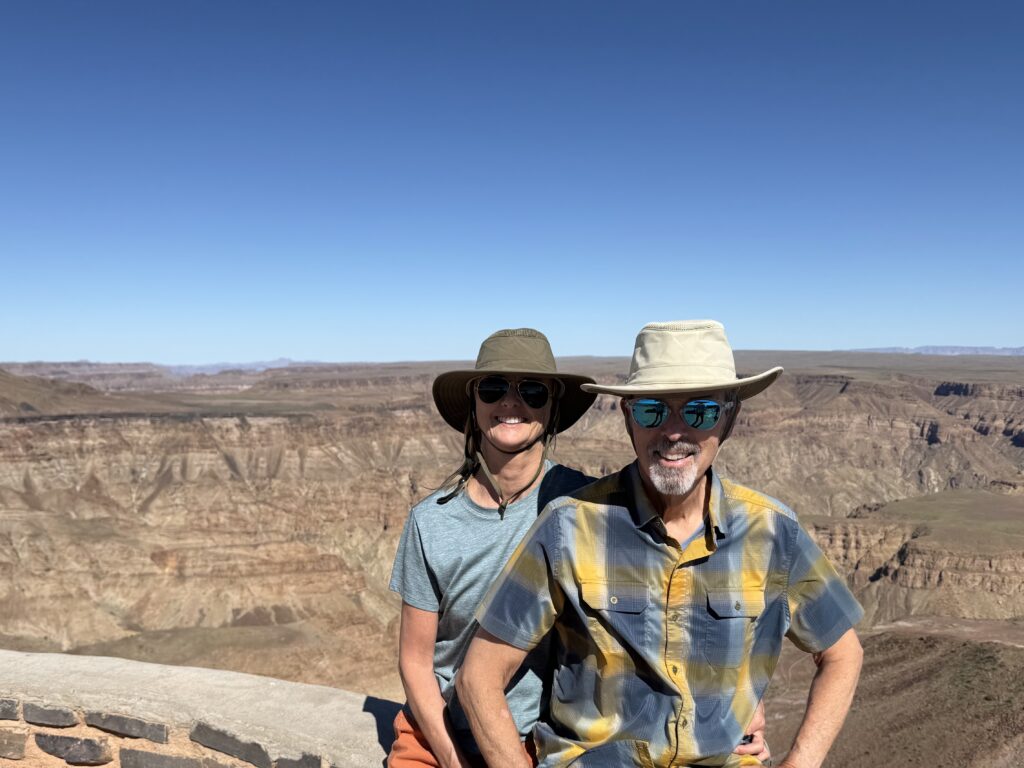
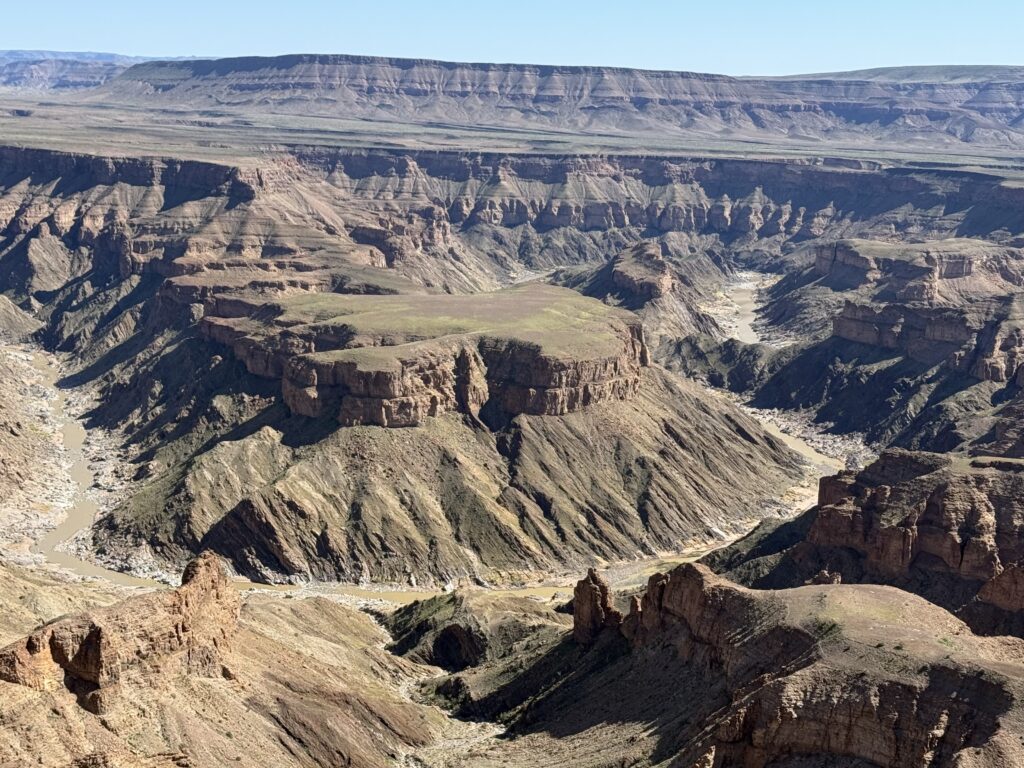
A unique trip destination on our tour is the Fish River Canyon, both older and larger than the Grand Canyon, prompting our more descriptive rebranding: the Grander Canyon. The Fish River even makes a horseshoe turn in the gorge to great effect. On the rim we learn that the quiver tree, which can live up to 150 years, is used by bushmen who cut a branch to drink the water inside then hollow out the branch to store meat. They also use the toxic milk product of the local euphorbia plant to poison their arrows.
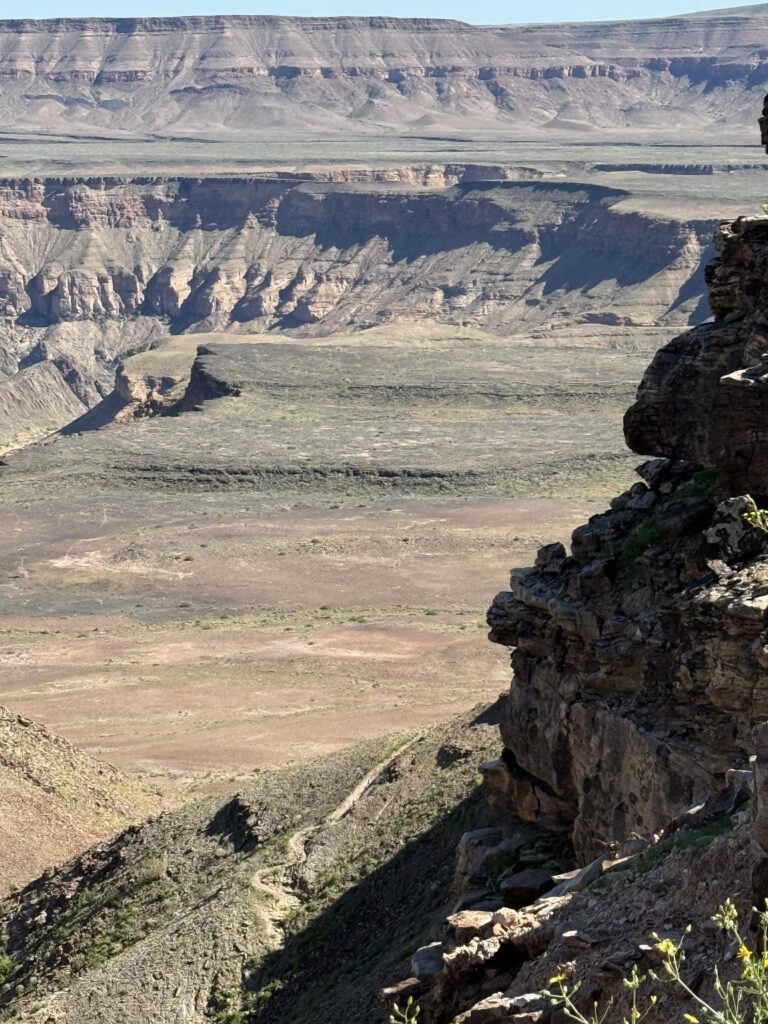
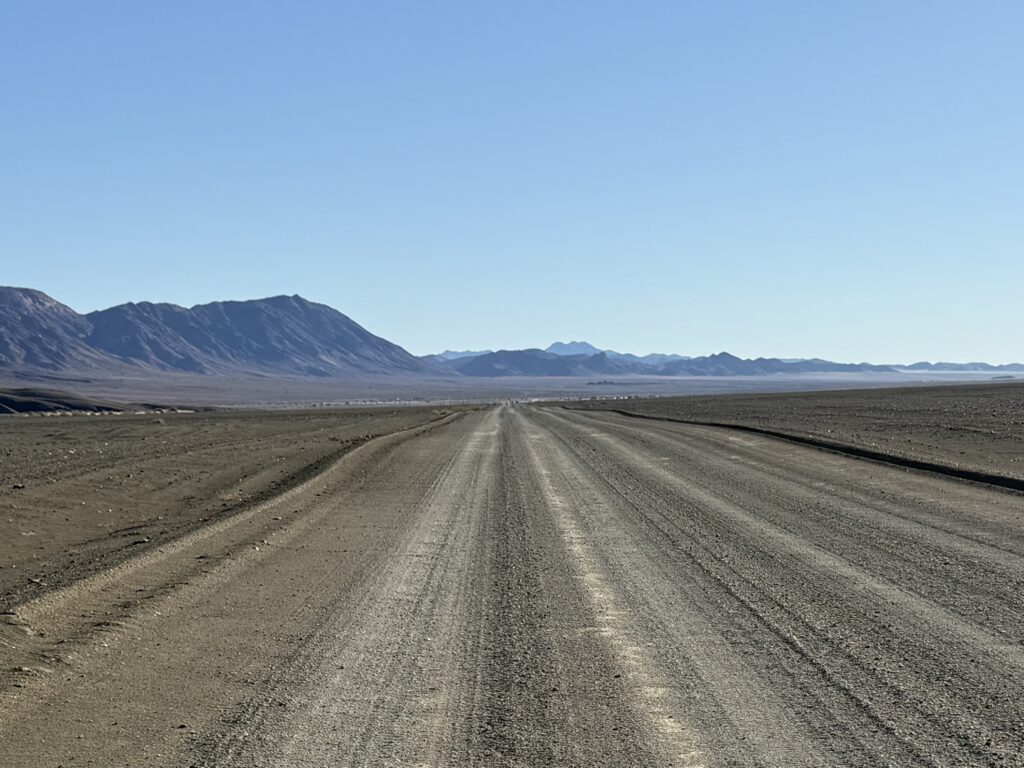
Namibia is a mix of road qualities including some main roads with smooth asphalt for hundreds of miles, built originally by South Africa to help them manage the throngs in their South-West Africa territory. Others are dirt washboards varying in bounciness, referred to as African Massage. The terrain varies between vast mesmerizing grassy plains, rocky outcroppings and hills, scrub brush including menacing thorn bushes, broad acacia trees providing much needed shade, sandy desert-like sections, and, due to the recent rains, more lush areas with taller trees. When needed, we request a roadside pit stop aka bushey bushey.
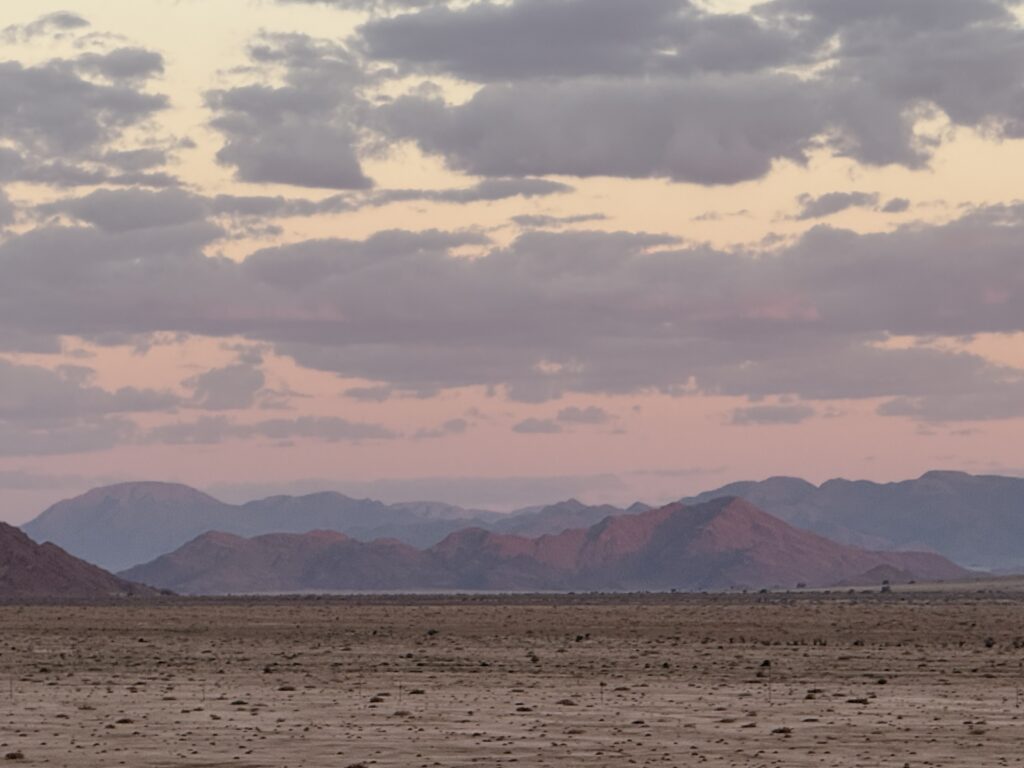
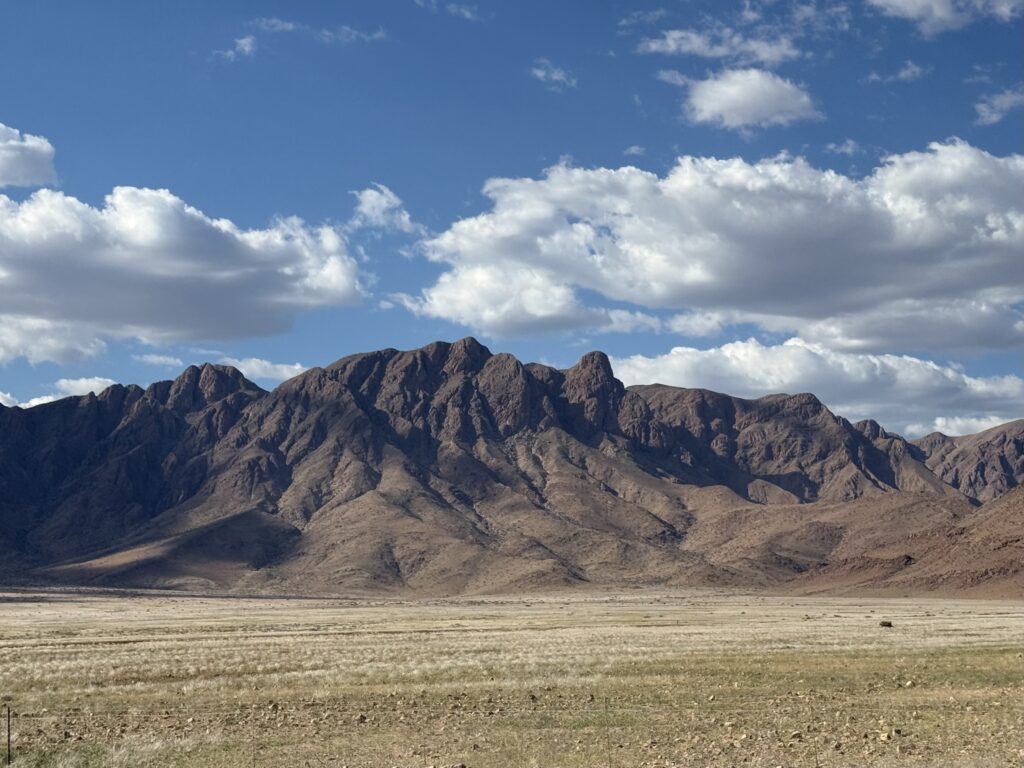
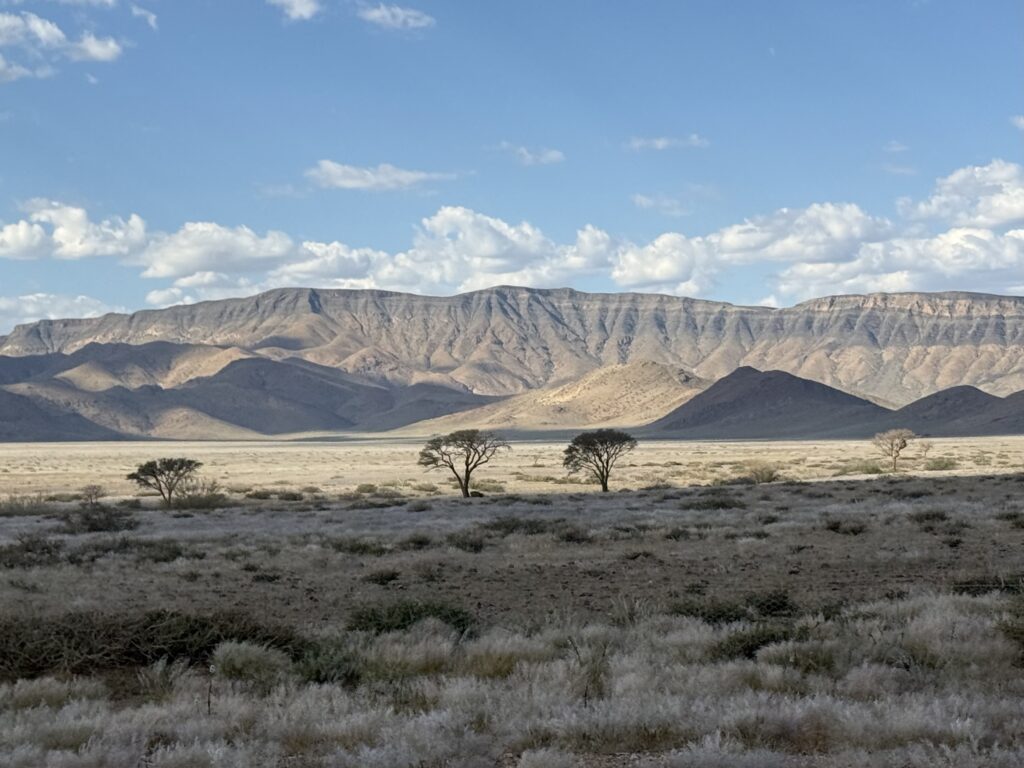
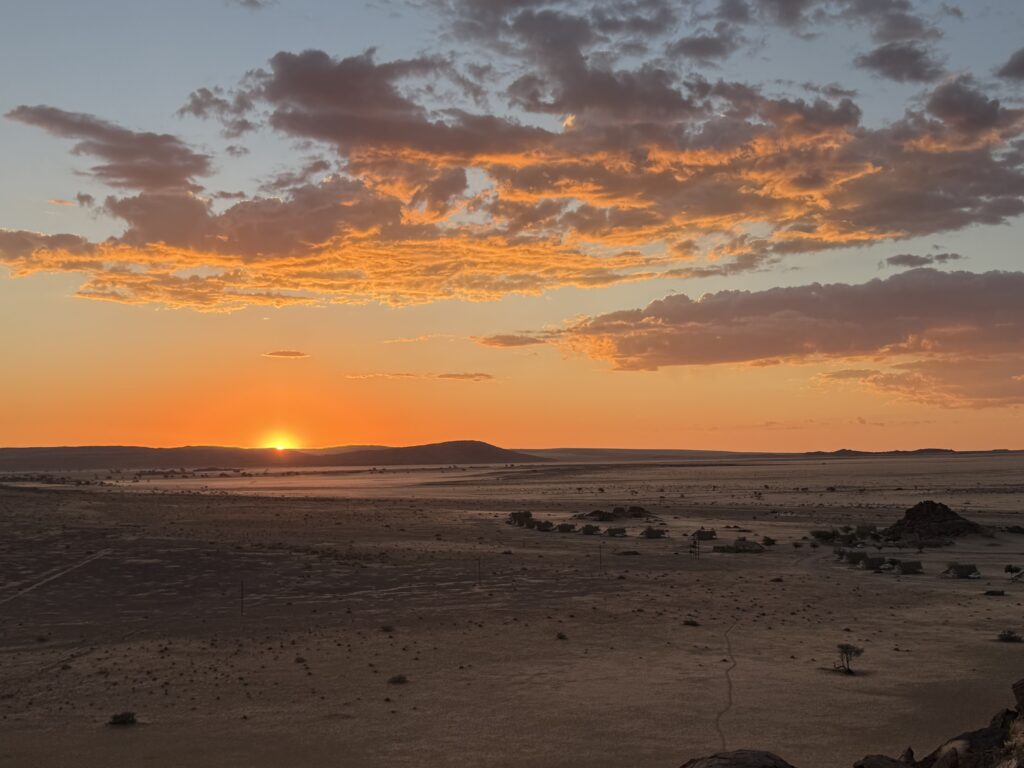
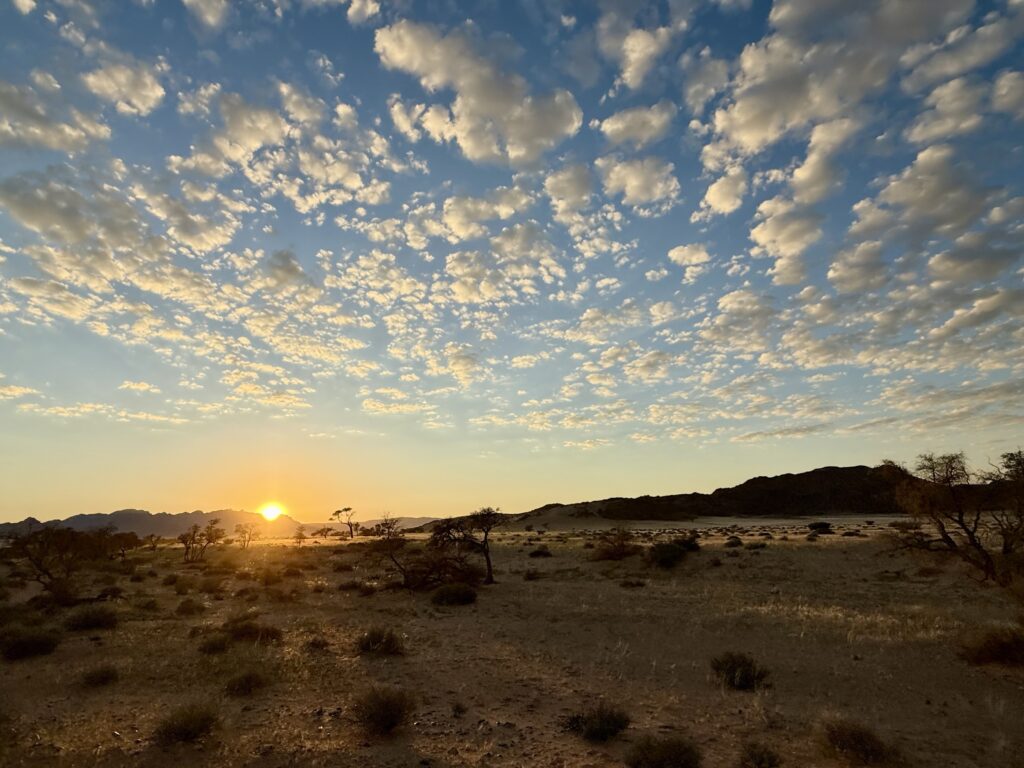
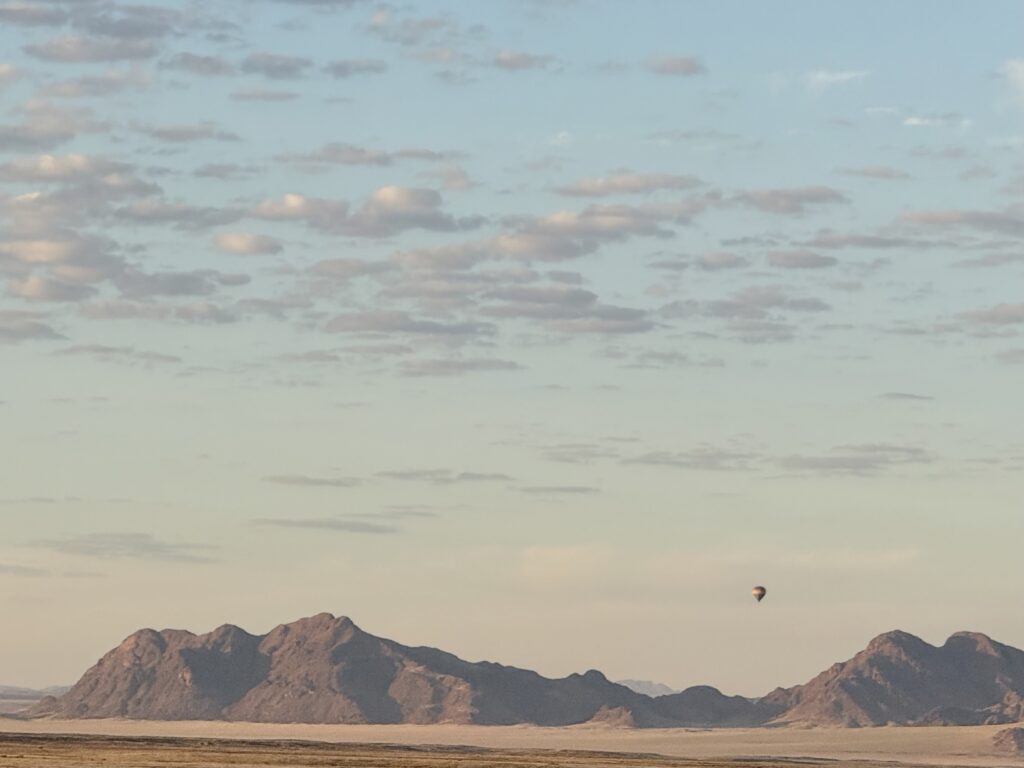
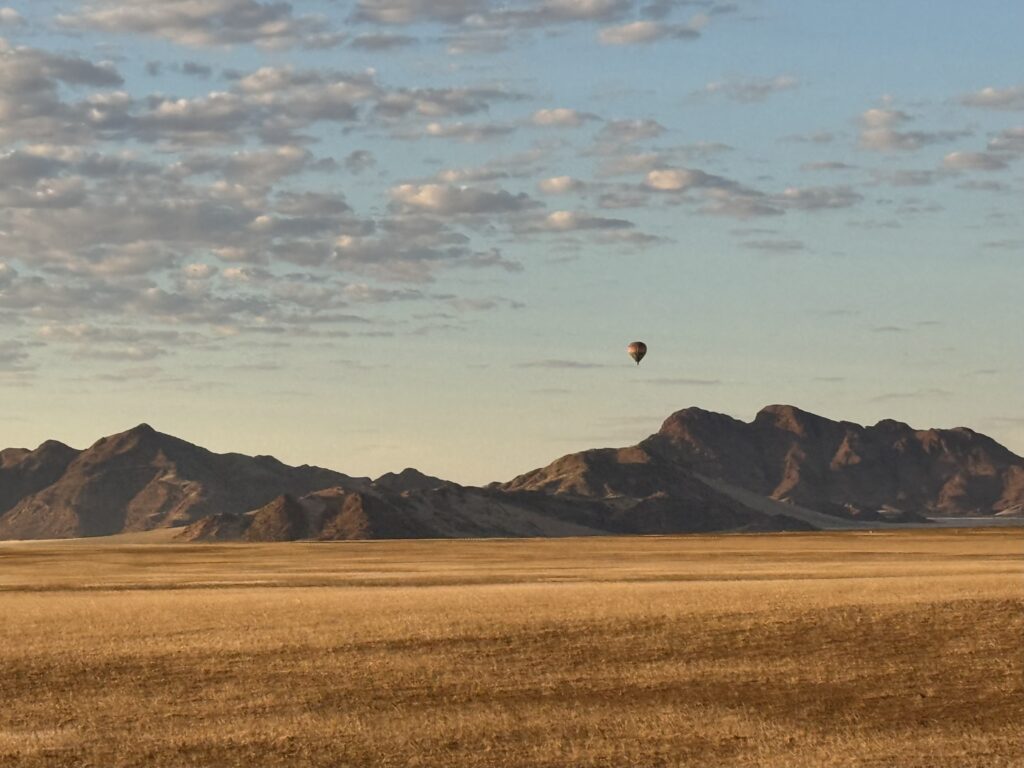
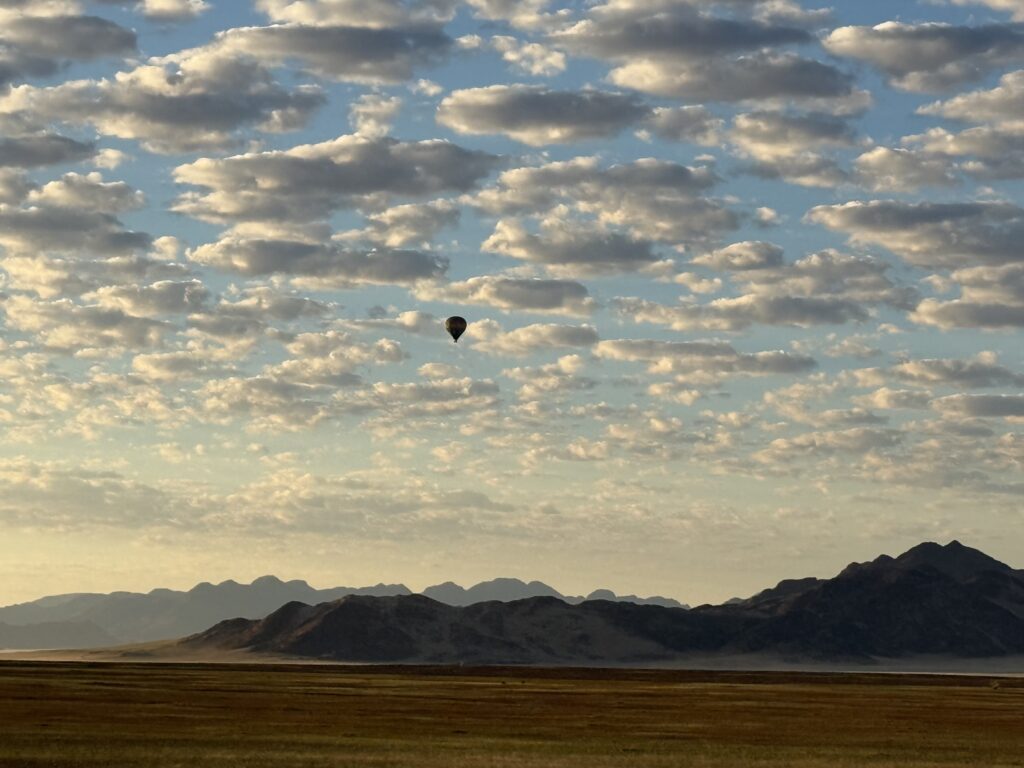
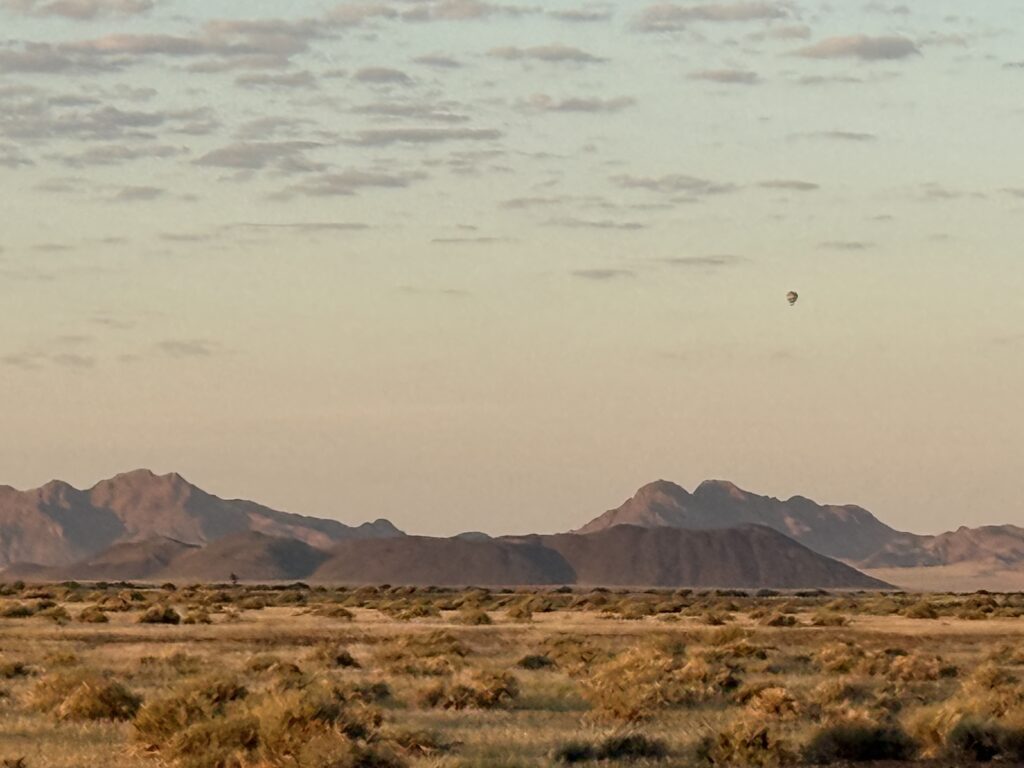
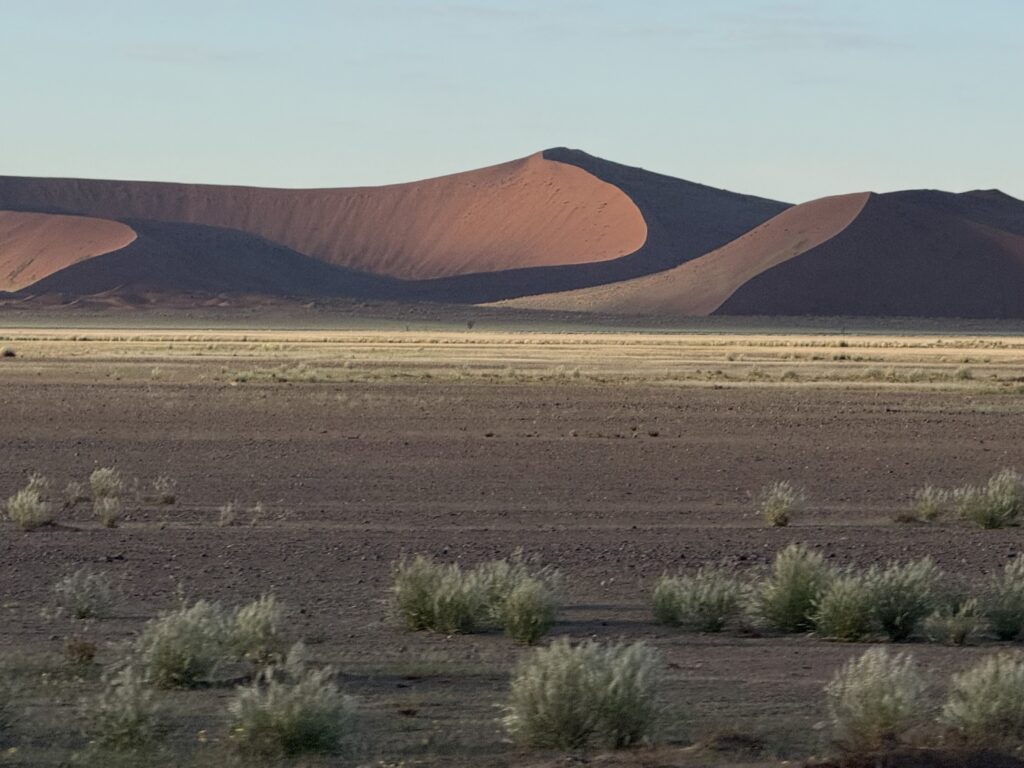
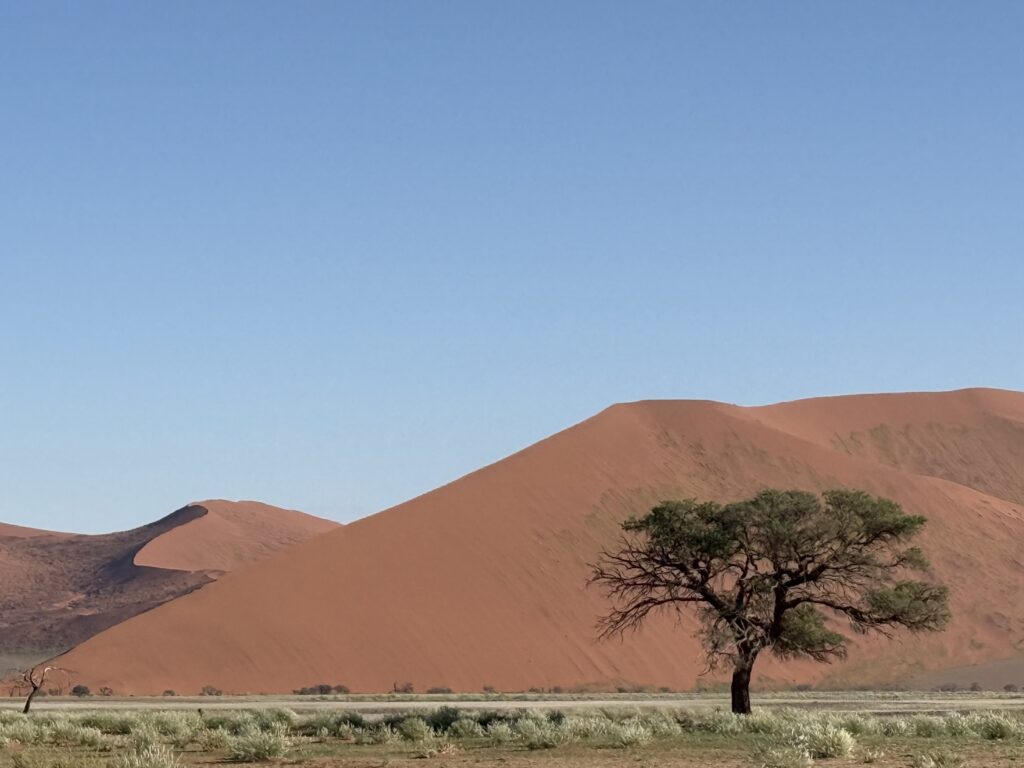
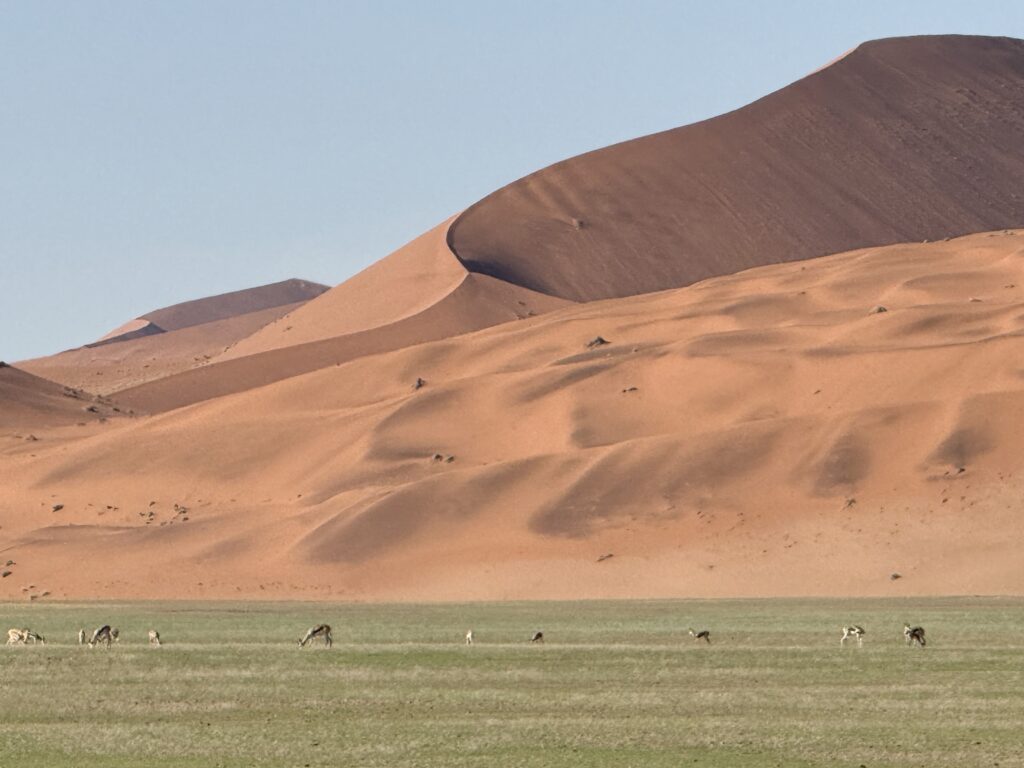
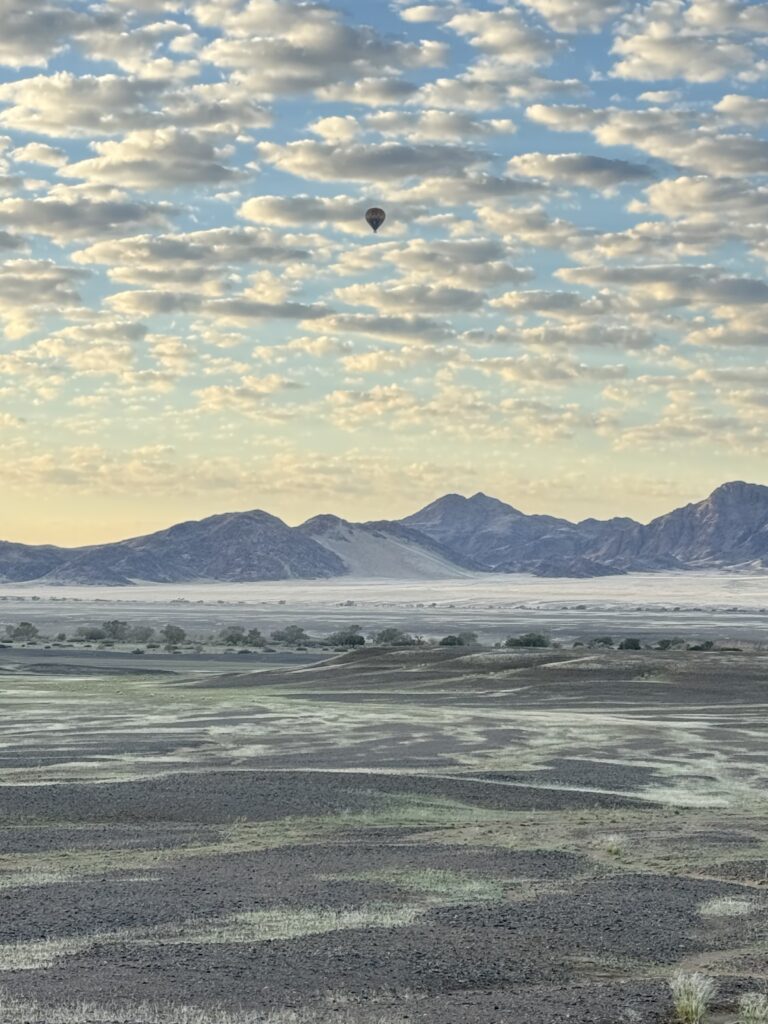
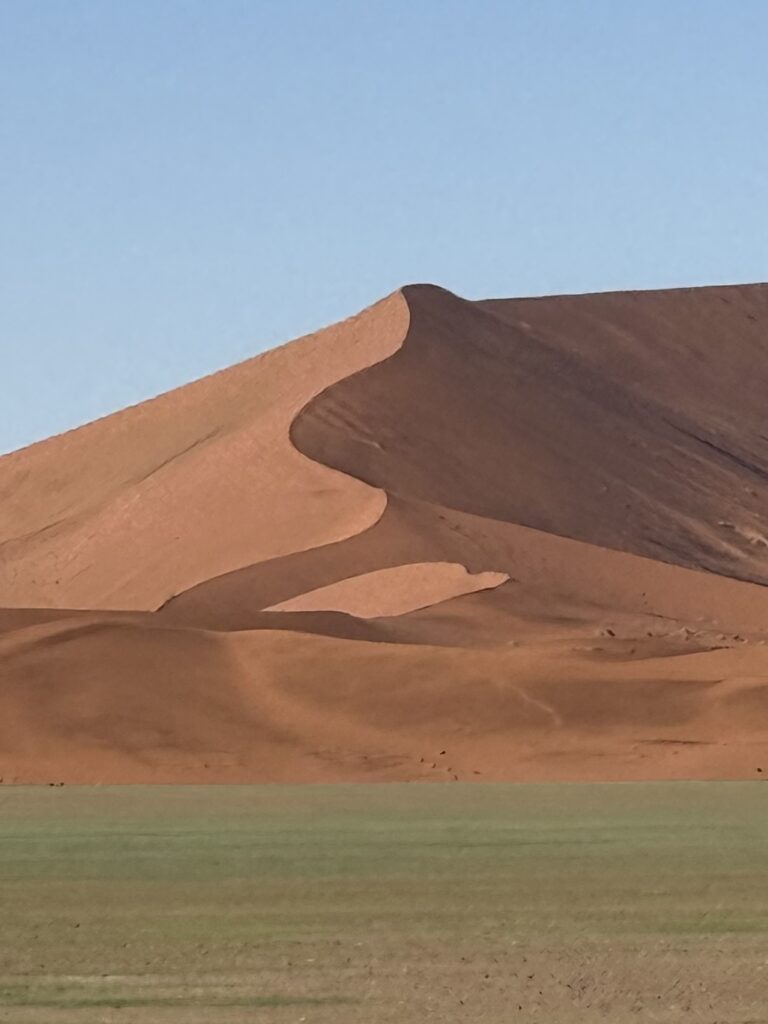
At Sossusvlei National Park, a highlight destination for me, we tape our phone openings with a band aid to block the fine sand from disrupting our lifeline technology, and my Kindle screen gets slowly obscured with debris as the sand blows in through window cracks and gathers in a hefty line along the sides of the truck floor. As we enter the park at sunrise, a single hot air balloon drifts in the distance amid cotton ball clouds, floating slowly towards us above the desert dotted with springbok and oryx. The vistas evolve before our eyes with the rising sun in a landscape Georgia O’Keefe would have coveted, and the rains have added a rare sheen of green against the red sand. These are living dunes getting reshaped daily by the winds, causing height and shape fluctuations and dynamic conditions. I double layer my boot in garbage bags, grab my poles, and head single file up the ridge line of Dune 45 feeling strong and steady, focused on my footsteps to keep any fear of heights at bay as the sand drops precipitously on either side. The vistas are magical with the surrounding dunes displaying shades of red, orange, white, and grey depending on their mineral content and the sun’s angle. From the summit we drop down the sandy ski slope to finish the 4 mile loop.
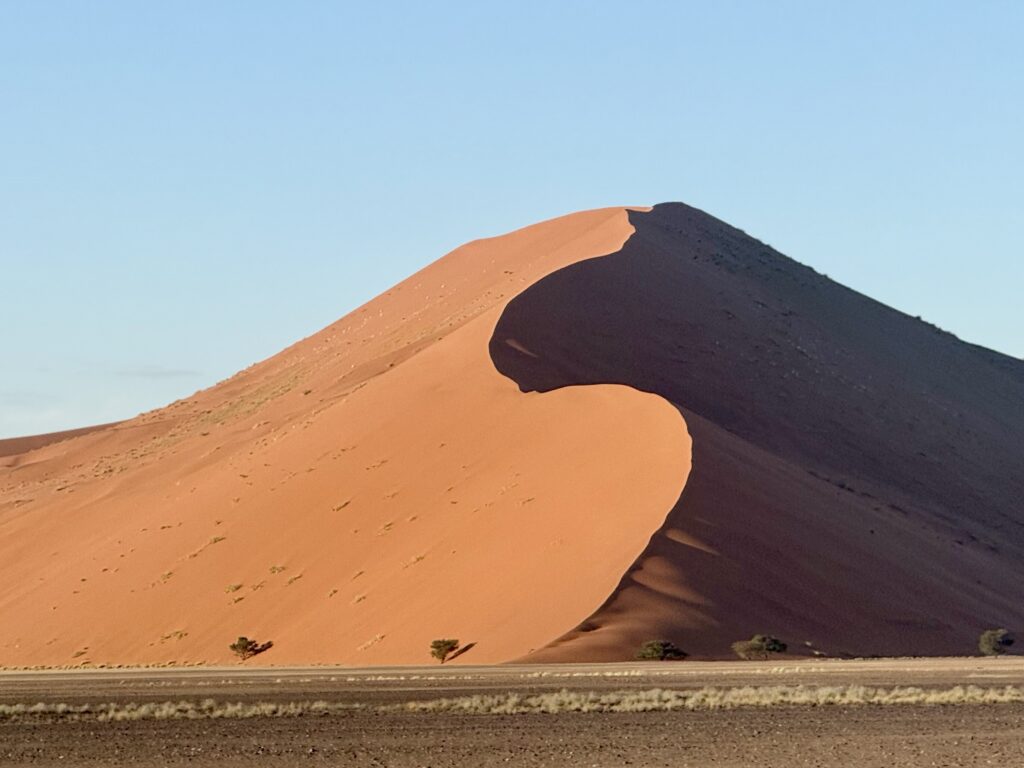
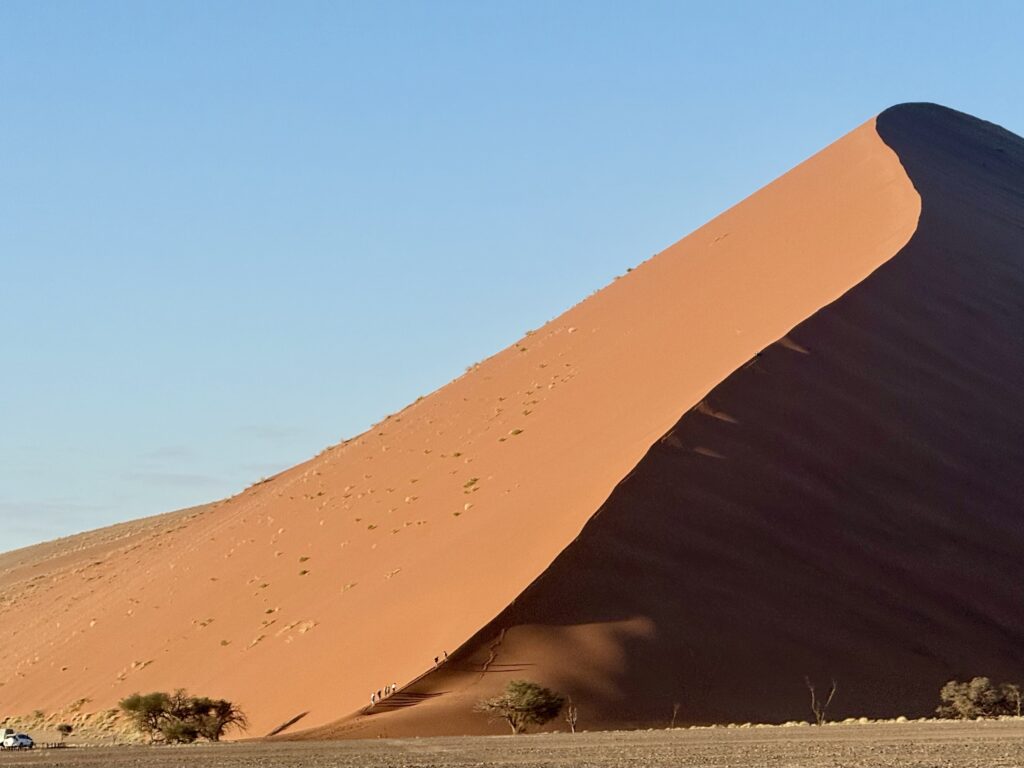
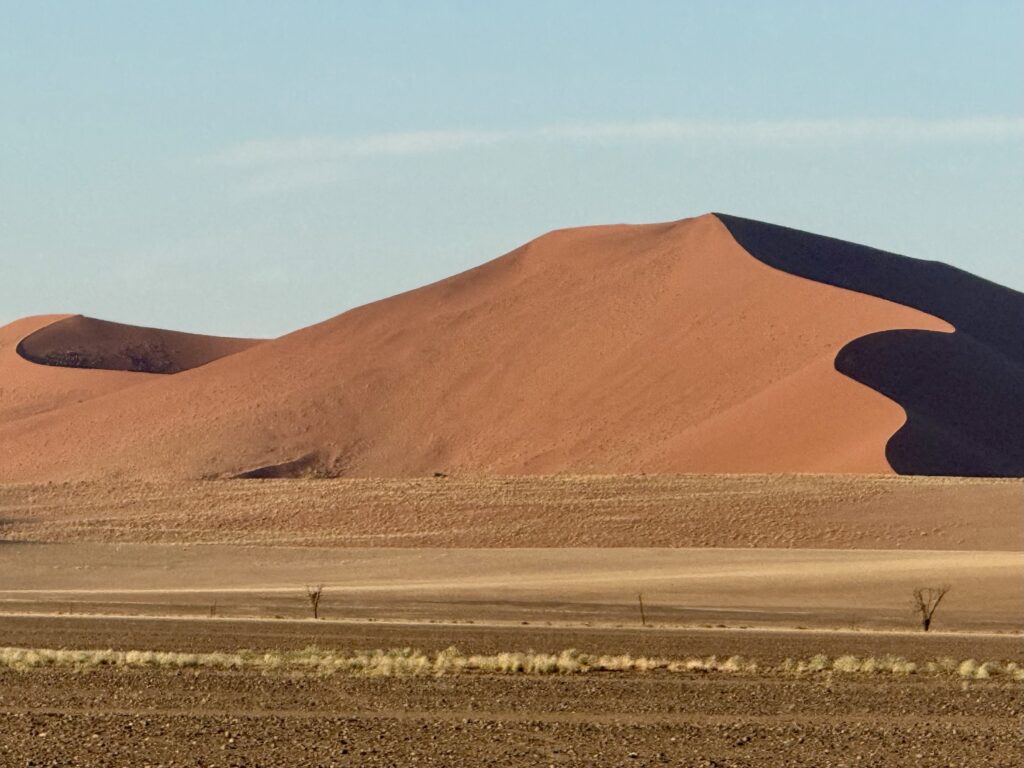
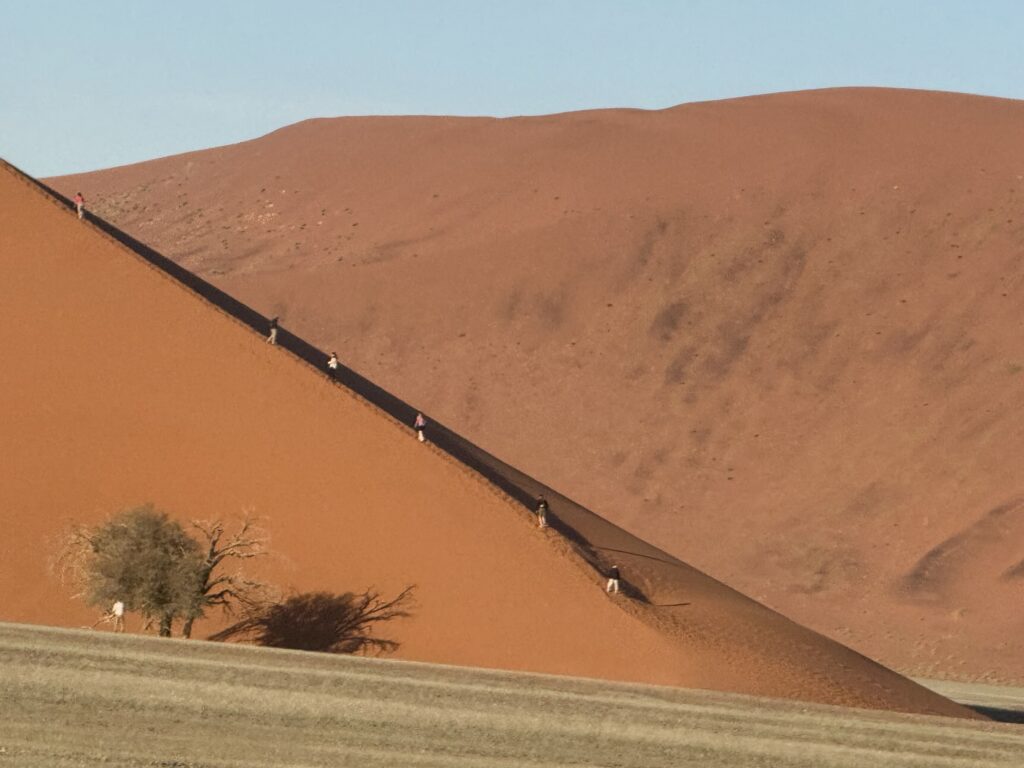
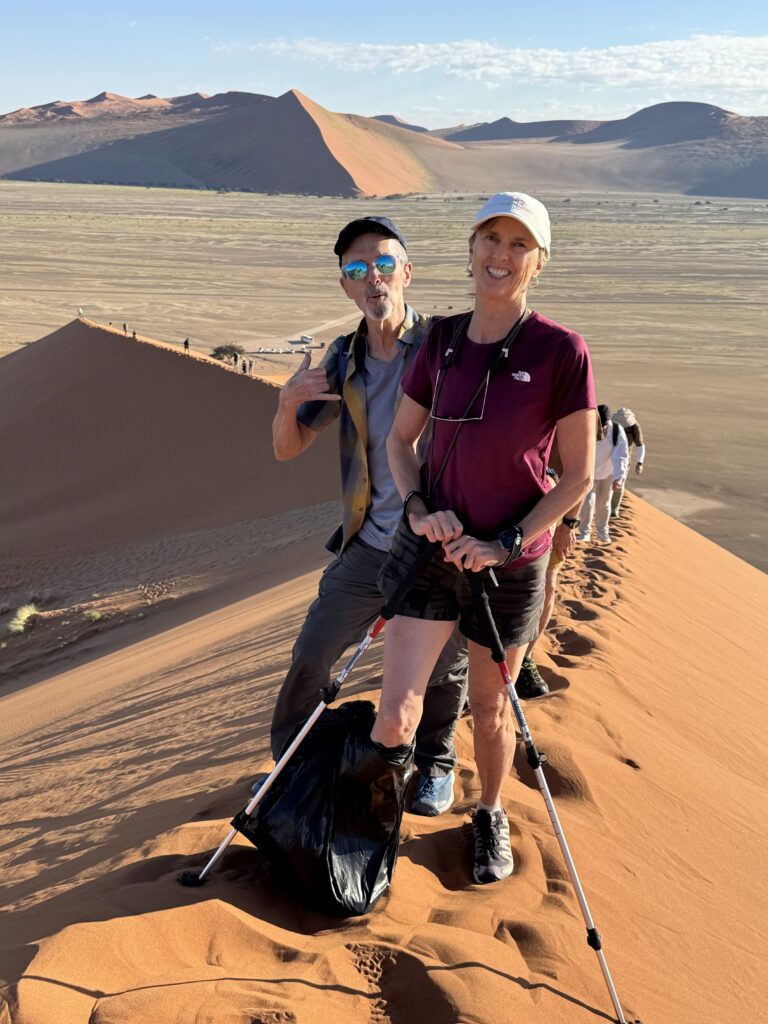
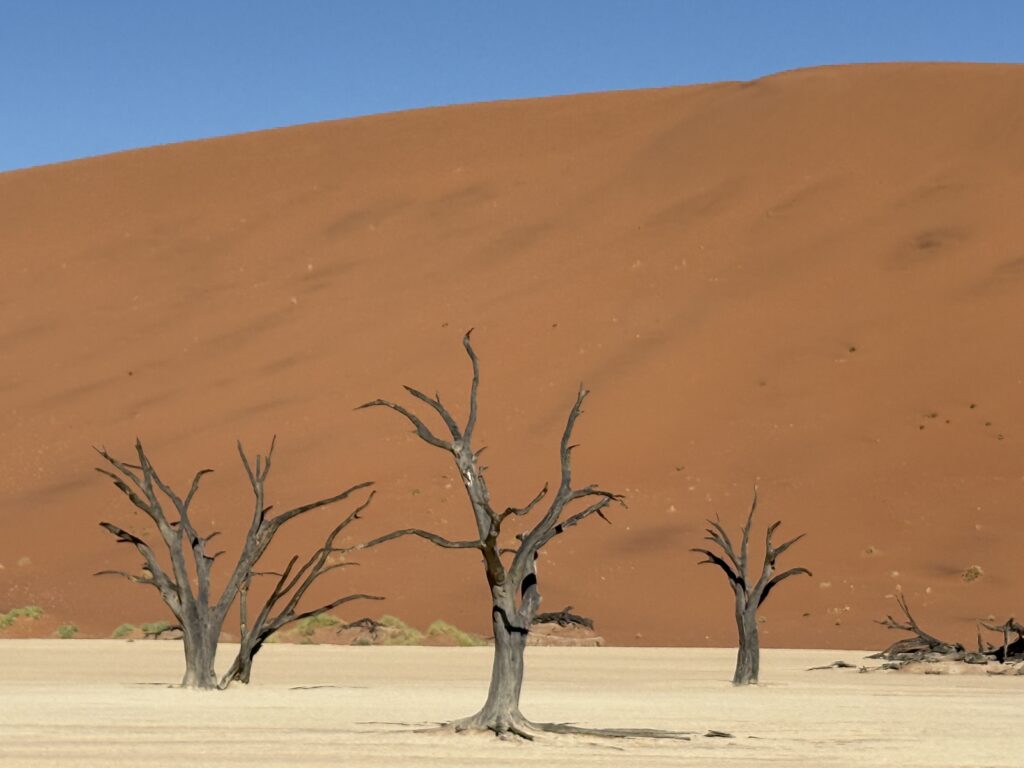
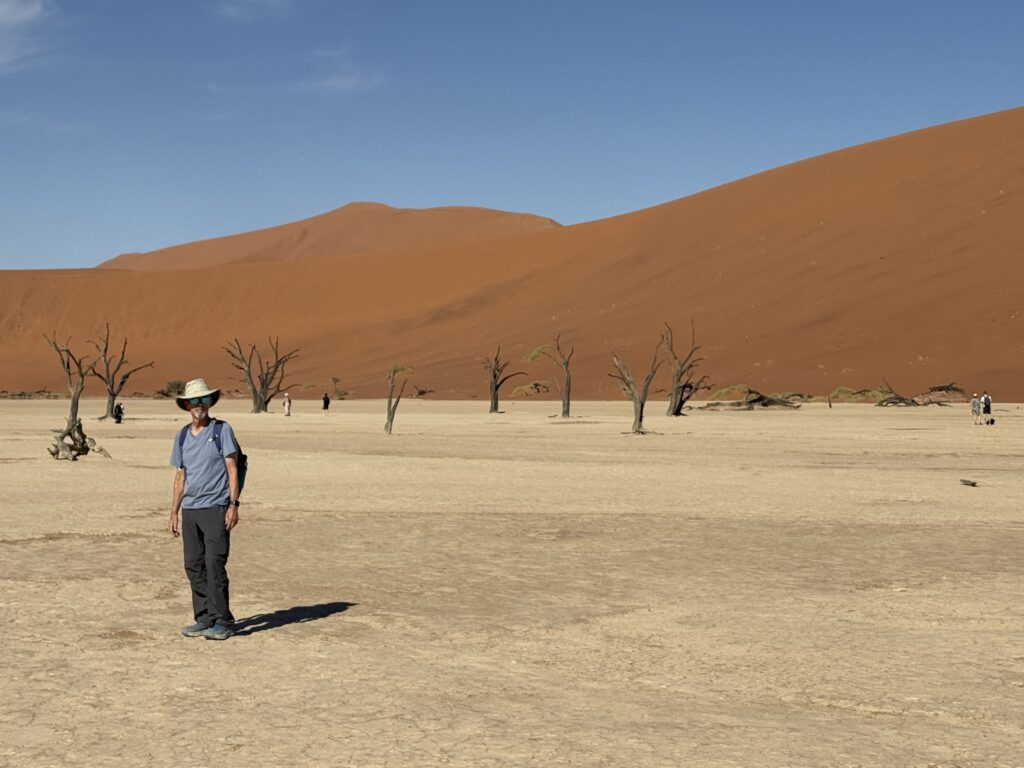
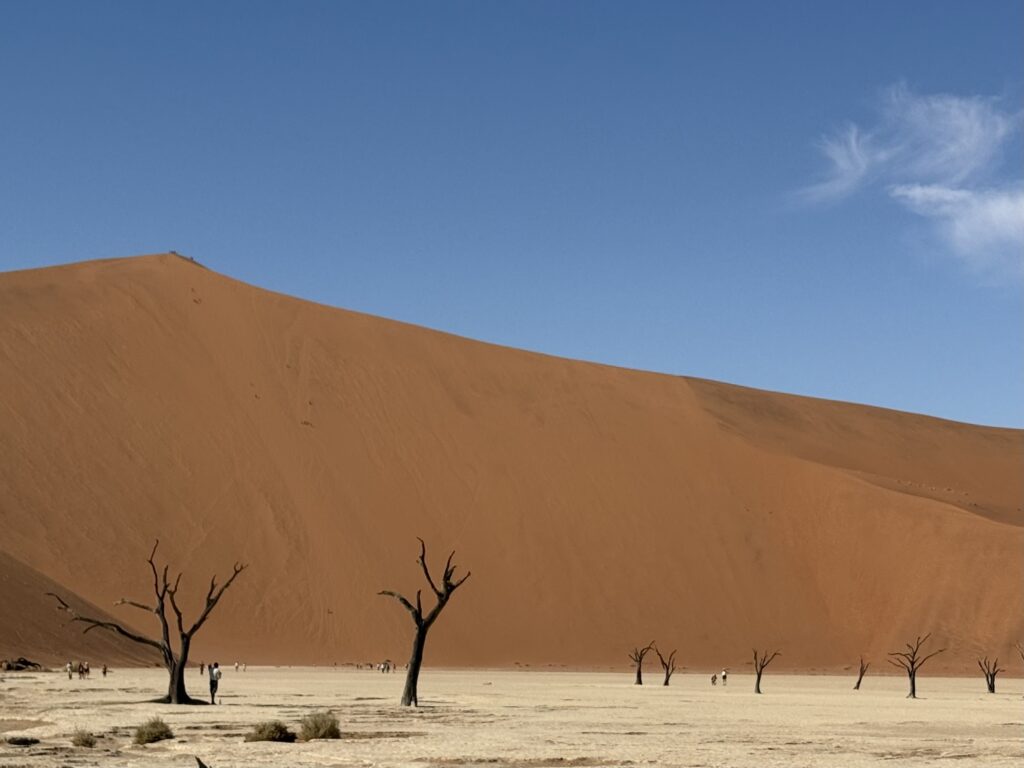
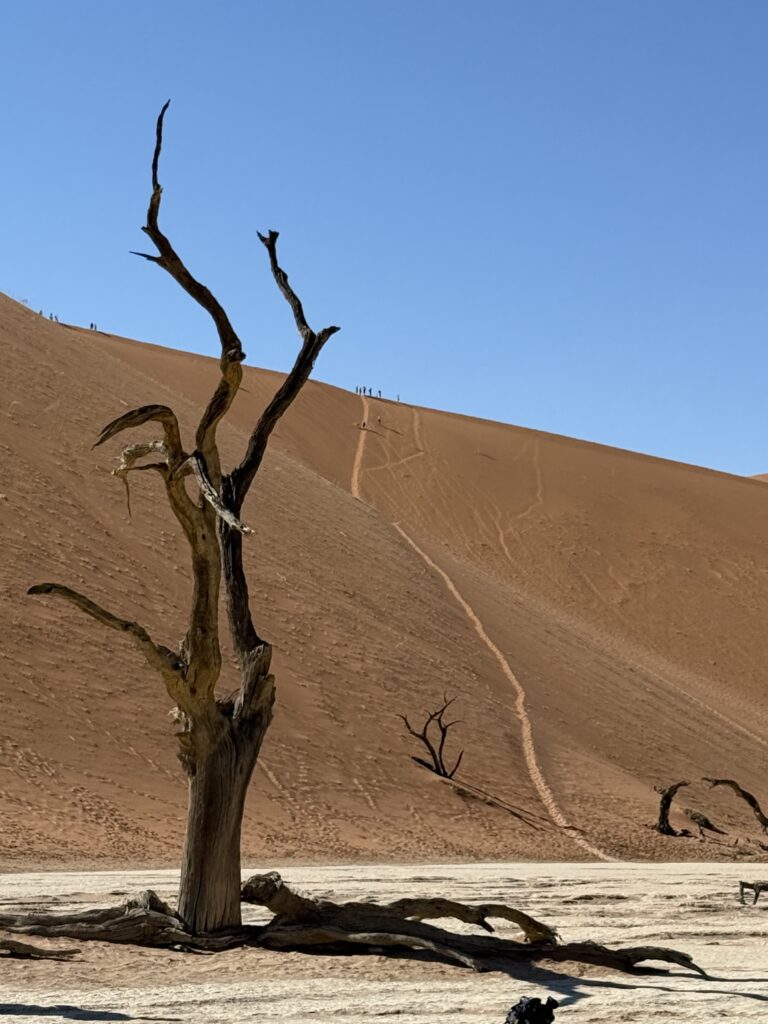
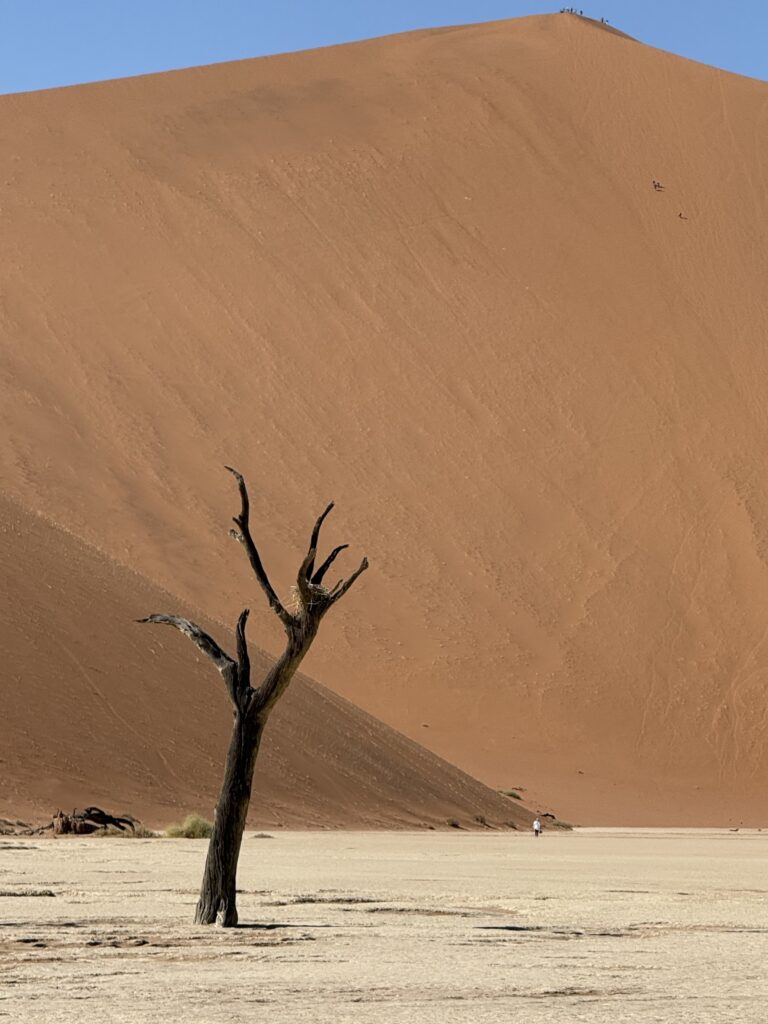
We head next in the park to Deadvlei, where the river was rerouted by the dunes over 1,000 years ago, and the arid atmosphere prevented the stranded trees from decomposing so they remain as a barren forest in the hardened sand. Both on the dunes and this hike I receive lots of encouragement from other tourists for my boot escapades, one group even saluting me. The rains wreaked havoc last month in the park, causing flooded roads and inaccessible sites, leaving deep muddy truck tracks and a small lake with partially submerged trees. We wrap up our park visit at Sesriem Canyon, formed millions of years ago by the Tsauchab River creating raw, rocky and mud formed walls.
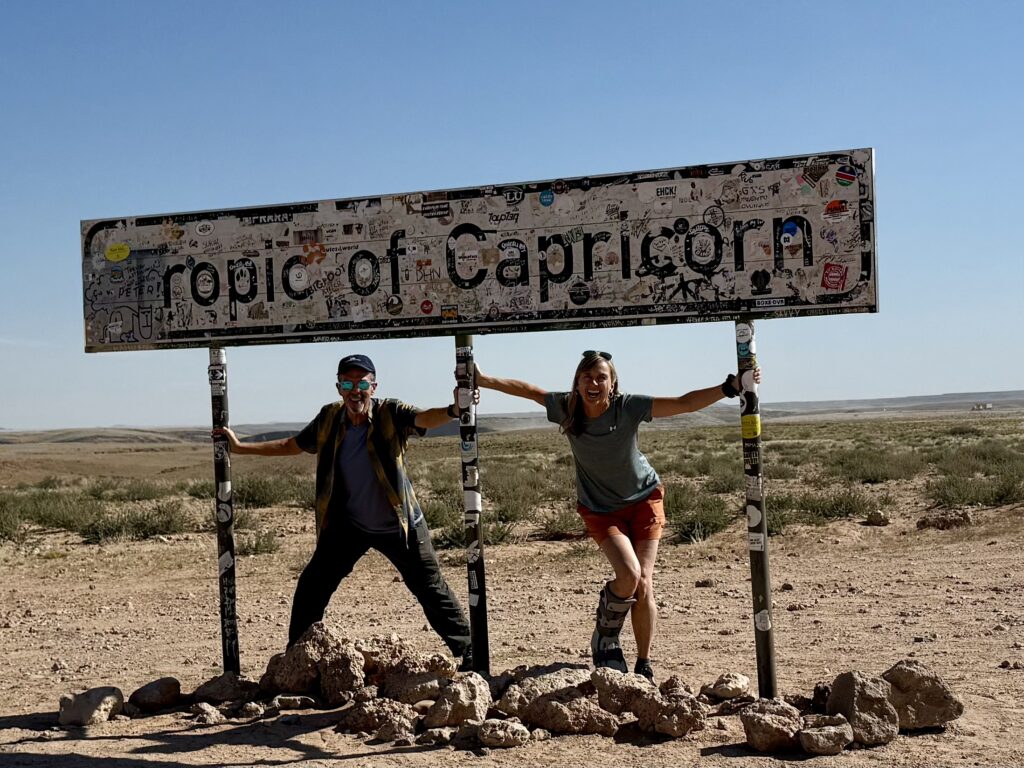
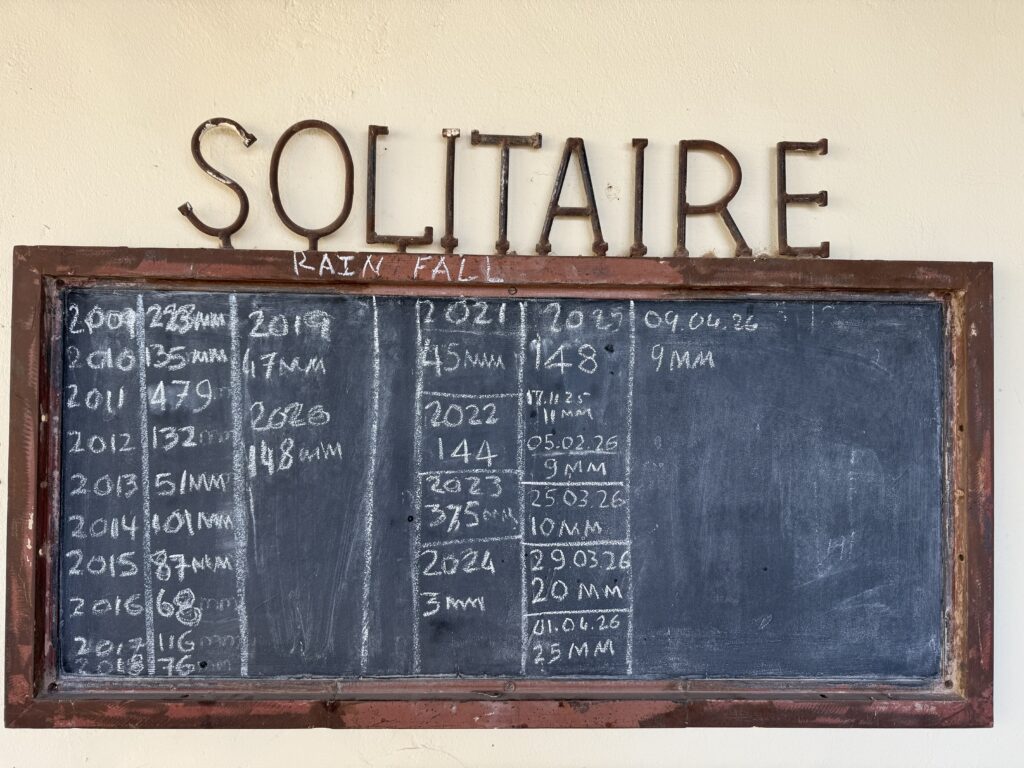
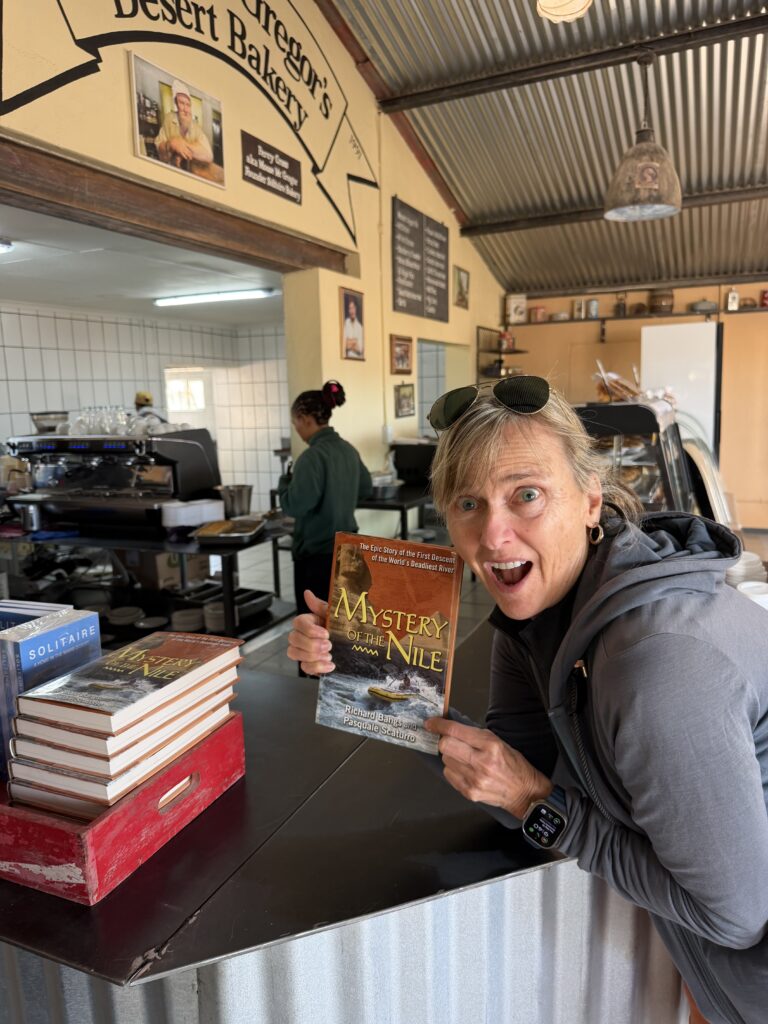
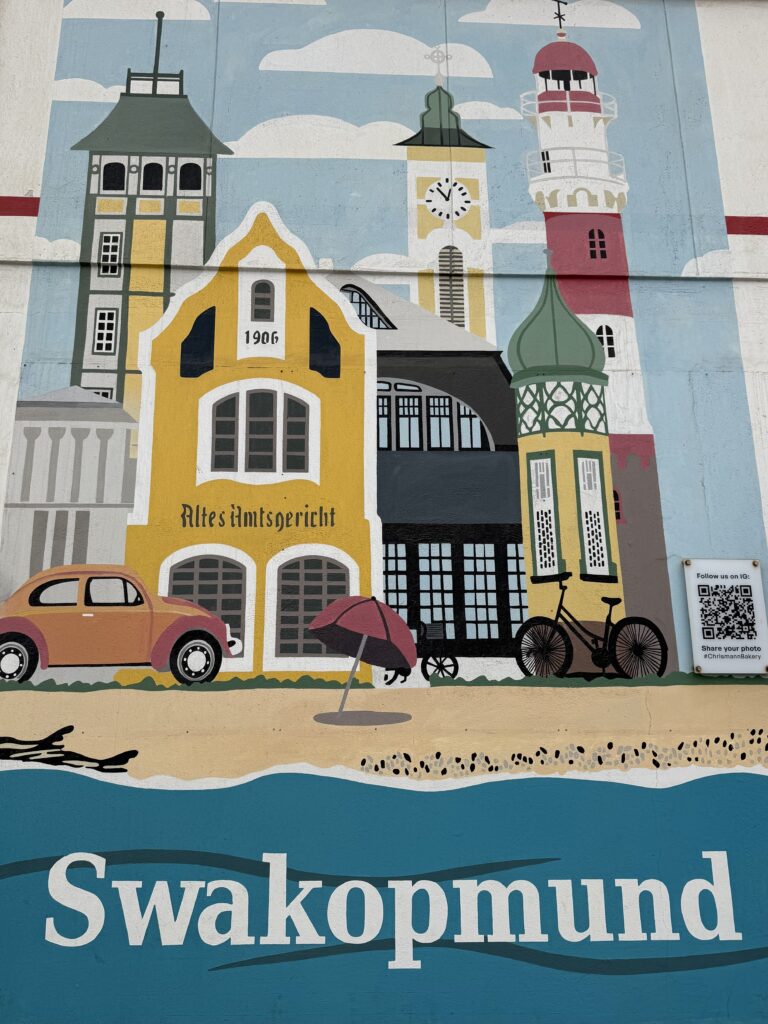
We grab photos at the Tropic of Capricorn sign, which marks the latitude where the sun is directly overhead during the December solstice, then stop briefly in Solitaire where the precious rainfall is tracked on a chalkboard and the store bookshelves are filled with Richard Bang’s book Mystery of the Nile. We stop for pictures of the beautiful Kuiseb Canyon, carved by the Kuiseb River and acting as a natural boundary keeping the sand dunes from spreading north before heading to the coast to visit Walvis Bay, their second largest city with revenues from oil, salt, and gas plus a major Atlantic shipping port. We stayed overnight at Swapokmund, an old German town alongside the Swapok River discovered in 1895, where our black African receptionist is named Ludwig. Namibia was colonized first by the Germans in the late 1800’s and then by South Africa after WWI when it was renamed South-West Africa, before gaining independence in 1990. The German stamp remains ever present in the street names, architecture, shops, and menus, where there seems to be a nationwide competition for the best apple streusel (consensus favorite is Moose McGregor’s in Solitaire) as well as a predominance of German tourists. The language of German speakers in Namibia is Southwest German, and many Germans have second homes in Swakopmund to escape the winter. The German influence has shaped Namibia into a more efficient, cleaner, and well functioning country than most of its neighbors. Namibia is twice the size of California with just over 3 million in population and the extracted resources (uranium, lead, zinc, tin, silver, diamonds) have created high per capita wealth though there remains large income disparity. In the category of celebrity sightings, Brad Pitt & Angelina Jolie gave birth to their biological daughter Shiloh in Swakopmund in 2006.


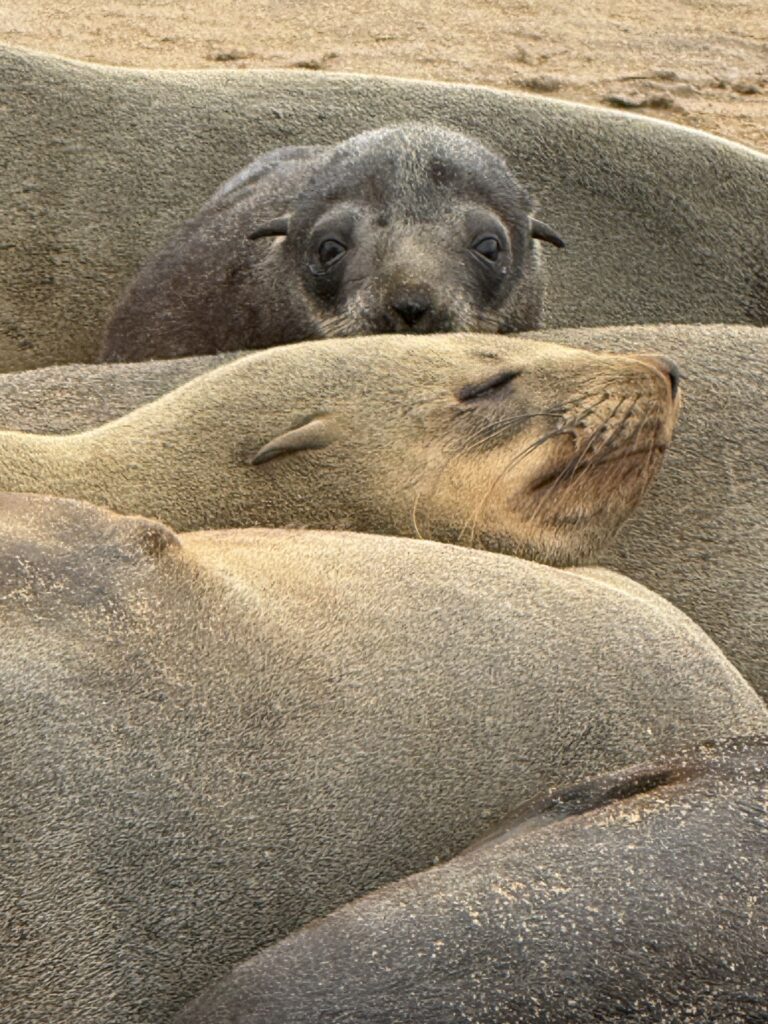
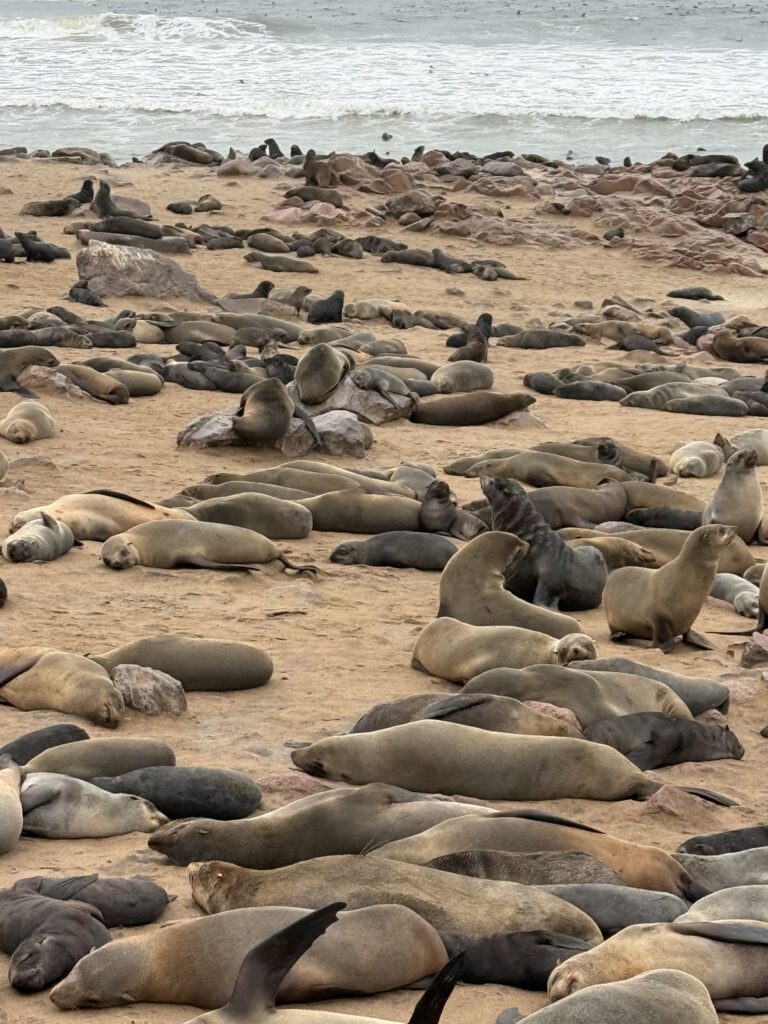
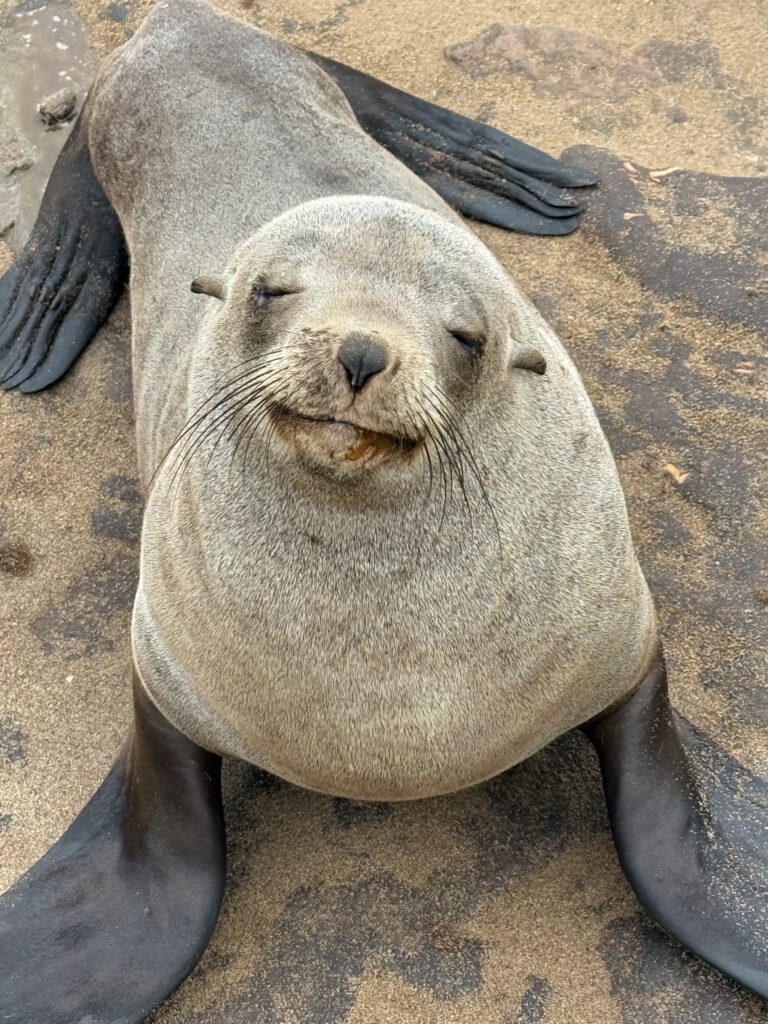
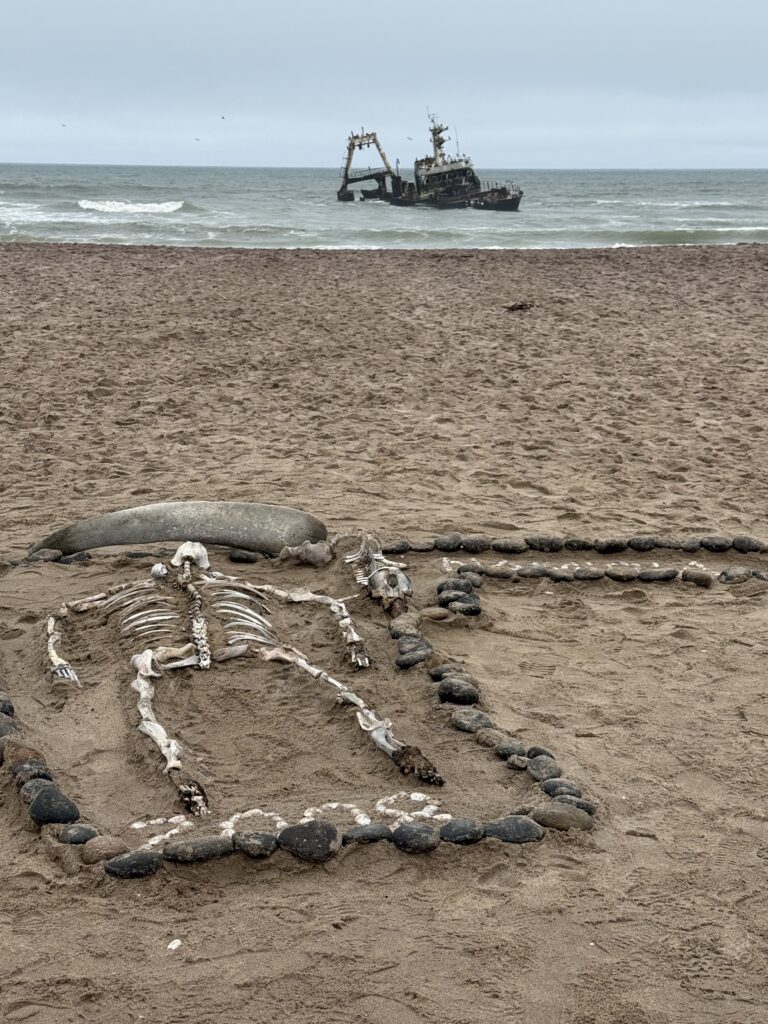
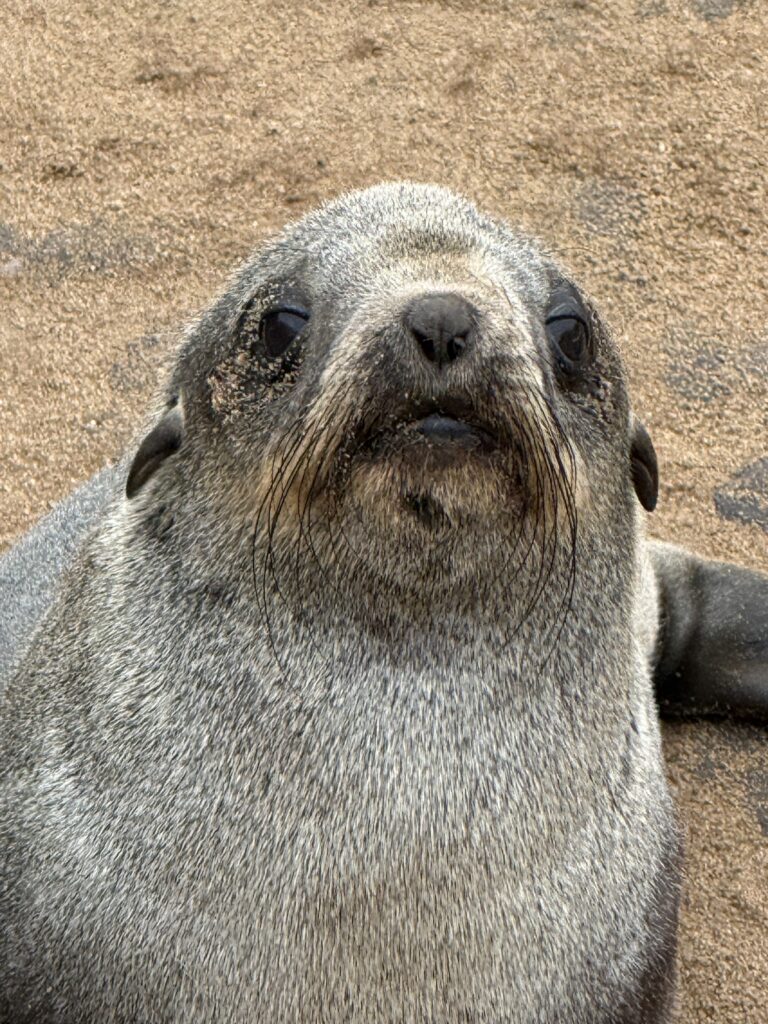
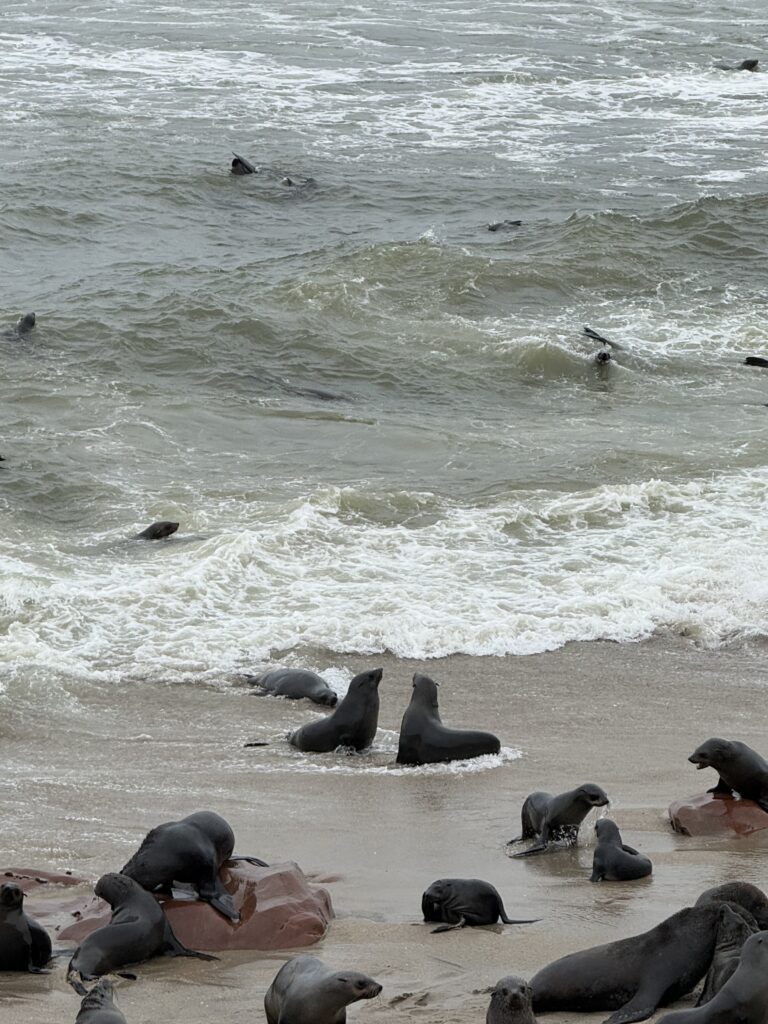
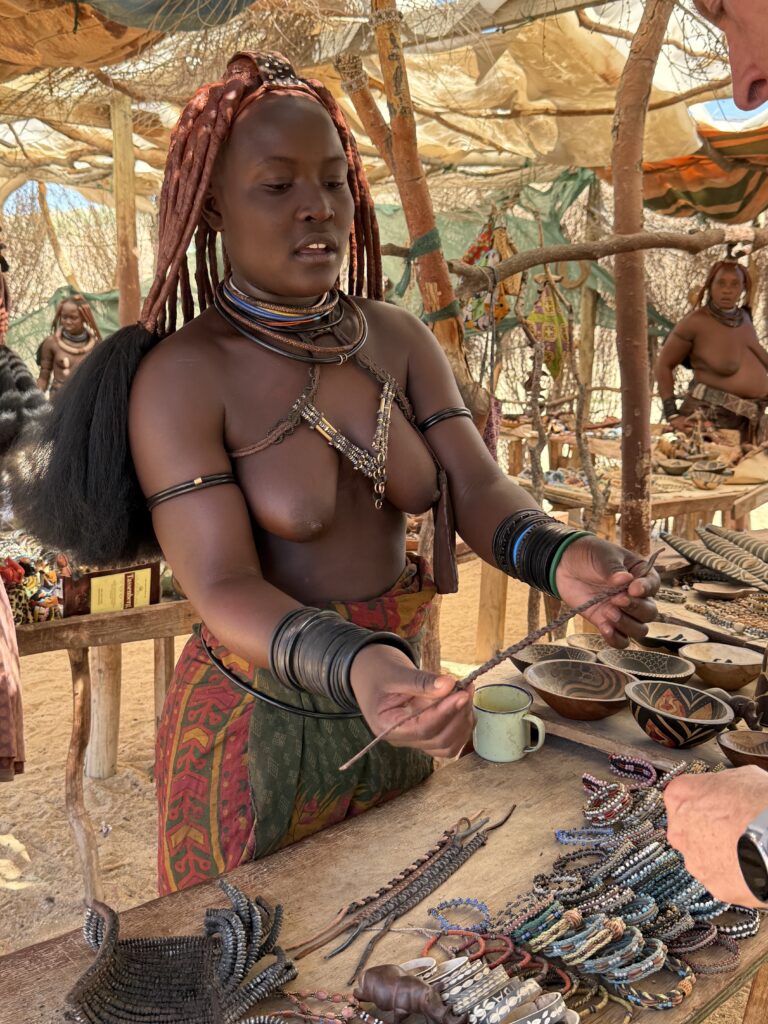
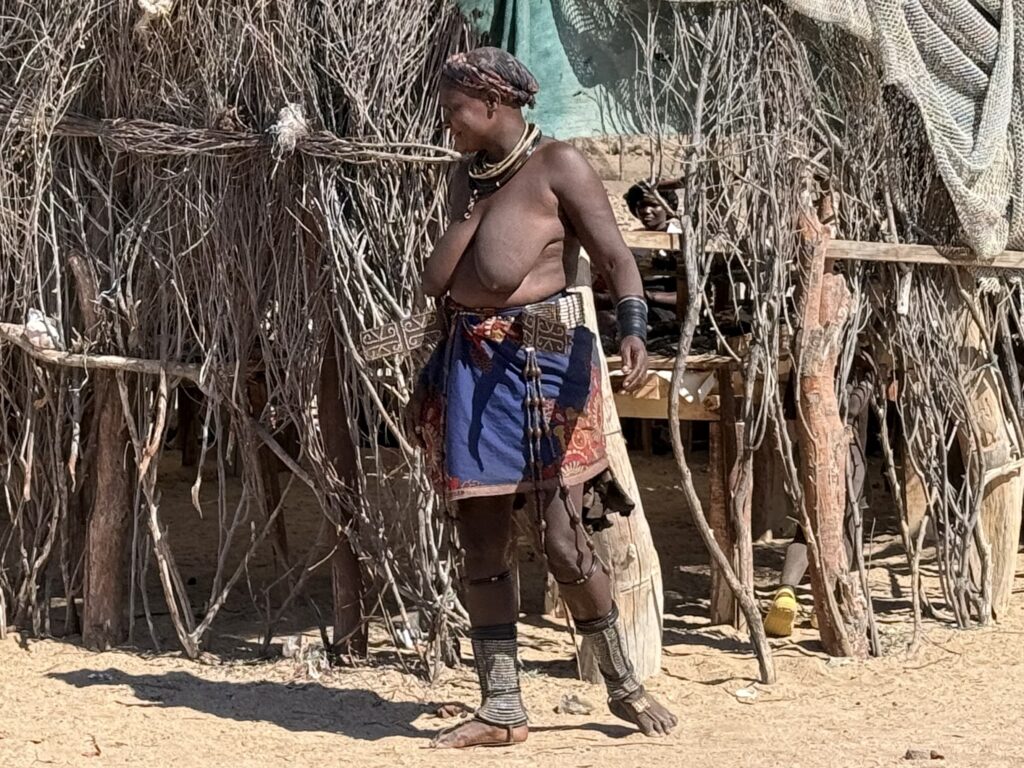
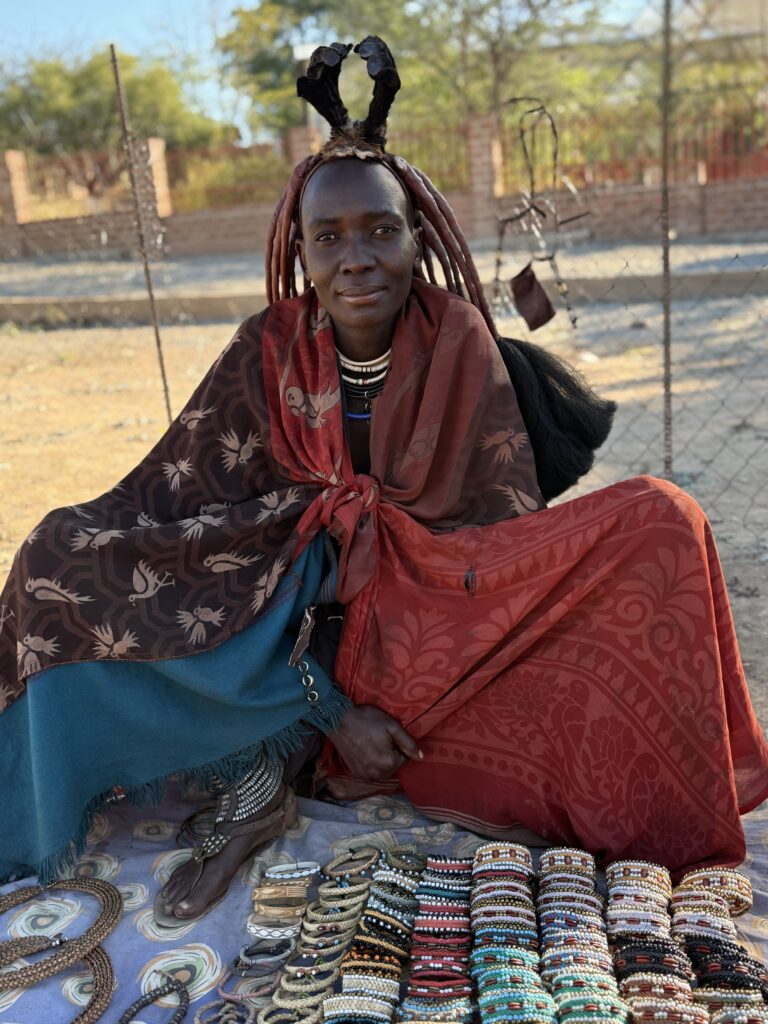
We visit The Zelia, an Indian shipwreck from 2008 along the Skeleton Coast, riddled with shipwrecks and animal skeletons resulting in the nickname. Our next stop, Cape Cross seal colony, greets us with seal barks and an odorous stench from the hundreds of thousands of seals and pups lazying on the beach and rocks and playing in the offshore waves. The raised wooden walkway allows close encounters with safety. Nearby we hit a roadside stand run by the Himba, formerly a nomadic tribe, living in simple huts with the women wearing minimal clothing, bare breasted, and sporting elaborate hairdos of animal skin designating age, social status, and wealth as well as shell jewelry for fertility. The exception is a woman in a full length Cinderella-type gown which is another fashion statement legacy of the German colonial period.
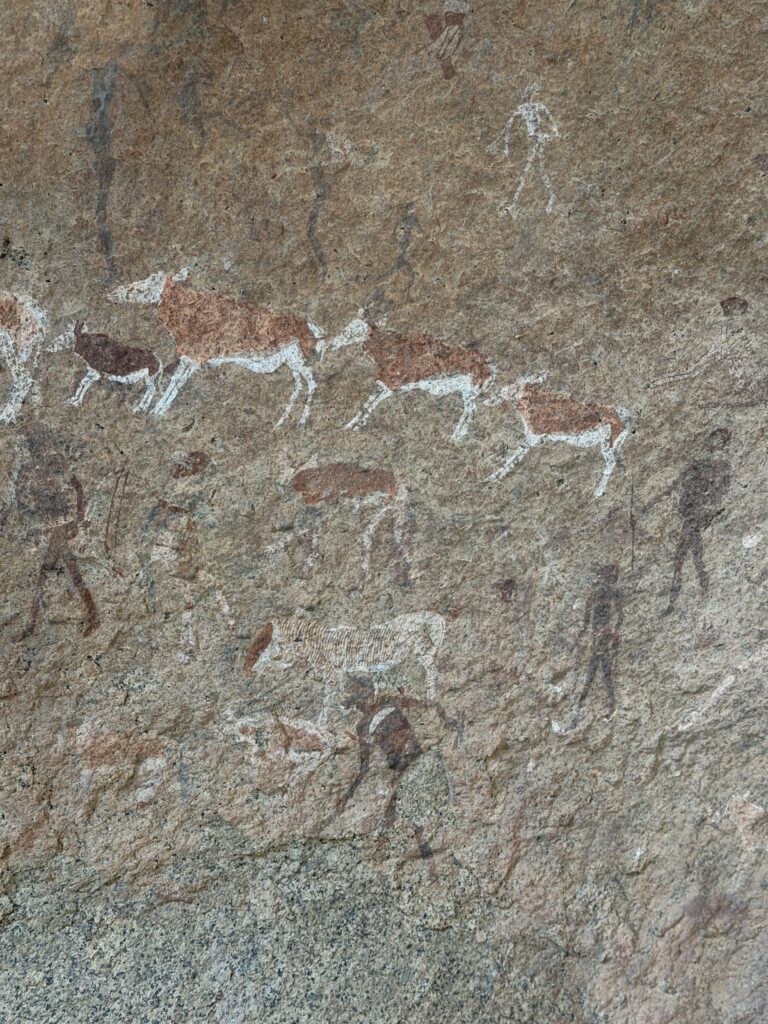
In the distance is the Brandberg Massif including the tallest and 2nd tallest peaks in Namibia where the group hikes, and I abstain, for 3 hours into the rocky mountains to view the White Lady cave drawing, dating over 2,000 years old, one example of thousands of prehistoric cave art in the region.
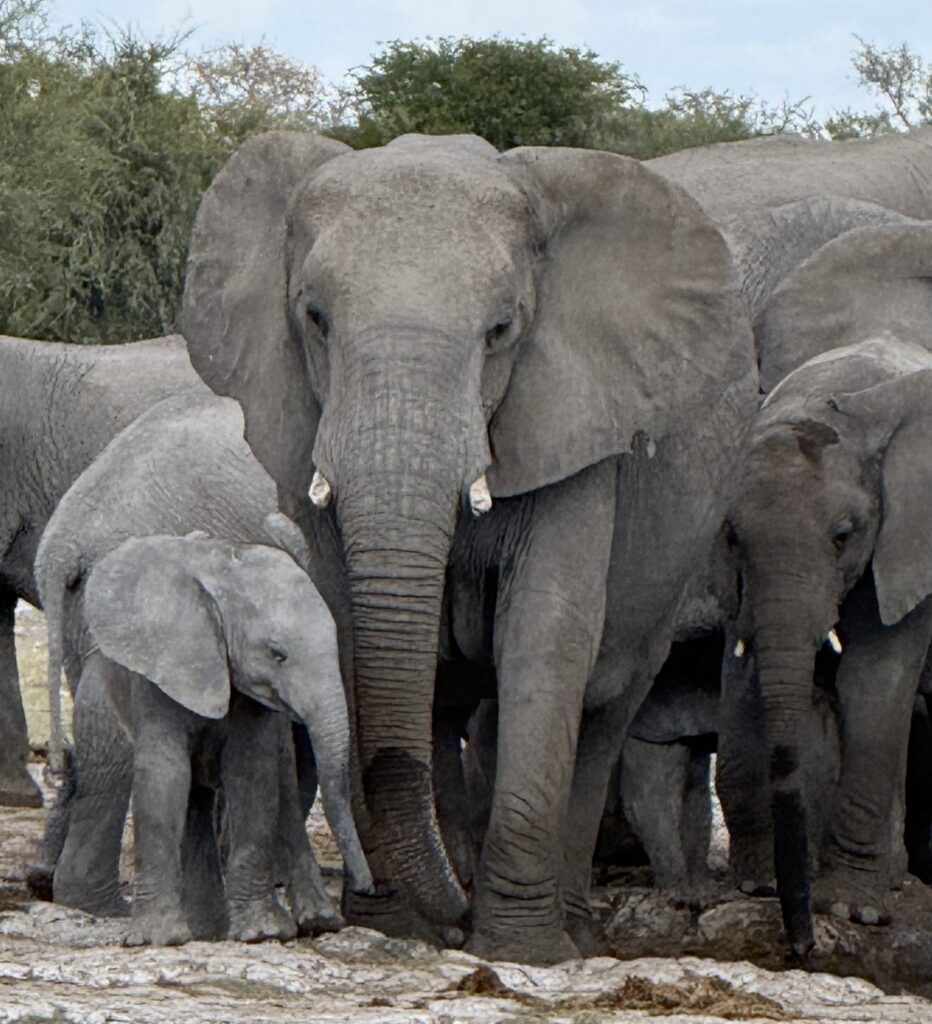
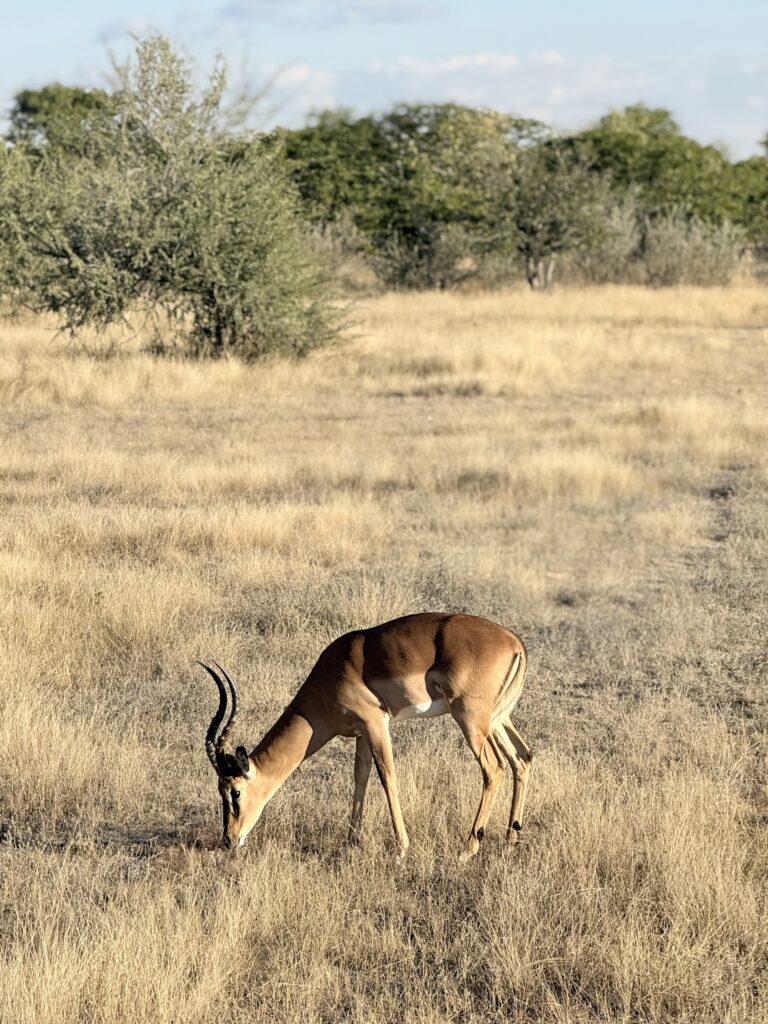
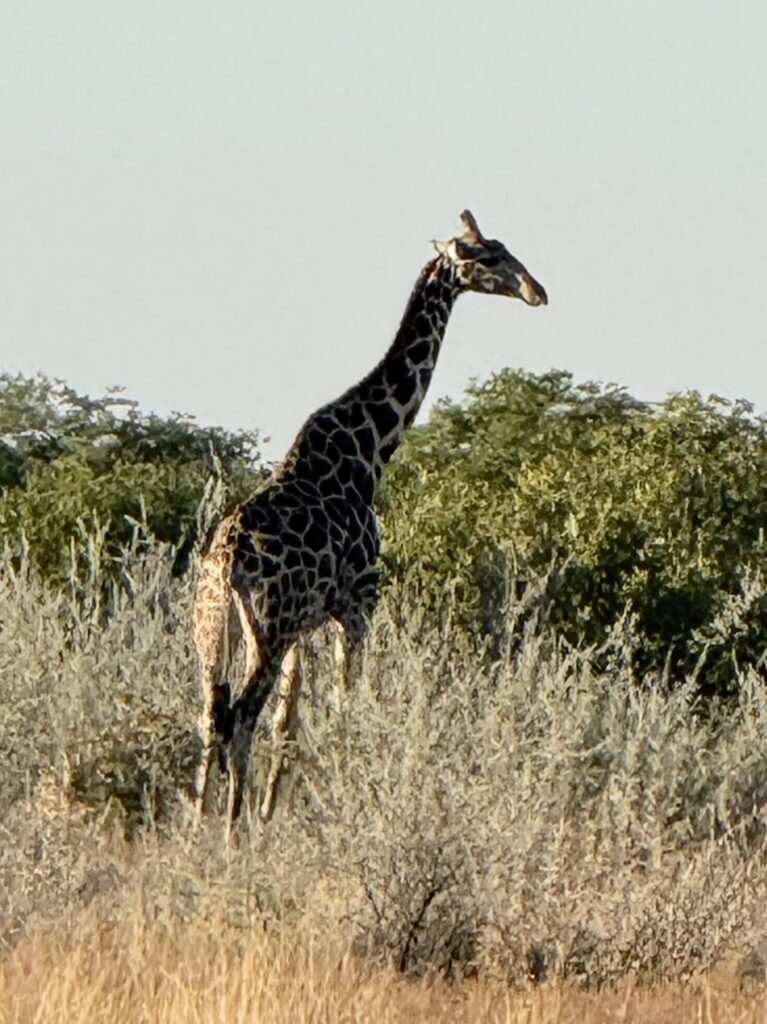
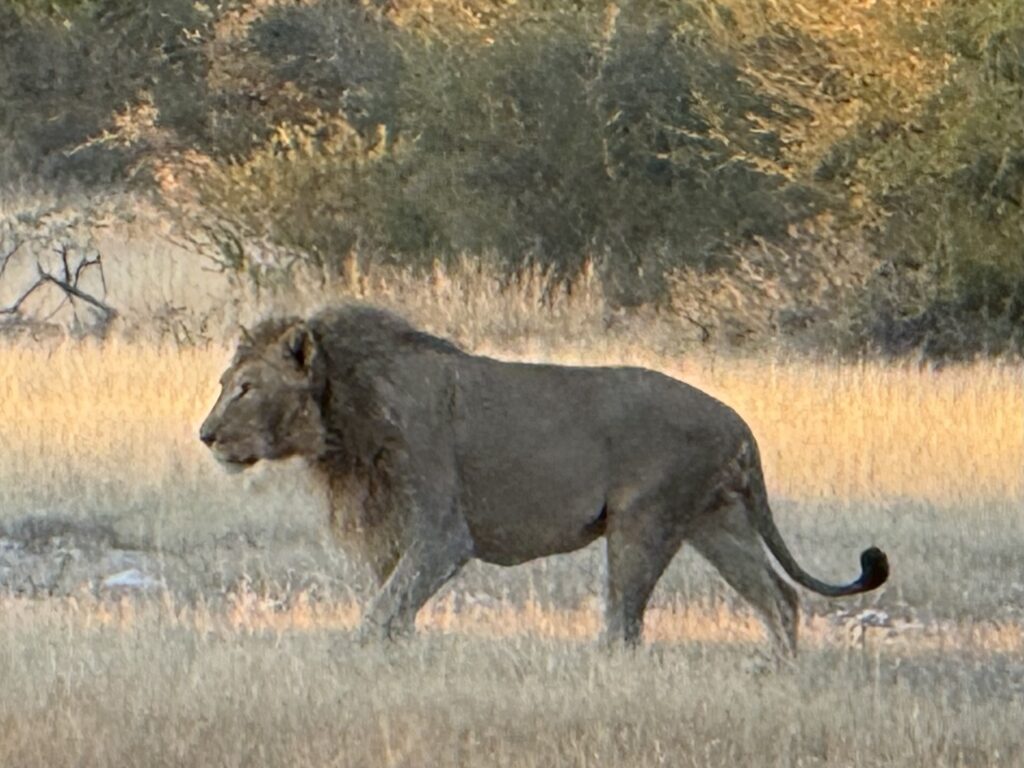
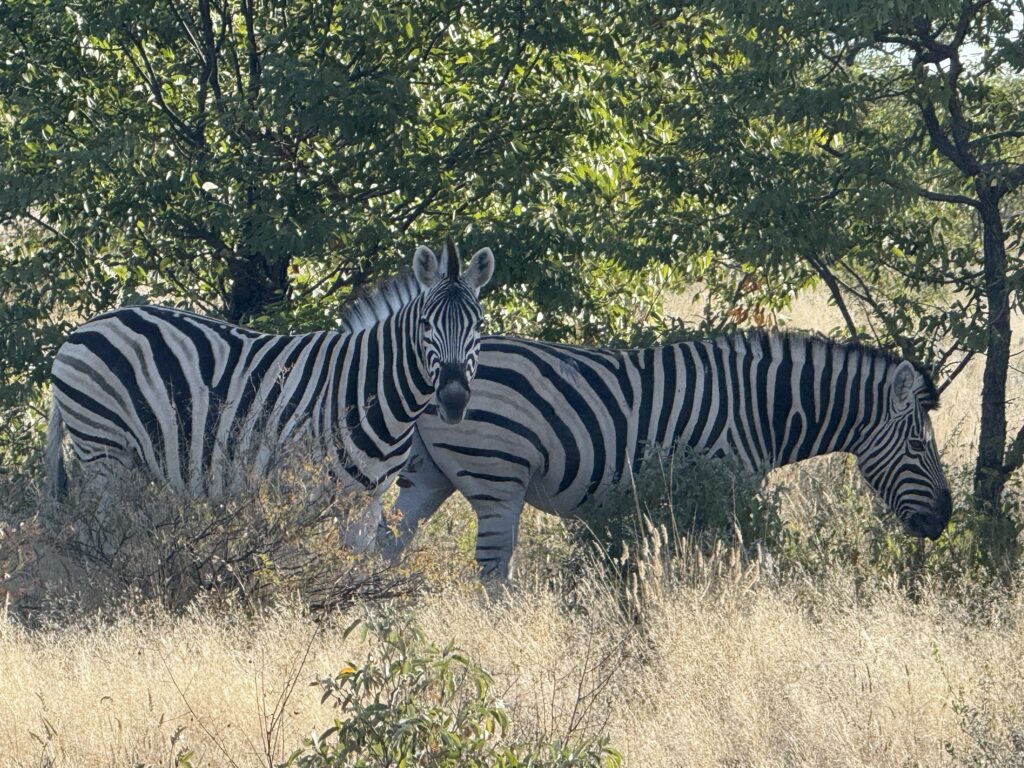
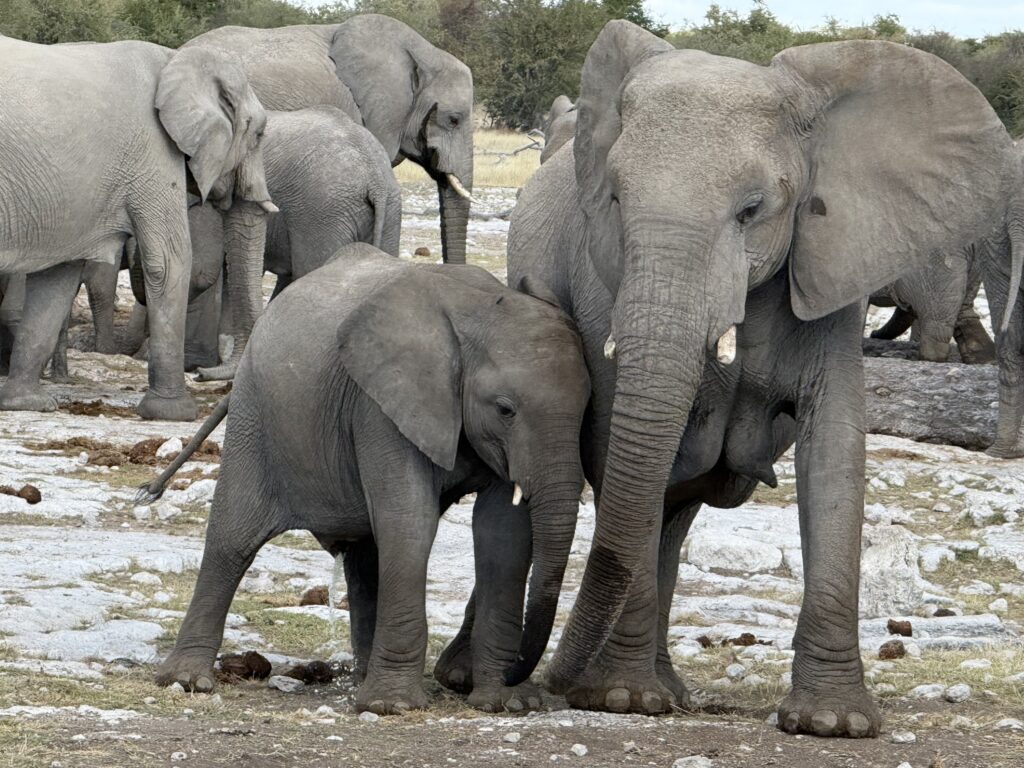
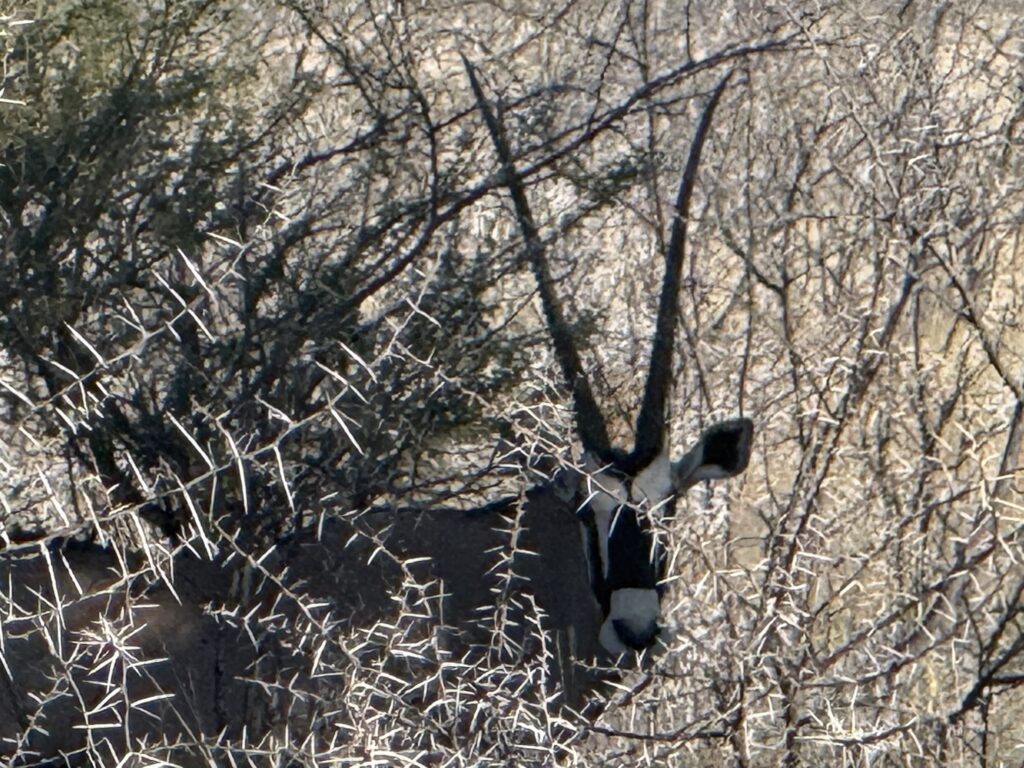
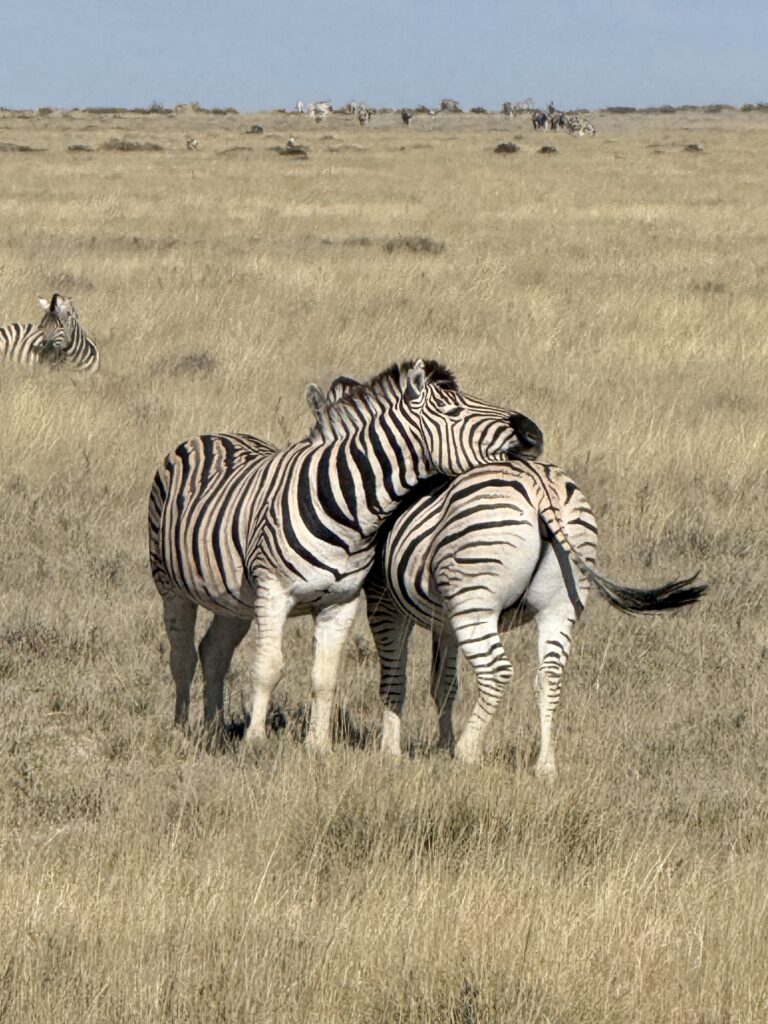
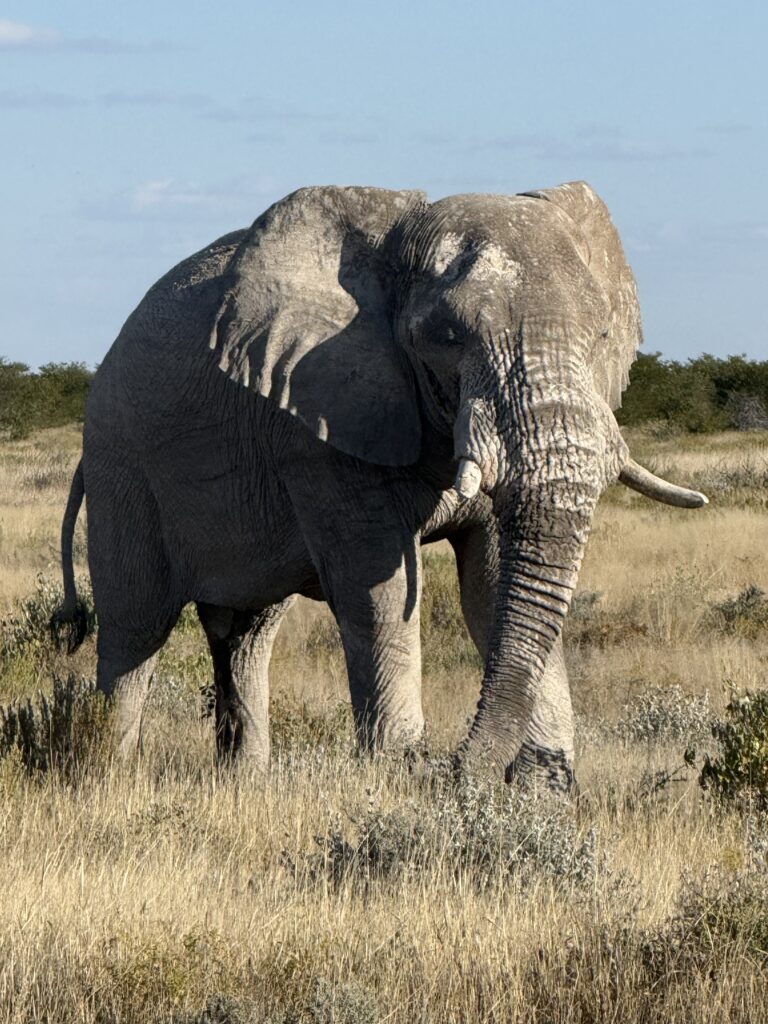
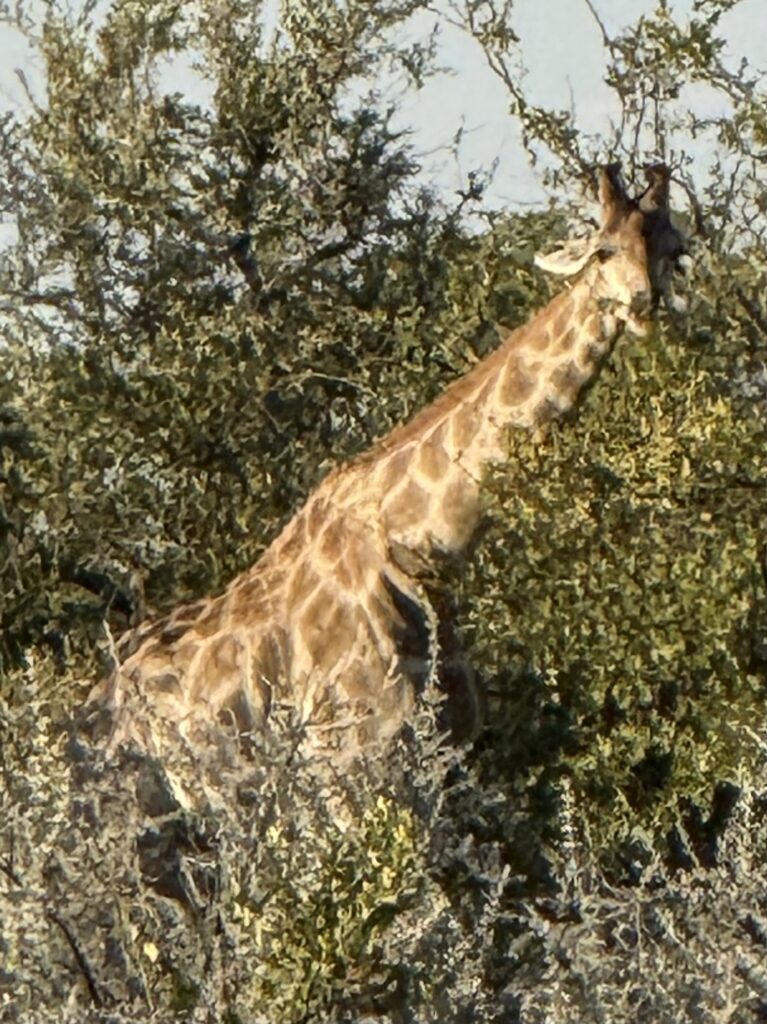
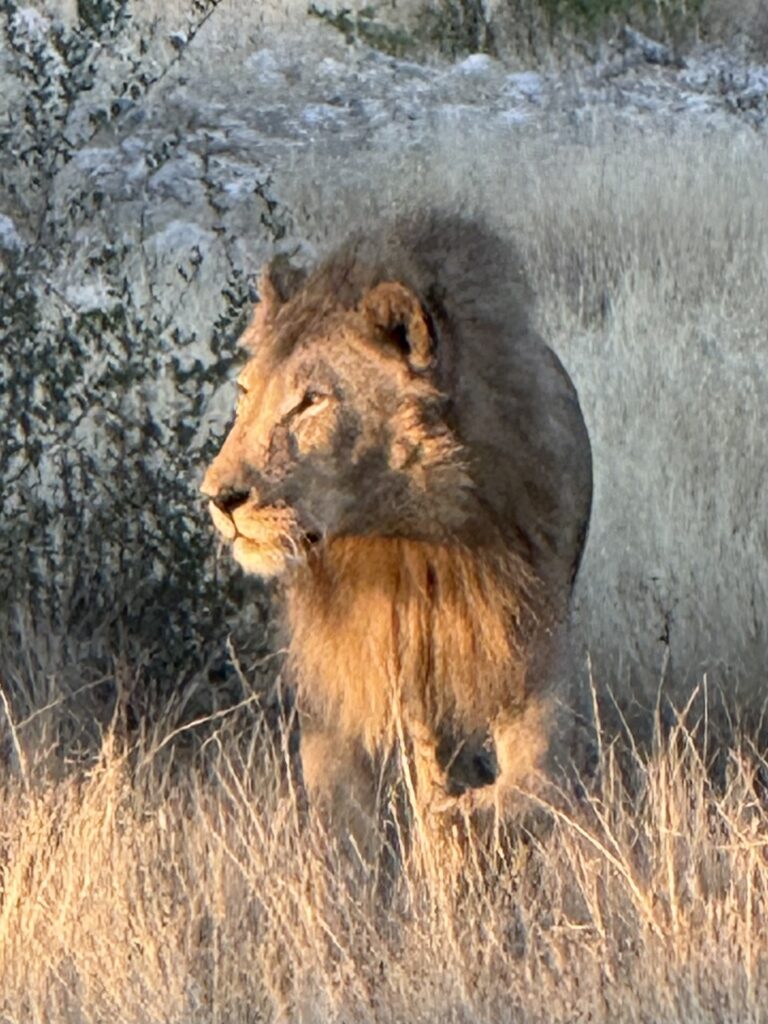
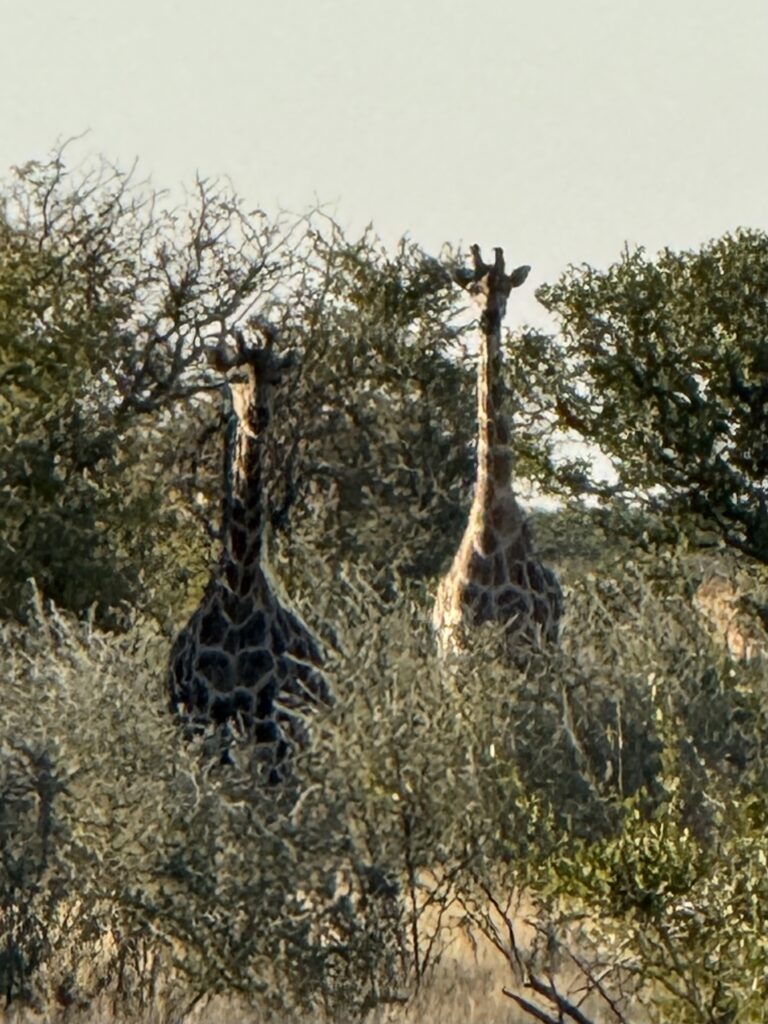
Etosha National Park is where our initial iconic Africa experiences start, enjoying game drives through the vast preserve of 2.2 million hectares while encountering so many amazing species including the majestic oryx with their long straight horns that can gore a lion, the ubiquitous springbok acting as the PB&J of the plains, impala with their curlicue horns, herds of zebra rocking their heads to wind up to walk, and several groups of giraffe trimming the tall trees. We are graced by a large herd of elephants including young ones at a watering hole, a lion shooting through the park in the soft morning light, and not one but two black rhinos, their horns cut off for their own security from poachers which will grow back slowly.
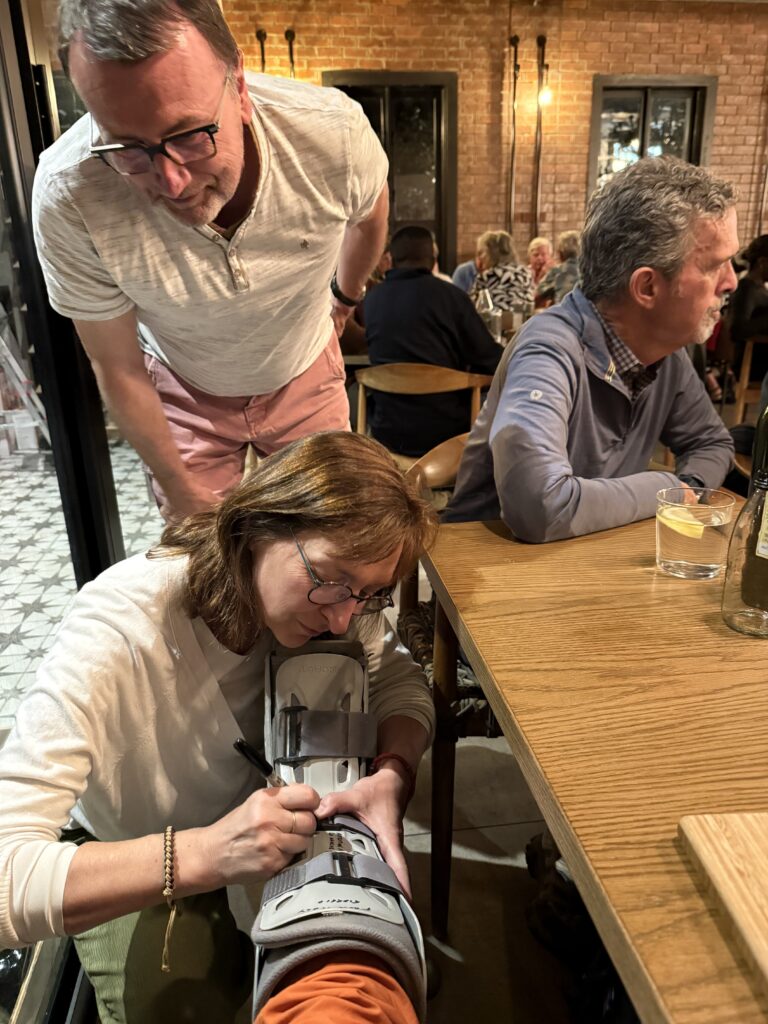
We reach the capital Windhoek, founded in 1840, a fairly modern city where the current President, Dr. Netumbo Nandi-Ndaitwah, has her compound across the street from our lodge. She took office last March, becoming the first female president and is cracking down on the deep rooted and deeply destructive corruption, and we pass the headquarters of her SWAPO Party.which has been in power since independence. We have a goodbye dinner since half the group peel off from here for home, so I get our newfound friends to sign my boot as a souvenir, and we’ll proceed to Botswana with a tight group of six.
Next up: Botswana

Love hearing your stories and travel tales. Xoxo keep sending them on.. we live vicariously through you!! Best to you both. Come visit KY when you return from world travels!!
Thanks Shelley! Will try to swing by KY after – it’s been too long!! xoxo
You are great
Grazie Giorgio! Loved traveling with you and Stefanía – enjoy your pasta and hope to travel with you again soon! Ciao!
Great travel stories and wonderful photos. So impressed you are doing this…boot and all!
Thanks Bridget! We’re having a ton of fun and I transition out of the boot starting today! xo
Great job! 👏 👏👏amazing photos! Thanks! 🤗😘I hope to see you again one day…. Maybe in Italy???
Grazi Stefani! It was fun traveling with you and Giorgio! Hope to see you someday in Italy or elsewhere! 🇮🇹
It’s so fun to track your progress, and these are such amazing adventures. How great to be traveling with 10 like minded travelers. Bushey bushey!
Eeeeeeeed! Great to hear from you and glad you’re enjoying our blog! Hope you and Kara are doing great! We may tap into your expertise on Vietnam…. xo
Susan and Brian,
Thank you both for the wonderful updates. They are so descriptive. Keep them coming and most importantly stay safe.
Thanks Steve – glad you’re enjoying our blog! We’re having a great time on the road, as you can see. We head to Uganda next month and have done our research on staying safe from the Ebola outbreak and will be vigilant! Best to you and Lisa! xo
Your photographs are incredible!!
Namibia is on my bucket list – thanks for the fantastic travelogue. Enjoy Botswana- I hear the wildlife is amazing (and I want to go there too!) Safe travels and keep the stories and photos coming
Thank you Erik – glad you’re enjoying the write ups! Doing Namibia and Botswana together makes sense if you have the time since they’re side by side. This trip has so much variety and I highly recommend! Take care and keep working on that bucket list! xo
Fantastic travelogue! I’ll be watching for its debut on the National Geographic channel!
Ha! Thanks Chip – I’ll let my agent know to contact them! xo