
We spend a week on our own in a beautiful AirBnB in a lovely neighborhood in Kigali, Rwanda, a city I’d heard was vibrant and thriving in the fastest growing country in Africa, and it is the perfect antidote with phenomenal restaurants, clean and safe streets, and some of the most beautiful and friendly people in Africa. Honestly I wasn’t sure I was still in Africa!
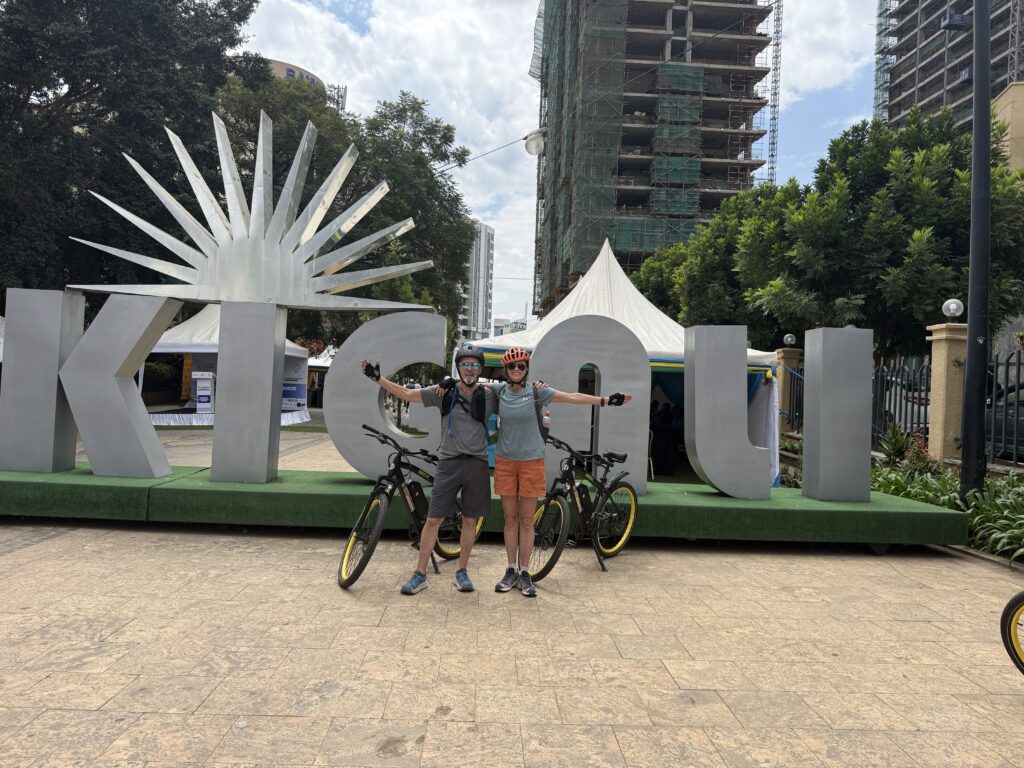
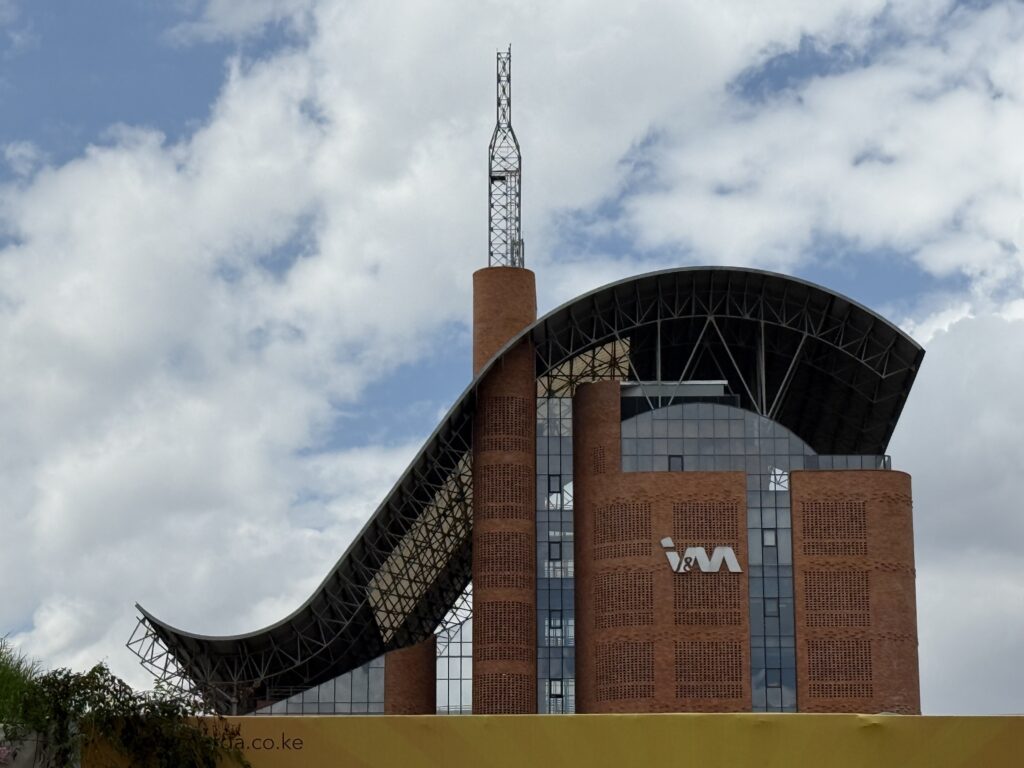
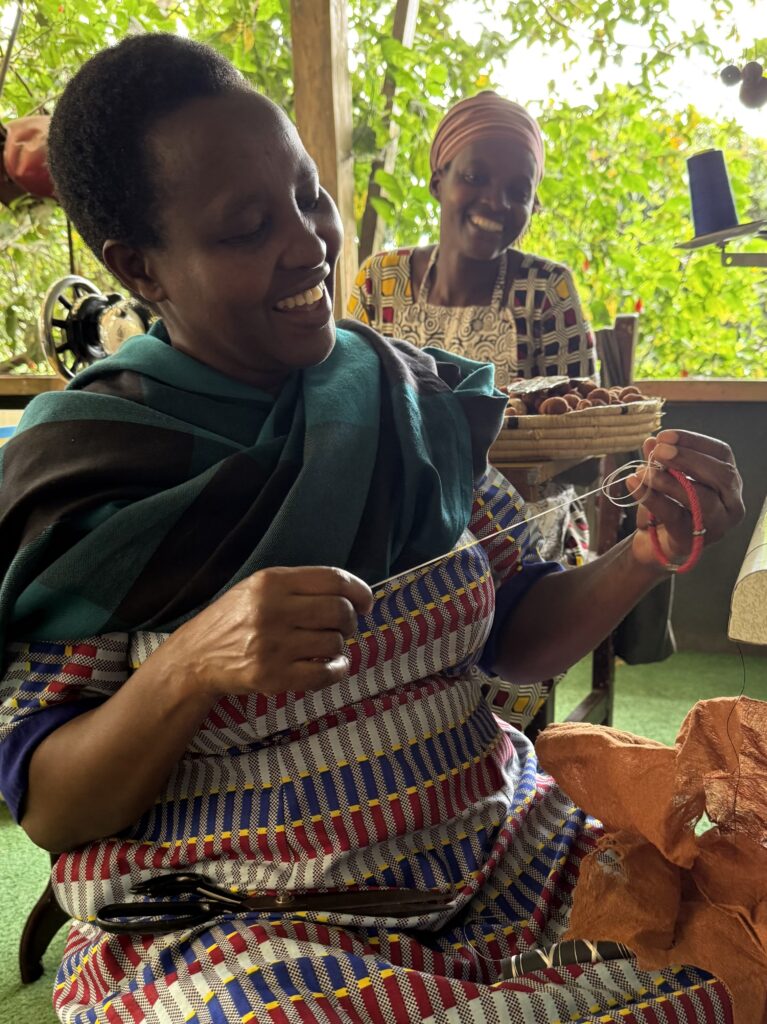

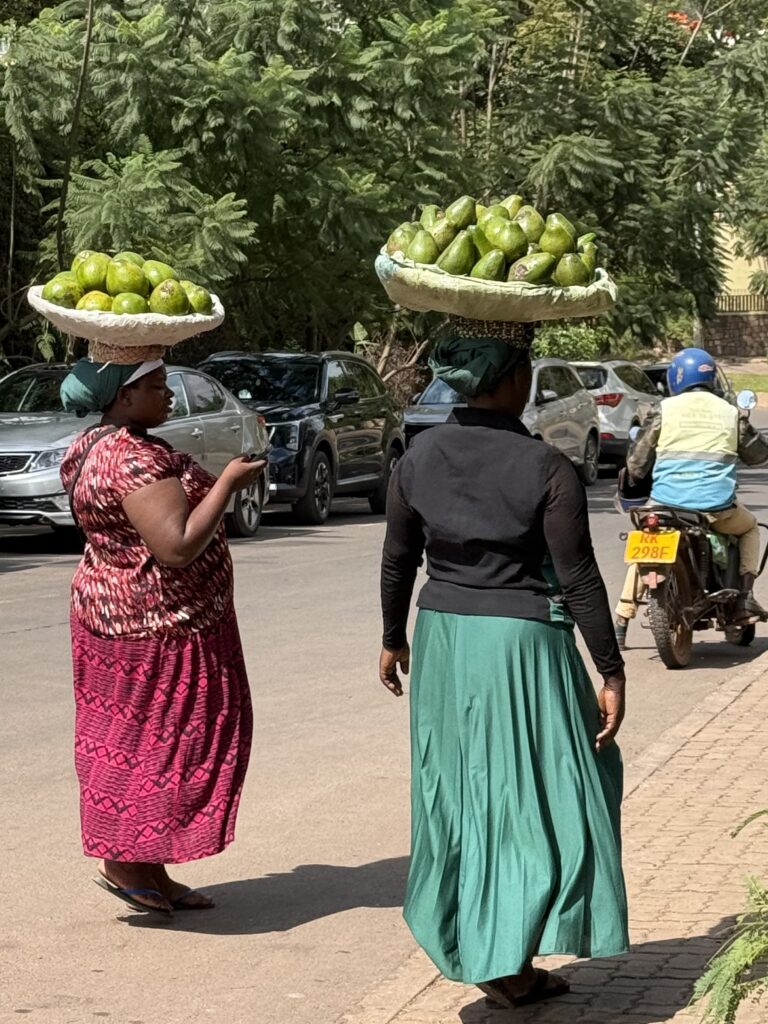
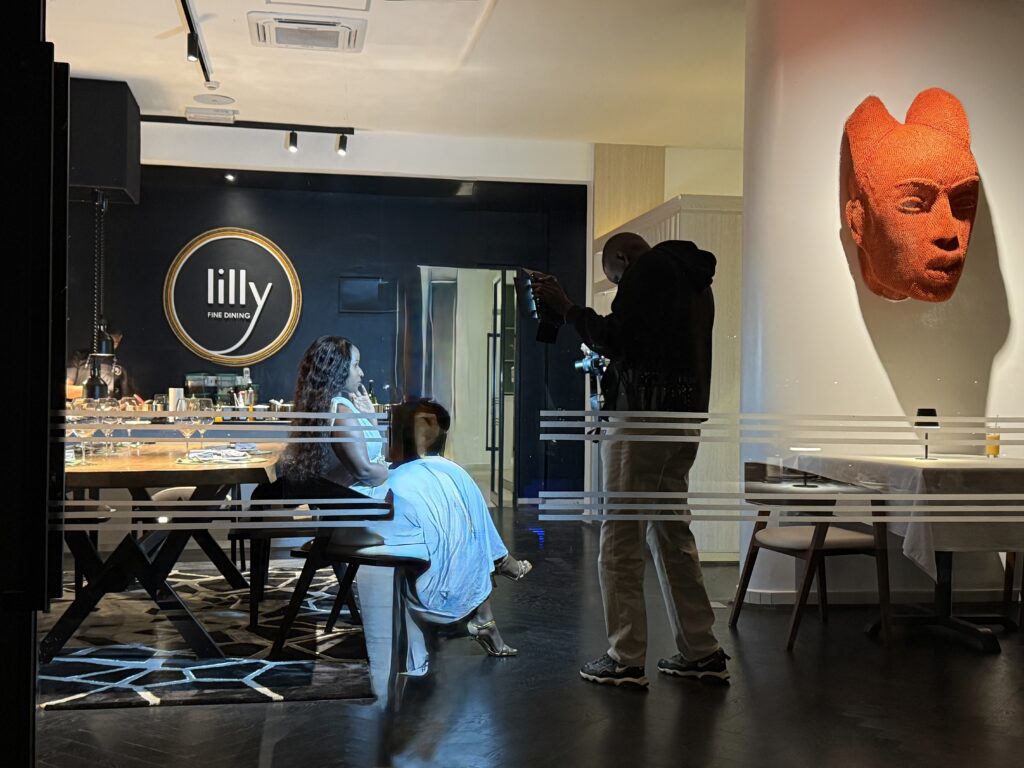
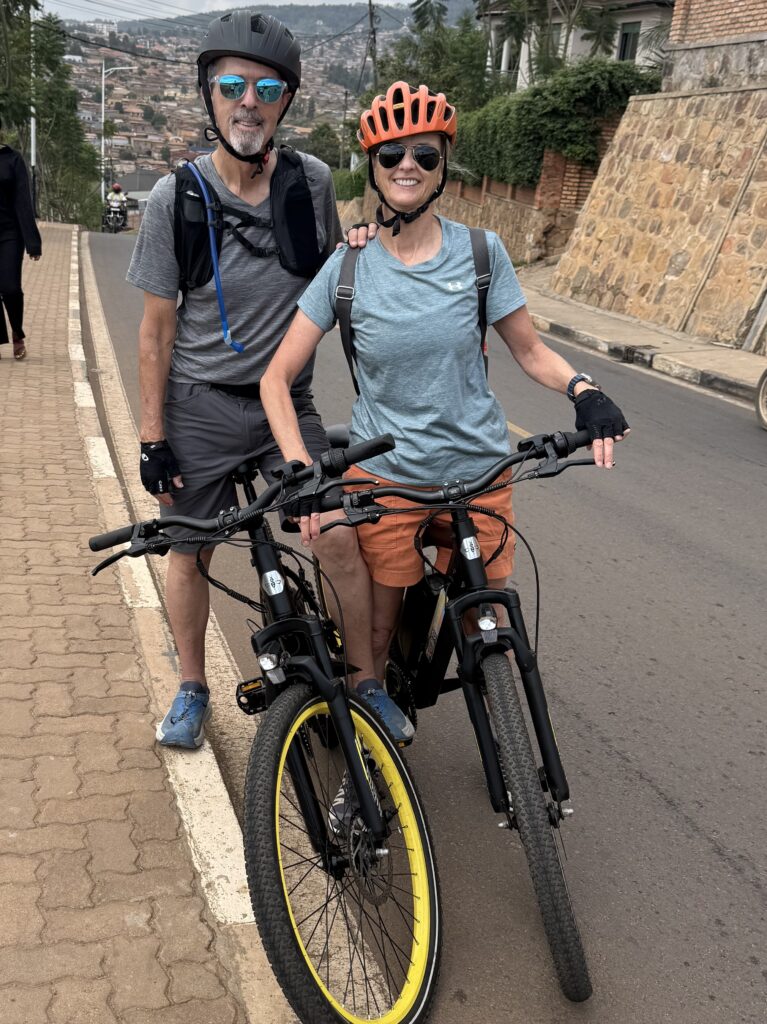
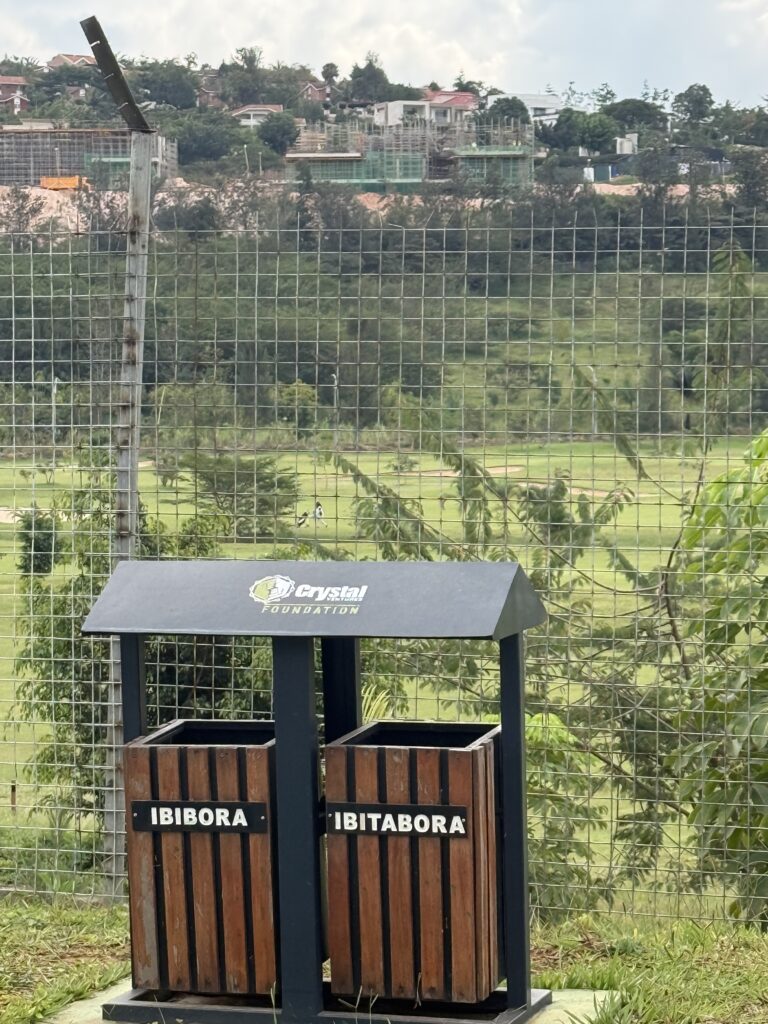
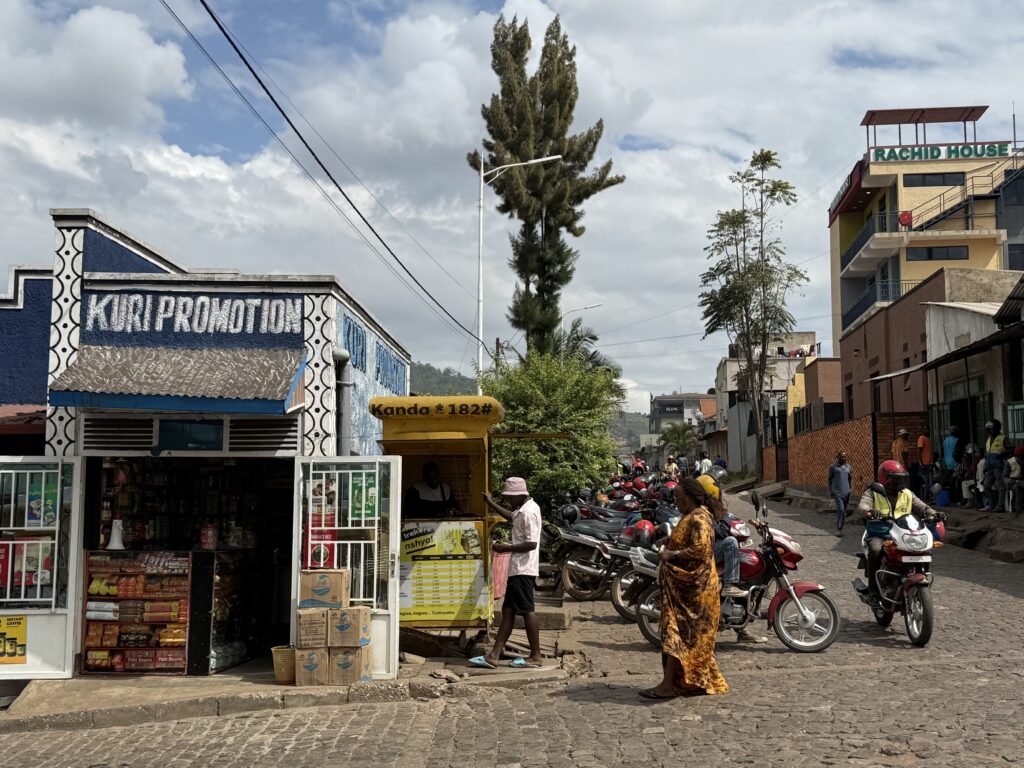
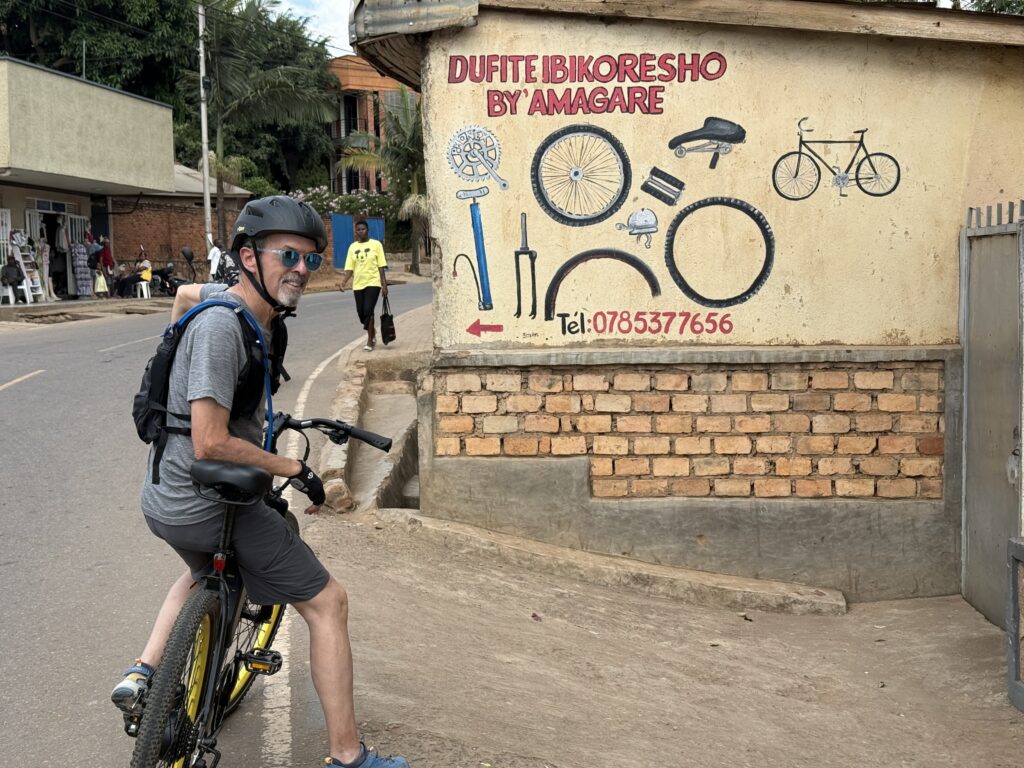
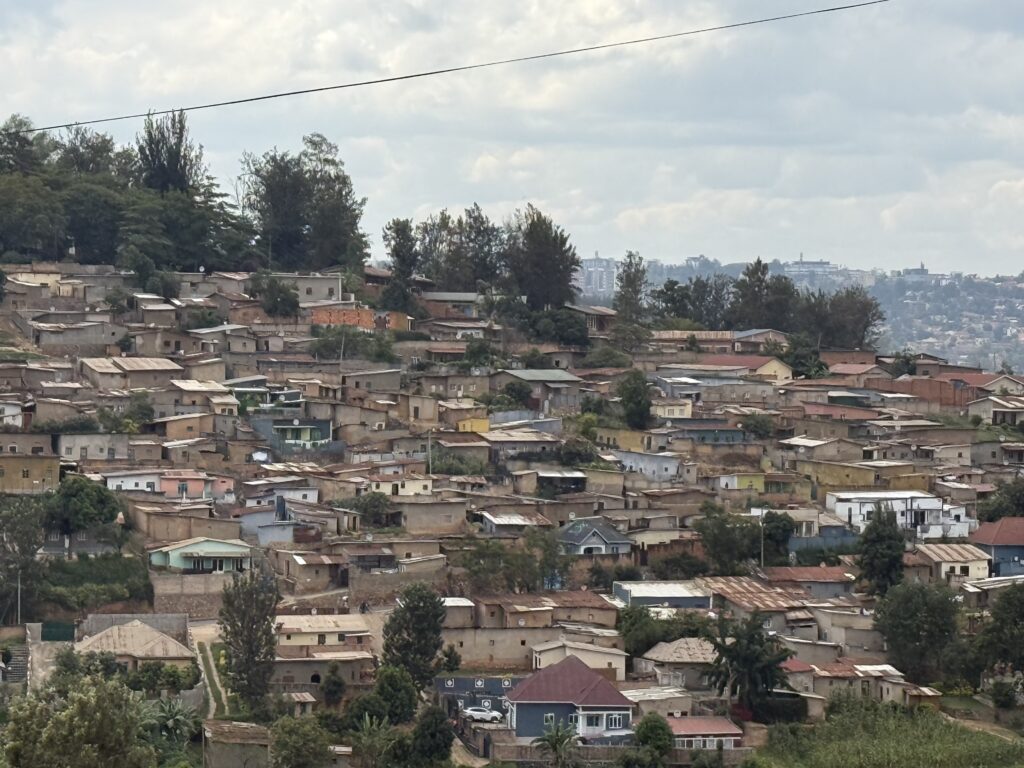
We start our visit by touring this hilly city on Chinese e-bikes with a local guide. The vehicle of choice here is the motorcycle which swarm around the cars, many with paying rides, creating a constant flow on the roads. I am intimidated initially but the drivers are very deferential and the speed limit is strictly enforced via cameras everywhere so there’s a tone of courtesy which brought comfort. We’re guided through wealthy neighborhoods, past their convention center in the dome shape of their traditional homes, alongside a 2km 4 lane running track paralleling the road open to all to use, then up another hill into the less affluent Muslim quarter, where the structures are solid compared to townships we’d seen elsewhere. Through our guide we learn that credit for this country’s success, especially after the devastating genocide it experienced in the 1990’s, goes to their President Paul Kagame, in power since 2000 ruling with a gloved iron fist. He sets the tone by eliminating corruption at the top, expecting good behavior of citizens and handing out stiff punishment for misbehavior, and developing an emphasis on smart growth including sustainability. The government buys electric vehicles in bulk and sells them back to citizens with favorable loans, the Greenride Africa app provides ride sharing using only electric vehicles, most of the motorcycles are electric with ample charging stations throughout, and recycling bins are available everywhere. The city is also exceedingly clean, and like lawnmowers in New England in the summer, you can always find someone sweeping, mopping, or landscaping here, to the point of ensuring a small handful of debris in the gutter gets removed, which I witnessed. Our guide explains that Kigali citizens pay 1,000 RWF ($60) per month for city cleaning and citizens are fined 5,000 RWF ($304) if found littering. There’s an emphasis on health, thus the free track, and the President frequently participates in community weekend walks. Also the streets are safe day and night with security cameras and personnel everywhere, which we’re reveling in, enjoying evening strolls with little concern. You may ask “How can the current President rule since 2000?” Elections occur every 7 years, expanded from 5 years, and for a maximum of 4 terms. He’s been called a dictator due to his tight grip though discussions with several citizens confirms he is also beloved and is core to this country functioning so well after the history it has survived. If this type of reform requires a dictator, so be it – they’re enjoying the stability they so deserve.
No trip to Kigali is complete without visiting the Kigali Genocide Memorial which outlines the horrors of 1994 and the back story. Germans colonized Rwanda in 1875 which was transferred to the Belgians after WWI. In 1932 an identity card was introduced which categorized anyone with 10 cows as Tutsi and fewer cows as Hutu, using physical measurements such as nose length as part of the calculus, with the designation being passed down through generations, to effectively split the population. Europeans brought increased prosperity to the region using enslaved labor, showing preferential treatment towards Tutsis whom they deemed more intelligent, further fueling the tribal dissonance. With Hutus comprising a dominant 85% of the population, they massacred Tutsis in the thousands over the decades and Rwandan independence in 1962 enabled Hutus to gain political power. By 1990 the Hutu-led government put forth their Ten Commandments proselytizing that any Hutu supporting Tutsi family, friends, or neighbors be deemed a traitor, and they used the media to advocate for Tutsi eradication. In response, the international community delivered the Arusha Peace Accord in 1992 to create a transitional government for peace, but the Hutu-led government undermined its success, simultaneously completing the largest-ever arms deal with a French company for $12 million, in preparation for what was to come. In 1994 the bubble burst when the Hutu president’s plane was shot down and Tutsis were blamed. Hutus took to the streets with rifles, machetes, and clubs to exterminate all Tutsis – neighbors turned on neighbors, friends on friends, even family on family. In the end the genocide resulted in over 1 million deaths in 100 days, leaving tens of thousands mutilated, 300,000 orphans, 85,000 children as head of household, and 2 million refugees in neighboring countries. The country smelt of death while perpetrators fled into neighboring countries. The Kigali Genocide Memorial provides graves for 250,000 victims, many unnamed and many still being discovered and identified.
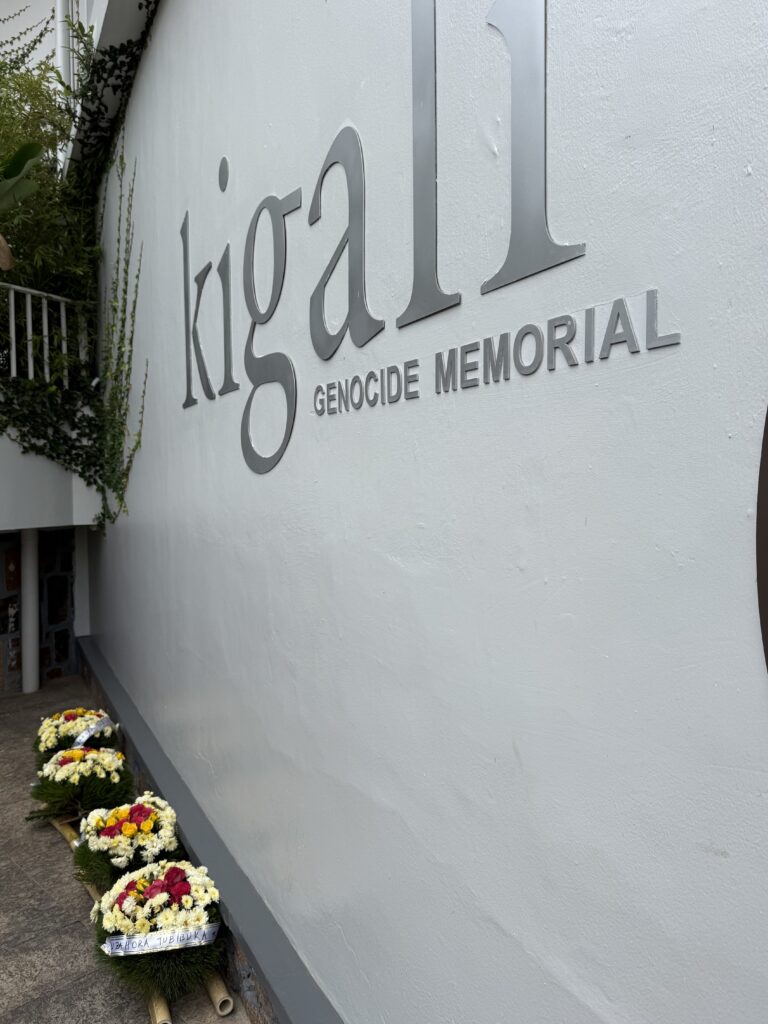
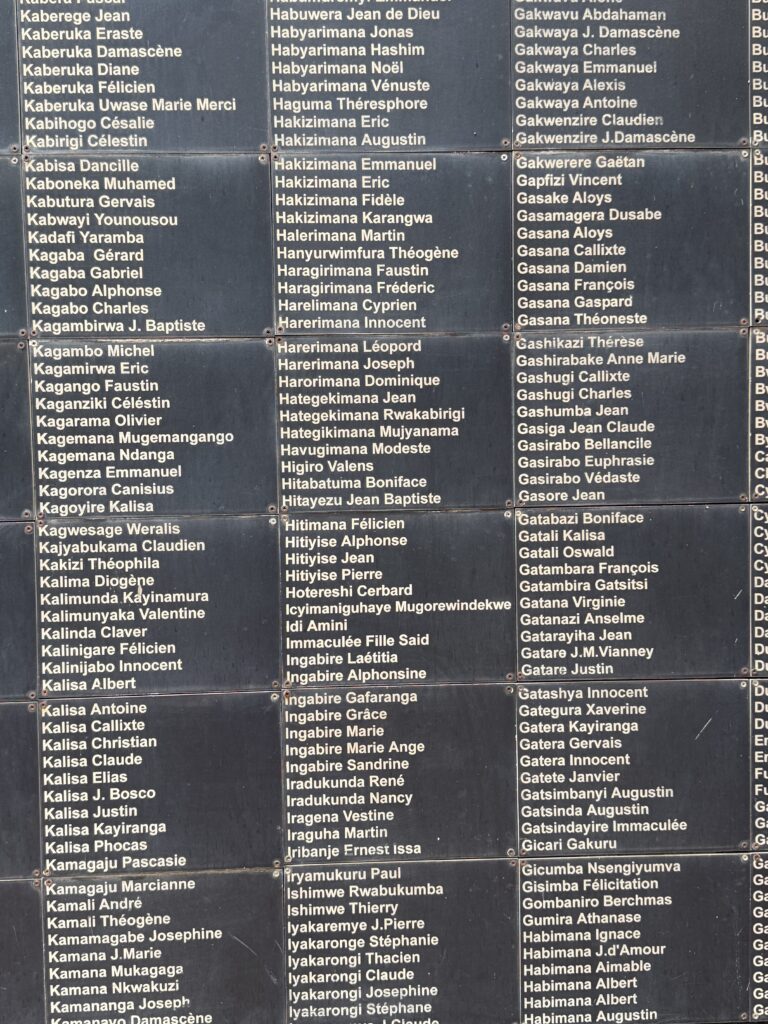
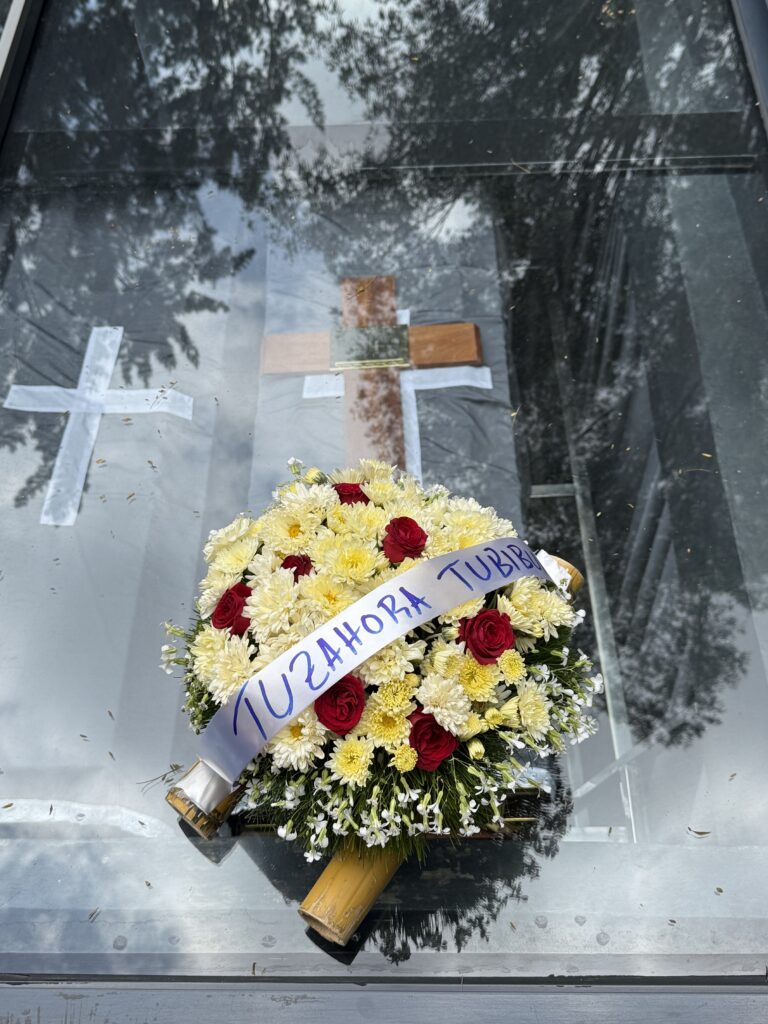
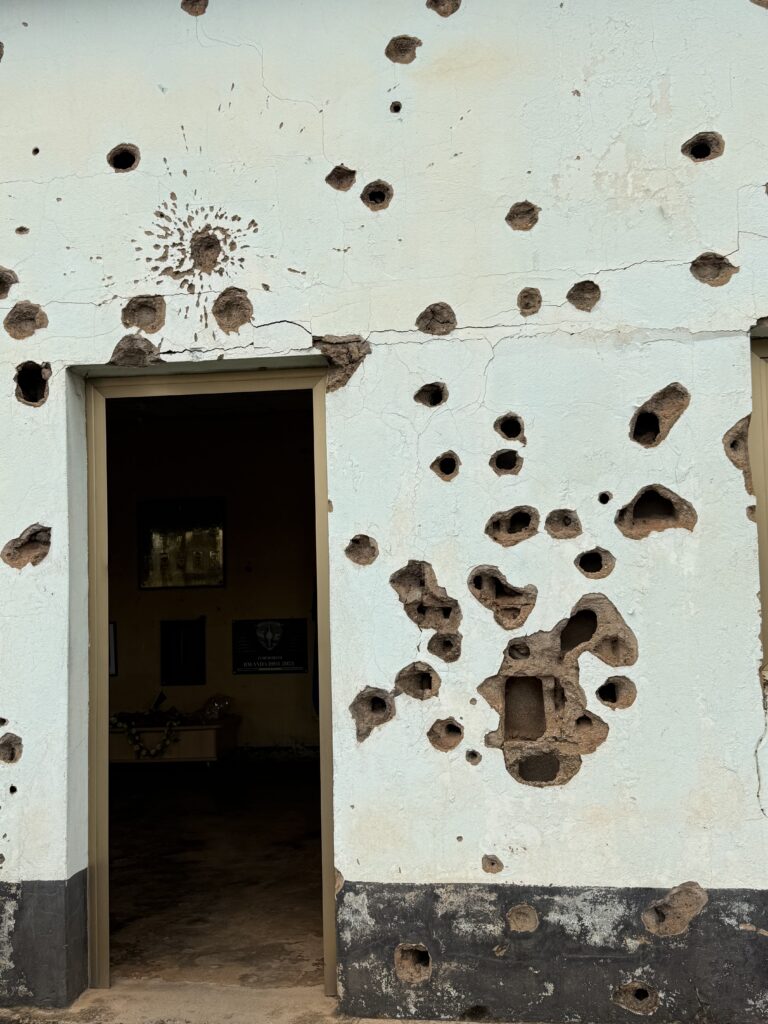
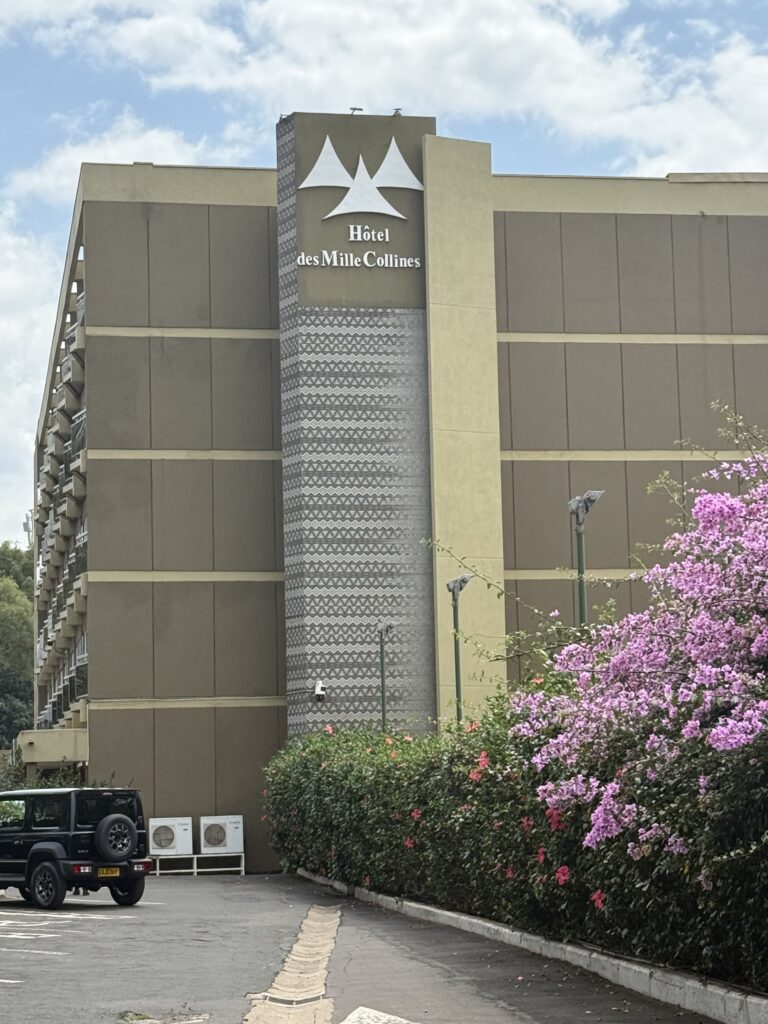
This was only 32 years ago. It is hard to reconcile this tragic history with the vibrant city before us, and their recovery amazes us to no end. We watch Hotel Rwanda after our Memorial visit, and many of the facts align in the movie, but Rwandans tell us that the Hutu hotel manager, Paul Rusesabagina, who housed over 1,200 Tutsi at the Hôtel des Milles Collines during the genocide saving their lives, is falsely represented as a hero, Hollywood having simplified the story.
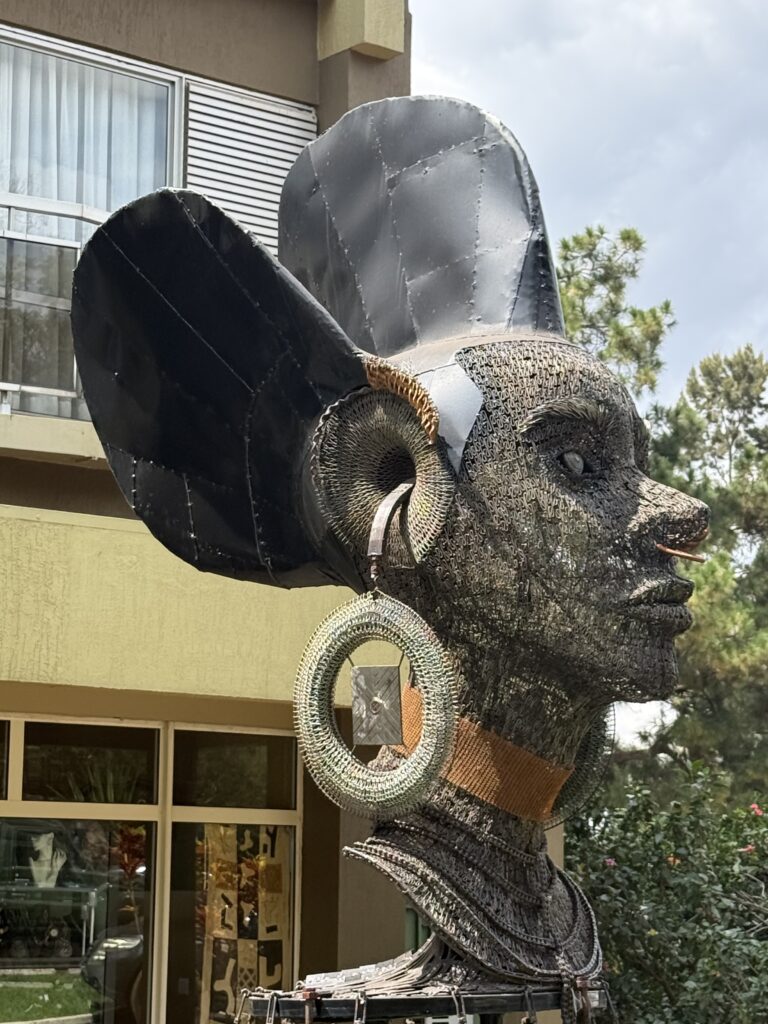
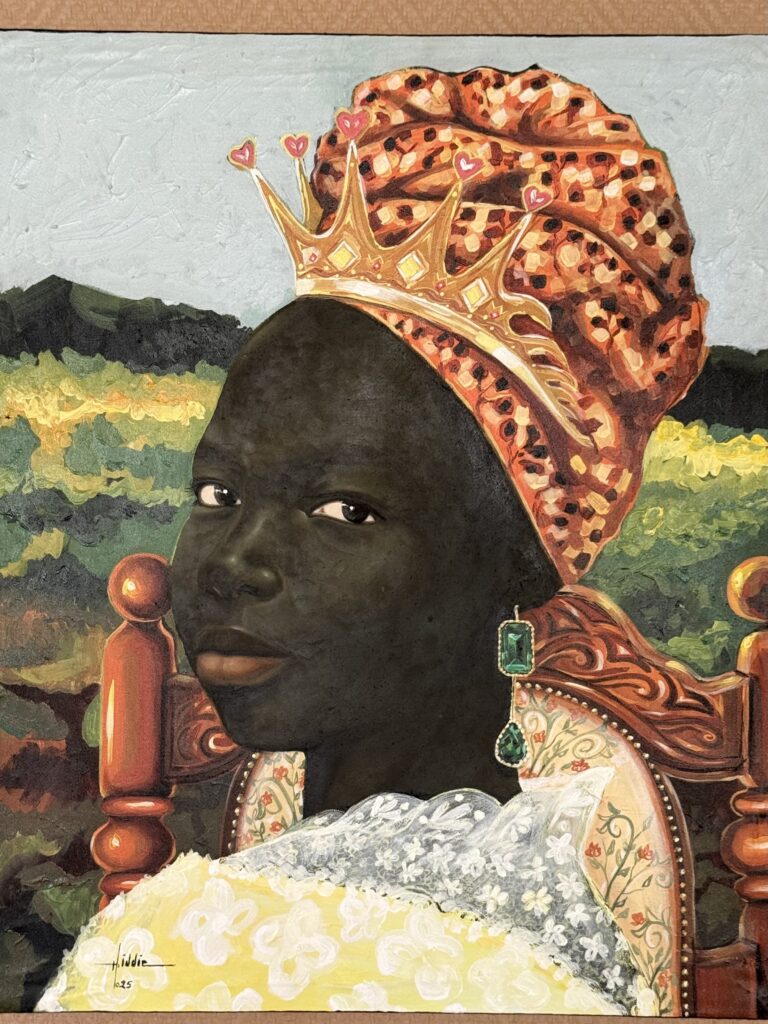
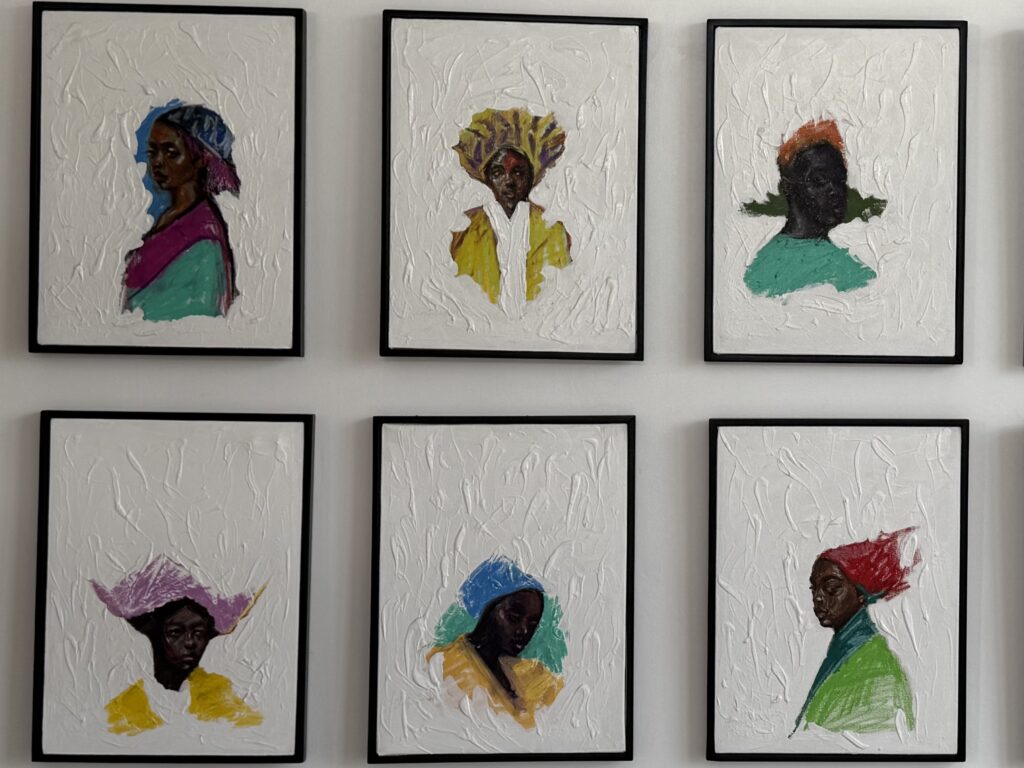
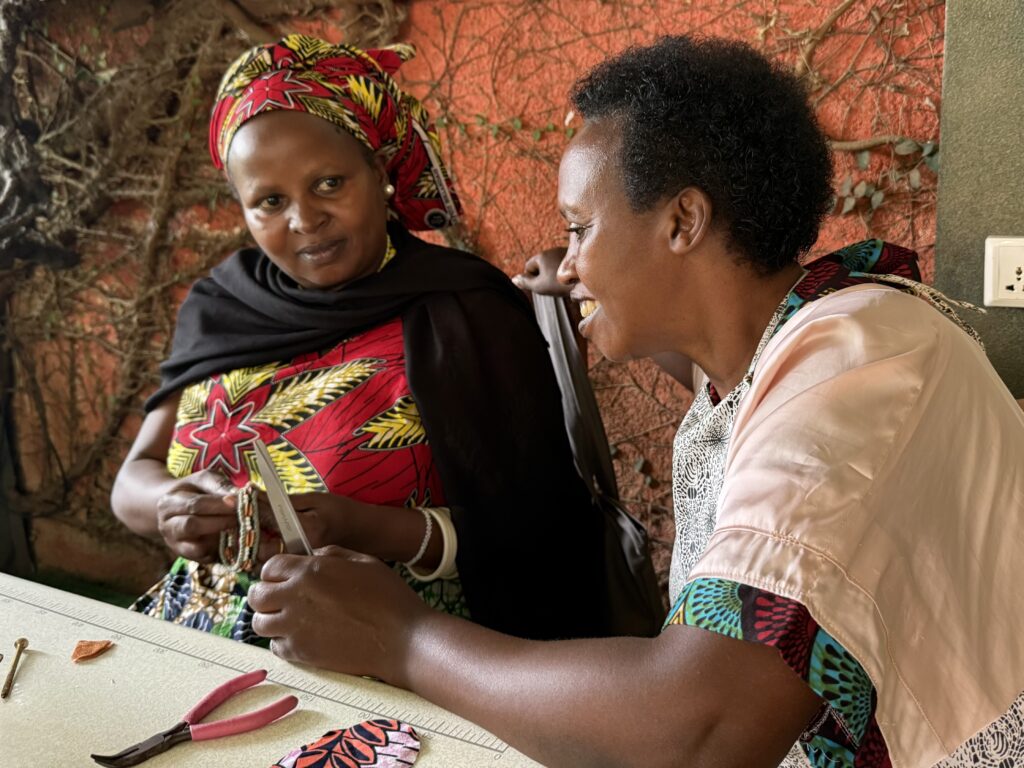
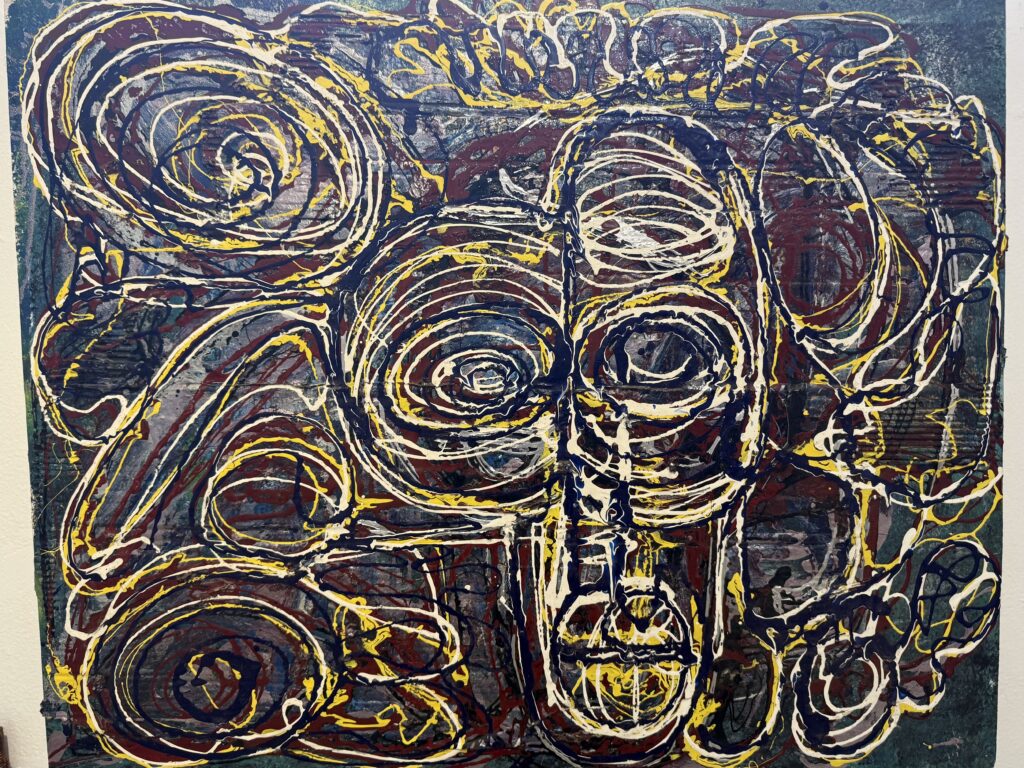
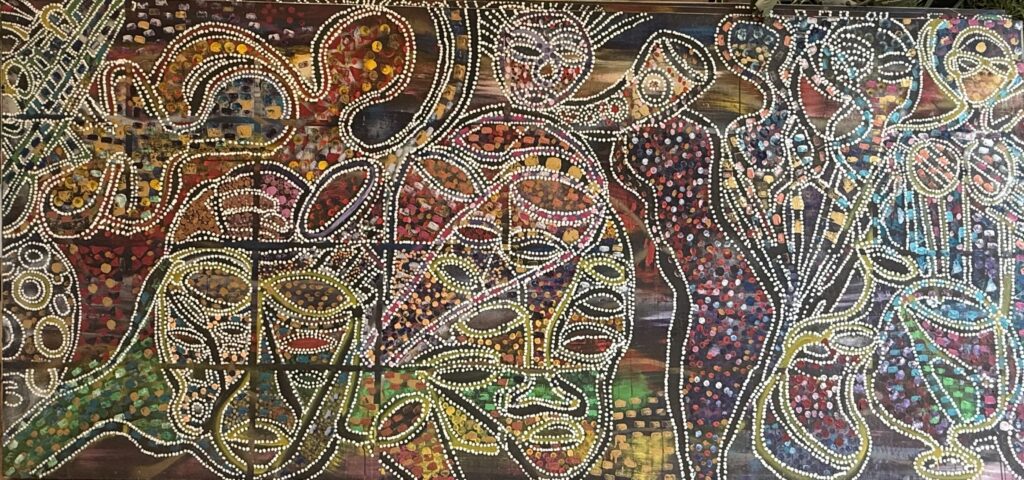
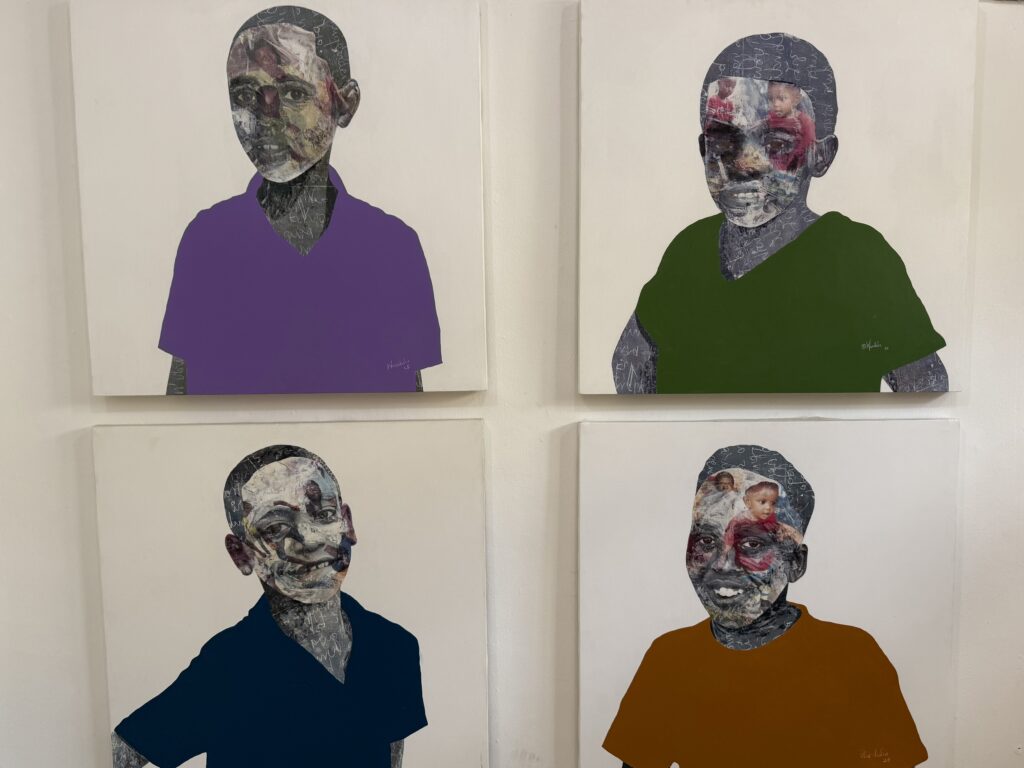
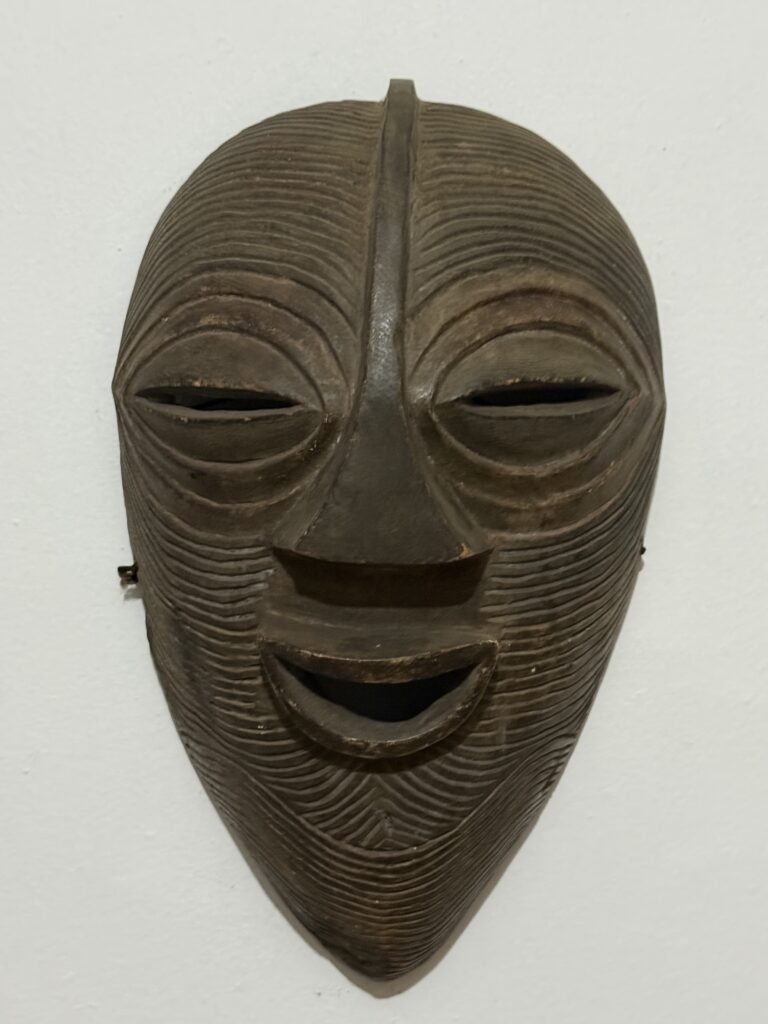
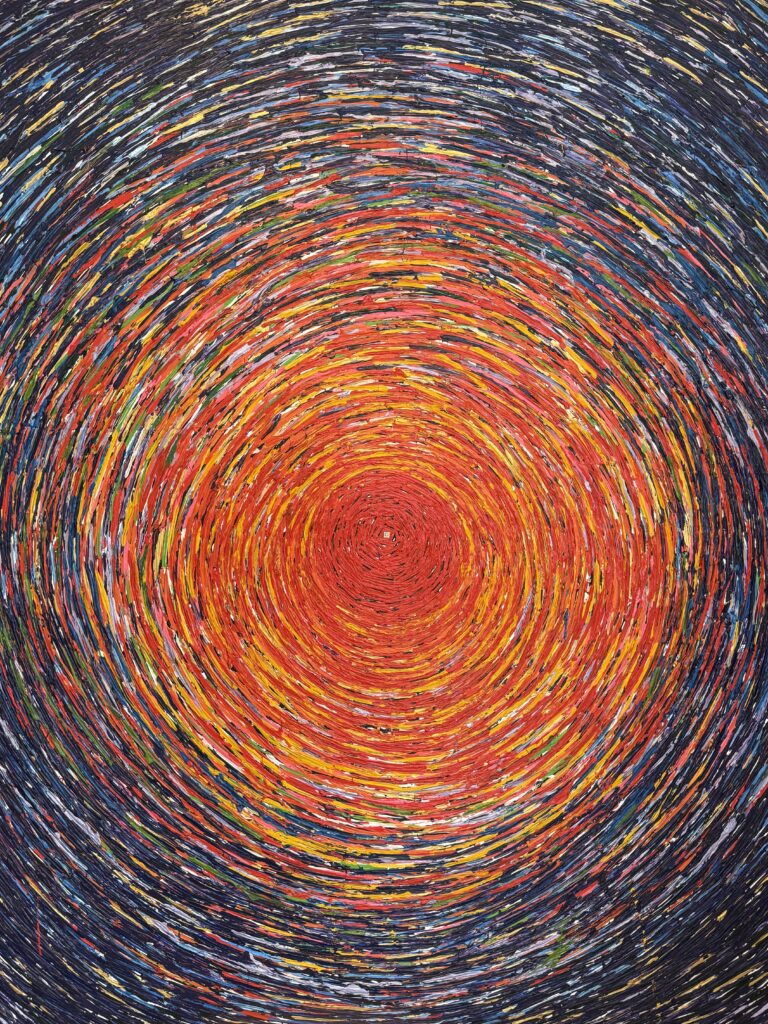
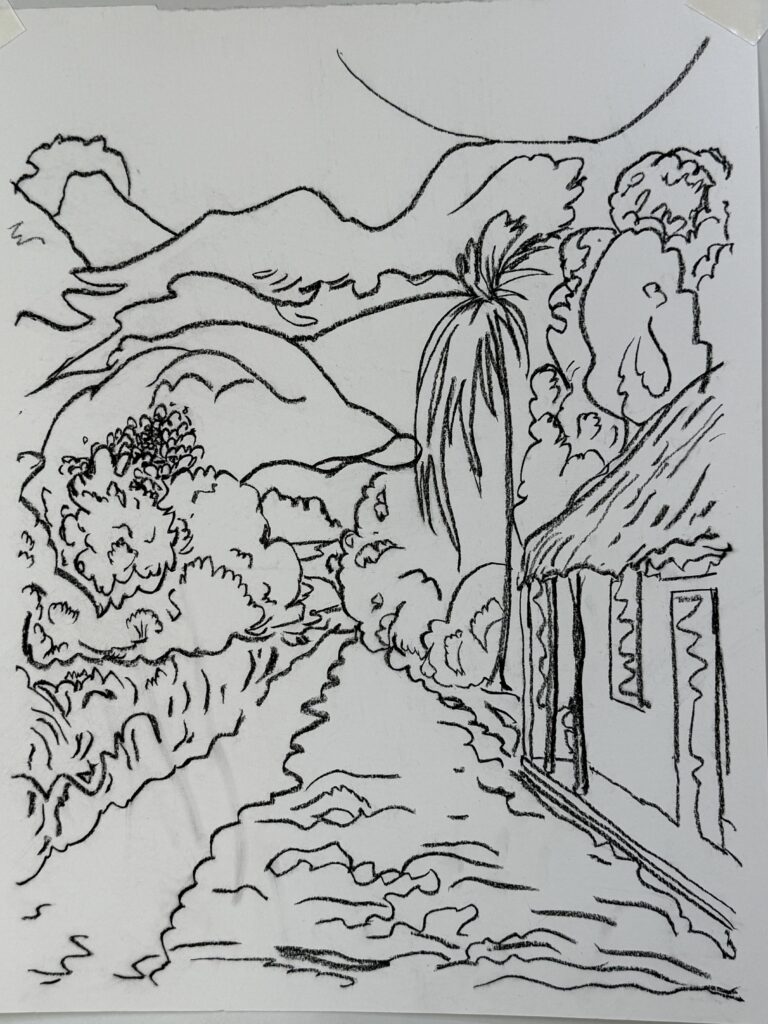
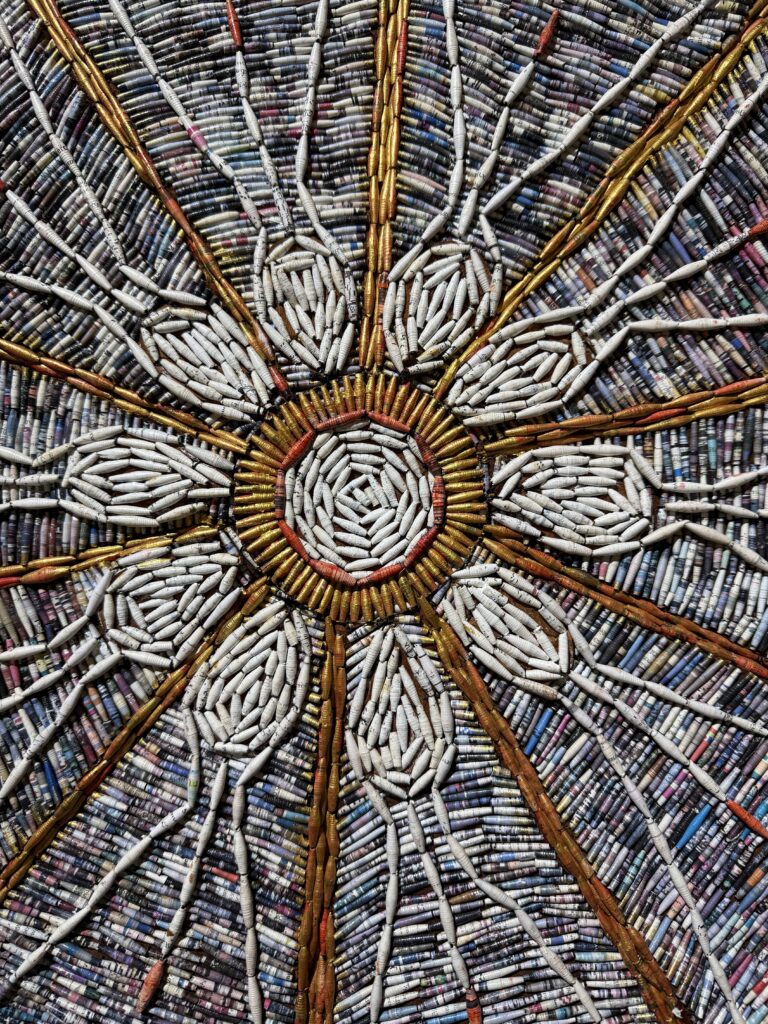
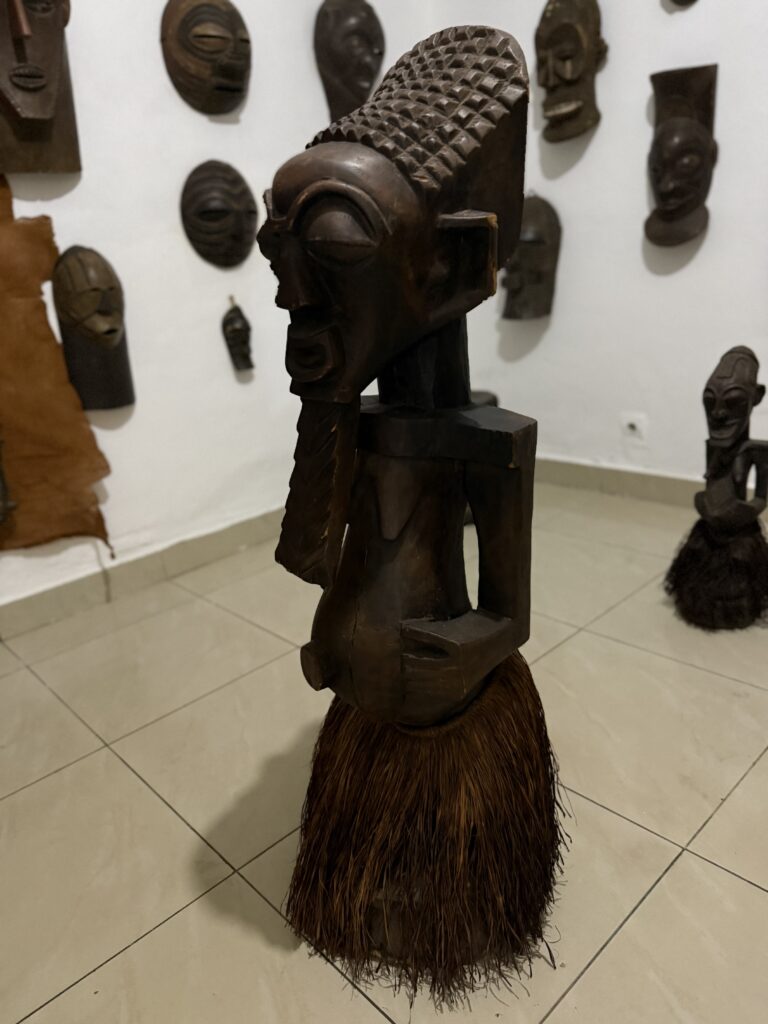
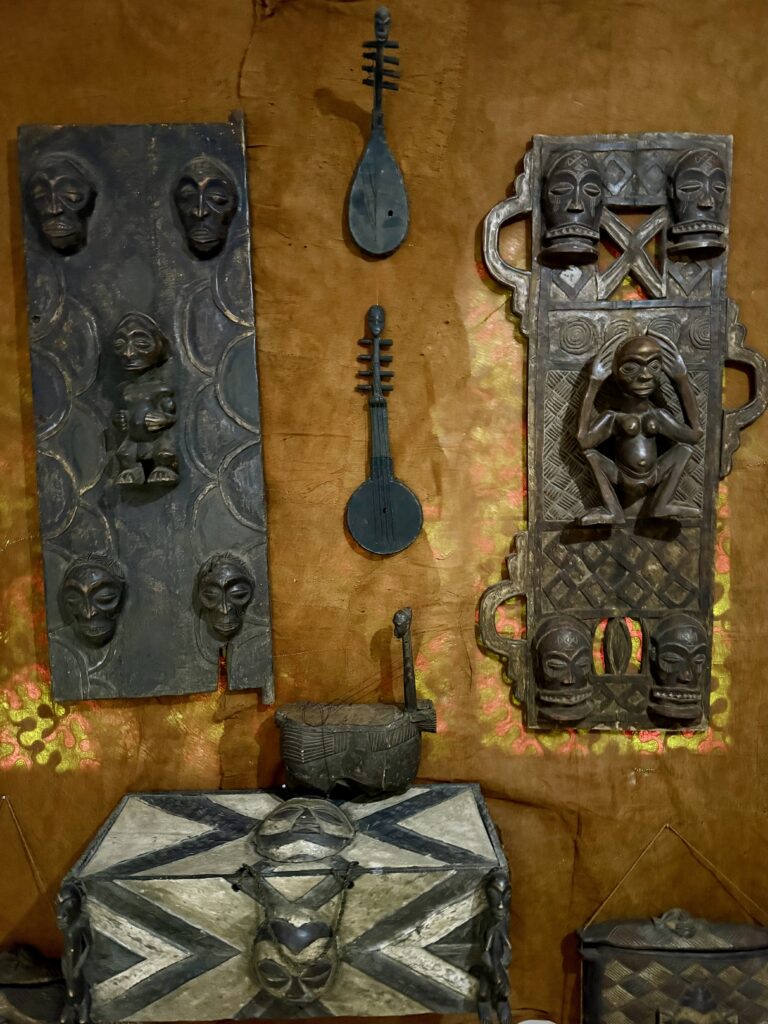
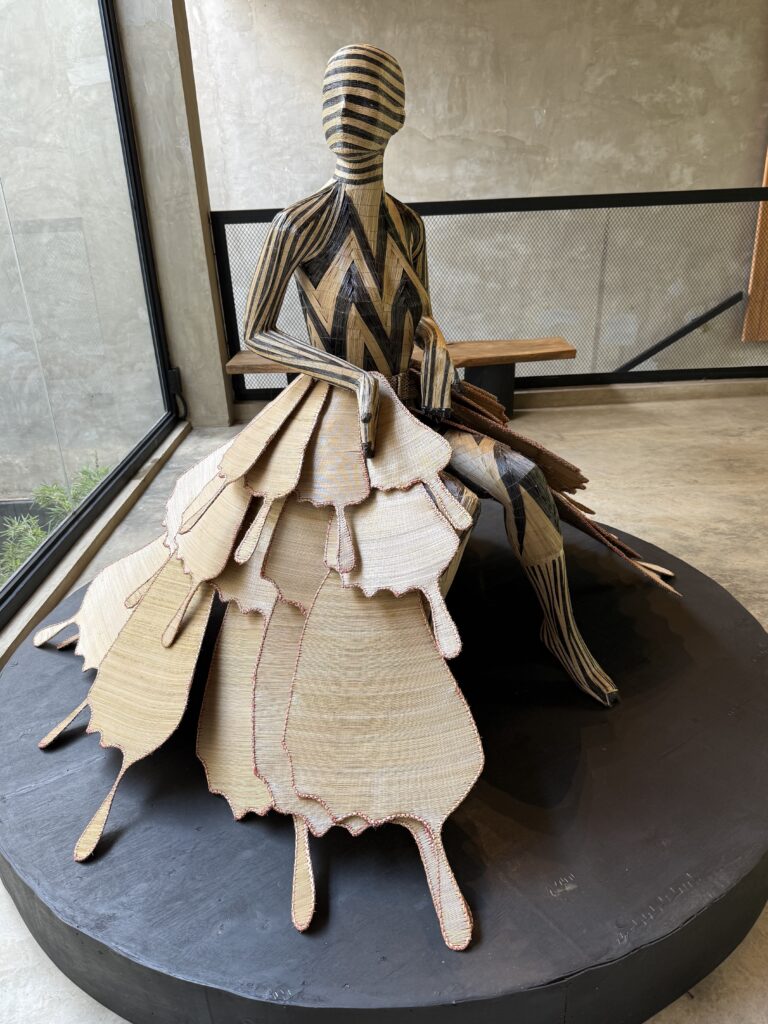
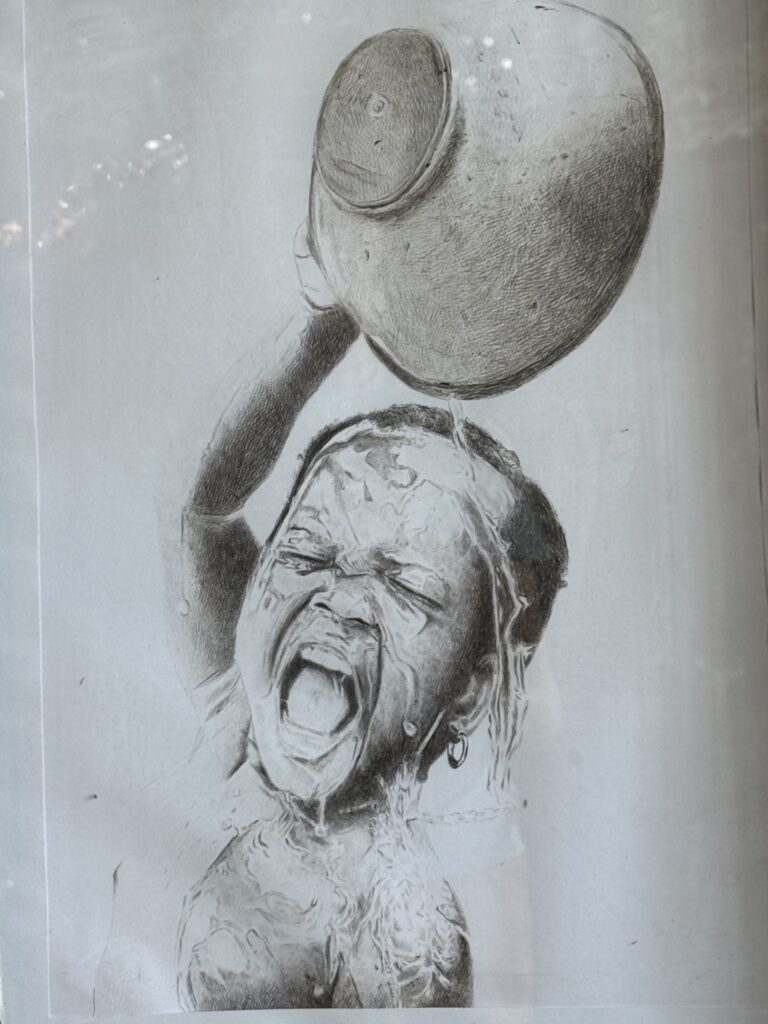
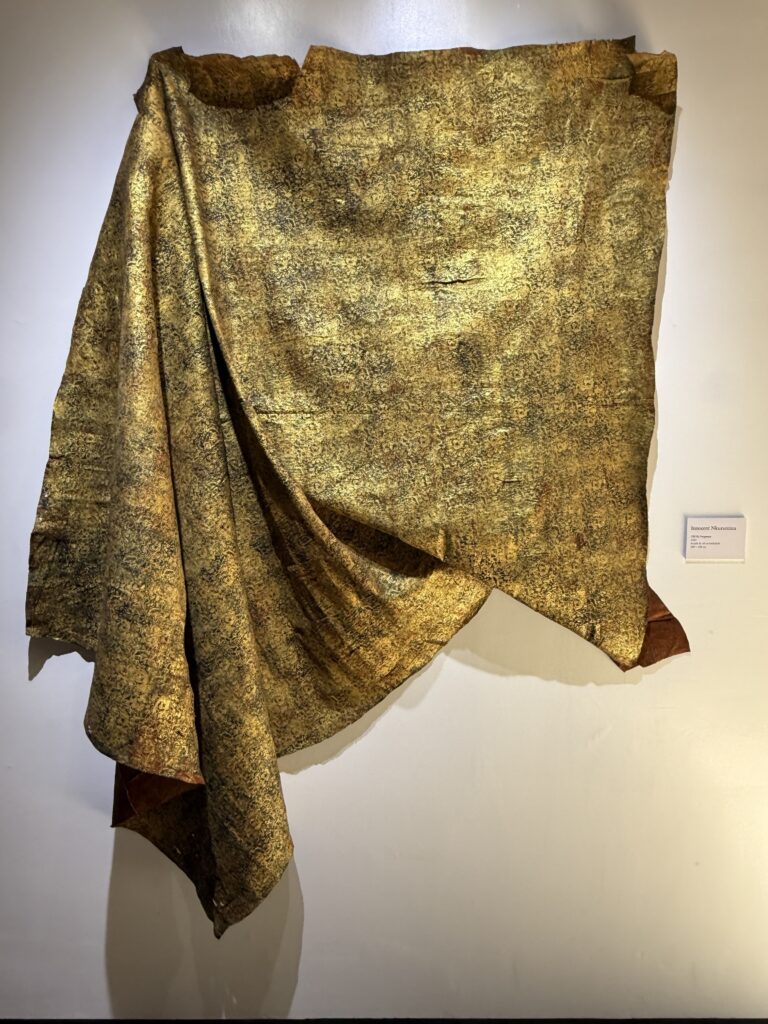
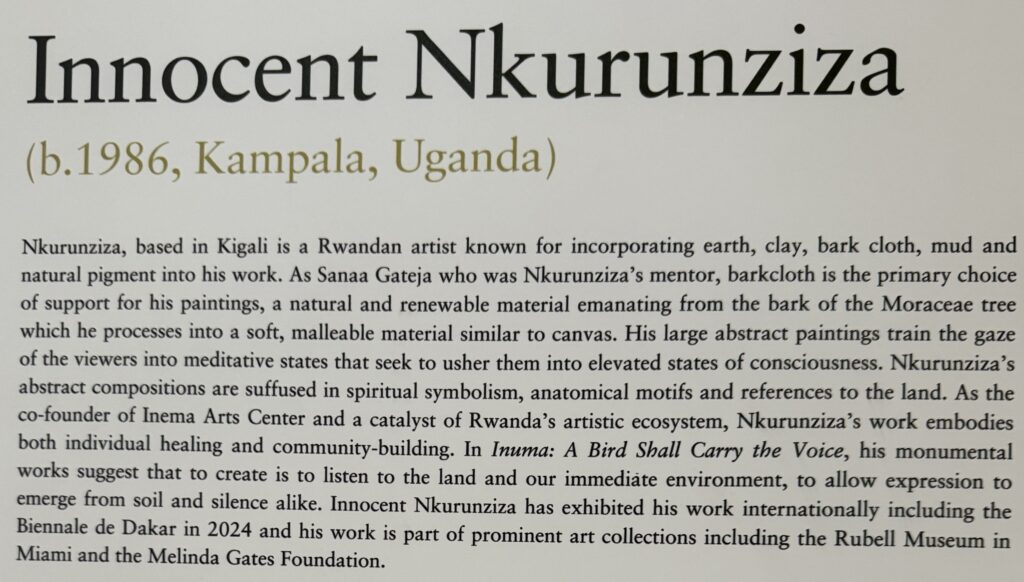
On a lighter note we explore some of the prolific local art, first by visiting Inema Arts Centre where we enjoy chatting for over an hour with co-founder and artist Innocent Nkurunziza and his brother Joseph. Innocent is very accomplished, with his work being displayed globally including the De Young in SF, the Zeitz in Cape Town, and in 2028 in the MOMA in NYC. His work uses natural products including tree bark cloth as a canvas and the centre hosts orphans and female survivors of the Rwandan genocide in support of their community. One room includes wooden figures from the Congo dating from the 1800’s, part of Innocent’s collection of 250 pieces which he purchased after the Rockefeller Foundation completed their selection for museum donations. Innocent directs us to visit Gihanga Institute of Contemporary Art, recently opened in a beautiful modern space showcasing 7 Central African artists including Innocent in an impressive inaugural exhibit. Innocent and his 5 brothers were living as refugees in Uganda during the genocide, returning afterwards to rebuild their lives. Innocent became a globally recognized artist, opening the Centre with his brother Emmanual, and Joseph achieved his BA from Cal State Fullerton with help from the university’s President who’s become a parental figure, with his sights now on an MBA. Their resilience is emblematic of this country rising from the ashes to build back better.
Another contributor to Rwanda’s rebuilding is Jonathan Boyer, a professional road racer and the first American to participate in the Tour de France in 1981, who selected 5 Rwandan young men, including our eBike guide’s brother, to create a national bike racing team in 2007. He had to take the fledgling class completely under his wing, mentoring them not only on biking skills but also on life skills, such as hygiene, nutrition, finances, and many other aspects to improve their lives and livelihoods. He paid them a nominal fee which the riders mostly sent to their families to improve their well being, and from this fledgling class, a national bike team was born, giving so many families over the decades a leg up, and still employing his brother as a mechanic. This is just one of many examples of successful rebuilding with aid and guidance from abroad.
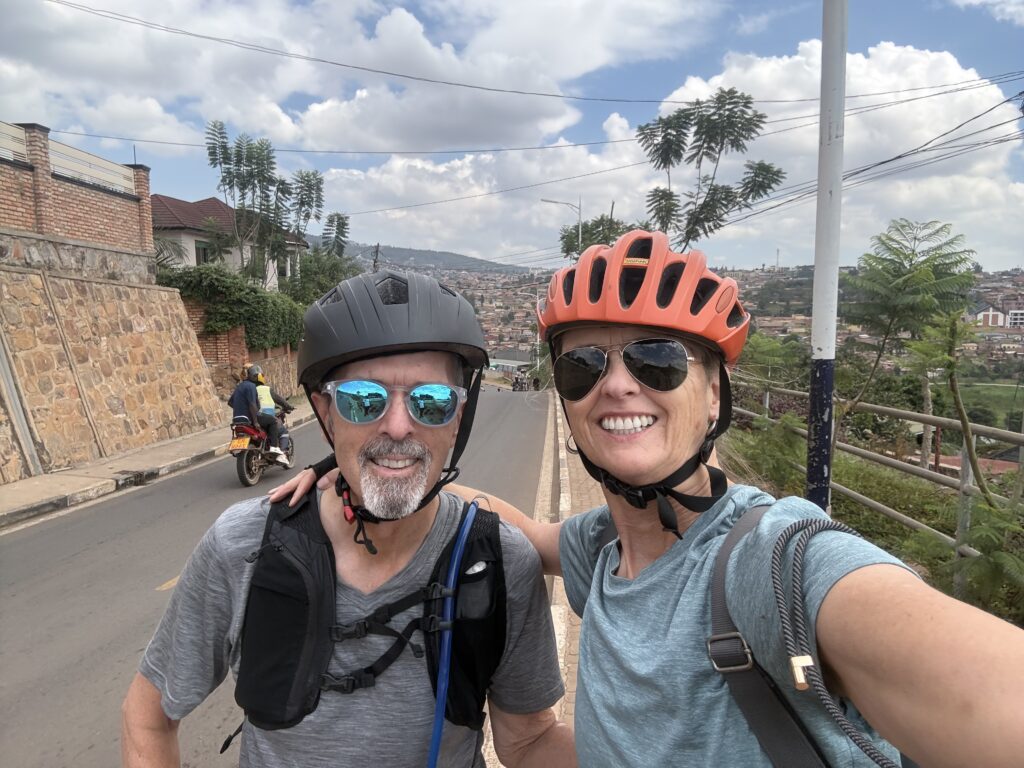
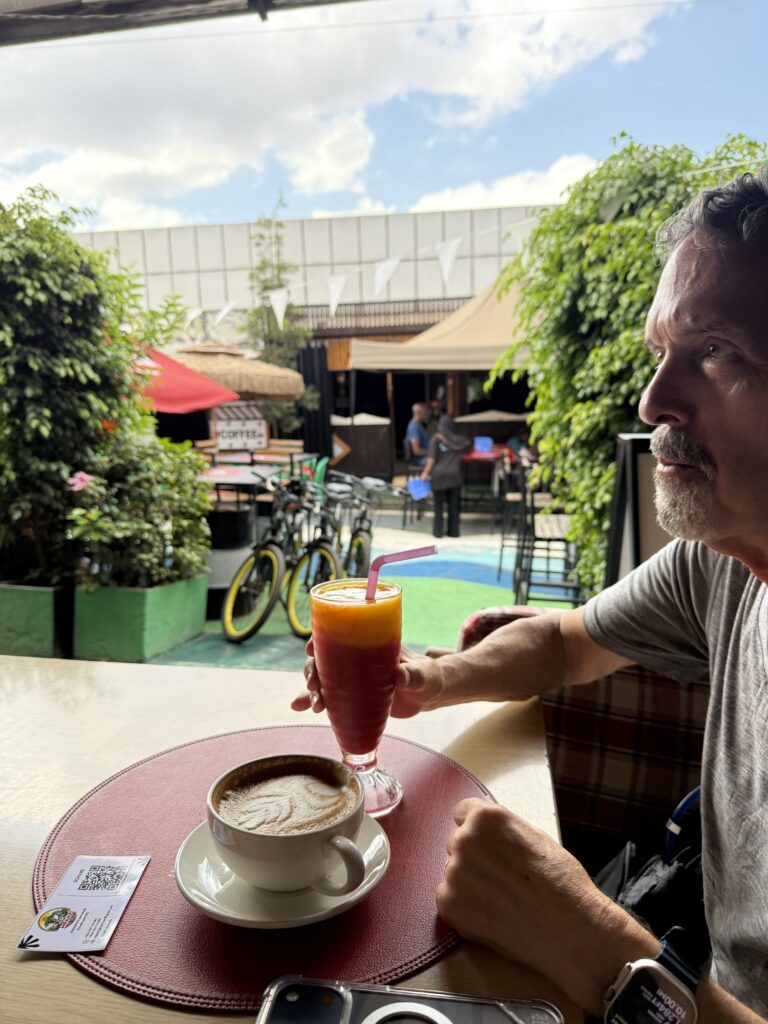
With Kigali’s explosive growth since the genocide, supported by international donations in cash and counseling, it is has evolved into a very progressive country, a real role model for Africa, and the perfect Intro to Africa country for newbies, complete with safe streets, tony restaurants serving delectable coffee, glittering vistas, wonderful people, and great wildlife and cultural activities.
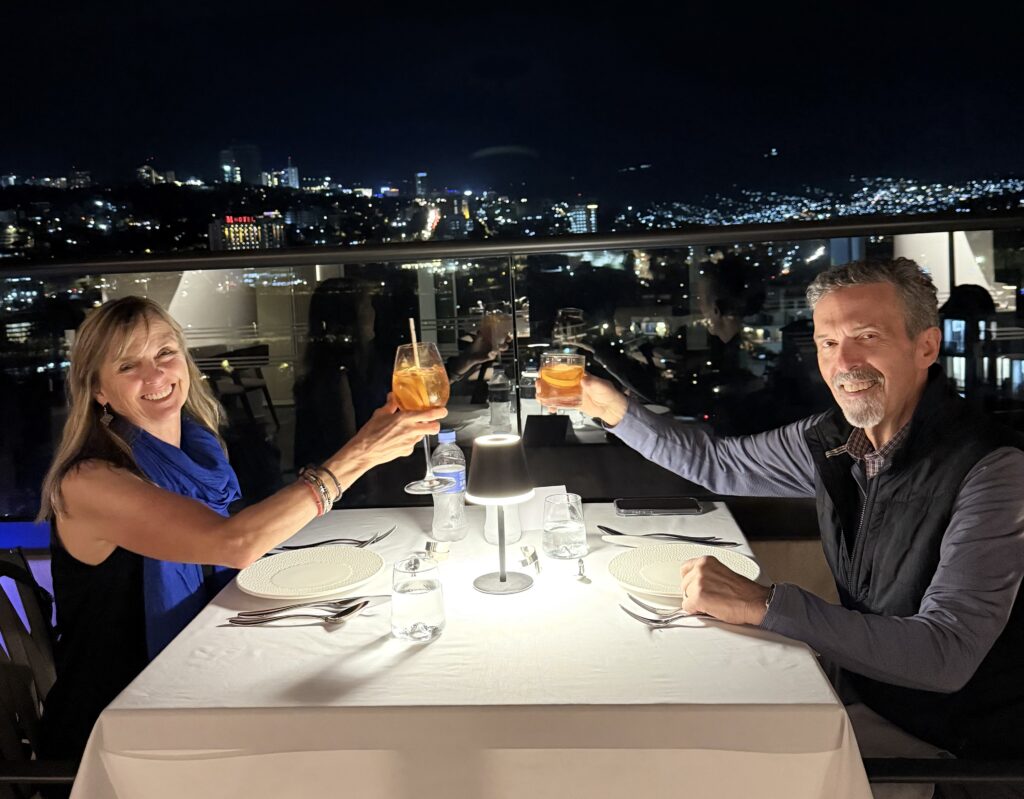
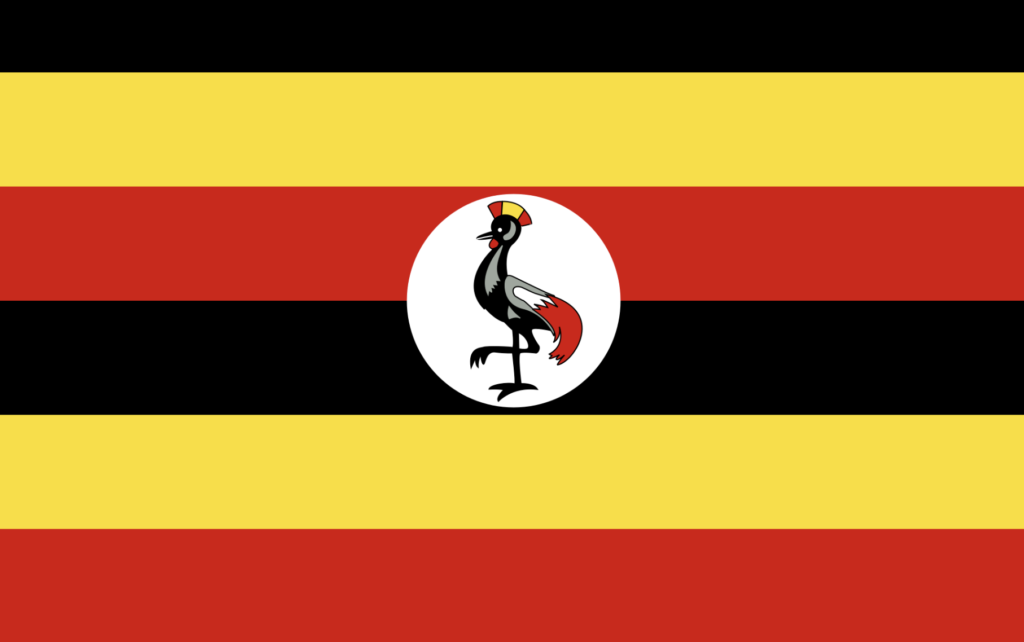
Next up: Uganda
Hiya susan and Brian
Allen Bechky, suggested we reach out to you boyh after a mutual MTS friend sent him the link to your our blogpost on Rwanda
Are you still traveling in Rwanda ? We are running Allen’s lodge in Kinigi Musanze near where folks come to trek the endangered silverback gorillas
Let us know if you are coming up North …we would love to connect and show you the beauty of the Northern Region
You can reach us via email at
Behappy.food.fun.travel@gmail.com
Or whatsapp +1646 339 3663
We have been here 5 years and have discovered so much about this remarkable country
Your blog hits in many home truths
Looking forward to hearing from you.
Sawa!
Thank you Lisa for your outreach! As I’ve explained to Bwana Allen, we are no longer in Rwanda but I’m sharing your comment so others may want to utilize your contact info for their travels. You live in a beautiful place and it would be amazing to visit you there someday! Thank you, Susan
Hi Susan and Brian,
Good to see you got the bug for Africa.
I enjoyed this piece of Rwanda.I hope you are going to see Moore of the country.
I spent 6 weeks in Rwanda in March and April, and then returned to the US April 13, so I didn’t mss you by much. I’m pretty sure you will visit Musanze and Kinigi to visit the Volcanos National Park, famous for beautiful mountains and the mountain gorillas that live there. I recommend visiting the gorillas in Uganda at half the price of Rwanda, so you get 2 visits for the price of one. You can see them in the Mgahinga NP, which is Uganda’s share of the Virunga Volcanos, and also at Bwindi Impenetrable Forest NP, where there are many groups of habituated gorillas at different locations around the park.
I know you guys are good strong hikers, so I recommend that you hike to the summit of Karasimbi Volcano in Rwanda. It is the highest of the Virungas and requires a night on the mountain. You arrange it with the park office and you will probably be the only hikers. Visoke Volcanos is easier access and a one day hike. It s very scenic and you will get up into the remarkable afro-montane vegetation at its summit. You can climb Sabinyo Volcano on the Uganda side. I’ve Neve summited that one, but it is probably the hardest hike and maybe scary because you partly ascent on wooden ladders.
Don’t miss a hike to Dian Fossey’s Research site at Karisoke n Rwanda. This trail takes you through the heart of gorilla country and you may get a bonus sighting, though you won’t be permitted to stay long, The park authorities don’t want anyone to get the full gorilla viewing experience without paying the $1500 fee. The Karisoke trail leads you though the most beautiful forest in the mountains. Gnarled and moss-draped hagenia trees and yellow-flowering hypericum trees (giant St John’s wort) are worth the walk. the ruins of Fossey’s cabin are there and the cemetery in which she buried poached gorillas.
BTW, be sure to visit Ellen de Generis’s Dian Fossey Campus. Great place. Just up the road from Villa Gorilla.
I have a small hotel up at Kinigi, near Volcanos Park office. I sent your bag connection to my cousins who are running Villa Gorilla. Cousins Lisa and Andrew can set you up on tours in Rwanda or southwest Uganda. They are super chefs. I don’t know if they can offer you accommodation but I’m sue they would be happy to see you. I also know a couple to terrific birding and photographic guides.
I look forward to seeing your future blogs and will read up on the past adventures. Uganda is ahead. SW Uganda is the most scenic part of the country. Try to get to Kidepo Valley NP– very few visitors and the most scenic wildlife park in Uganda.
Feel free to contact me at allen_bechky@hotmail.com or by WhatsApp at +1 510 290 8667
Have fun, Allen
Bwana Allen – what a thrill to hear from you! Glad you are still enjoying the gems of Africa as I’d heard you’d moved back to the States. We’ve thought of you often while here in continent and all of your valuable expertise. If you were still in Rwanda we would have adjusted our travels to visit you but alas we spent our one week in country in Kigali and moved on to Uganda for 2+ weeks touring, including gorilla tracking. I’m writing from Kibale NP watching the sunrise over the hills while fishermen throw their nets in hope on the lake below. Africa is so varied and filled with such treasures, and we feel deeply blessed to spend so much time here. Enjoy our blog and stay in touch! WhatsApp +14157177688. Maybe you can make it now to one of our MTS reunions at our home once we return! xo
It is wonderful to learn from your journal and that Rwanda is thriving and that your journey has been safe. There are so many gifted artisans in Tanzania and now I learn Rwanda. Be well my friends.
Thanks Heidi and great to hear from you! Yes such great artwork here in Africa, really creative. xo