
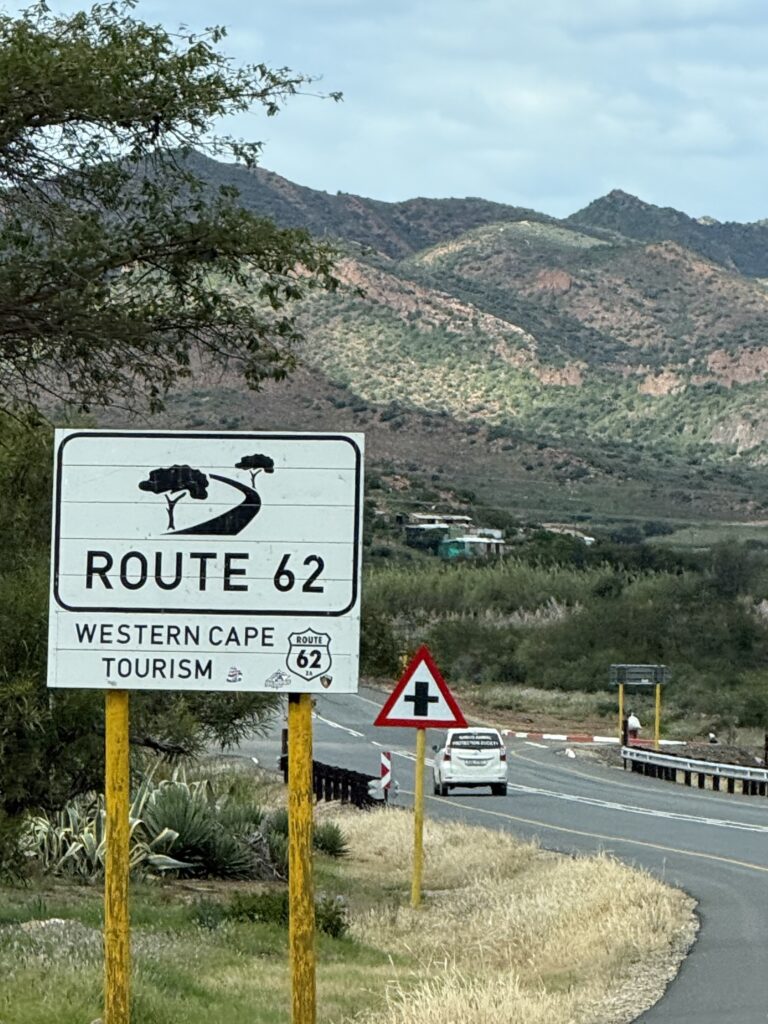
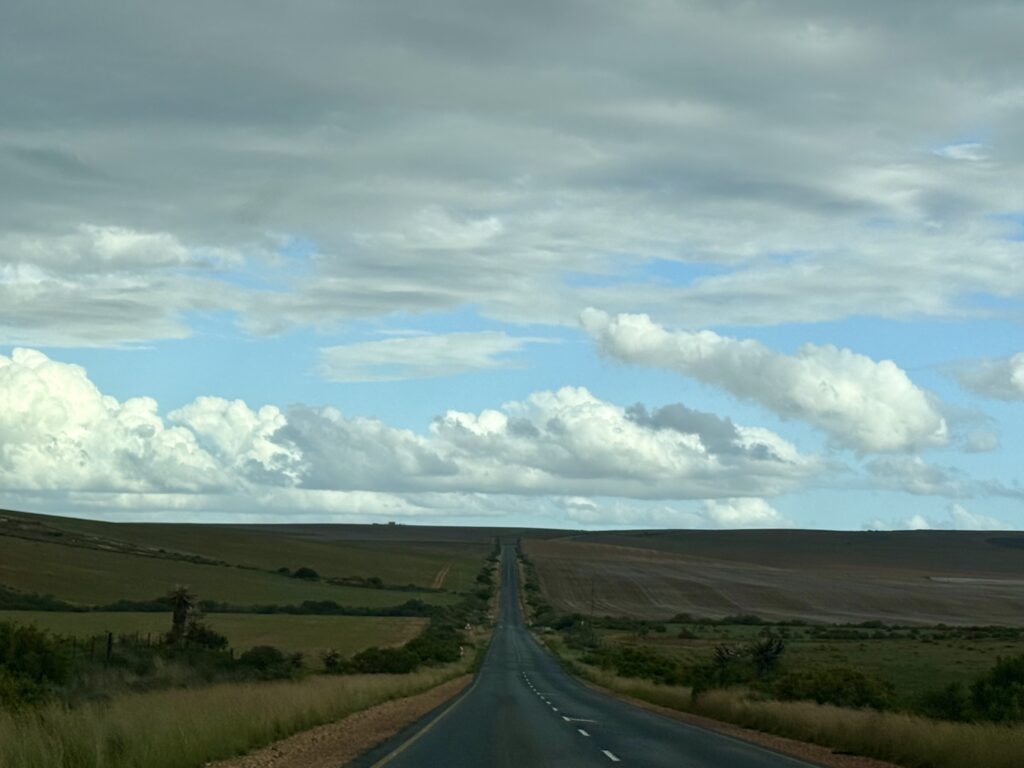
Having holed up in Cape Town for 11 days to heal, the longest we’ve been in one place in 3 months, we head out for a deep dive of the Garden Route, a Route 66-type trip but on Route 62, through the beautiful southern regions of South Africa. A motor vacation, poking around the towns and enjoying the vistas, is just our speed right now and Brian does a fabulous job navigating the opposite side driving with a stick shift while combating pneumonia.
What strikes us the most about this road trip is the incredible beauty of this part of South Africa, and I’d imagine elsewhere as well! The other aspect is the warmth of those we meet along the way, pity for my booted foot, intrigued by our journey, and gracious with travel ideas, which we maneuver into our fluid planning.
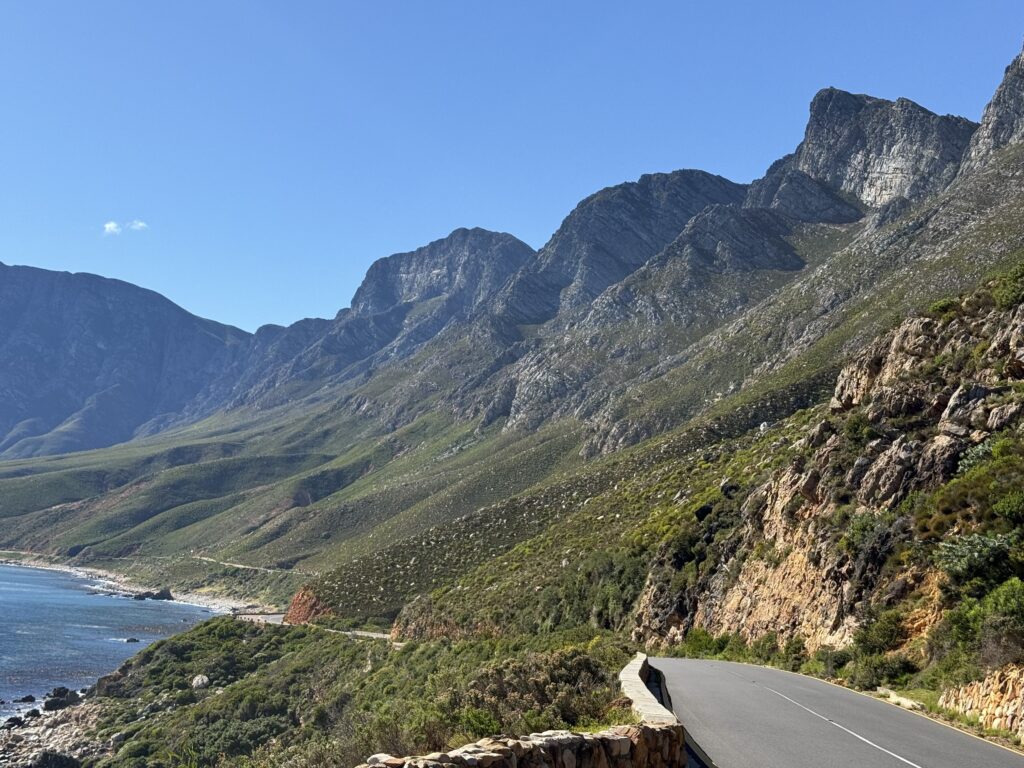
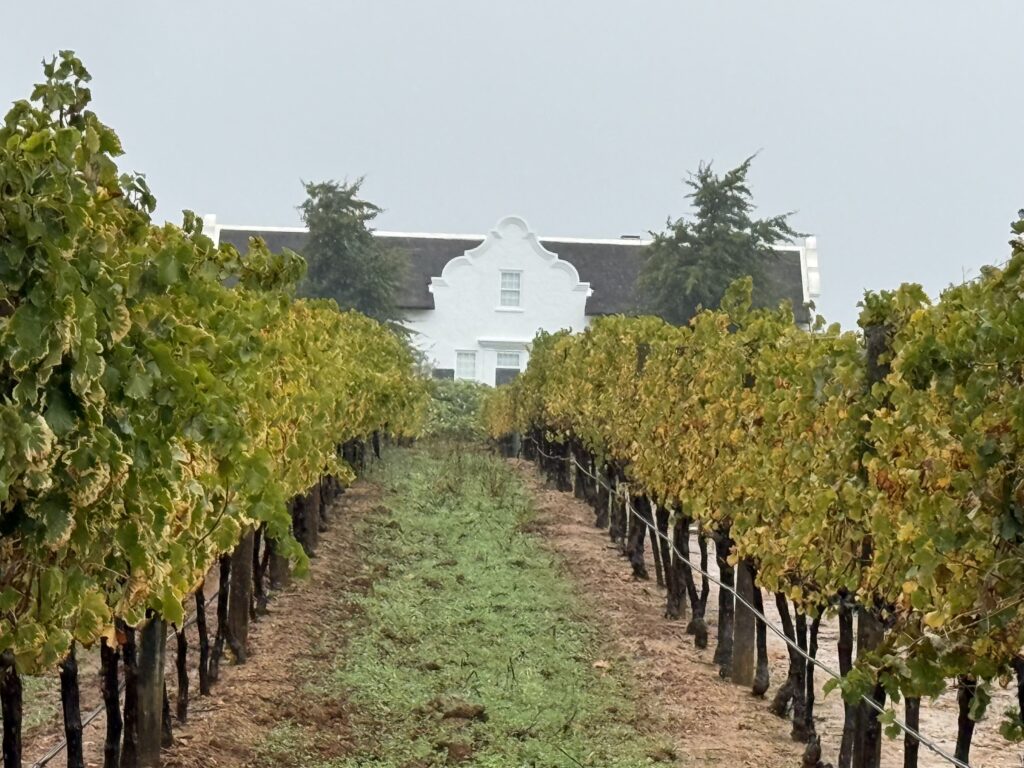
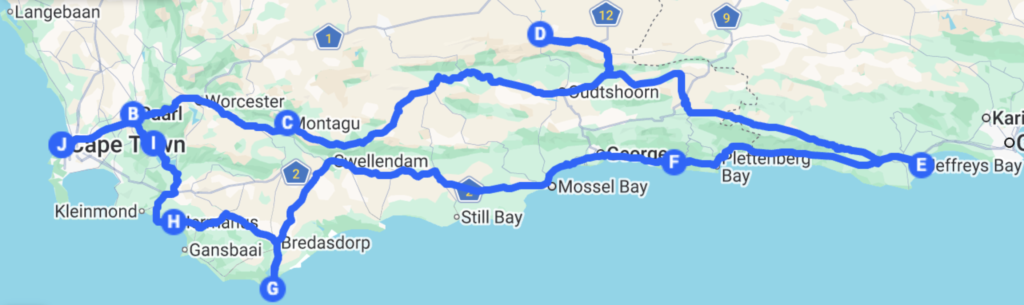
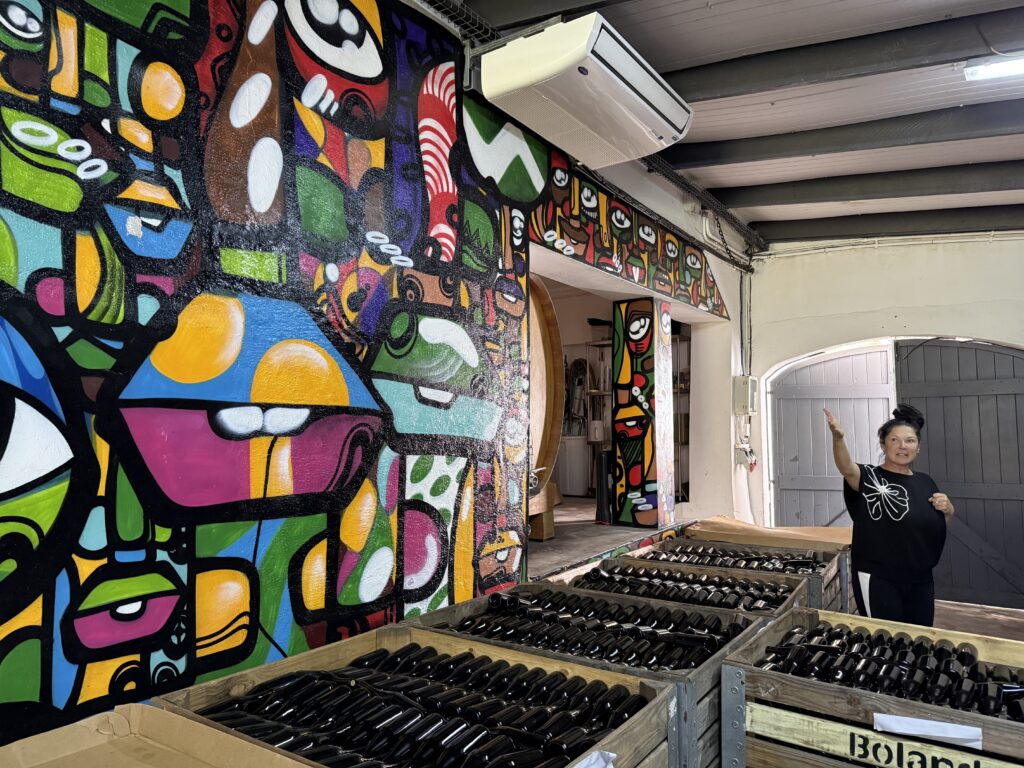
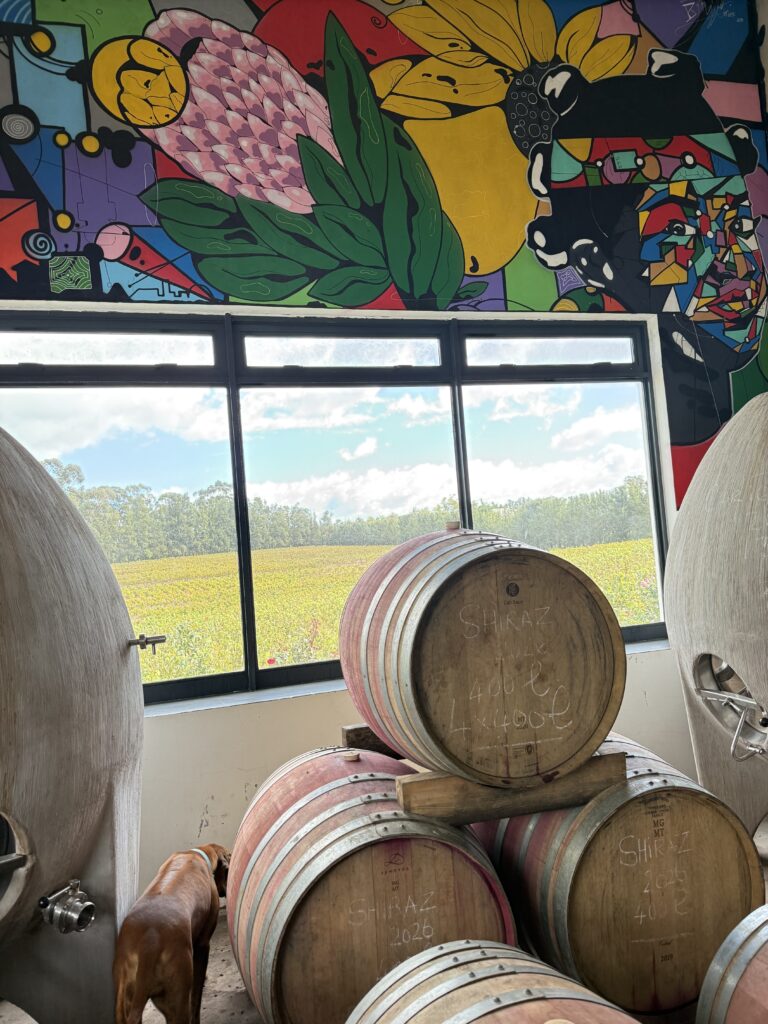
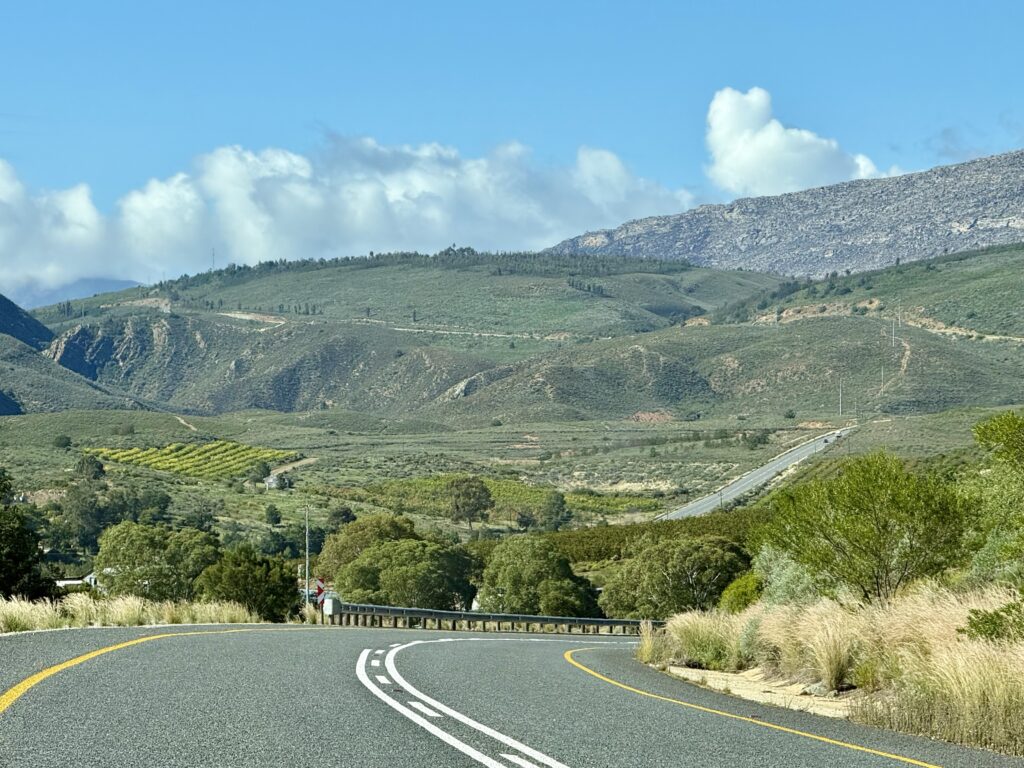
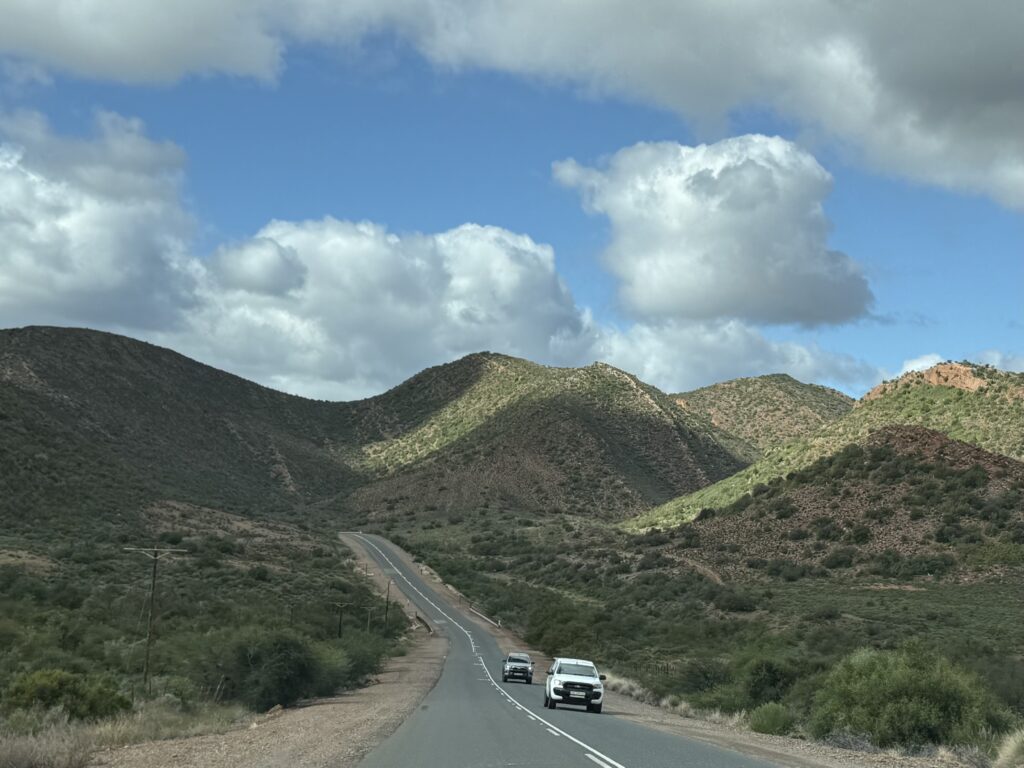
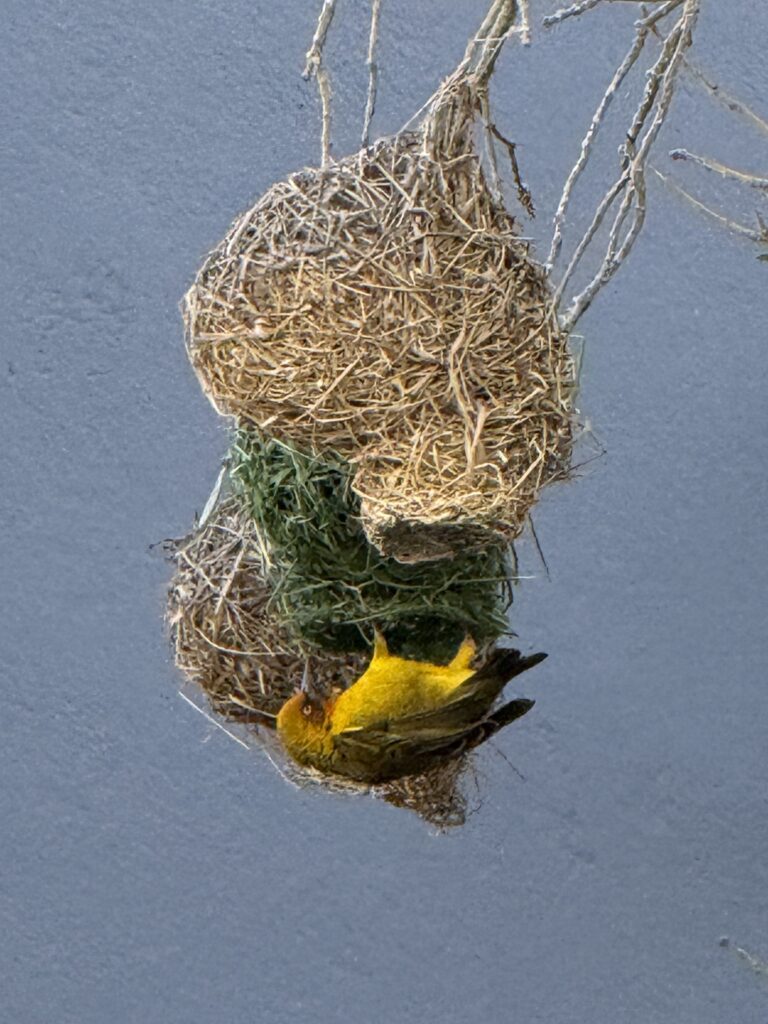
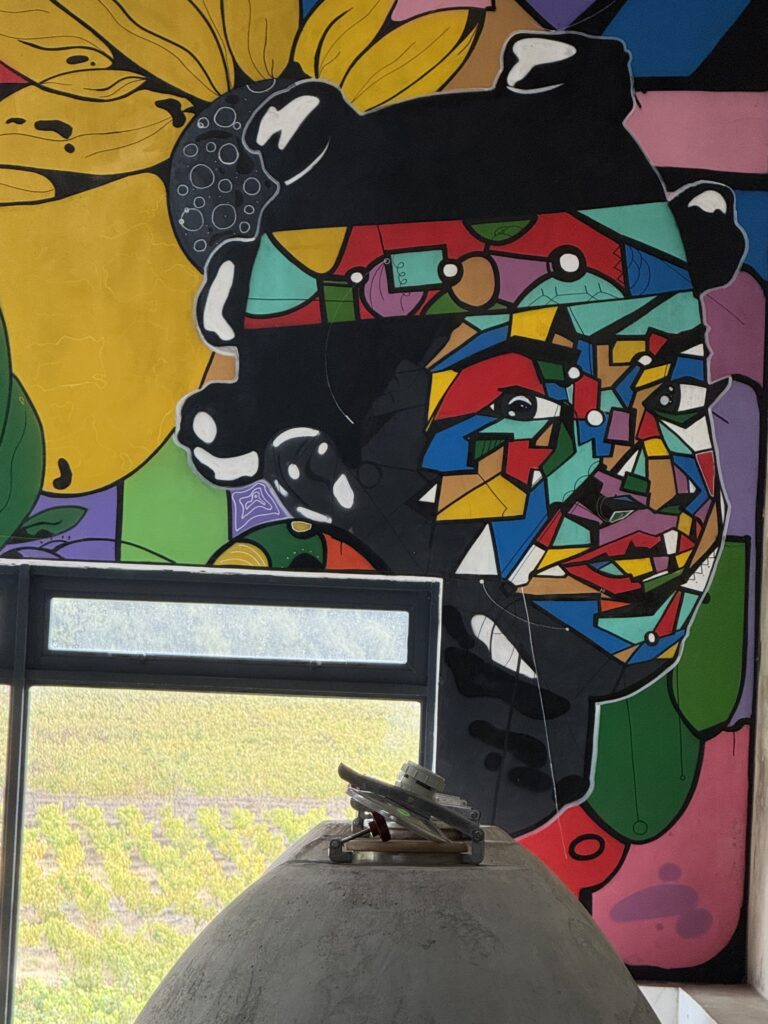
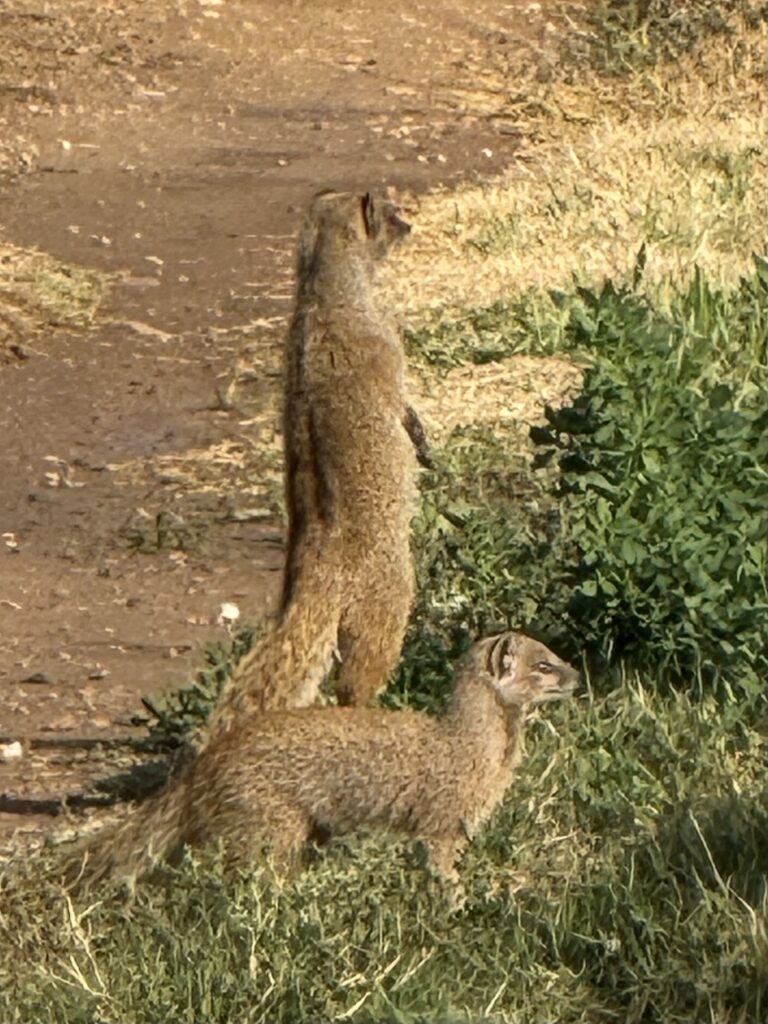
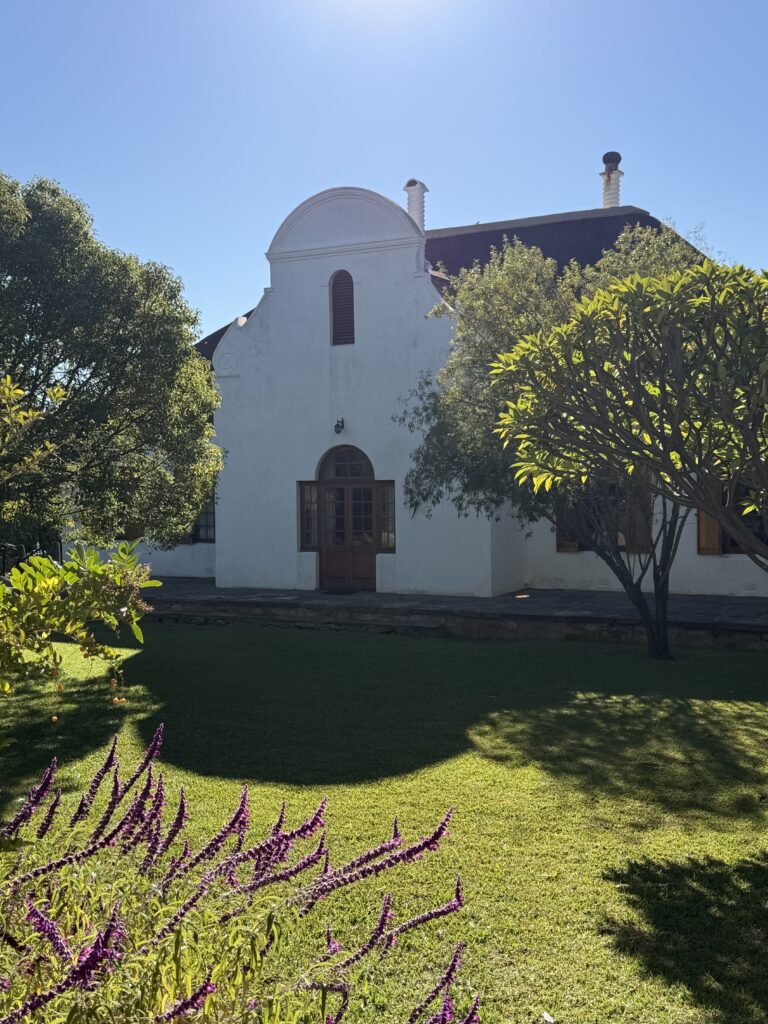
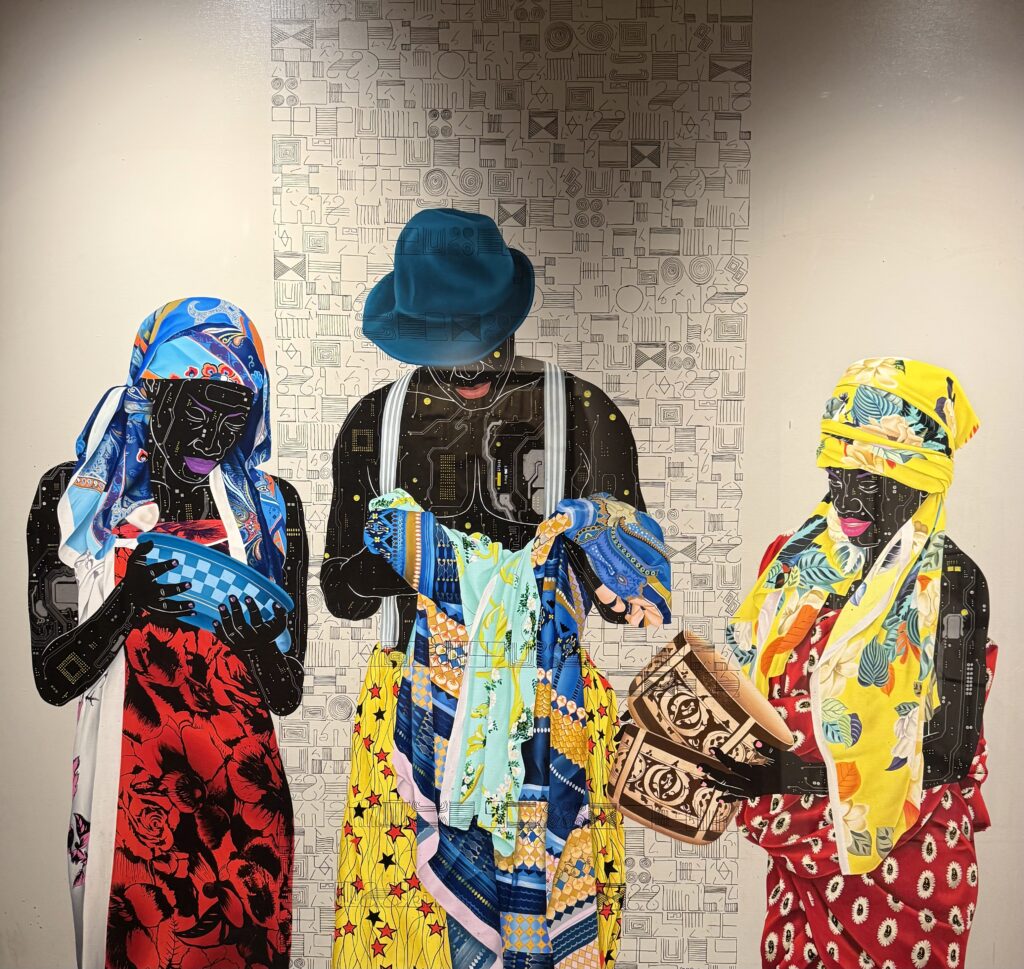
The first part of our journey maps the inland route, returning on the coastal route to drive on the outside edge of the road. Like the Bay Area, the wine region is right up the road so we do a quick stop at Paarl, overnighting at Tempel Wines where we visit their wine production room decorated by local artists. The highway after is straddled by rugged mountains with villages and agriculture in the valleys. At our next step Montagu, we’re greeted by a pair of meerkats (aka mongoose) who live onsite near a tree filled with weaver bird nests, a type of finch, which dangle from the tree limbs in groups. The males make the nest to entice the female who checks out the proposed home. If she rejects it, he builds another one, which is why there are so many, and if she moves in, she’s responsible for interior design i.e. bedding material. As we roll, we listen to Nelson Mandela’s autobiography Long Walk to Freedom, infilling our knowledge on apartheid, the atrocities suffered, and the legacy that shapes the country today.
We push on to Oudtshoorn, famous as the ostrich capital of the world (who knew there was such a thing? But then Castroville is the artichoke capitol of the world so….). Ostriches were initially bred mainly for their feathers for high-style hats in the late 1800’s and early 1900’s. Once the car was introduced, the demand dropped precipitously since the feathers couldn’t stand up to the air stream of the open road. The feathers are still harvested for feather dusters and eggs for eating but mostly the bird is bred for its meat, which is much like beef but a bit more gamey and very tasty. The locals eat the neck by softening the meat in Coca Cola then cooking the slices like oxtail stew. They are the only bird with only two toes and can run up to 50 miles per hour! Plus they can give you a neck massage, though that didn’t work out so well for me.
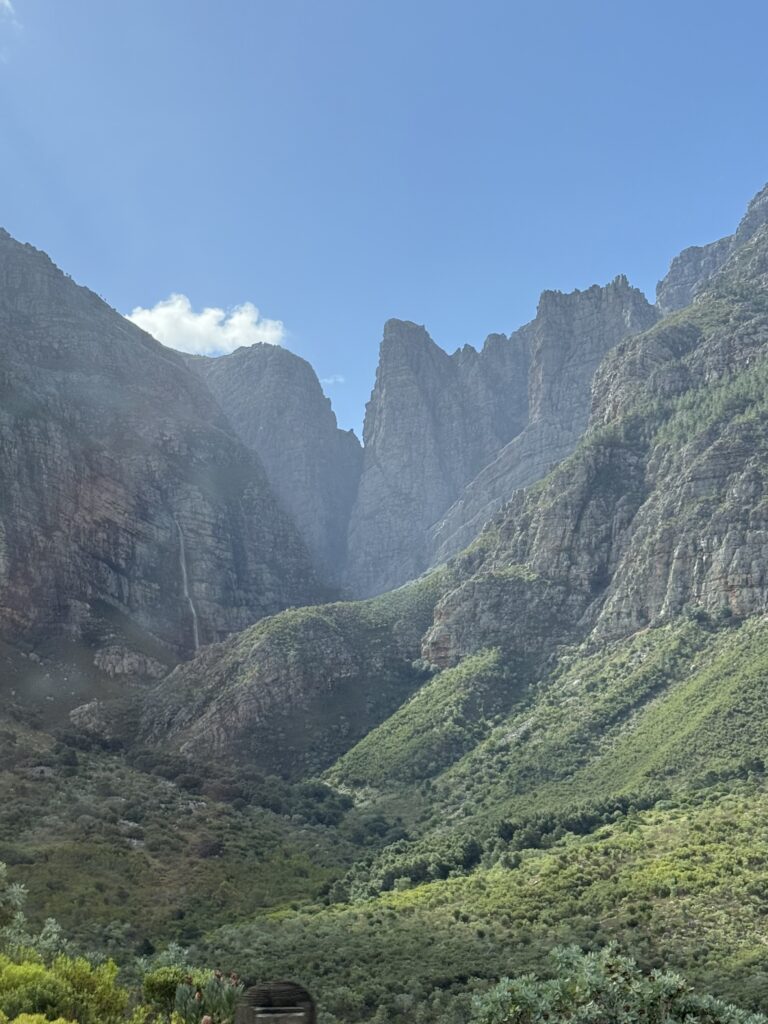
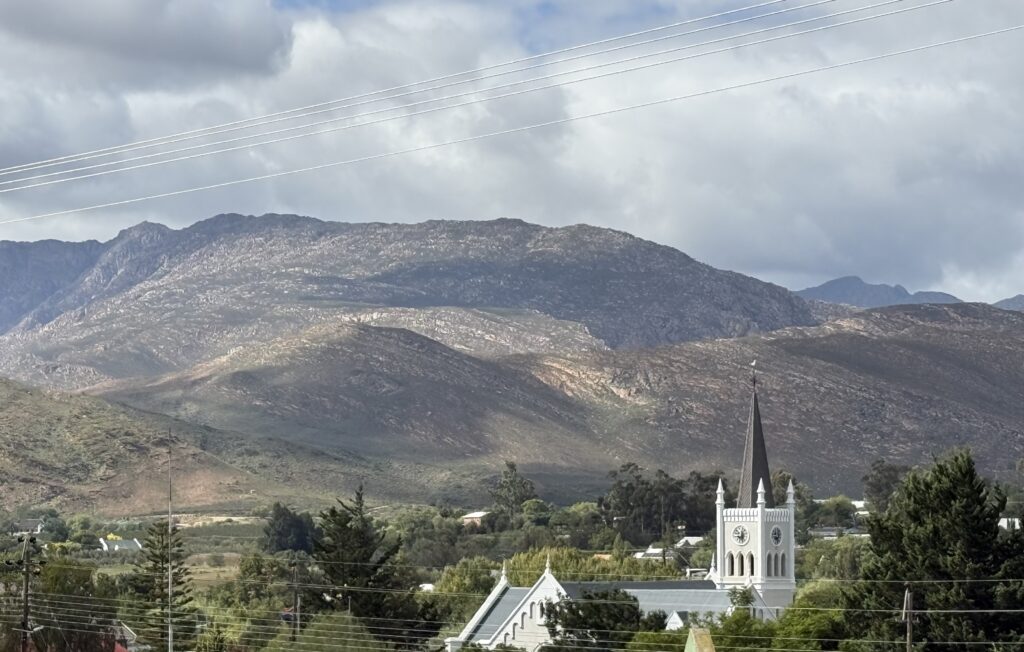
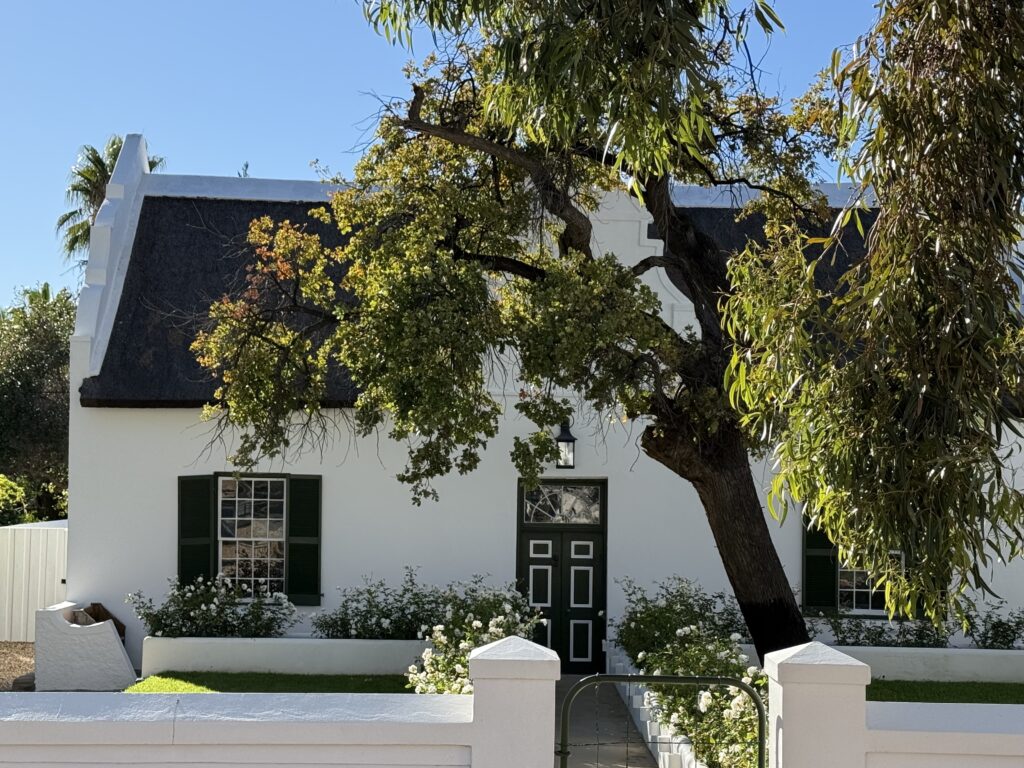
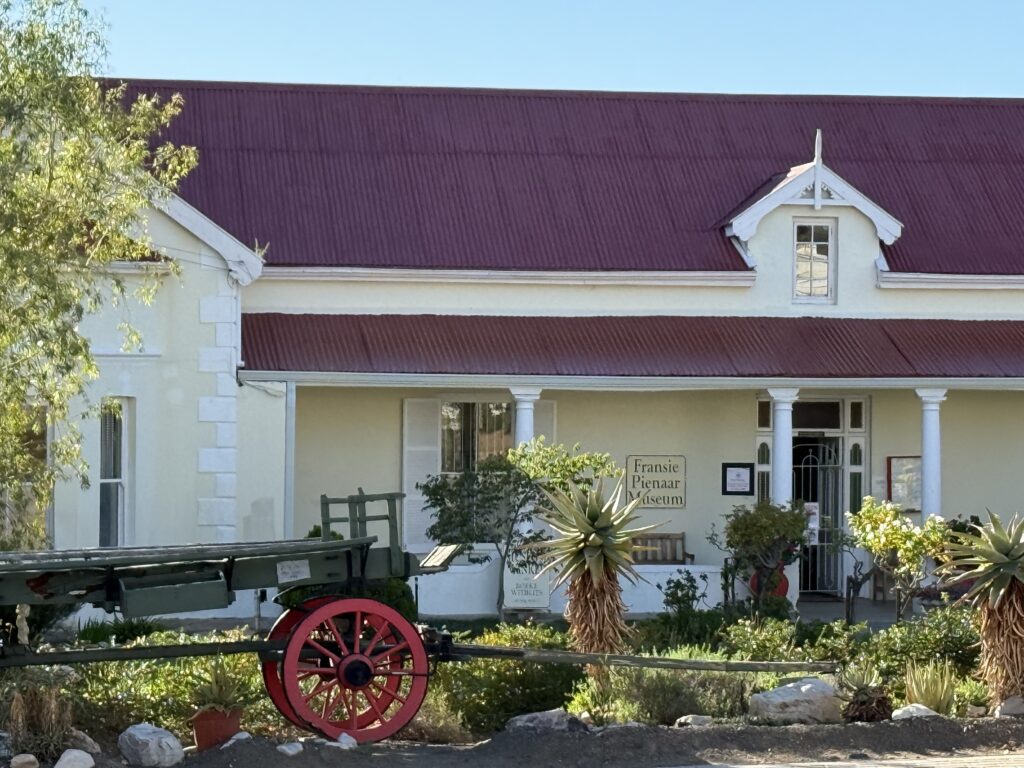
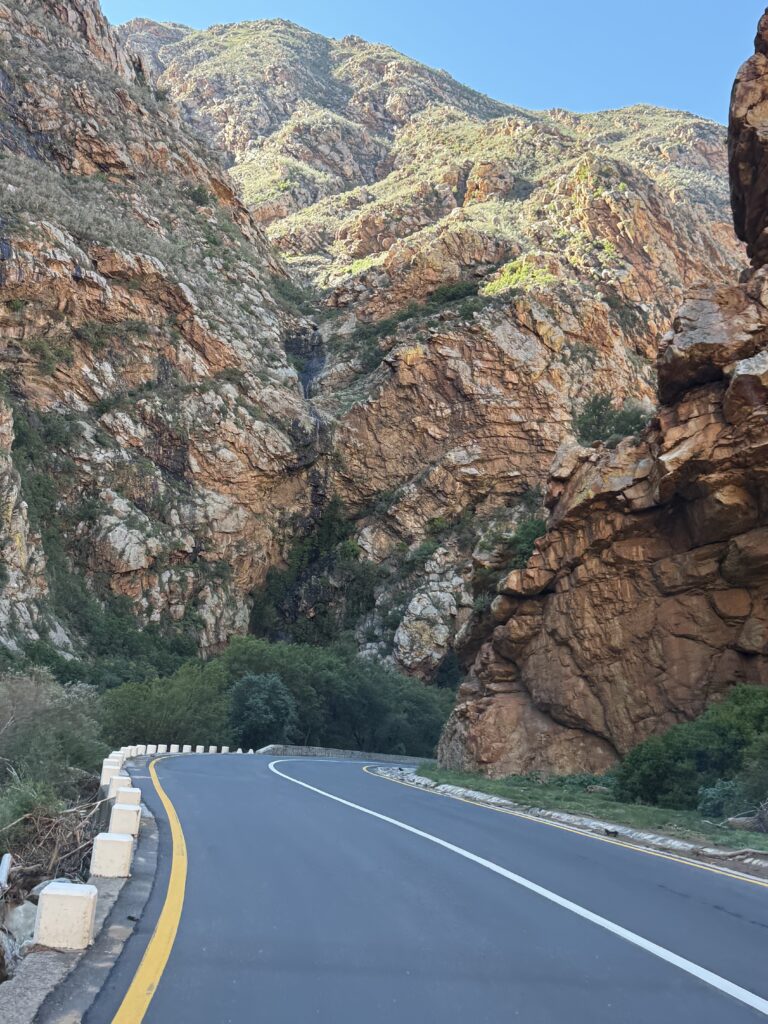
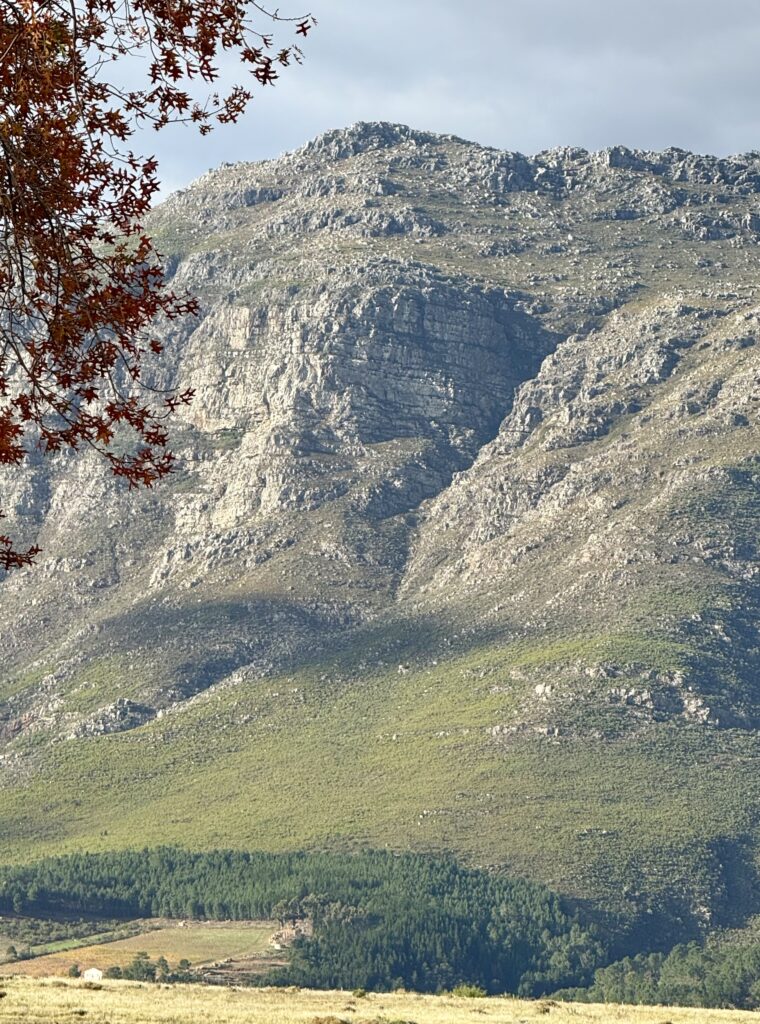
From Oudtshoorn we head north through the stunning Swartberg Pass with its jagged cliffs down to a road-level river, and if you’re lucky you’ll encounter a troop of baboons! Elsewhere we had a Vervet monkey cross our path while driving, less common than baboons which we see occasionally throughout our road trip. The highway passes by many quaint towns with church steeples in the dell and each one seems to have a township hugging the less desirable highway section with corrugated sheet metal homes in this idyllic setting.


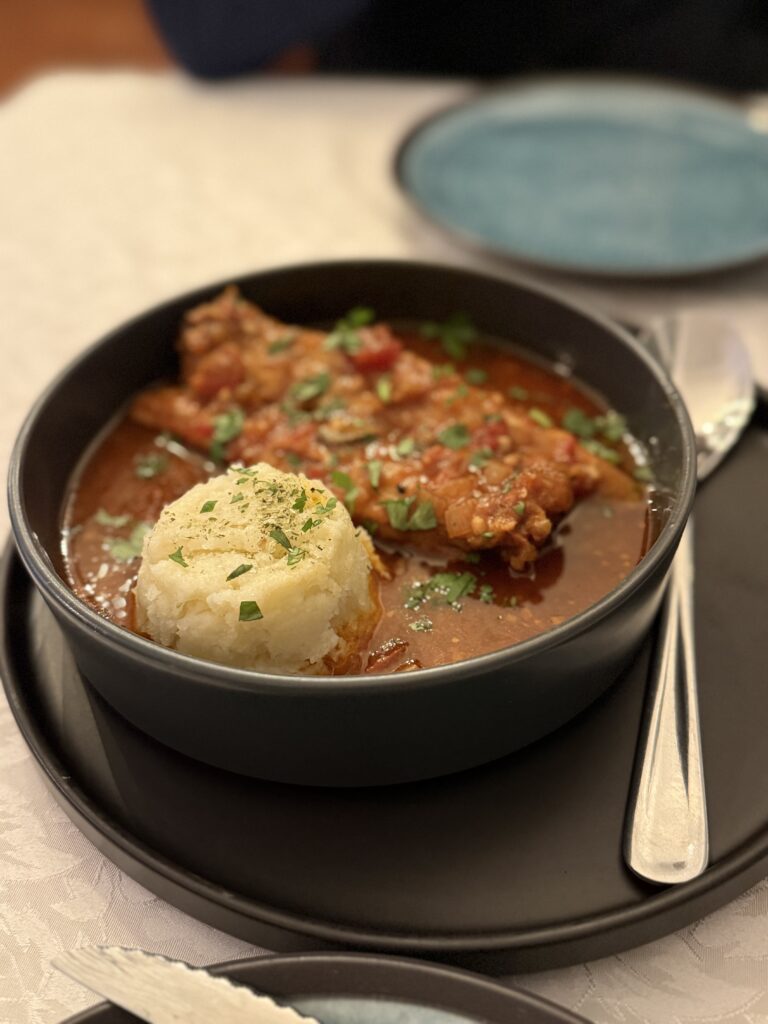
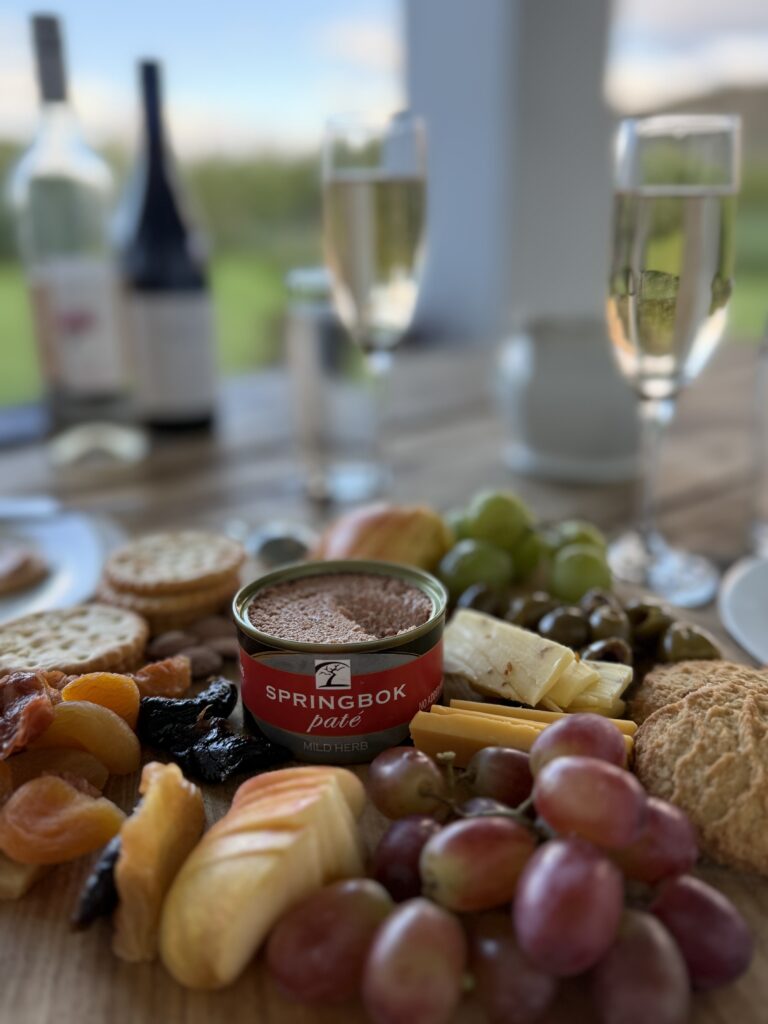
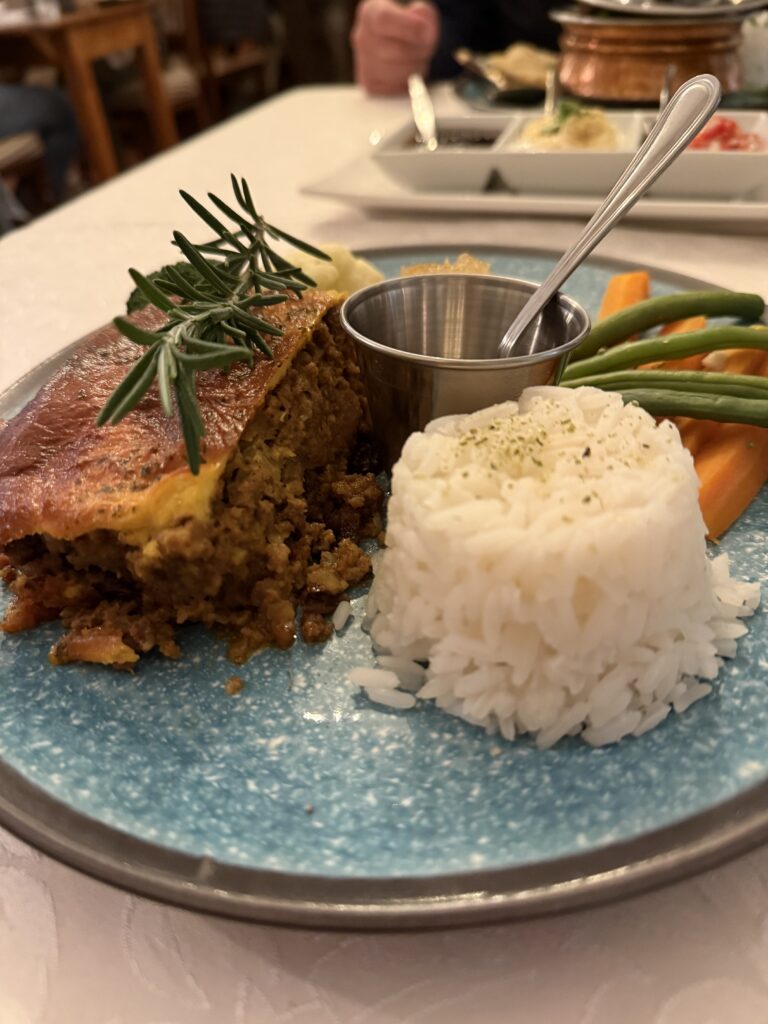
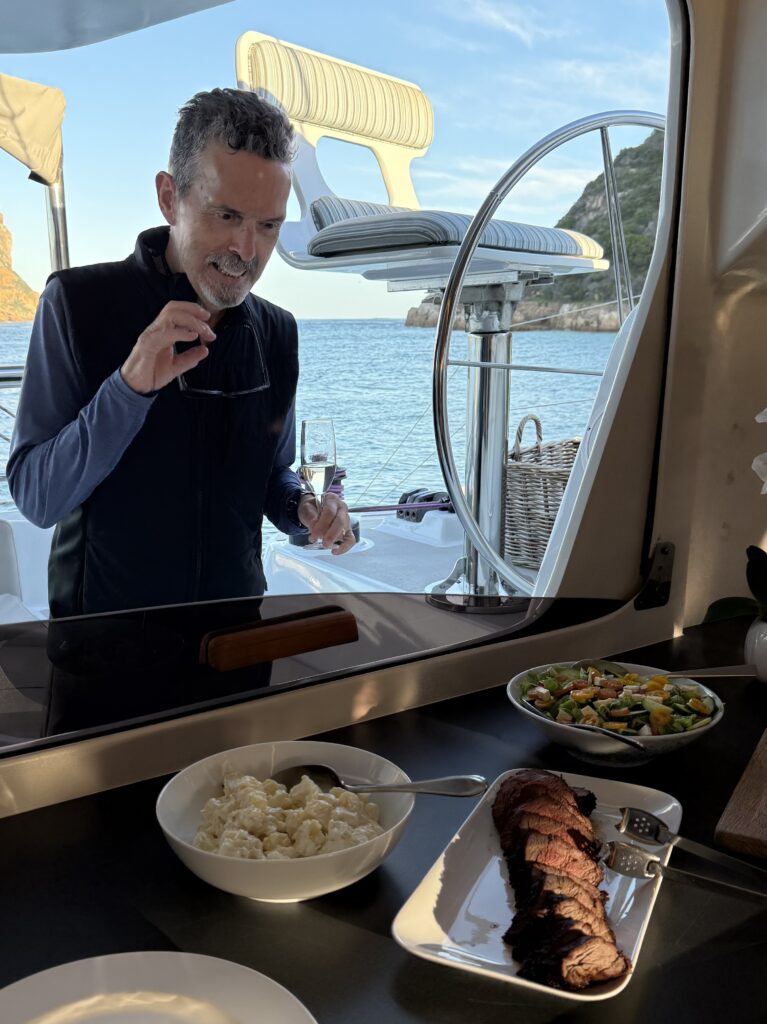
We try several regional cuisines on this road trip, including Skaapstertiies (sheep’s tail), Bobotie (casserole of curried minced beef with egg custard topping in a Cape Malay style), Eisbein (pork knuckle which falls off the bone in tenderness), and Ostrich, our favorite. And of course we enjoy the occasional braai (BBQ) which is usually beef steaks and sausage, rarely pork, even in the townships which we find interesting based on its price point.
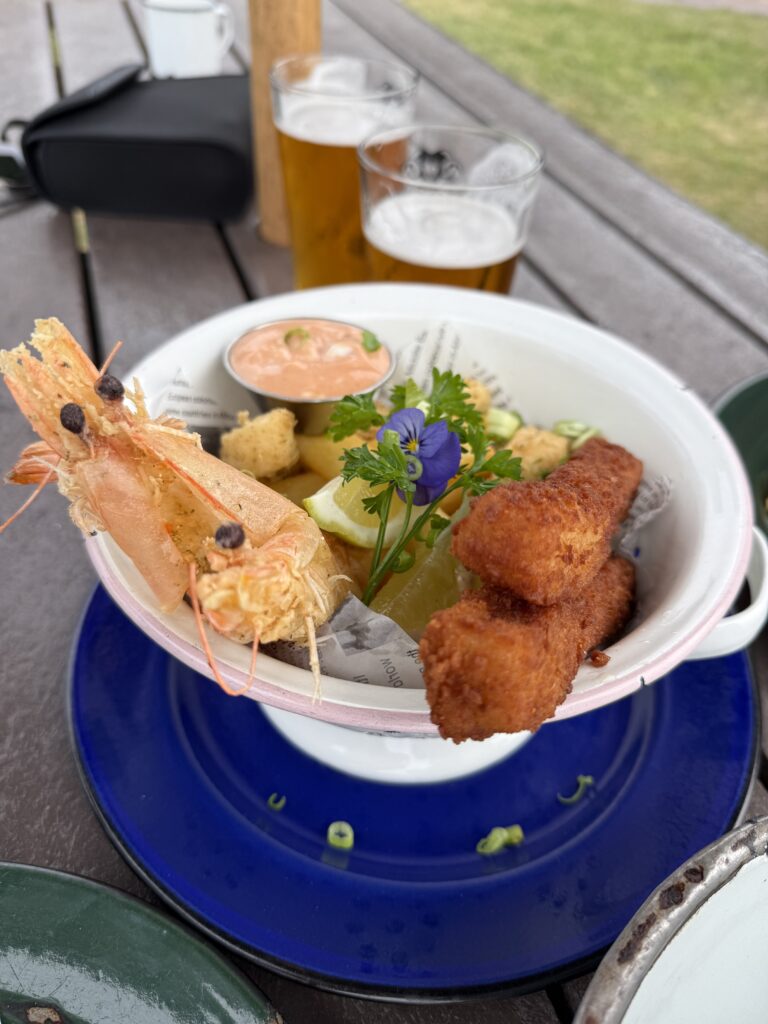
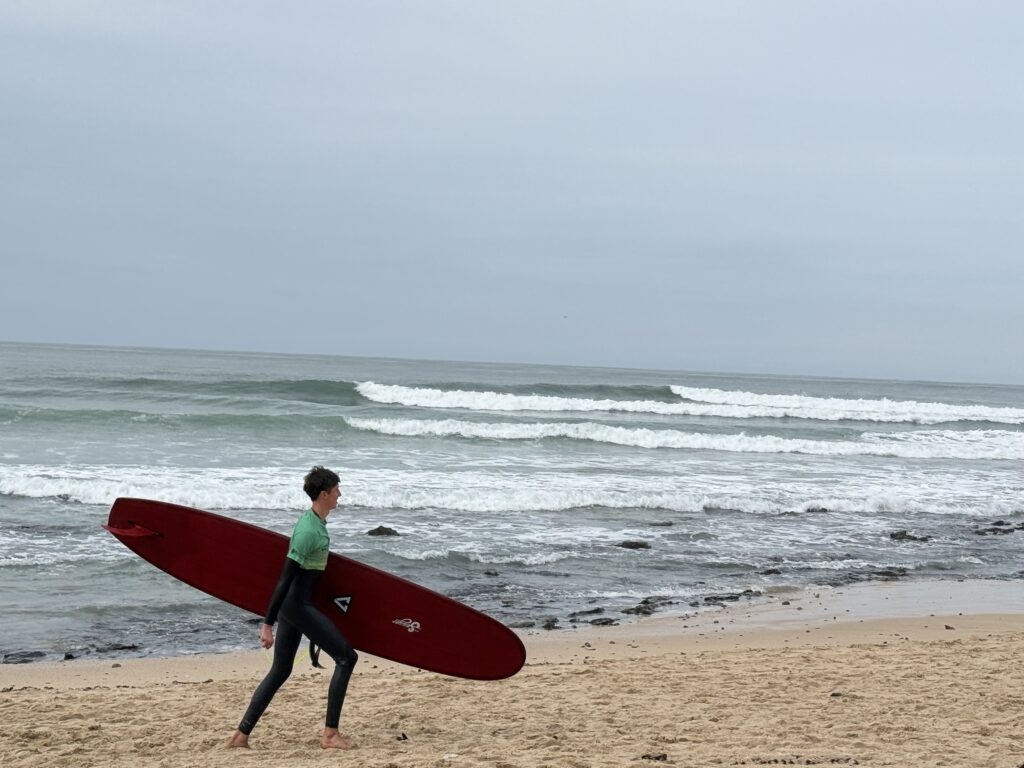
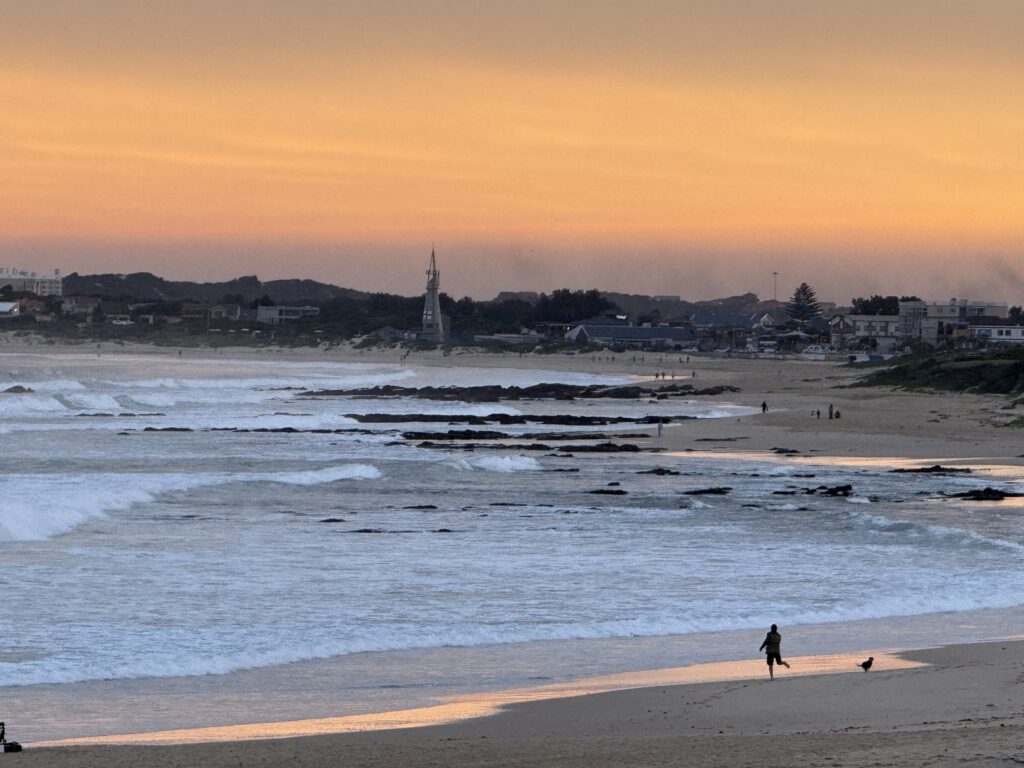
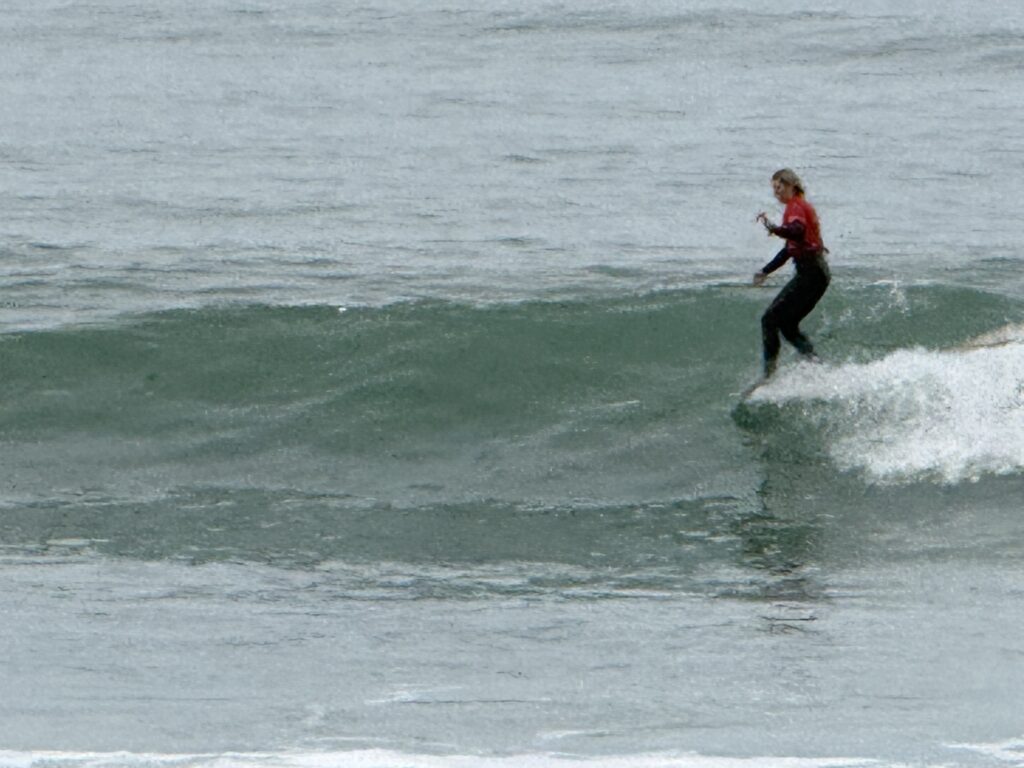
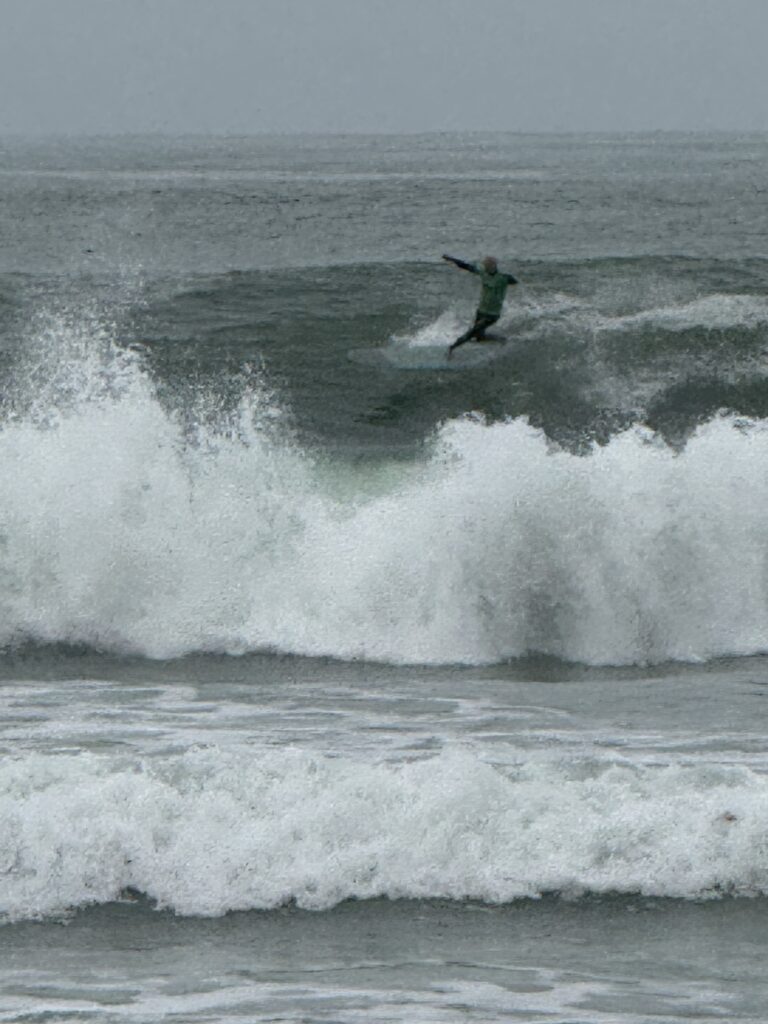
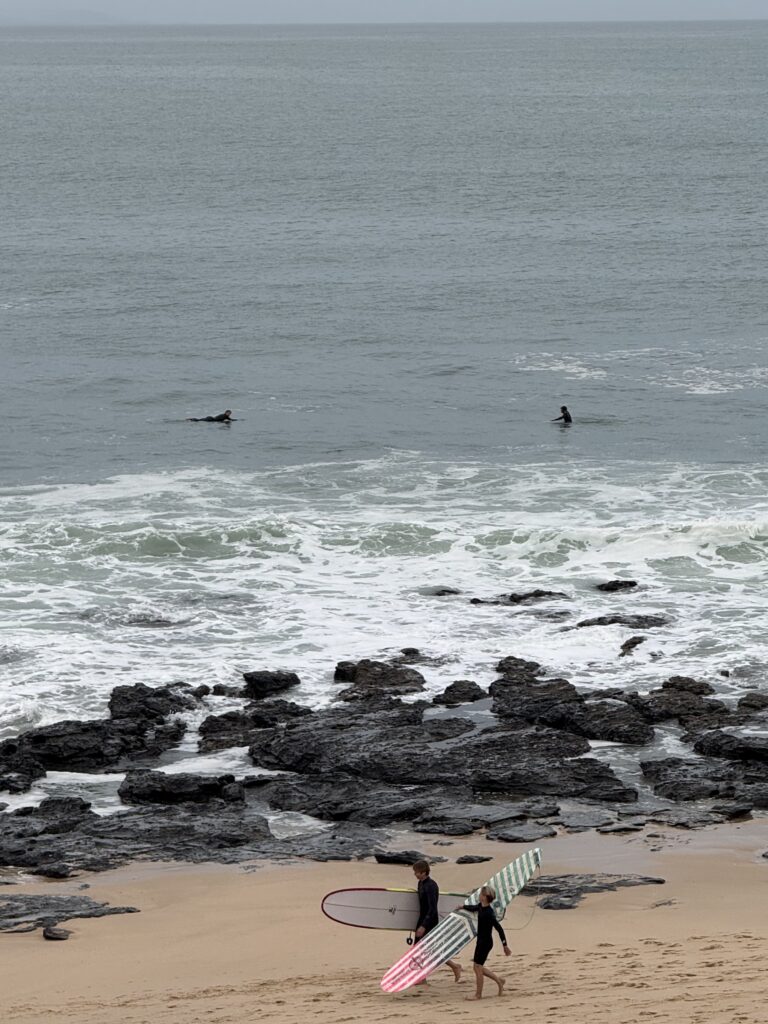
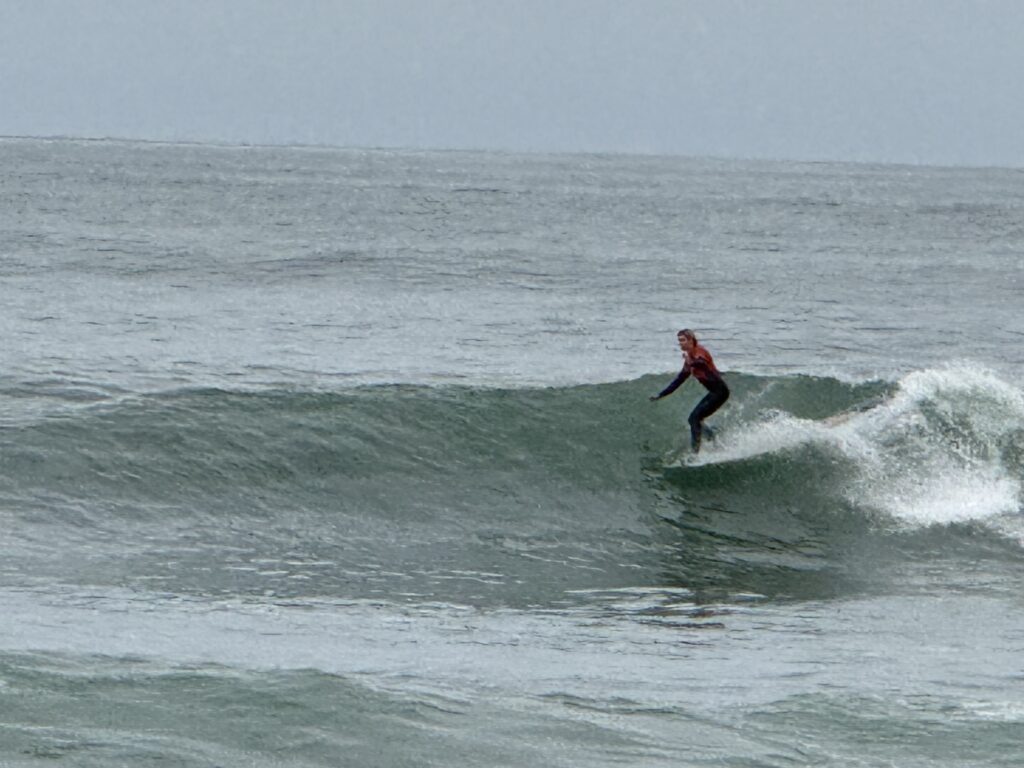
Our northern route wraps up at our turnaround point on the coast: Jeffrey’s Bay, a surfing town with Santa Cruz vibes. We’re lucky to be there during the South Africa Longboard Surfing Championships at the Lower Point break, just west of the famous Supertubes surf spot. It’s a low key, super chill event, with ample parking and easily accessible vantage points, reminding us of what California must have been like in the 60’s when life was less complicated. On one drive in JBay we find ourselves inadvertently passing through the township past camouflaged, machinegun toting police, only to pop out a few blocks later at a gated community across the street with manmade ponds and manicured lawns, a somewhat shocking juxtaposition.
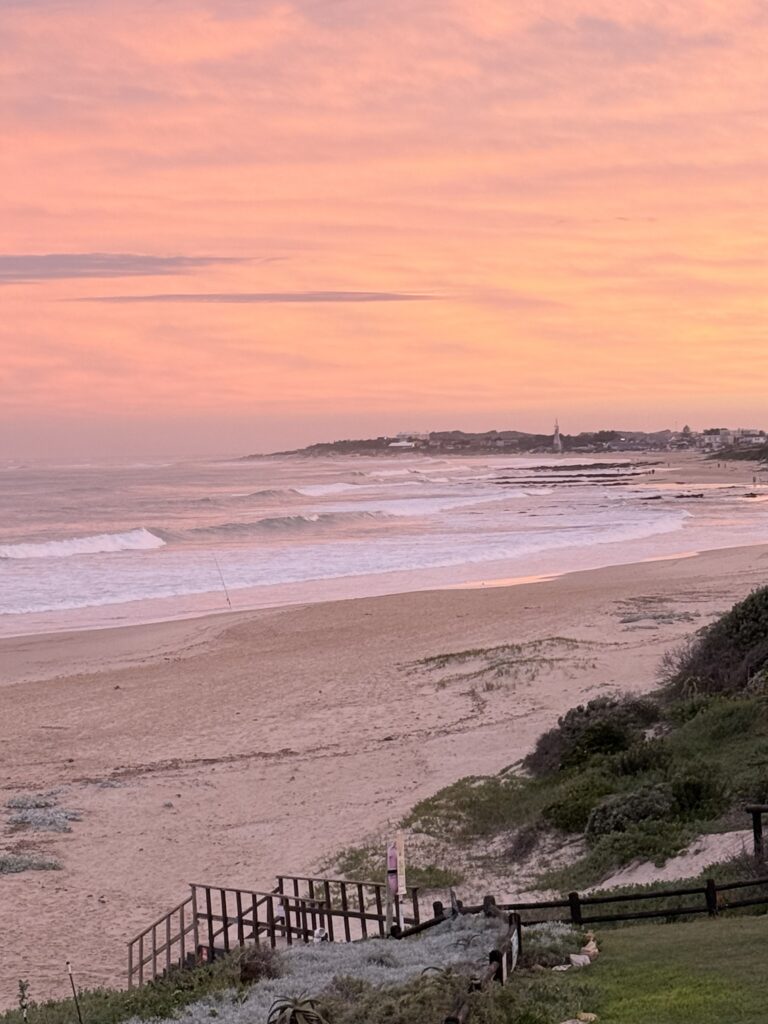
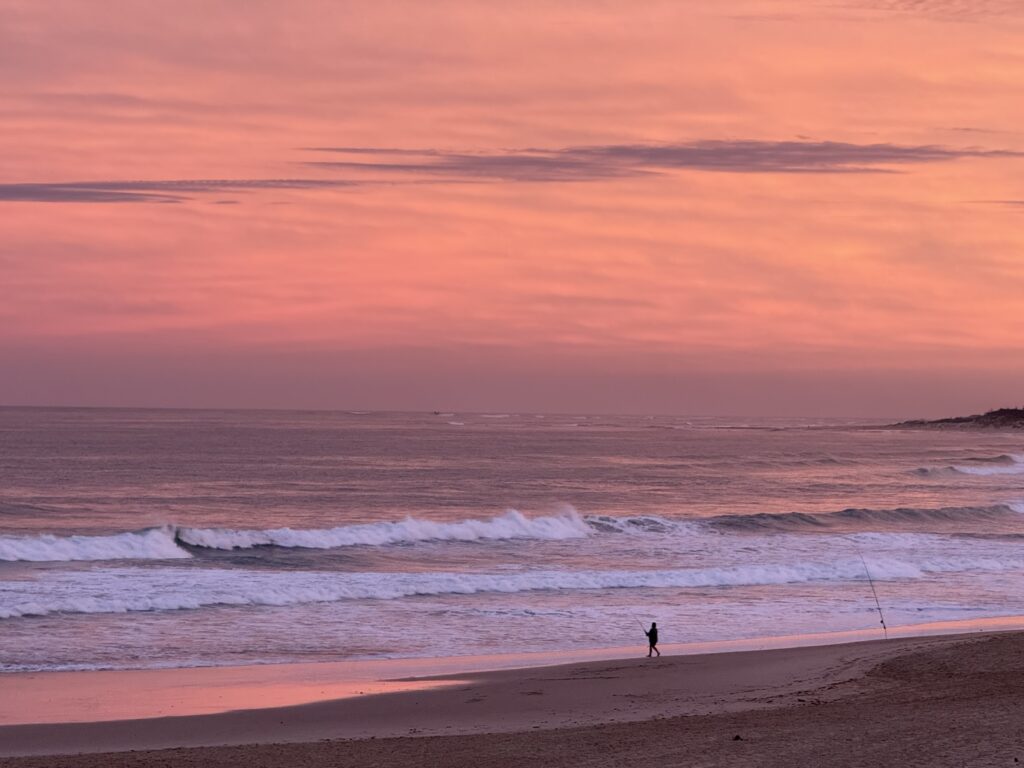
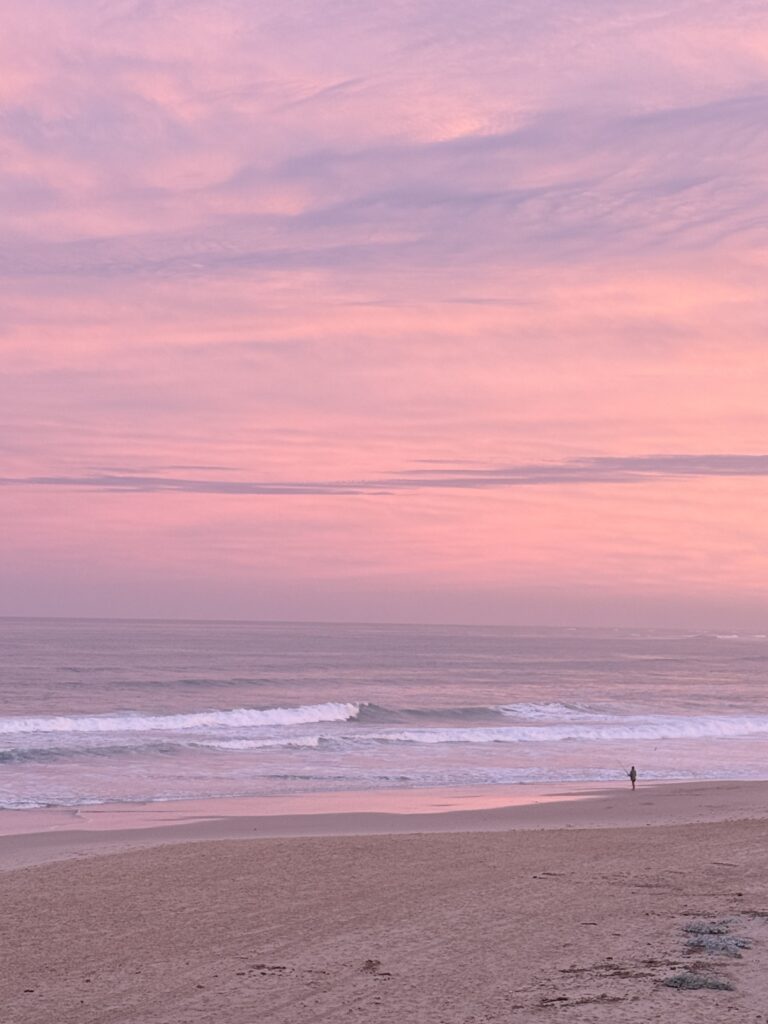
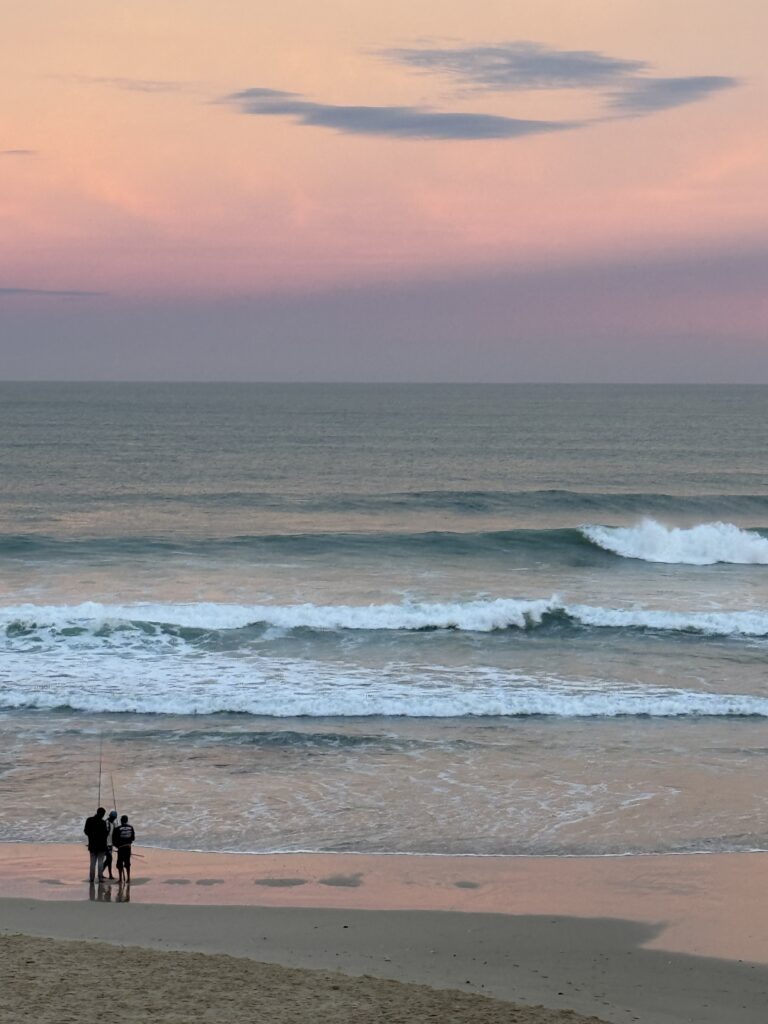
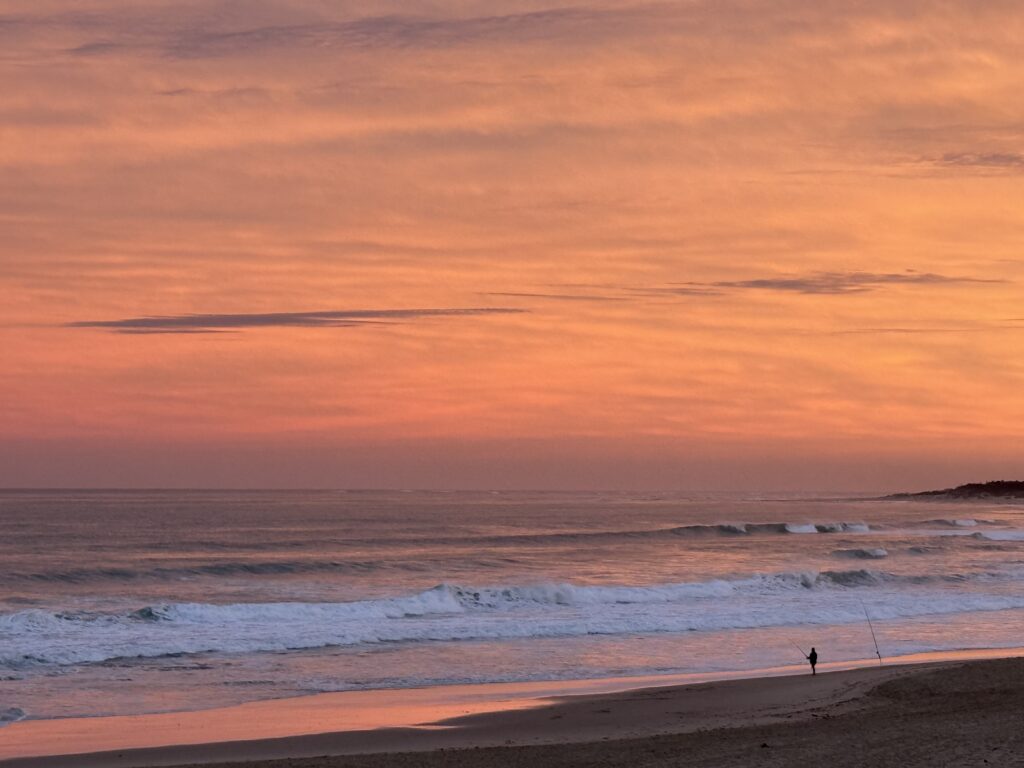
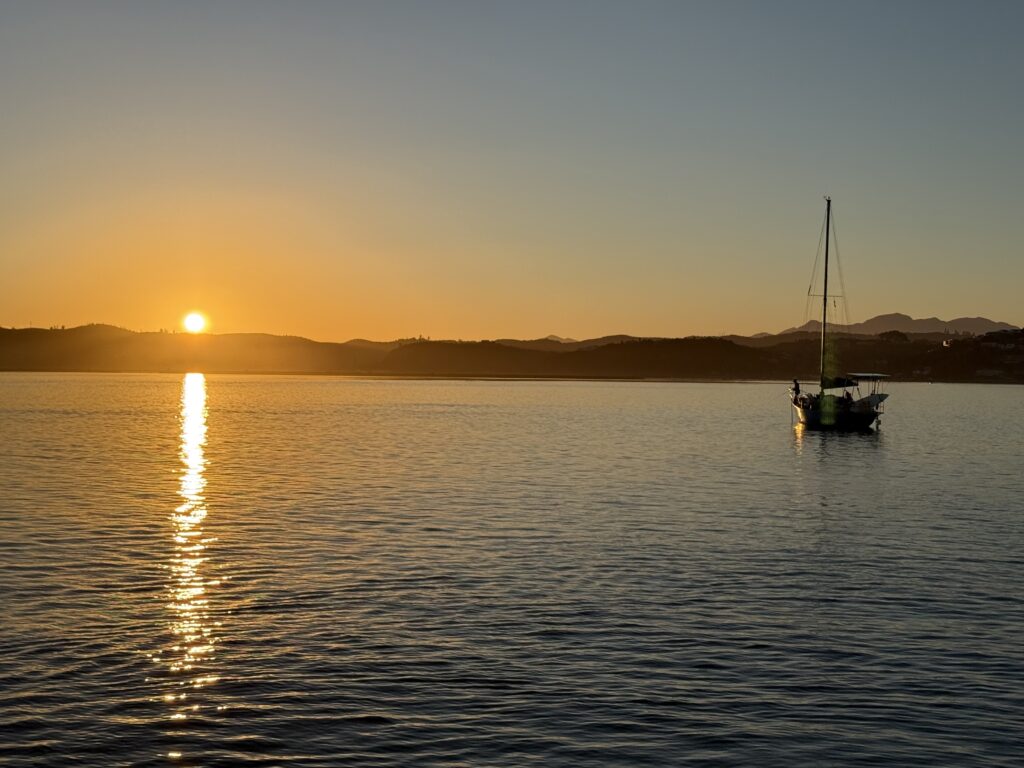
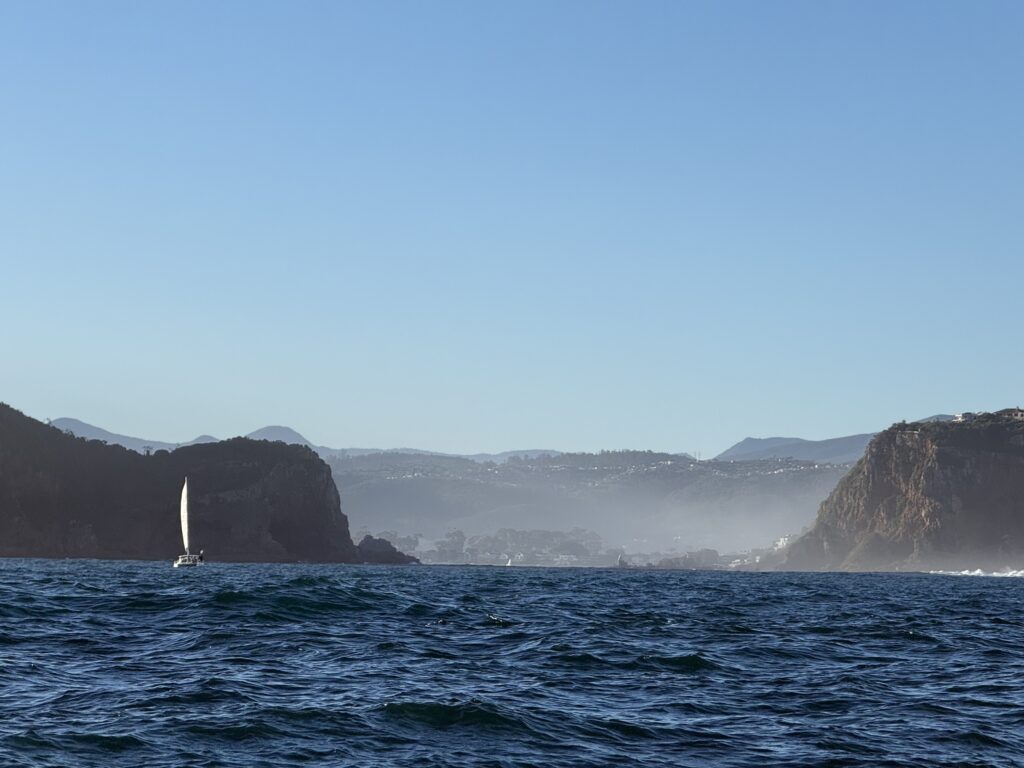
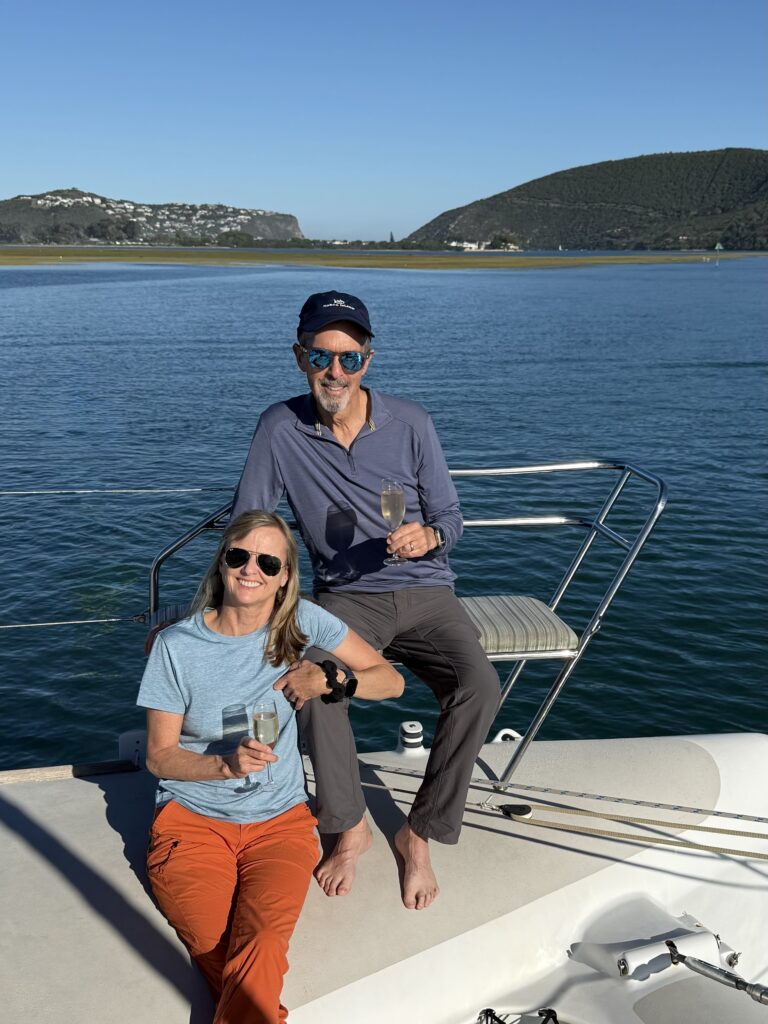
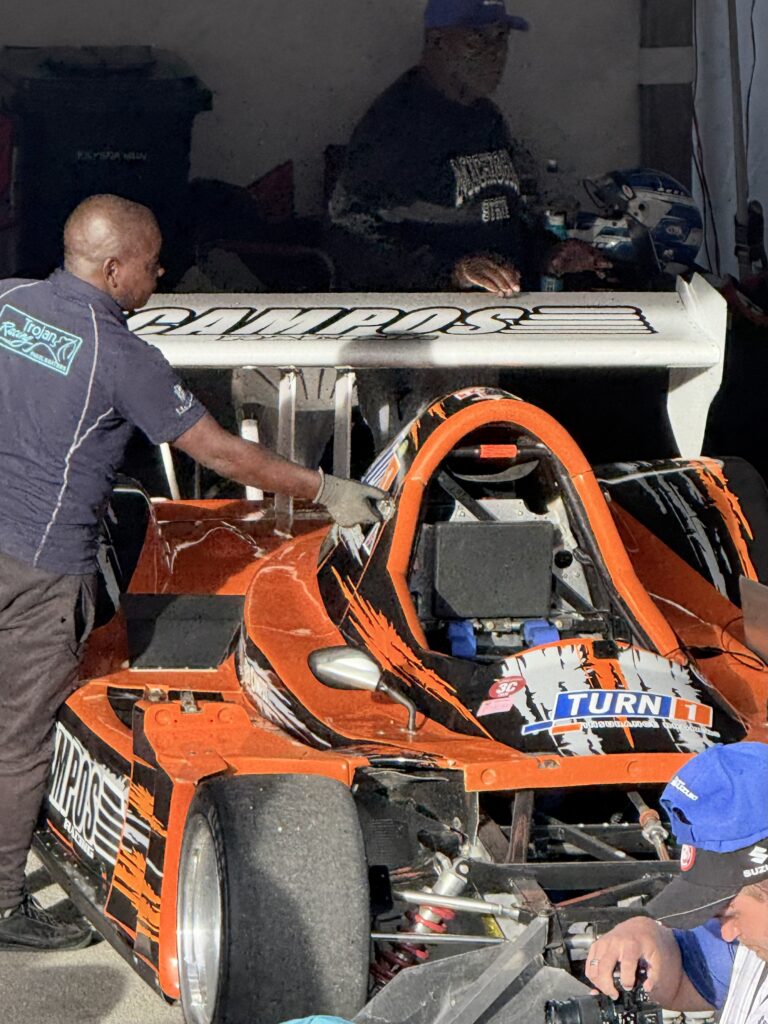
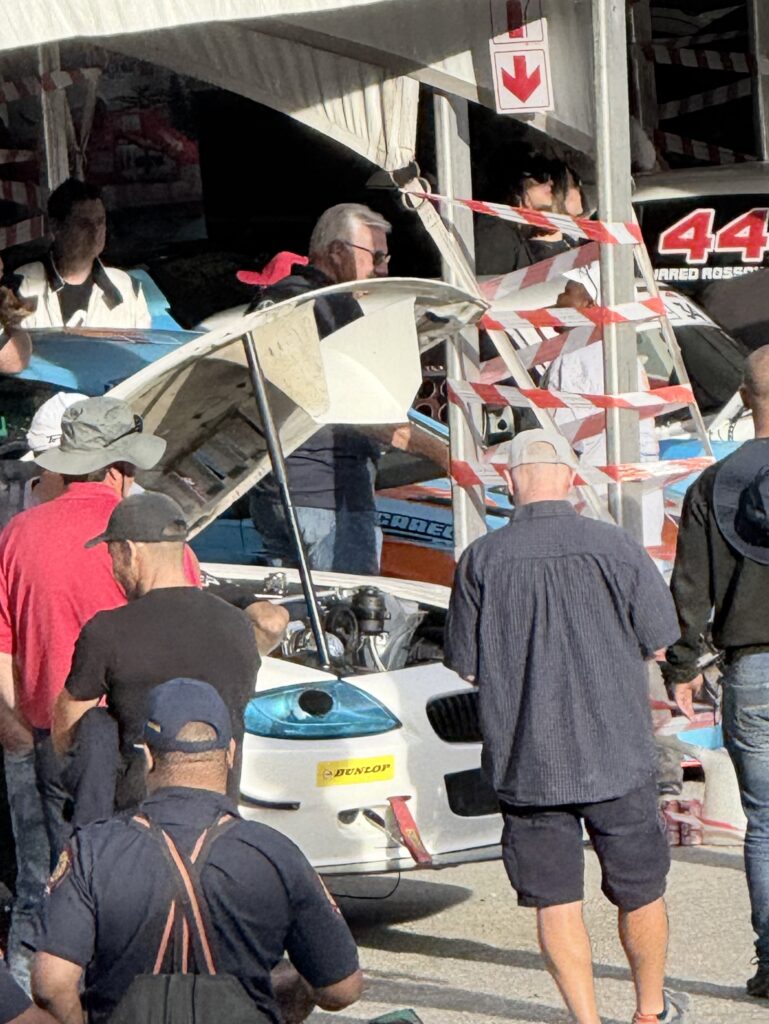
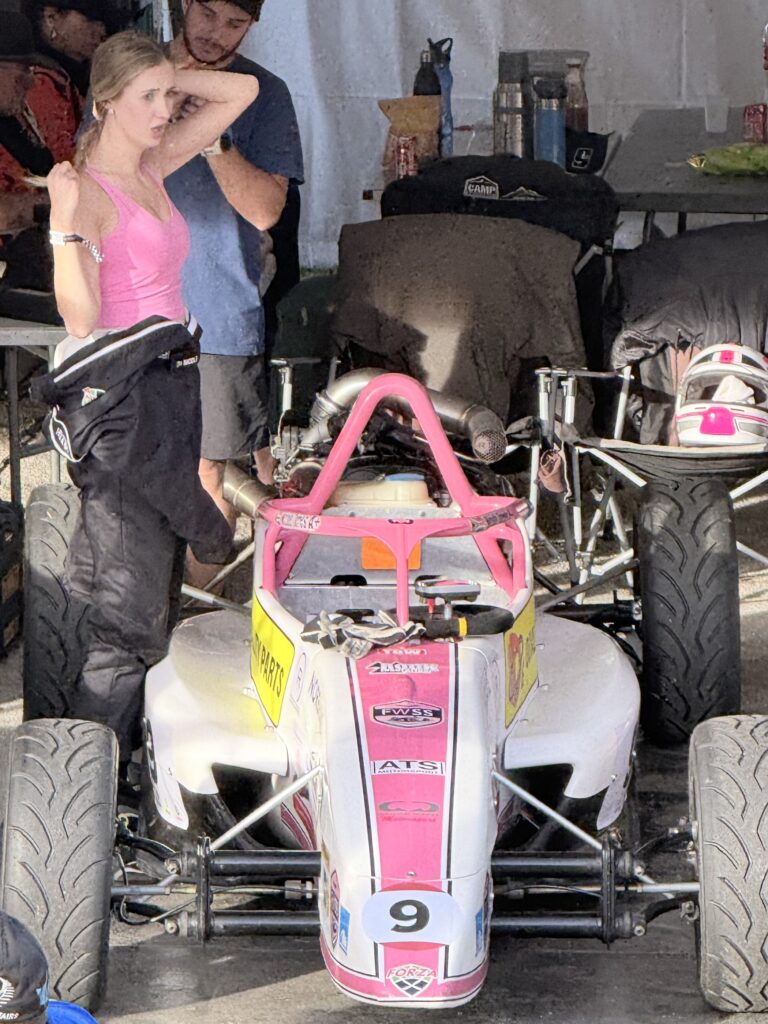
As we head west we pass by unparalleled, postcard ready, white sand beaches which, like California, are publicly owned and accessible to all. We grab lunch at stunning Plettenberg Bay, with its cascading hillside homes overlooking a placid bay where Central Beach is busy with surfers, boogie boarders, swimmers, and sunbathers on this warm afternoon. We stay nearby at Knysna (pronounced Nice-na which we butchered for far too long), known for its local oysters. Lucky us, we’ve hit another epic annual event: the Knysna Simola Hillclimb, one of the top Hillclimb car races in the world! Hosting a variety of cars in all shapes and sizes, the 1.9 km (approx. 1.18 miles) race begins with a standing start and competitors can reach beyond 250 kph (approx. 155 mph). The record set in 2022 completed the course in 34.161 seconds! Like the Longboard Championship, the event is very manageable, and tickets can even be bought for full pit access. Our van shuttle back to our parked car in this farmland setting put us in the hatchback trunk – seems there are no seat belt laws here – to which I exclaim in my moon boot “Put the boot in the boot!” On our last day in Knysna we enjoy a sundowner cruise with the rare treat of departing the tranquil lagoon through the narrow entrance into the becalmed ocean, ogling at gazillion dollar homes on the high cliffs. Unfortunately just days after we left, this area got doused with rains causing national headlines due to significant flooding.
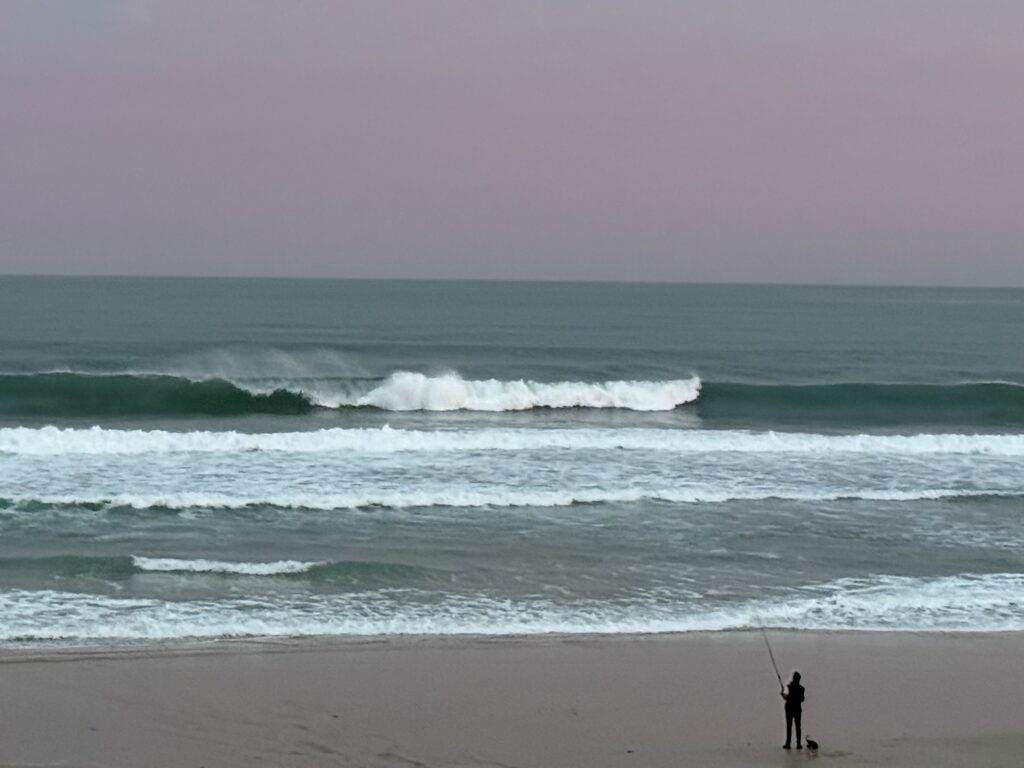
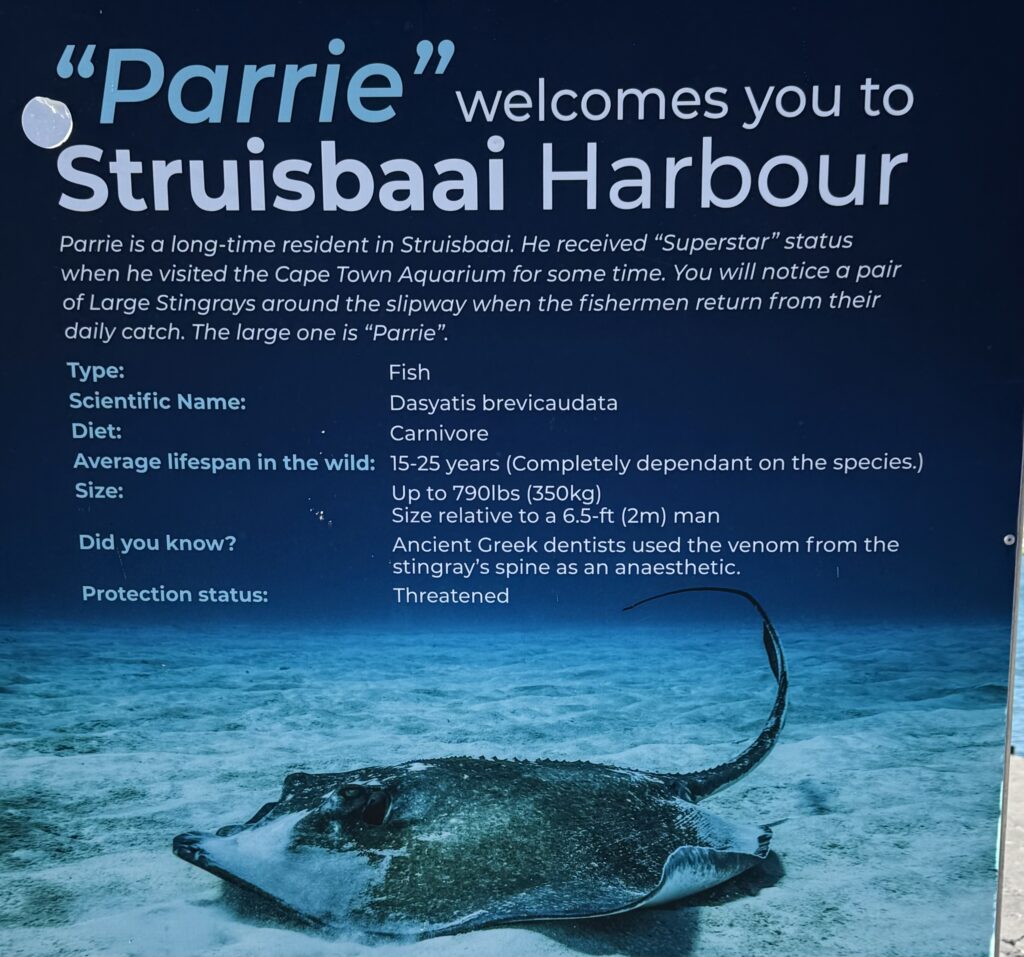
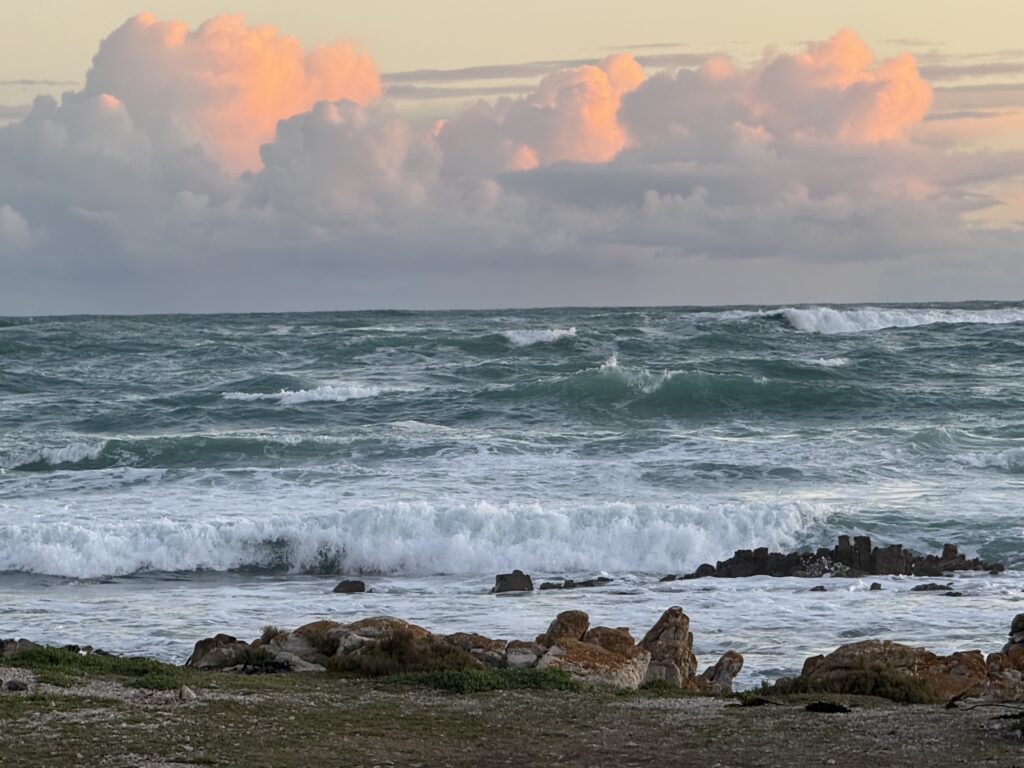
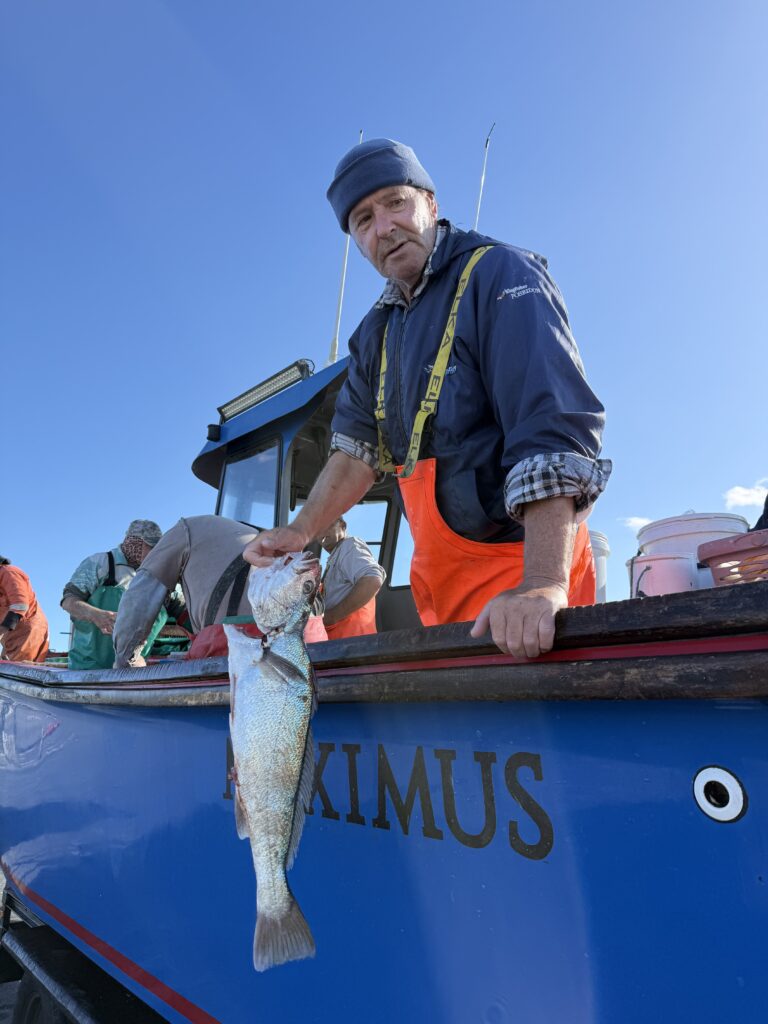
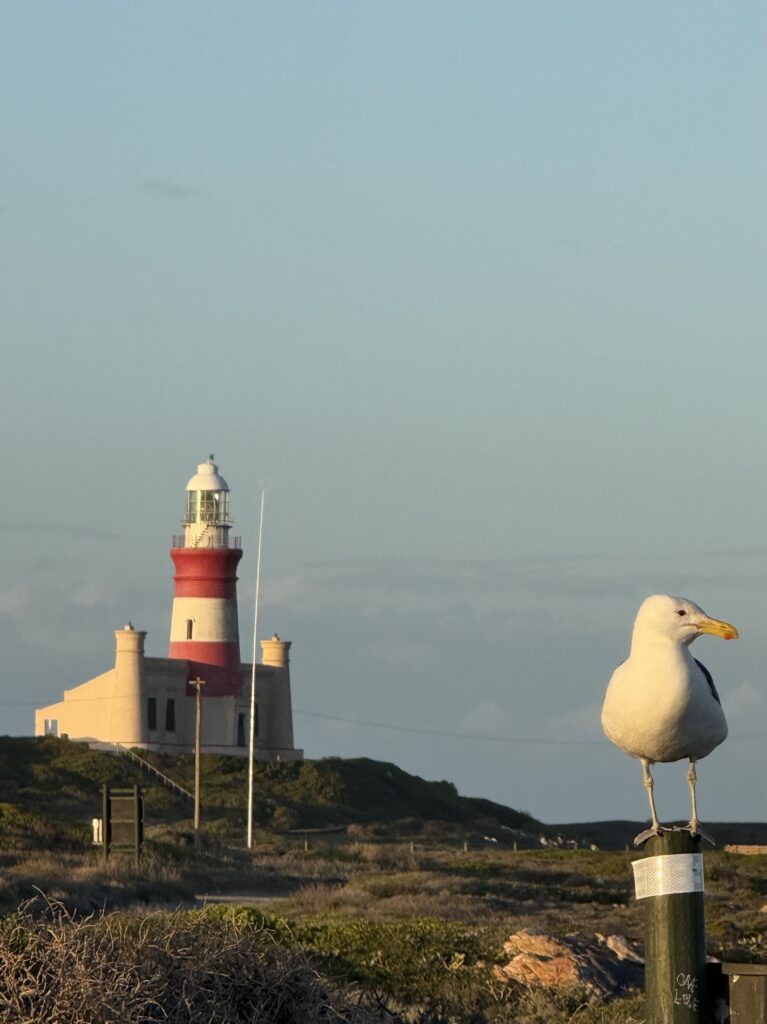
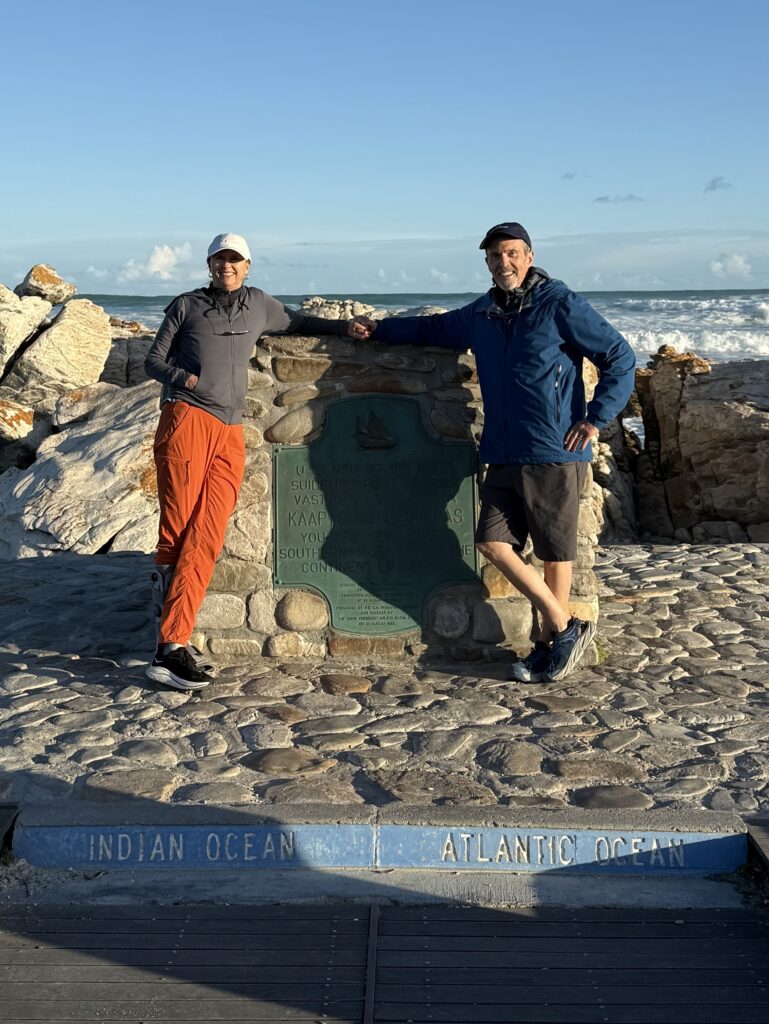
Continuing our travels west, we head off the main road down to Agulhas, a sleepy fishing town with a small handful of services and a lighthouse, mostly known for being the southernmost point of Africa where the Indian and Atlantic oceans meet. This is a quiet, somewhat desolate area with a smattering of vacation homes and even fewer locals. Its neighbor Struis Bay touts the longest uninterrupted white sand beach in the southern hemisphere, so long that it defeats my photo efforts, and it’s also where Brian meets Parrie the Stingray up close and personal.
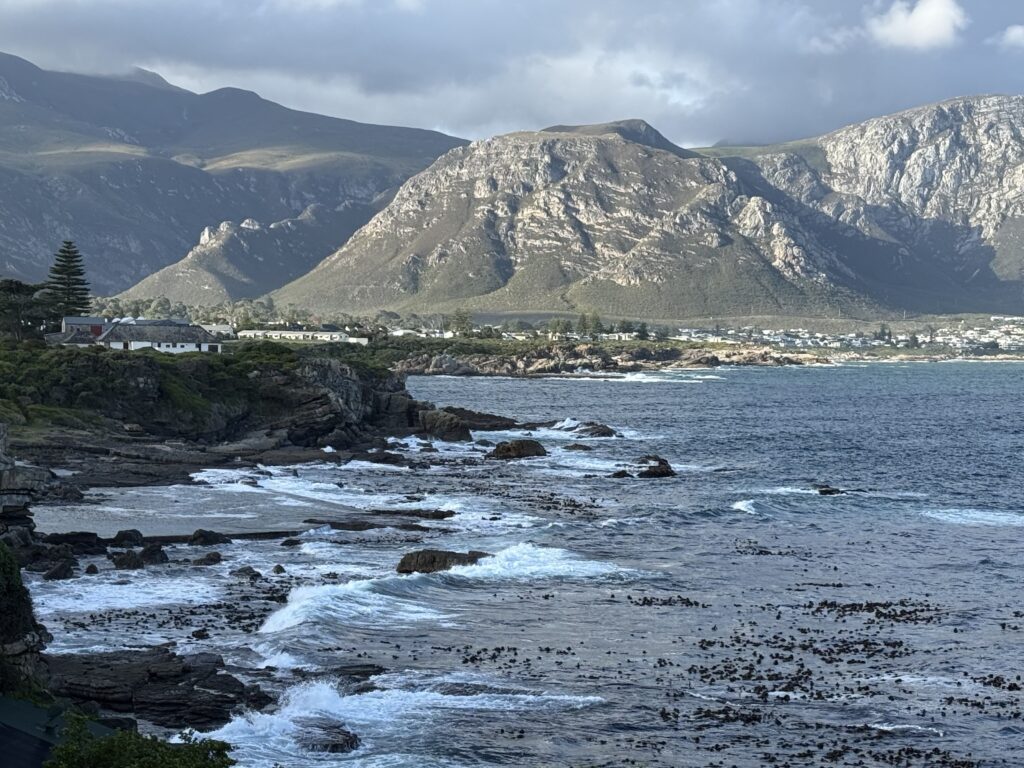
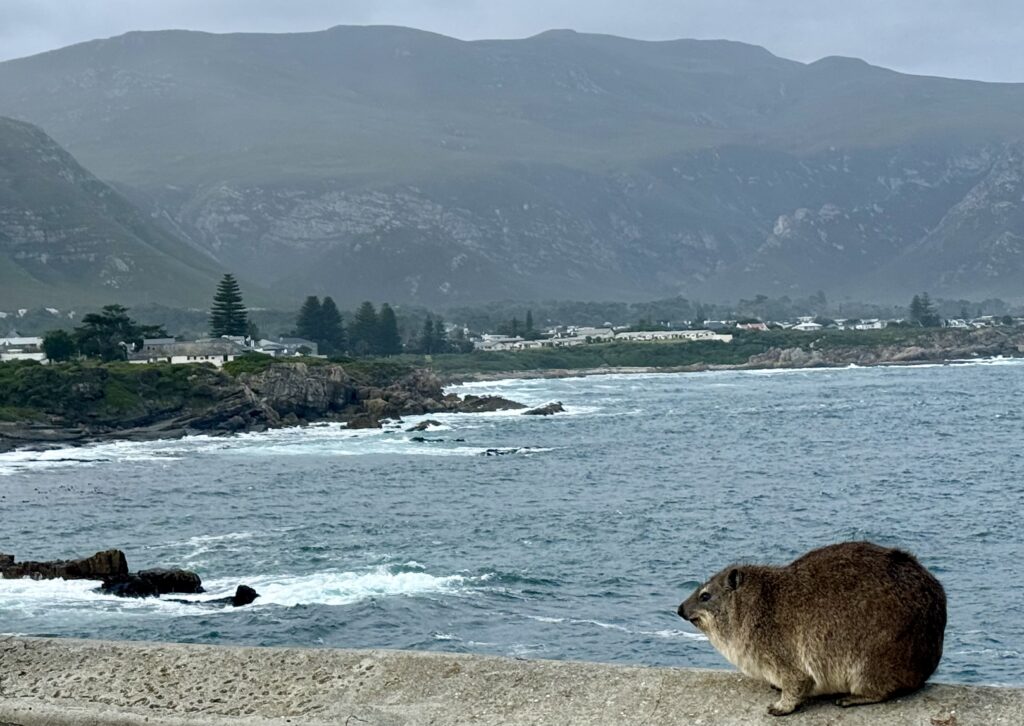
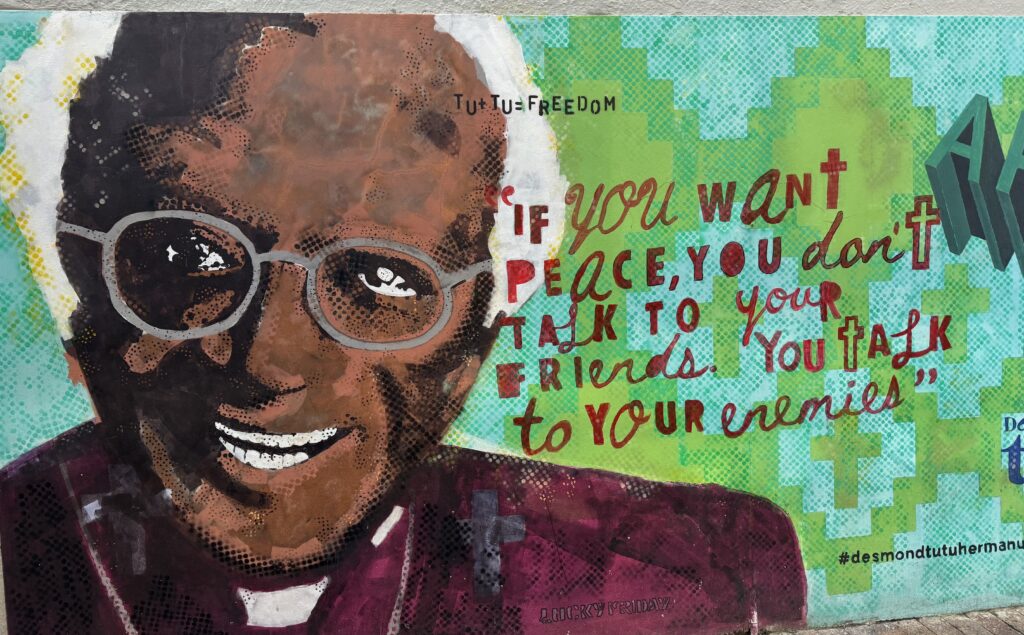
Next we head to Hermanus, a quaint town with stunning mountain-to-ocean views which gets packed with tourists in the high season. The rock hyrax marmot-like animals, nicknamed dassies, entertain us along the coastal walk. During our lunch perch with uninterrupted views, we chat with a local of British descent who talks about the decline of his country over the past 20 years, with the ANC corruption having squandered investments in infrastructure, security, education, and job opportunities. He says Mandela would be rolling in his grave to see how much the country has deteriorated. His goal is to stay locally active in order to keep Hermanus quaint, clean, functioning, and safe. Local real estate is being bought up by foreigners, mostly Europeans, at bargain prices, and he’s moved his assets to US Dollars, now getting hammered by the Iran War (welcome to the club). A local store owner is currently doing agricultural work in Nebraska for 6 months to earn far more than he can locally, at $20/hour according to the salesperson which she considers an outrageous salary. We hear elsewhere that Whites have a tough time getting good jobs in South Africa due to legislated hiring requirements and, when they can, they work remotely for foreign entities. We also learn that the local Afrikaans, of Dutch descent, still dislike the British, residue from the Boer Wars in the late 1800’s and early 1900’s, so division resides among the whites here as well, and on our road trip we’ve noticed an equal mix of Afrikaans and English being spoken. It seems to us that South Africa is a fractured country in some ways – economically, politically, and racially – yet set in this unequaled, spellbinding natural beauty.
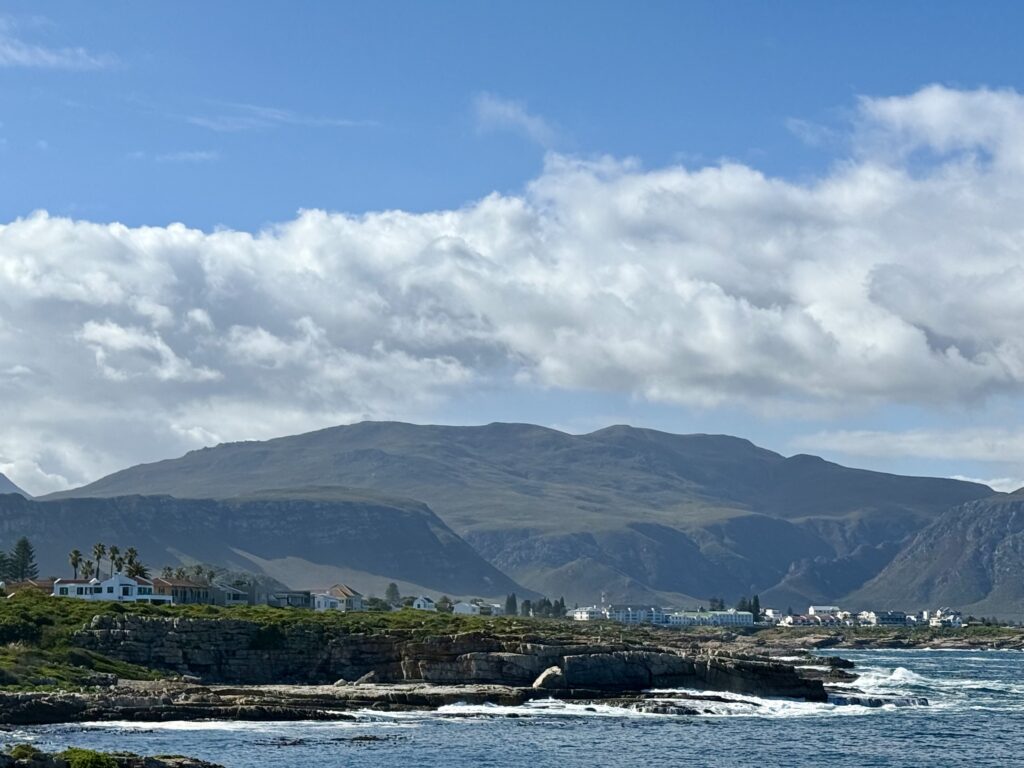
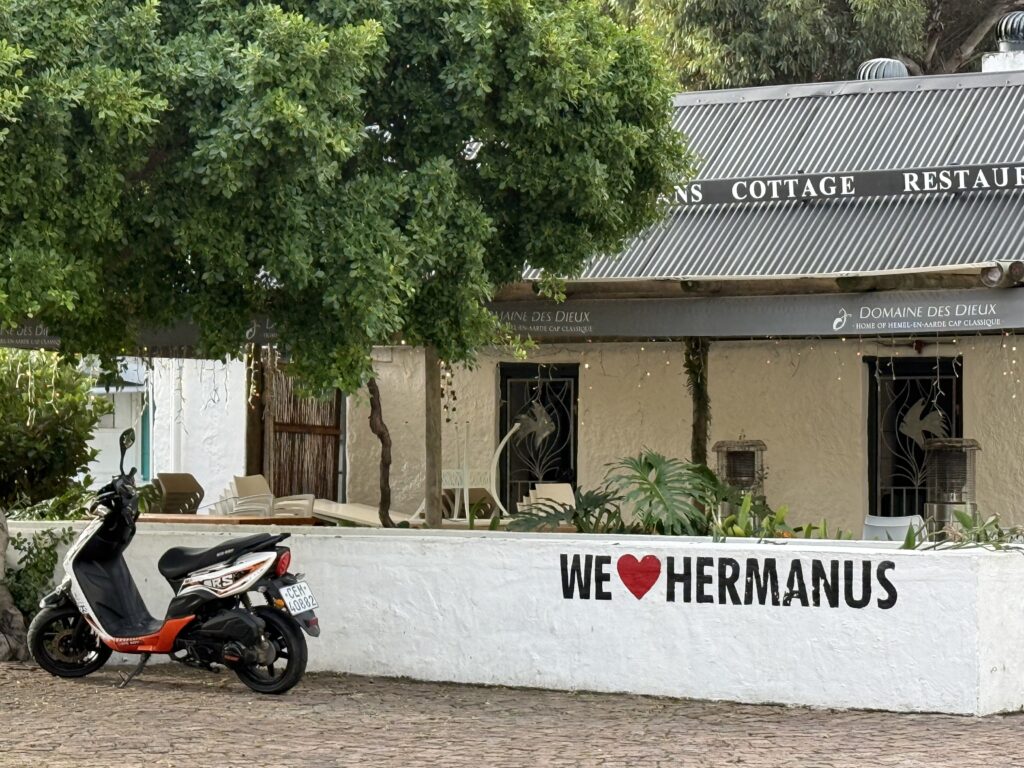
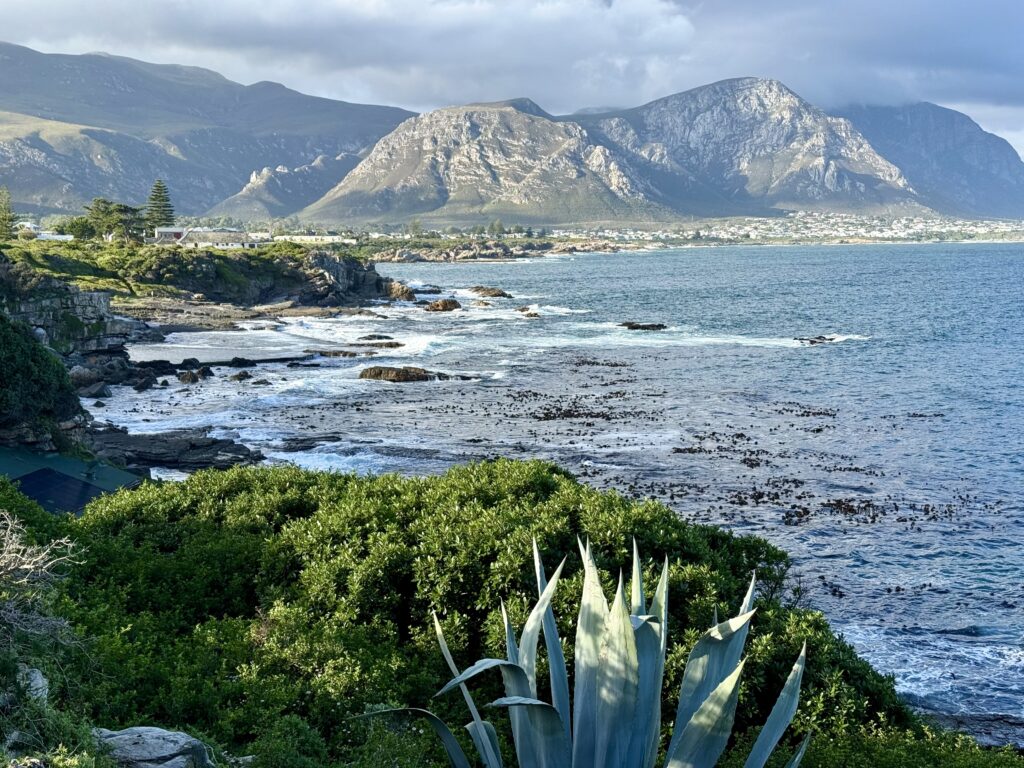
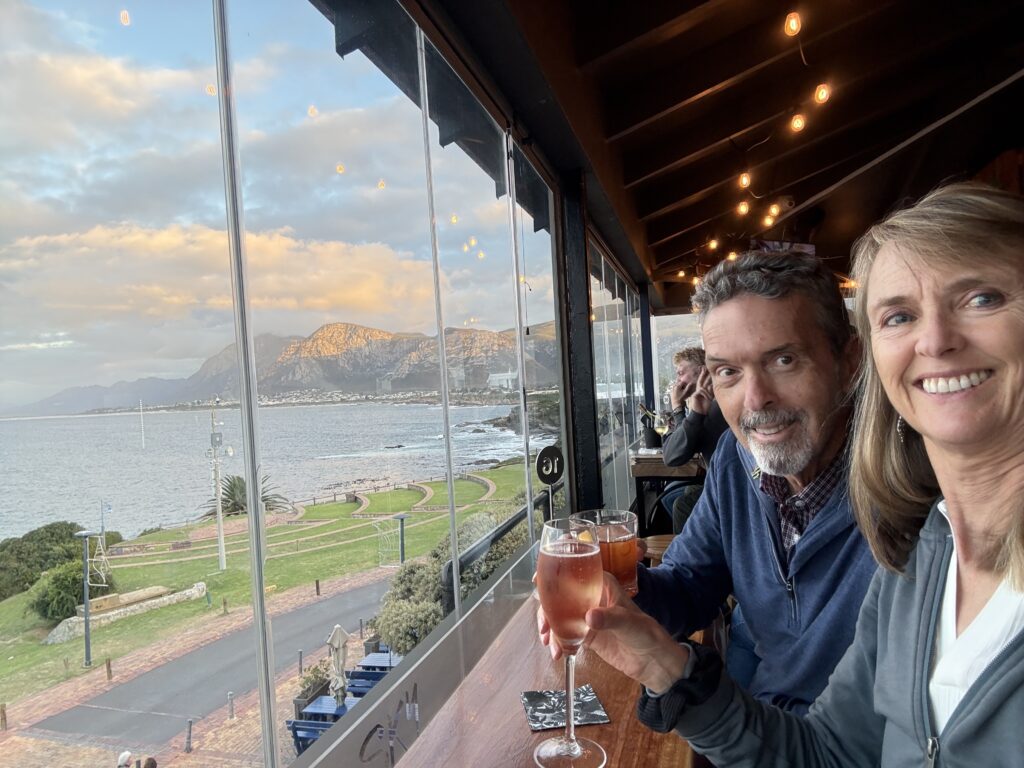
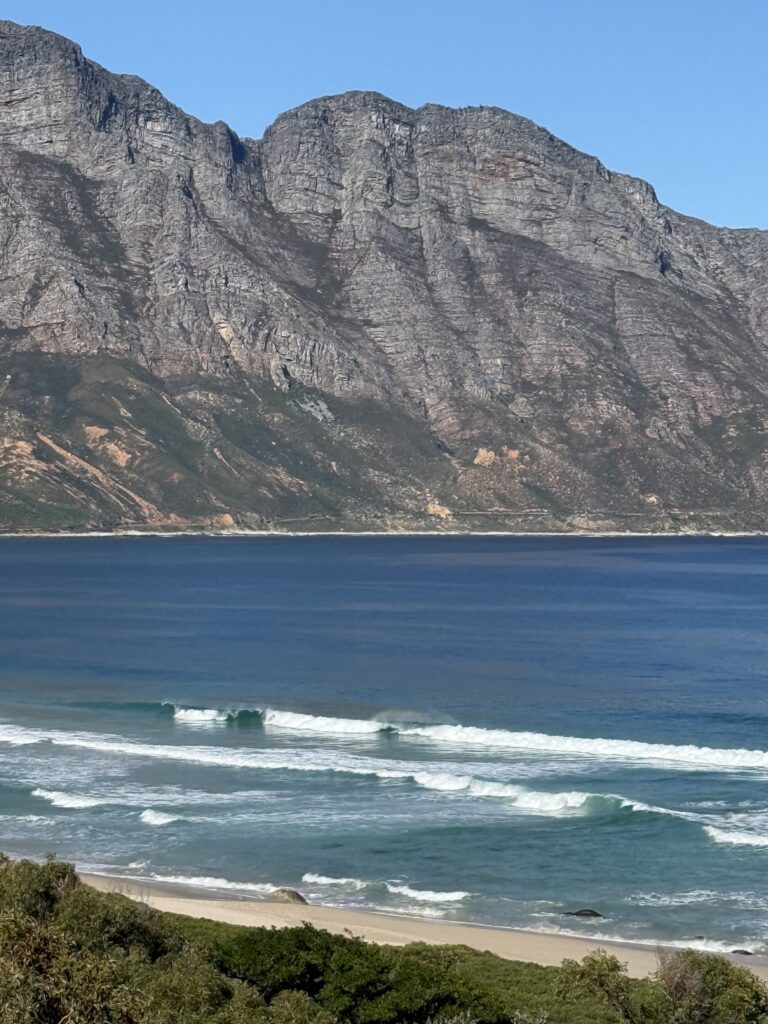
Our drive continues past stunning coastline scenery with the Cape of Good Hope across the bay, signaling our imminent return to Cape Town, but we have one more anticipated region to visit: Stellenbosch & Franschhoek, the heart of the wine country.
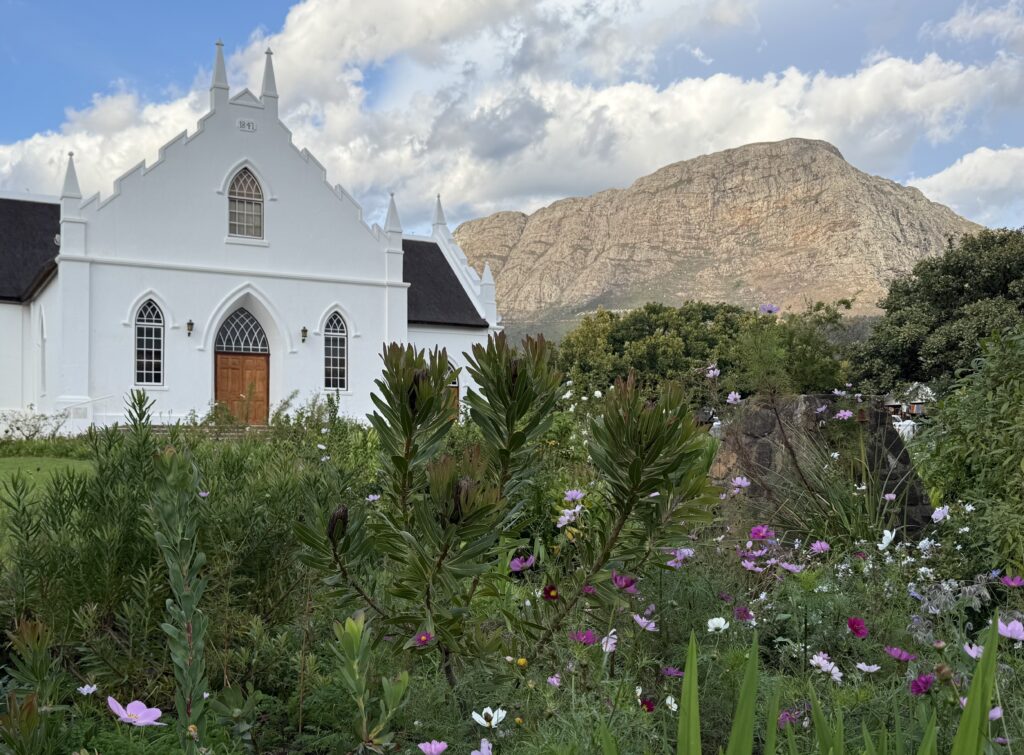
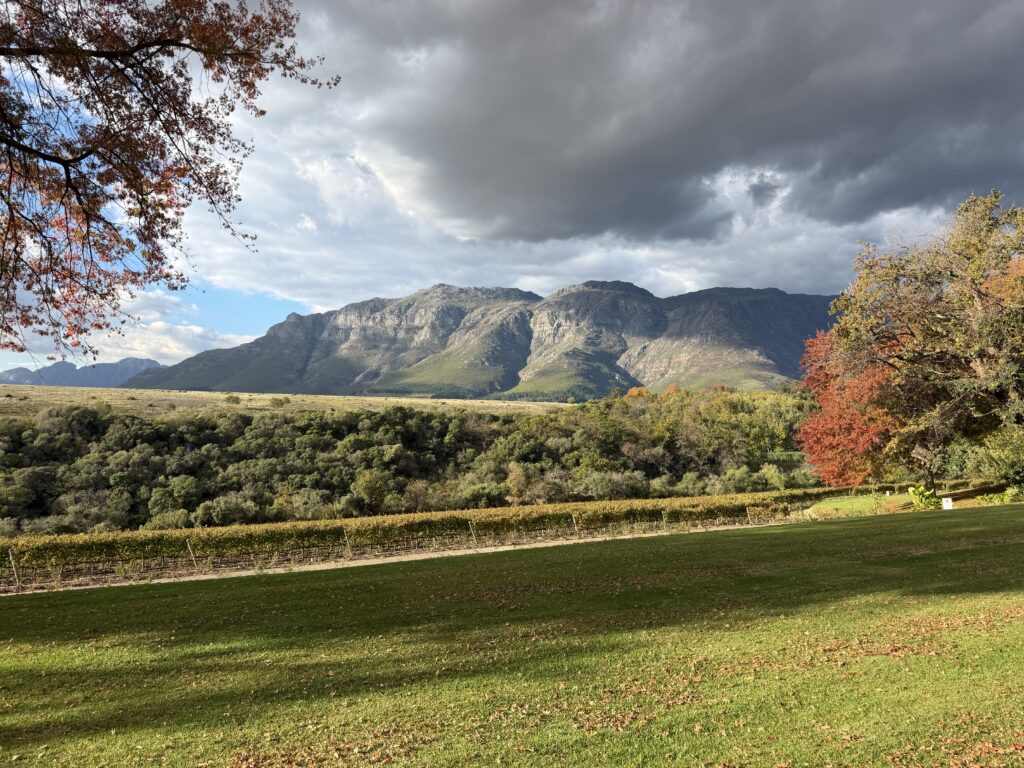
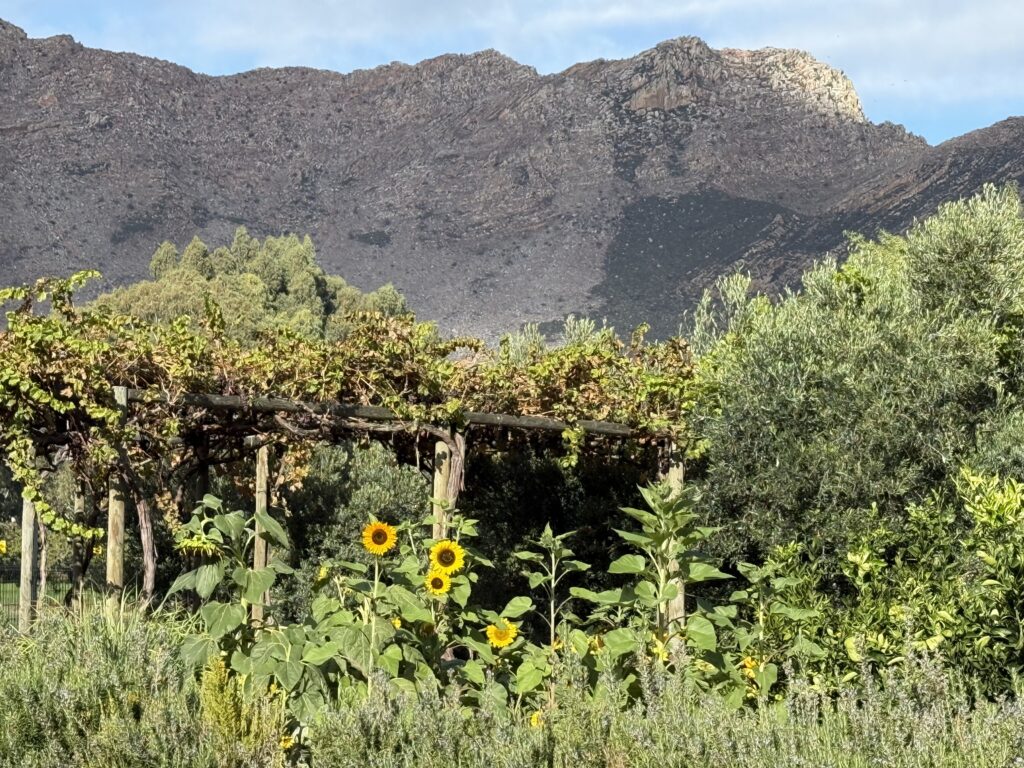
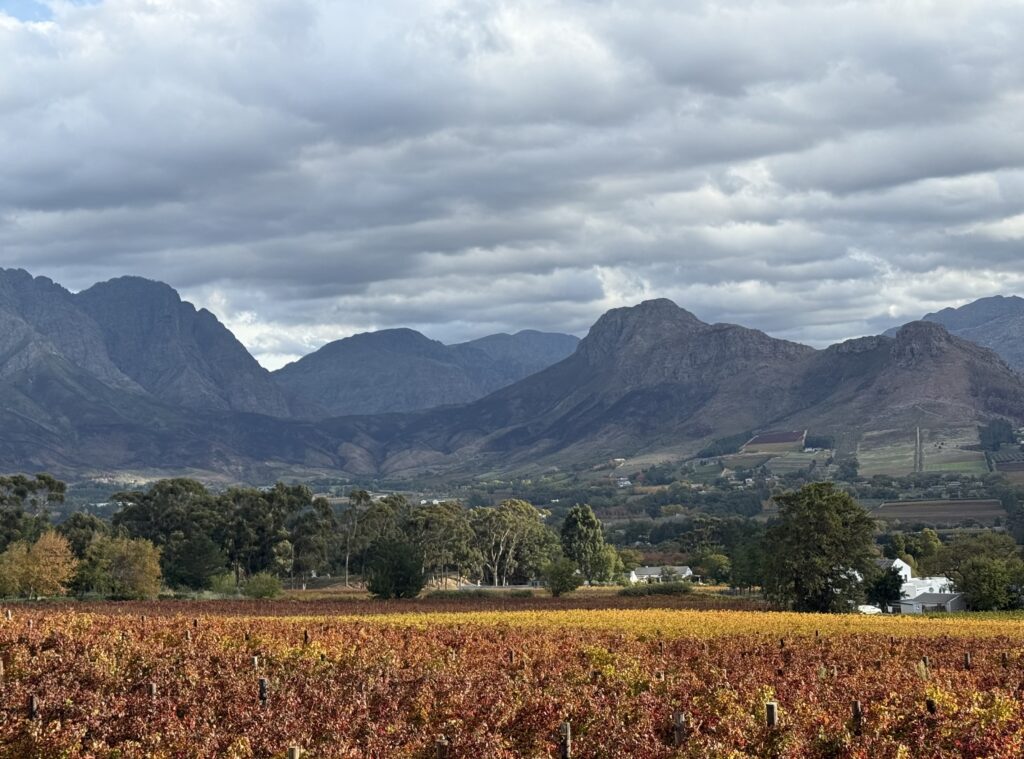
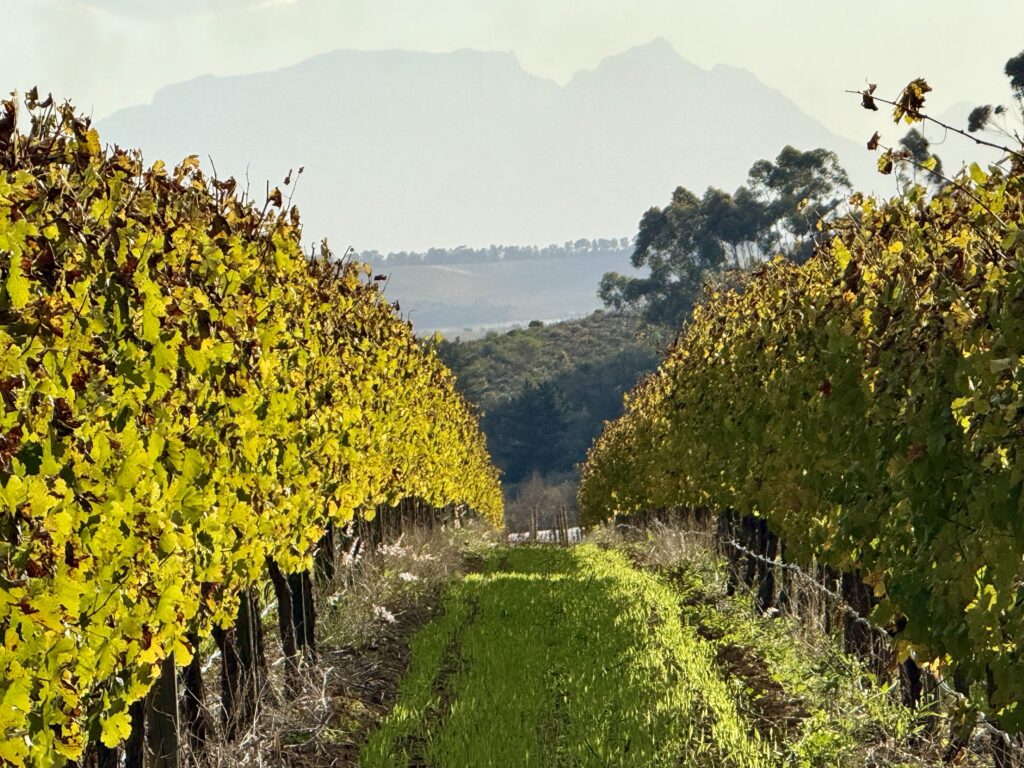
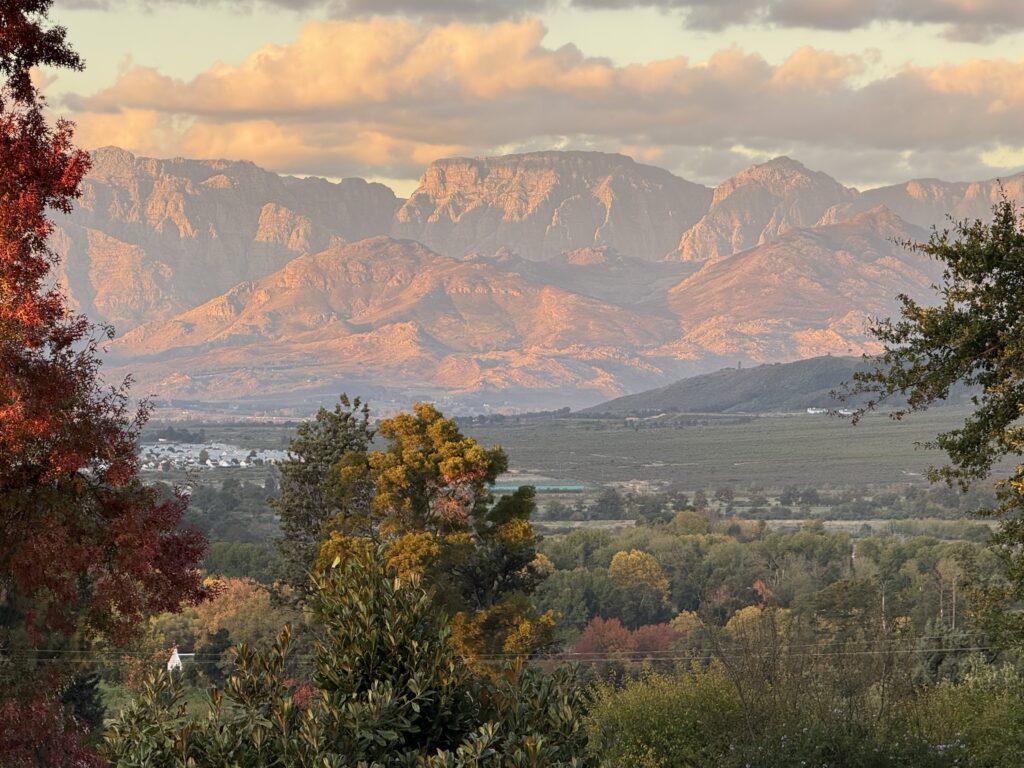
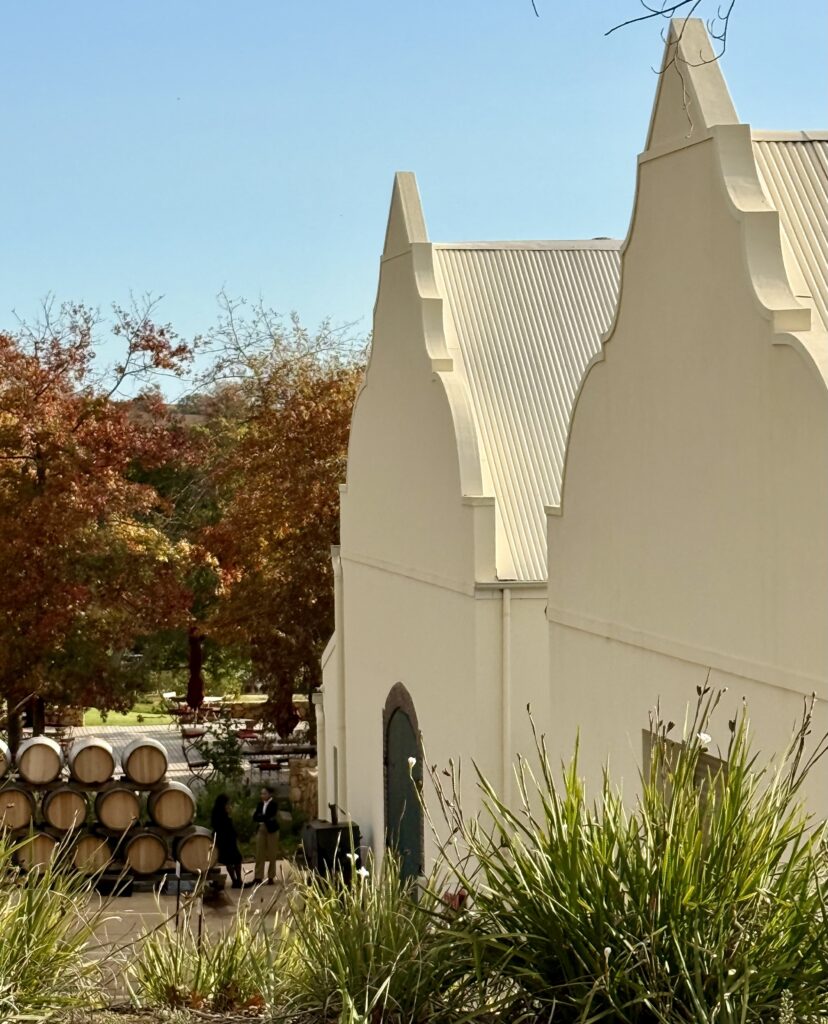
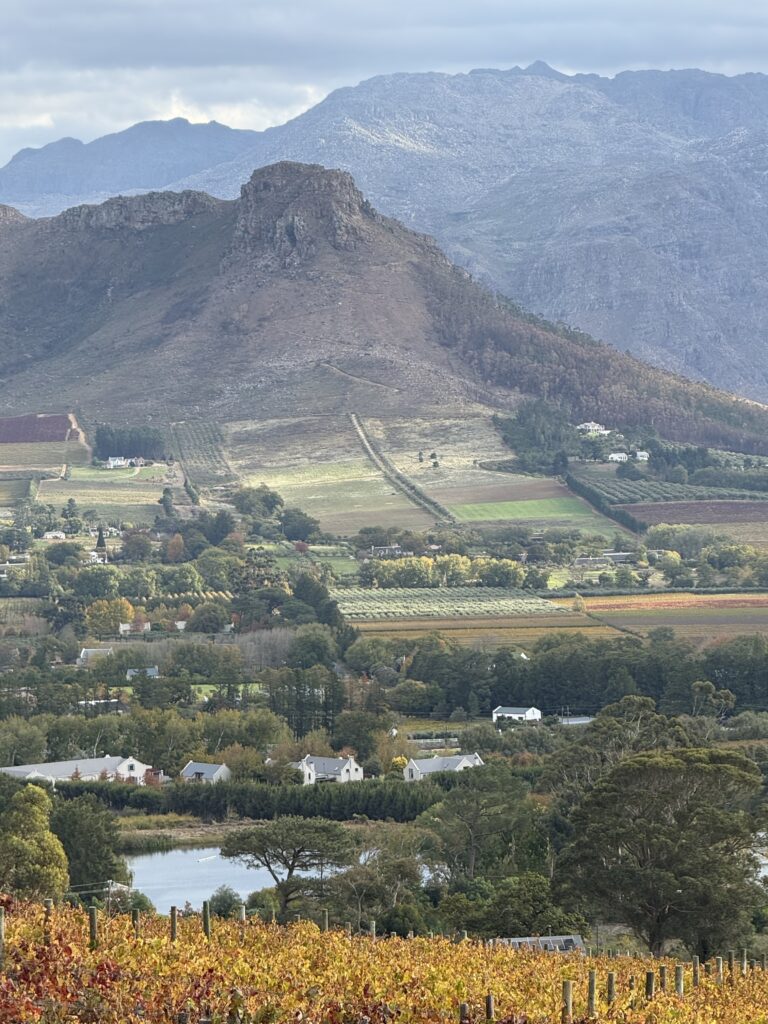
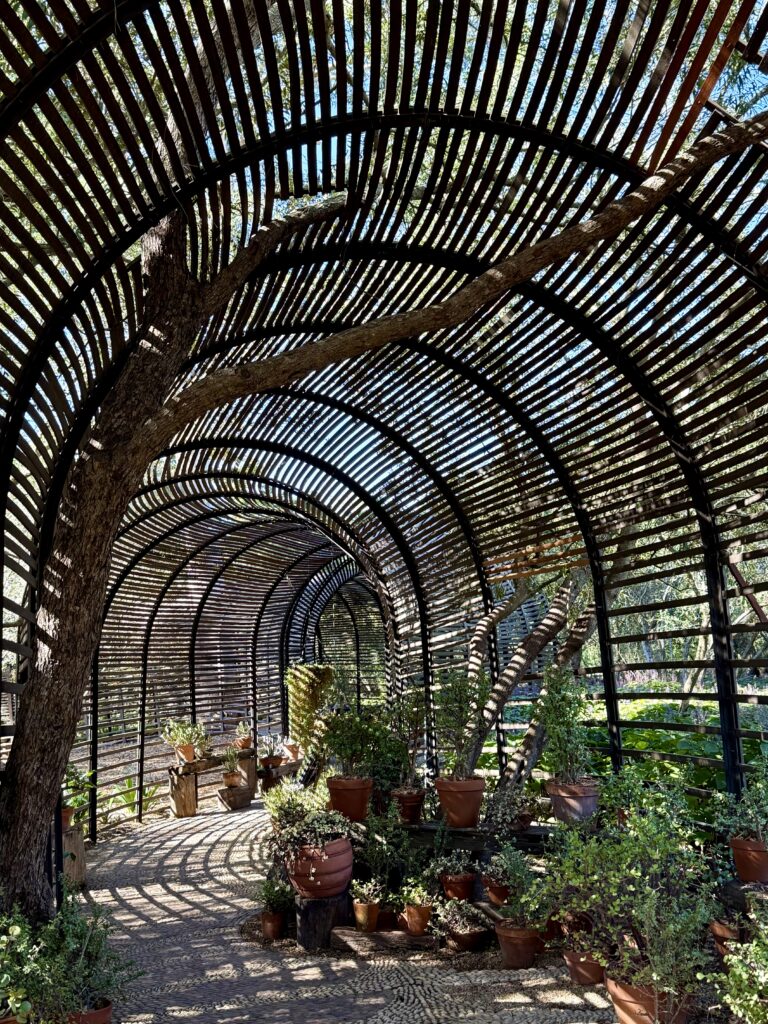
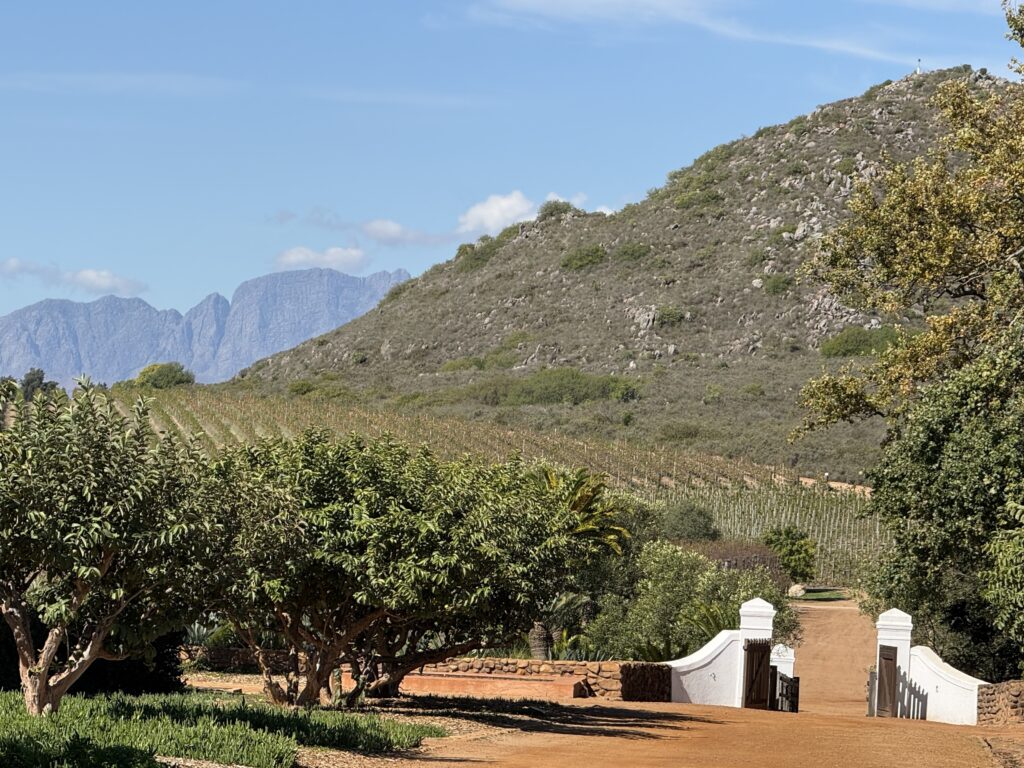
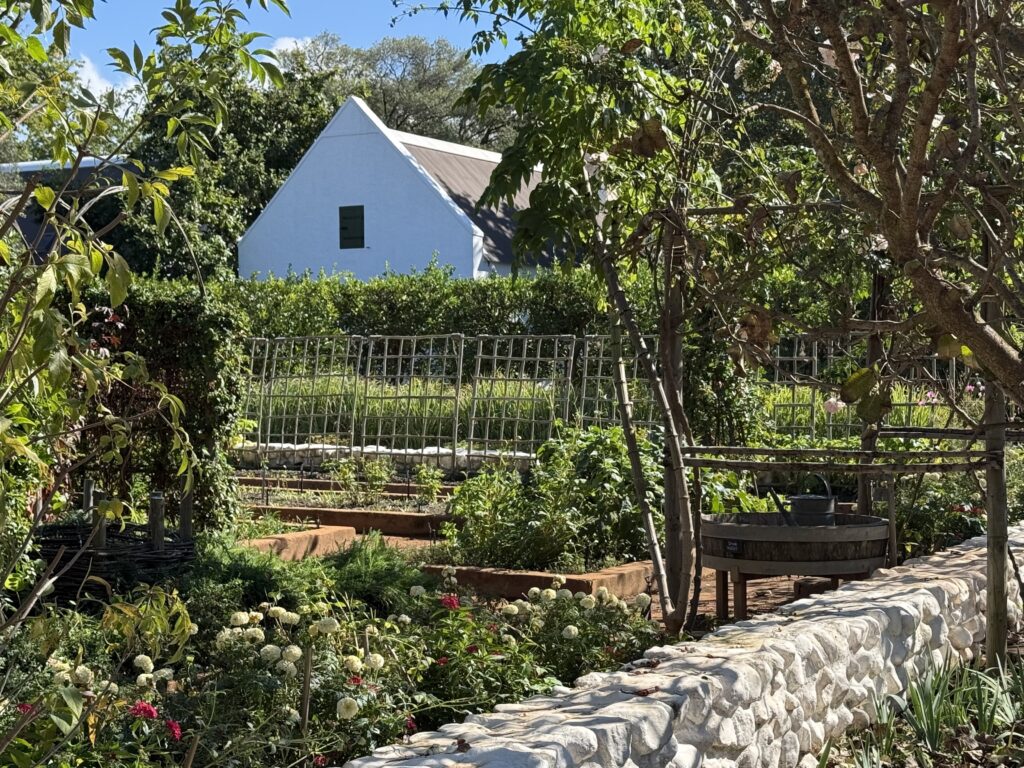
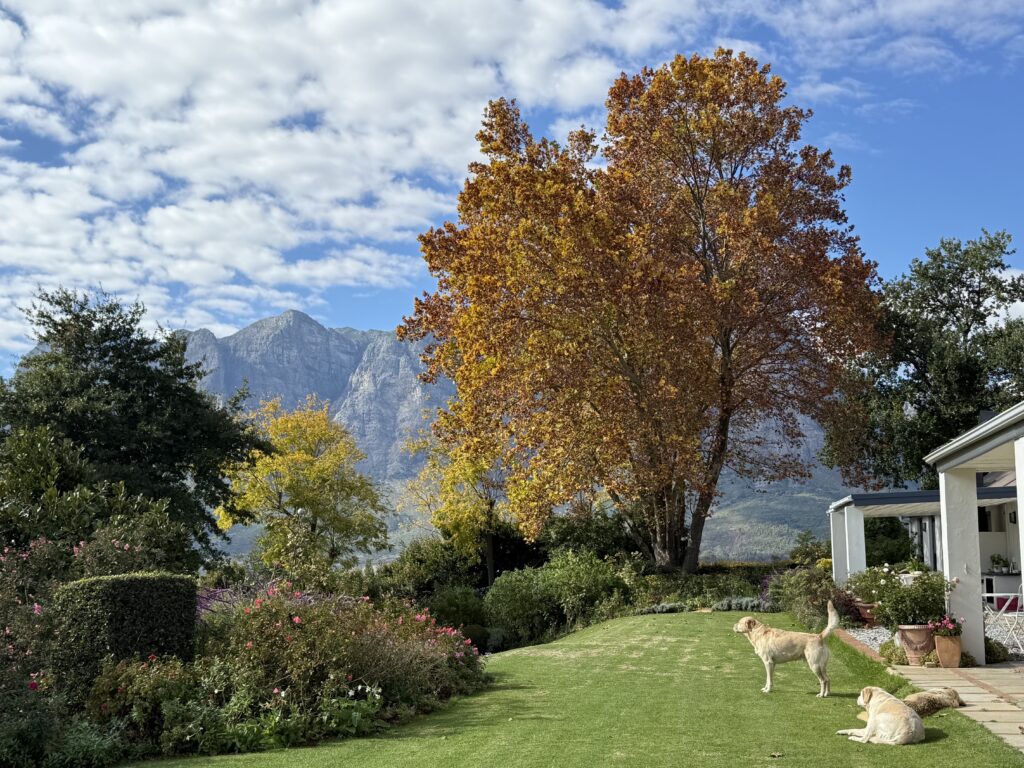
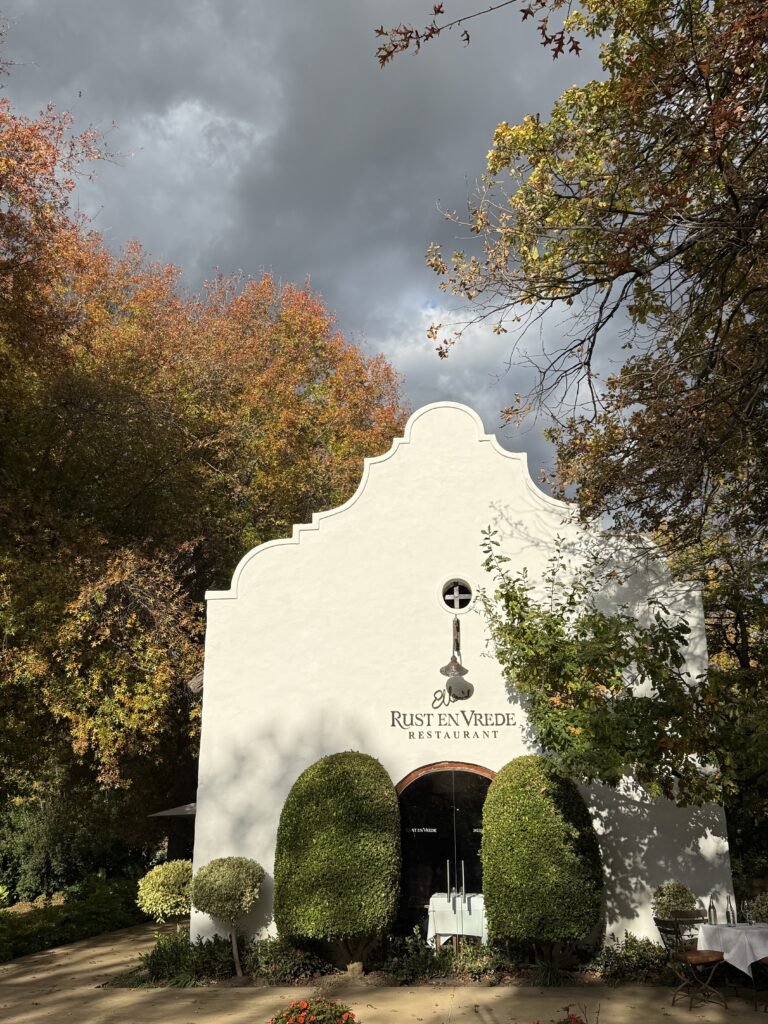
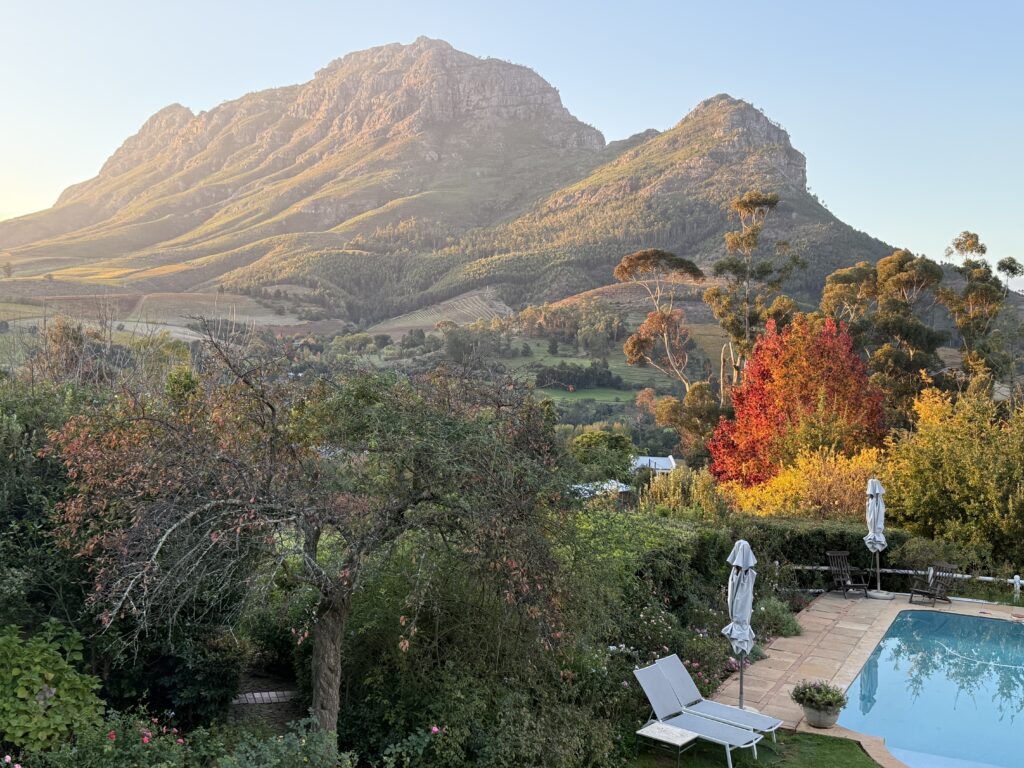
We get our first taste enroute, crossing a checkpoint before entering a pristine, country club-like area of wine estates including Rust en Vrede, established in 1694 – eight decades before our country was founded! The persecuted Huguenots fled France to establish Stellenbosch in 1679, the second oldest European city in South Africa, and thankfully brought with them wine making techniques. The setting is gorgeous on this warm fall afternoon as we revel in their luscious reds. Arriving at our accommodations at Camberley Wines, we’re greeted by the owner/winemaker who immediately starts pouring while the sunset casts exceptional light on the mountains and vineyards surrounding their property. The steep hillsides are dotted with red and gold vines in patchwork and the formidable layers of mountains make every angle breathtaking. Later we explore the vast estate of Babylonstoren with its extensive gardens and enjoy meals and wine tasting at several world-class establishments in the region. Between the vistas, the wines, the quaint towns, and the culinary achievements, this is a fail-proof destination.
We head back to Cape Town to prep for our group overland tour!
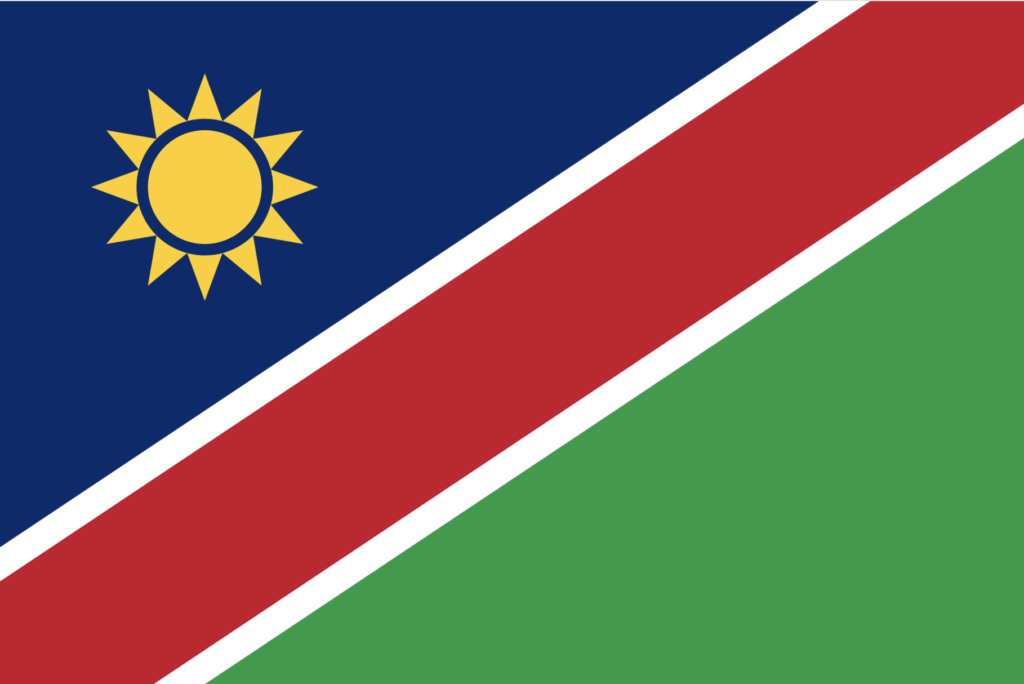
Next up: Namibia
Really love following your travels, Susan and Brian! You are having such an incredible adventure during such an historic time globally. Love that you’re diving into the history and cultures in such a thorough way and then sharing it with we voyeurs! Thanks! What a gift!
Thanks Linda – glad you’re soaking it all up! We’ve been having a great time, despite minor setbacks, and look forward to shifting into group travel mode, leaving the details to others! xo
It’s been wonderful to follow your adventures Susan & Brian! What an adventure you are having, what a gift! YOu are truly blessed. Enjoy the next leg, sit back, and relax on the group adventure. Hope our paths cross somewhere in the world. I will be in Nepal in September, Istanbul & Sicily the first half of October and Morocco the end of October into November, and finally Lisbon the third week of November. Love to you both!
Thanks CAT! Our overland just arrived in Namibia today and the group of twelve are fun and from around the globe. Would love to see you on the road but alas I don’t think our paths will cross. Stay in touch, enjoy your time at home in the Bay Area, and best of luck with your upcoming tours! xo
I’m just catching up on your last few posts today, Susan! It’s so fun watching everything and everywhere! You’re an incredible photographer, too. Stunning pics. It’s so nice to see these to remind me that there’s a vast world out there to see and good people everywhere. Hugs to you both.
Hey Meghan! A vast world indeed and fabulous people everywhere with so much more in common than otherwise. We’re enjoying our jaunts and glad you’re along for the ride vicariously!
xo