
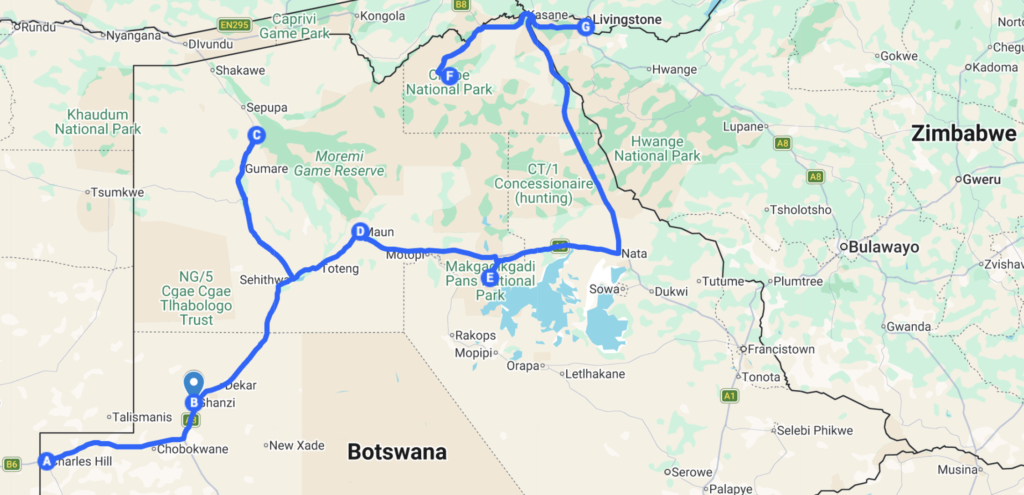
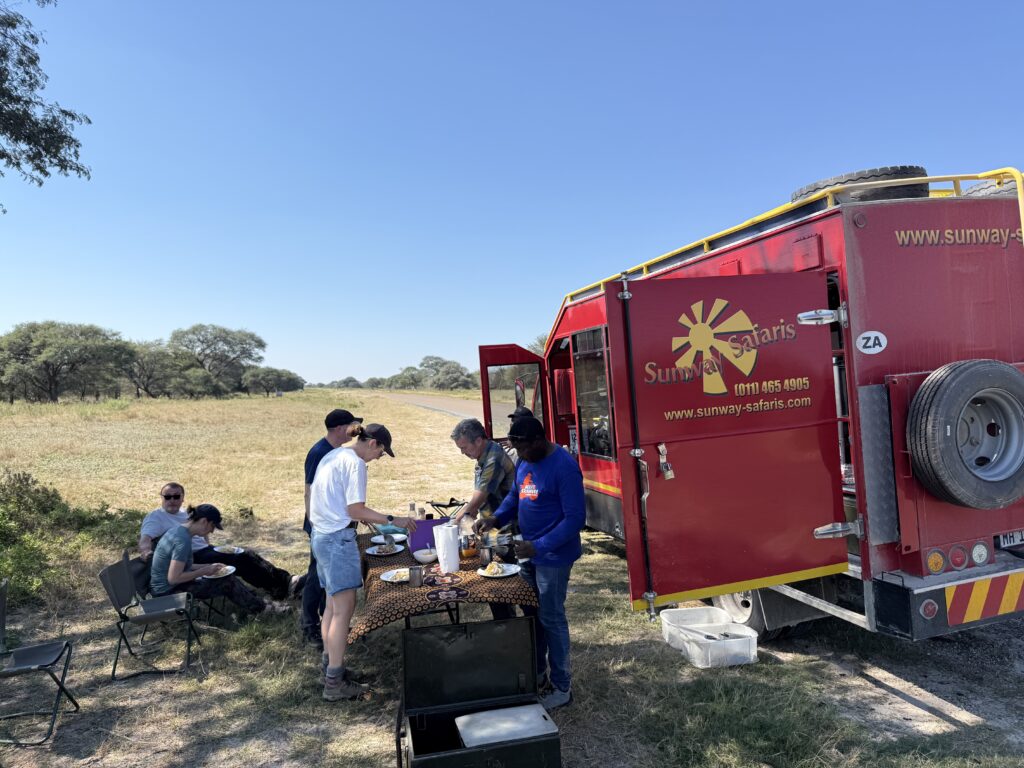
Our overland group, whittled down to 6 plus our 2 guides, leaves Windhoek, Namibia crossing into Botswana for the final leg of our 3 week odyssey – everyone gets a window seat! Botswana gained independence in 1966 from the British through peaceful negotiations. Their first elected president was Seretse Khama, subject of the 2016 movie A United Kingdom about his reign and his romance with Ruth Williams in the time of apartheid. With a population of only 2.6 million, one of the most sparsely populated countries in the world, their economy is driven by mining (diamonds, copper), agriculture (beef), and tourism while expanding into automotive manufacturing, and the Botswana Pula (which means “rain” in Setswana, honoring this valuable resource) is one of the strongest currencies in Africa.
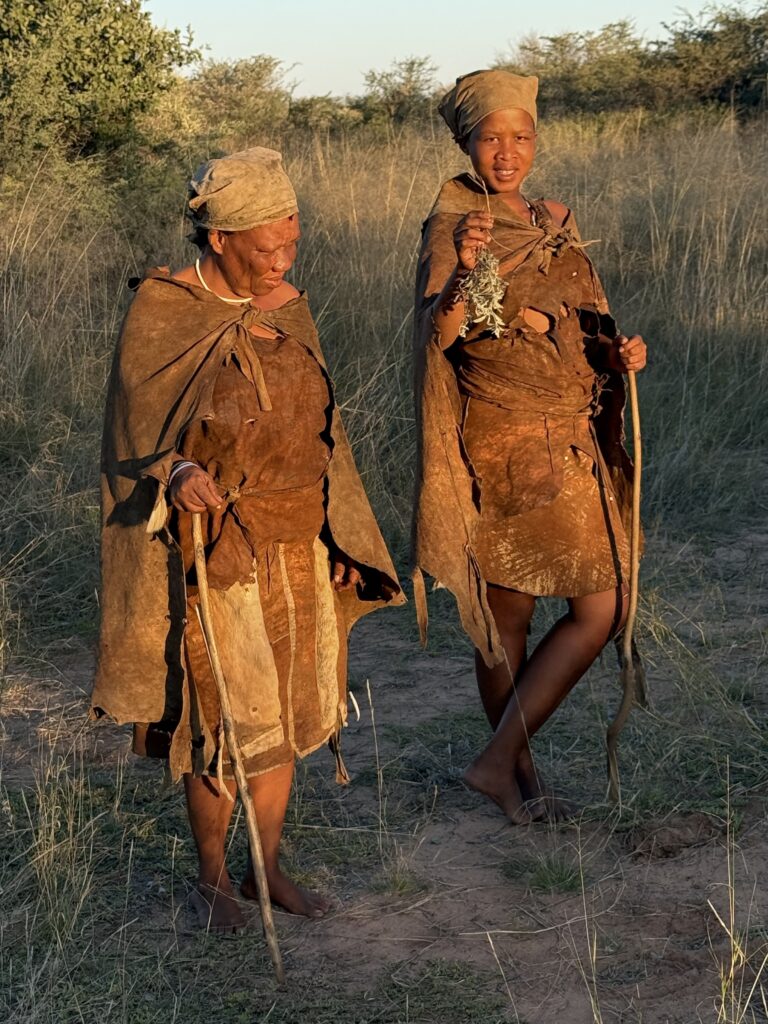
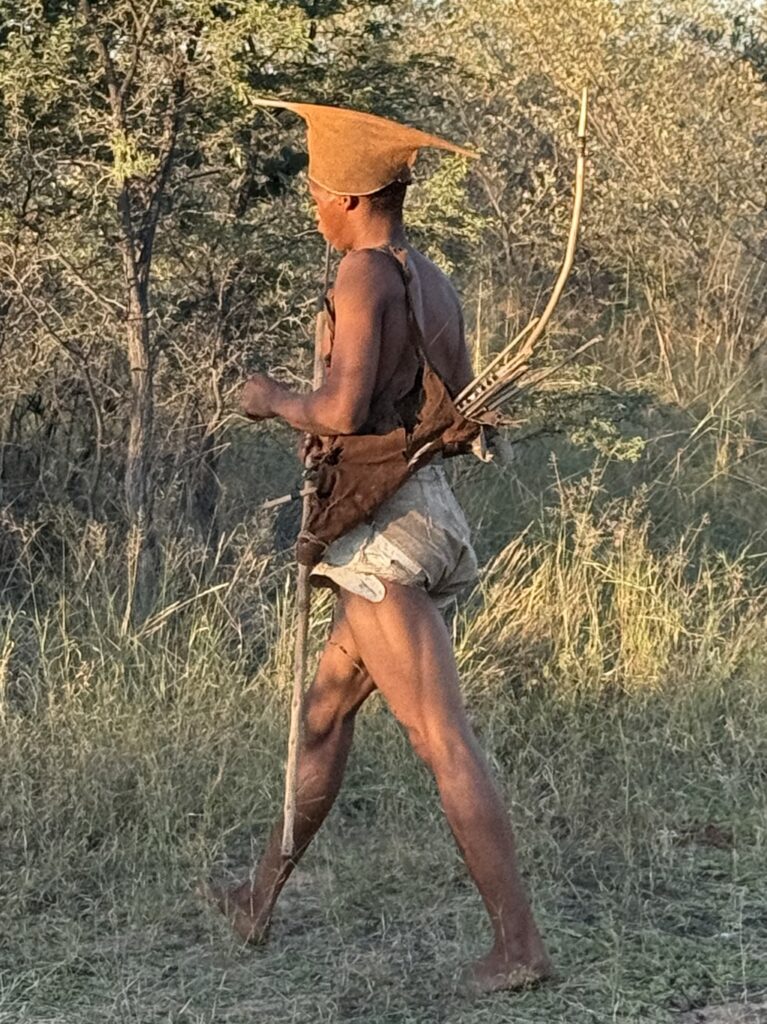
We overnight in a San tribe village, the local bushmen featured in the 1980 film The Gods Must Be Crazy, who were banned from hunting in 1994 and forced to relocate from their villages thereby undermining their cultural heritage and livelihood. Dressed in traditional outfits and demonstrating in their native language including click consonants, they explain their culture of hunting skills, fire making, turning hides into clothing, and medicinal plants: what grass gives protection against malaria, what grass relieves diarrhea, what root to use as a toothbrush, what plant provides poison for arrows, and what root acts as soap. After watching them perform, the tables are turned when they “teach us” how to make the click consonants by putting a seed pod under our tongues, watching us in anticipation, which explodes in our mouths with a surprising pop, generating an expletive from me and amusing them to no end.
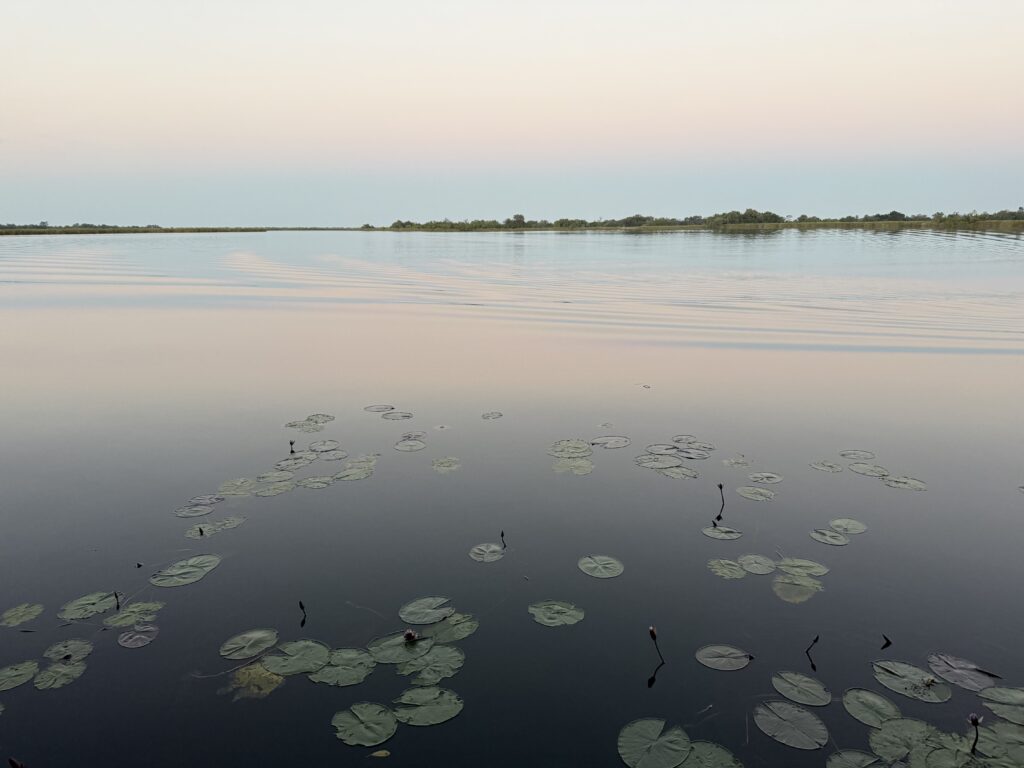
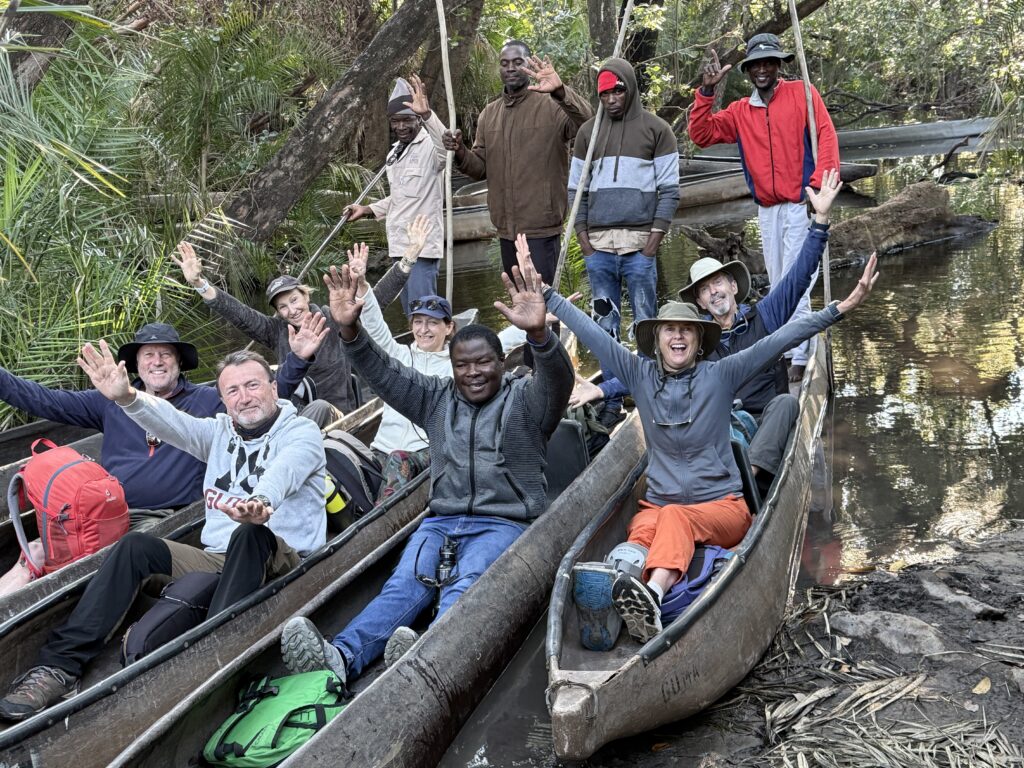
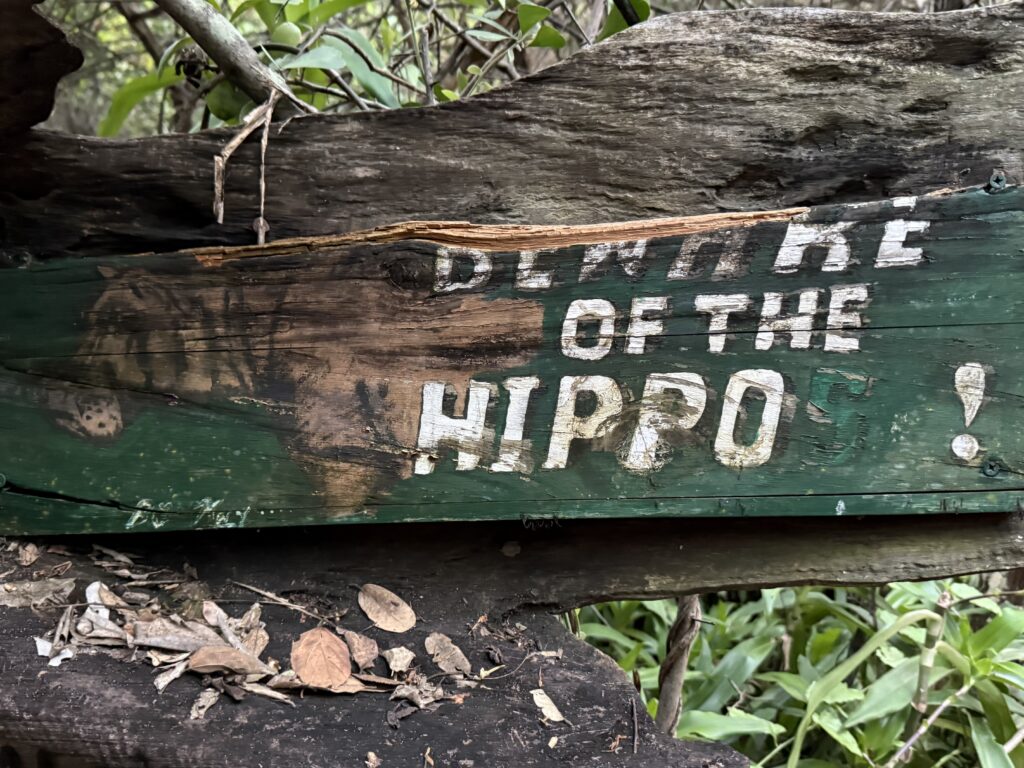
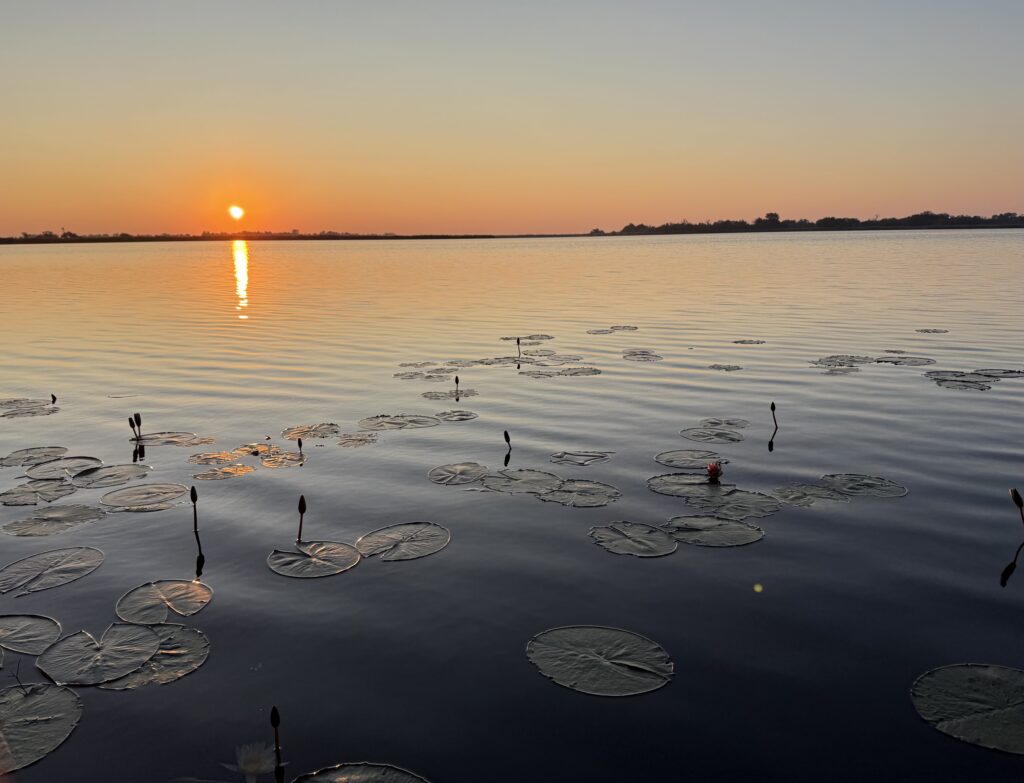
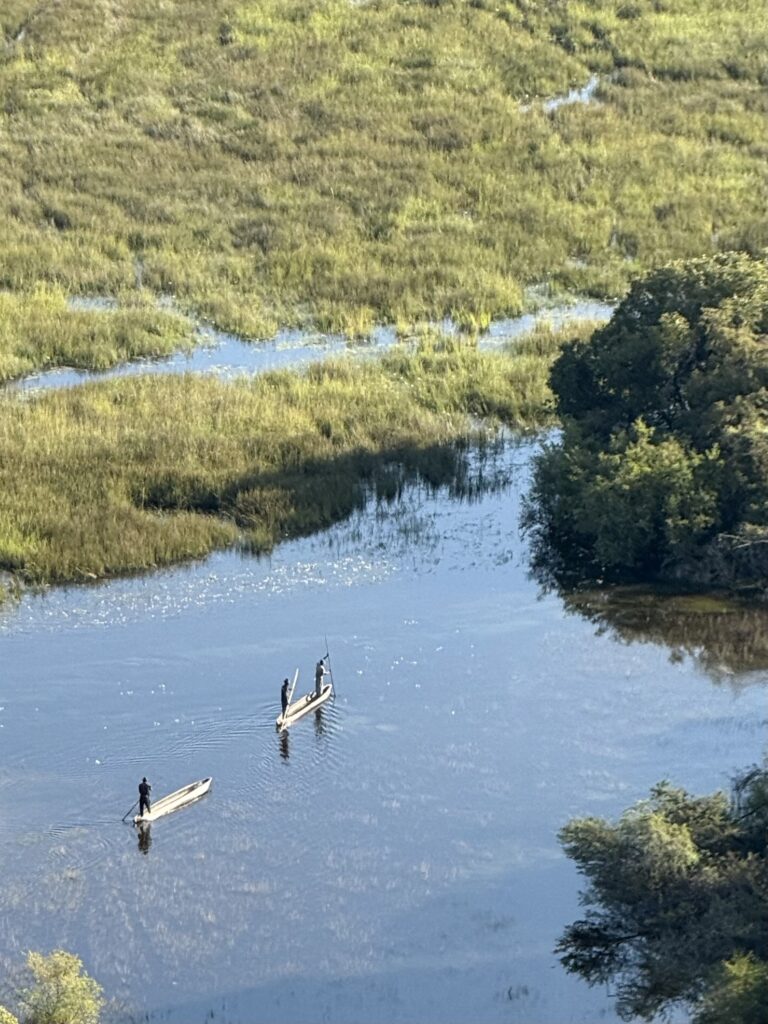
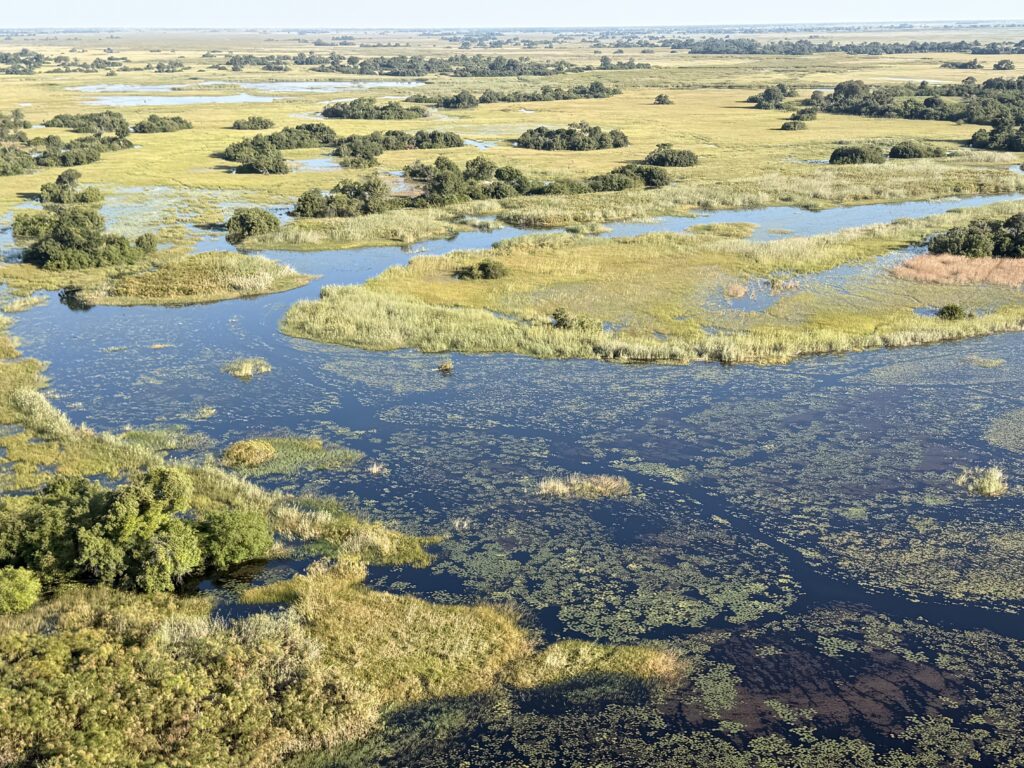
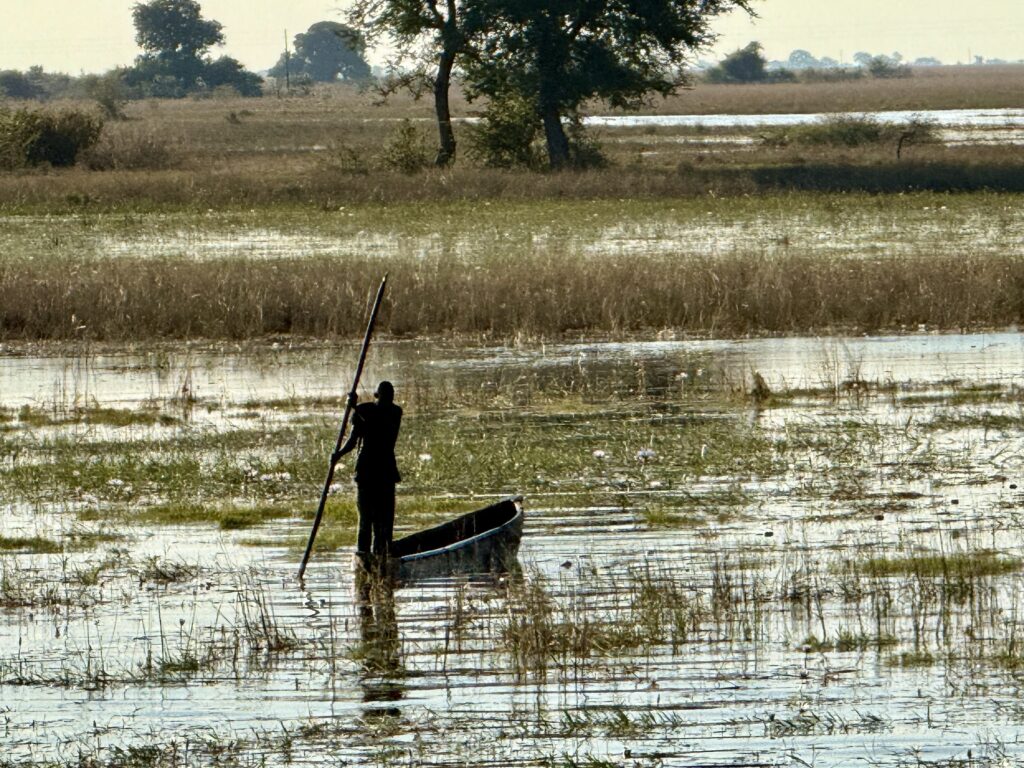
Next we enter the Okavango Delta, another highlight for me since selling these trips in the early 1990s at Mountain Travel Sobek. Our idyllic Guma Lagoon Camp is accessed using their rugged vehicle to drive through the deep sand and low water areas, guided by white-tipped stick road markers and elevated by underwater sand bag tracks in deeper sections, an exciting entry to paradise. Designated as a UNESCO World Heritage site, the Okavango Delta flows from the Angolan Highlands crossing Namibia into Botswana but never reaches the sea, dissipating into the Kalahari sands. We explore the delta in our mokoros propelled by experienced polers, transport originally hand carved from a tree trunk but now regulated to be fiberglass for conservation purposes. The early morning ride is tranquil through the tall reeds and papyrus dotted with lily pads and lotus flowers, gliding in channels forged by elephants and hippos. Lily pads flip as the mokoros pass, leaving a breadcrumb trail of traffic, as we hear elephants trumpeting in the distance. Our guide explains that these reeds are used by locals to build huts and fences plus wrap cigarettes, and papyrus are used to make sleeping mats and rafts and act as fly swatters. Also lilies are edible once pollinated, known as the Delta Onion, and papyrus provide water in its stem, an alternative when crocs line the banks. Birdlife thrives in the delta, and we spot the colorful bee-eater and kingfisher, the African sacred ibis, and the African fish eagle, among many others.
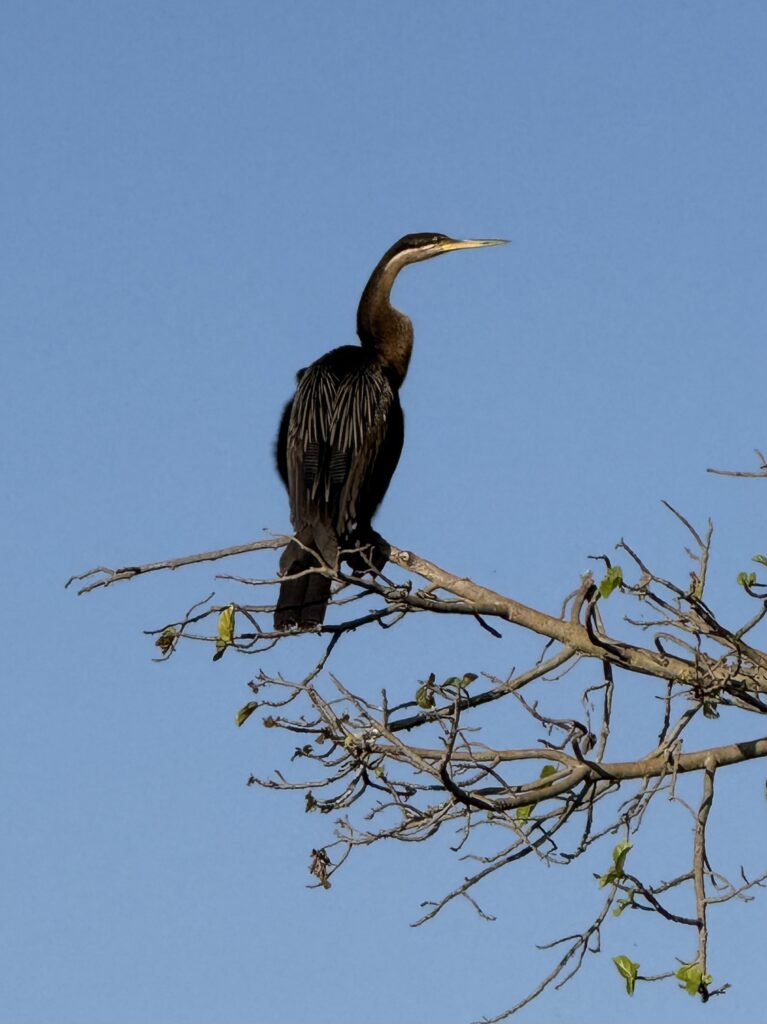
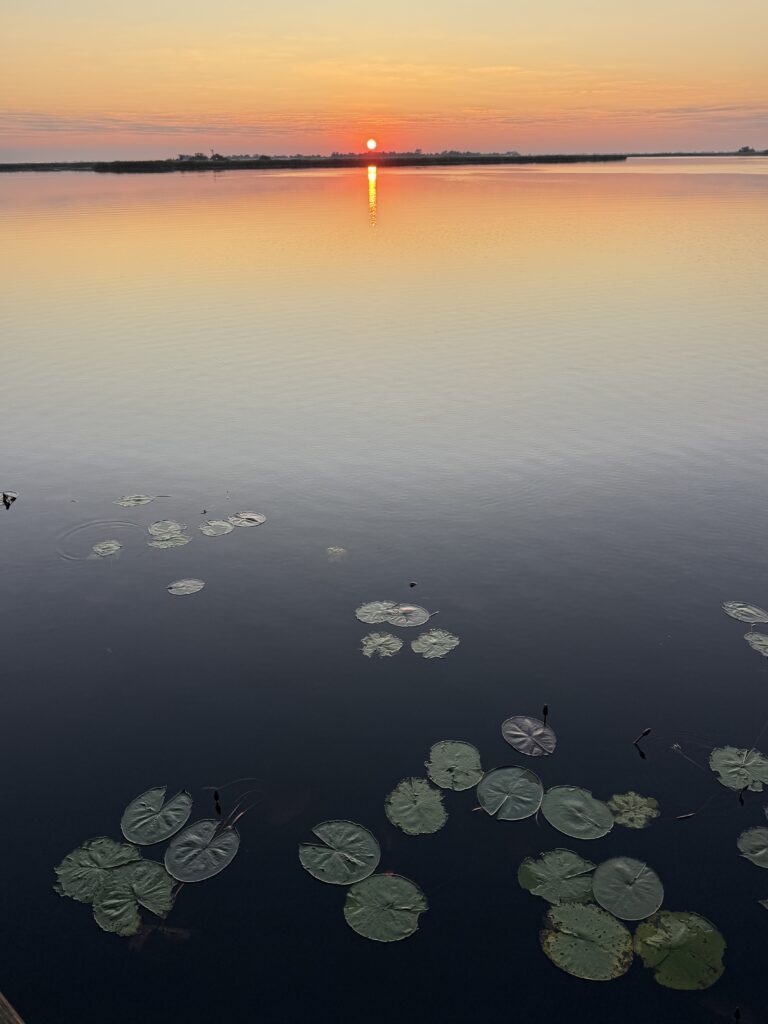
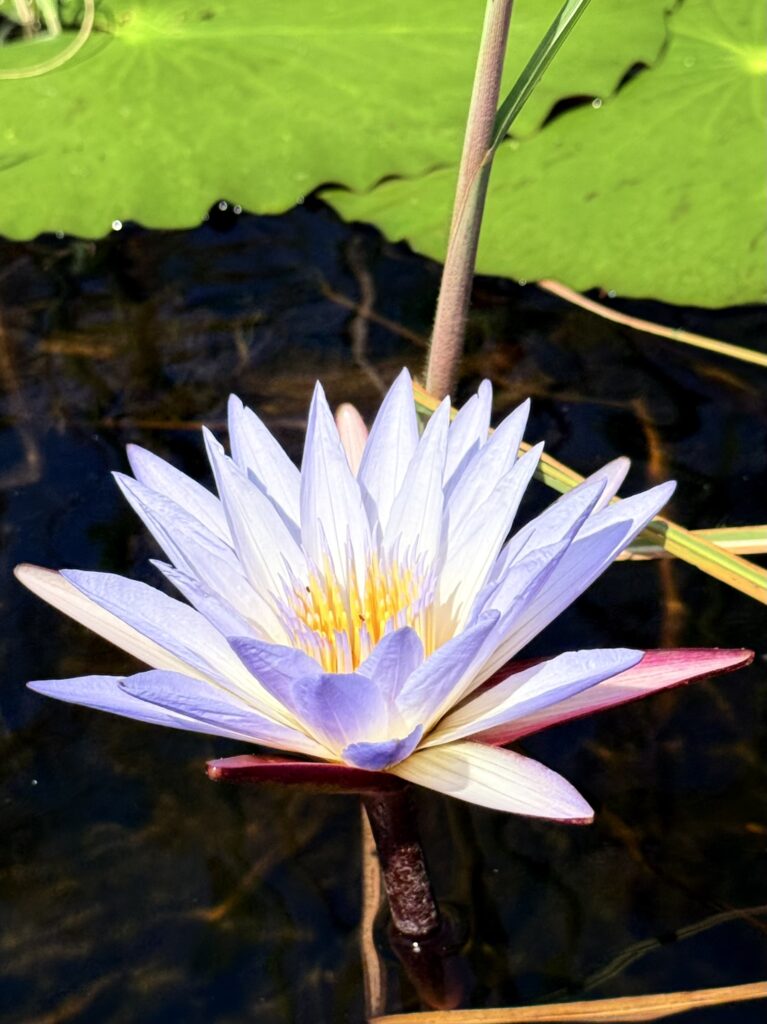
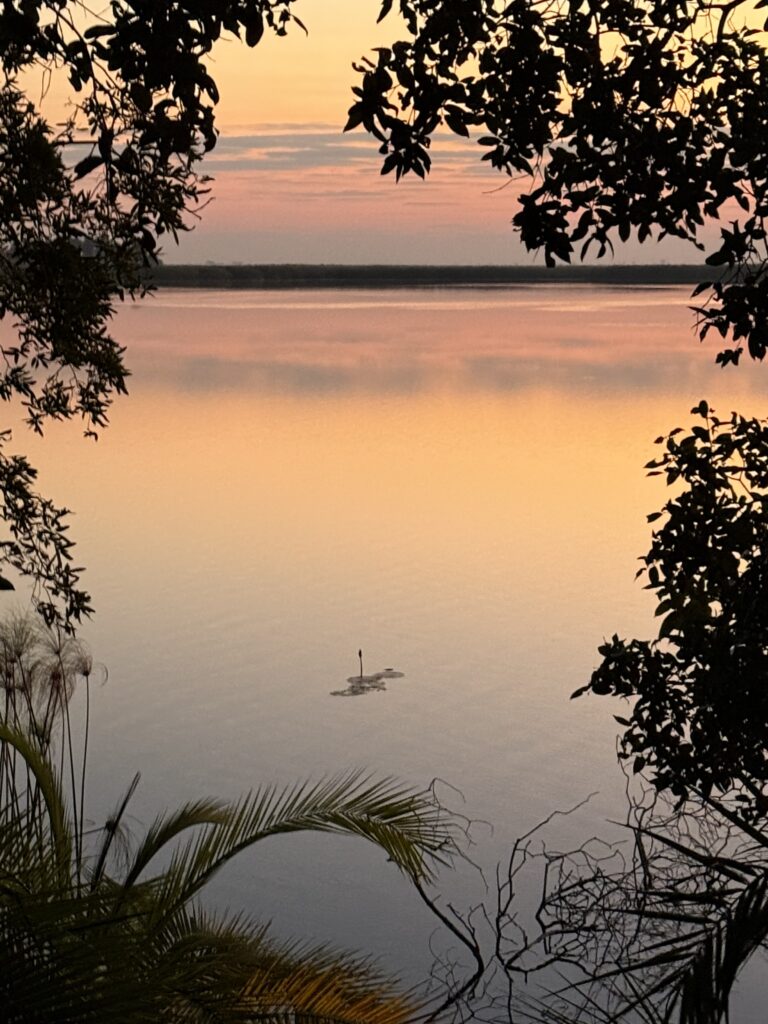
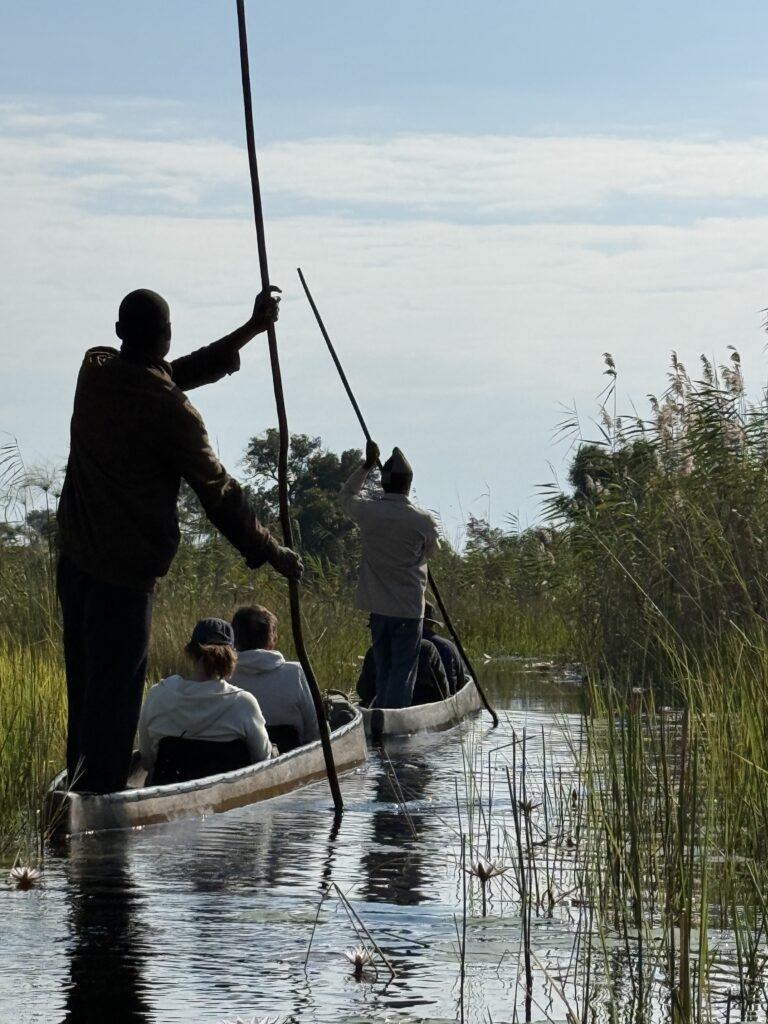
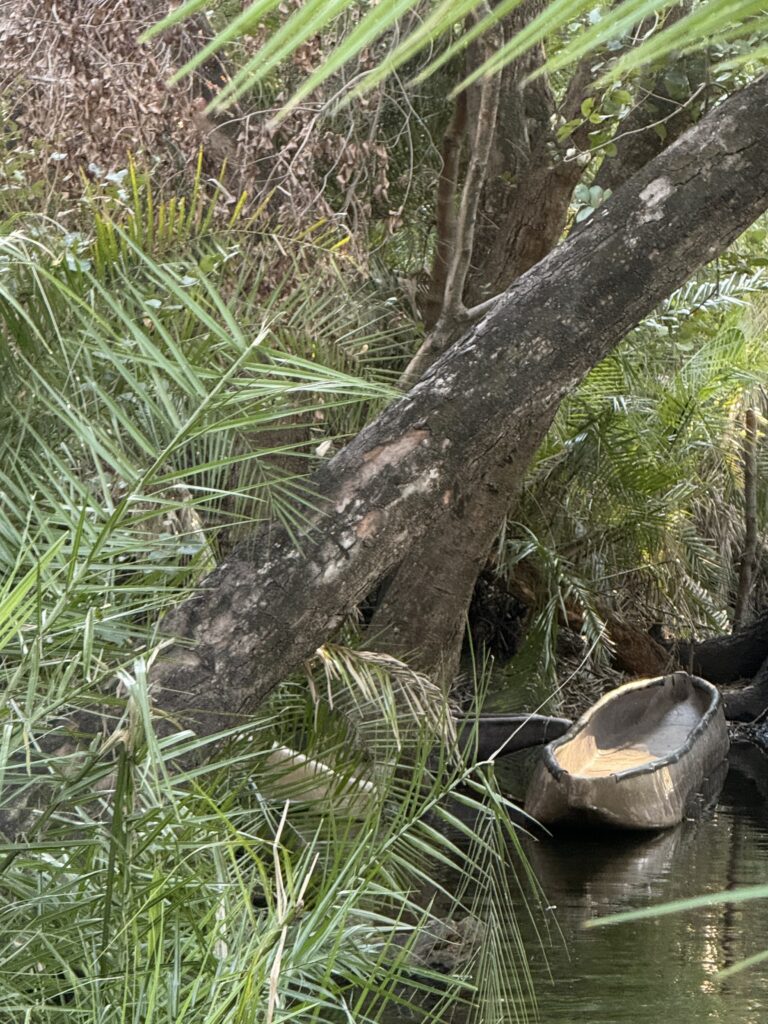
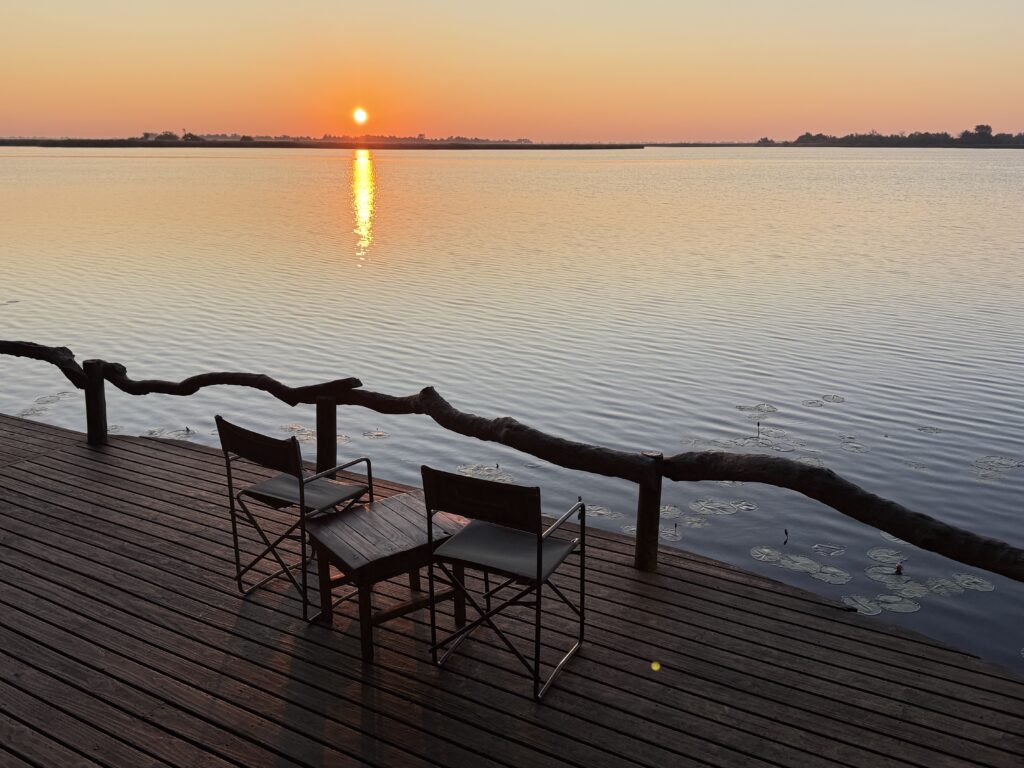
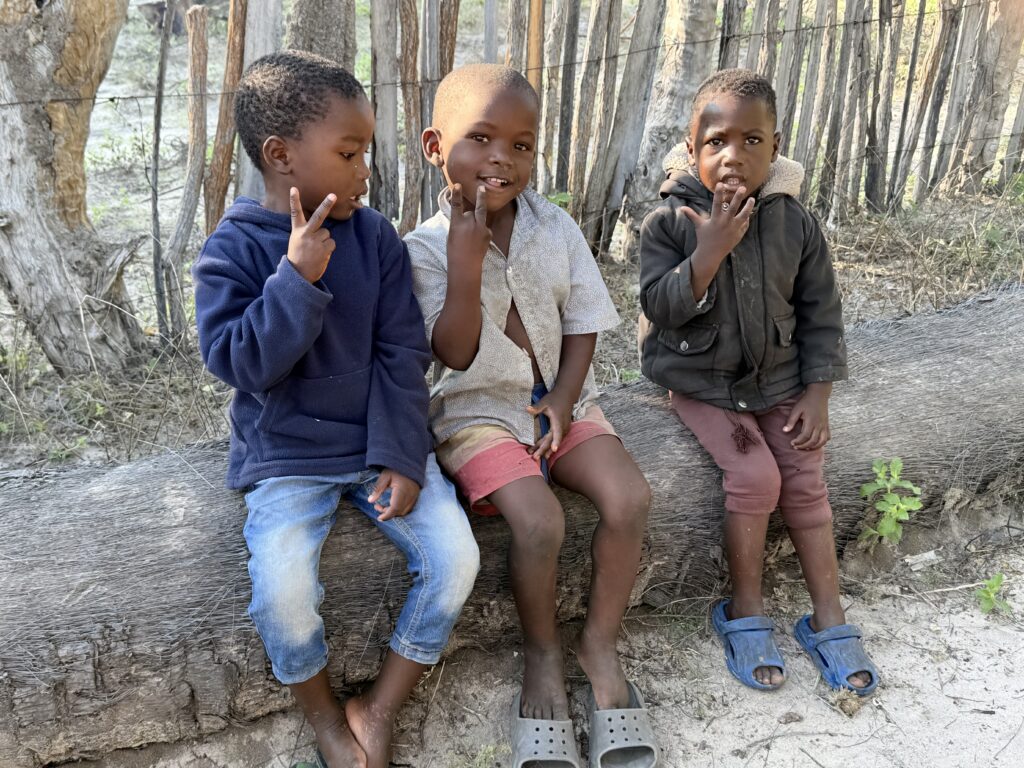
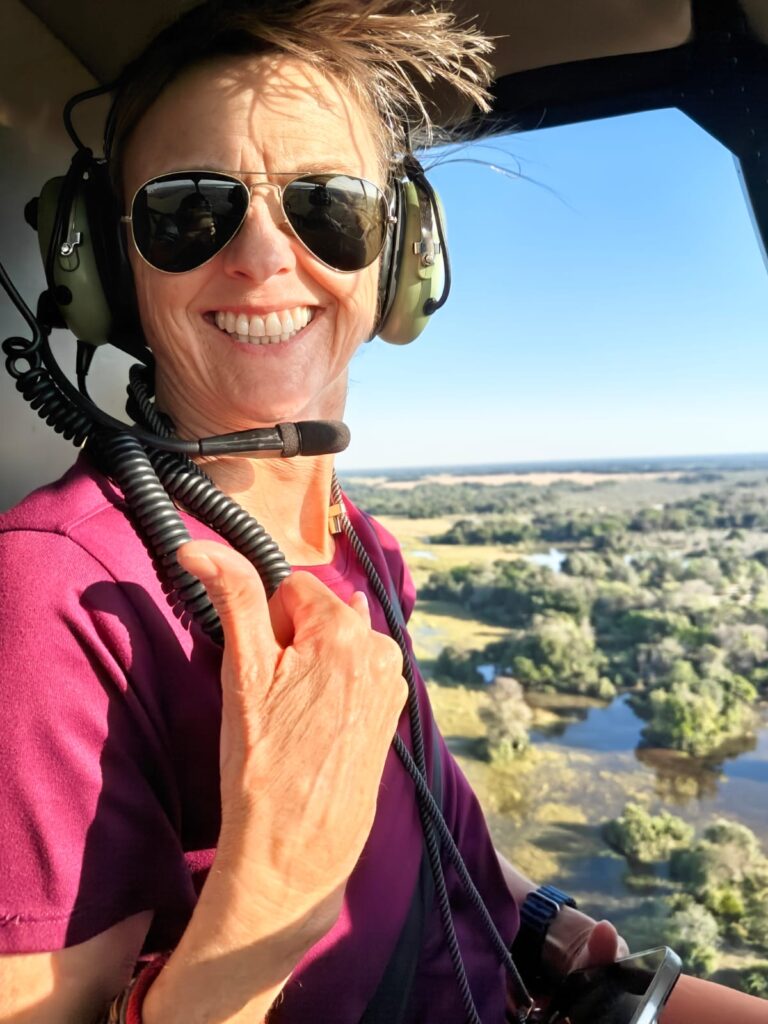
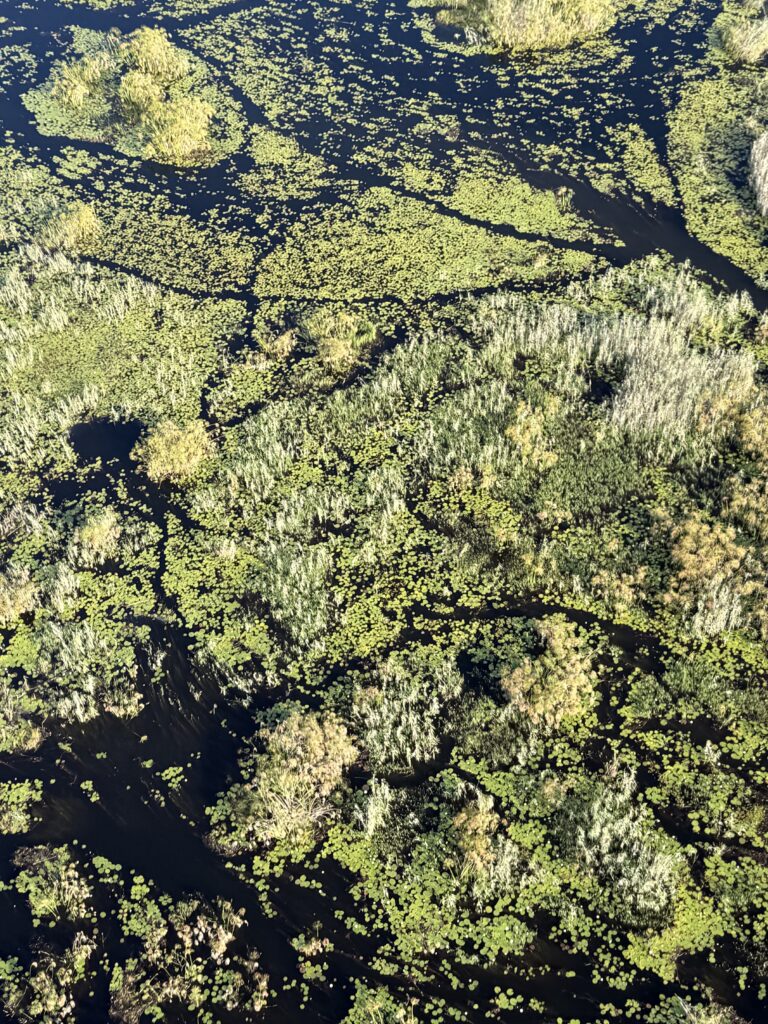
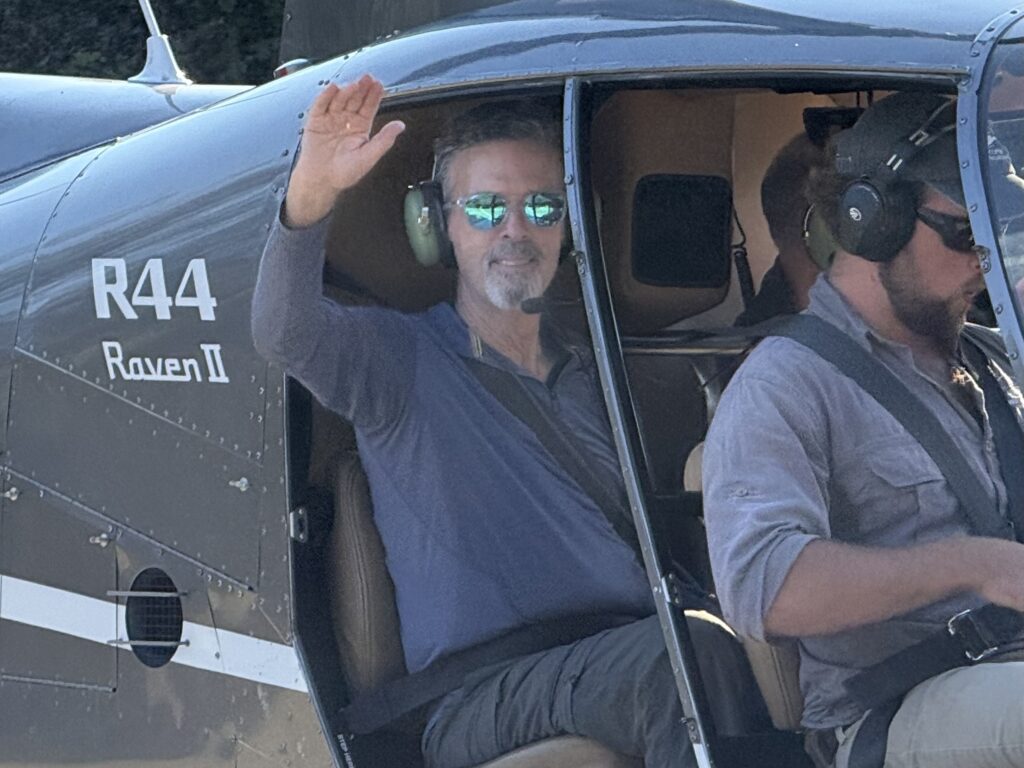
Having enjoyed the delta at water level, we take to the skies in a helicopter with doors removed, our first heli ride ever, giving us a sense for the expansiveness of the region. The vivid greens veined by liquid paths, the broader bodies of water accented with fields of lily pads, and the occasional island housing the beefy baobab trees sheltering elephants and hippos take our breath away as the pilot banks and drops to highlight the sites. We even document and report on what is believed to be a poacher’s camp deep in the delta hidden by foliage.
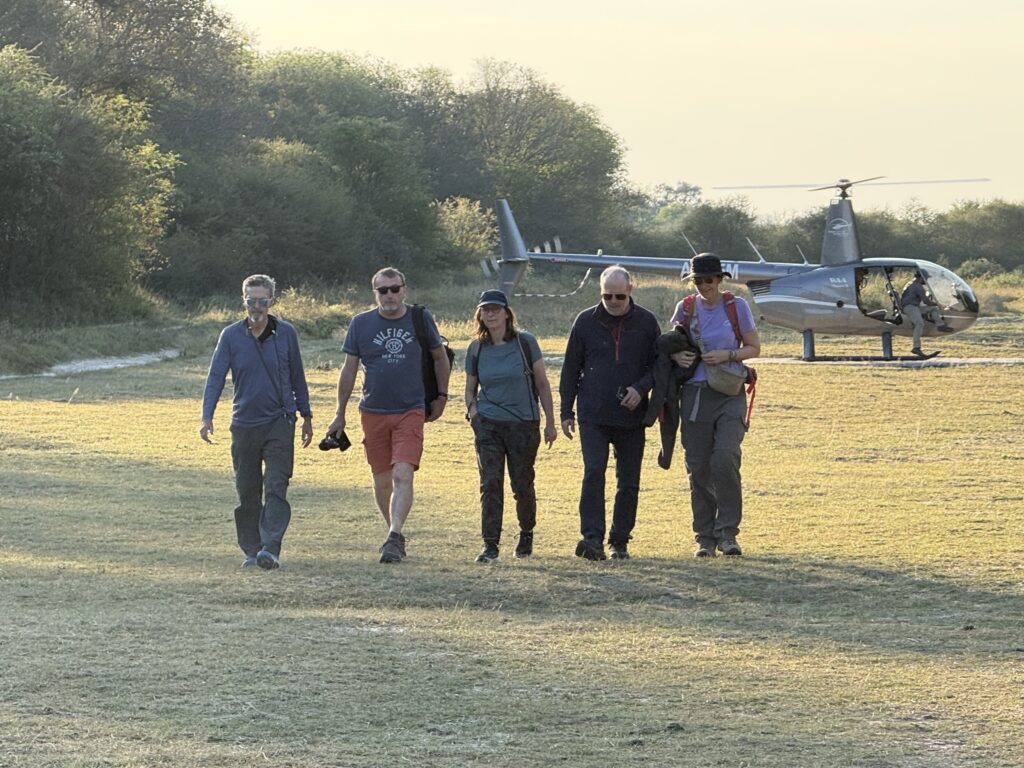
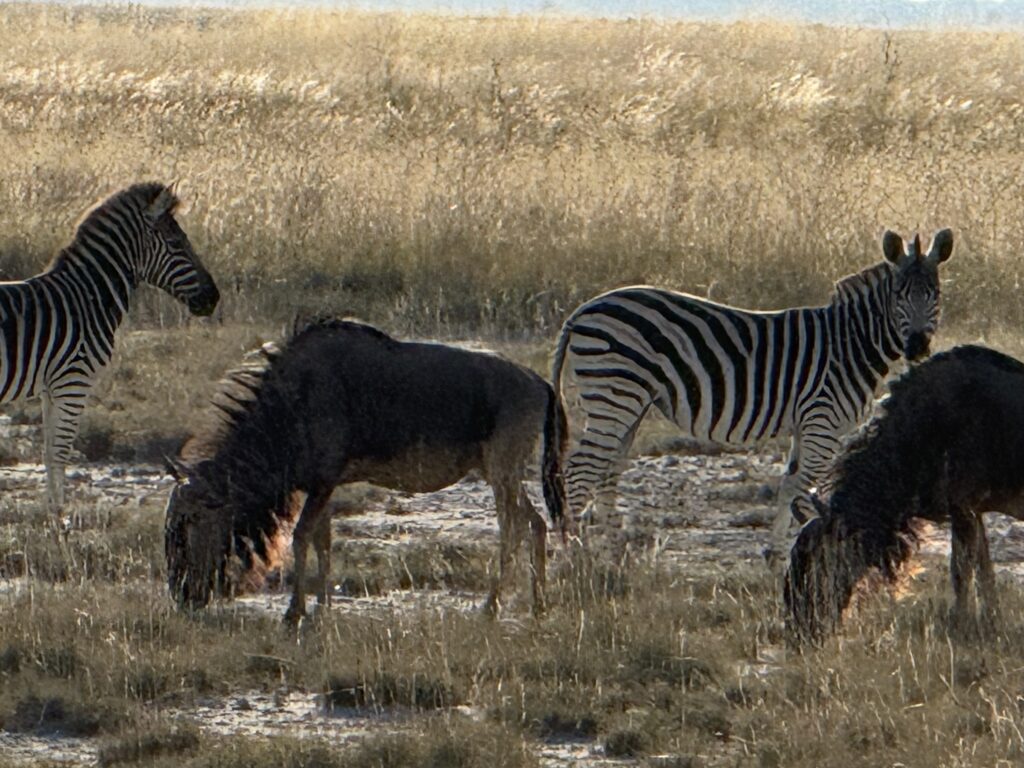
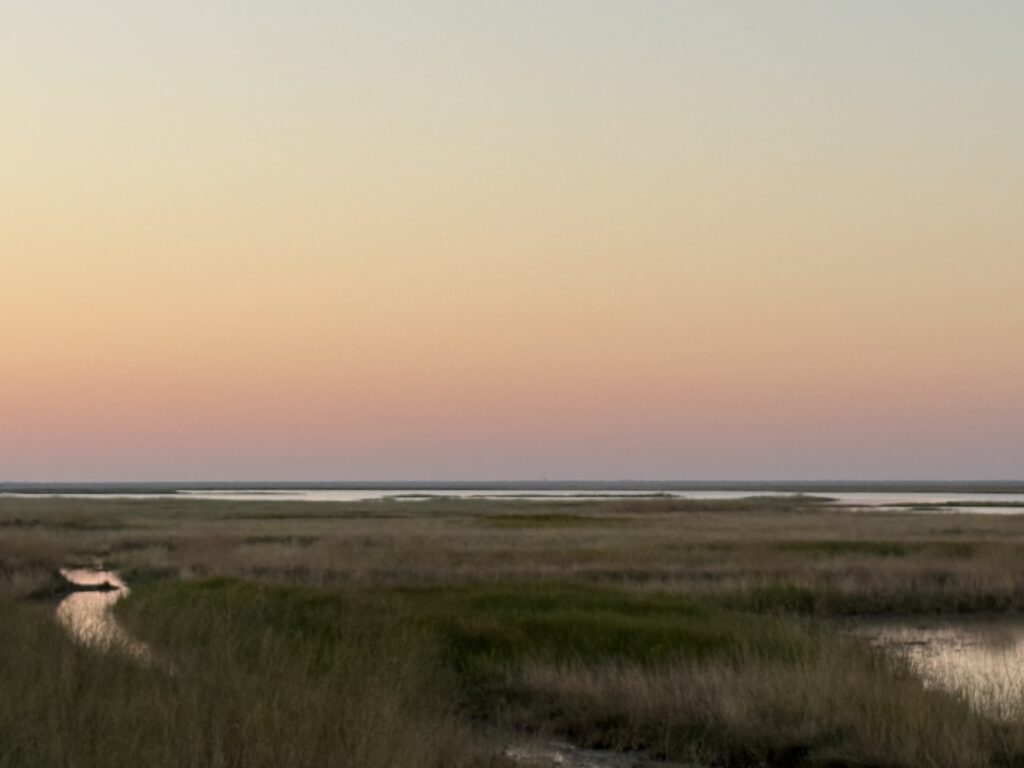
Heading East across Botswana, past flat topped acacia trees encountering elephant and zebra herds alongside the heavily potholed highway, we reach the Makgadikgadi Basin, providing one of the largest salt pans in the world attracting a variety of wildlife, however due to last month’s excessive rains, we find the pans flooded with water but still enjoy a vibrant sunset over the savannah. Our drive north brings us into the most fertile areas of Botswana with fields of sorghum, maize, and sunflower drawing migrant workers for harvest as well as industrial scale farming.
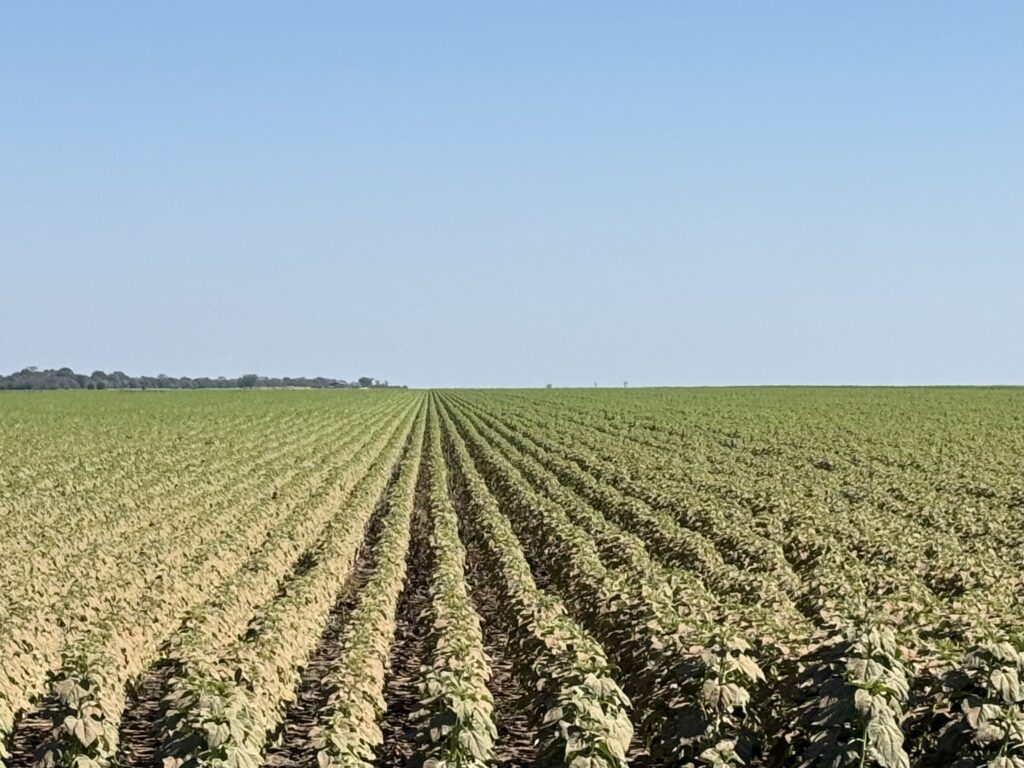
At the small town of Nata, the markets are bustling because it’s their monthly payday when they stock up on maize milk, washing powder, and cooking oil for the month, buying fresh items as needed. The typical monthly salary in this rural town is 3,500 Pula ($260) which doesn’t go far. Those living in shacks may not pay rent but those with steady employment could spend 300-900 Pula ($22-30) renting a 3 meters square room for all their living needs. The government has mandated a minimum wage of 4,000 Pula ($300) starting July 1st, which will cause many employees to be laid off.
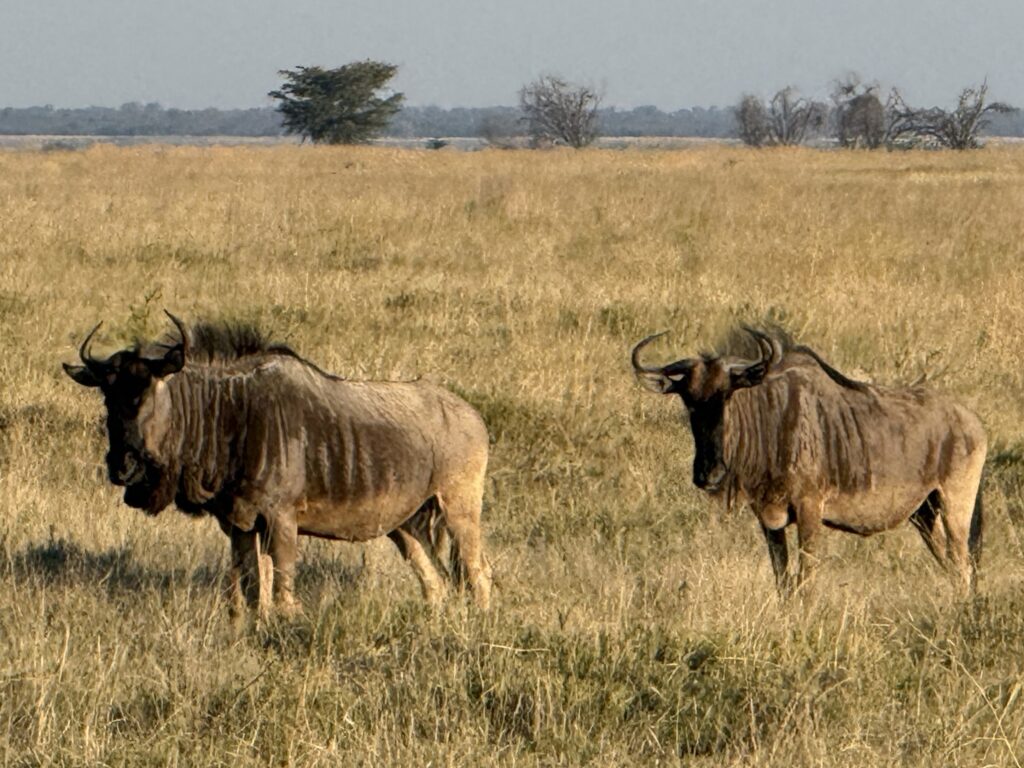
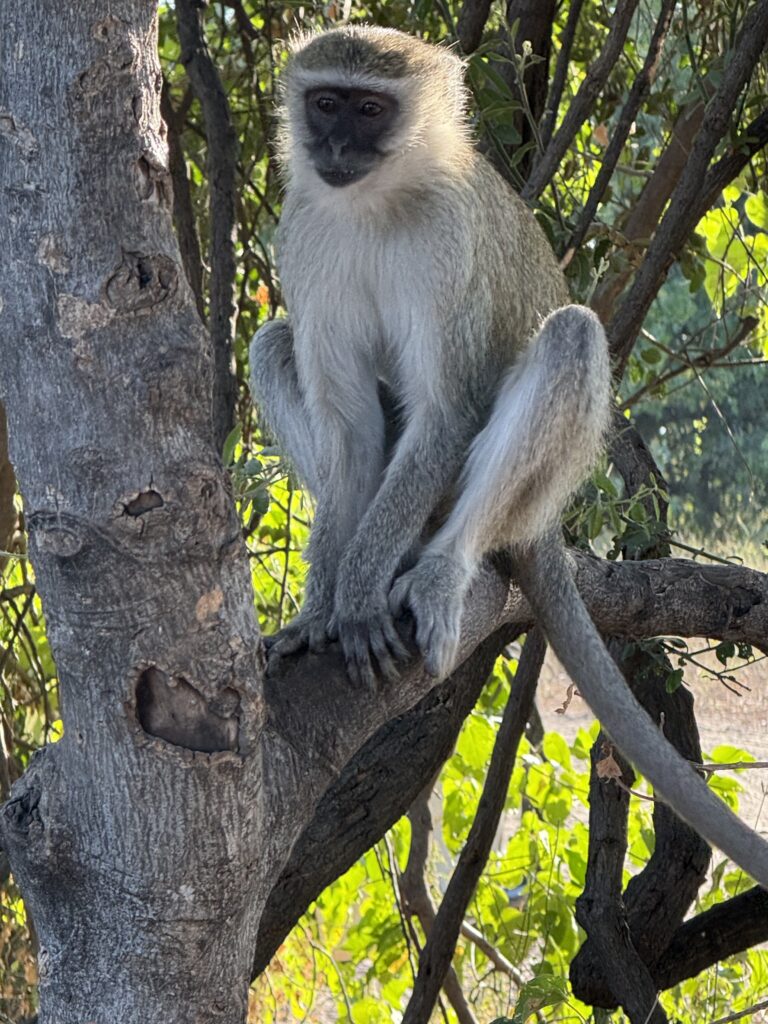
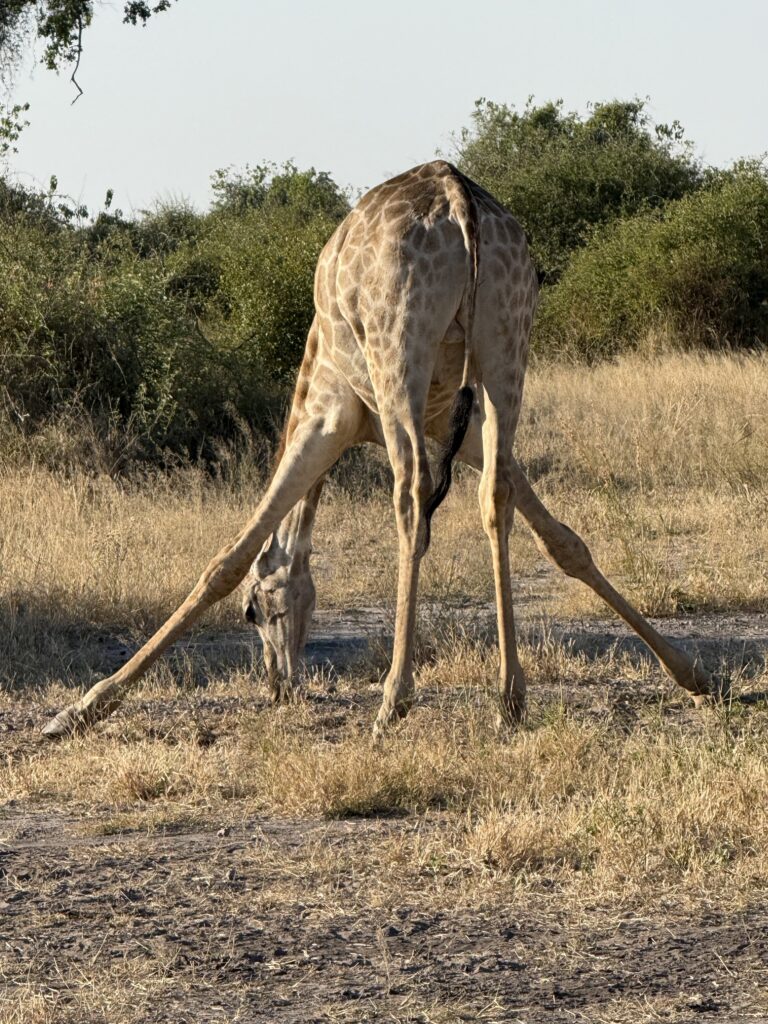
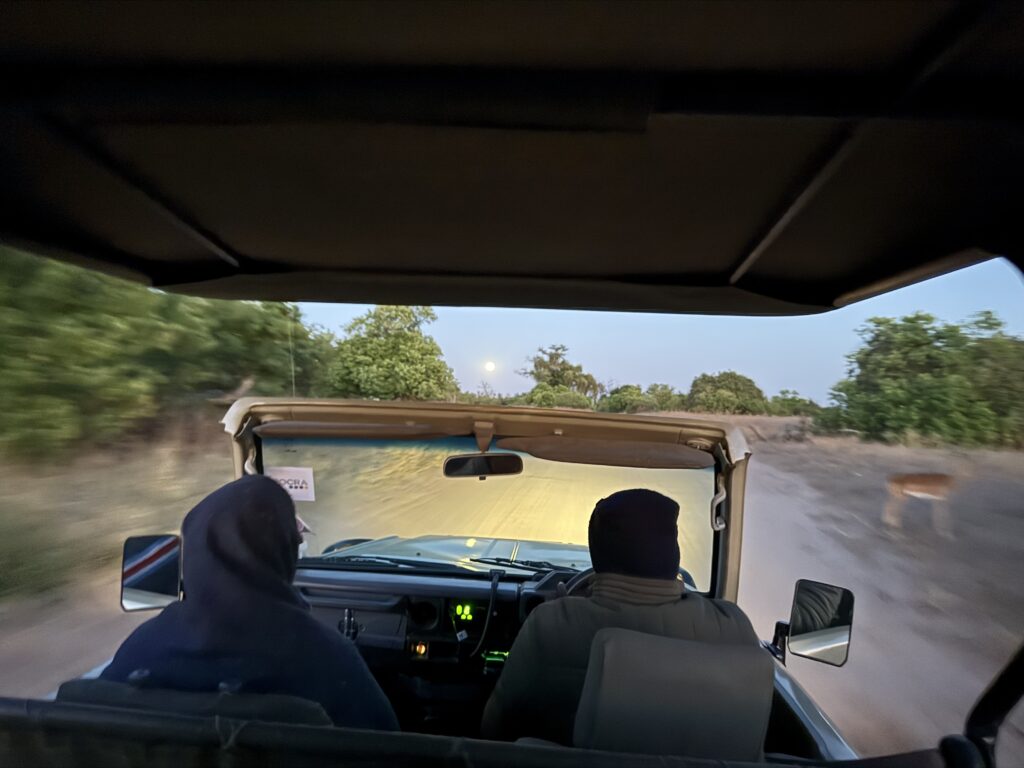
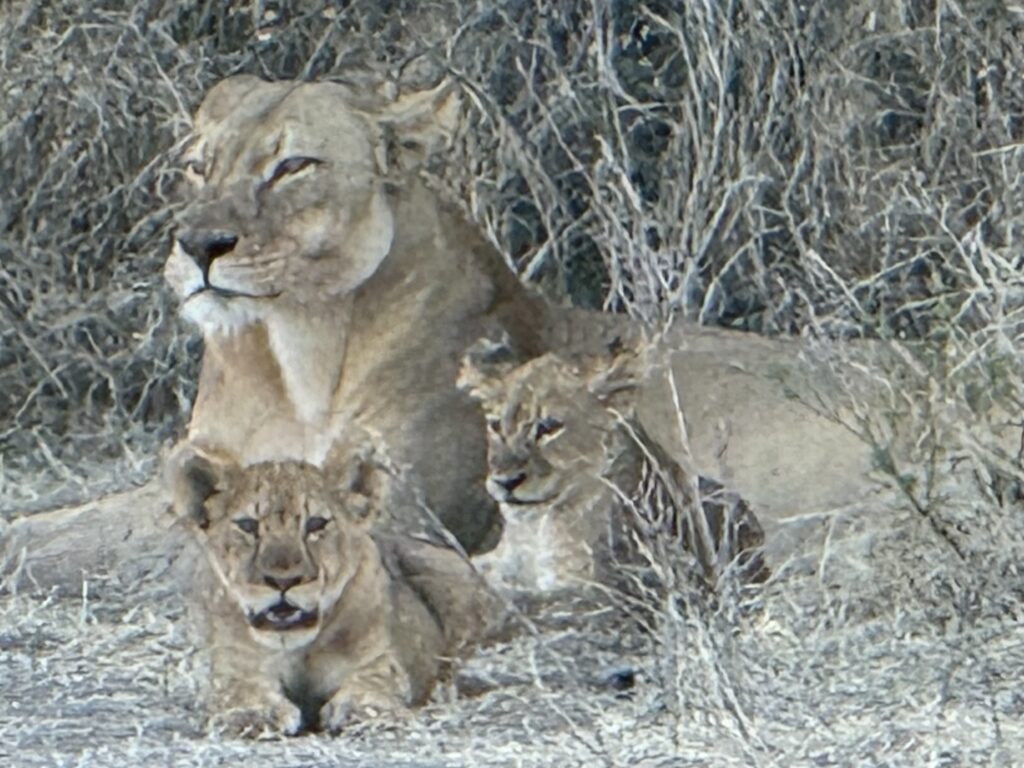
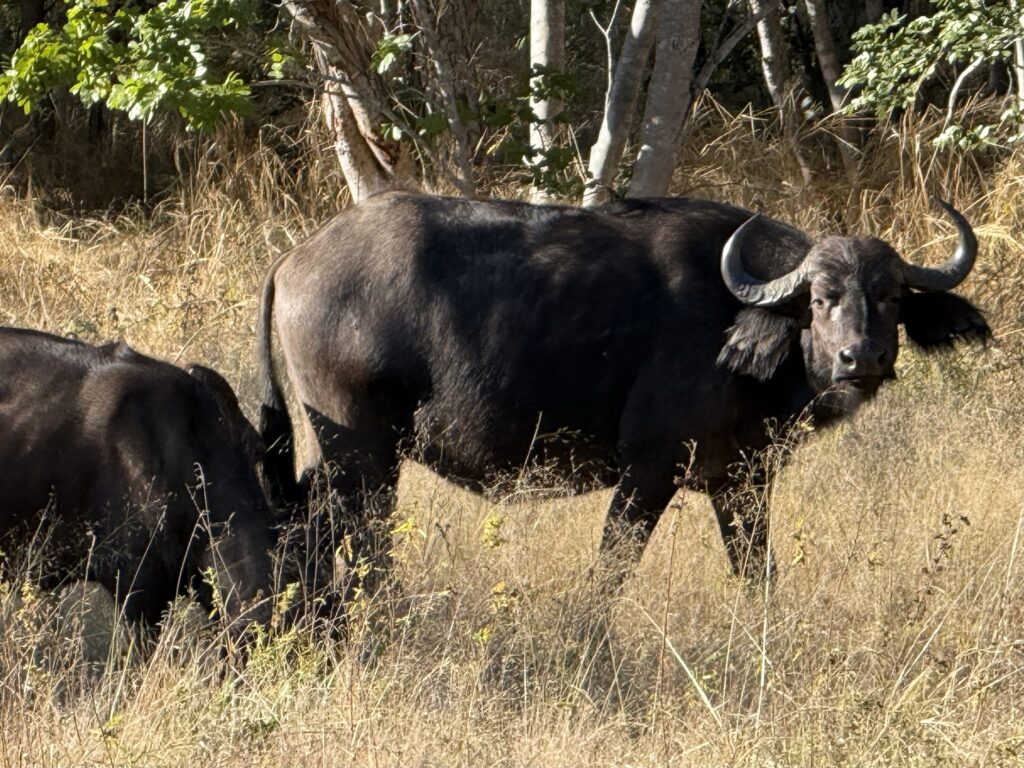
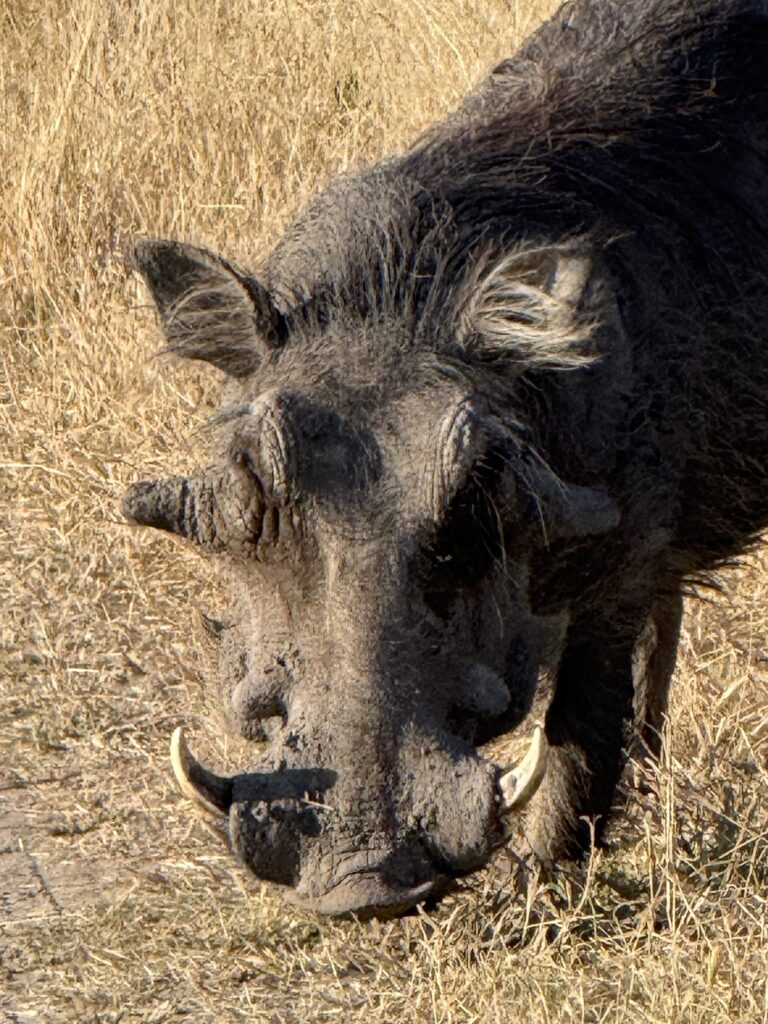
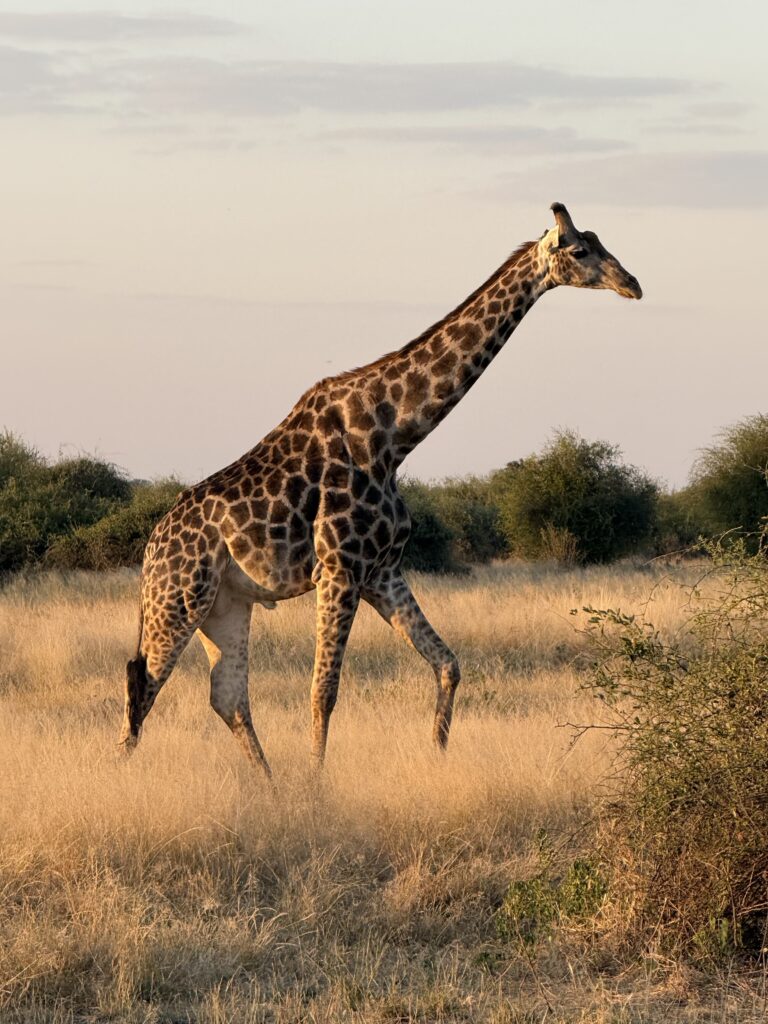
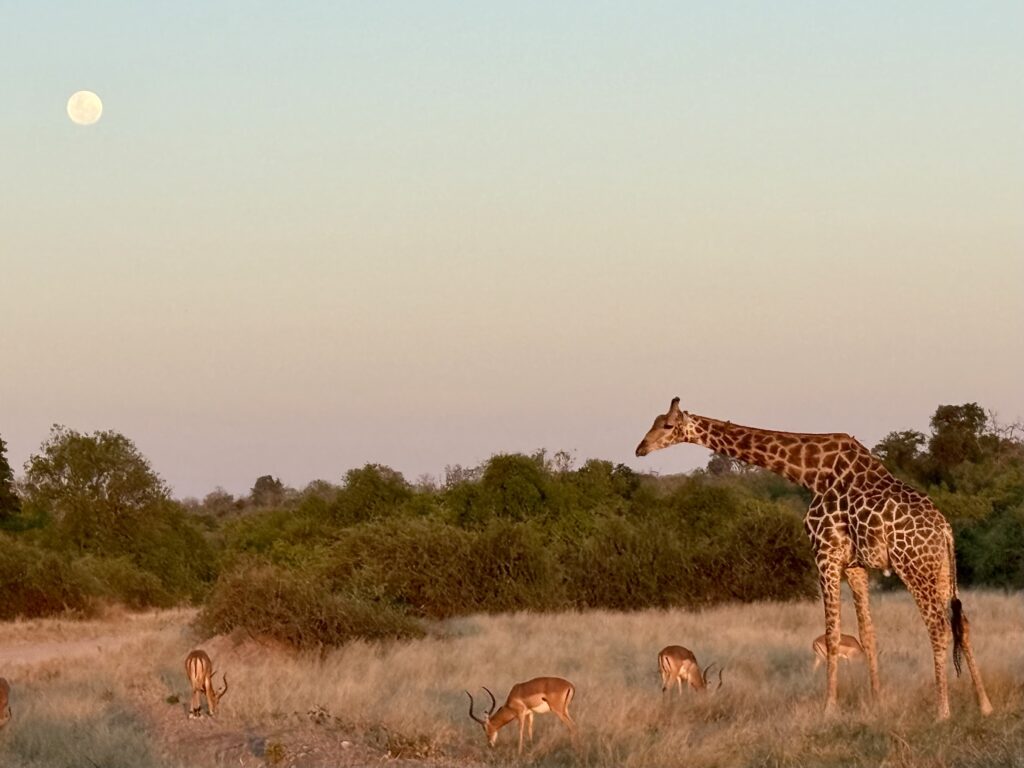
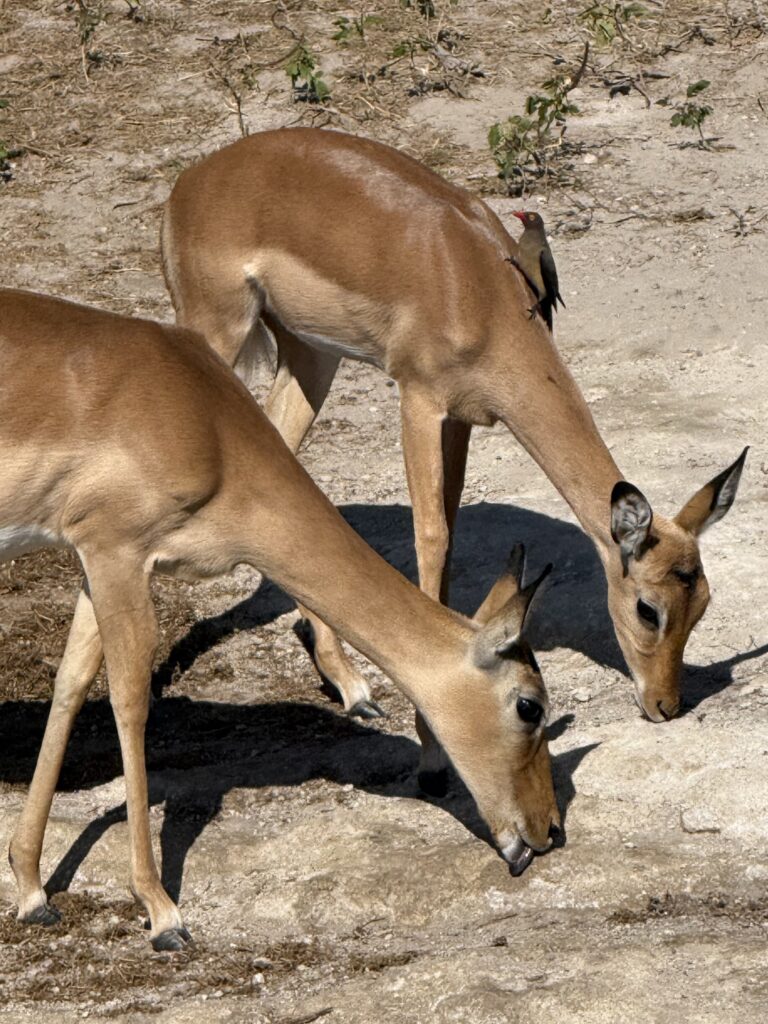
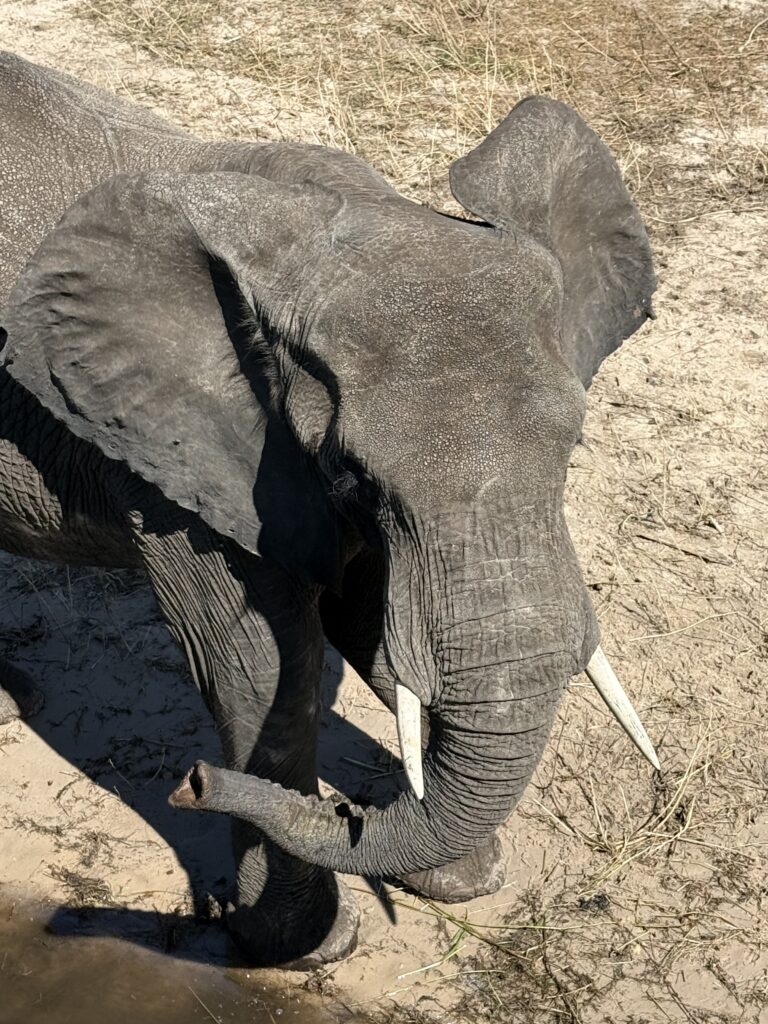
We head on to Chobe National Park, the second largest park in Botswana with 11,700 square kilometers housing 30% of the elephant population in Botswana. Unlike South Africa and Namibia, the landscape here is unfenced, allowing villagers to graze their animals throughout and wild animals to roam out of the national parks, putting them at hunting risk. Across two game drives including a 5:45am start to best view cats, we experience throngs of elephant, giraffe, antelope, impala, baboon, Vervet monkey, warthog, greater kudu, lions, Cape buffalo, and even a leopard, completing our search for the Big 5: elephant, lion, leopard, rhino, and Cape buffalo.
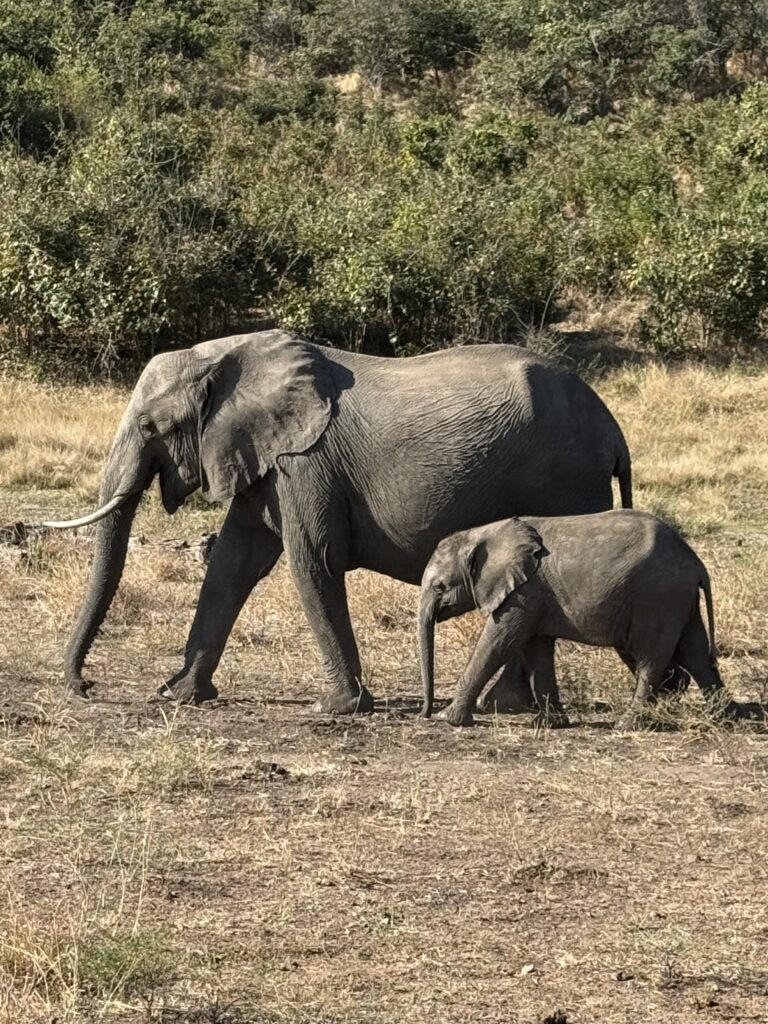
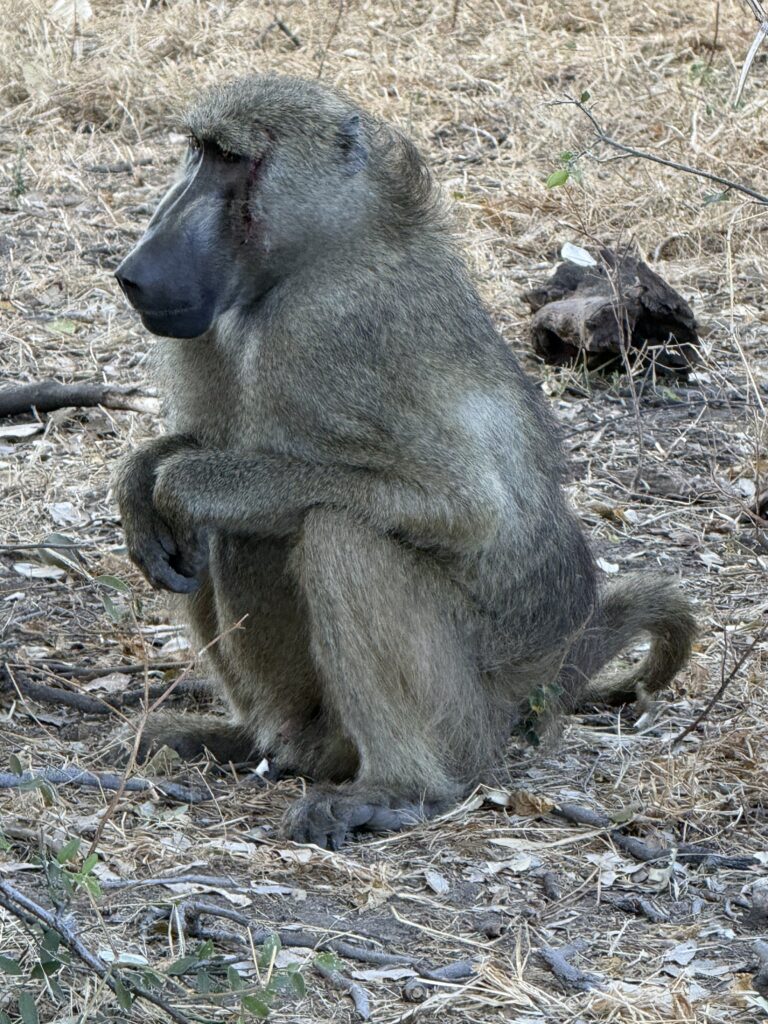
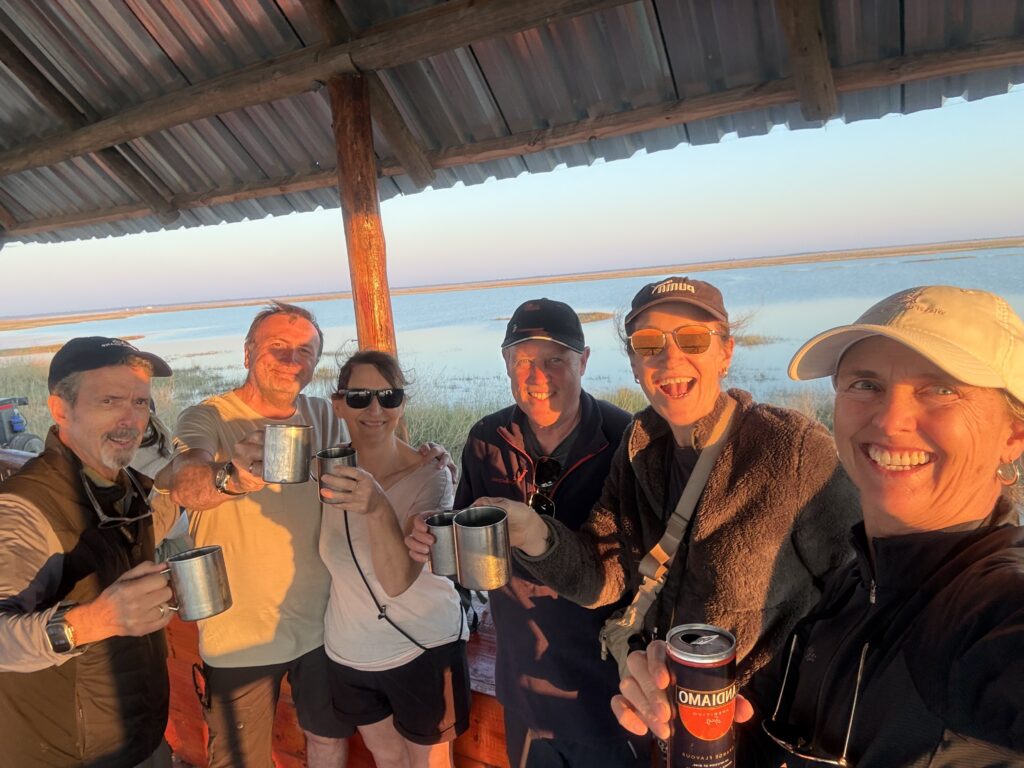
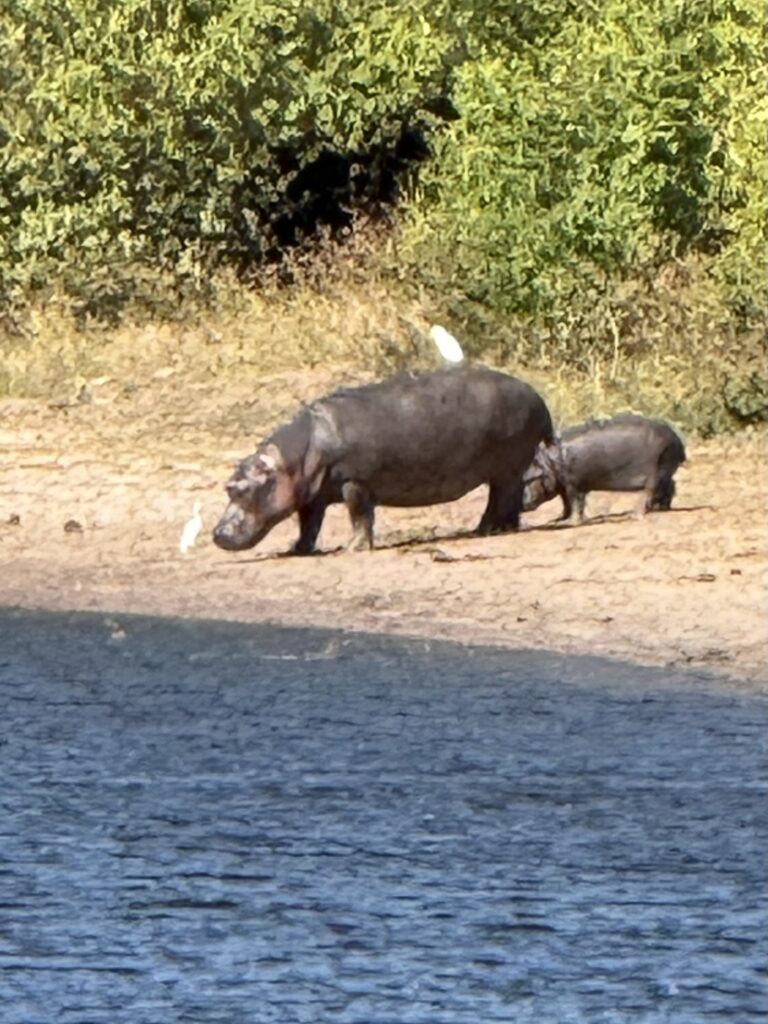
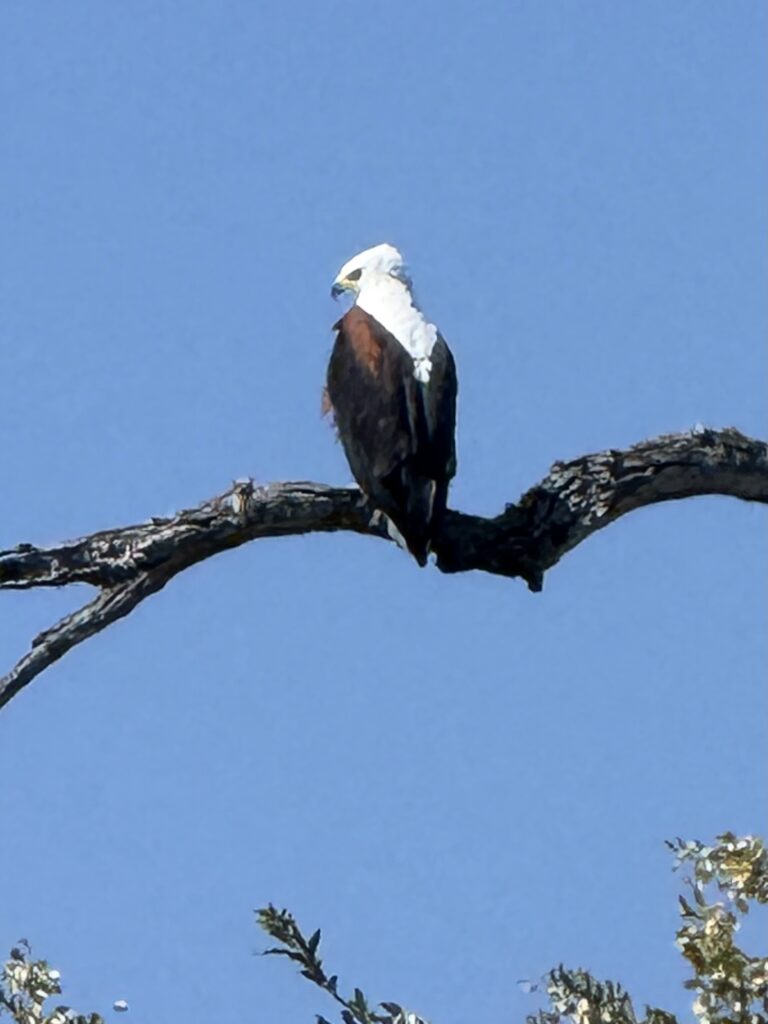
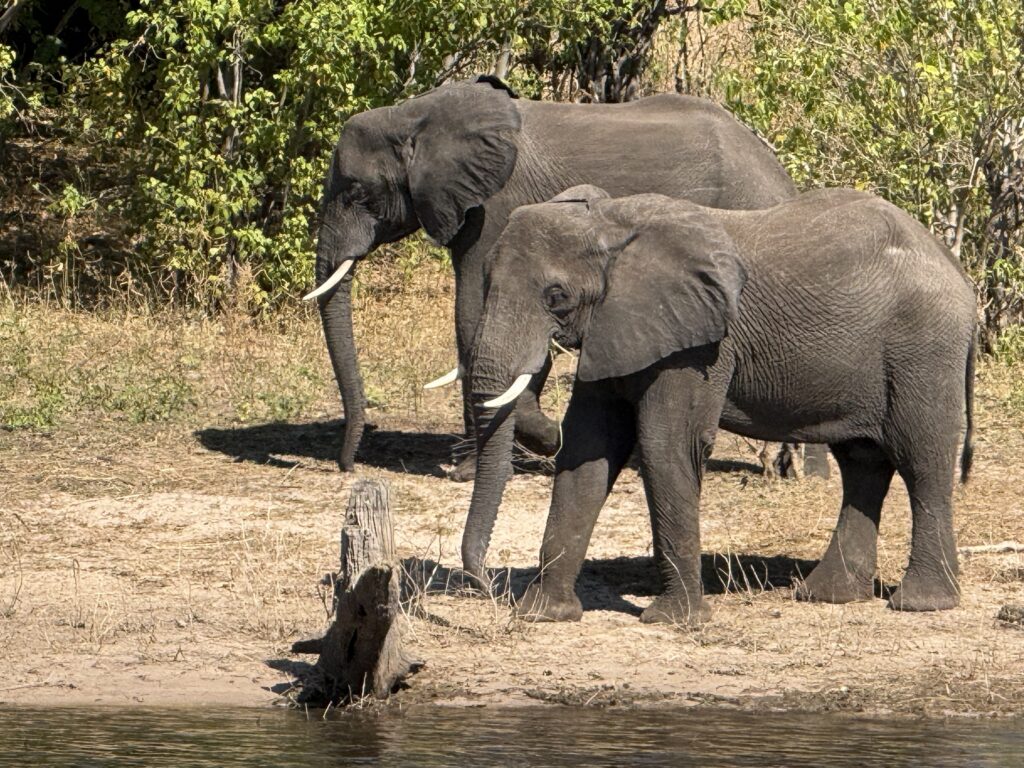
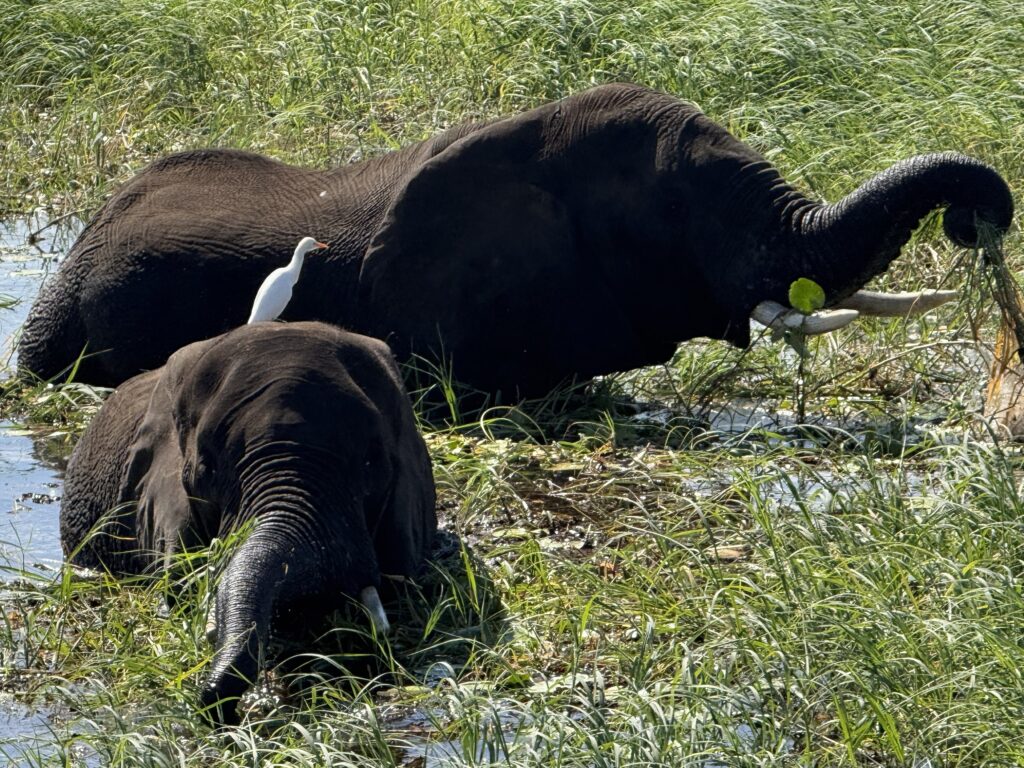
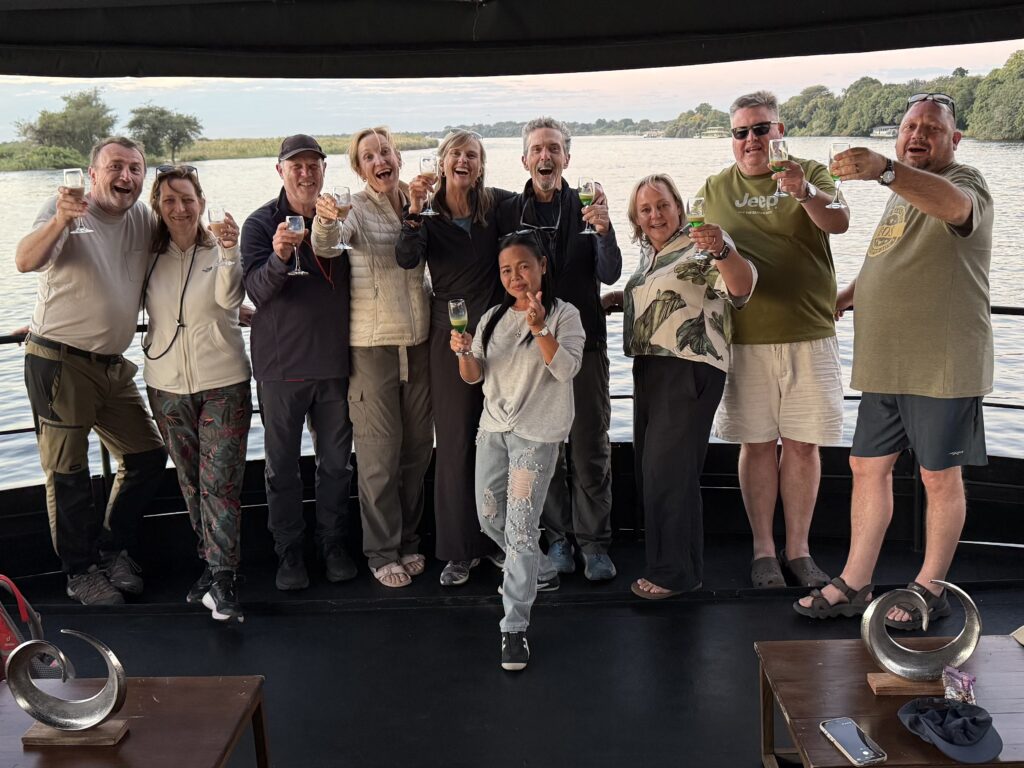
Our cruise on the Chobe River, bordering both Botswana and Nambia and also touching Zambia and Zimbabwe further downstream, was relaxing and exciting with up front encounters of elephants bathing, swimming and eating; hippos basking on the beach; crocodiles sunbathing; baboons and impala drinking; and Karibu storks and African fish eagles manning the airspace. We toast to our experiences with some local drinks: Amarula (like Irish cream) and Springbok (mint flavored served with cream, the shot of choice during Springbok rugby games).
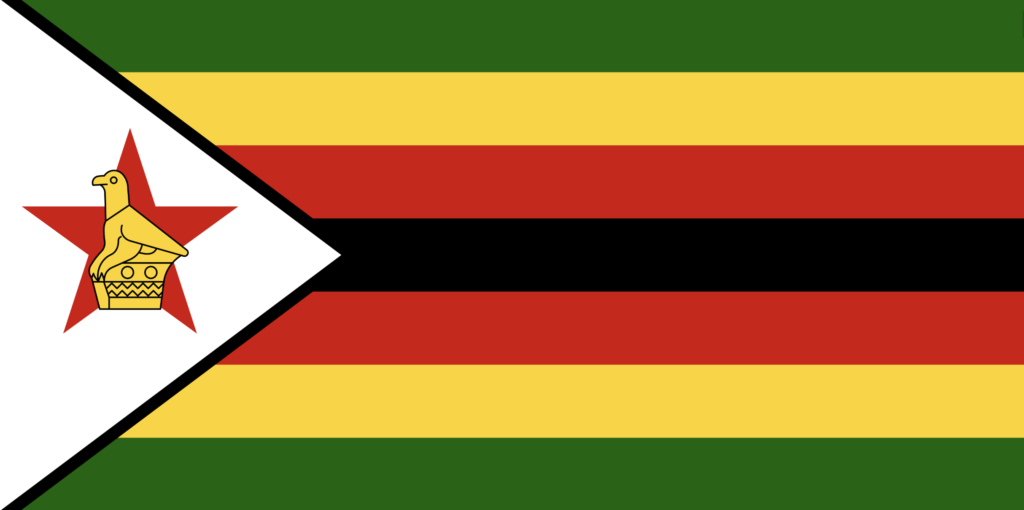
We cross the border into Zimbabwe where they conduct a quick protocol temperature check due to the Ebola outbreak in neighboring D.R. Congo before heading to Victoria Falls. Like Botswana, wild animals aren’t fenced in here so we’re advised not to walk the streets at night due to roaming elephants. Zimbabwe was colonized by the British in the 1890s, naming the territory Rhodesia after its founder Cecil Rhodes. Famous for starting the De Beers diamond company and creating the Rhodes scholarship, he dreamed of uniting Africa with a Cairo to Cape Town railway. Known as the Bread Basket of Africa, Zimbabwe farms were owned by the whites but worked by the enslaved blacks until their revolt, lead by Robert Mugabe who took power in 1987 and ruled for nearly four decades, first as a freedom fighter but soon thereafter as a dictator. In 2000 Mugabe gave black war veterans the authority to violently seize lands from the whites, leading to bloodshed, mass inflation and famine, yet he retained control through rigged elections until 2017 when ousted by a military coup.
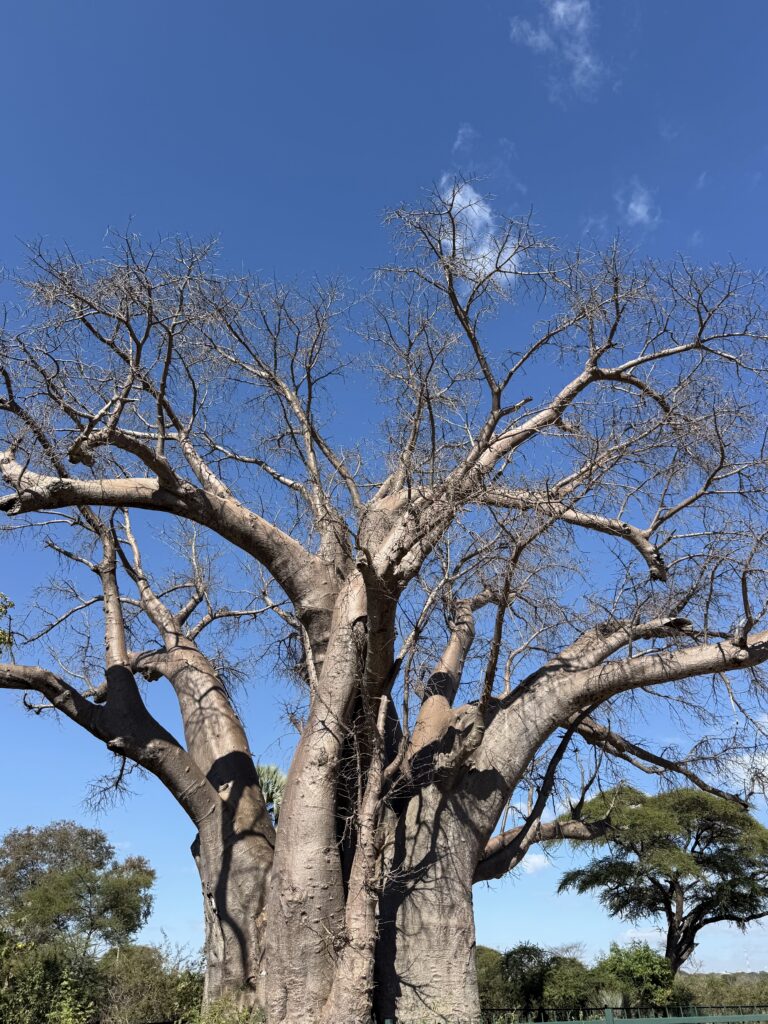
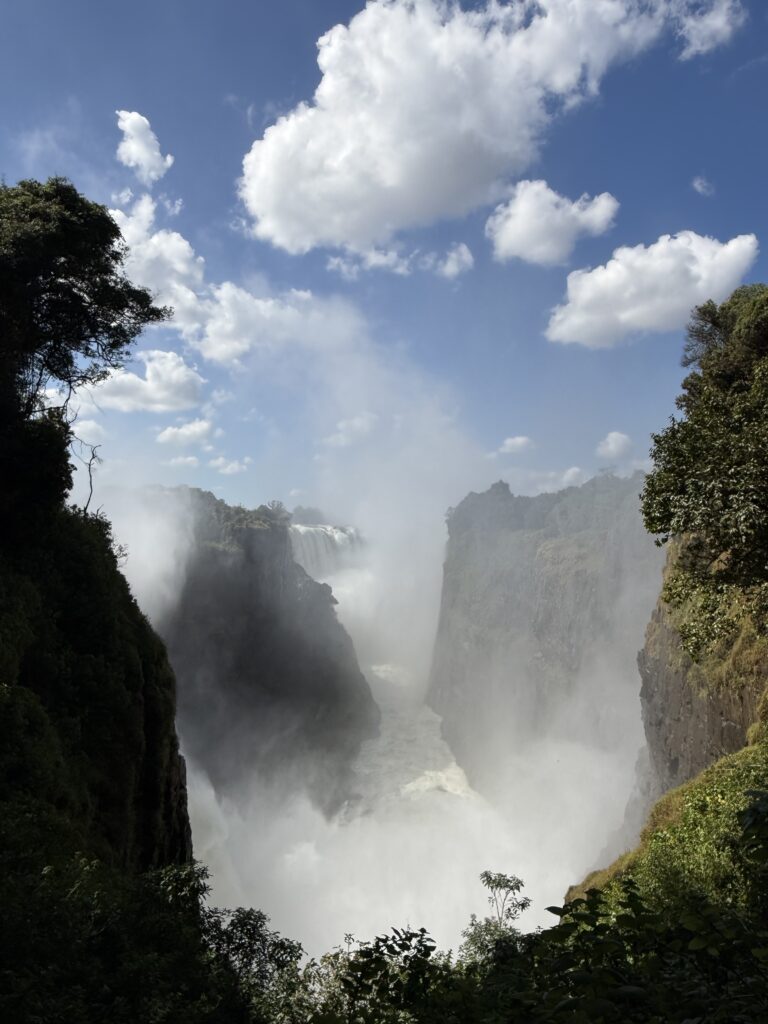
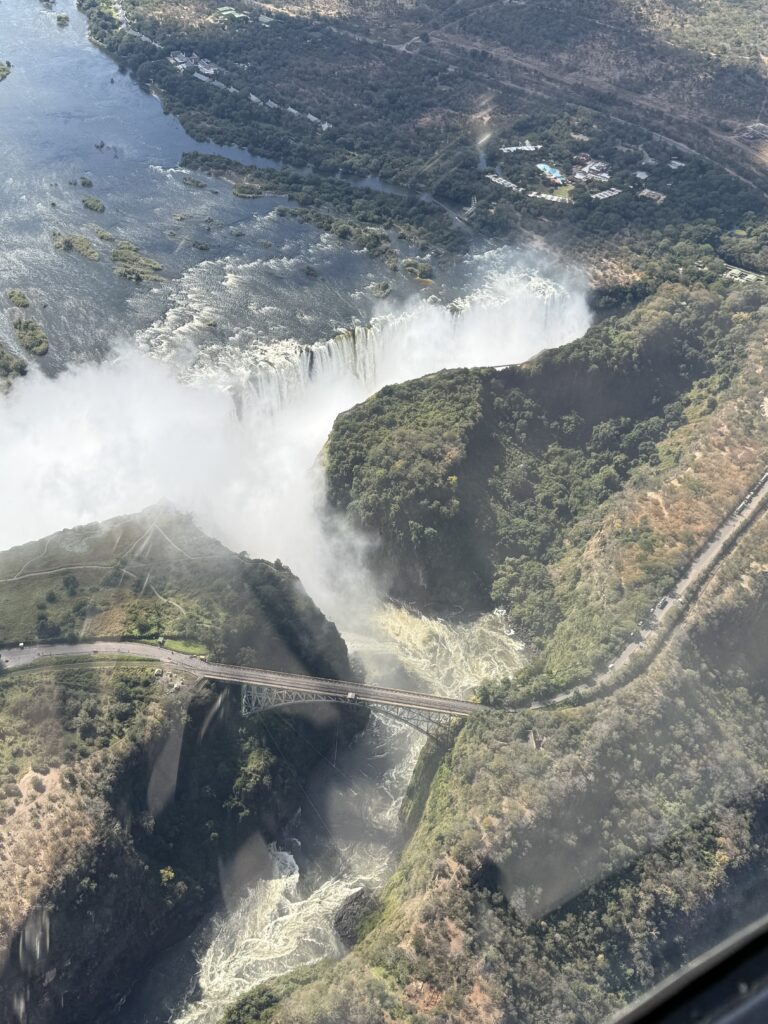
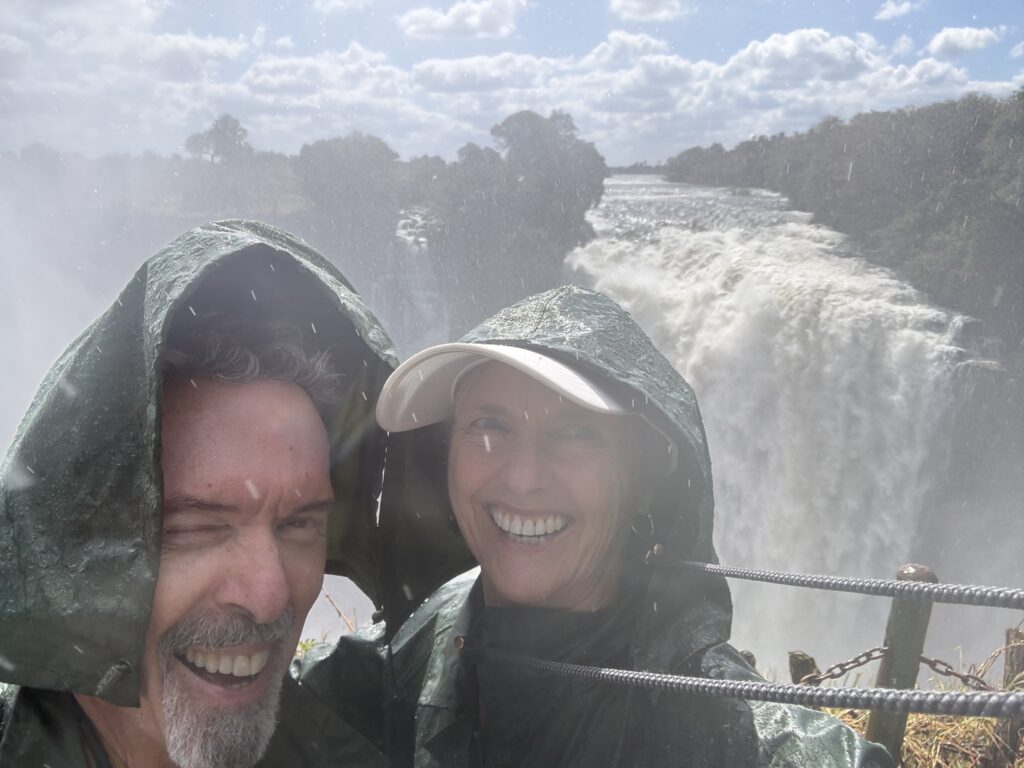
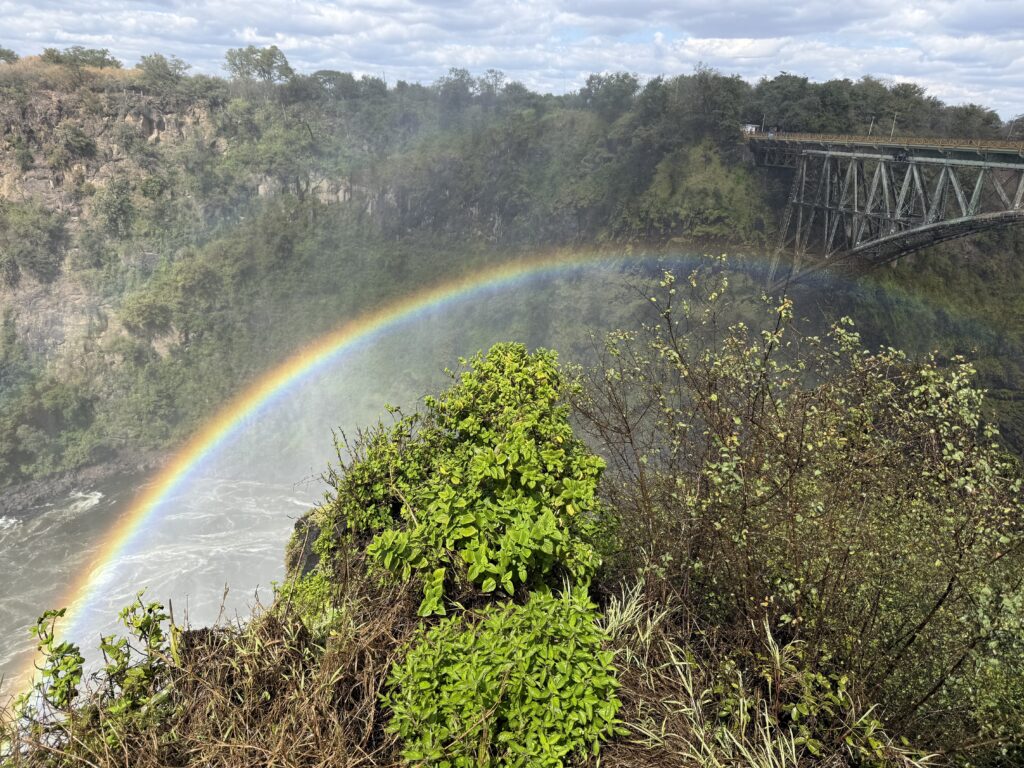
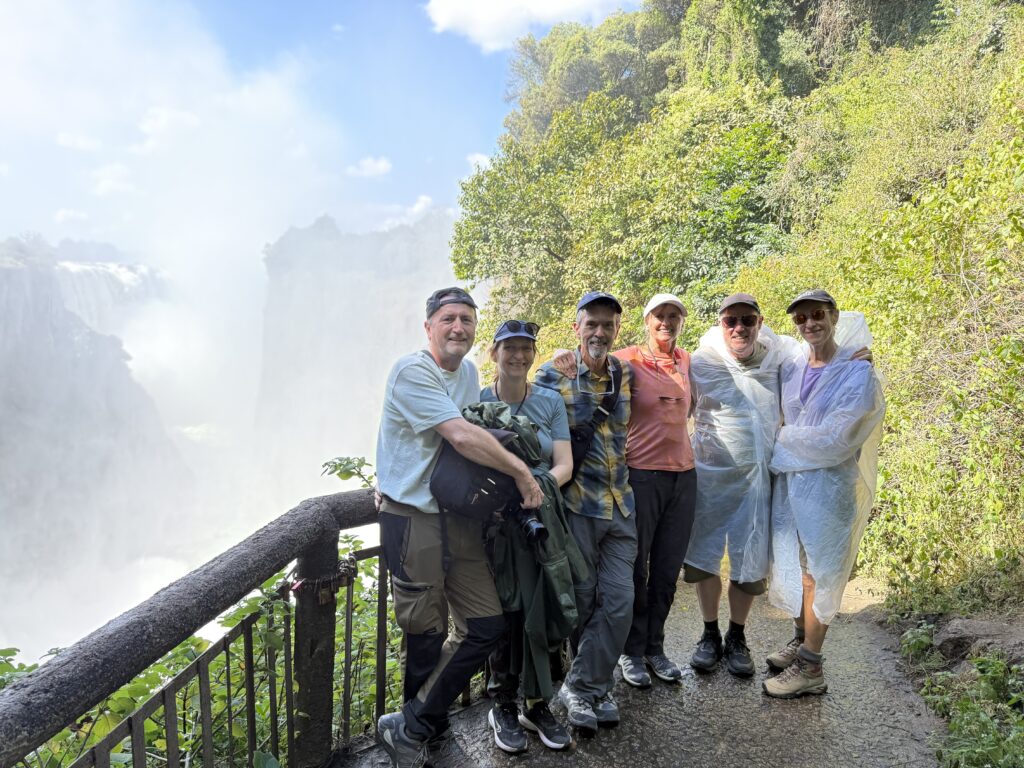
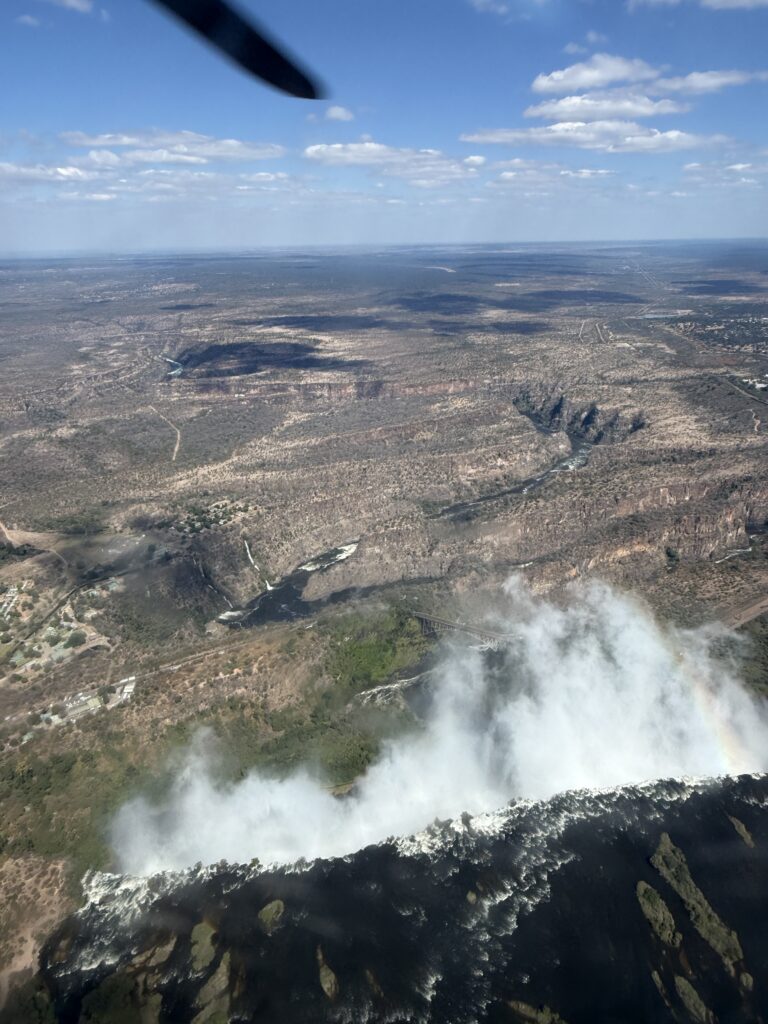
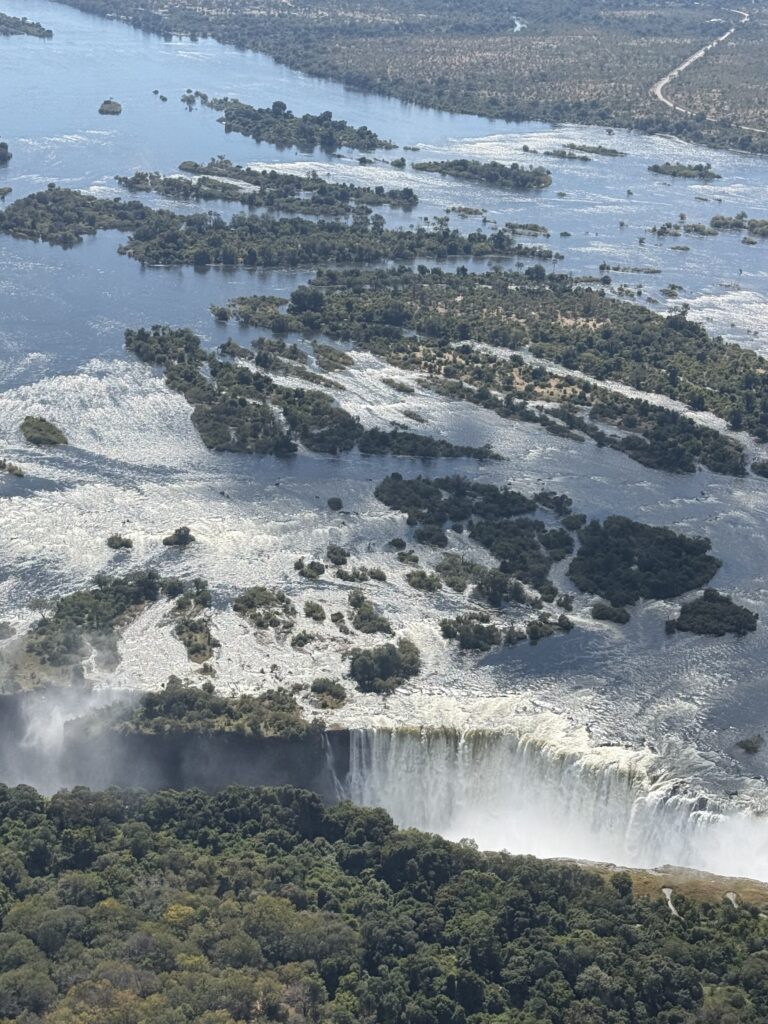
Upon arrival in the town of Victoria Falls, we visit their 1,200 year old baobab tree with its expansive girth before walking the rim of the falls wearing our protective raincoats. Victoria Falls is the largest sheet of falling water in the world, spanning 1,708 meters and dropping around 90 meters over durable basalt rock. From the rim we view the 8 cataracts getting progressively more soaked until there’s water sloshing in our shoes. We enjoy a sundower river cruise above the falls and also take to the skies with another helicopter ride to view the falls and the gorge with the churning Zambezi River, videos running nonstop capturing all the beauty.
This overland trip has been everything we’d hoped for, combining a variety of destinations each with unique culture, wildlife, scenics, activities, and history, covering a daunting 4,704 km (2,925 miles) during which ebooks/audiobooks were key. Every day was a thrill packed with new experiences and we’re grateful to our travel mates and guides for making this the trip of a lifetime!
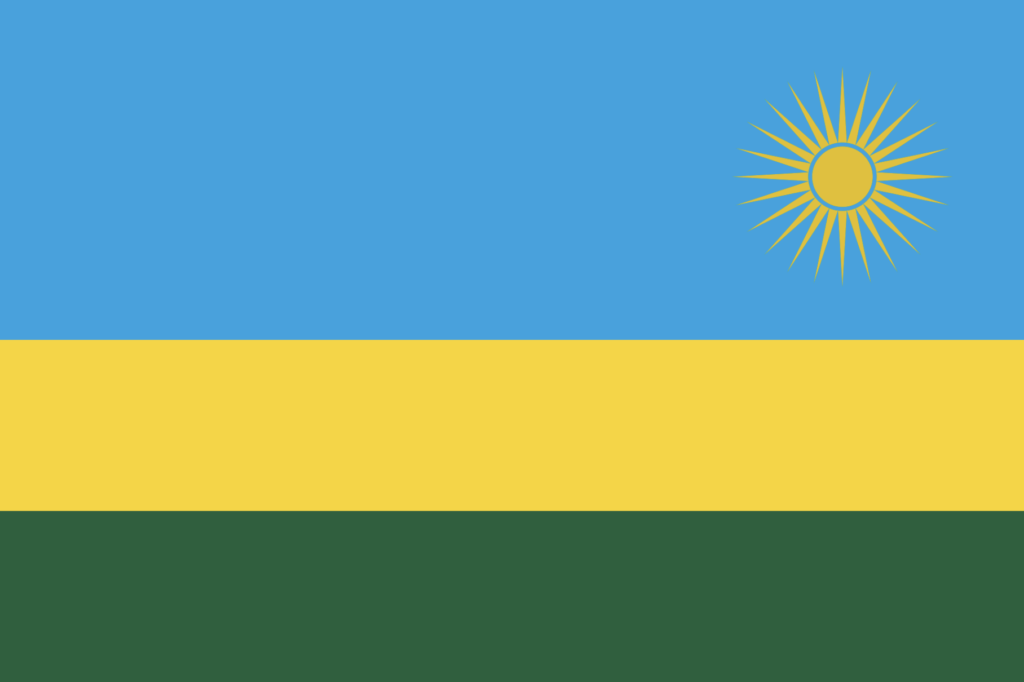
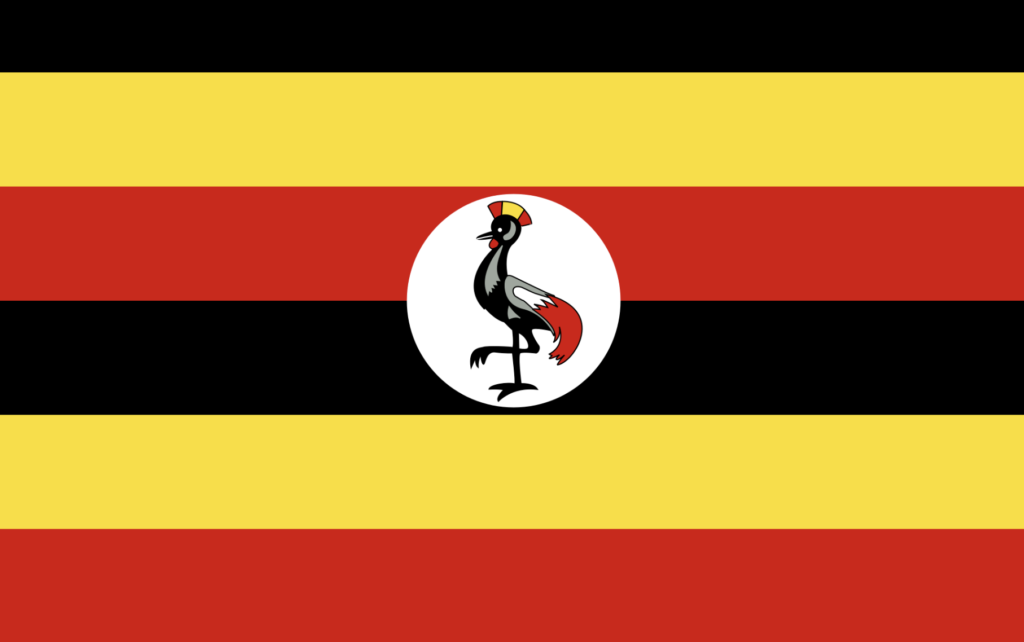
Next up: Rwanda & Uganda
Your odyssey continues to marvel us, Susan & Brian. Thank you for sharing the sights, sounds and historical context of your adventures. Wow! Xoxo Ashley & Ken
Thanks Ashley! Hugs to you both and super congrats to Jake on his graduation!
xo
What an incredible leg, and you’r wildlife pics are beautiful. Thanks for keeping us updated, and that’s a path we’d love to follow some day!
Reach out anytime Ed if you have questions about these destinations! We’re sharing our journey in the hopes of inspiring and educating as well as to slow down the whirlwind and take time to absorb and reflect! Glad you’re enjoying! xo
Will do Susan, and when you head to Vietnam, talk to us because we visited caves there that were extraordinary. Hi to Brian!
Thanks Ed! We’ll reach out when planning Vietnam/Cambodia/Laos in Nov. Working on Japan in Oct at the moment and not too worried about pre planning much for V/C/L but if I need to jump on that boat cruise which Jill did, please send me info! xo
It’s so fascinating and wonderful to catch a glimpse of your wonderful travels. Thank you. The Kalahari section seemed very interesting to me. We had a similar encounter with the Samburu people at the Singing Wells in Kenya a number of years ago in fact we gave a lift to 2 men in full tribal regalia and as they descended one of their spears punctured our tire so we had an impromptu tire change and photo session that I’ll never forget. I have a similar spear in my living room! Ask me how I got it home via Israel!
What an amazing story Beth! I love the visual of these hitchhiking warriors in tribal regalia and road side tire change to boot! Bringing a spear back via Israel sounds impossible – we may have the same spear but ours needs some TLC. Thanks for reading and commenting! xo
Looks like a great group and fabulous adventure! Love your historical commentaries. Glad you have both recovered and are able to fully enjoy your dream trip! Following you vicariously is just my speed right now post my 79th birthday!
So glad you are recovered from your set backs and are in full adventure mode! Love your videos and historical commentary. I’m learning from you each time I read your posts even after hearing many stories from my years at MTS. I’m happy to be traveling with you vicariously now after celebrating my 79th birthday!
Girl! You’re not a day older than 59 – no way! Keep living life to the fullest and don’t let any age get in the way! Glad you’re enjoying our blog and it takes you vicariously back on the road! Big hugs to you both xo
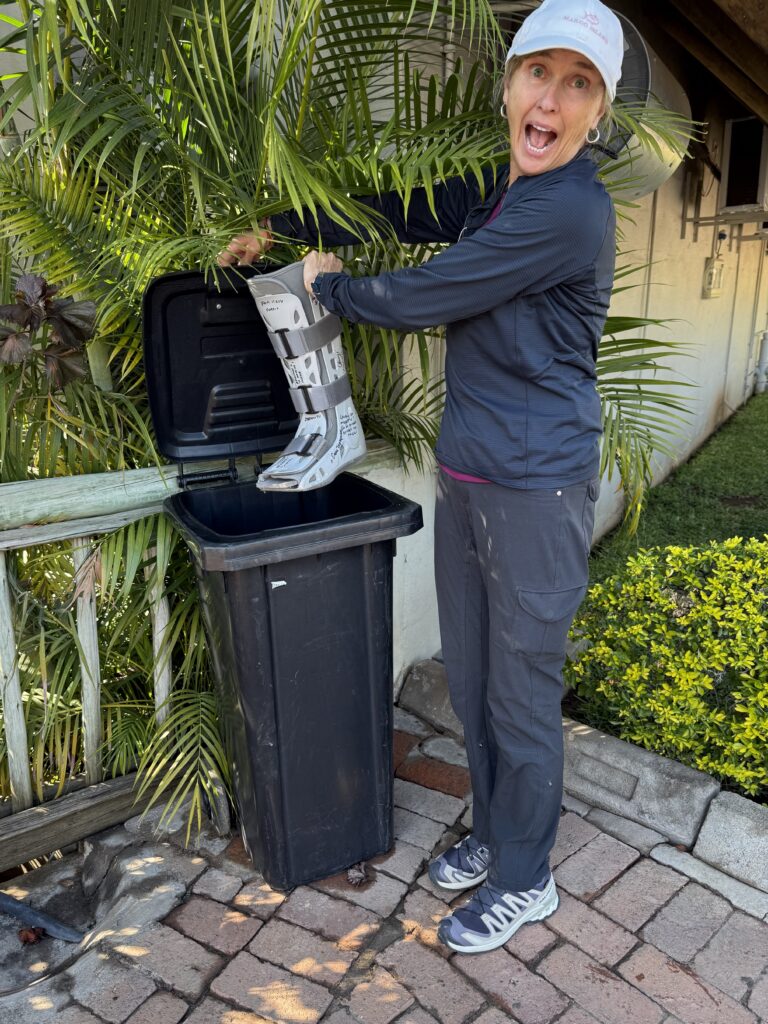
Just wow!! Climbing the dunes in a boot & Brian recovering from his illness, all the while continuing to adventure travel is nothing short of amazing. I really love reading your wonderful writings about the interesting & historic facts of all the places you visit.
Will you be visiting Allen Bechky during your Africa travels? I think he’s living in Uganda or maybe he’s in Thailand now 😉
Stay safe, you two!
Lisa
Thanks Lisa – glad you’re enjoying our blog! I believe Allen Bechky now lives in Florida, having left the continent. He used to own the Villa Gorilla in Rwanda. Big hugs! xo