
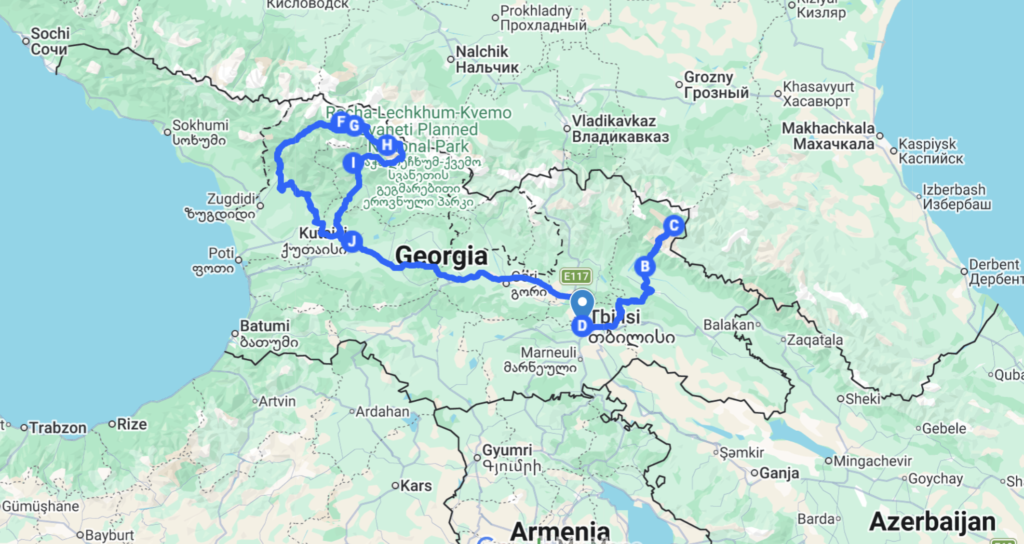
As our journey continues, we are lured to Georgia to hike the rugged Caucasus Mountains and hang with friends from the past. Nestled between the Black Sea and the Caspian Sea, this region known historically as Iberia acted as a thoroughfare for the Silk Route, enduring waves of invaders over the centuries as well as currently, despite the formidable Caucasus ranges providing natural defense. Being at the crossroads between Eastern Europe and Western Asia, the region has been conquered most notably by the Romans, Arabs, Mongols, Persians, Ottomans, and Soviets, all leaving their cultural impact and fueling a desire for self-determination, finally realized in 1991 when they gained independence after the fall of the Berlin War. The struggle continues however as the Putin-led Russian Federation hovers threateningly. The tome The Eighth Life by Nino Haratischvili spans the 20th century of Georgian history through the lives of six generations, a great background read.
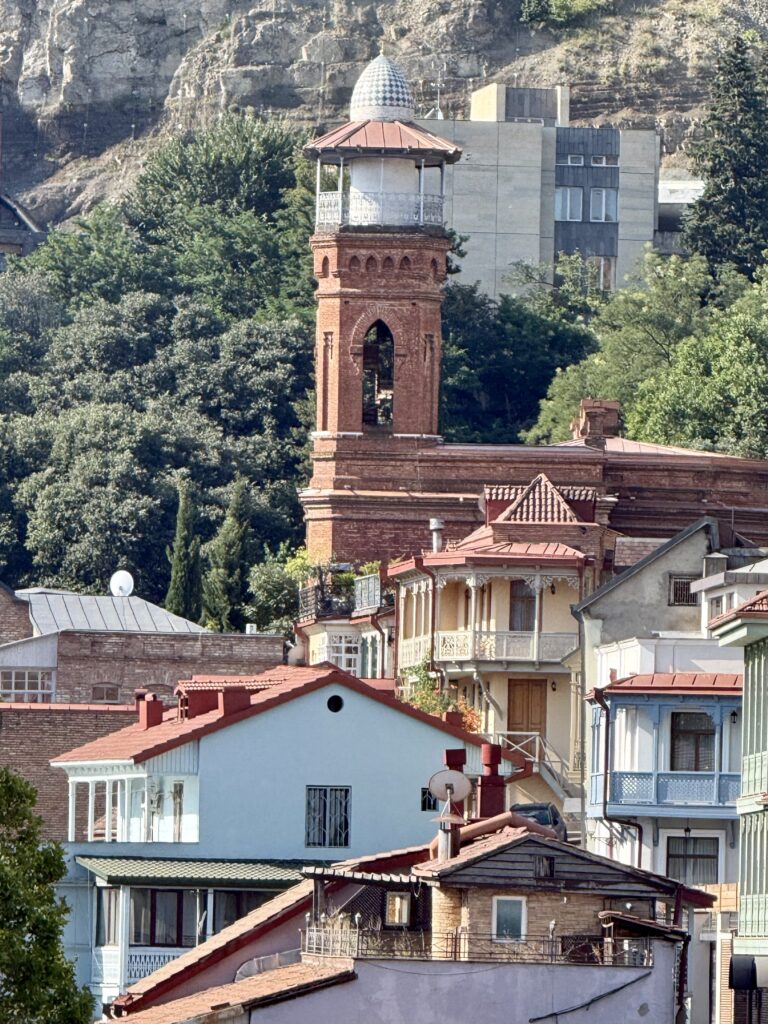
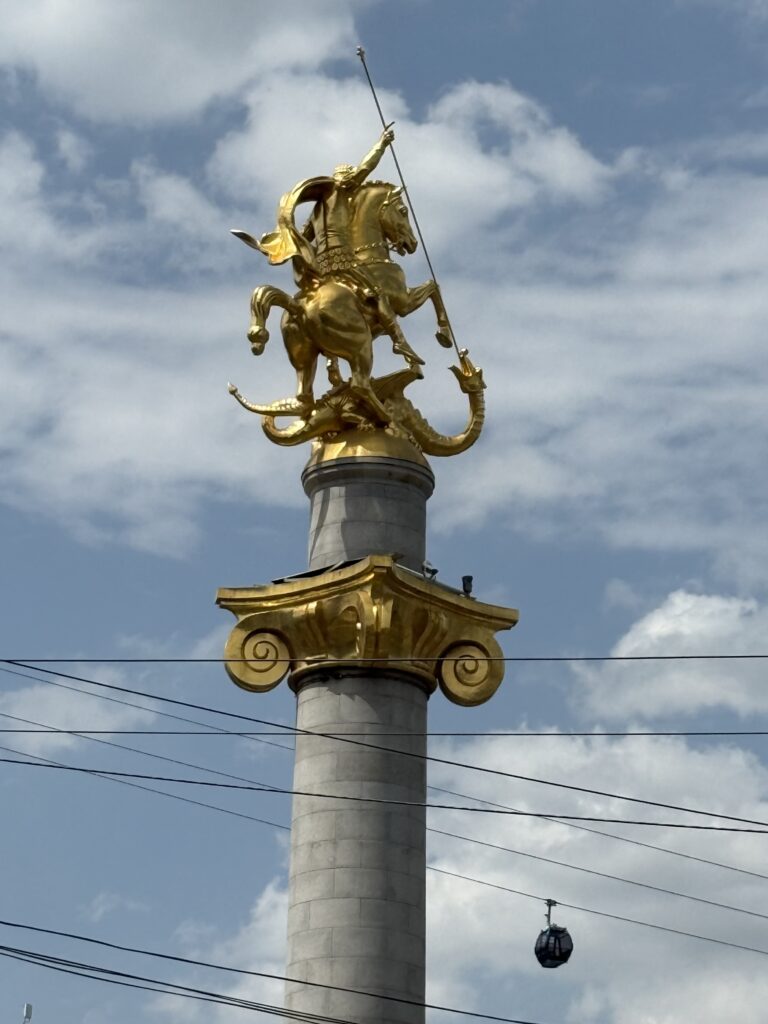
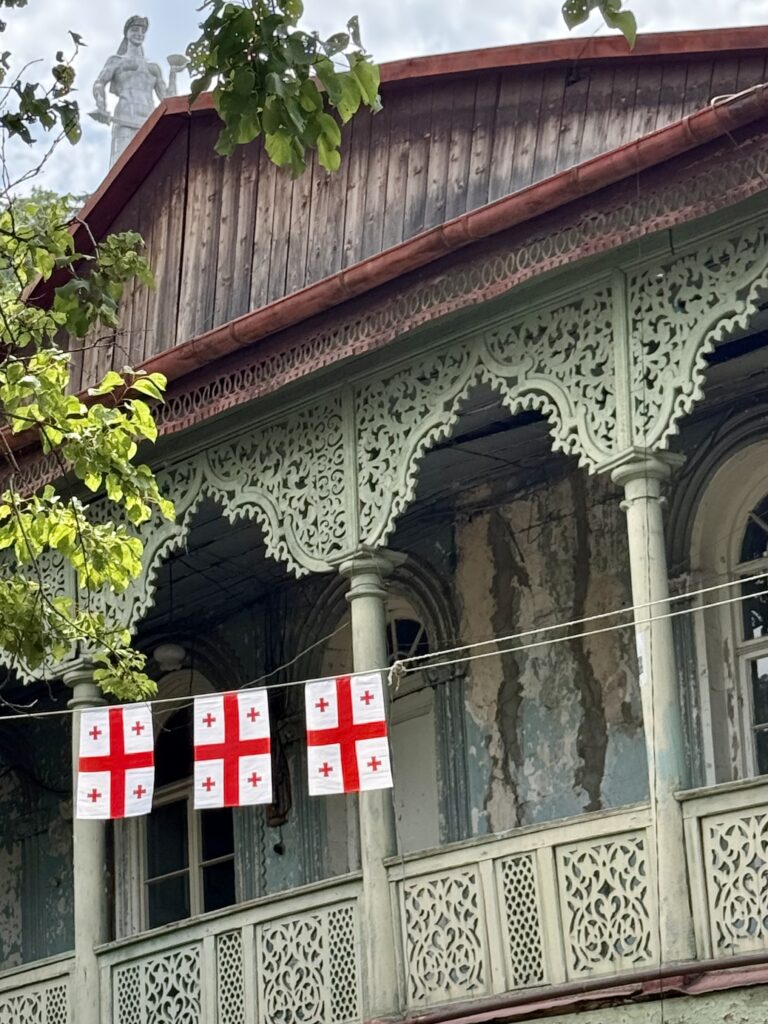
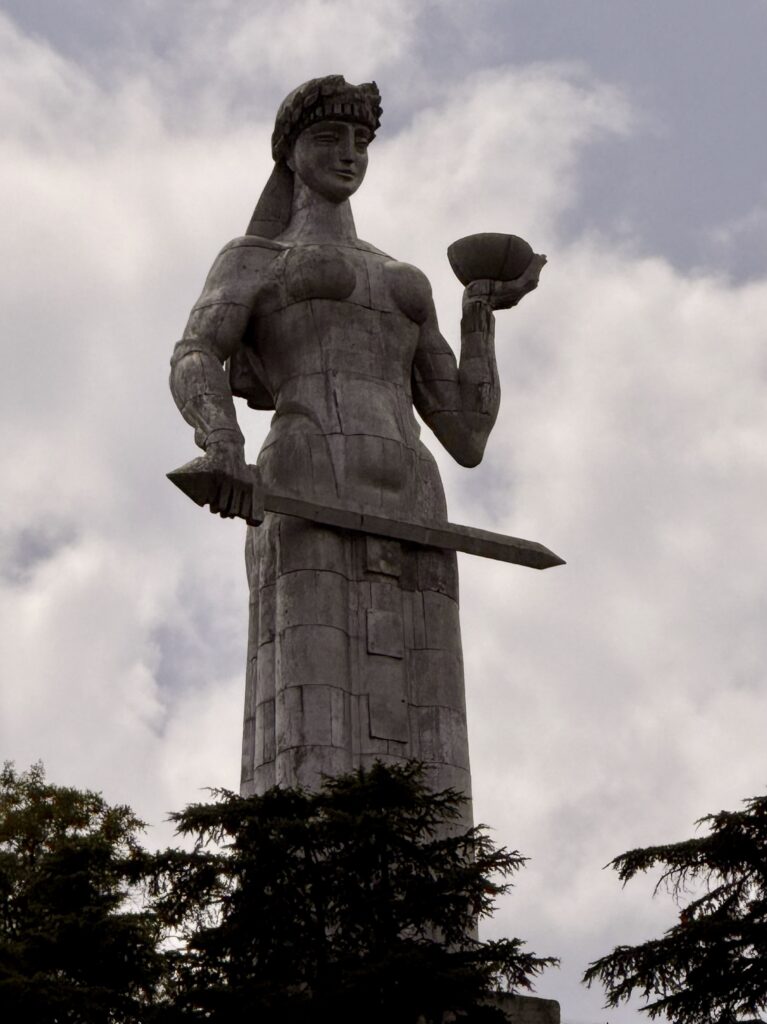
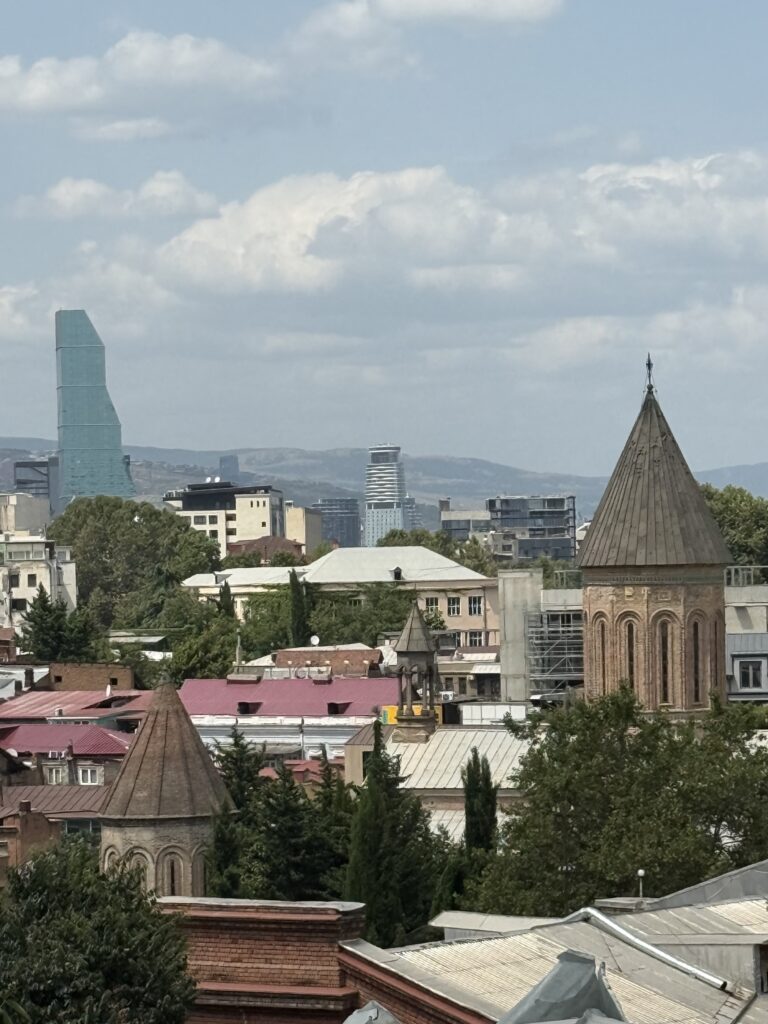
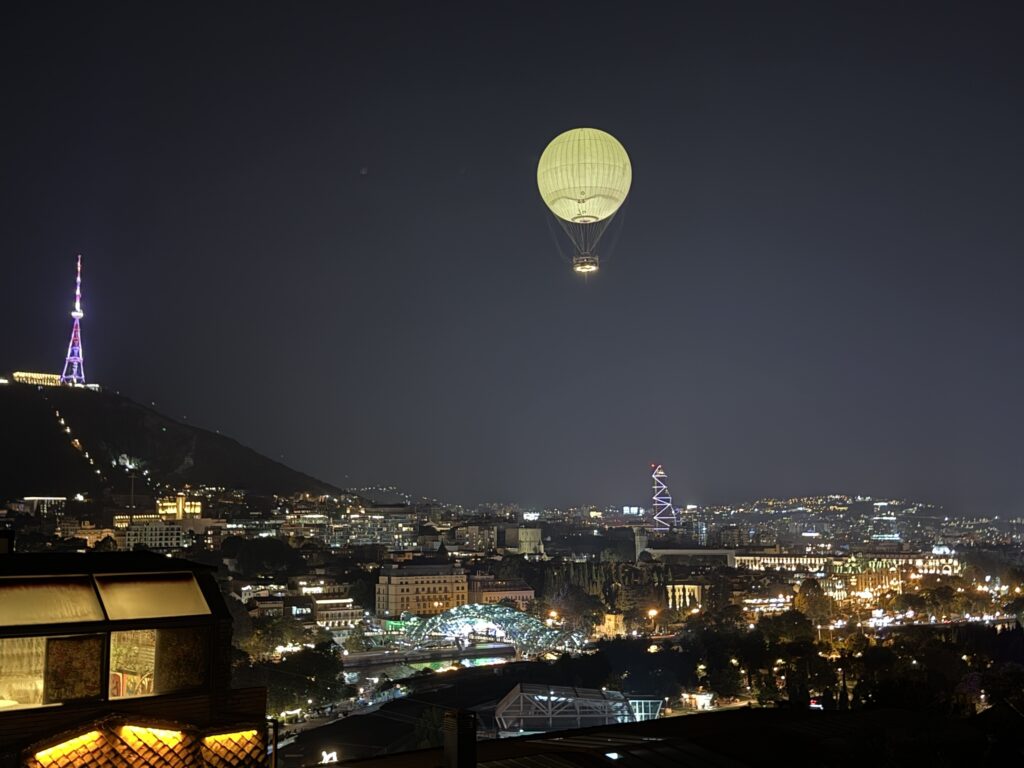
Tbilisi is a vibrant capital with an interesting blend of new and old ideals and architecture. With the Mother of Georgia statue overseeing the city from on high, holding a cup of wine for friends and a sword for foes, she is the embodiment of Georgian culture, emphasizing their hospitality and patriotism. Restaurants spill out on cobblestone sidewalks in European fashion while Orthodox churches nestle amid the neighborhoods, their steeples dotting the skyline. In contrast the pedestrian Bridge of Peace spanning the Kura River is a splash of glass by day and lights by night which, combined with colorful towers and futuristic governmental buildings, bring modernity to this 5th century city.
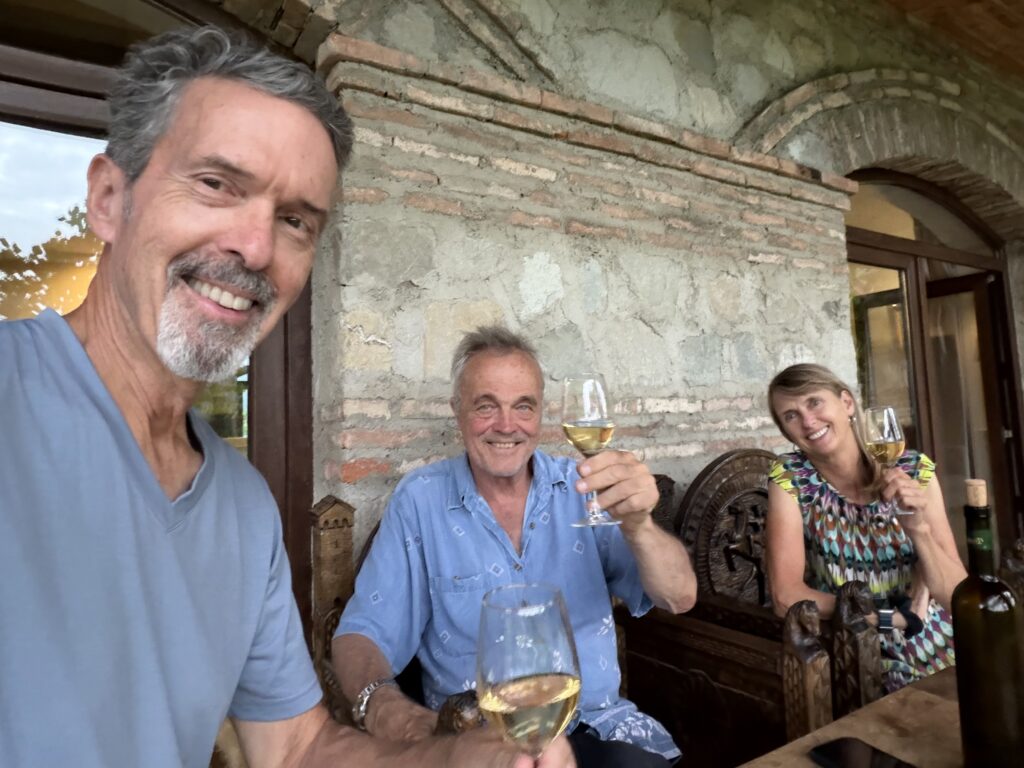
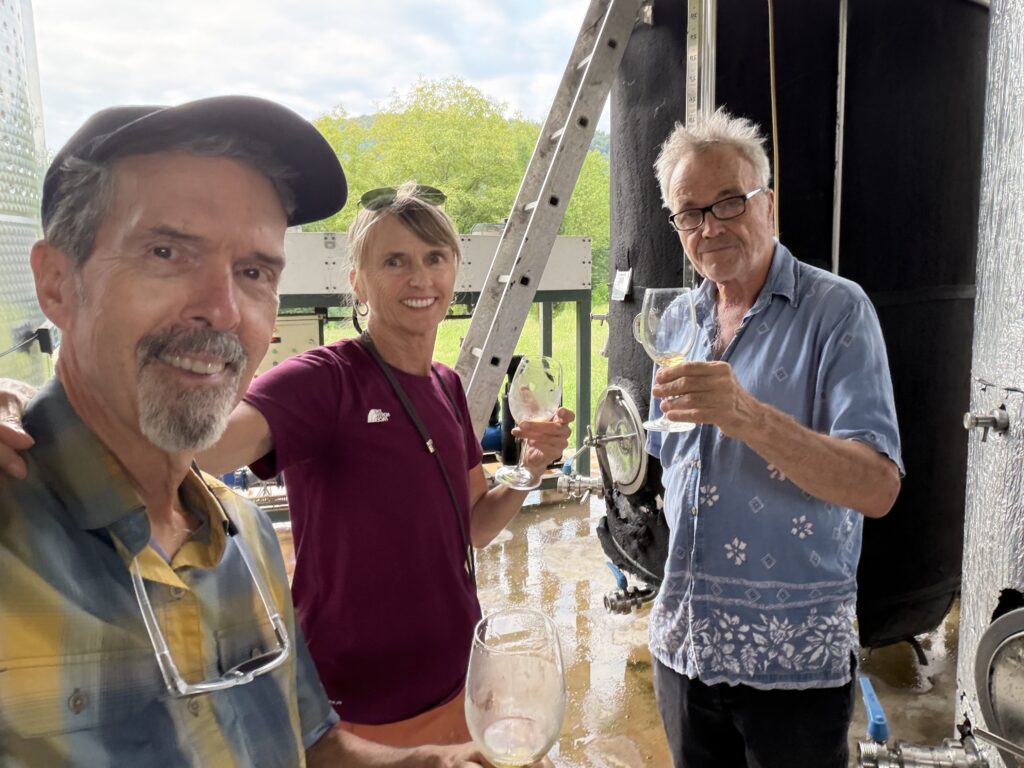
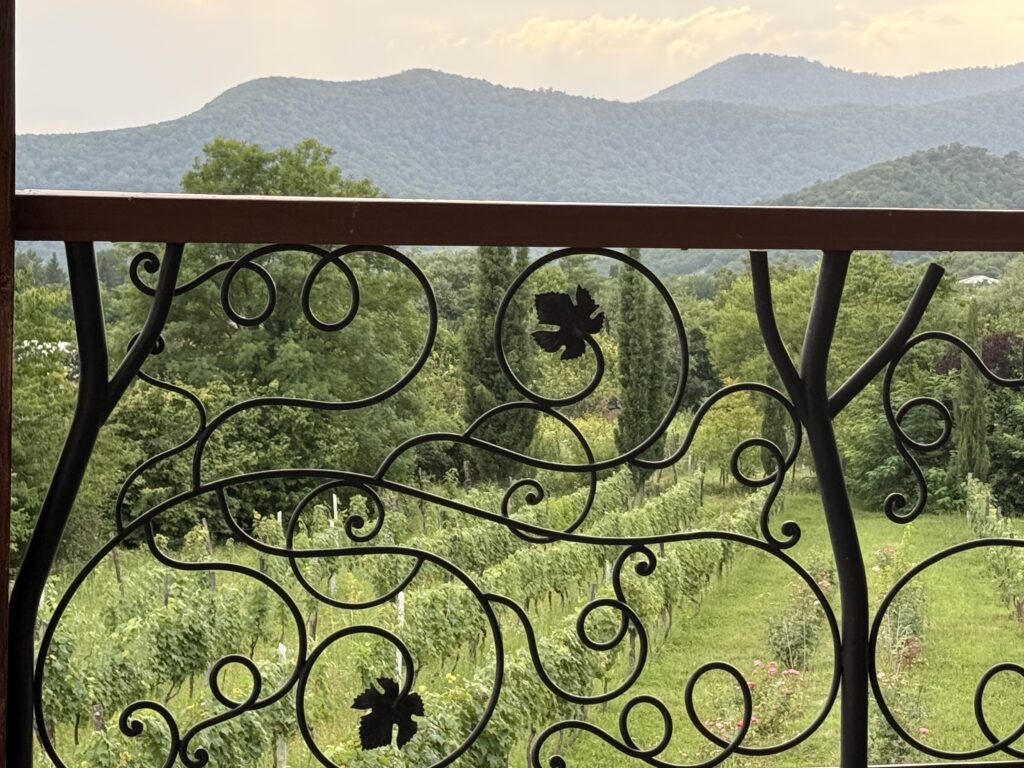
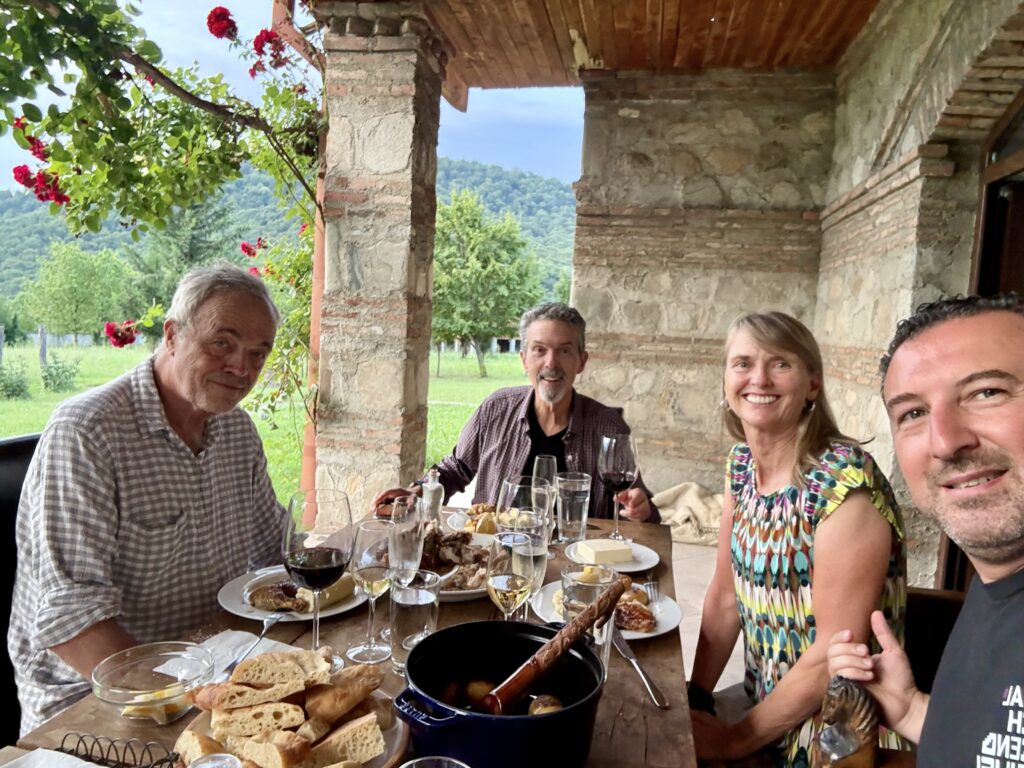
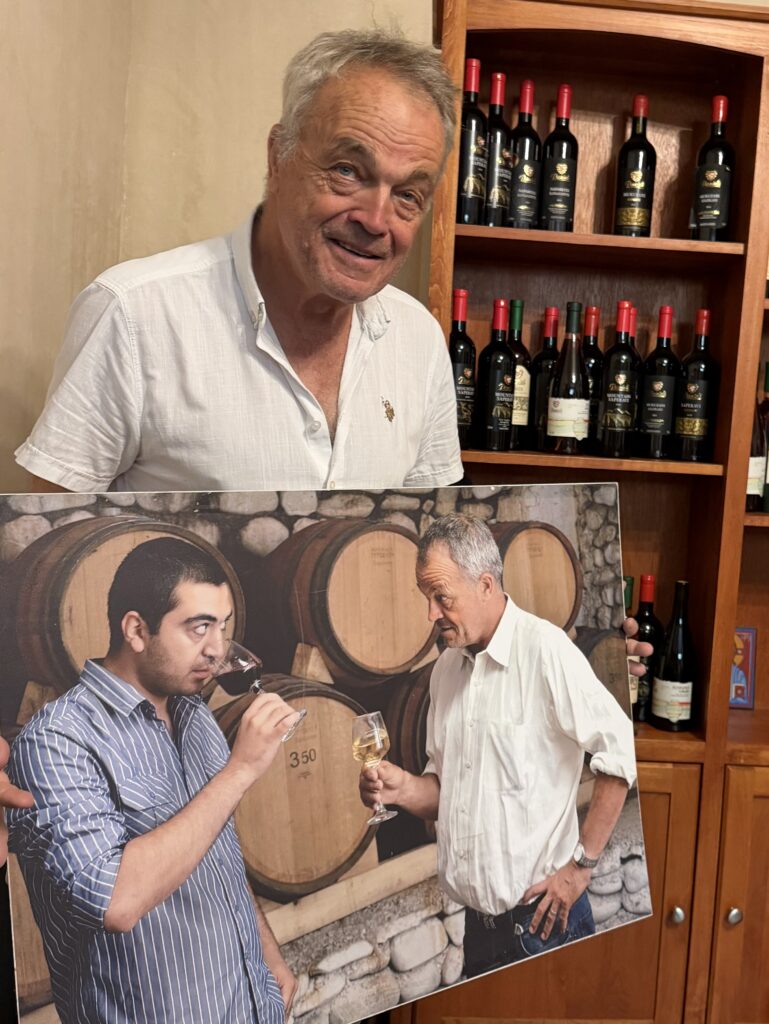
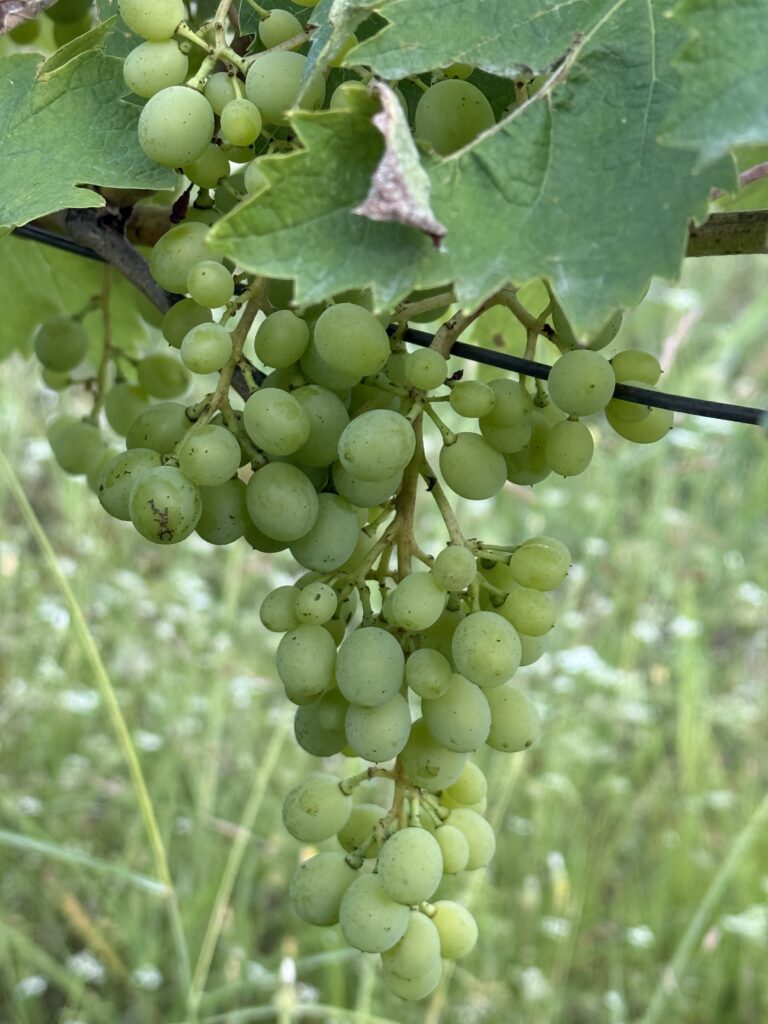
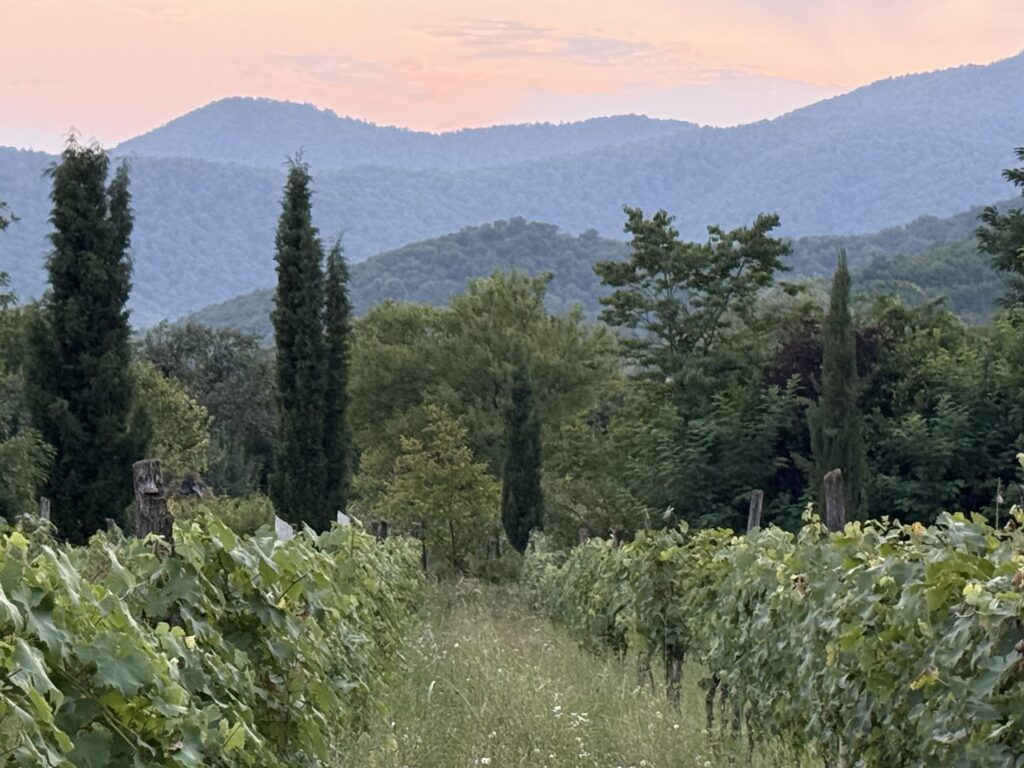
We connect with our former colleague from Mountain Travel Sobek, Olaf Malver, who designed and led our global sea kayaking trips before falling in love with his Georgian wife and her country over 20 years ago. Olaf has led a rich and diverse life as a swashbuckling adventurer leading clients into untouched corners of the world while garnering an endless stream of stories. This Renaissance man is also a nerdy winemaker, applying his PhD in Organic Chemistry to drive their award-winning winemaking at Danieli Winery. Plying us with philosophical discussions, food, and wine, it seems he’s living his best life here in Georgia, thoroughly inspired by and smitten with his adopted homeland. Sipping a glass of Kisi on his patio with the sun setting over grapevines listening to Georgian polyphonic chants, he has me convinced, and our trip has only started.
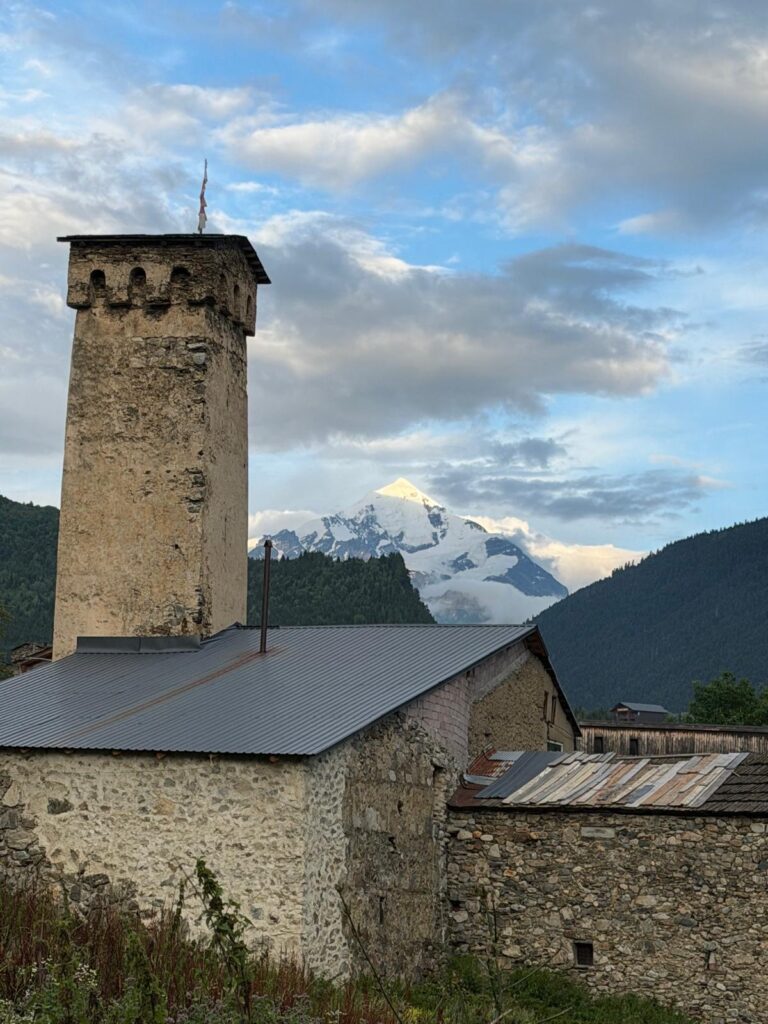
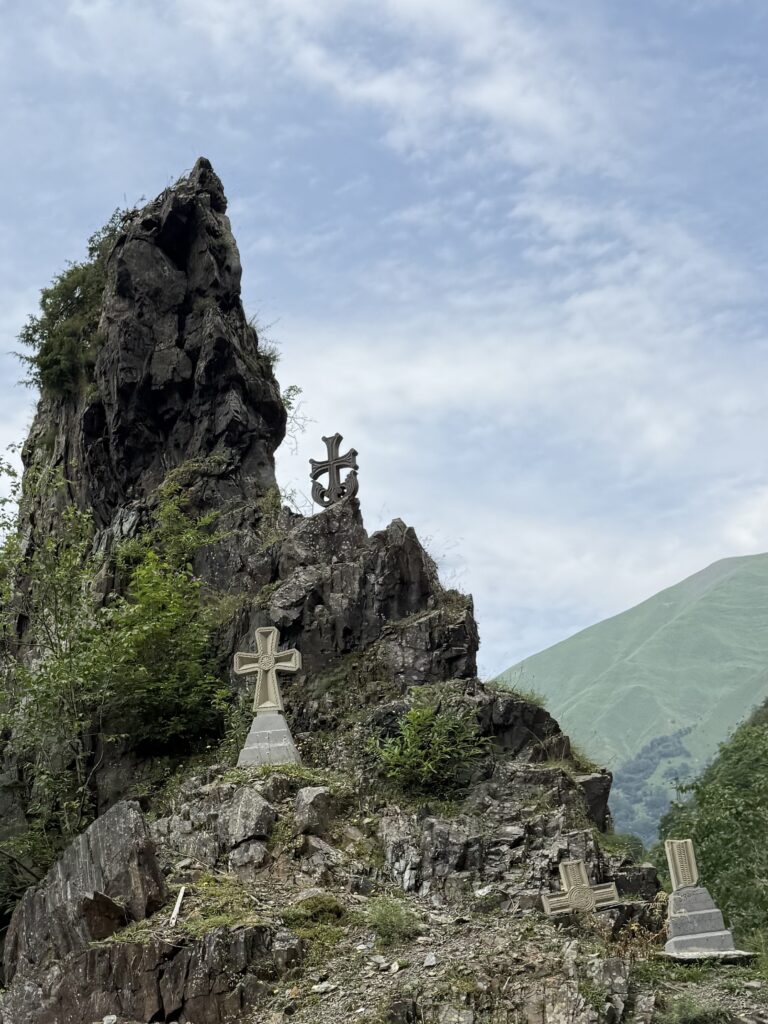
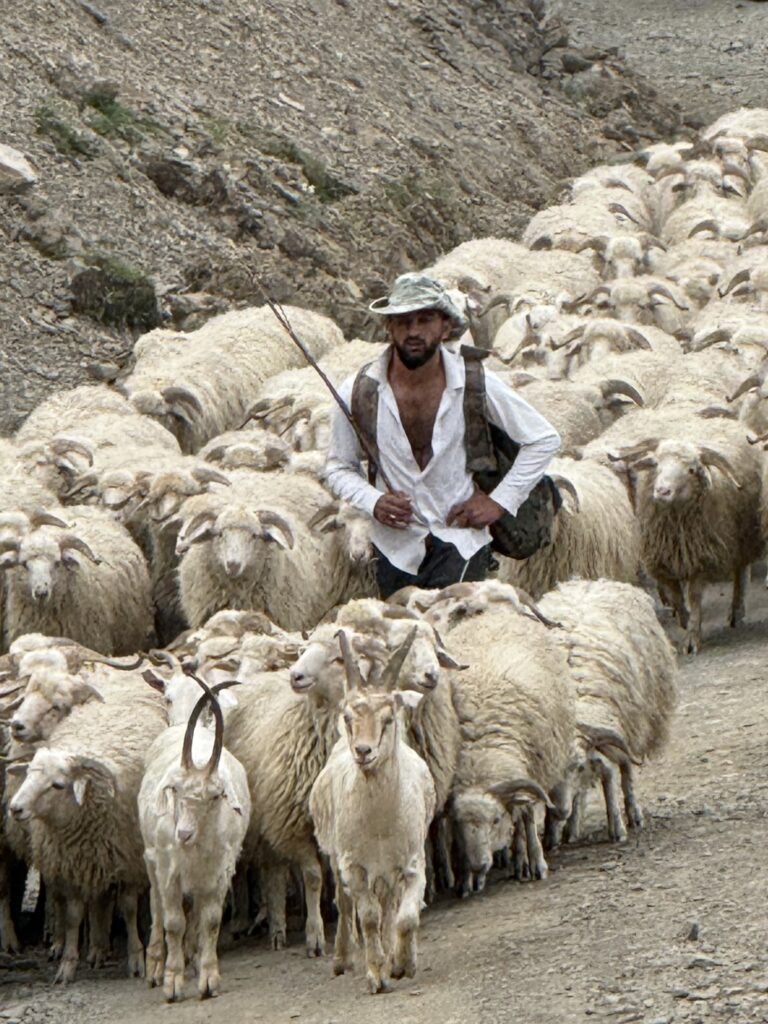
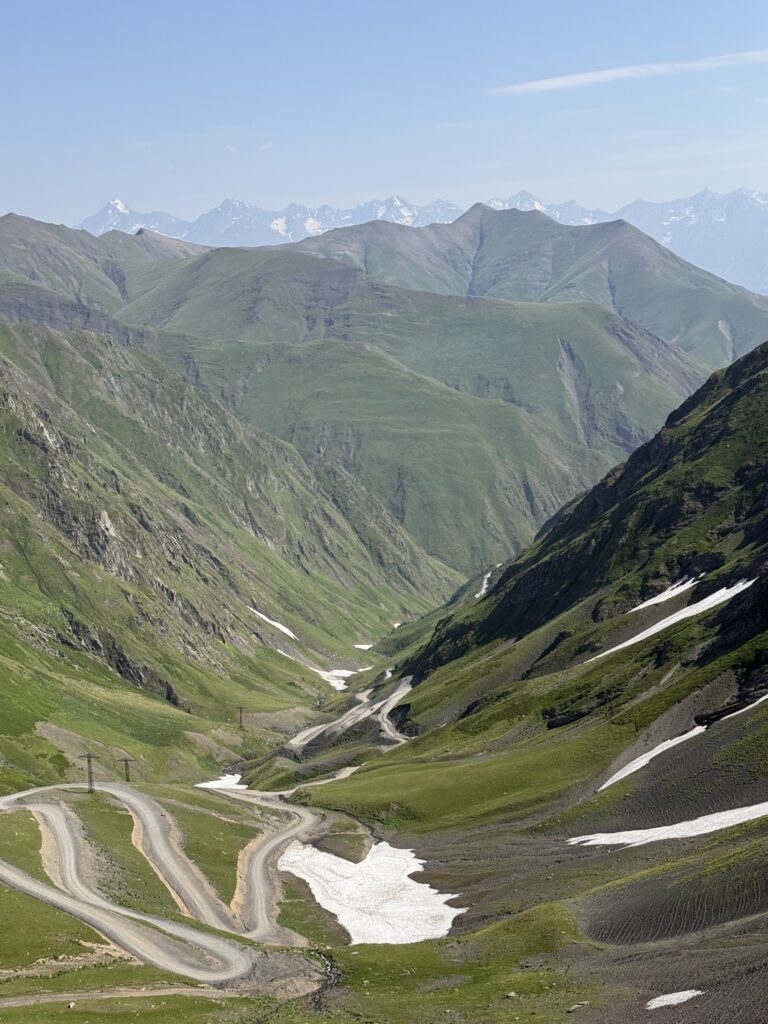
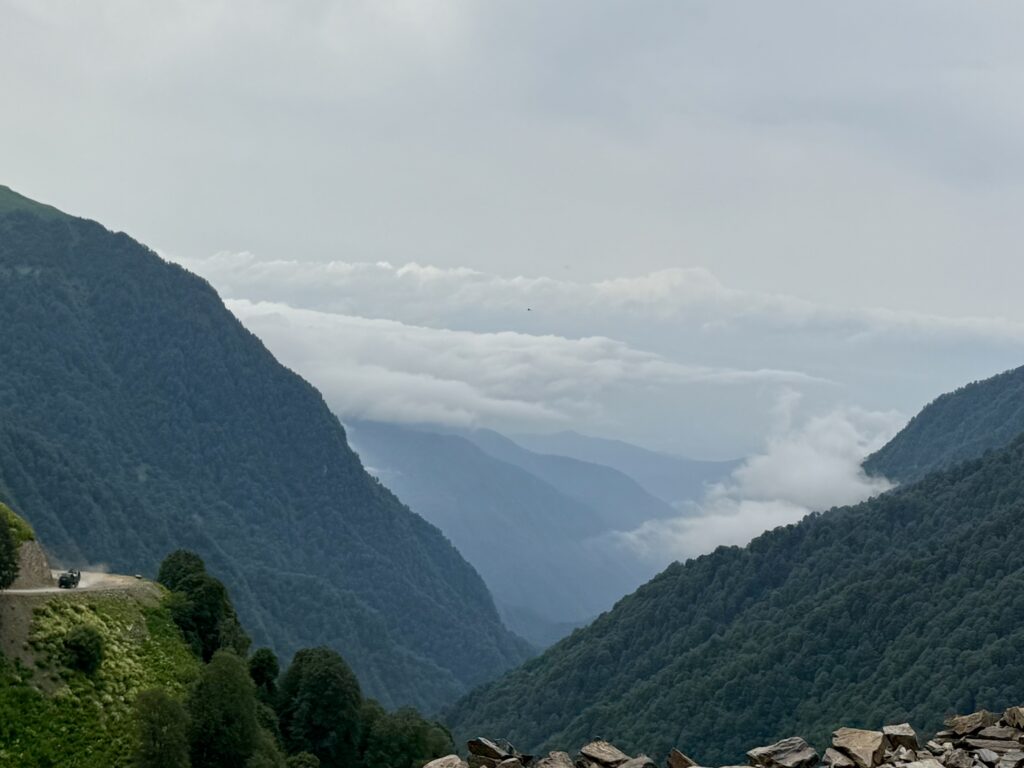
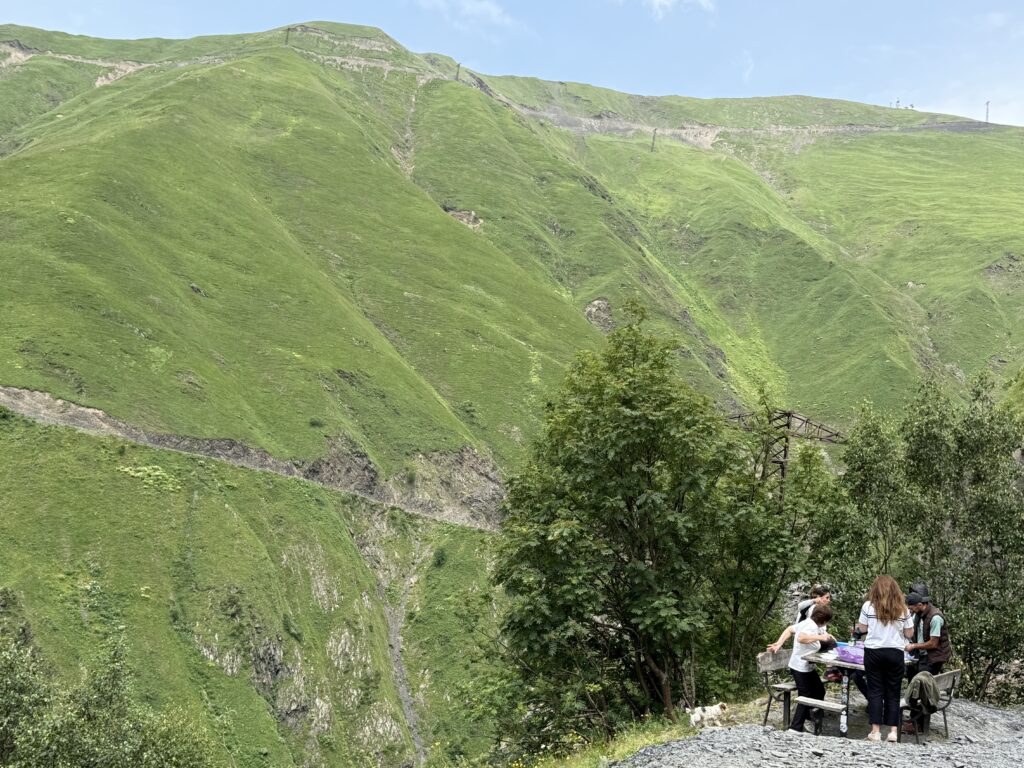
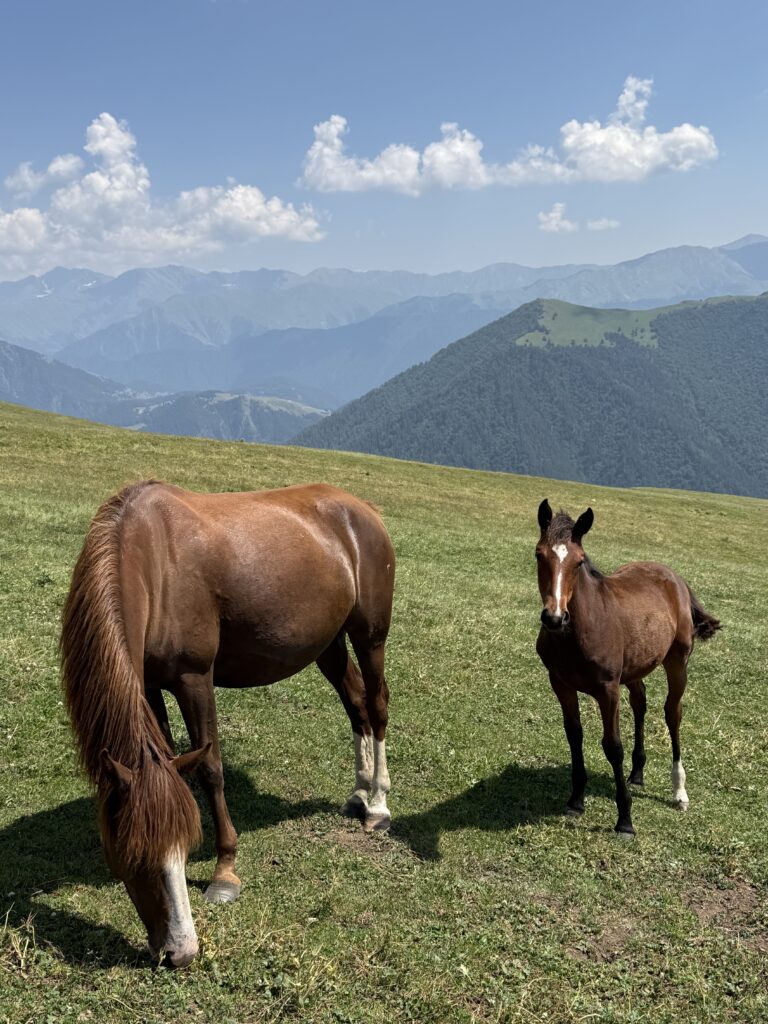
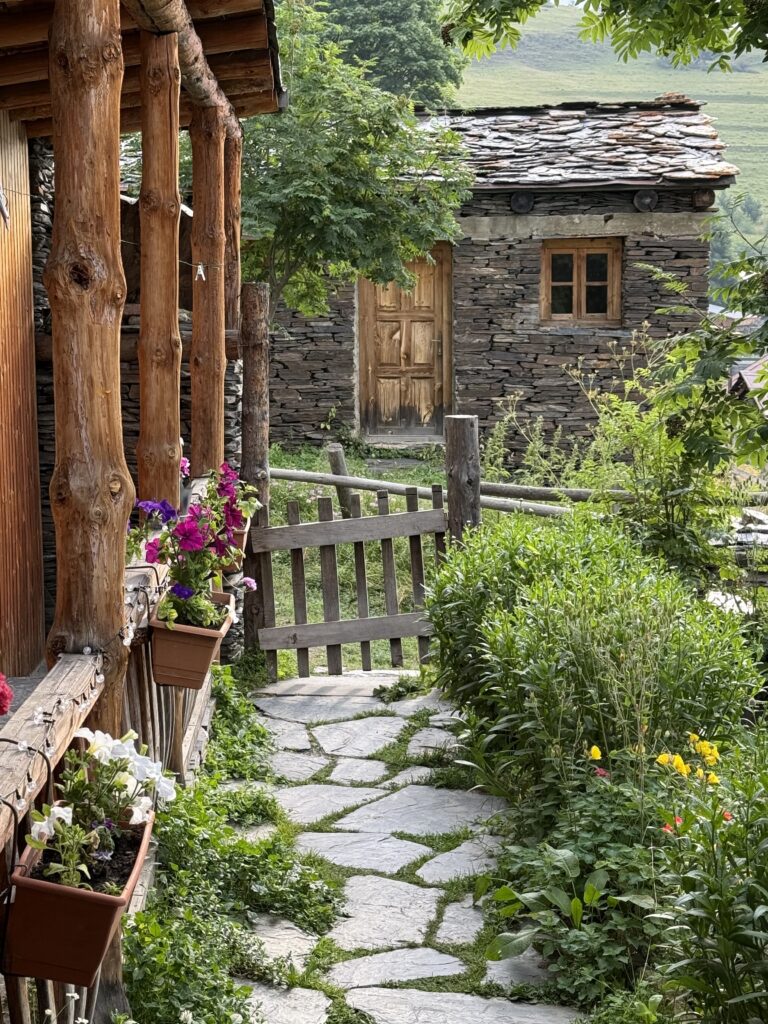
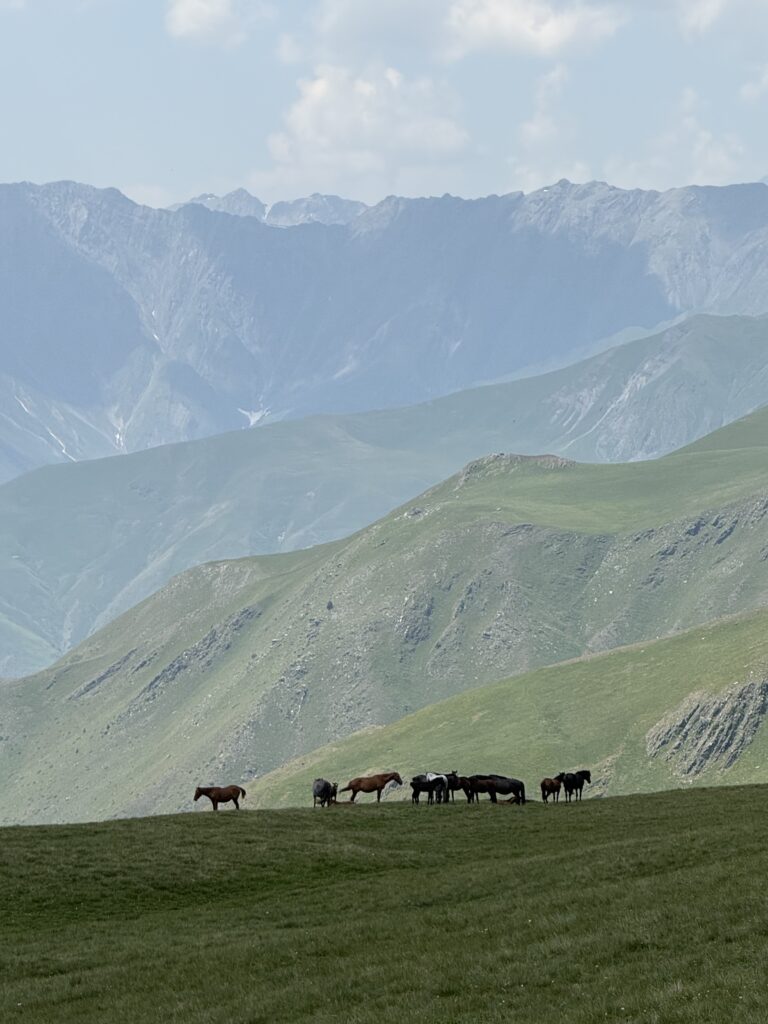
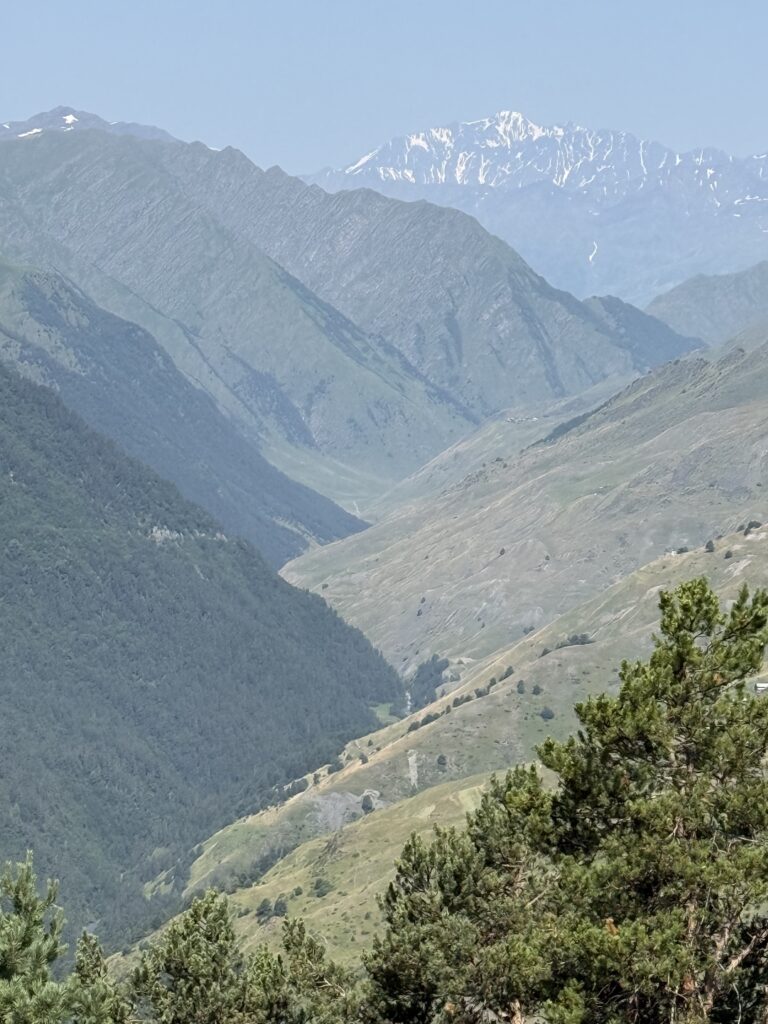
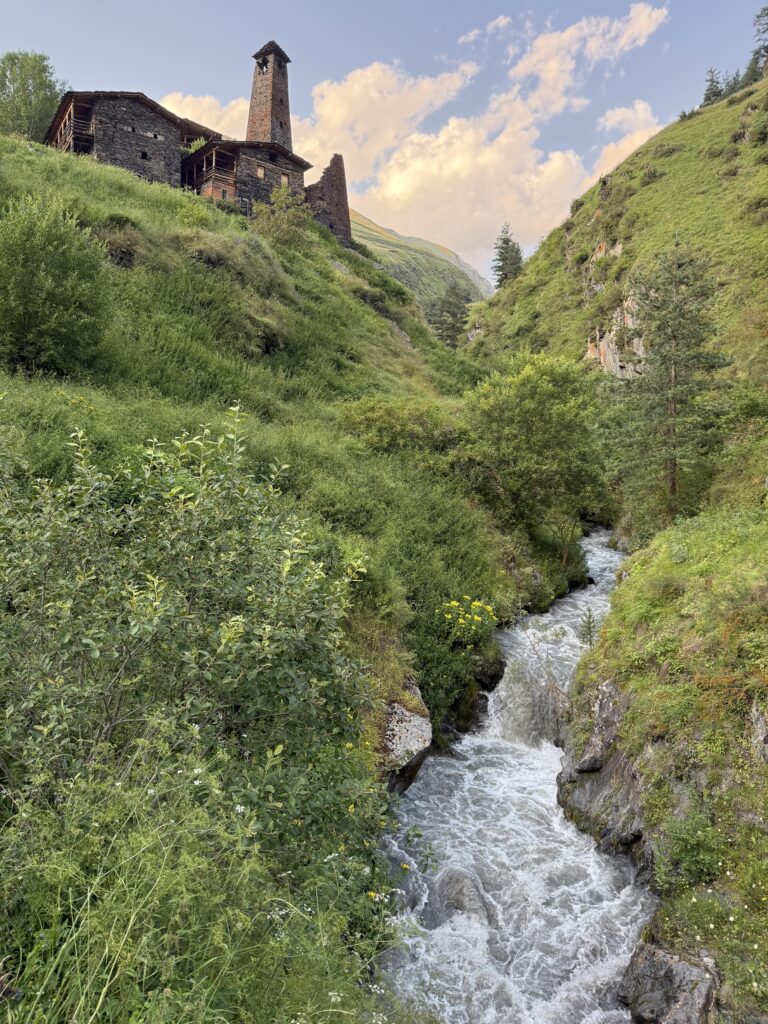
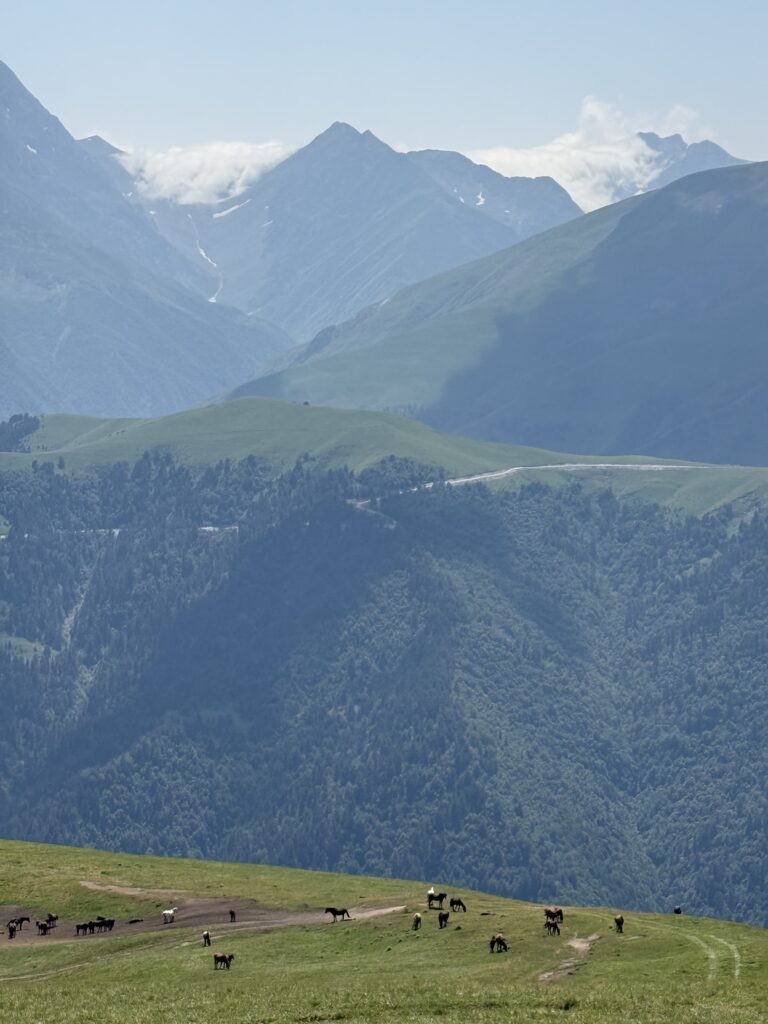
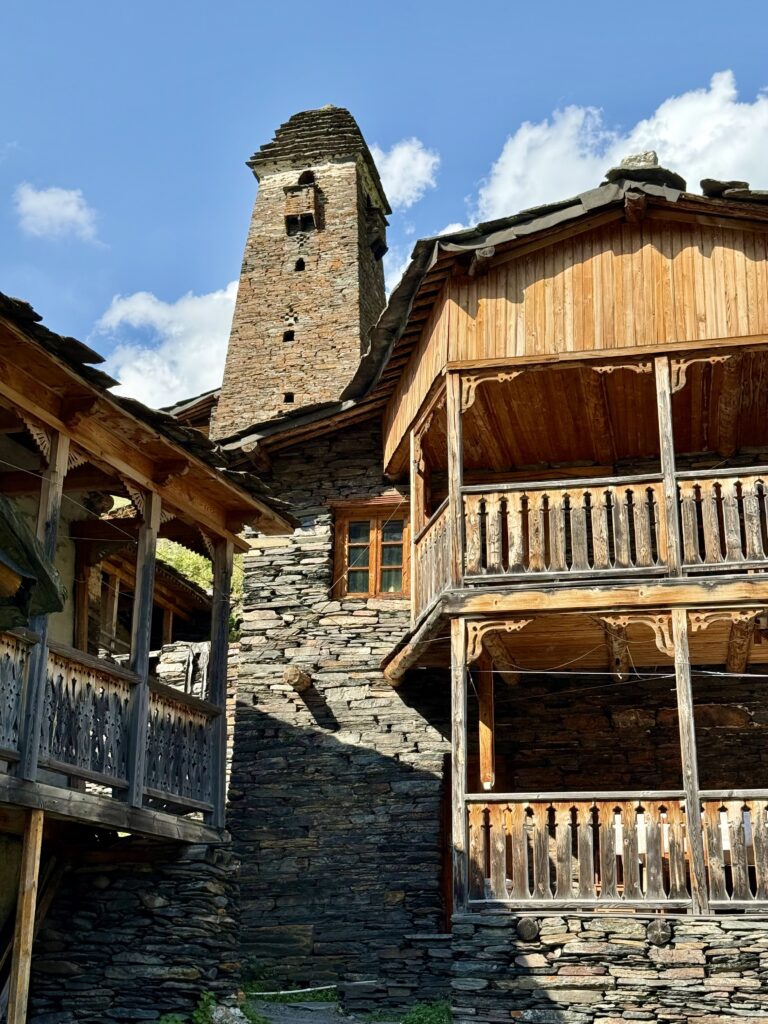
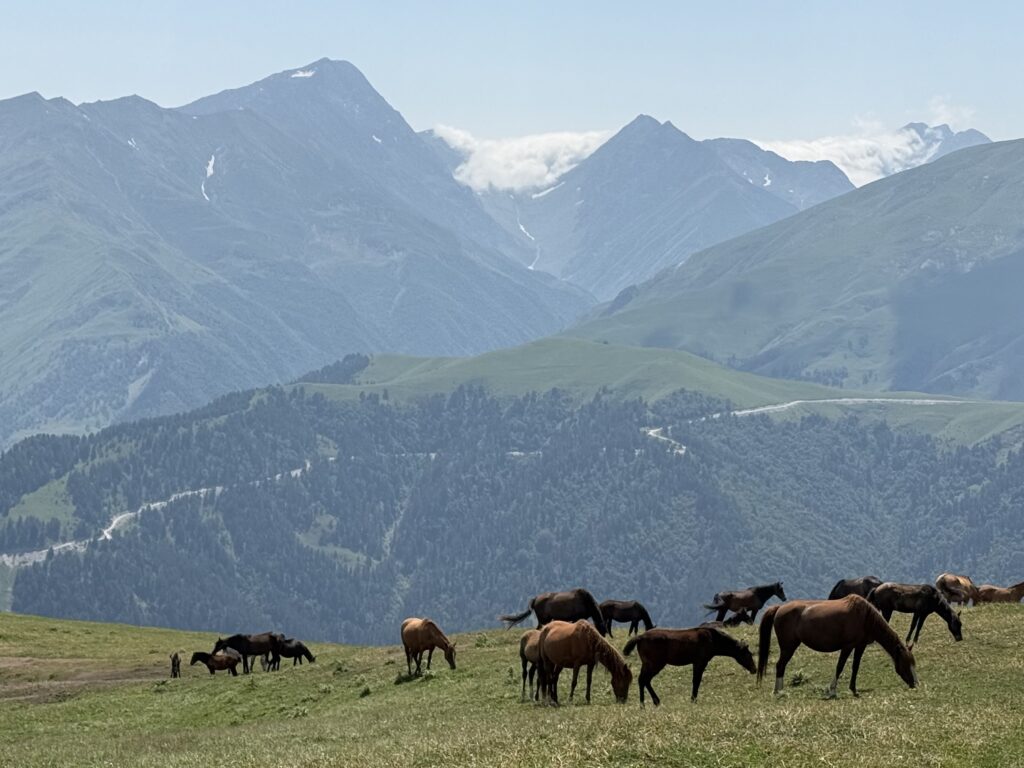
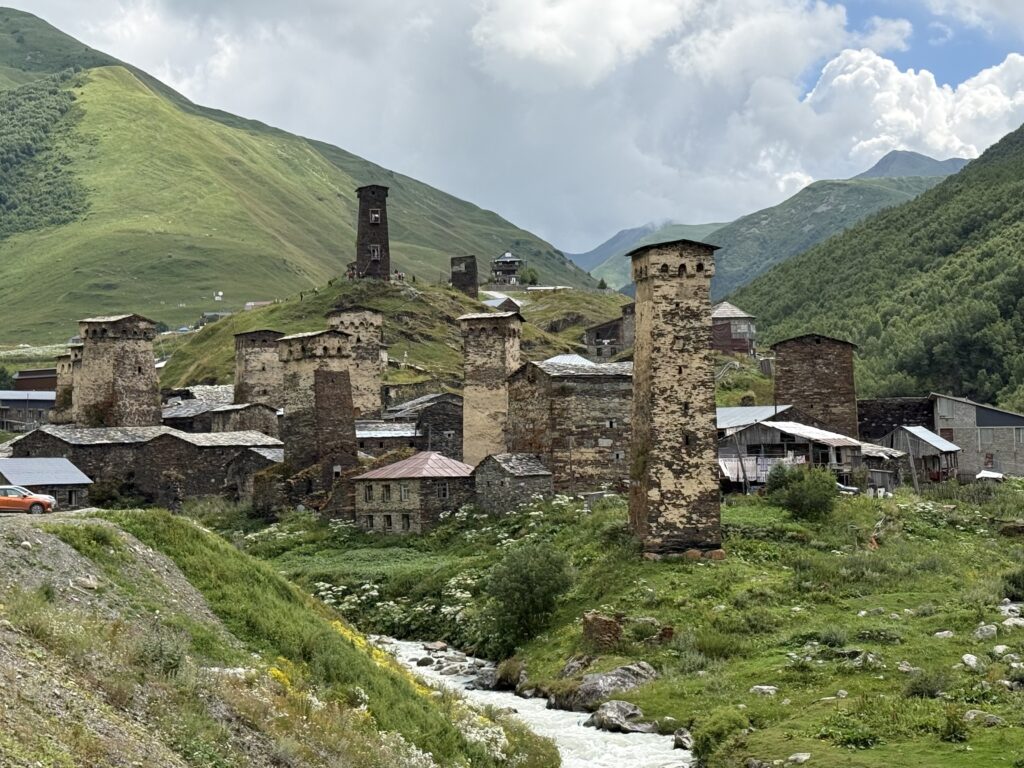
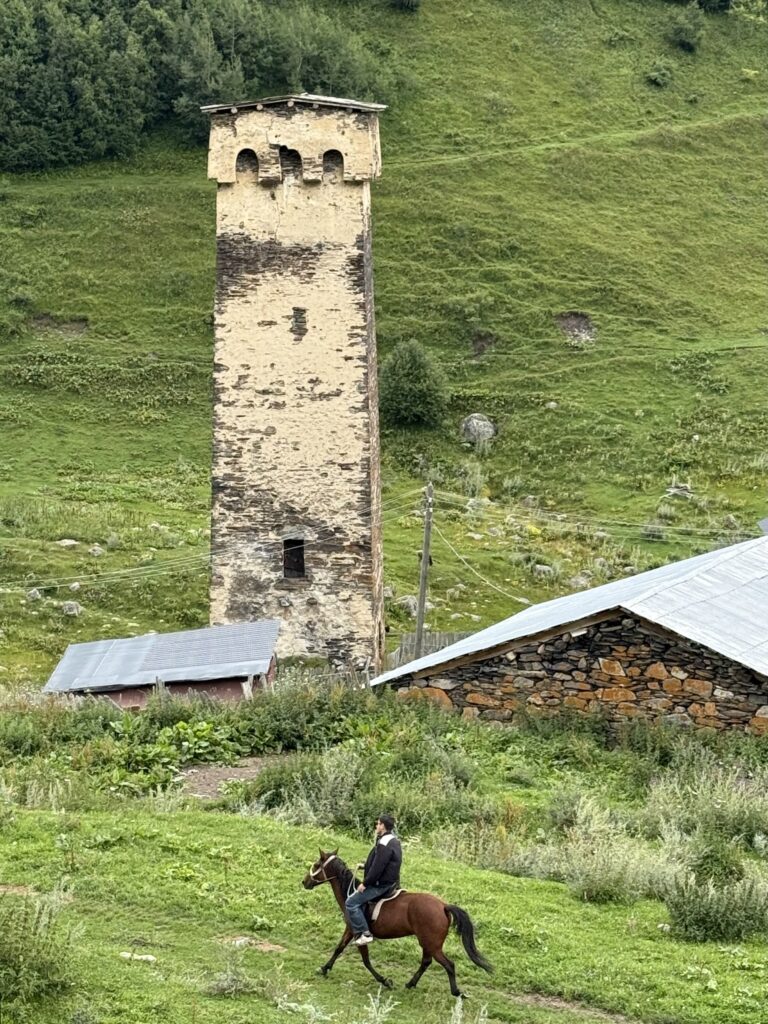
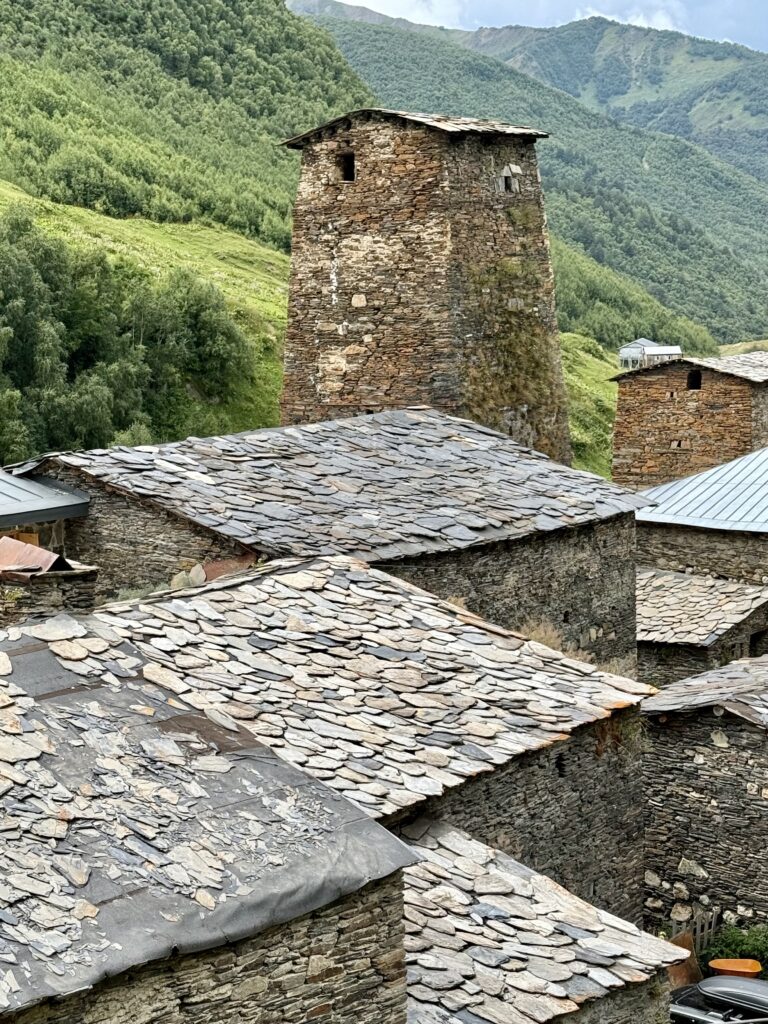
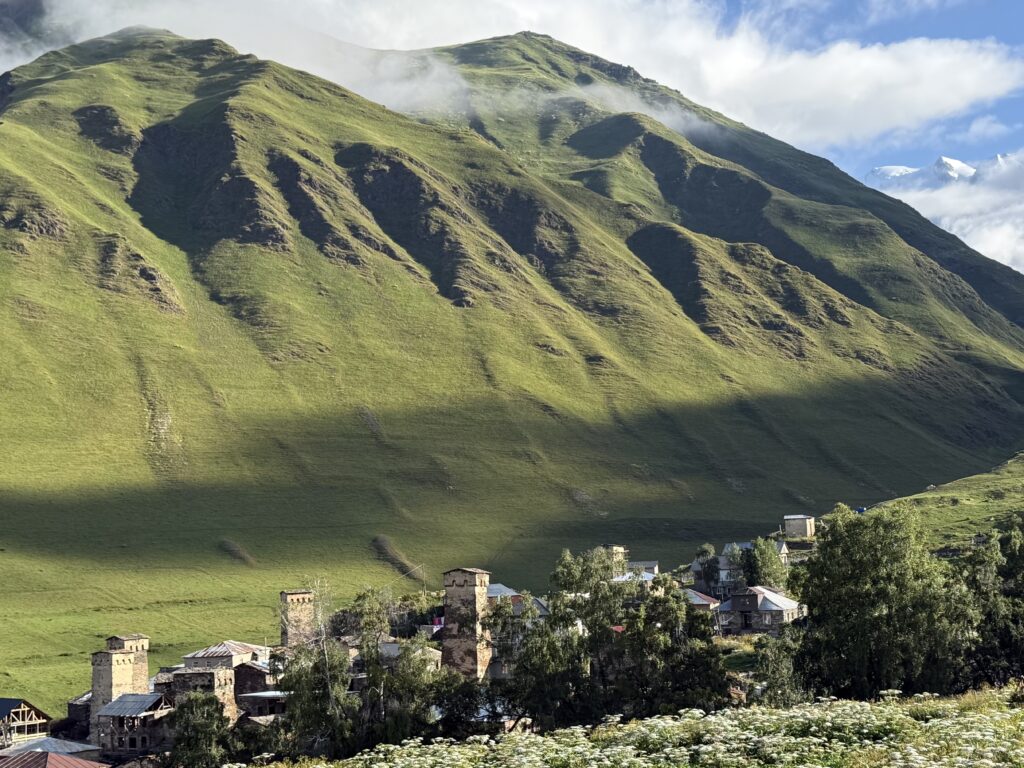
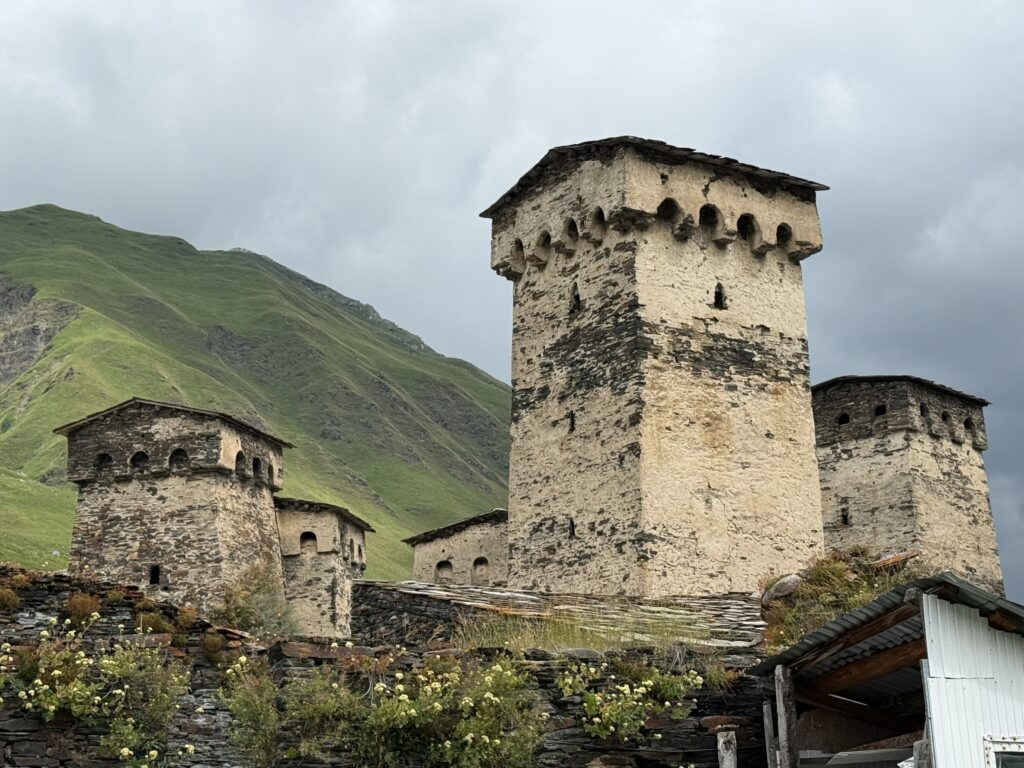
With our guide Gio and our driver Gogi, we wind through the foothills of the Caucasus then climb into the Tusheti region on a gnarly shelf road of dirt and rock, deemed one of the most dangerous in the world by the BBC. With portions hand built by WWII German prisoners and opened to cars only in the 1960’s, the road dips and dives, crossing mountain runoff streams and hugging the steep hillsides at a precipitous angle, making me gasp and close my eyes in areas. Along the roadside are memorial crosses for those lost enroute, convincing me I would have benefitted more from a tranquilizer than a motion sickness pill. Our driver Gogi is an old hand though, fueled on stale cigarettes and blaring Georgian pop music on loop, navigating with impunity. We stop at a picnic table where travelers gather to toast to the road, a longstanding tradition based on passing horsemen drinking from sheep horns worn like necklaces. Nearby is a memorial plaque to four lives lost from drunk driving as a sobering reminder while picnickers offer us chacha, the local hooch, which can’t be refused; the irony not lost on us. The surrounding vistas are beyond beautiful, with steep, green hillsides, snow-capped peaks, and traces of clouds beckoning us up. Eventually we make it to the Abano Pass at 9,600 feet, dropping down the serpentine backside past shepherds’ camps and birch trees into the Tusheti Valley. As we reach the village of Omalo at 6,200 feet, we pass domesticated horses roaming free range, living the best horse life imageable with no fences in sight. Tushetians are horse people to the core, learning to ride bareback at an early age and being so connected to their horses that they used to be buried with them. Mountain villages include stone towers which were used for housing during attacks or snowstorms, with livestock on the ground floor and men vs. women and children living on different floors up the narrow shaft riddled with bow and arrow slits for self-defense. With 85% of Georgia being mountainous, the harsh environment has shaped their dwellers to be industrious and tough, the first ones tapped to fight on the frontlines during battles.
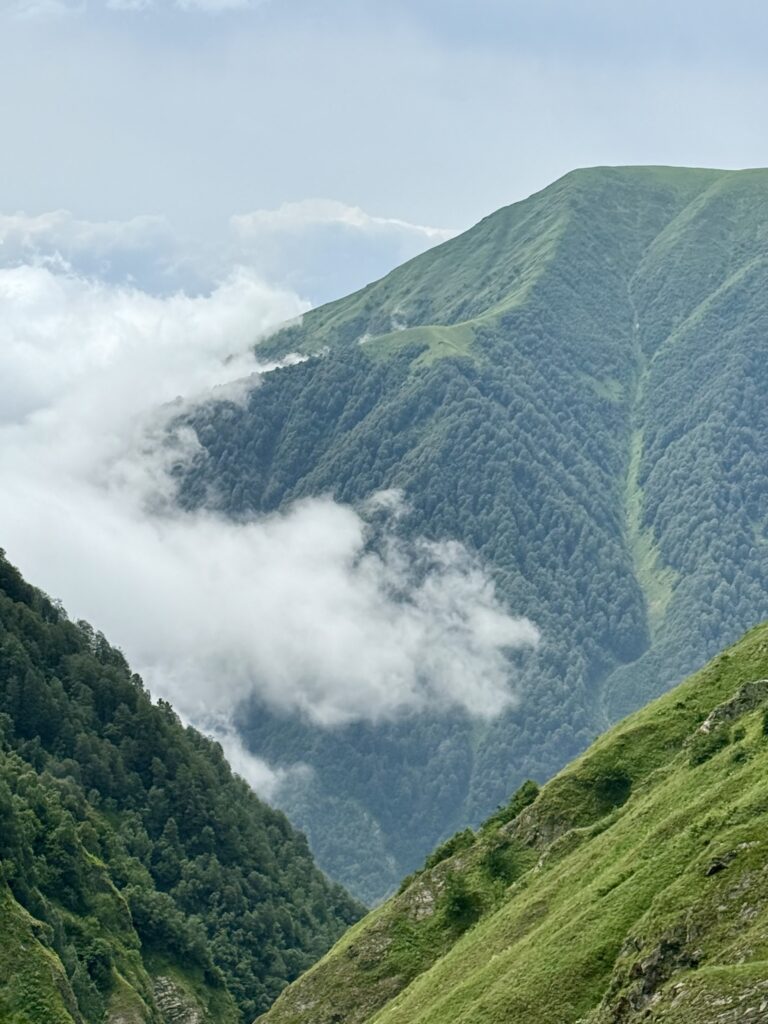
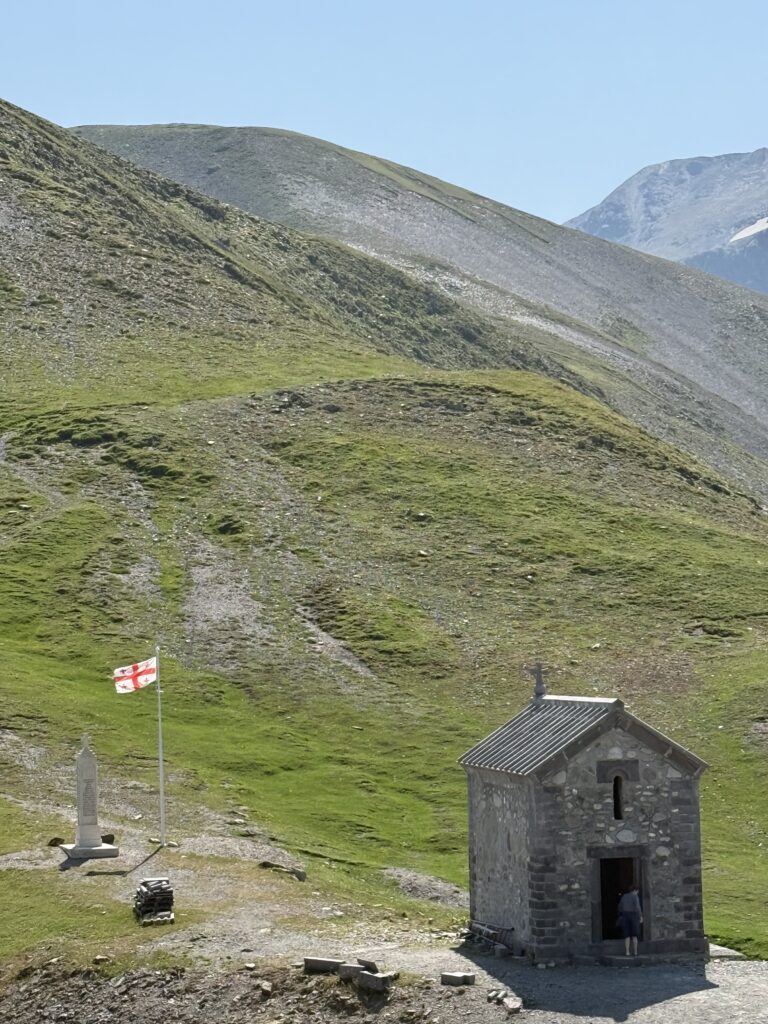
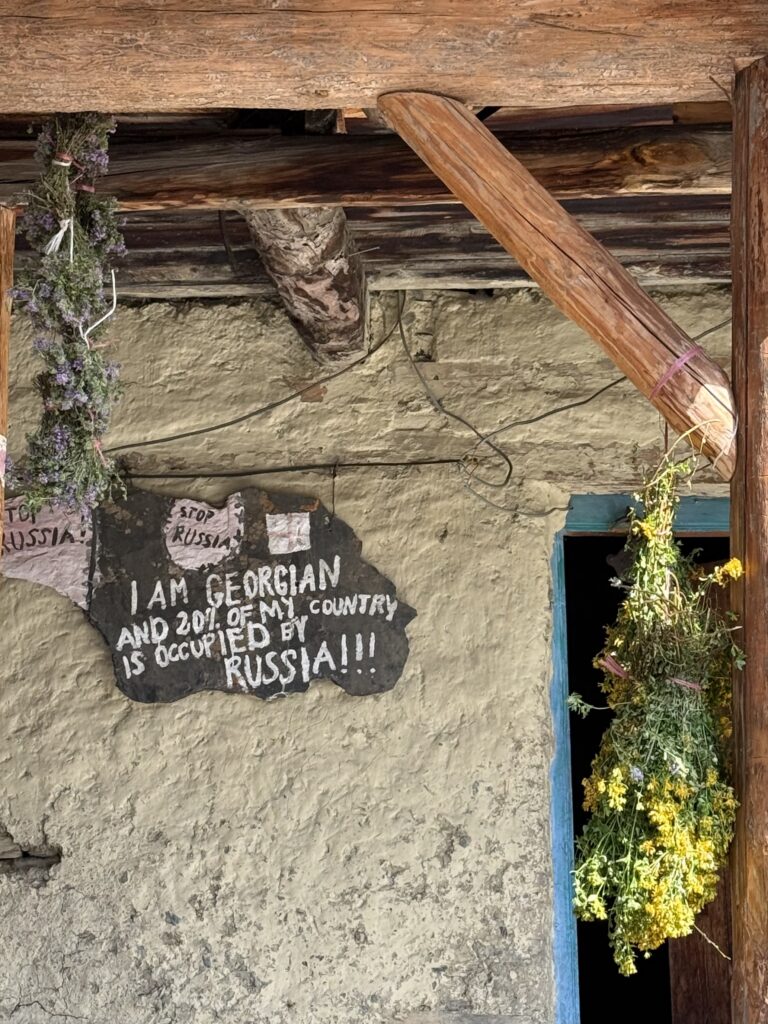
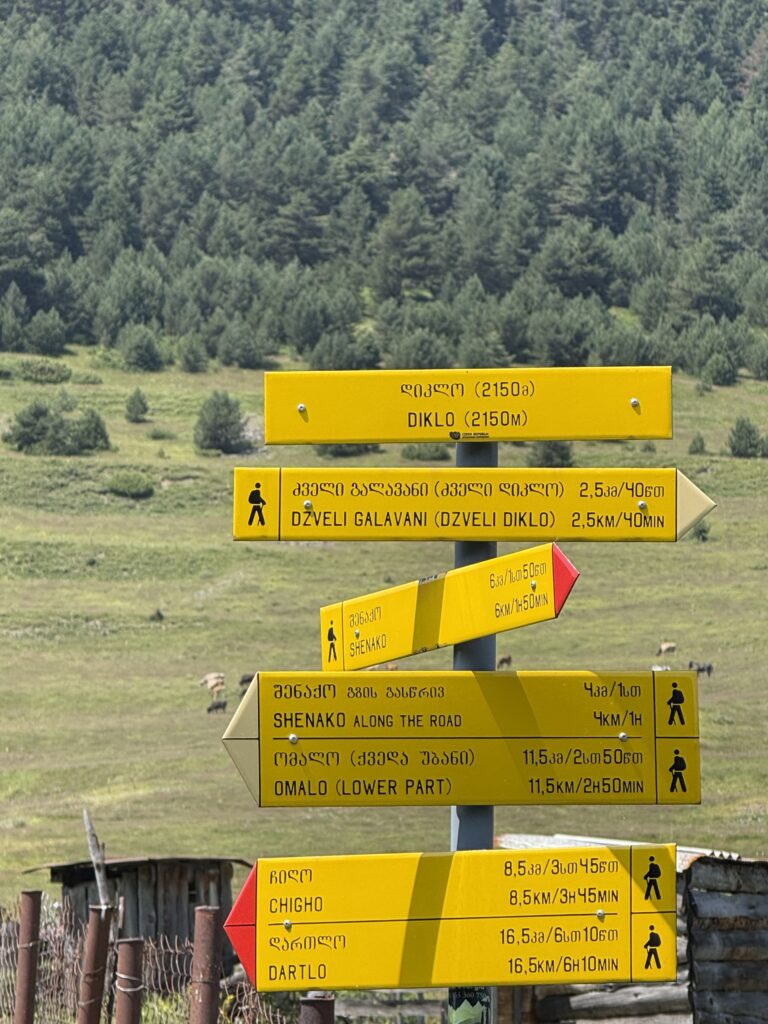
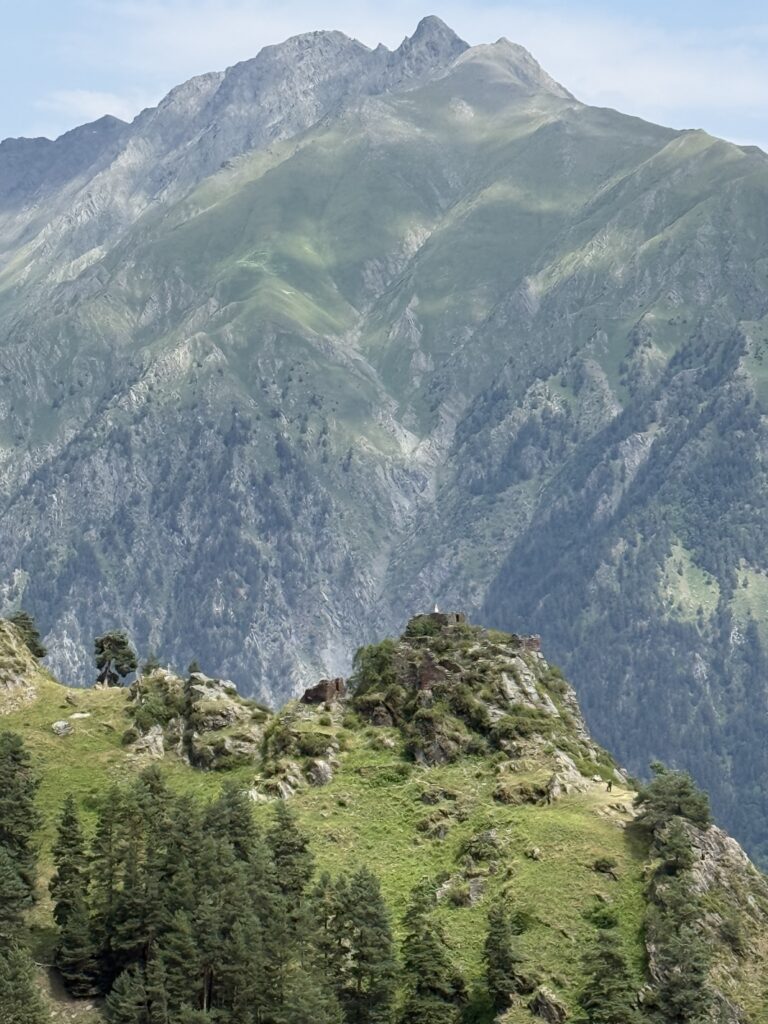
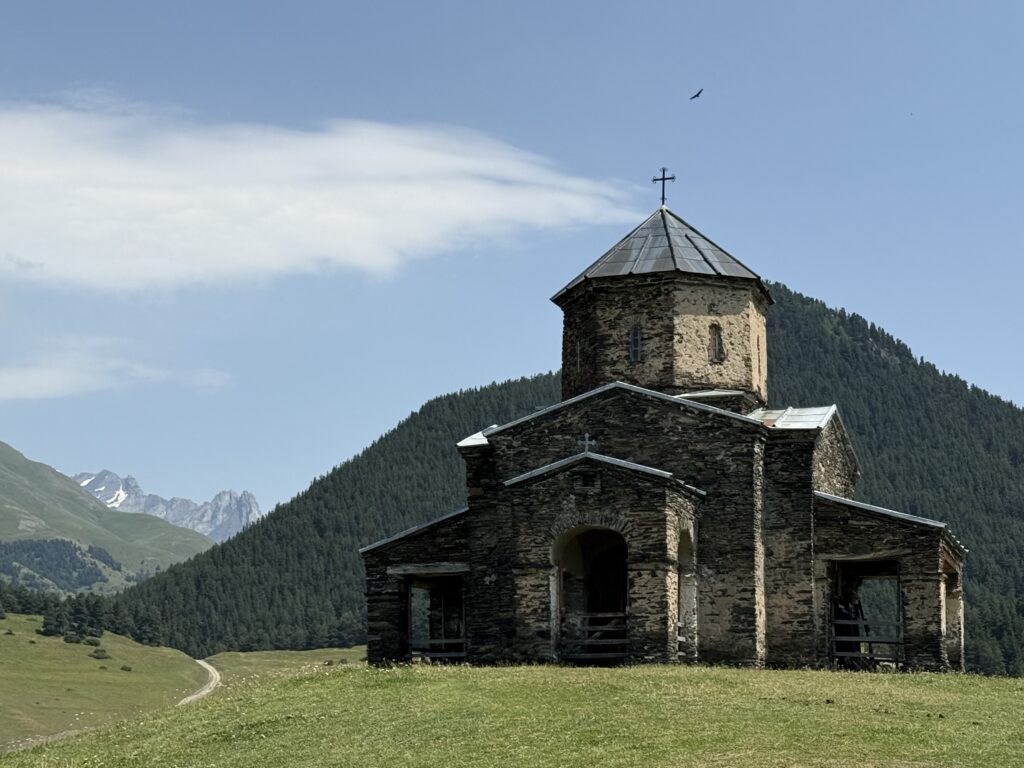
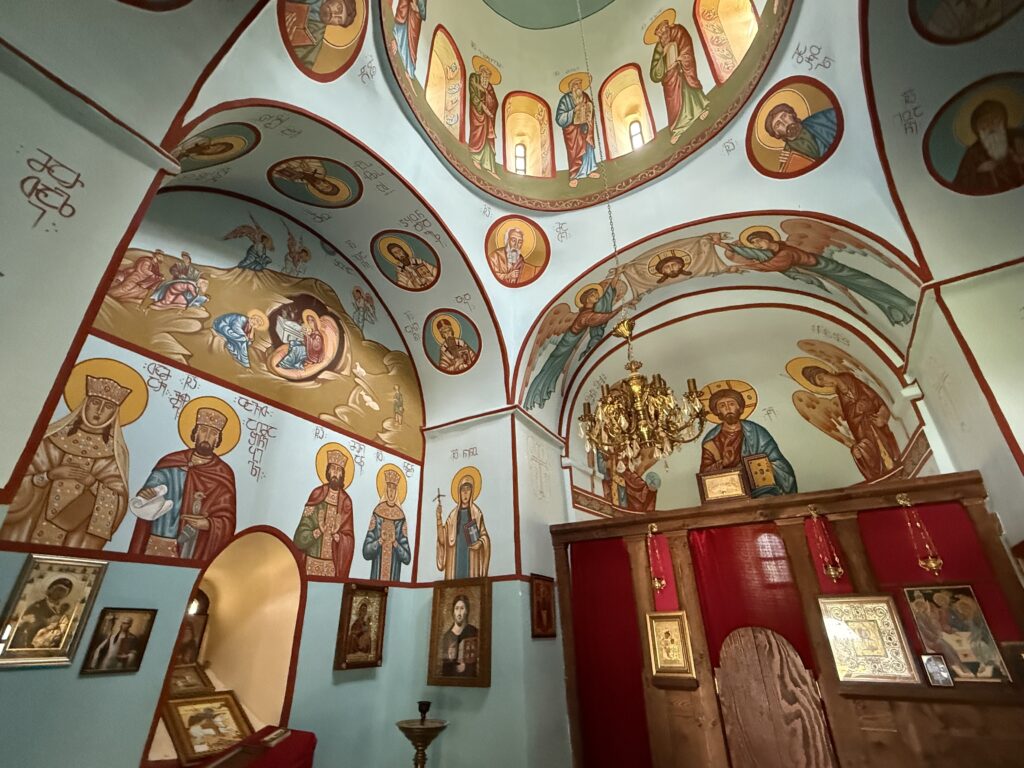
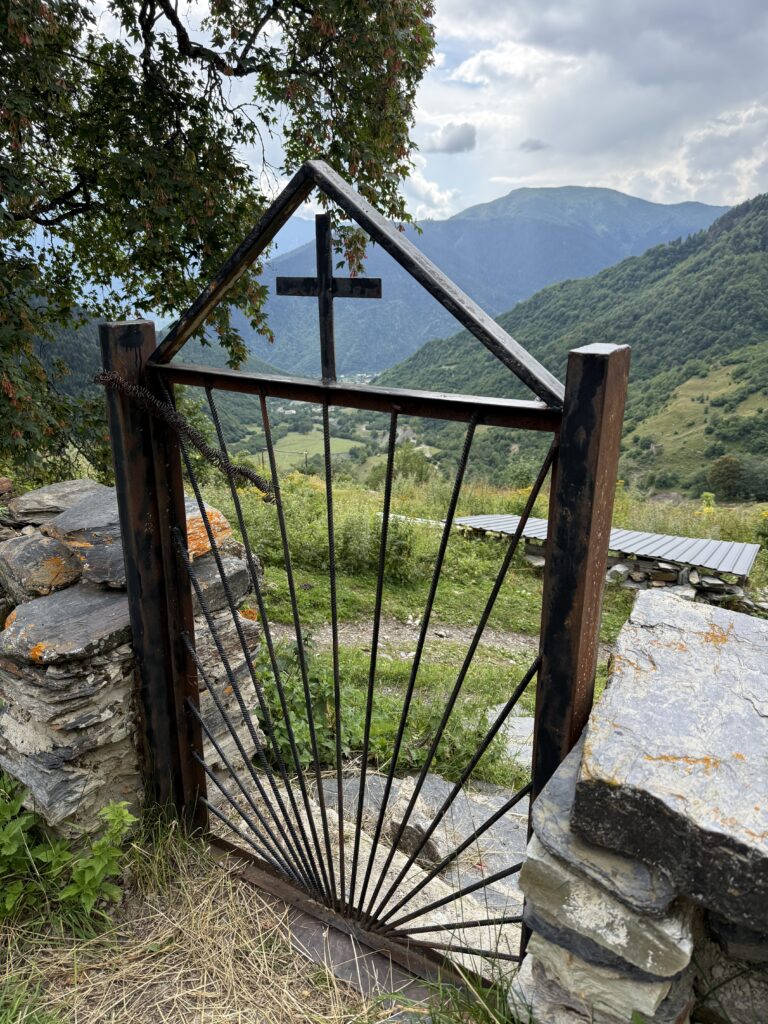
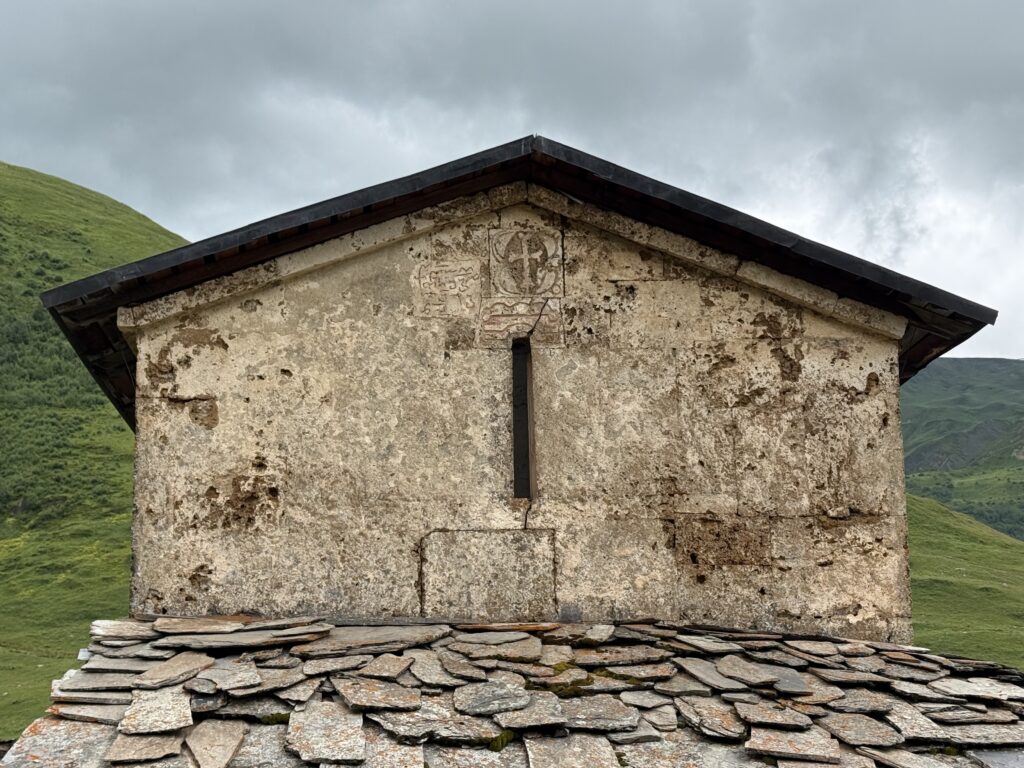
We head to the village of Shenako, where the Orthodox church’s frescoes were revitalized thanks to a donation from Mountain Travel Sobek investor Tom McCormick to inspire both the locals and tourism, then hike near the neighboring town of Diklo where across the steep valley can be seen an invasive Russian army camp. The border with Russia should be on the far side of the Greater Caucasus range but the Russian military secretly move the boundary markers further into Georgia claiming new territory, taking over a farm here and a hillside there before setting up camp and raising their flag. Georgia reports these incursions to the United Nations who send international representatives in response, including helicopters during our visit, to document the adjustment for future reference. Russia currently occupies roughly 20% of Georgian territory, including two separatist regions Abkhazia and South Ossetia since 2008, forcing many of these Georgians to become refugees within their own country. Flags are at half mast on August 8th in remembrance of their 2008 invasion when Moscow tried to conquer Tbilisi, being pushed back by Europe and US efforts but retaining 150+ villages to this day. Georgia is heavily Western-leaning, with 71% voting to join the European Union, however the current regime is pro-Russia since 2012, out of sync with popular opinion. Many Georgians are battle-ready, having watched Russia’s offensives into Crimea and Ukraine with trepidation, and they hope the world will support their continued independence.
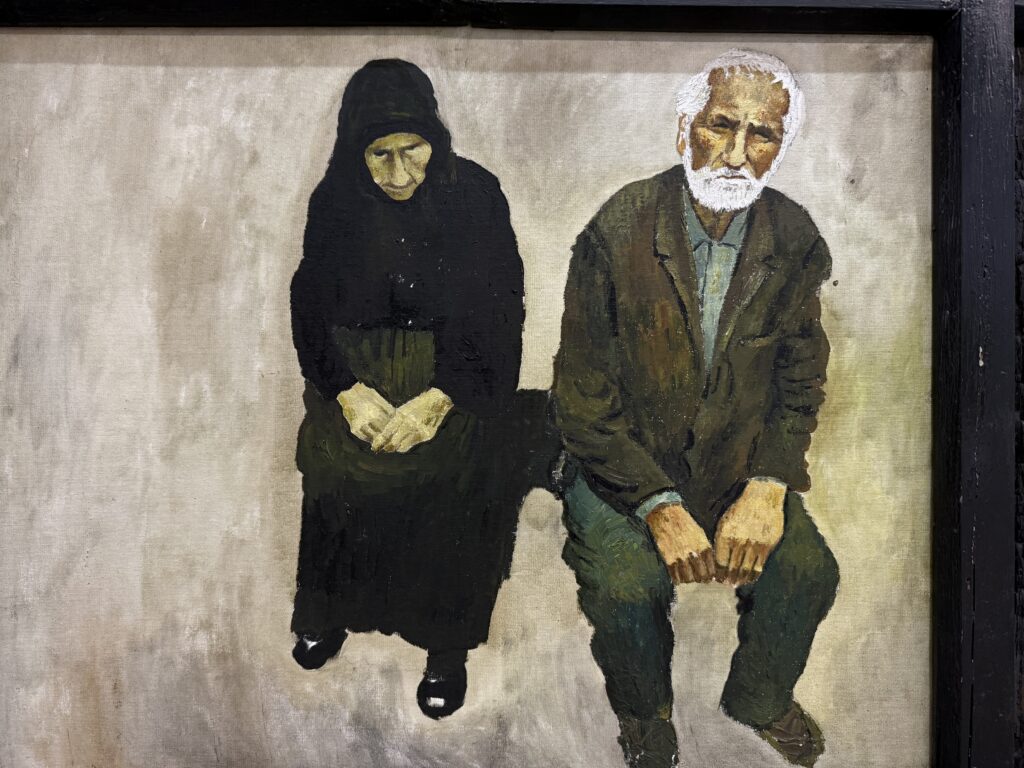
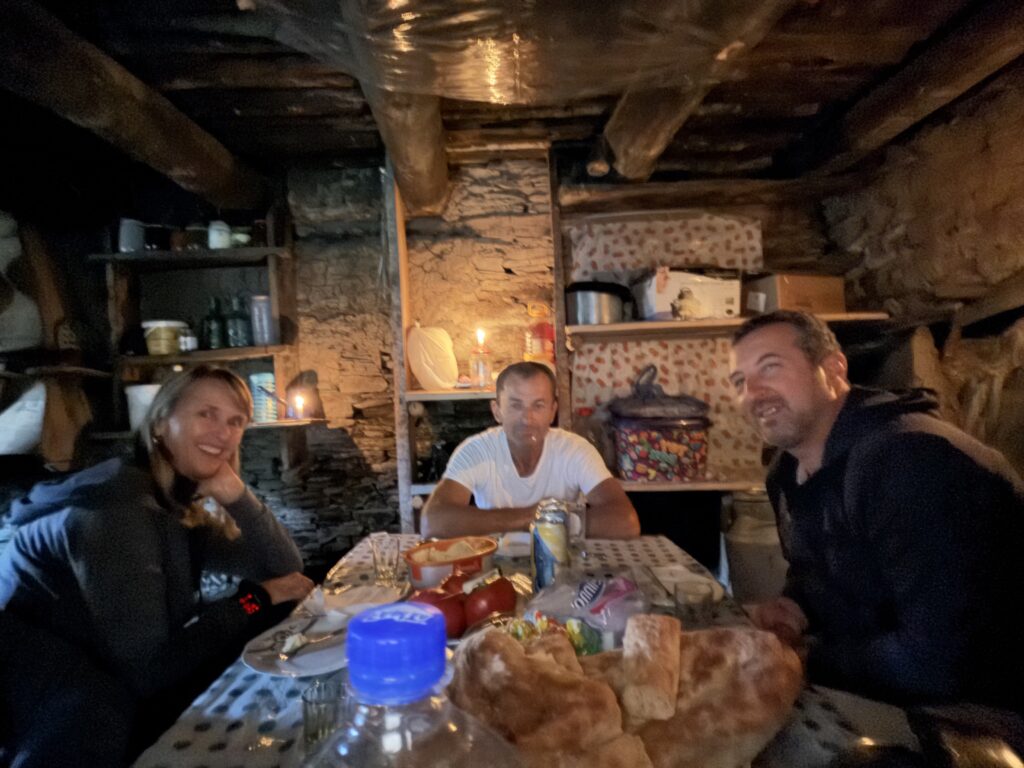
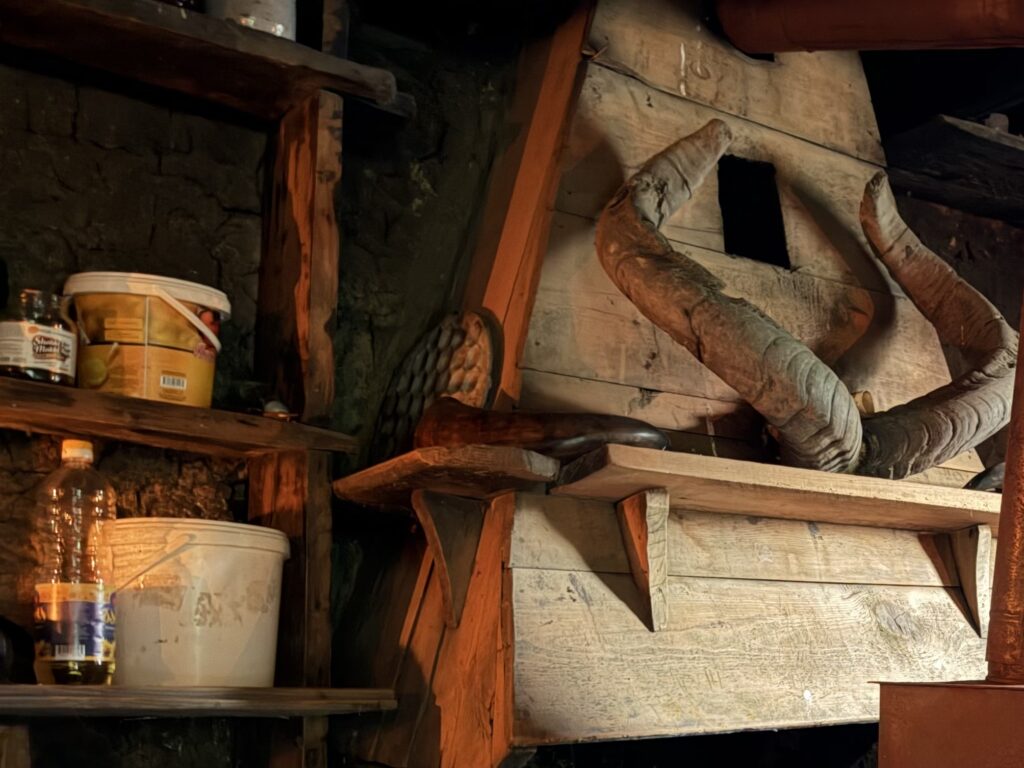
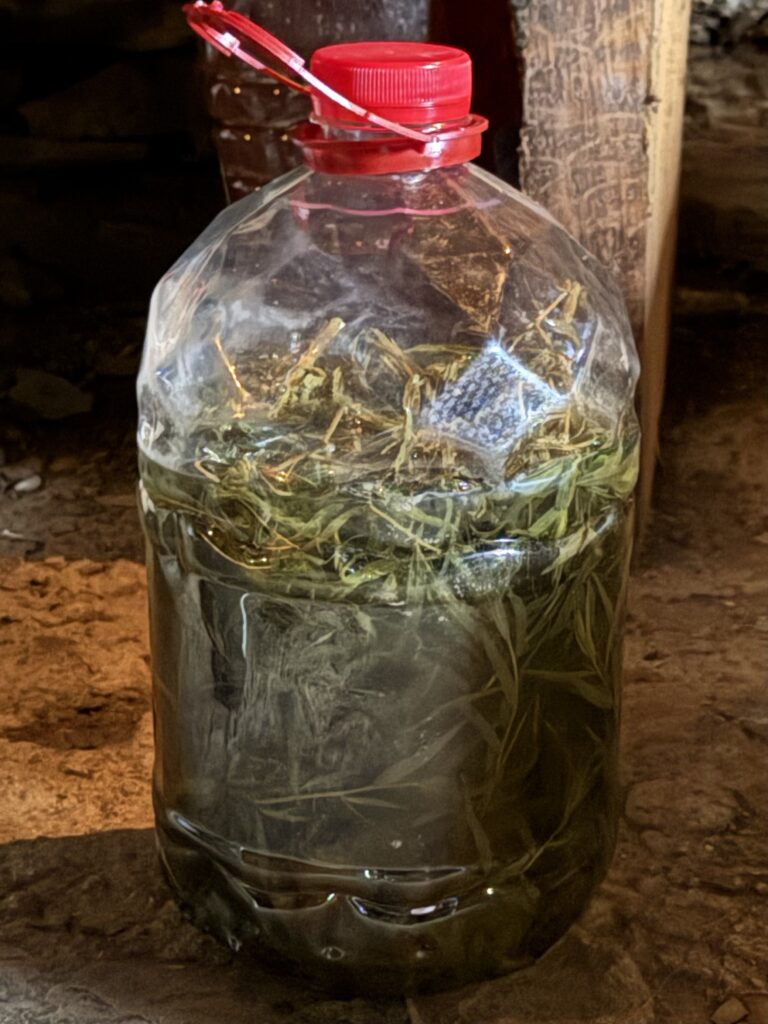
One evening our driver Gogi invites us to his home for chacha, which is an invite not to be missed. Bending down to enter his room set against bedrock on one wall and finished with flagstone-stacked walls and hand hewed shelves containing all manner of ancient implements, food items, and tools, we sit at a low table bursting with a post-dinner banquet of tomatoes, bread, cheese, tea, candy, peanuts, and more, demonstrating Georgian hospitality at its finest. In the candlelight we can make out an ancient fireplace hood on which rests a massive set of sheep horns, filled during ceremonies with chacha or wine to pass around in celebration. Gogi serves us small glasses of tarragon-infused homemade chacha, similar to grappa and teasingly called an anti-depressant, with a toast required before consuming each cup in its entirety. He explains how he’s building his son’s inheritance for when he returns from construction work in Ireland, including some real estate, over 80 horses for tourist trail rides, and a new restaurant, so his son will have financial security. I ask what he’s building for his two daughters, and he gives a big sweep of his hand like wiping crumbs off the table, meaning nothing, that’s for their husbands to provide. It’s an interesting glimpse into the past and present. Later we are the first guests at their new restaurant in the lowlands enjoying local dishes in their homey backyard setting.
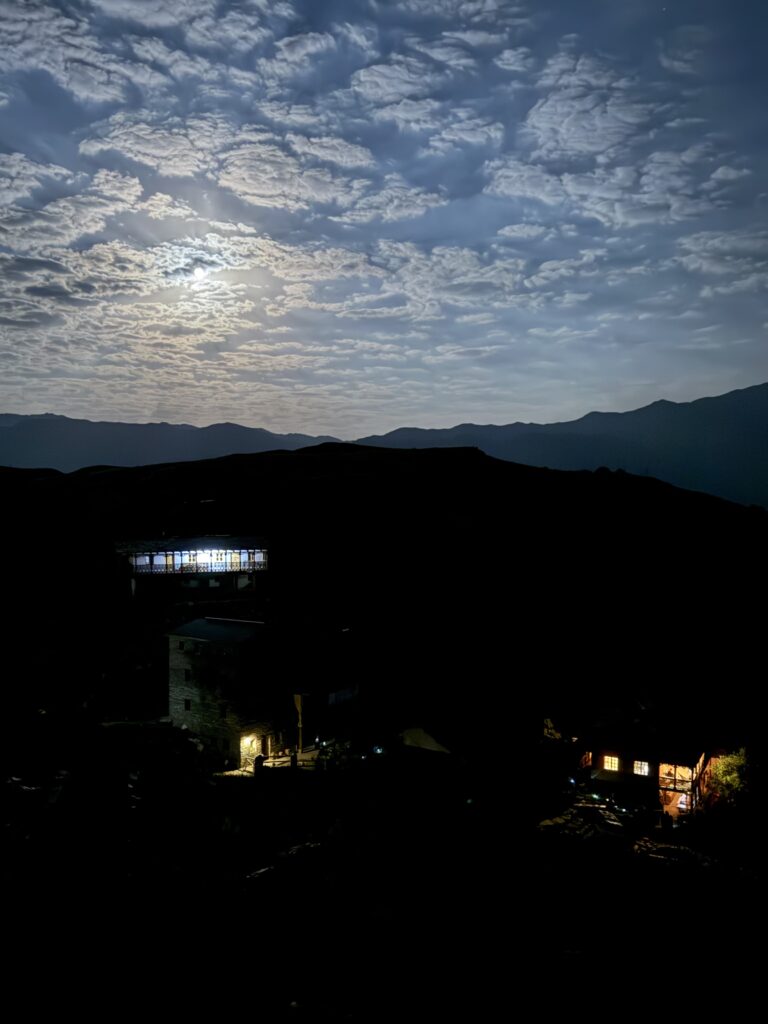
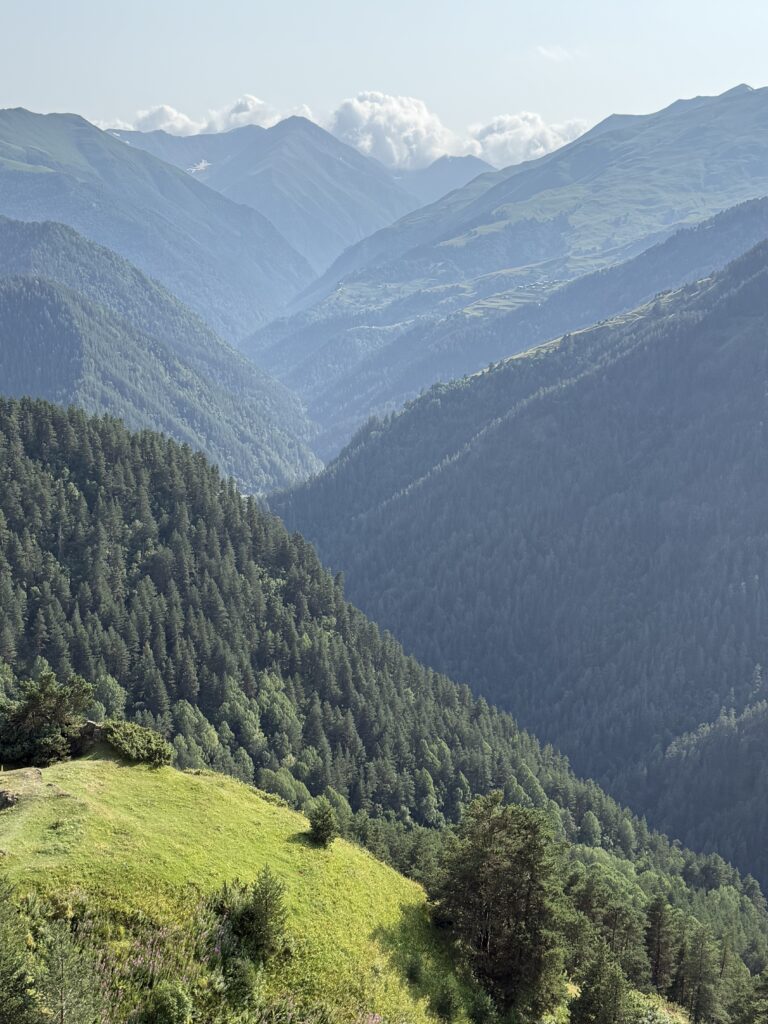
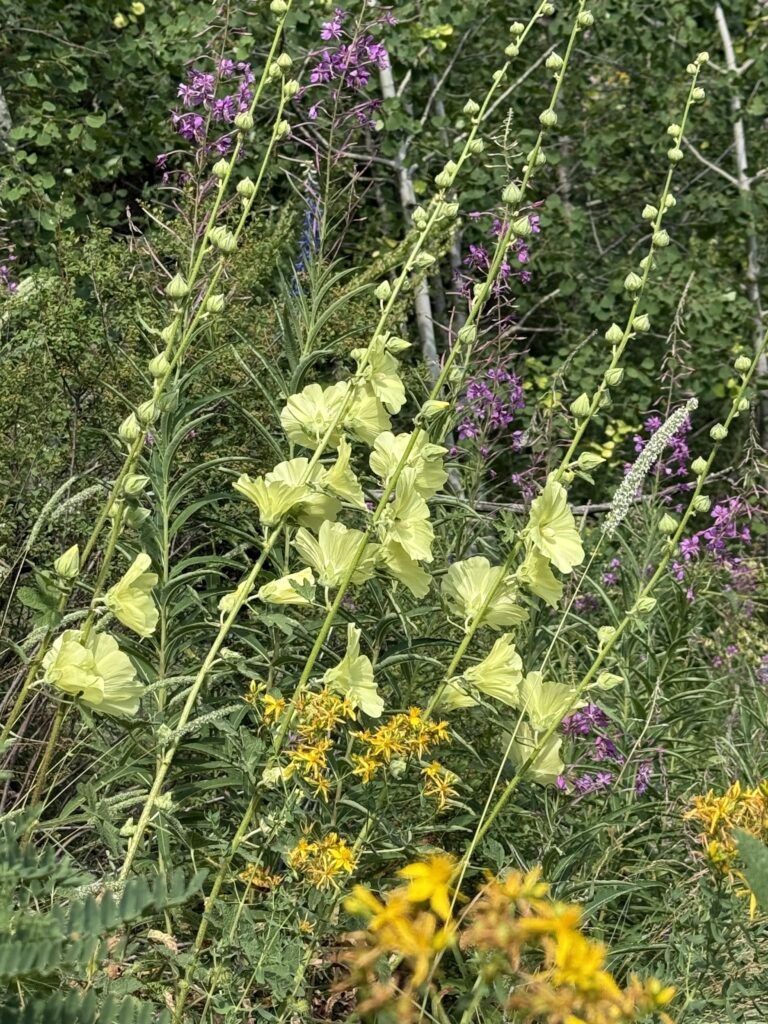
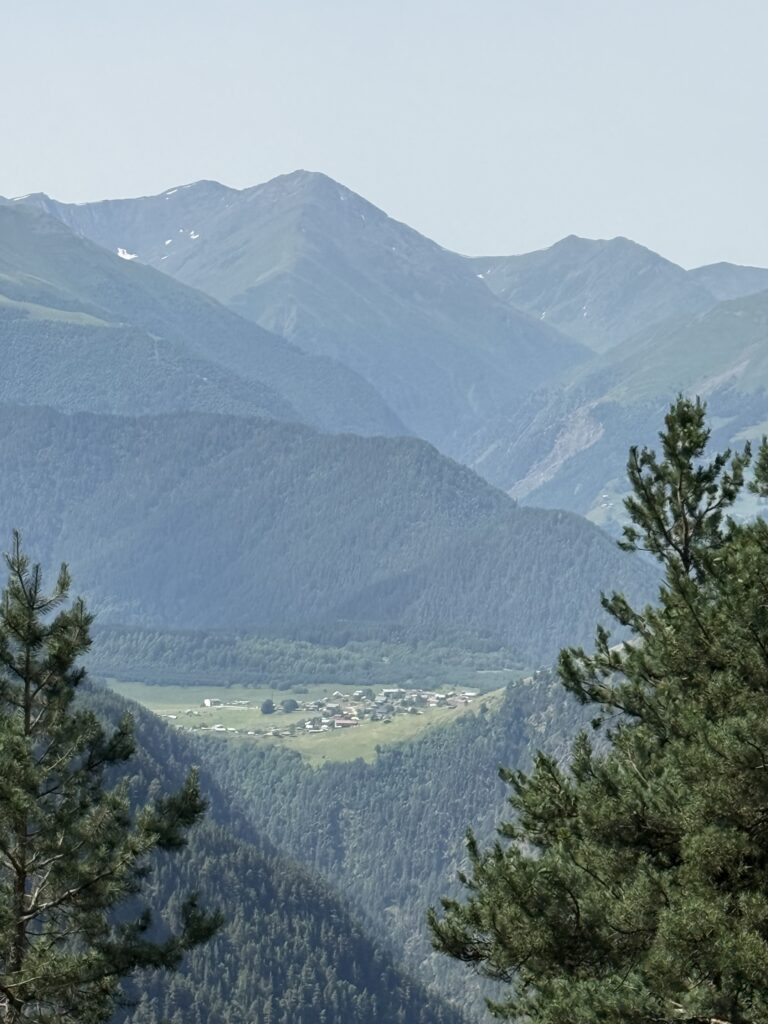
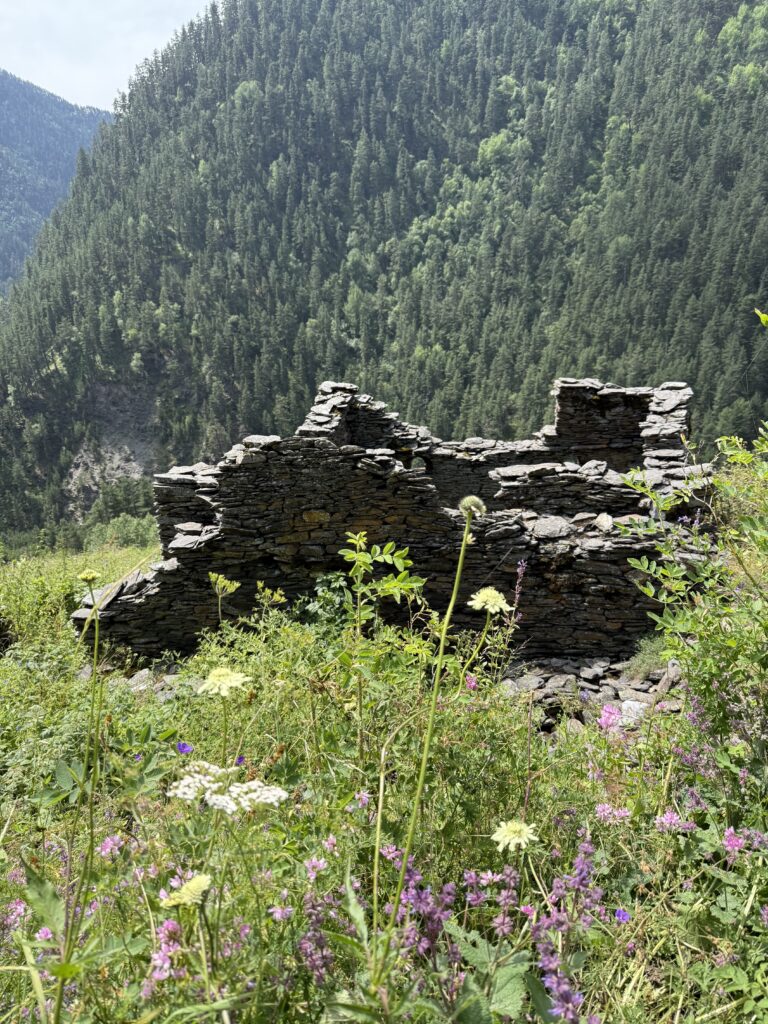
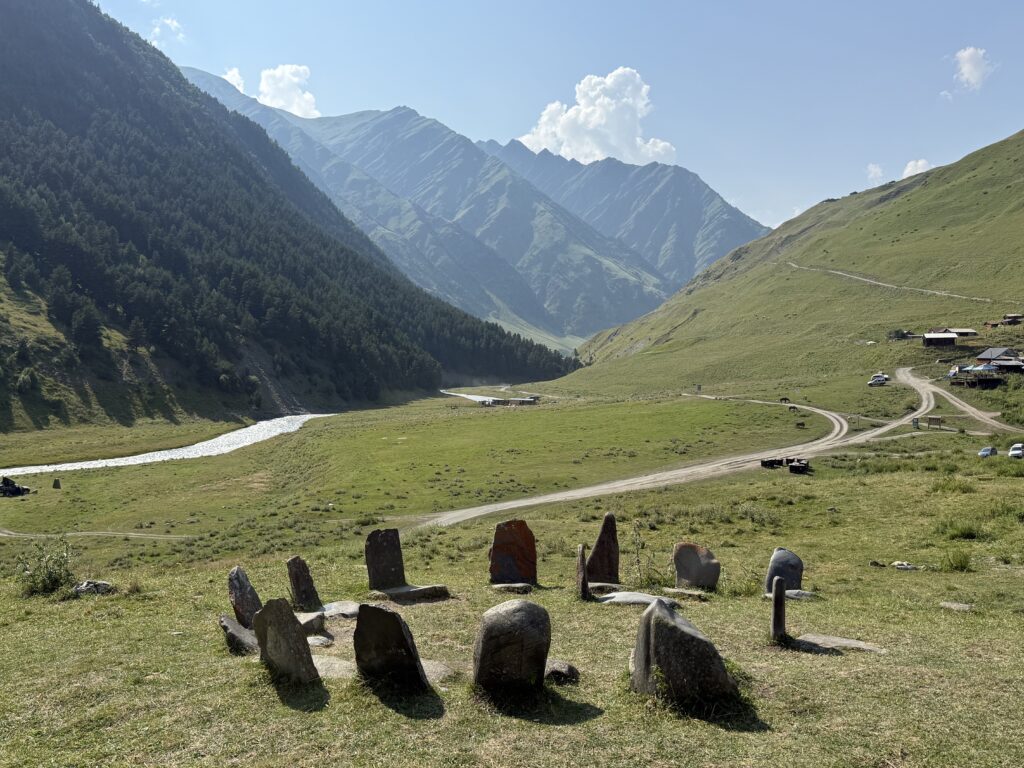
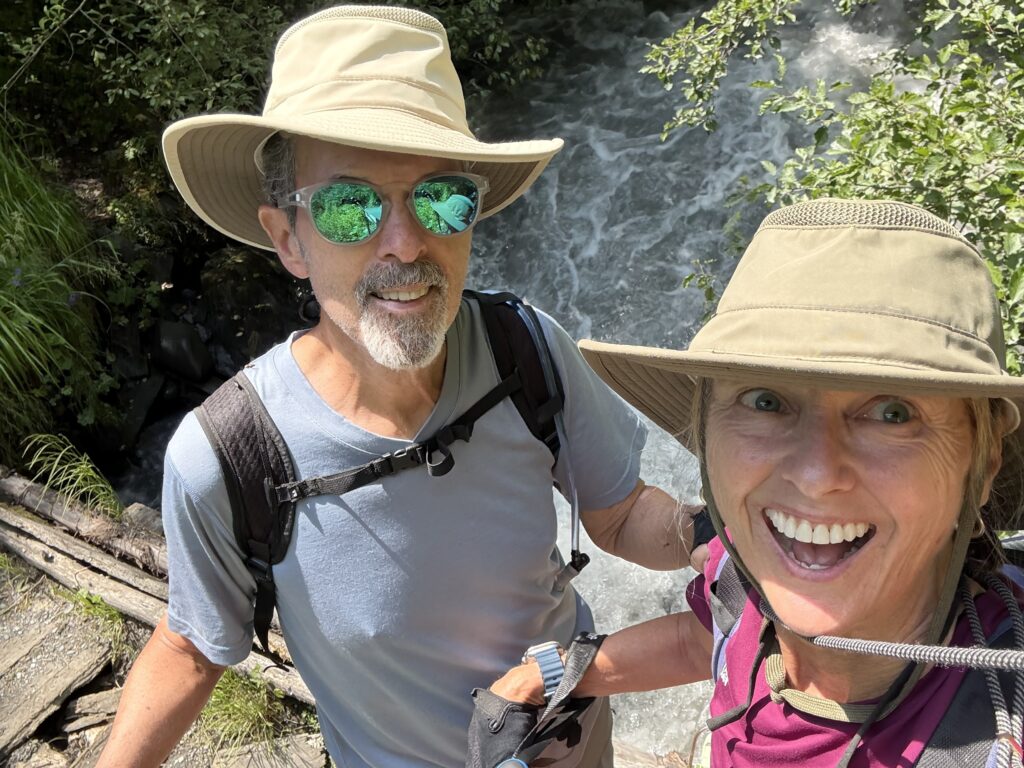
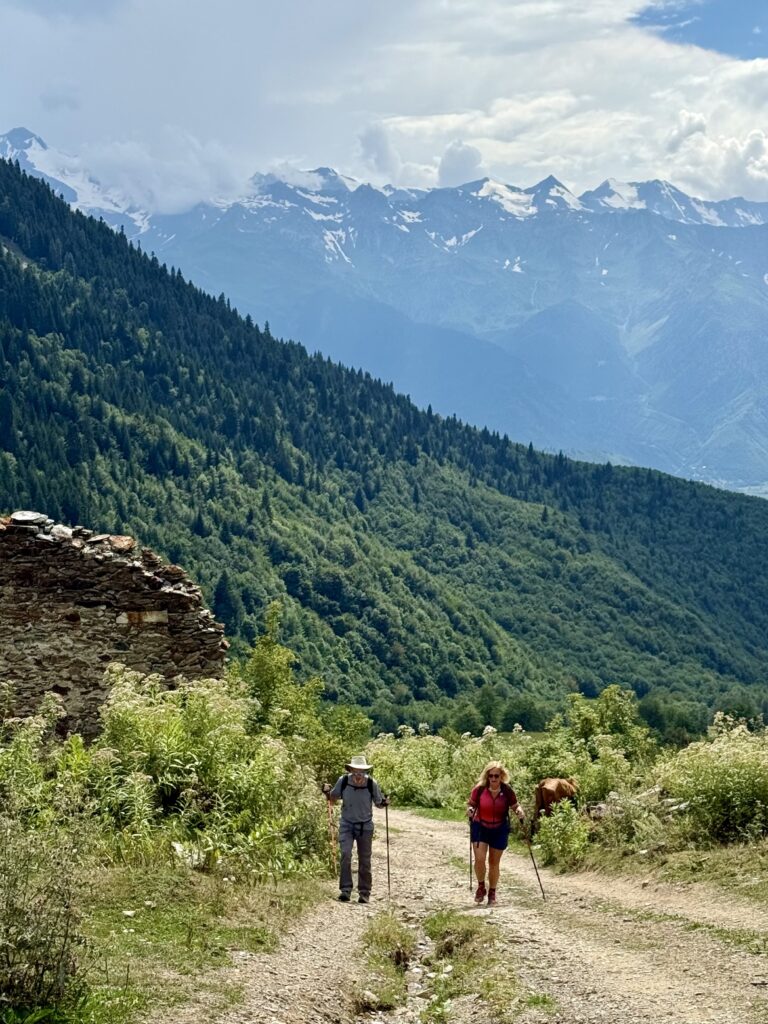
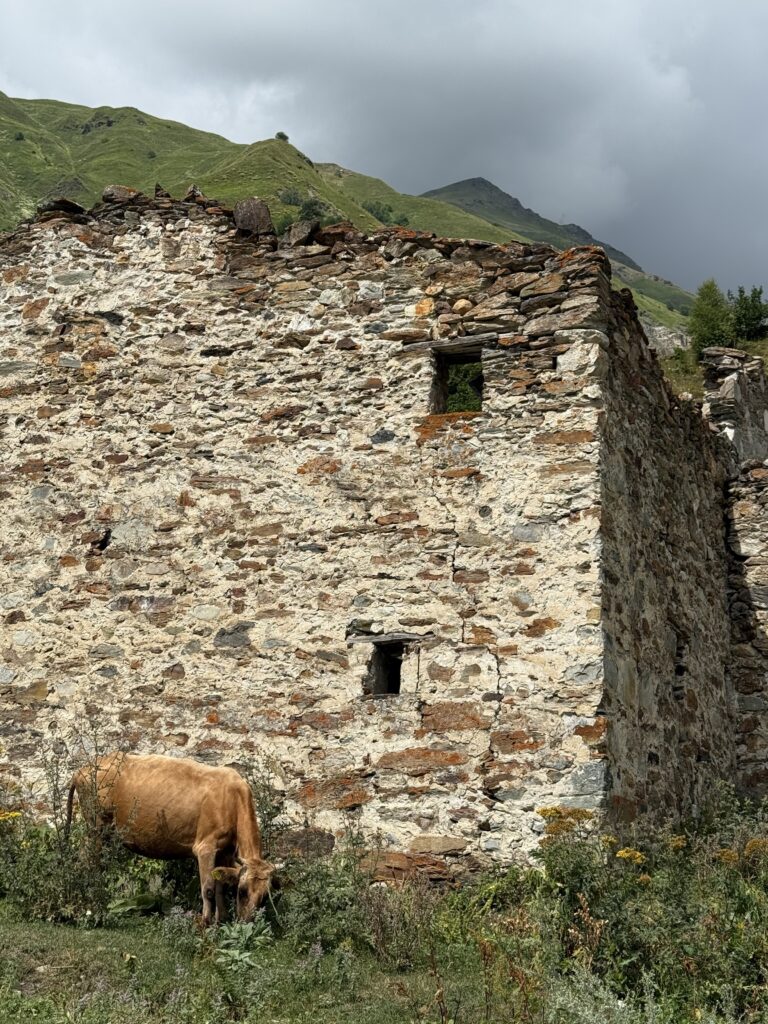
Hiking in the Tusheti region is an exercise of steep up and down, following shepherd and livestock paths devoid of other hikers. The payoff is the vistas which are expansive and stunning, dotted with stone ruins from abandoned villages and fields thick with wildflowers beyond imagination, many which are endemic, providing fragrant and visual delight. We hike through the town of Chigho dating from the 1700’s which had been accessible only by horseback until 3 years ago when a new road was built, which since has succumbed to landslides – bring back the horses! The local village of Bochorna is the highest permanently-inhabited settlement in Europe at 7,694 feet, established by a single physician who services his patients by horseback year round from this promontory, an example of hardy mountain culture. Another day we enjoy a breathtaking above treeline ridge hike at nearly 10,000 feet with sweeping views across valleys and peaks. In this rugged setting, we learn about ancient Georgian soldiers who committed themselves to a life of defending their country while abstaining from all other human interactions, secretly leaving their gear in villages to be retrieved once repaired, and villagers would play music loudly in thanks for their service. Sound familiar? This historical fact was scripted into Game of Thrones. Their traditional soldier uniforms display a line of bullet-holding pockets on the chest enabling soldiers to hold the reins and a rifle with their hands while reloading cartridges using their teeth.
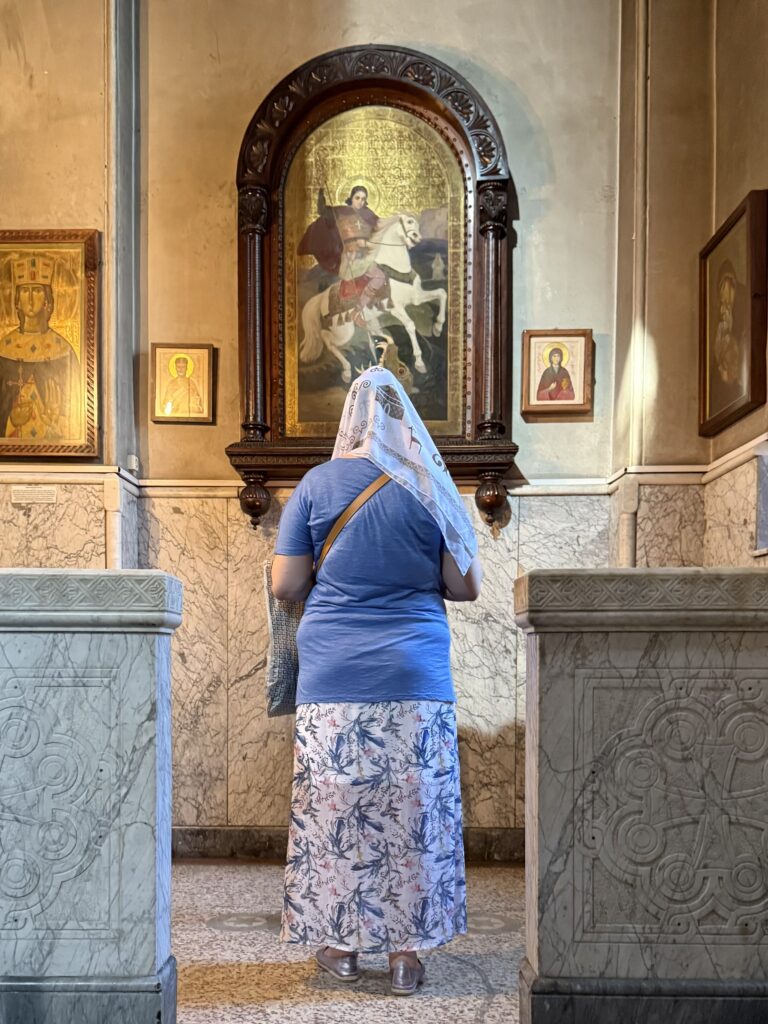
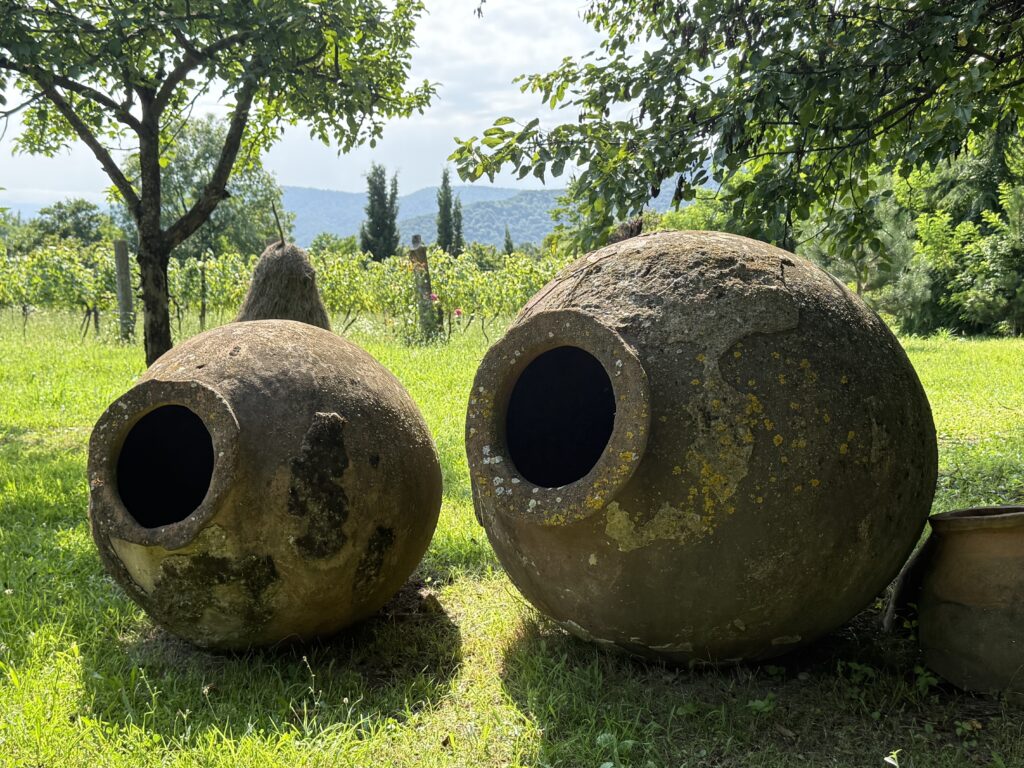
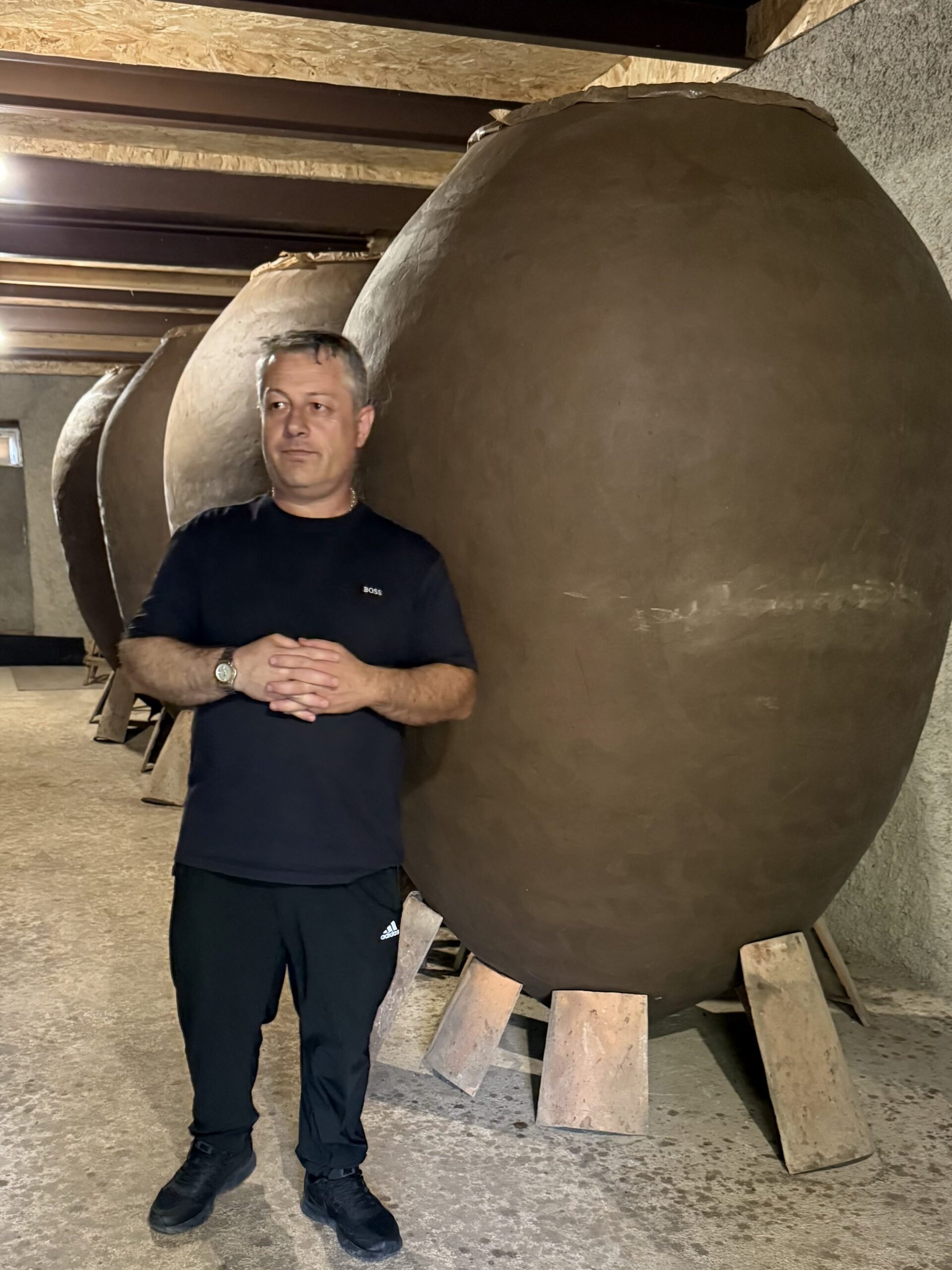
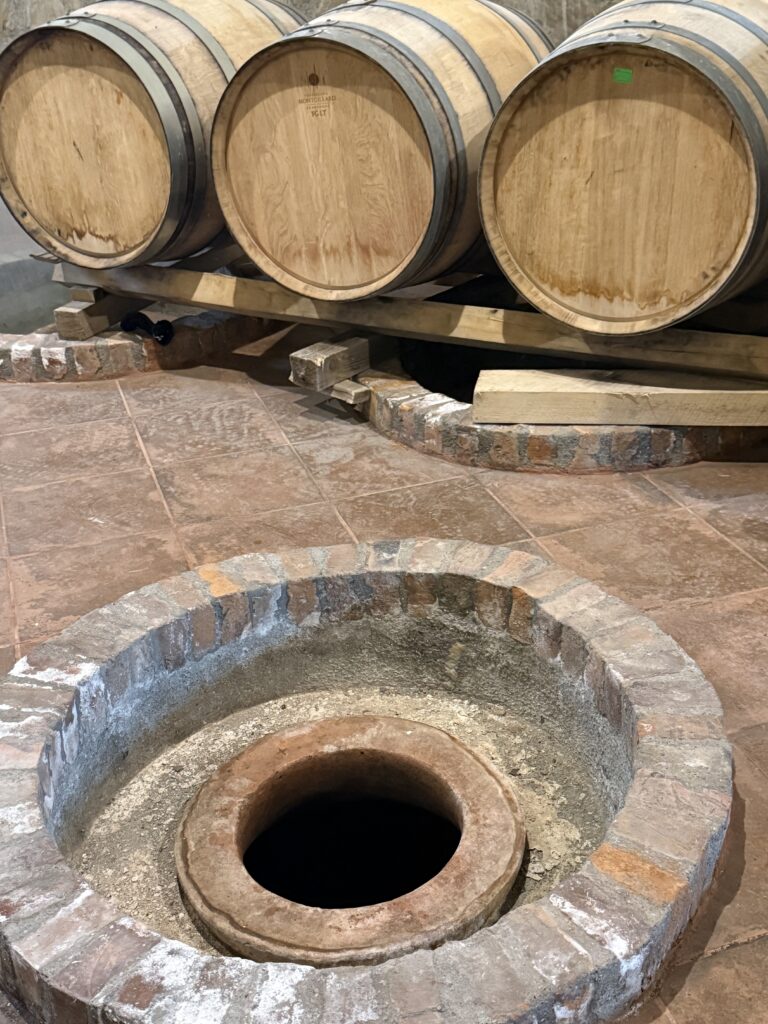
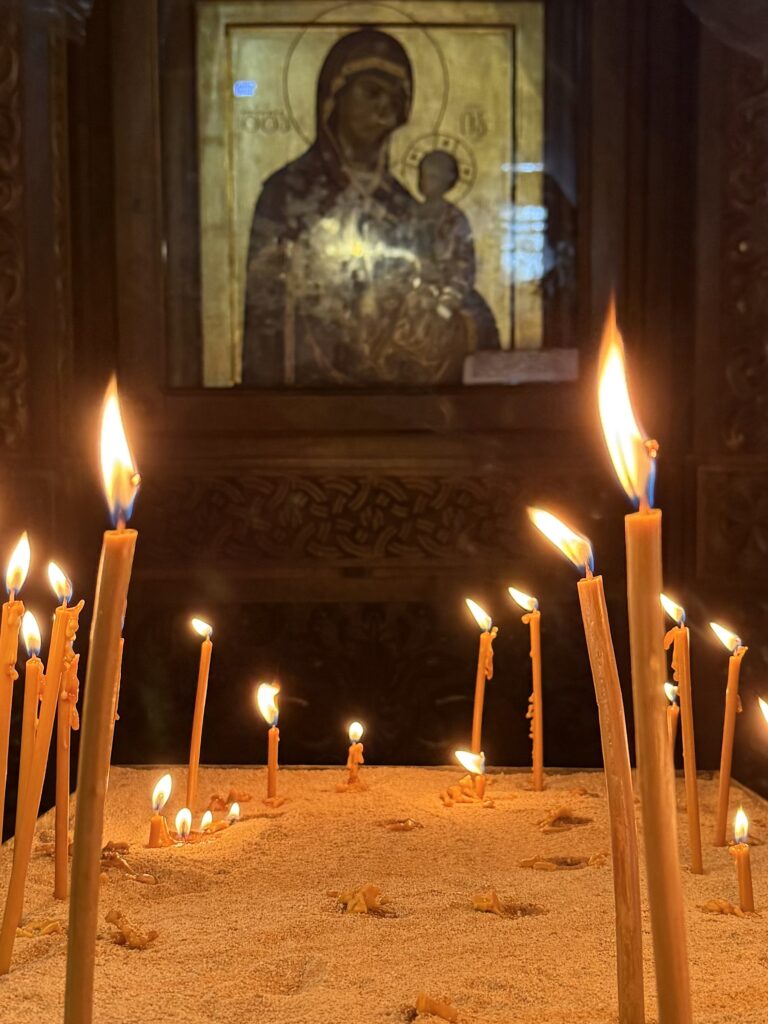
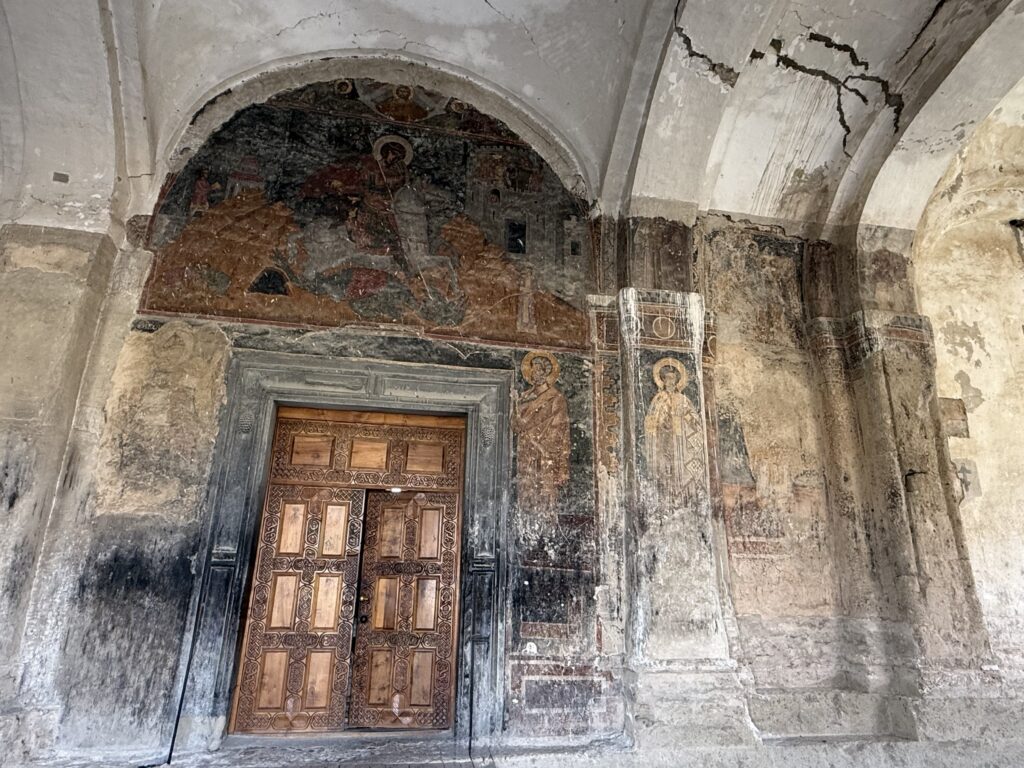
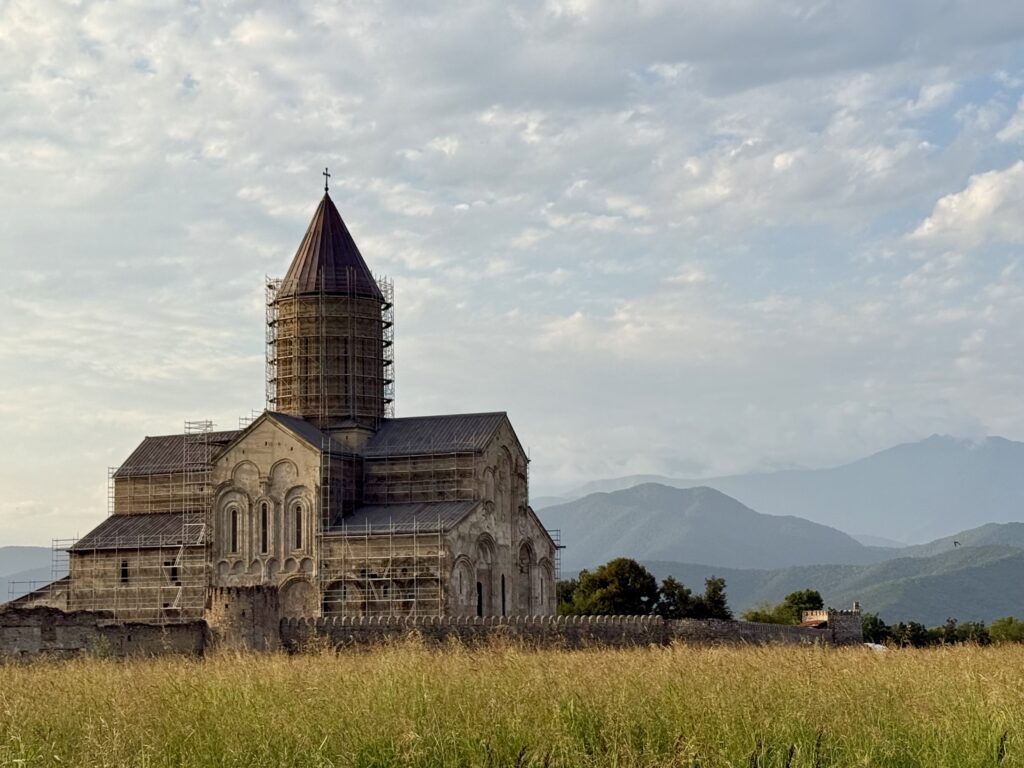
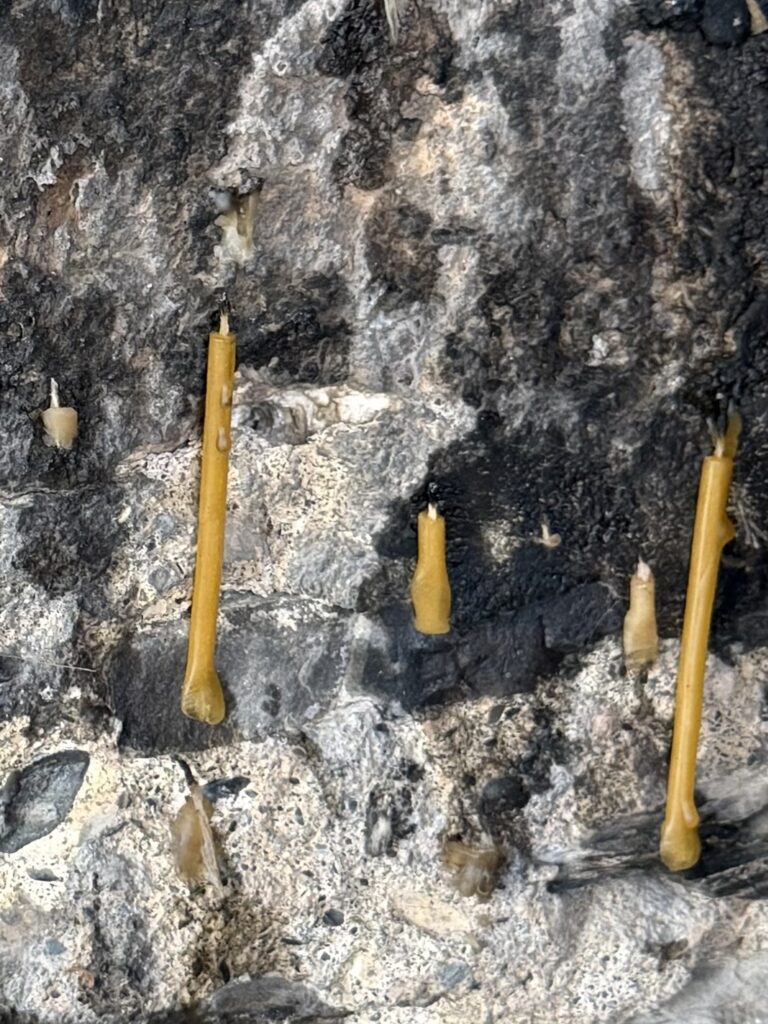
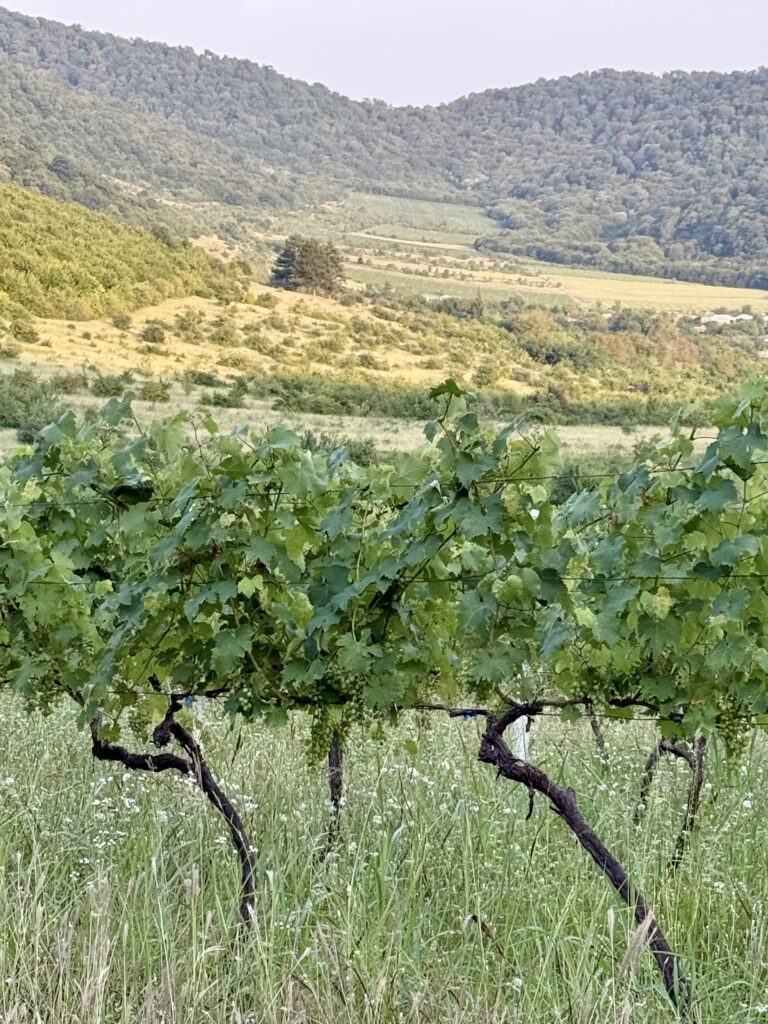
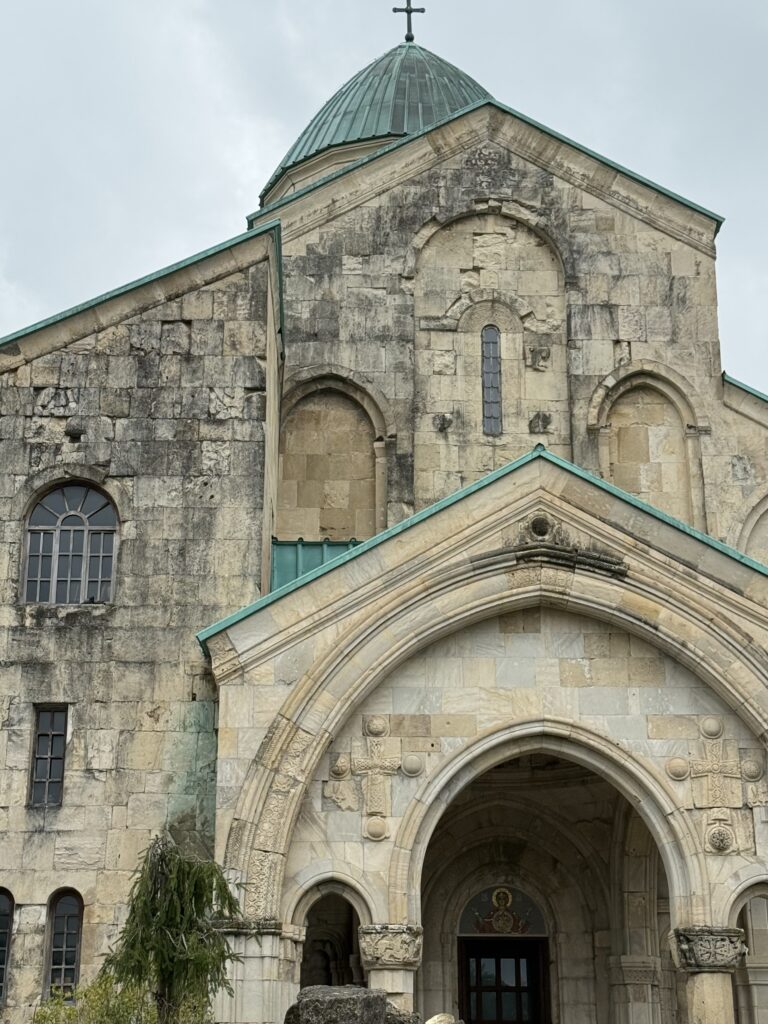
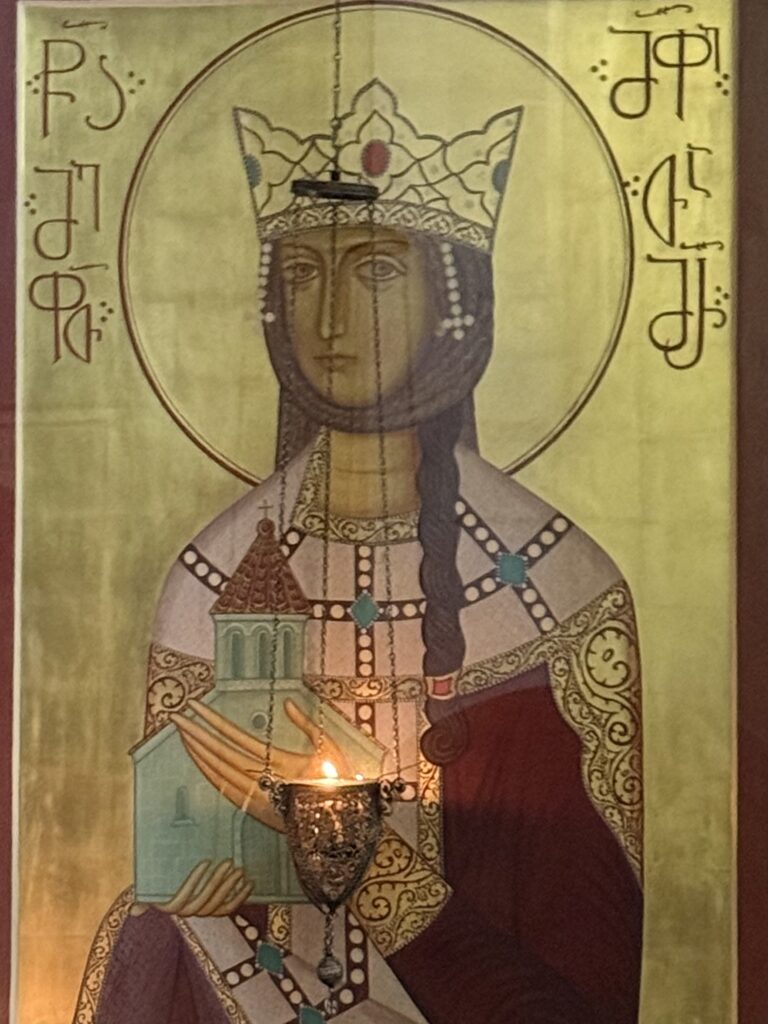
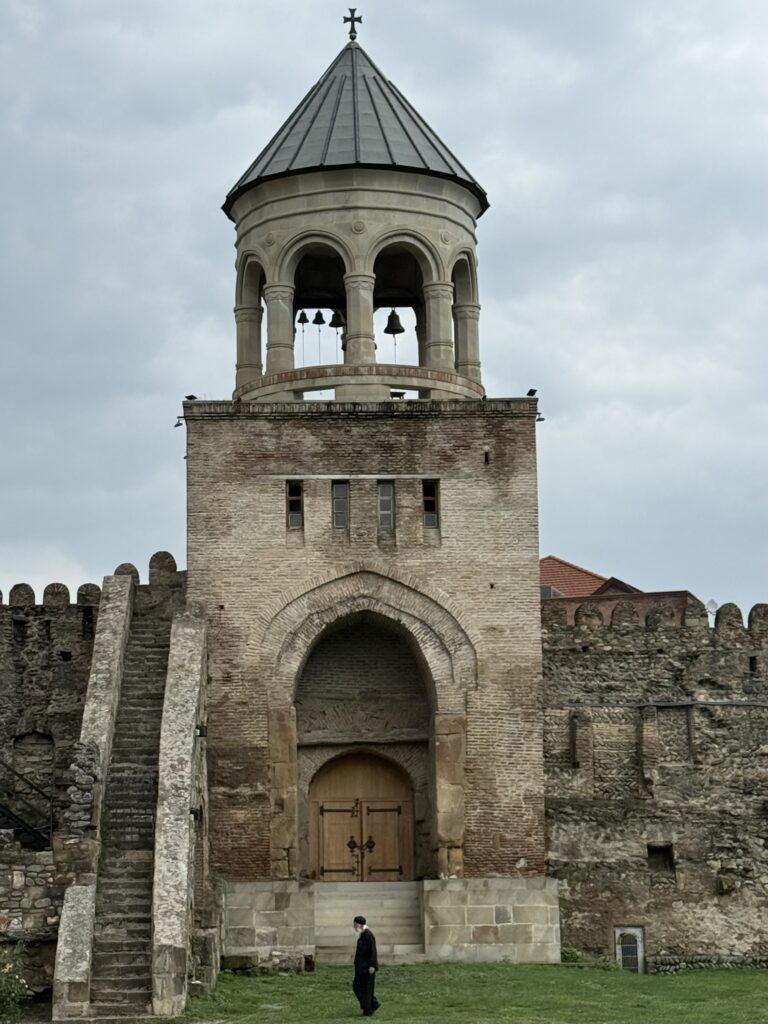
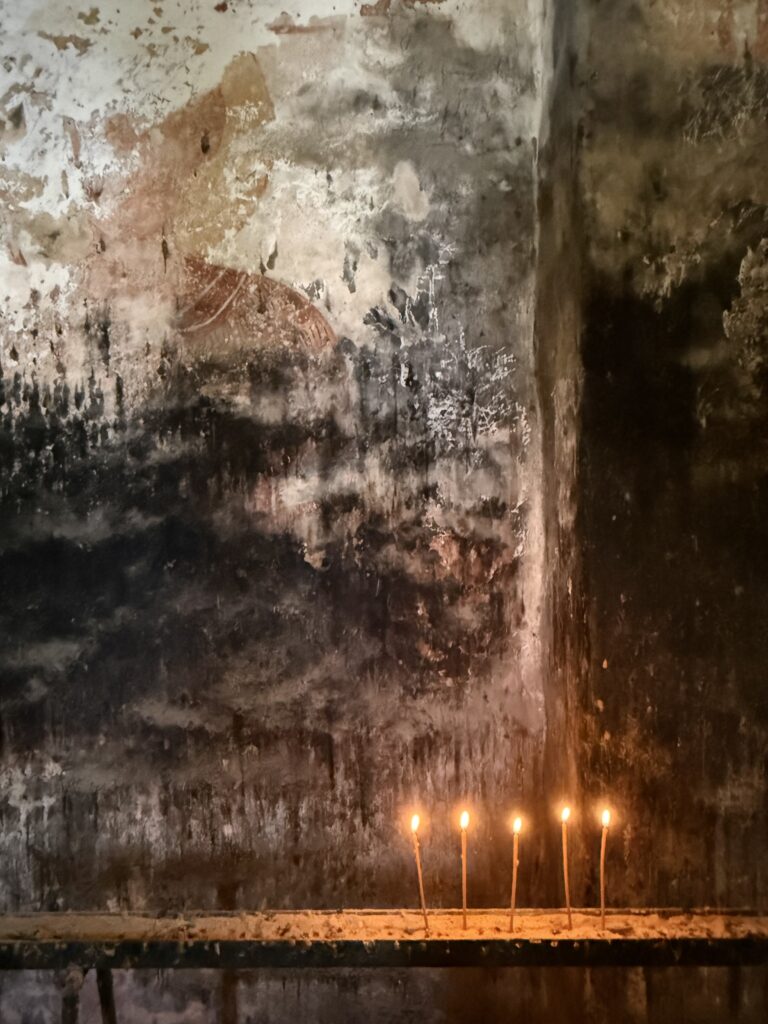
We head back to the lowlands to tour the Kakheti Valley, the major wine region of Georgia with over 200 wineries, with Olaf. In 2017 Georgia was designated as the birthplace of winemaking based on trace chemicals and pottery shards found south of Tbilisi dating over 8,000 years old, with the earliest wines being made in qvevris or underground amphoras. We visit a 4th generation qvevri business, amazed by the massive vessels which are built by 3 people adding 10 cm in height per day, using scaffolding to reach the top. Once cured, which takes 3+ months, weather dependent, they are carried by 8 people into the kiln which holds 8 qvevri and bake for a week, tending the fires round the clock. Once cooled they are covered in a thin layer of cement to provide rigidity and are sold to be installed in the ground for wine fermentation, storage and aging. There remain only 10 families making qvevri, considered a UNESCO intangible cultural heritage. We also visit the 11th century Alaverdi Monastery where Olaf was baptised and married, which displays religious iconography whitewashed off the walls by the Soviets and parishioners’ jewelry hanging on the saints’ images to be retrieved and worn later as protection. On the blackened walls remain candle wax markings, a tradition started when religion was forbidden during Soviet rule forcing worshippers to quickly mount their candle offerings to the walls before fleeing. The Orthodox church does not proselytize or decorate with the usual riches, focusing instead on the essence of religious commitment and deep belief. As beams of light pour through stone slits casting light on ancient graves, a black clad priest with a long, grey beard and cross-ladened chest recites the liturgy while candles burn in memory.
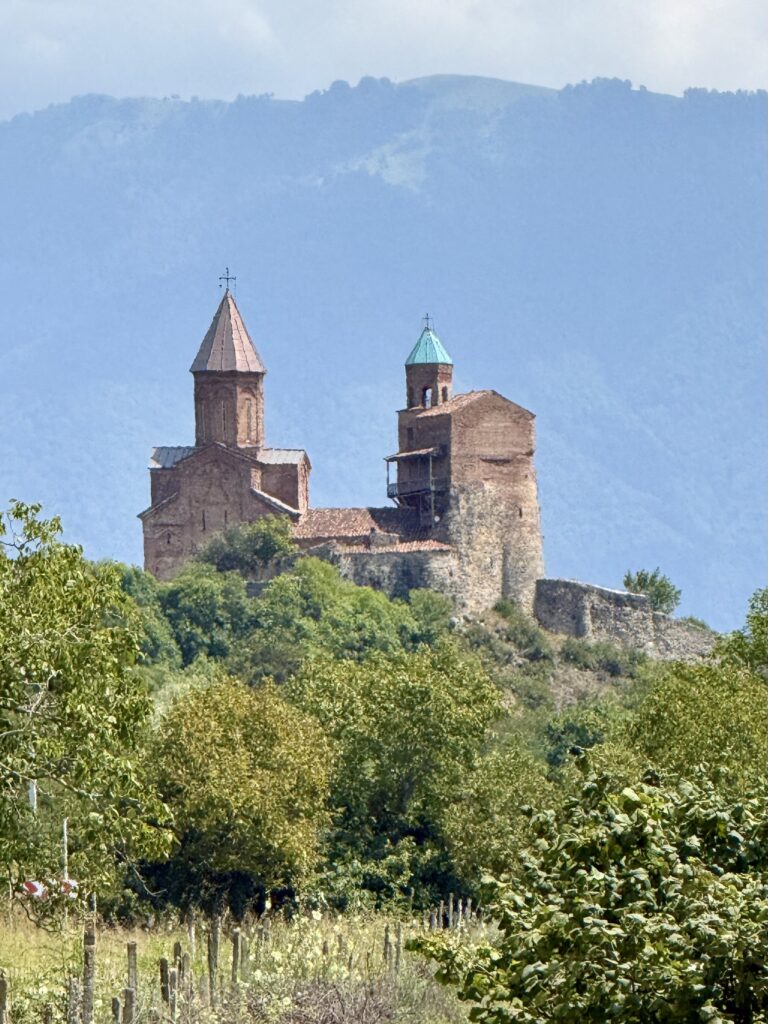
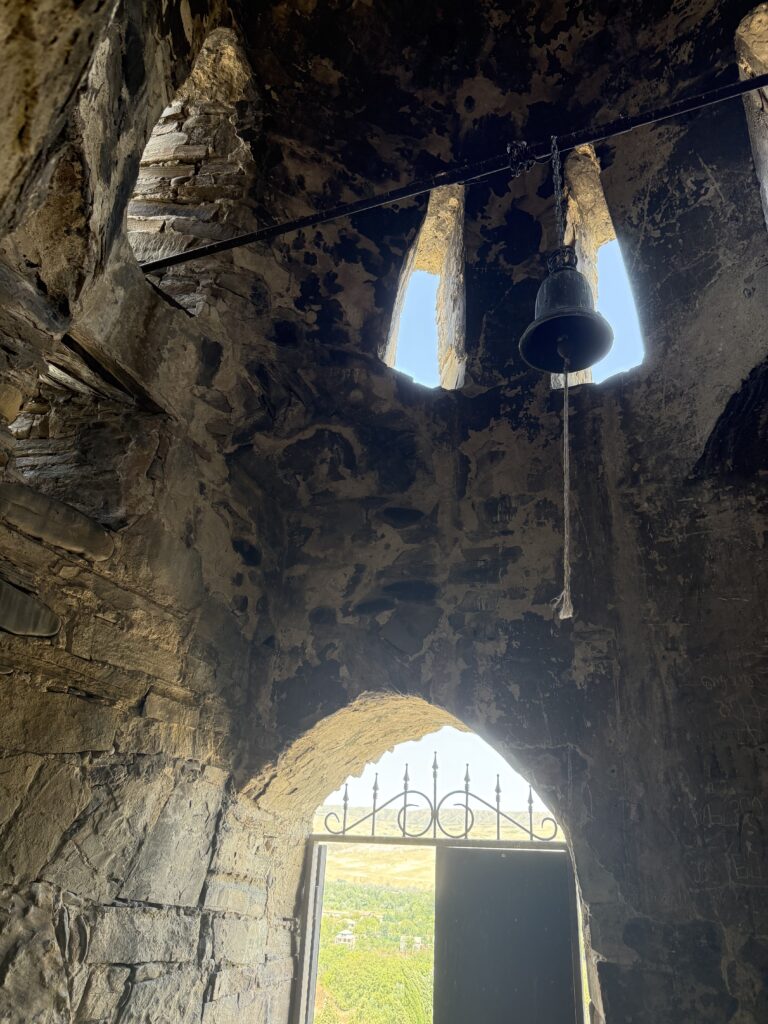
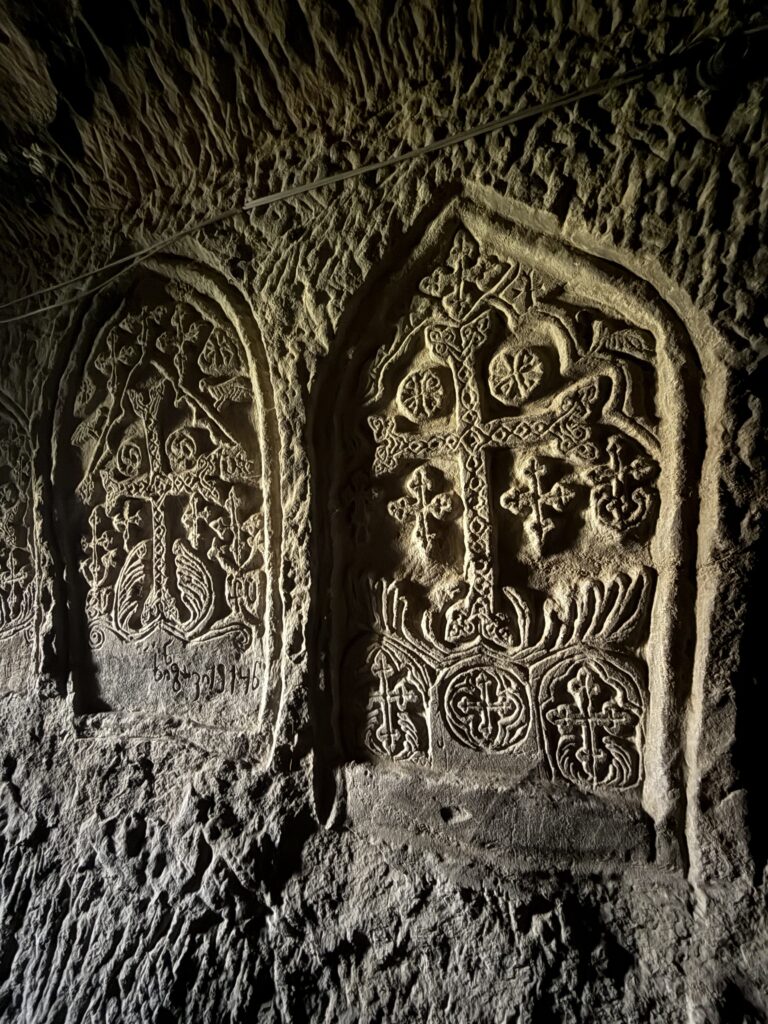
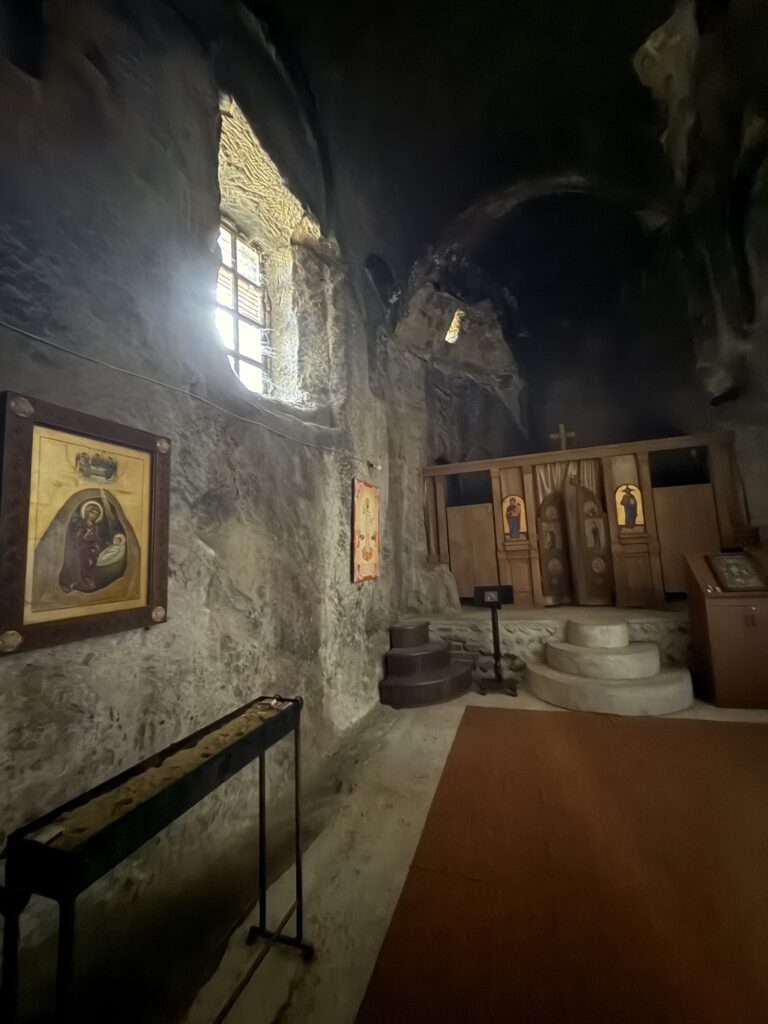
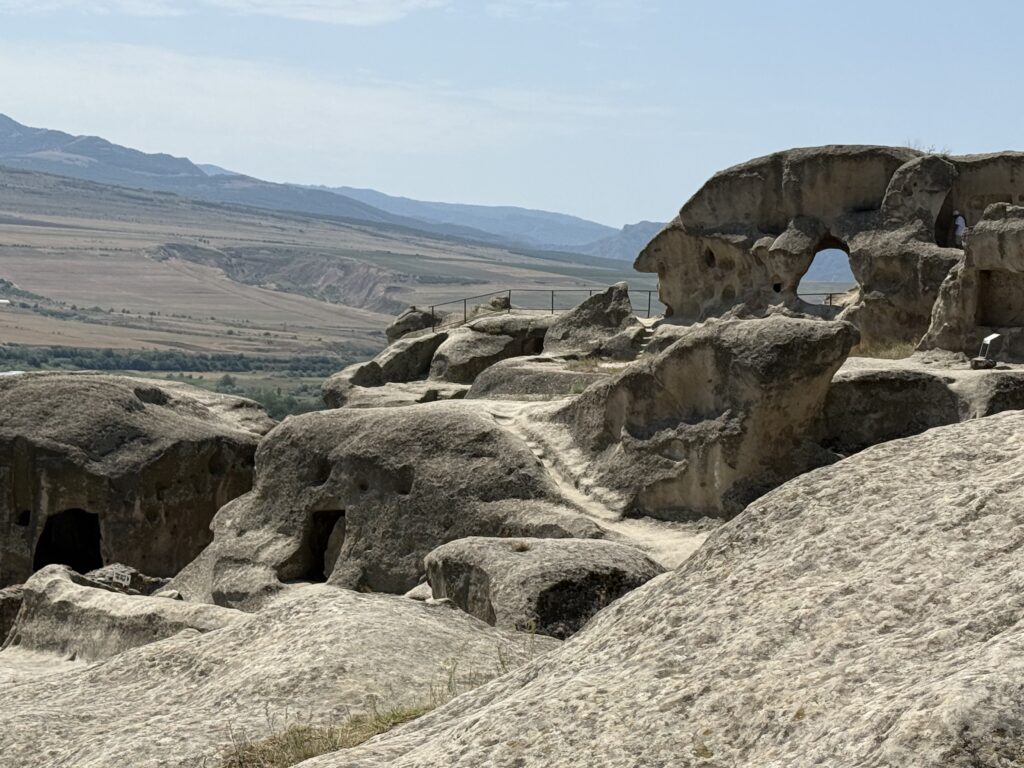
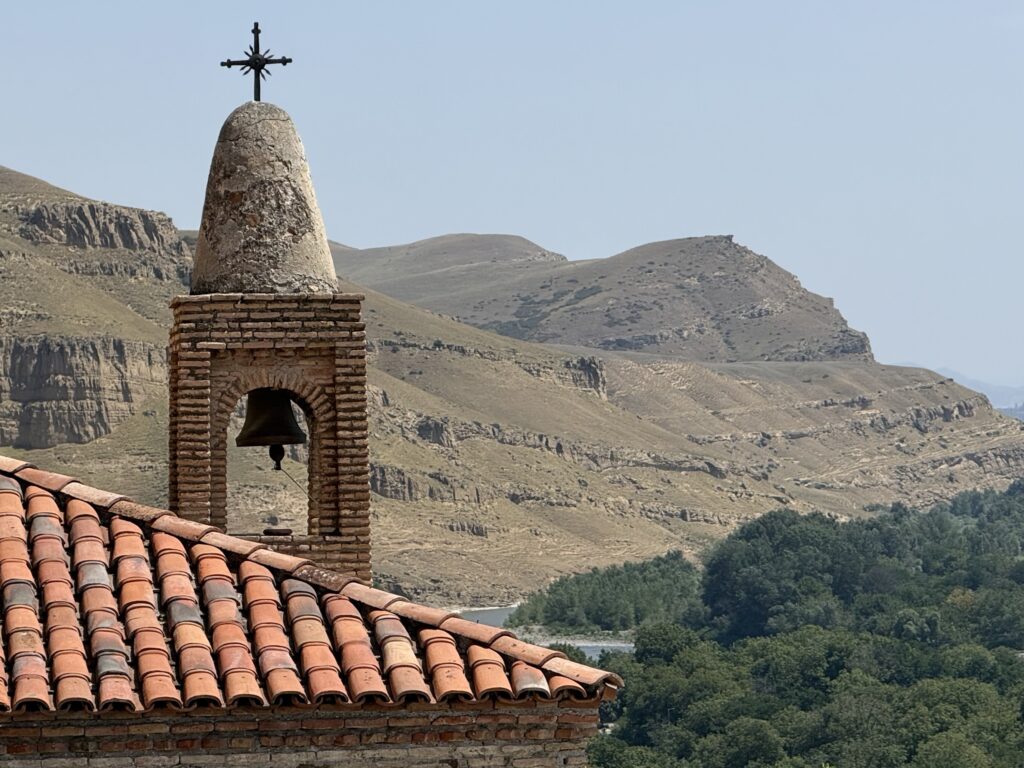
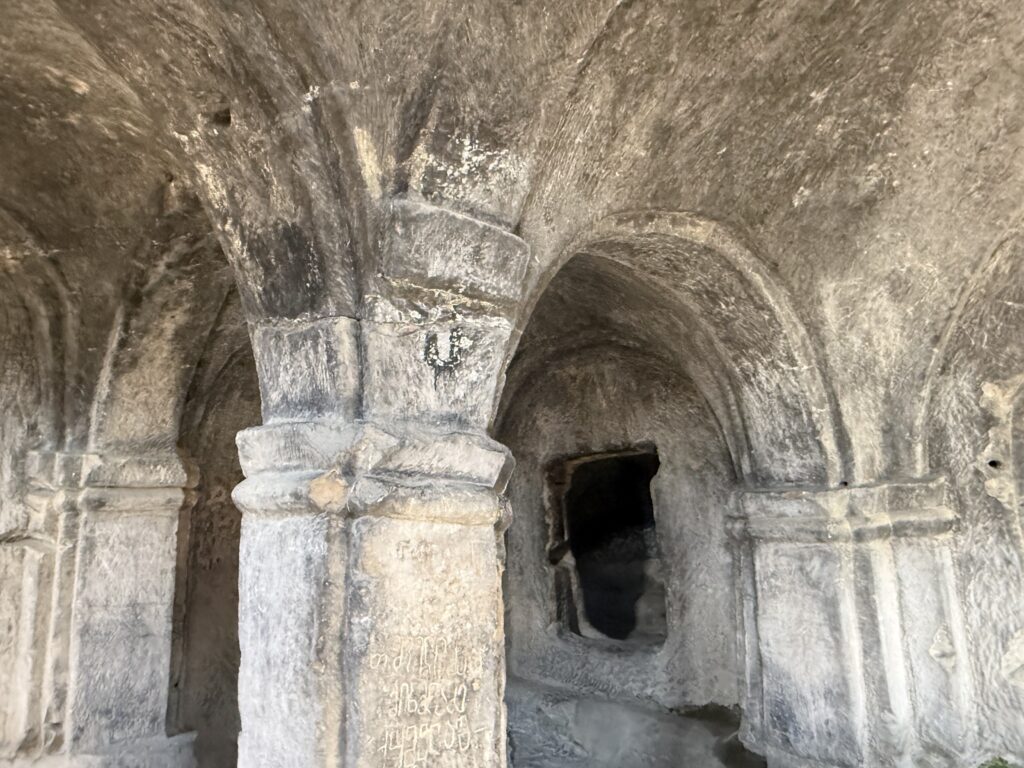
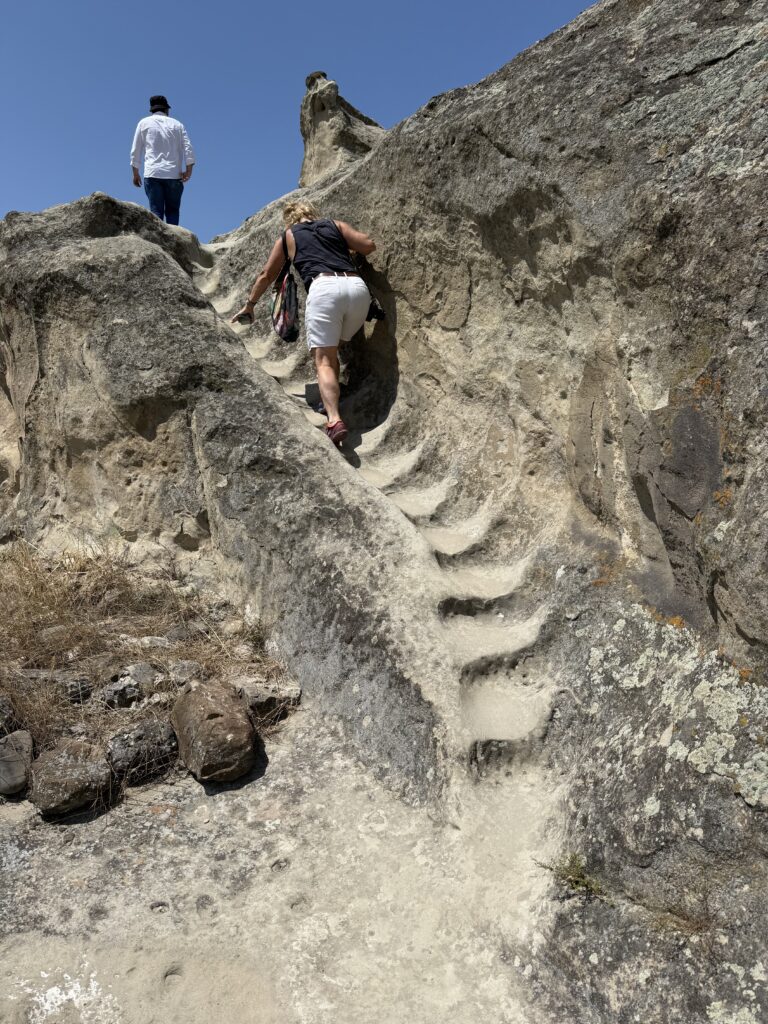
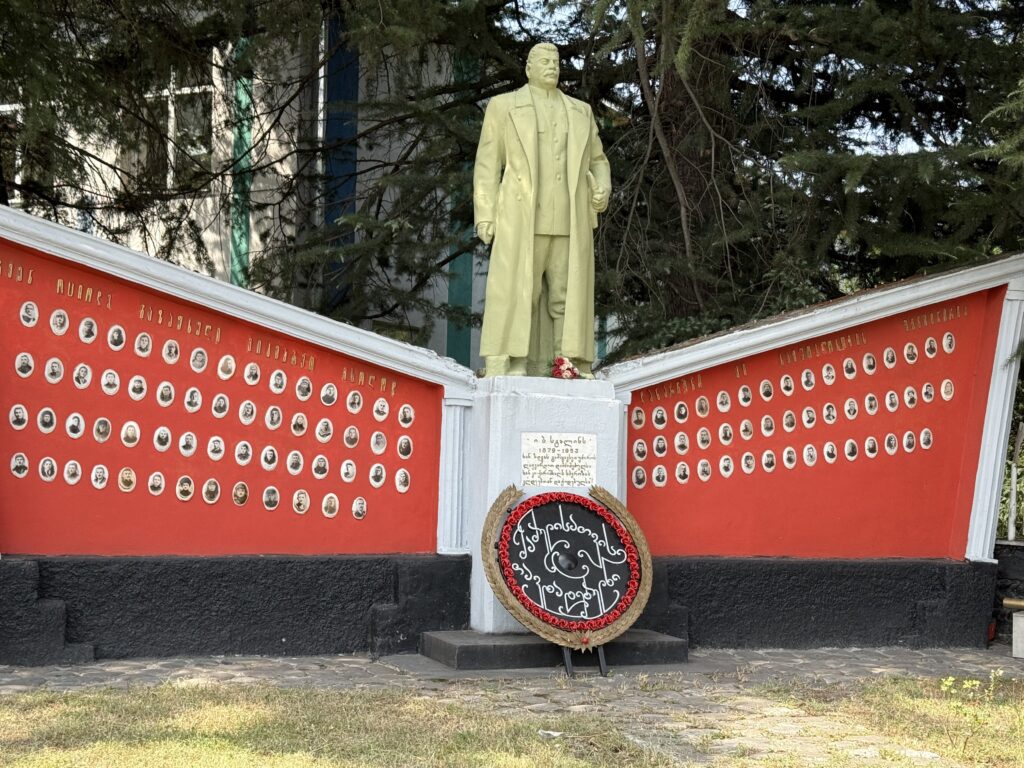
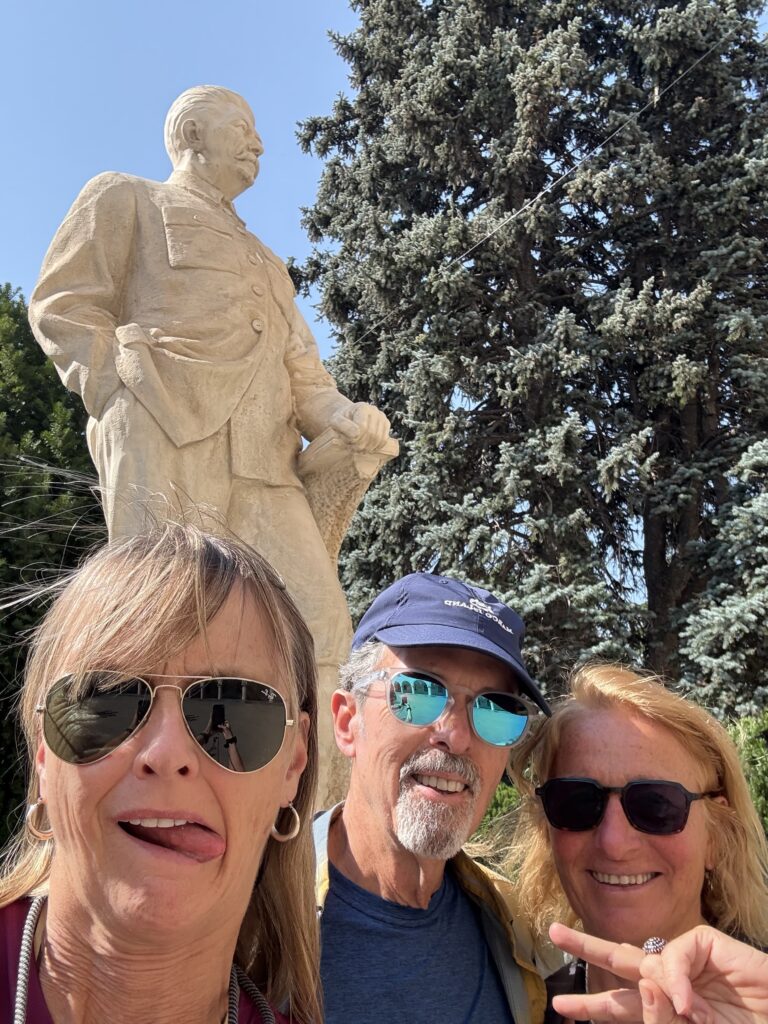
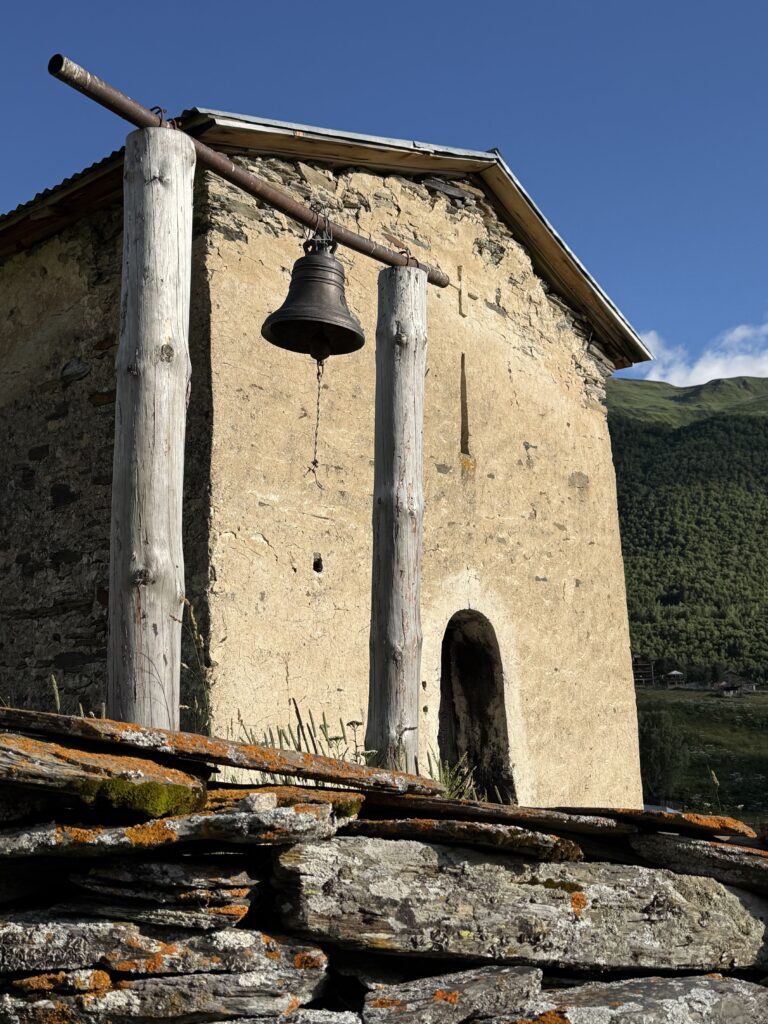
Back in Tbilisi we connect with Ann, a Belgian friend from my time in France in my early 20’s. With our guide Gio we head towards the mountainous Svaneti region, visiting the tiny Kvakhvreli Church built into the rocky hillside with only the belfry visible. Unlocking the gate, we explore the caves on our own, finding a tiny chapel and tunnels that connected in ancient times to the Uplistskhe village across the river for evading invaders. The earliest settlers of the Uplistskhe caves date from 1,000 BC, and in time over 700 cave dwellings for up to 20,000 inhabitants were carved into the hillside. We witness wheel ruts in the rocks from the ox-drawn wagons pulling pagan sacrifices, intricately carved ceiling posts, prison cells, an apothecary, wine press, and a rock-carved moat to be slathered with hot oil to deter attackers. Builders used chisels with a gold nugget embedded in the middle so once their chisel wore down from work, they retained the gold nugget as payment and were freed from labor. We swing by Gori where Georgia’s most famous citizen Joseph Stalin was born, and his statues can still be seen in villages and even in front yards across the nation, as the older generation clings to memories of the Soviet era. We pass a massive dam built by Georgia near the border with Russian-occupied Abkhazia, with the Russians having expanded their border over the mountain ridge to midway across the dam in order to redirect electricity towards the Abkhazia region in a clear violation of international law. Georgia has an abundance of water, with over 64,000 rivers careening down its mountainous hillsides, fostering their agricultural prosperity. Legend has it that when God was dividing up countries, the Georgians were late to the meeting (GMT = Georgian Maybe Time) and smelled of wine. When confronted by God, they explained that they were busy toasting to him and showed him their table filled with food and wine in his honor. He was so impressed by their hospitality that he granted them the land he had been saving for himself, the beautiful nation of Georgia.
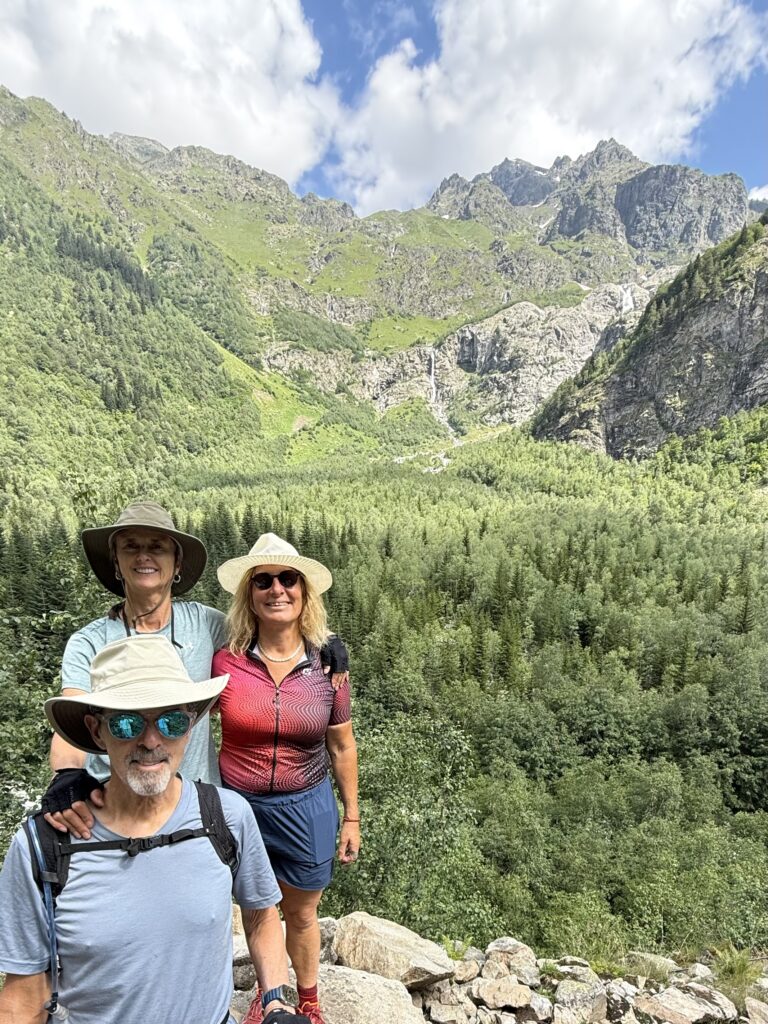
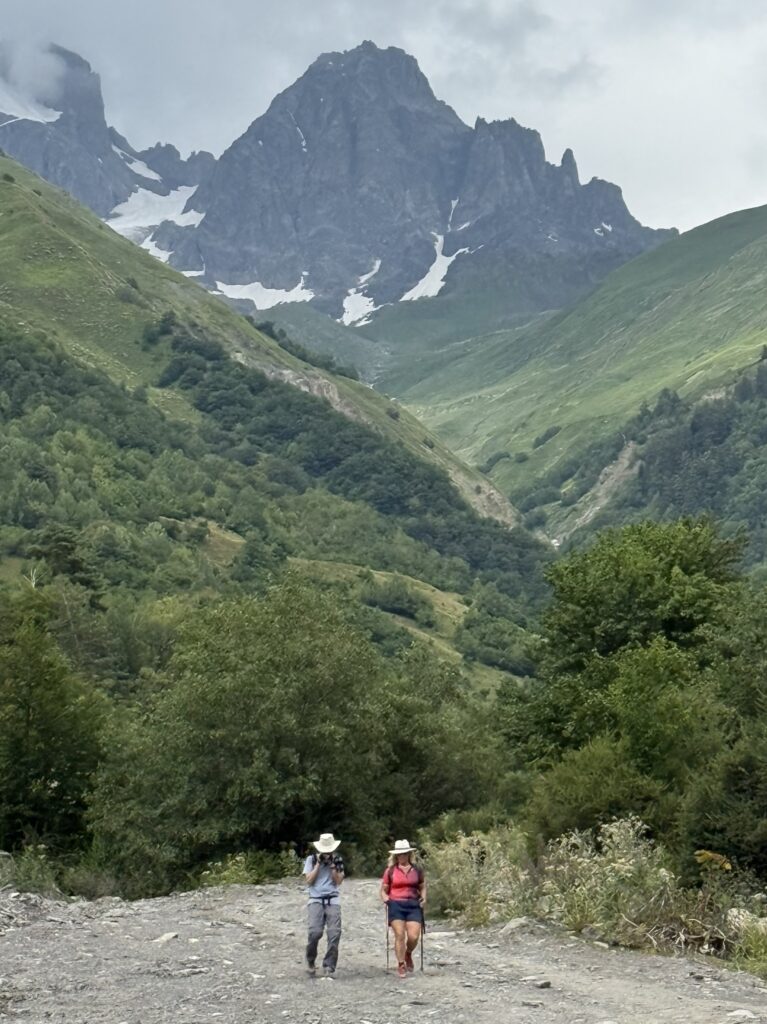
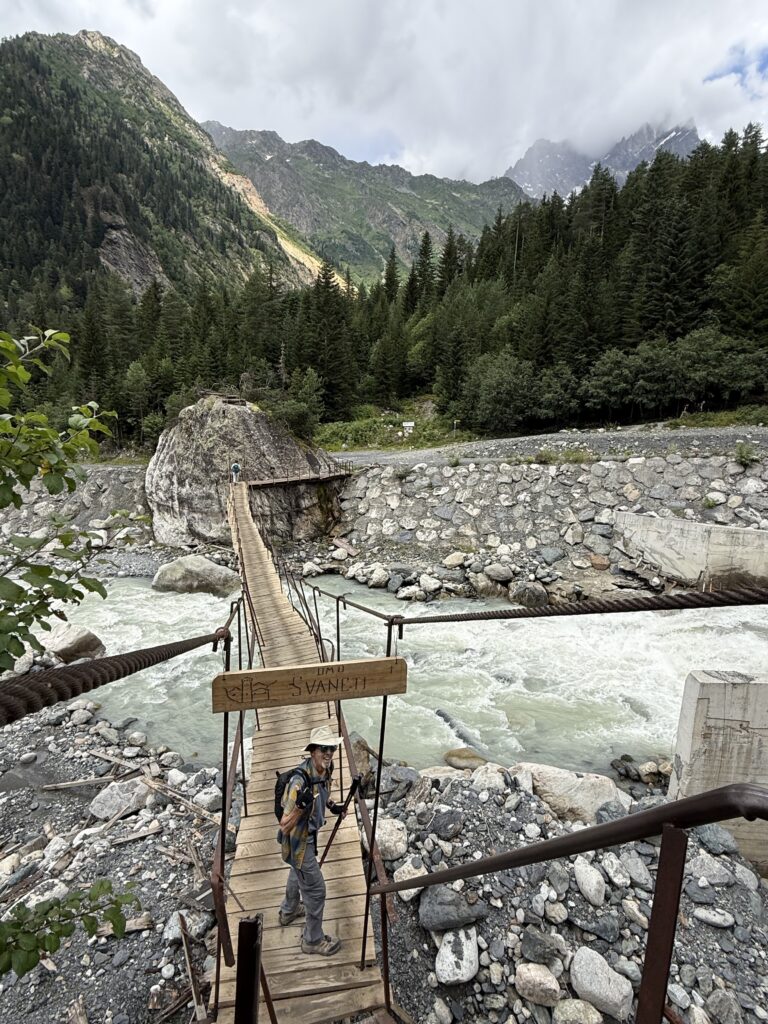
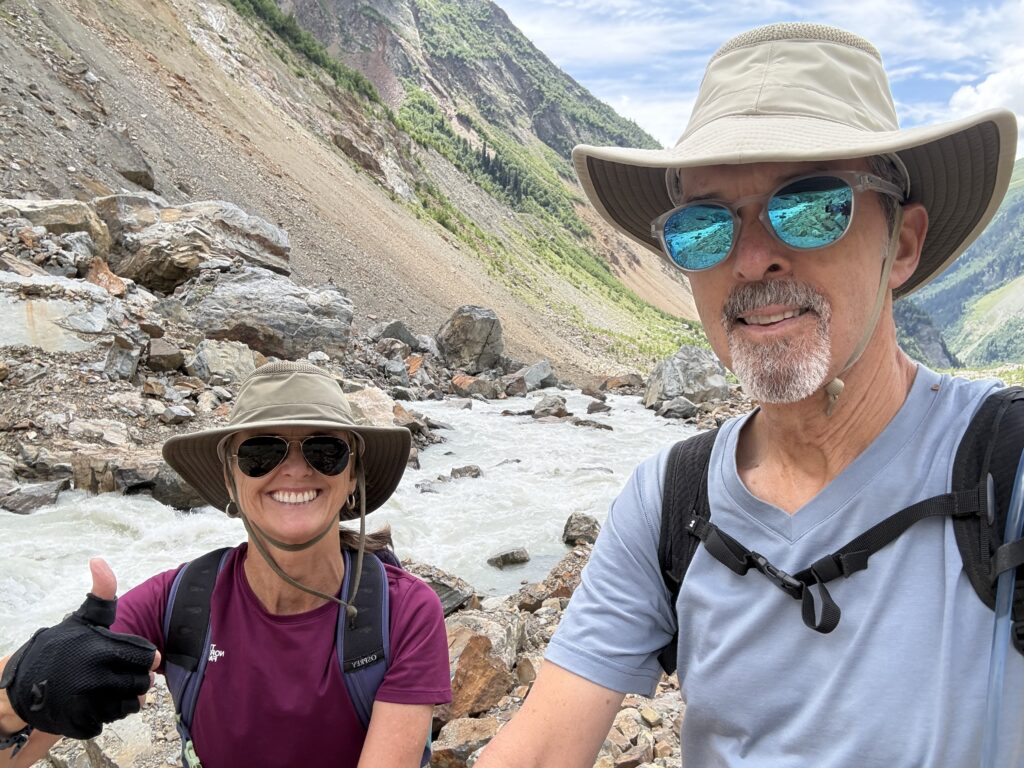
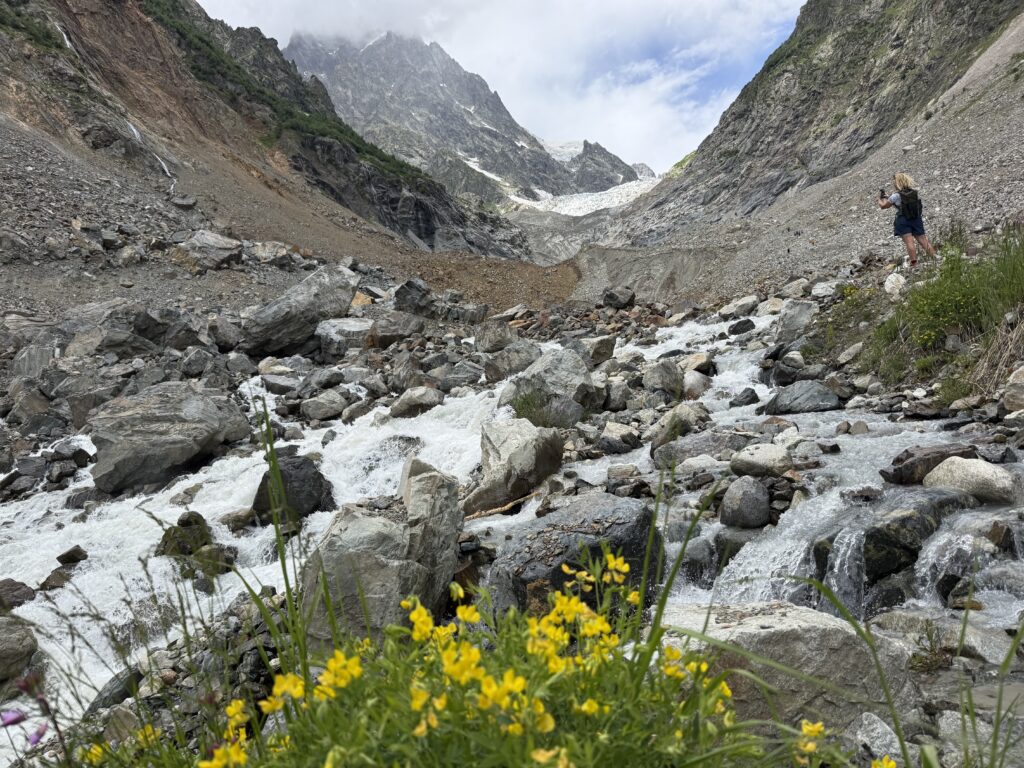
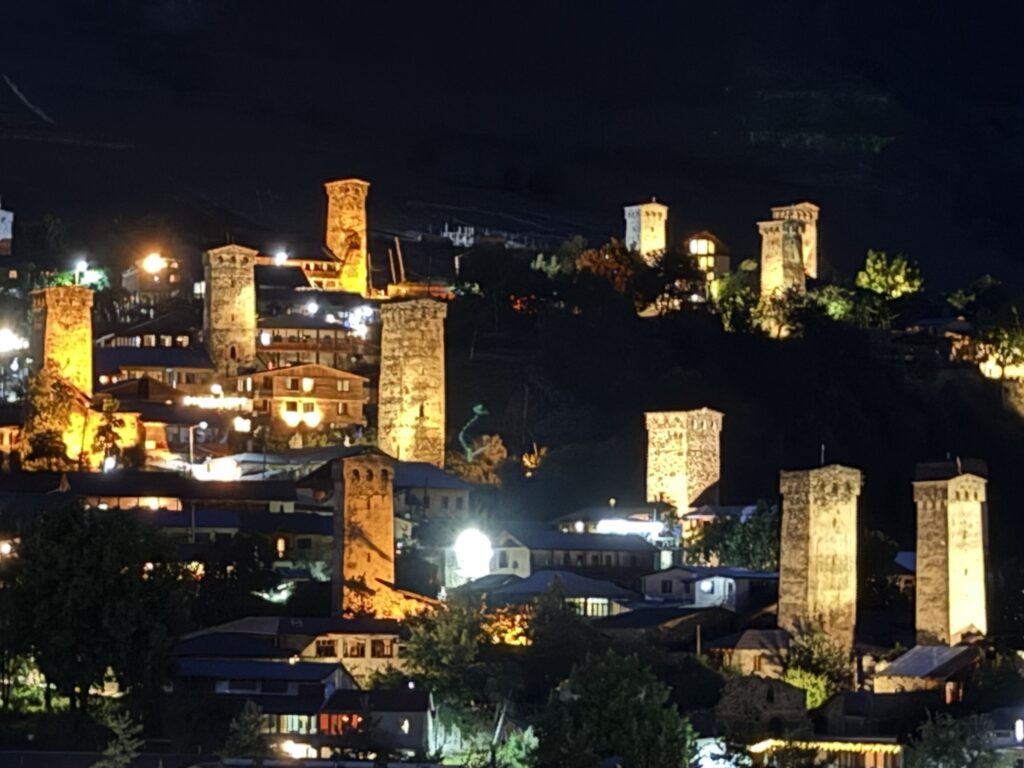
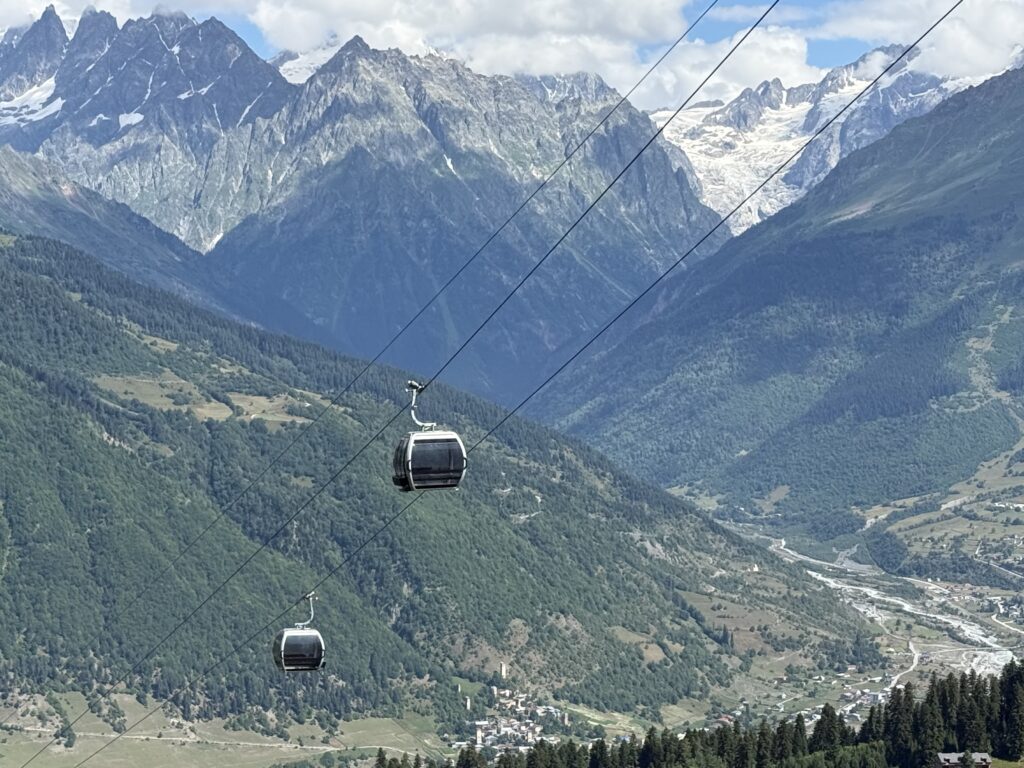
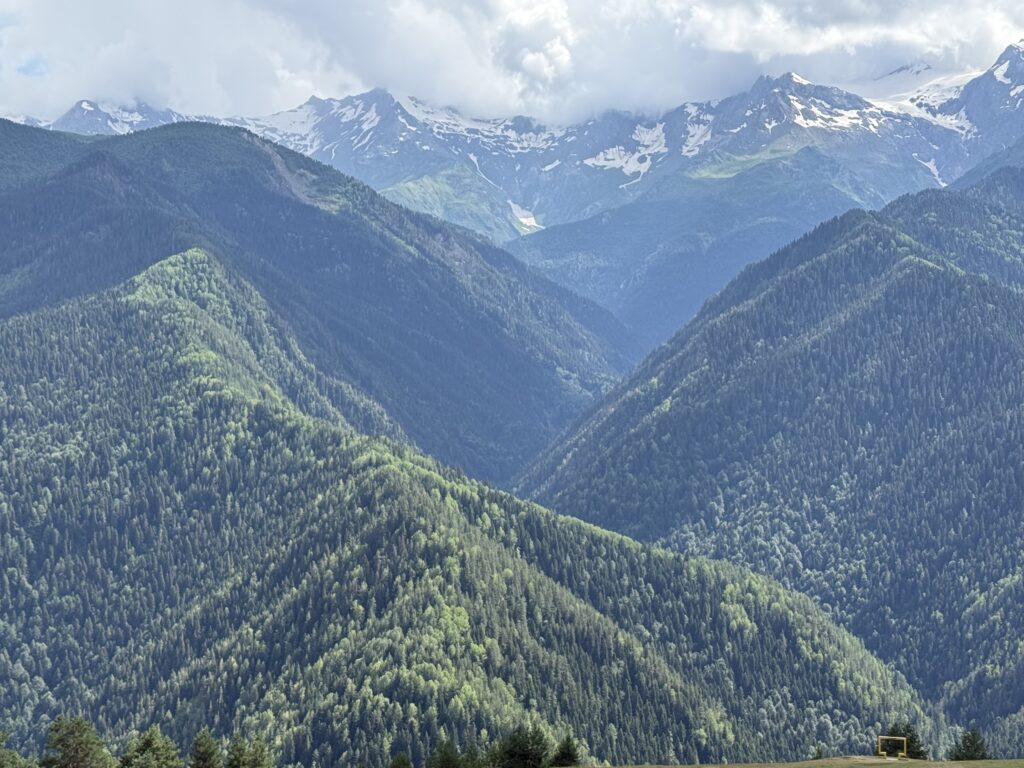
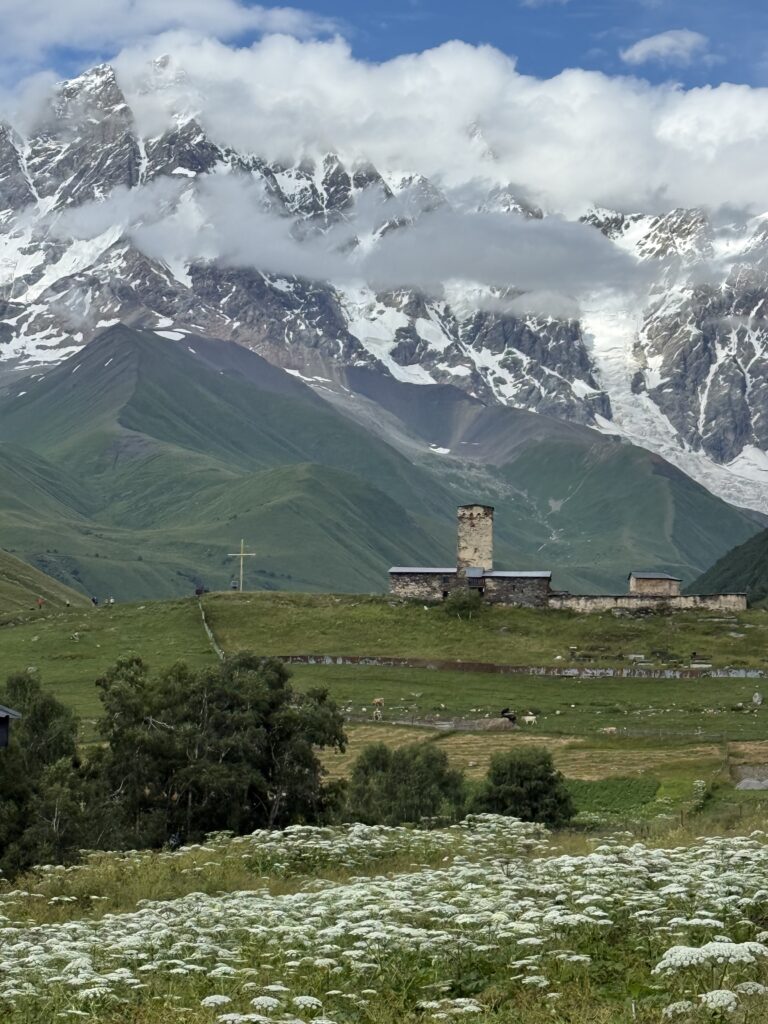
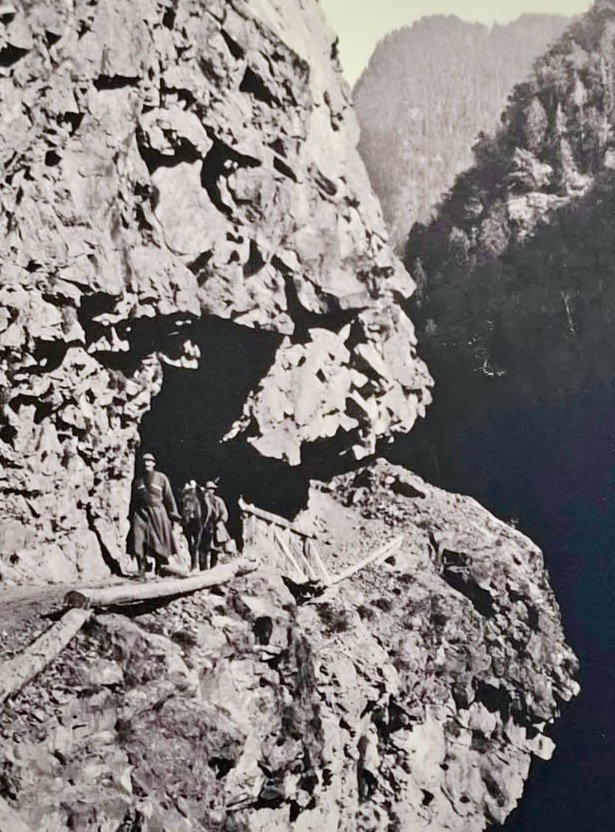
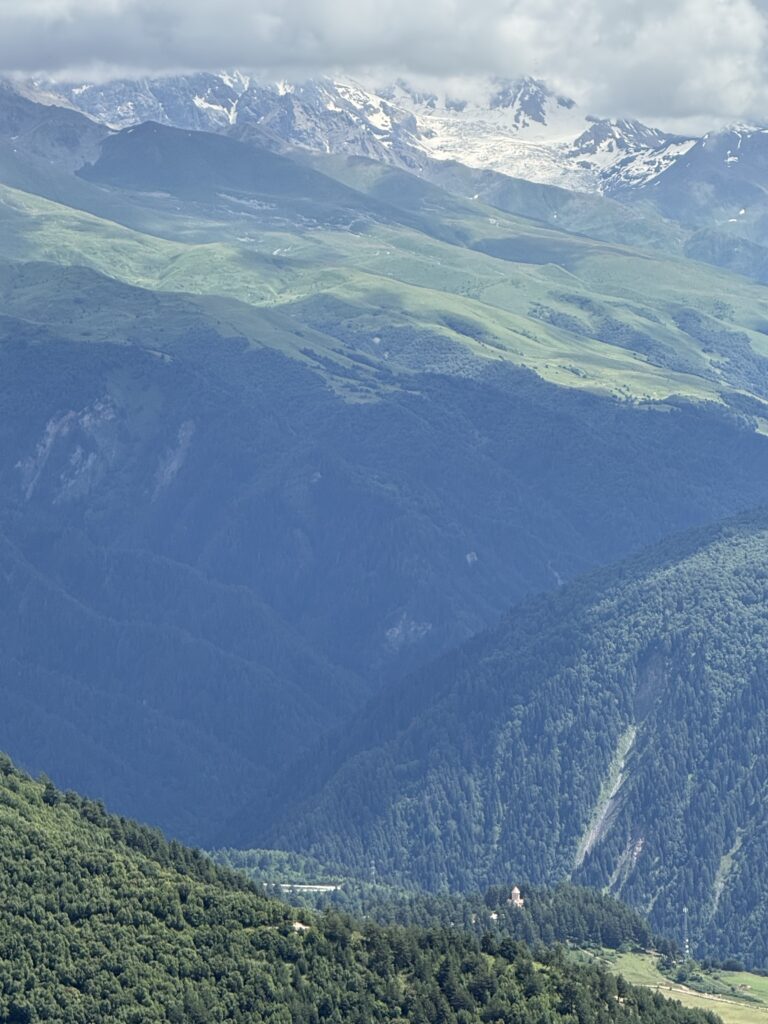
Climbing into the Caucasus, the highest mountains in Europe, we arrive in the Becho Valley staring up at Mt Ushba (15,490 feet), watching the setting sun hit the snow-covered peaks, with horses being herded home and cows strolling back of their own volition with cowbells ringing. We hike past verdant hillsides streaming with waterfalls tumbling down to a milky glacier river amid a forest of pine and birch, encountering a military station holding the line against the ever present Russian threat. At the abandoned village of Guli, house rubble covered in weeds and a crumbling 9th century church mark where the Soviets destroyed the entire town, sending the villagers to Siberia in punishment for not heeding Soviet rule. In the charming town of Mestia, we enjoy energetic Georgian music over dinner and fabulous vistas on a ridge hike on Mount Zuruldi with ski lift access, and where on New Years Eve families compete with firework displays from their towers, which must be a sight to behold! Nearby Ushguli is the setting for the stunning movie Dede about life in Svaneti in the early 1990’s during their civil war, highlighting what little control women had over their destiny, coined as “where feminism meets fatalism,” a must see. In a town photo exhibit of Ushguli between 1880-1920, an image shows the rock-carved road from Mestia to Ushguli which was so tight that two horses couldn’t pass, forcing one horse to perish, but allowing for strong village defense. With the recently opened road connecting Ushguli to Lentekhi, a circle route of Svaneti can be self-driven, hopefully bringing much-needed tourism to this beautiful region.
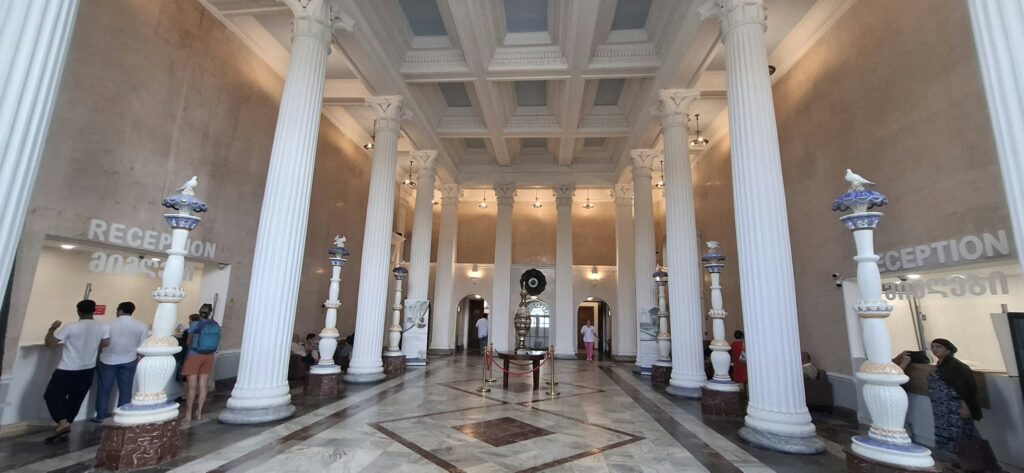
Enroute back to Tbilisi we stop at the Tskalbuto Thermal Waters, a Soviet-built no-fuss spa which once had a direct trainline to Moscow. Soaking in a lukewarm tub of mineral water, I get hosed down limb-by-limb with an underwater garden hose by busty Vera with dark eyes and heart-shaped pink lipstick, ostensibly providing a water massage. I swear Vera is gossiping with her colleague that this skinny bird will never catch a husband. Next I lie down on a hot slab of marble covered in a sheet of plastic with a sheen of mud on top as 3 women slather my body in warm mud and I belly laugh uncontrollably throughout. They wrap me in plastic like a mummy topped with a weighted blanket for me to bake for 20 mins while my body slowly relaxes, except for my nose which I crave to itch. The whole experience is hilarious and worth every lari!
What has struck me the most about Georgia is the deep sense of patriotism and pride, most likely intensified by the pervasive threat of Russia to their independence. It is a country with amazing landscapes, generosity of spirit, deep faith, and rich traditions. Its sights, history, and hospitality have touched us and will not be forgotten. Didi madloba (thank you so much) for our enriching and exciting visit!
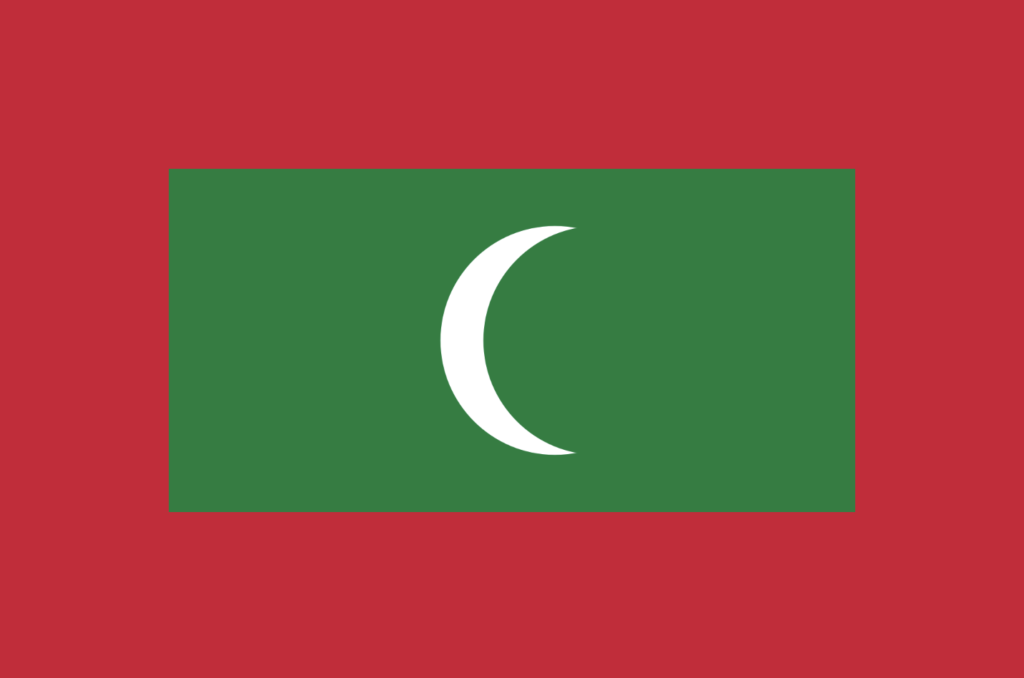
Next up: Maldives
I need a bottle of Daniel’s finest and an entire afternoon to absorb and appreciate this travelogue. This isn’t a quick instagram read nor should it be. The writing and tales of your travel in Georgia are really wonderful to read and the photos are excellent- far better than 95% of travel literature I’ve seen. I’m envious as we all are but so happy you’ve taken this time to see the world close up as you would. So send me the bottle. I’m setting aside the weekend to read and learn all about your wanderings. Keep going and having a great time!!!
Hey Fred – you can order a bottle of Danieli Winery’s award-winning Mountain Saperavi here then savor the read, getting the full flavors of Georgia for an immersive experience! Glad you’re enjoying the blog and appreciate your kind comments! Keep pedaling! xo
Fascinating read, I didn’t know Russia was encroaching on them so much. What a great journey.
Thanks Simon! Yes it was enlightening to see and experience the encroachment, bringing light to the struggle in Ukraine and how an emboldened Putin could wreak further havoc trying to rebuild Russia’s crumbled empire. Keep paddling! xo
I so appreciate how deeply you dive into the local culture and environment. Thanks for making it so personal that I feel like I’m there with you and committed to Georgia’s independence.
Thanks Ed! The experience also reinforced for me how precious independence is and how it’s not to be taken for granted. xo
Sign me up for Vera and the muddy spa treatment !
Happy early birthday ..
Can’t wait to read how you plan to celebrate !
xo
That’s my bday gift to you Carol – a Soviet-style spa treatment! Happy birthday to you too big sis – have a fabulous day! We will be getting wet on our birthday, scuba diving in the Maldives. Life dream come true – add it to the heap, tons of gratitude! xo
These missives are amazing. You are literally bringing us along with you. Thank you, thank you, thank you! I hope you have plans for all these writings in the future.
Thanks Diana – glad you’re enjoying the ride! No future plans for this content yet, just documenting to bring my tribe with me on these life adventures and to enjoy for posterity. xo
I’m so glad to see you both with Olaf who looks every bit a man enjoying his life in such a gorgeous country. Thank you for such luscious photos & keeping us informed about not only the history of the places you’ve been, but also current events that are not in mainstream media.
Lisa – glad you’re enjoying our updates! Olaf is definitely living the life, a very happy man. It was such a joy to hang with him and I already miss his stories, humor, and insights. Sending love from the Maldives! xo
Come on over to our place sometime Fred and we have quite a selection of Danieli wines from all my travels with Eka and Olaf and the groups! 🙂 Glad you finally got to visit Susan and Brian! I love Georgia so much. Hugs and safe & fun travels.
Come on over to our place sometime Fred and we have quite a selection of Danieli wines from all my travels with Eka and Olaf and the groups! 🙂 Glad you finally got to visit Susan and Brian! I love Georgia so much. Hugs and safe & fun travels.
Thanks CAT for taking care of Fred’s thirst! Georgia certainly over delivered! So grateful for all of our amazing experiences there! xoxo
What an amazing journey! ❤️ Georgia looks absolutely incredible through your eyes…. so much beauty, history, culture and adventure. I’ve really enjoyed following along and experiencing it with you from afar. Now off to the Maldives! 🏝️✨ Shela Bliss misses you both already! Sending love from Lamu and wishing you an unforgettable next chapter. 🤍🌴
Salam alaykum Abdullah! So glad to hear from you and to learn that you continue to follow our journeys!🙏 We miss Shela Bliss and the amazing experiences you gave us there! 😍 Stay tuned for a post on the Maldives soon!🌴
Omg first of all, I had no idea that you could write so incredibly beautifully. And so, it charismatically insightful, and not just about architecture and design and feelings, but language and politics. Susan, I am so impressed. I don’t know what to do that aside. What an incredible country, it’s my my vision of my perfect world. The mountains, the hills, although I would like to see some more trees. But the architecture, these heavy sleep, steep slopes. I mean, God, I was just so excited for you. And loved reading every word you wrote, how’s my boy, Brian, how are you guys doing the last? I spoke to you, you were Brian was sick with pneumonia. And you had broken your ankle. Well, you certainly have come a long way since then. I can’t wait to read more. I am now in your pocket. I’m gonna go back and read all the things I’ve missed. And couldn’t be happier to do it. Love you very much. My sister and you know, this is the life that you were meant to have in every way. It is so very, very you and Brian. It’s a unique experience that not many people in this world will say they have had. And can have could enjoy with such gusto as the 2 of you and I couldn’t be more proud.
What a thrill Blair to see your comment! I’m so glad you enjoyed this post on Georgia and hope you find others that are as inspiring! We are doing great – Brian recovered from pneumonia months ago and I should be fully healed from my foot fracture by the end of this month, and it has not held me back. We do feel truly blessed to be able to have this amazing journey, and there are many pinch-me moments. Let me know your thoughts as you read about our other adventures! Love you bro! xo