
“In this world hatred never ceases by hatred; it ceases by love alone. This is an eternal law.”
– Buddha
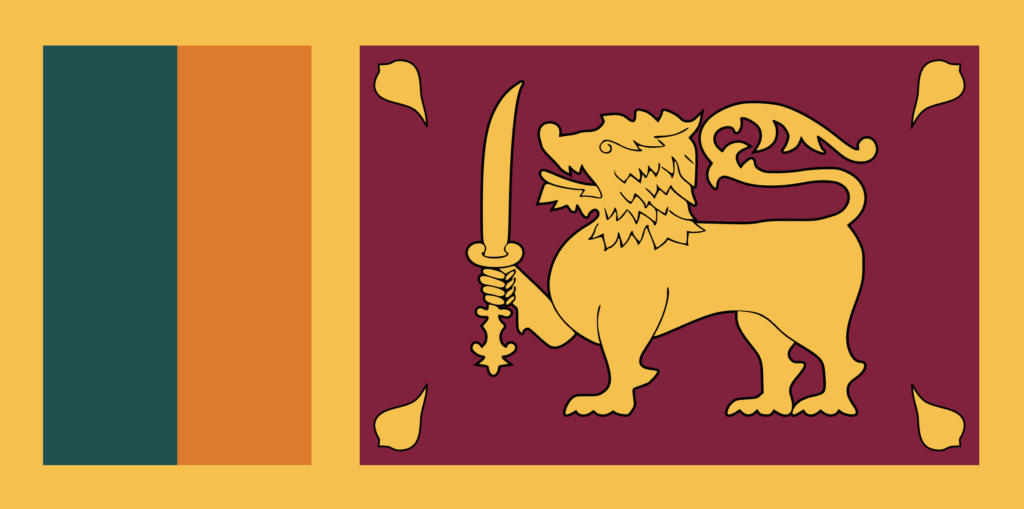
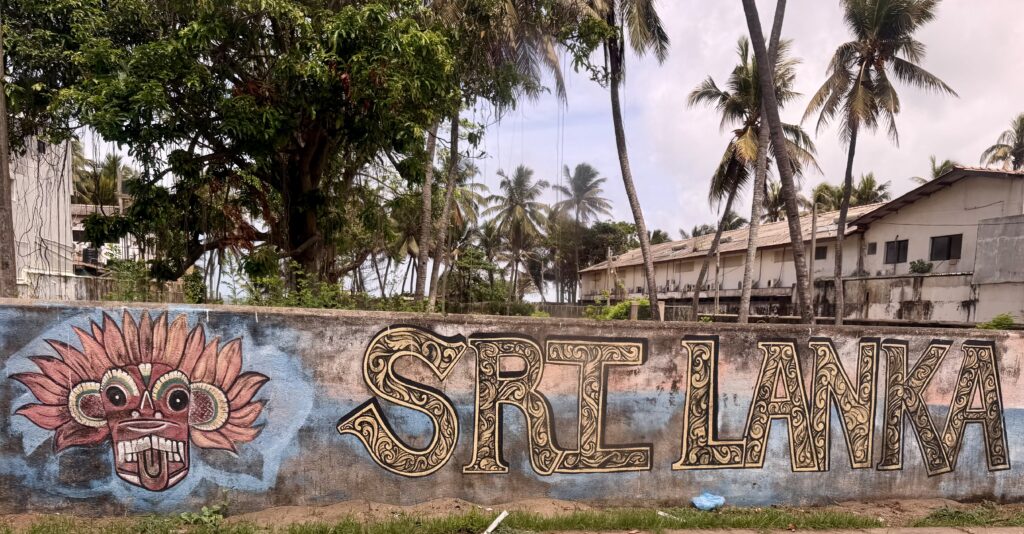
We head next to the island of Sri Lanka, just a short hop from the Maldives, to explore their diverse landscapes, rich history, and tantalizing flavors. What we find is a chill, soulful vibe well represented by their greeting – ayubowan – which translates to “may you live long.” Sri Lanka means Resplendent Island in Sanskrit and was first referred to as Lanka (island) in the ancient epic Ramayana when King Ravana abducted princess Sita and hid her in Lanka. Later the British renamed the island Ceylon when it became a British colony, initiated with the British East India Company gaining coastal control in 1796 followed by the fall of the Kingdom of Kandy in 1818. The island gained independence in 1948, becoming the Republic of Sri Lanka in 1972. The British have left their mark on this nation in many ways, mostly positive as pointed out by our guide Nero of Tour Ceylon +94, as they established thriving tea, rubber, and gem industries, built essential infrastructure such as railways and roads, developed military defenses, and introduced healthcare and English-language education.
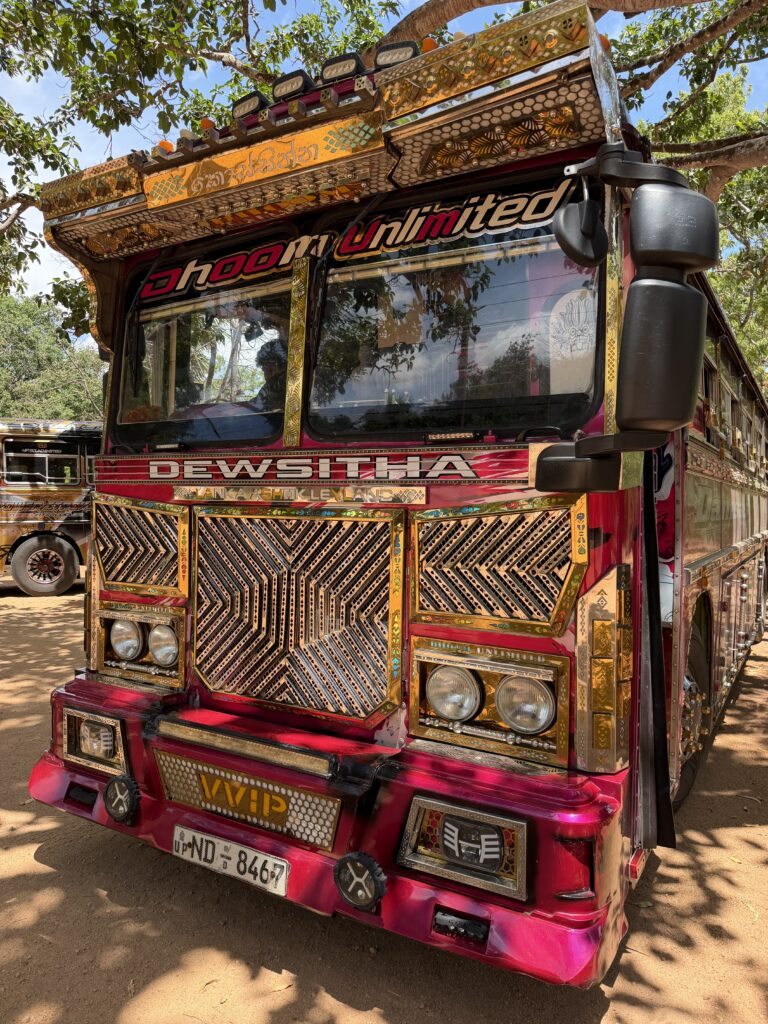
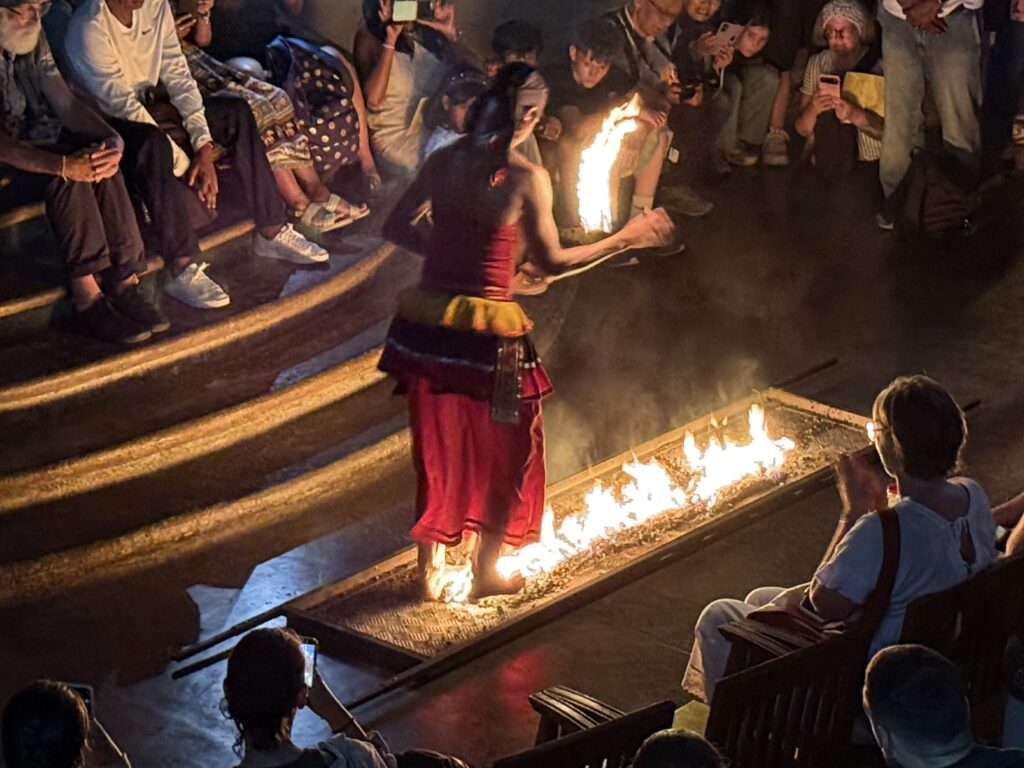
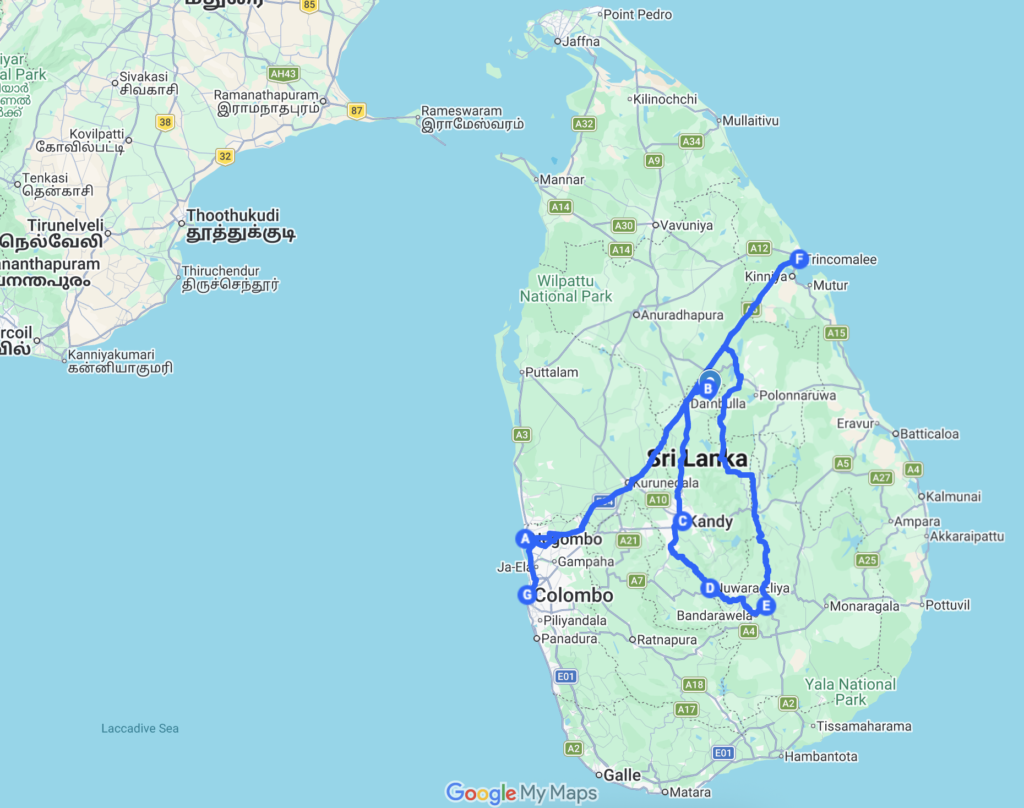
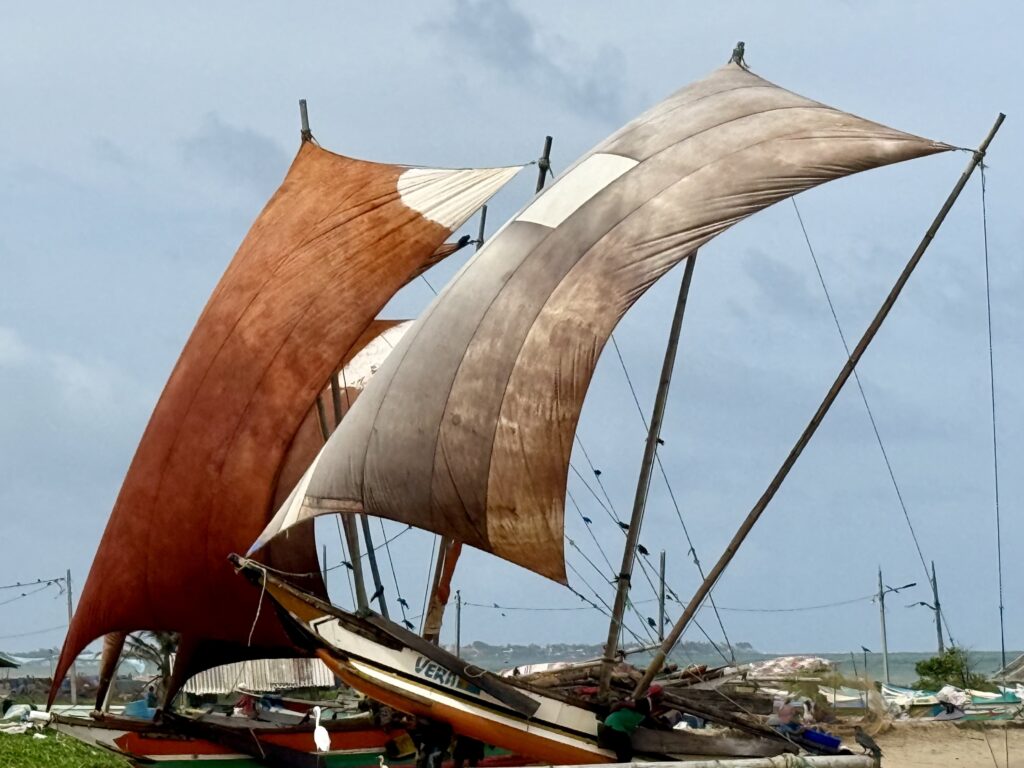
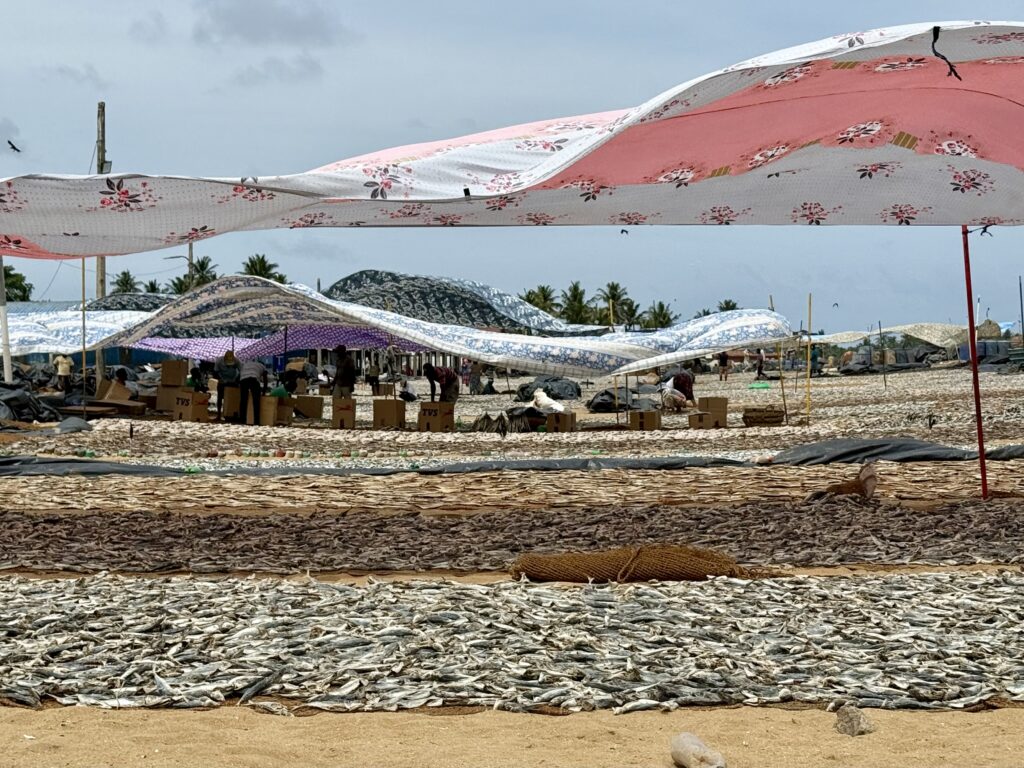
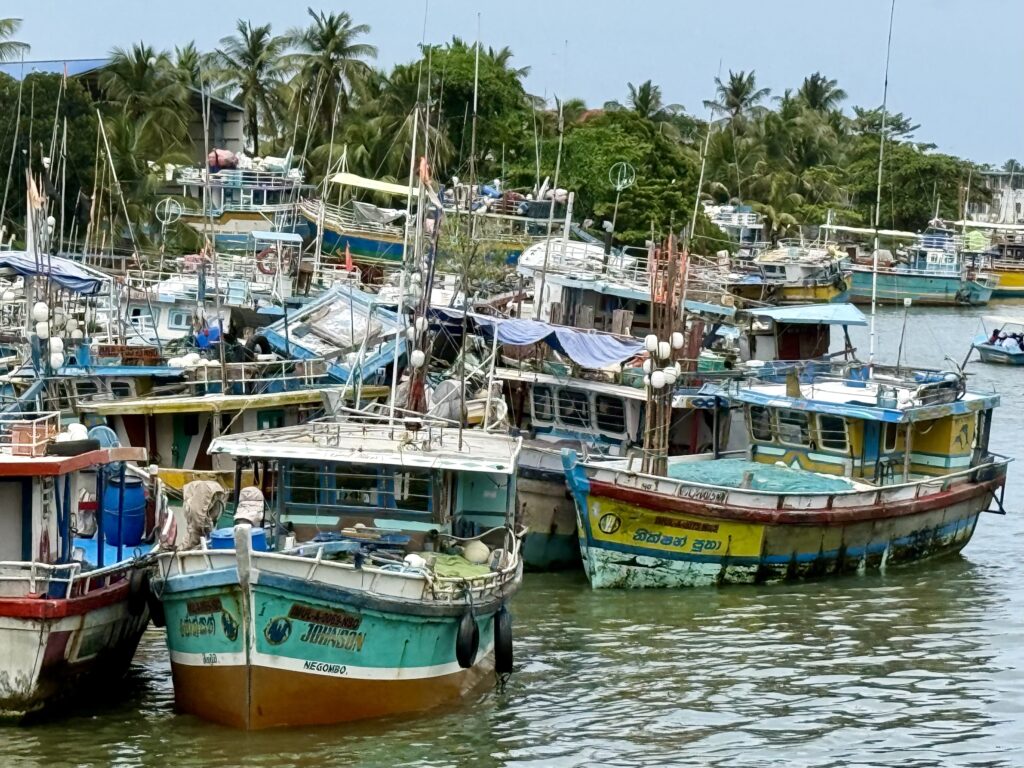
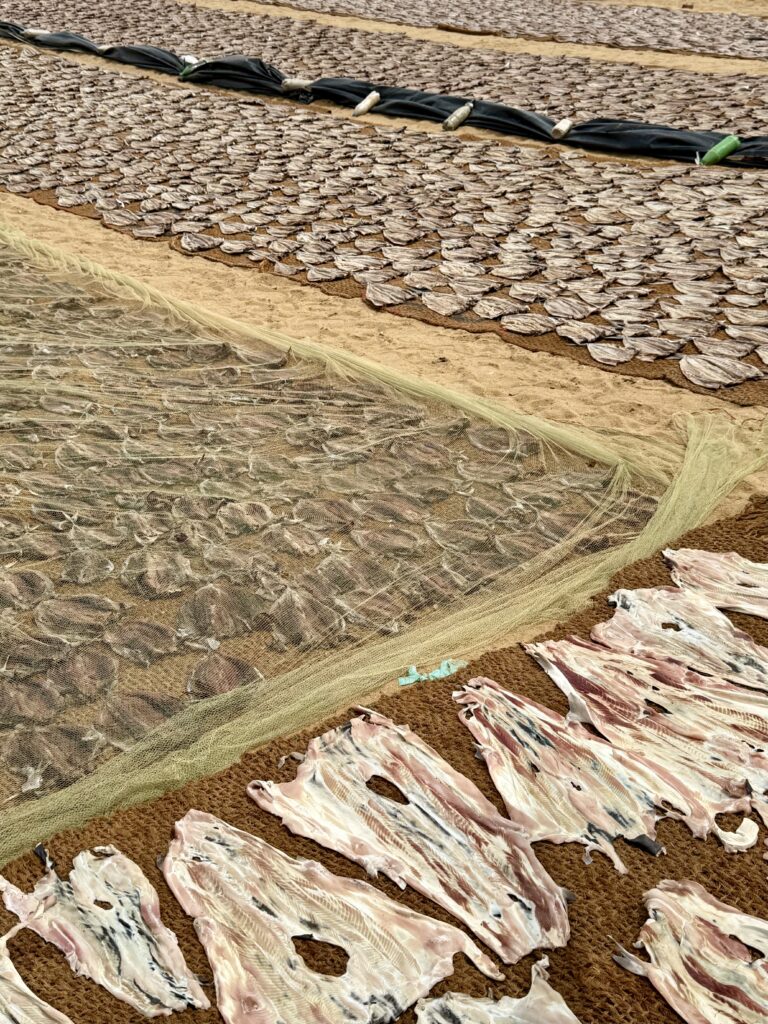
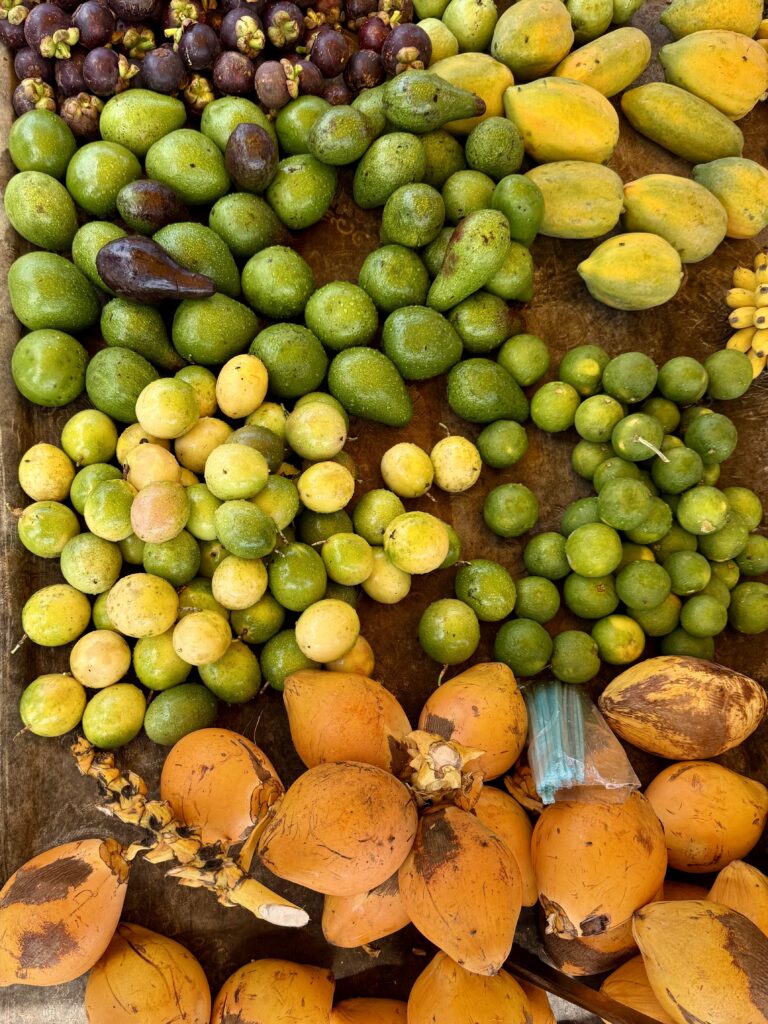
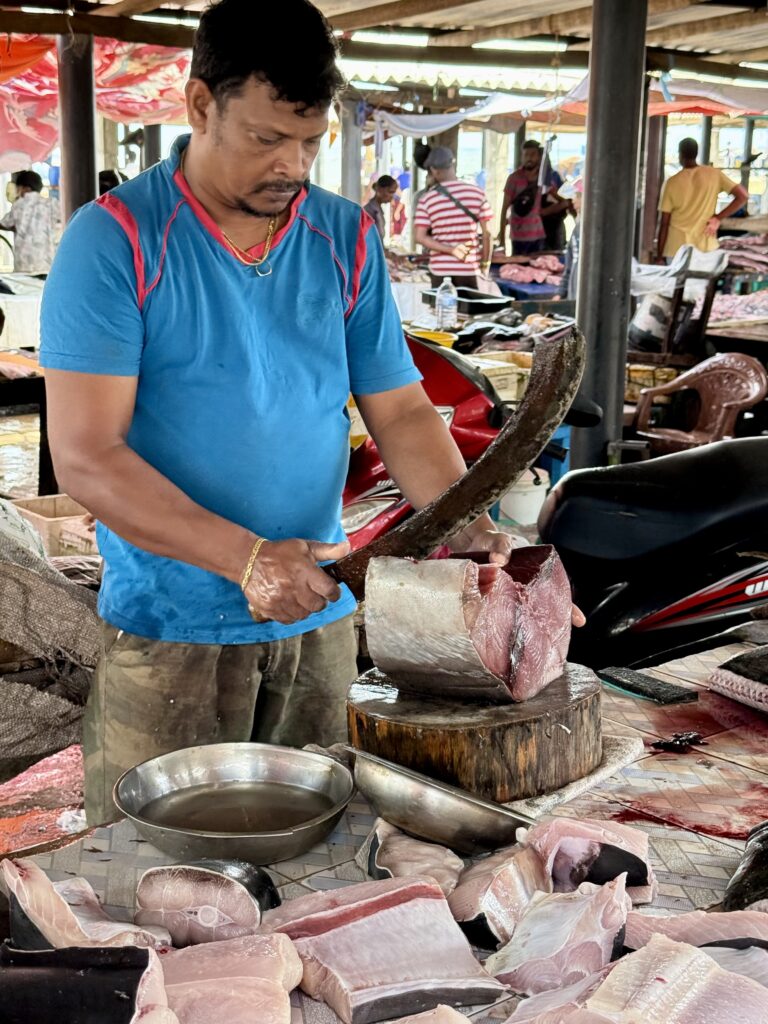
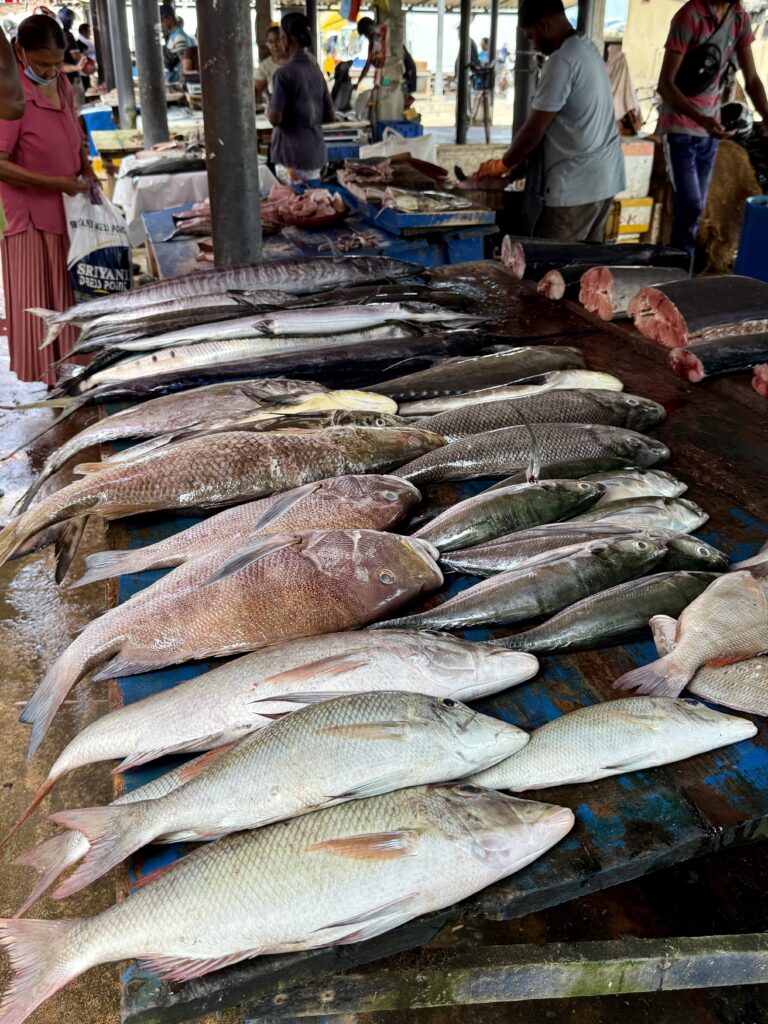
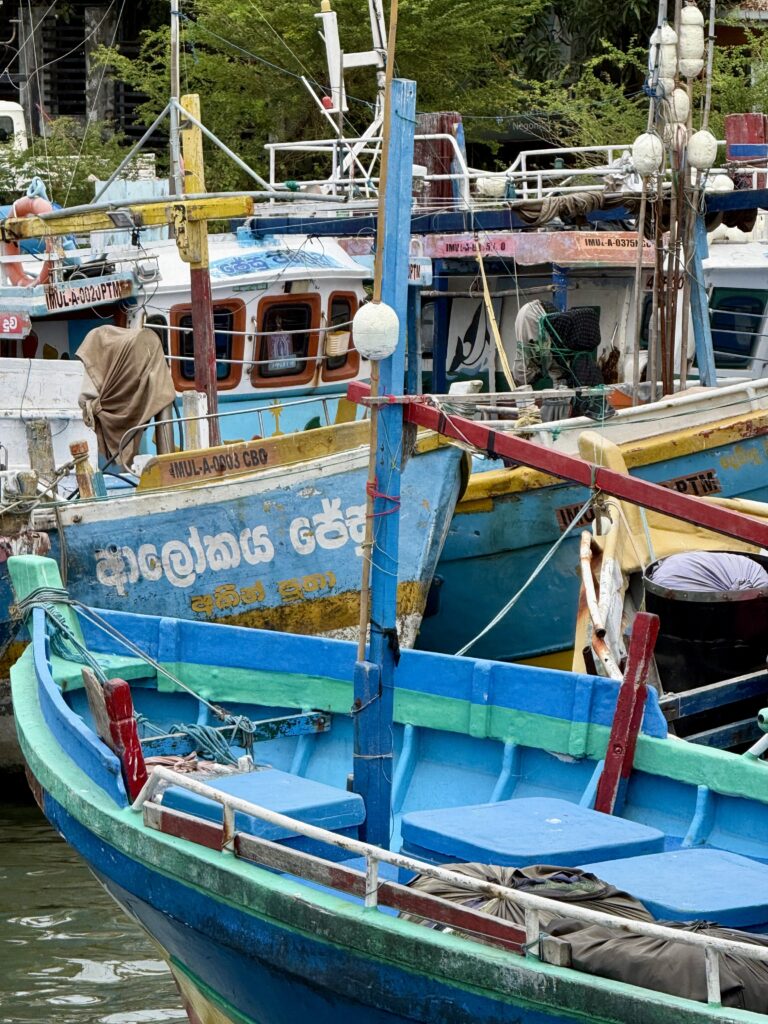
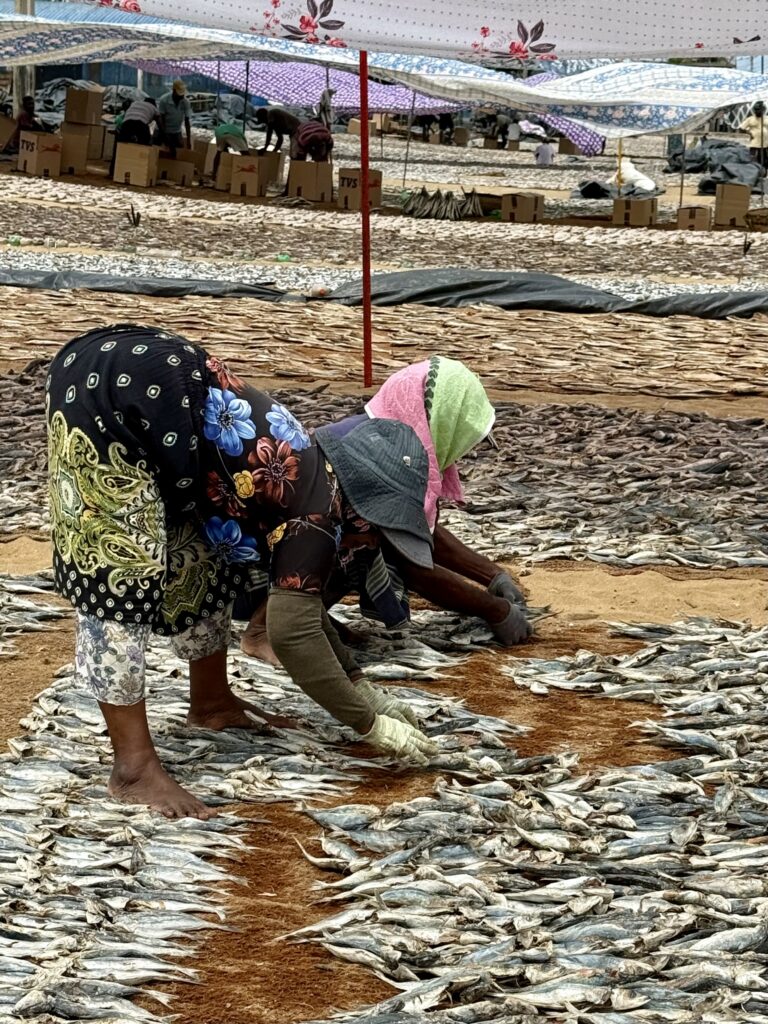
Landing on the West coast in Colombo, we transfer to the coastal beach town of Negombo with temps in the high 80’s matched by 80% humidity, forcing us to slow down, embrace the sweat, and do nightly shower laundry. We find relief by drinking juice from king coconuts, found only in Sri Lanka, to replace our electrolytes and quench our thirst. A visit to the Negombo outdoor fish market, displaying marine life of all shapes and sizes drying on coconut leaf mats in the hot sun, makes me gasp, seeing sliced and dried manta rays and shark fin skin after watching these creatures in their glory under water, but people need to earn. We pass symbols of Christianity throughout town, from small shrines to large churches, lending to the town’s nickname Little Rome, another legacy of colonialism, though most of the country is Buddhist (70%), followed by Hindu (14%), Islam (10%), and Catholic (6%). Catholic churches were targeted in the 2019 Easter bombings, orchestrated by ISIS, when ten bombs killed 269 people, mostly Christians, and injured over 500. As a result the burka has been forbidden, though we do see some on occasion in Muslim-dominant towns, but for the most part there is harmony and respect among religions.
We visit a coconut plantation to witness the dying trade of toddy tapping. Toddy is the local hooch which is naturally released by the coconut flower and collected by tappers. When the flower first develops, it gets bound tight with coconut fiber by the tapper who then pounds the flower daily with a wooden hammer for 3 weeks, after which the flower starts to release a liquid or toddy which is captured in a container. The toddy, which tastes a bit like vinegar and rice water with a hint of coconut, must be consumed within 5 hours or it will turn to vinegar. Due to this fast fermentation, the hooch cannot be bottled or marketed, being gifted or consumed by the deadline. The toddy tapper performs a high wire act moving between coconut trees with his tools and is in high demand as the next generation gravitates towards more lucrative work, leaving him without weekends or holidays after a 45-year career still going strong.
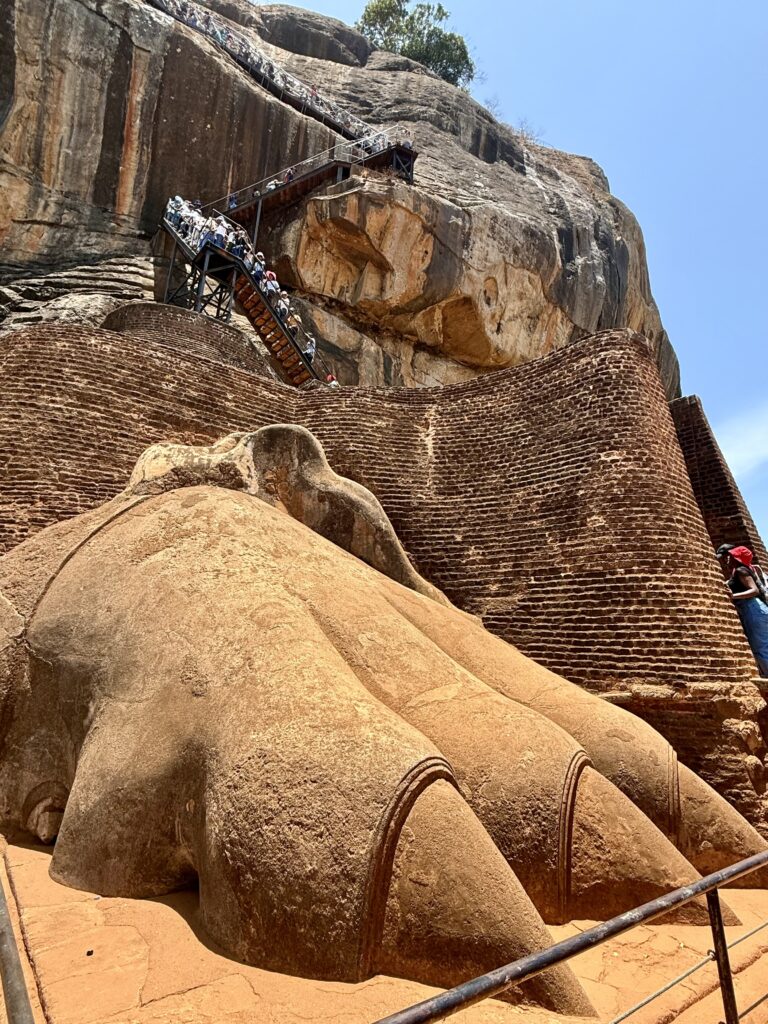
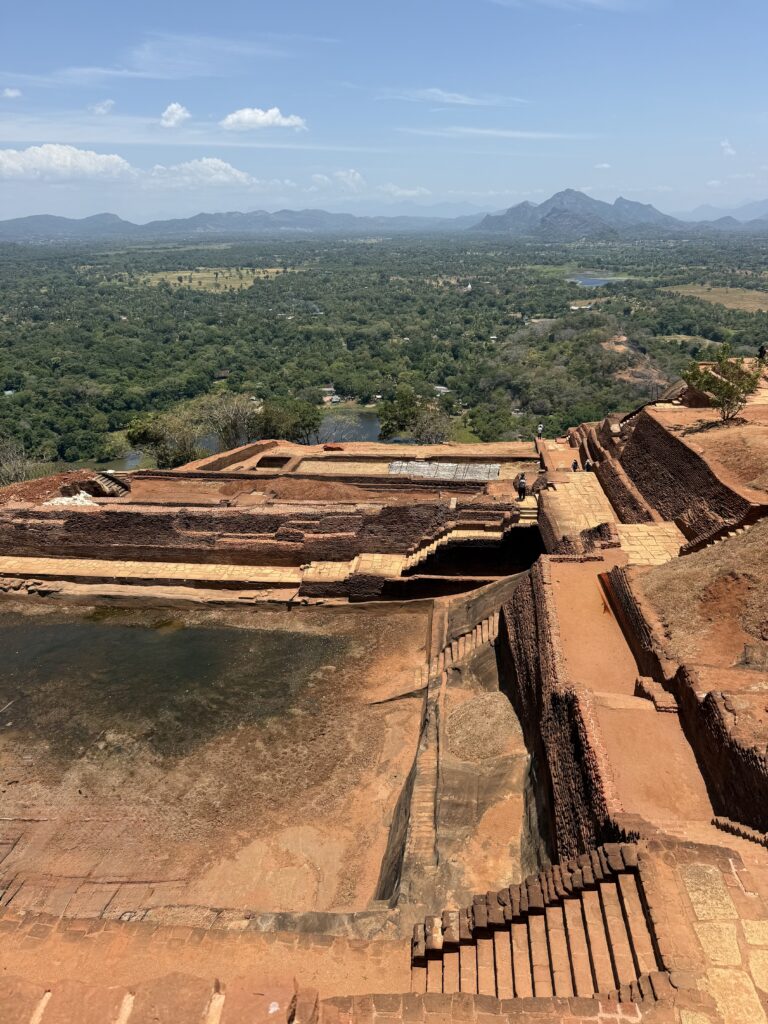
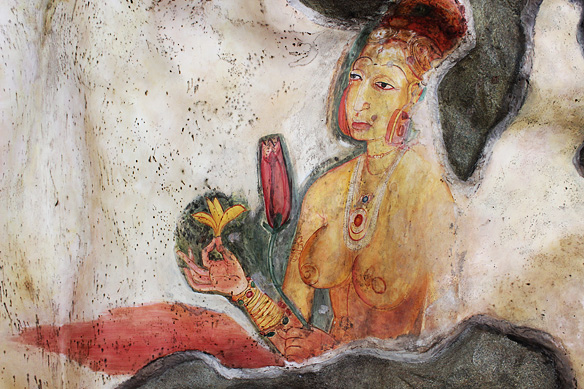
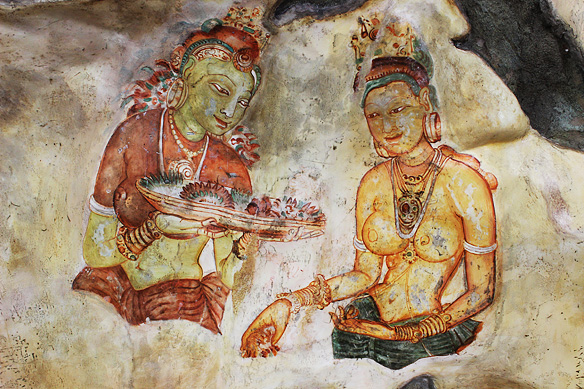
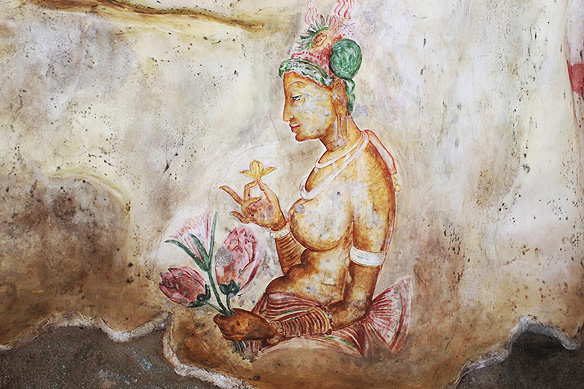
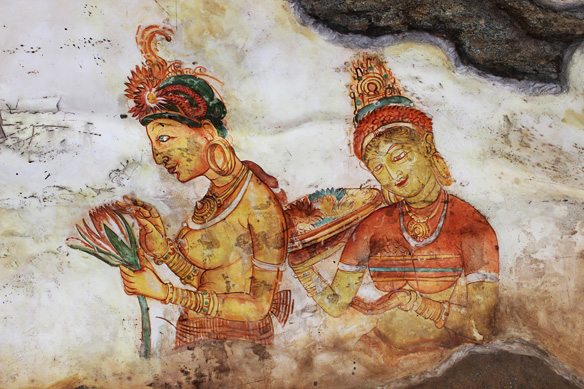
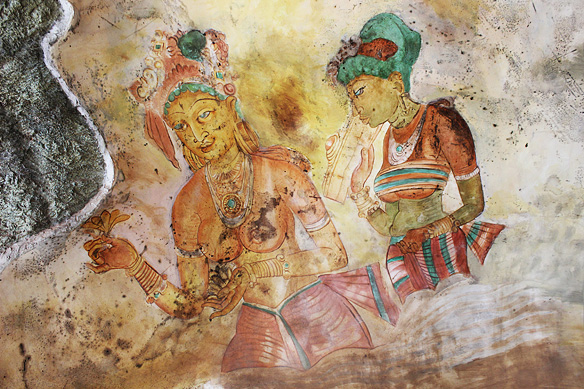
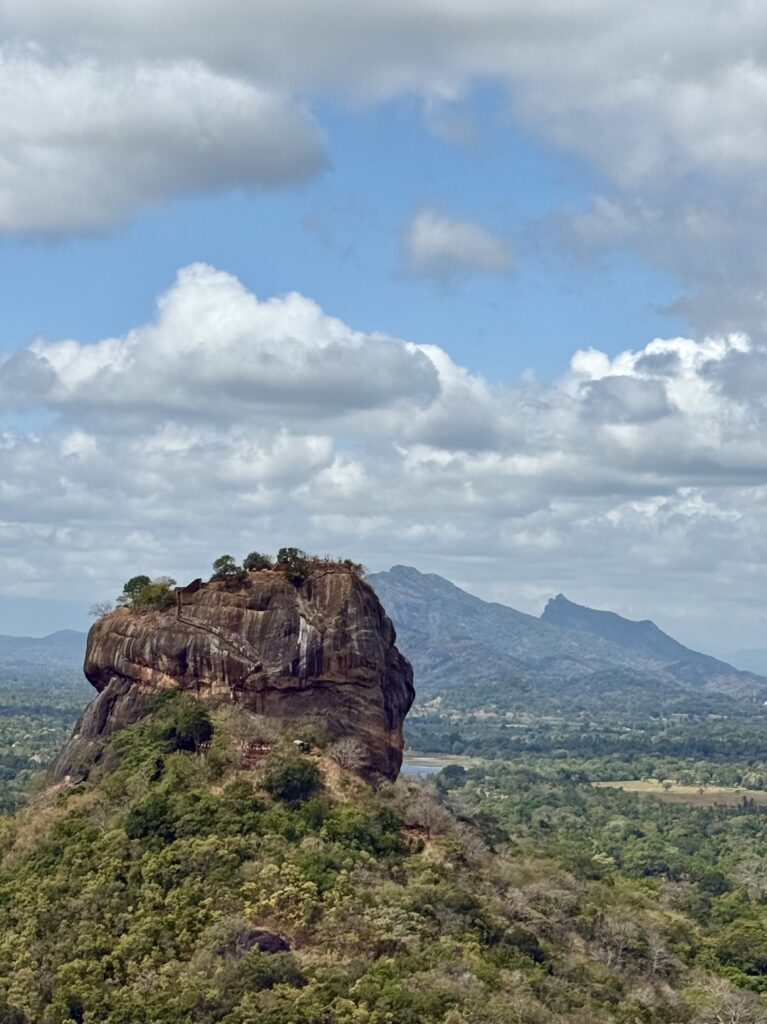
We head inland to journey down the spine of Sri Lanka, a region marked by hills and peaks topping out at over 8,000 feet. From the town of Sigiriya we visit Lion’s Rock, a UNESCO World Heritage site, initially a modest Buddhist monastery in the 3rd century BC which was transformed in the 5th century AD into a royal capital and palace, built on top of a massive lava rock with 600 foot sheer cliffs. With water being hand pumped up to the palace from a nearby lake, the village on top, spanning 3.5 acres, shielded nearly 3,000 inhabitants from attack, including secret tunnels for the king to flee and hide the royal treasures, now housed in the British Museum. The grounds at the base and on top of the rock as well as the face of the rock were decorated with bricks to create this lofty village, including stairways, houses, swimming pools, terraces, gardens, a palace, and a dramatic entrance through a lion’s mouth, of which only the paws remain today. Descending partway down, we are awed by the beautiful Sigiriya frescoes, dating over 1,600 years old, located on the side of the rock under an overhang. The images, with their rich, vibrant hues in all natural and original colors, are of the king’s 500+ concubines, with their origins reflected in their skin tone, hair, and eyes, including modern day Mongolia, India, Cambodia, Africa, China, and Sri Lanka. The artwork is absolutely stunning, especially considering its age and location.
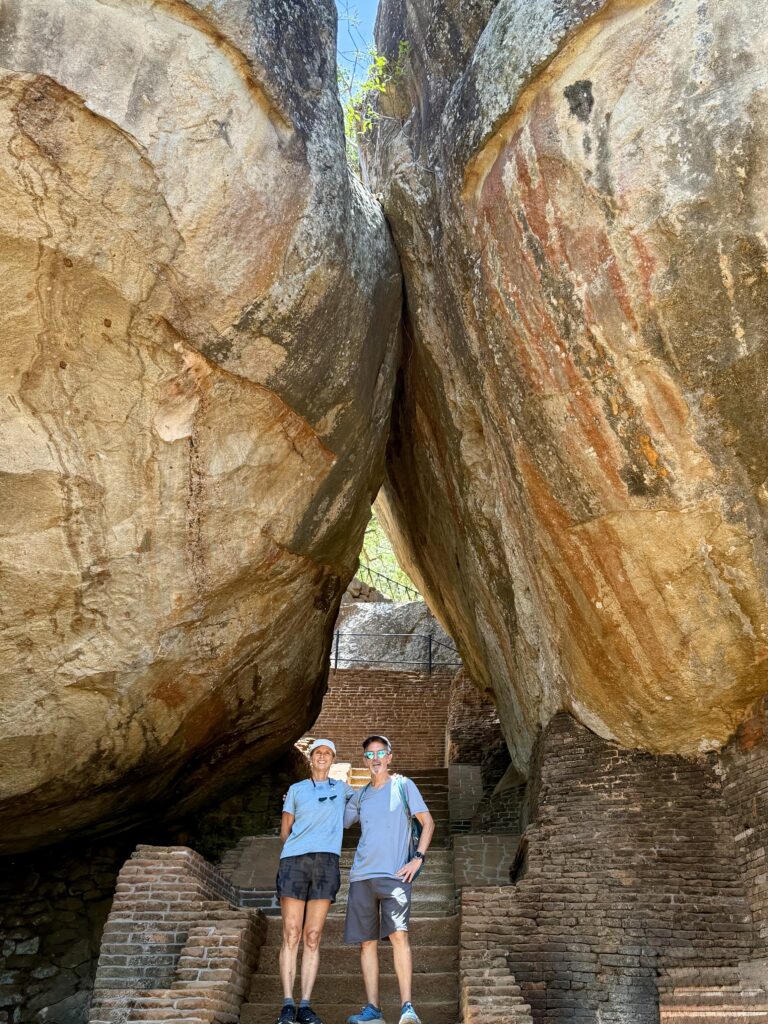
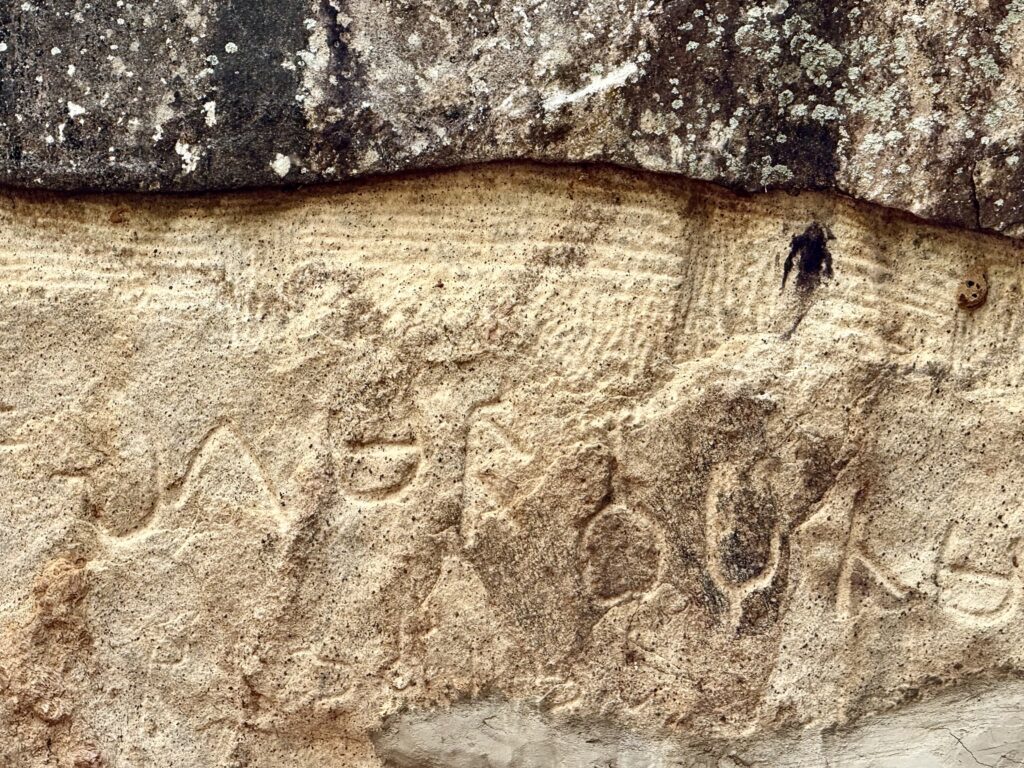
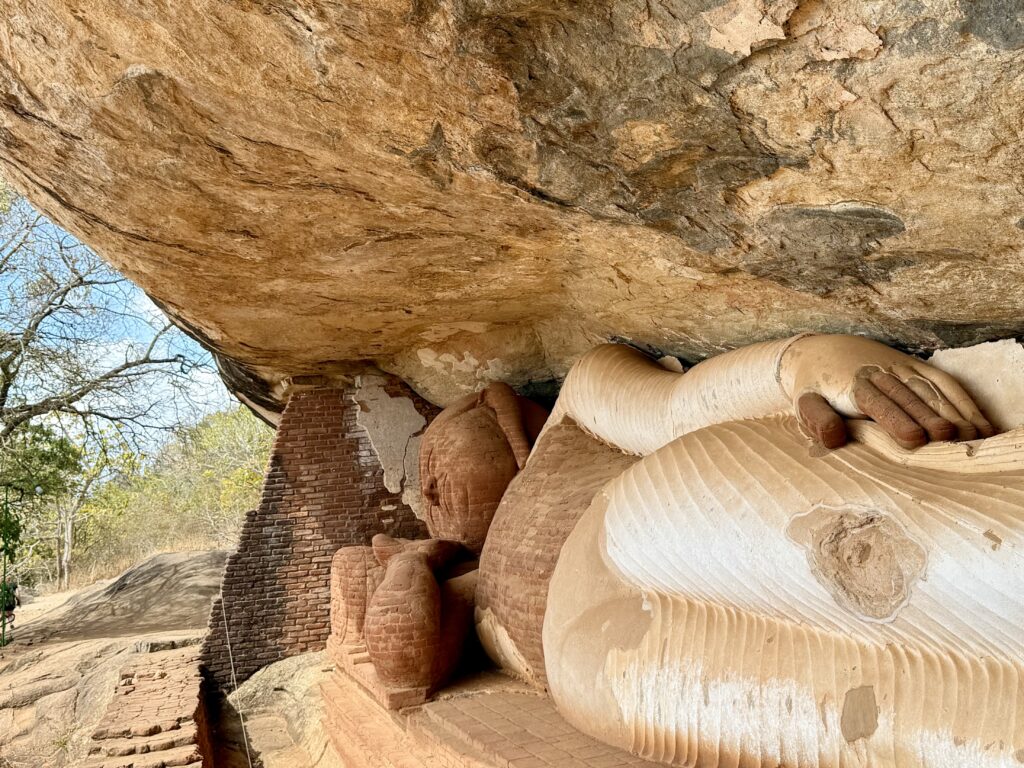
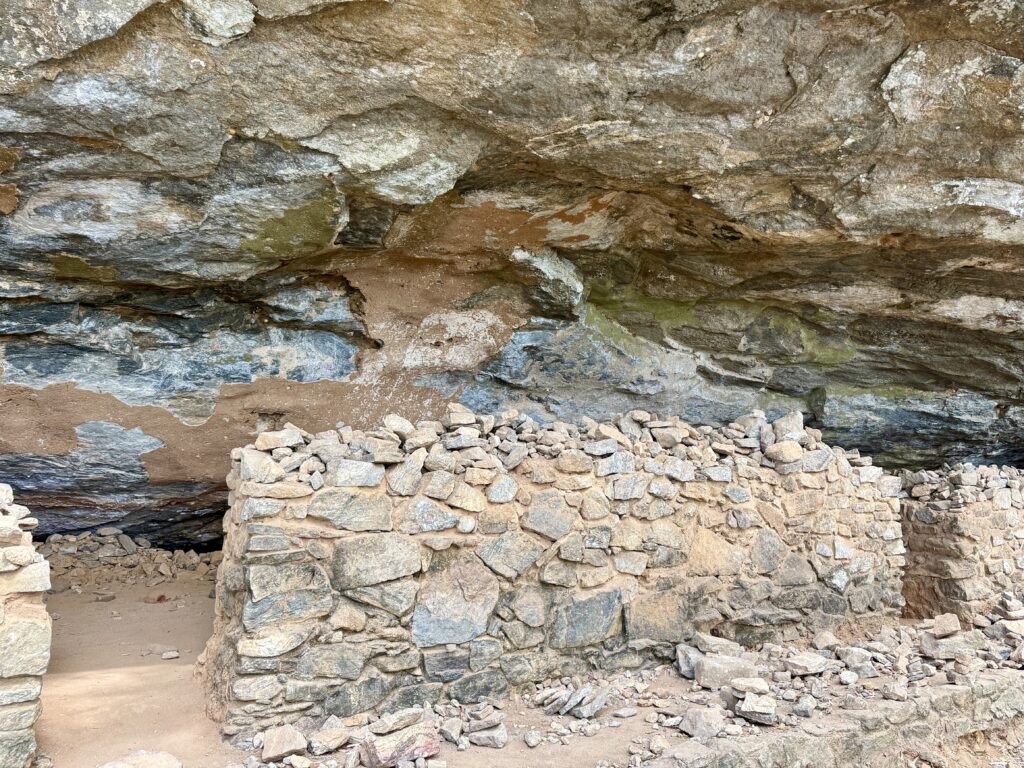
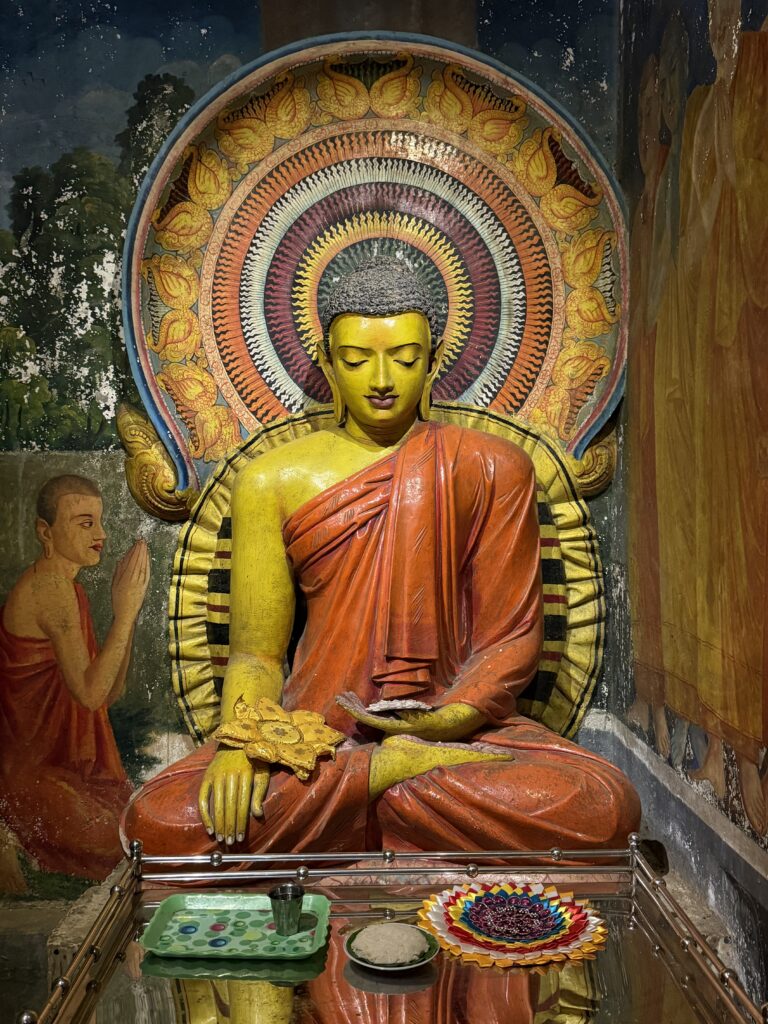
Another day we climb Pidurangala, a nearby rock formation with great views back at Lion’s Rock. At the base of the climb are two side-by-side temples for Buddhist and Hindu worshipers, which is the practice in Sri Lanka due to the kings appeasing the demands of their concubines with diverse religious backgrounds, early evidence of the concept Happy Wife Happy Life. The Buddhist temple is built into the rock with frescoes of the Buddha, elephants, and other deities painted on the curved rock ceiling above a reclining Buddha. Above the temple and below the drip ledge carved into the rock face is a Brahmin inscription from the 1st century BC acknowledging the donation of the caves to the Buddhist clergy. Buddhist monks sequestered themselves in caves to avoid warring factions below and to find peace for meditation, and further up while climbing we see their stone-walled cubicles for housing and meditation built into the rock overhang beside a massive rock-carved reclining Buddha. From the summit we enjoy views of Lion’s Rock as well as the surrounding dense carpet of jungle, thoroughly obscuring the vibrant activity below the canopy.
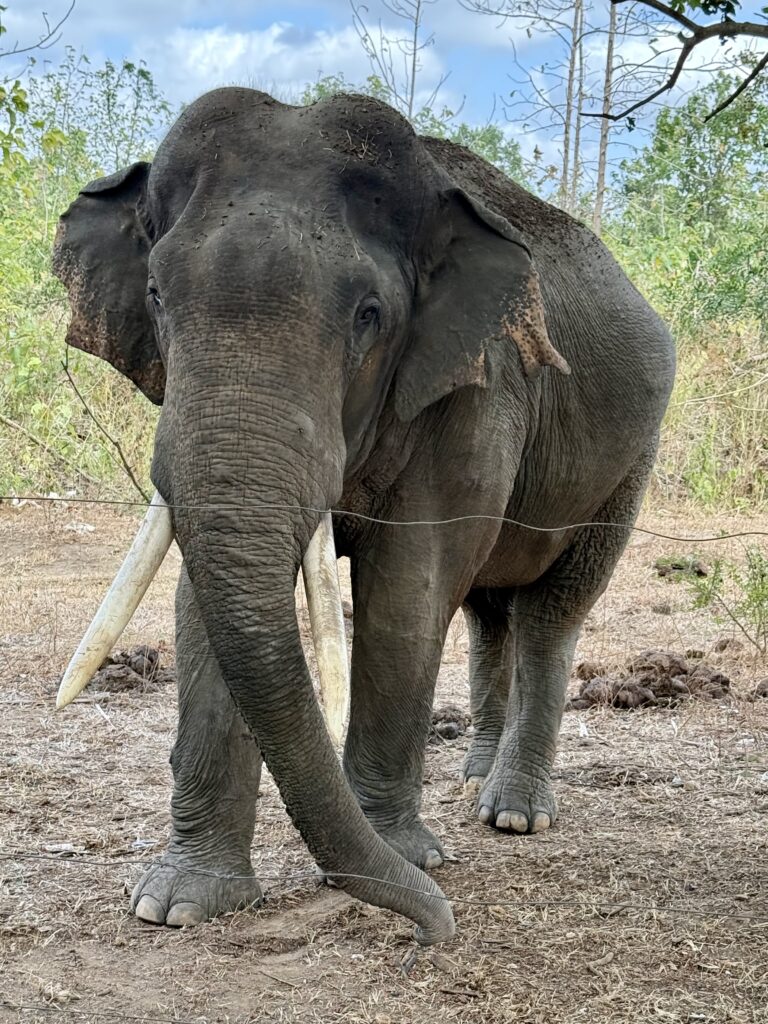
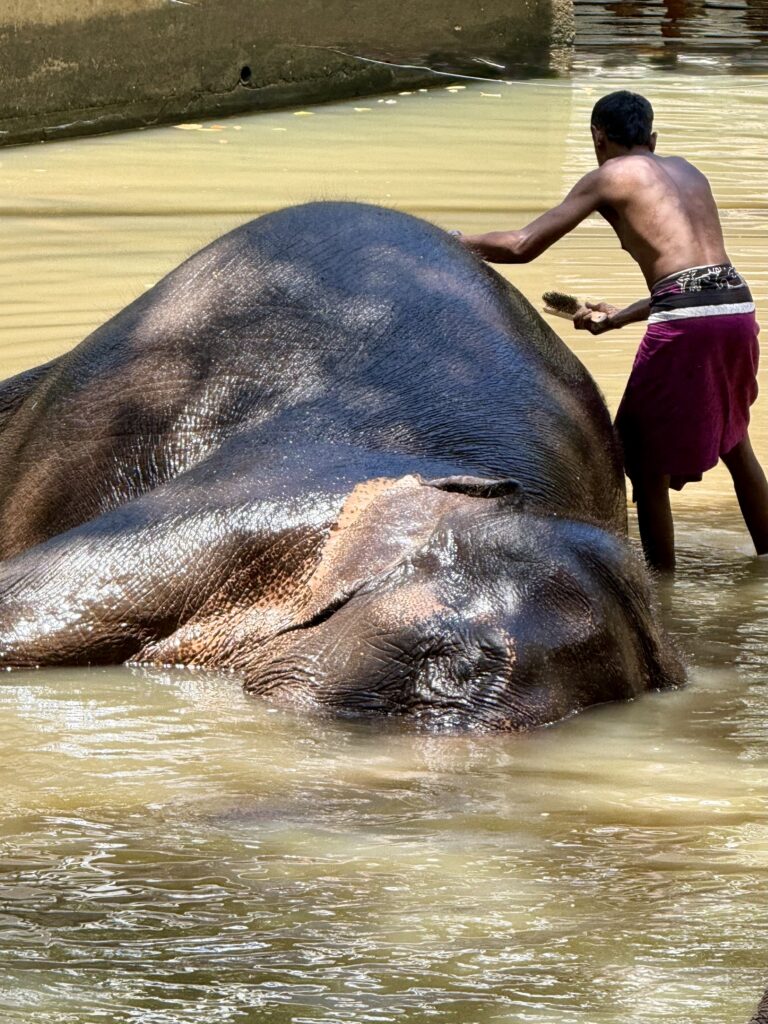
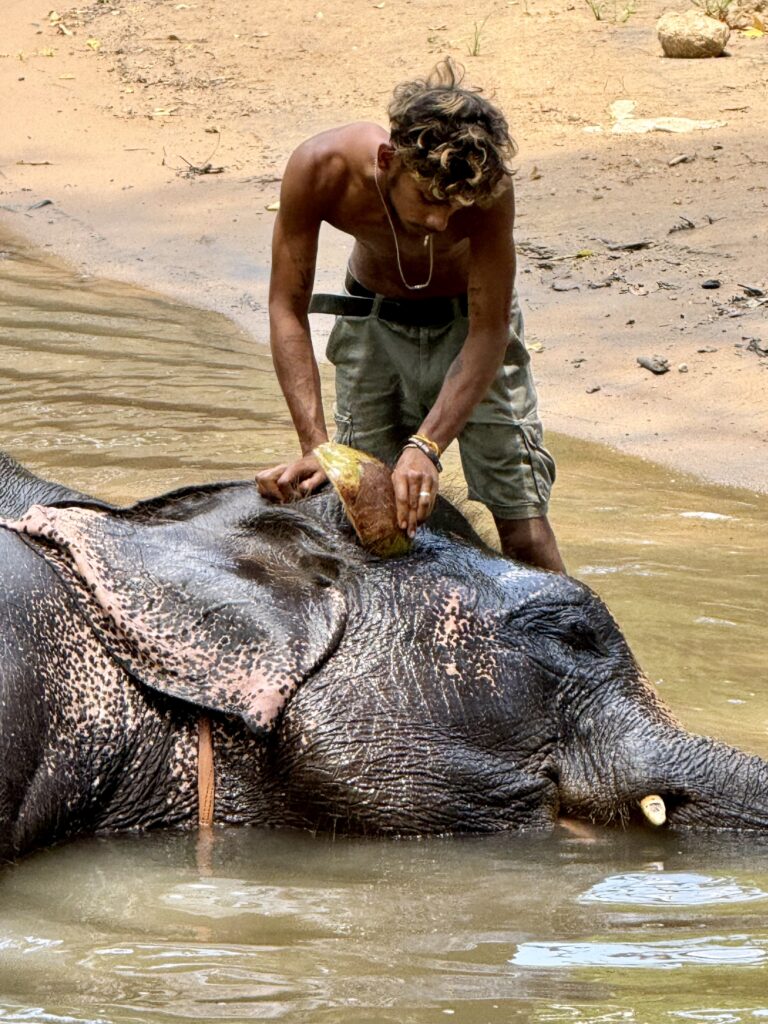
As a devout elephant lover, I am thrilled when we encounter a pair of wild elephants by the side of the road, a male tusker and a female, with the wire fencing separating us seeming more of a suggestion in light of their hulking bodies. The elephants are in search of food from humans, as deforestation has dwindled the forests from 70% in the 1920s to a mere 16%, causing significant human vs. elephant conflicts as farmers defend their crops. Domesticated Asian elephants, smaller in stature than African elephants, are usually human-raised orphans and are still used for tourism and cultural celebrations, though riding an elephant has been deemed unethical. One of my favorite moments is watching two full-sized elephants lounging in the river on their sides, languidly breathing through their trunks, while they receive spa treatments from their mahouts or wranglers. I feel their bliss when receiving my own ayurvedic spa treatment, including an oil massage and hot sauna with neem branches covering the floor to release toxins, of which I have plenty.
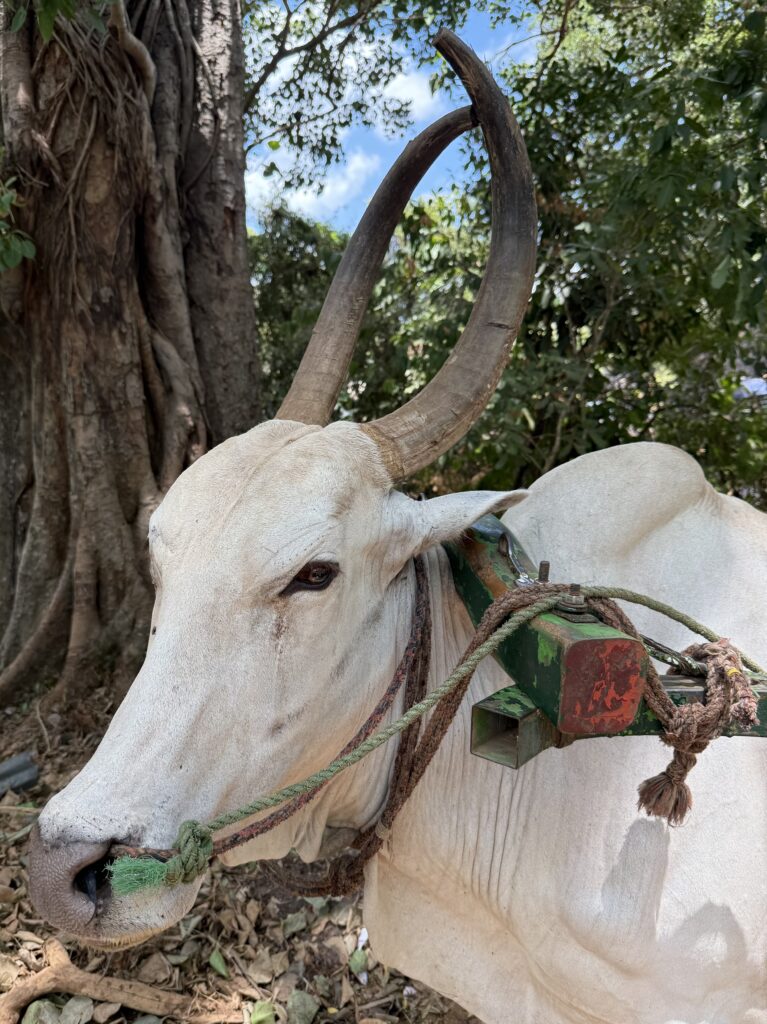
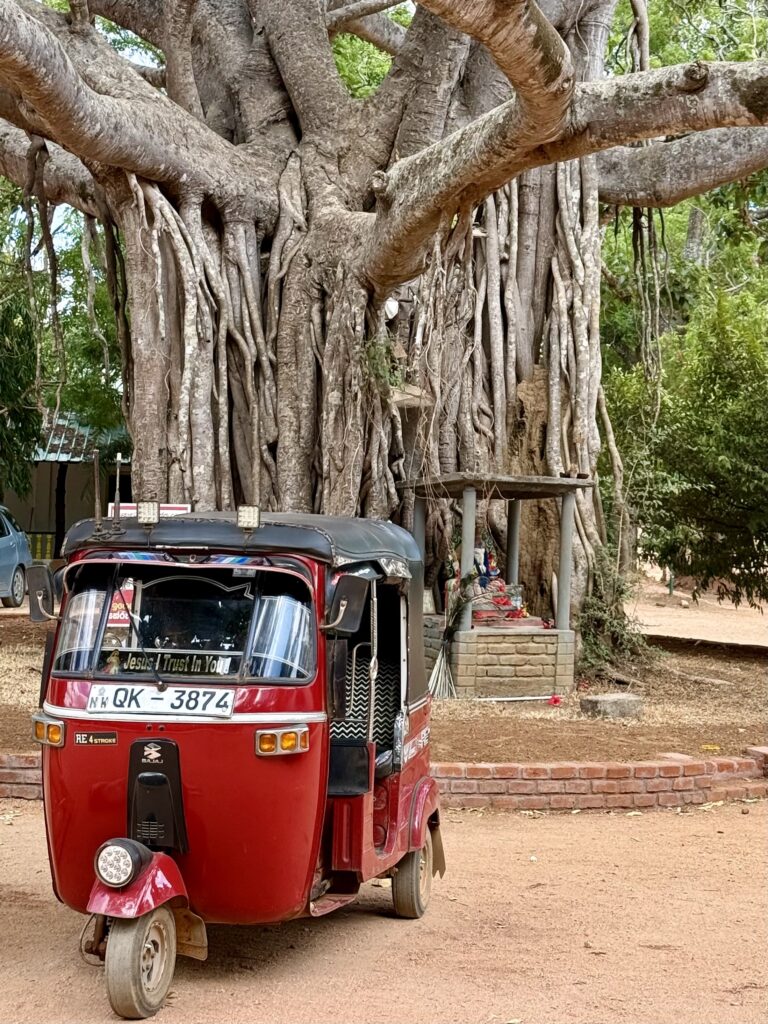
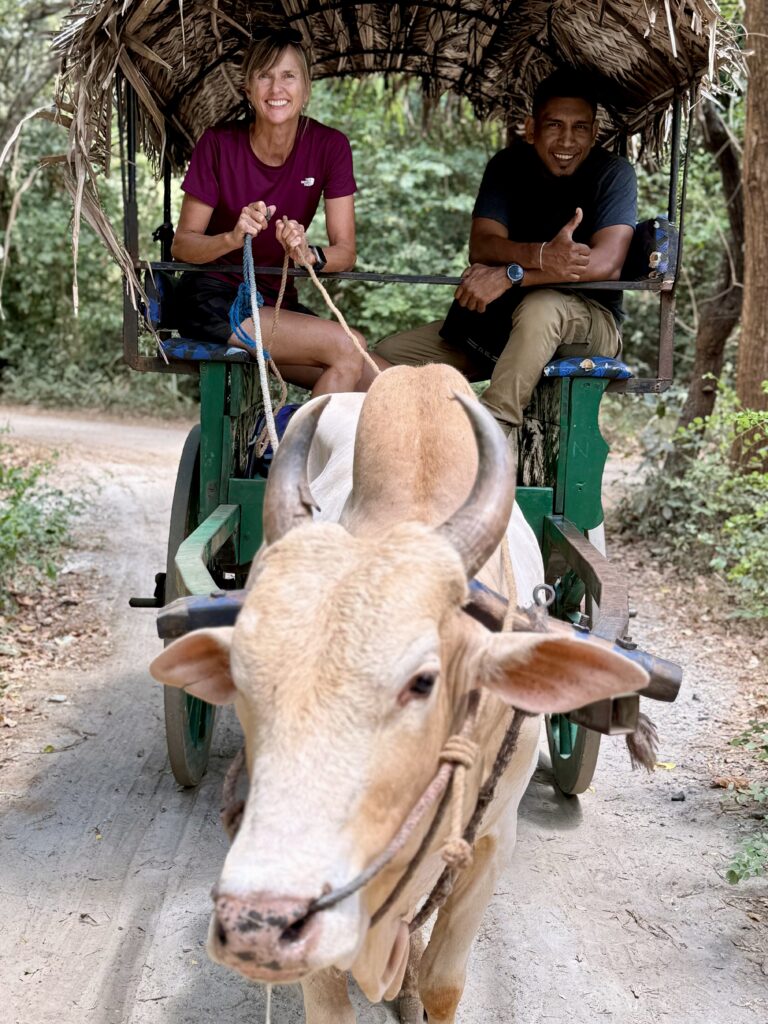
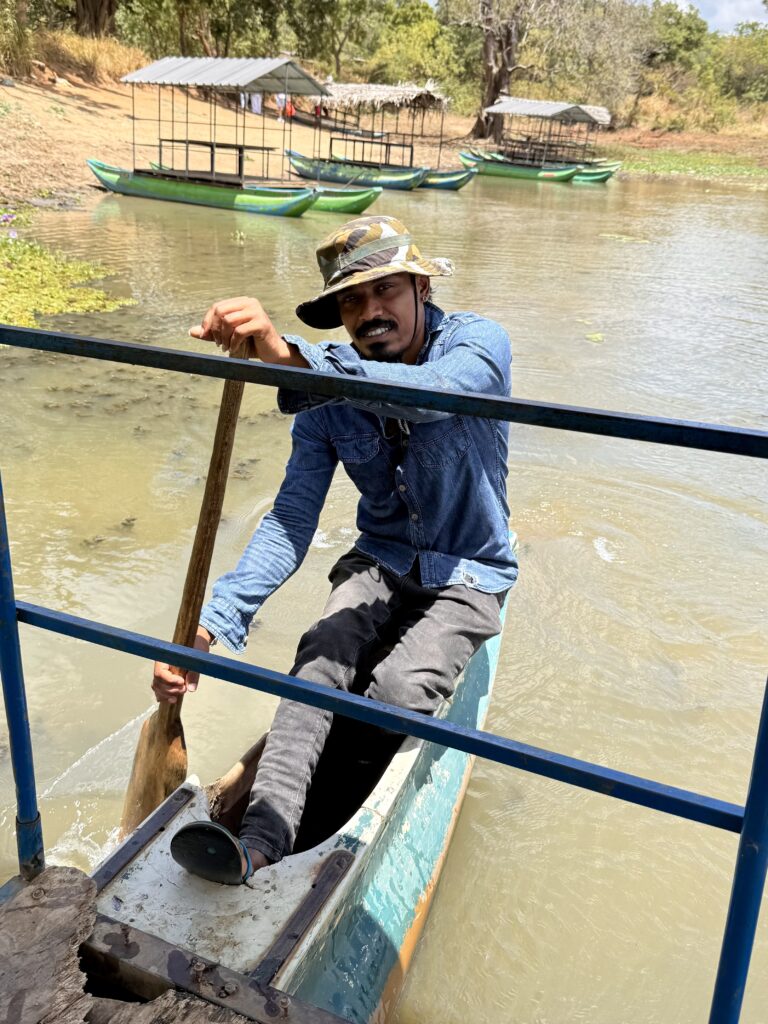
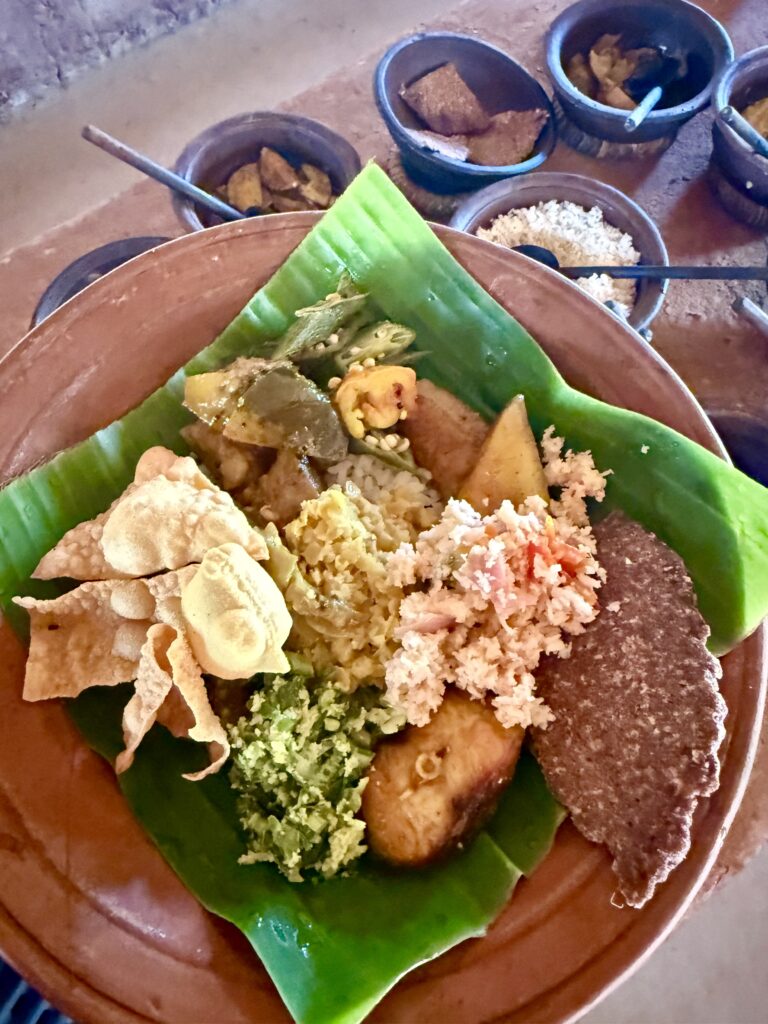
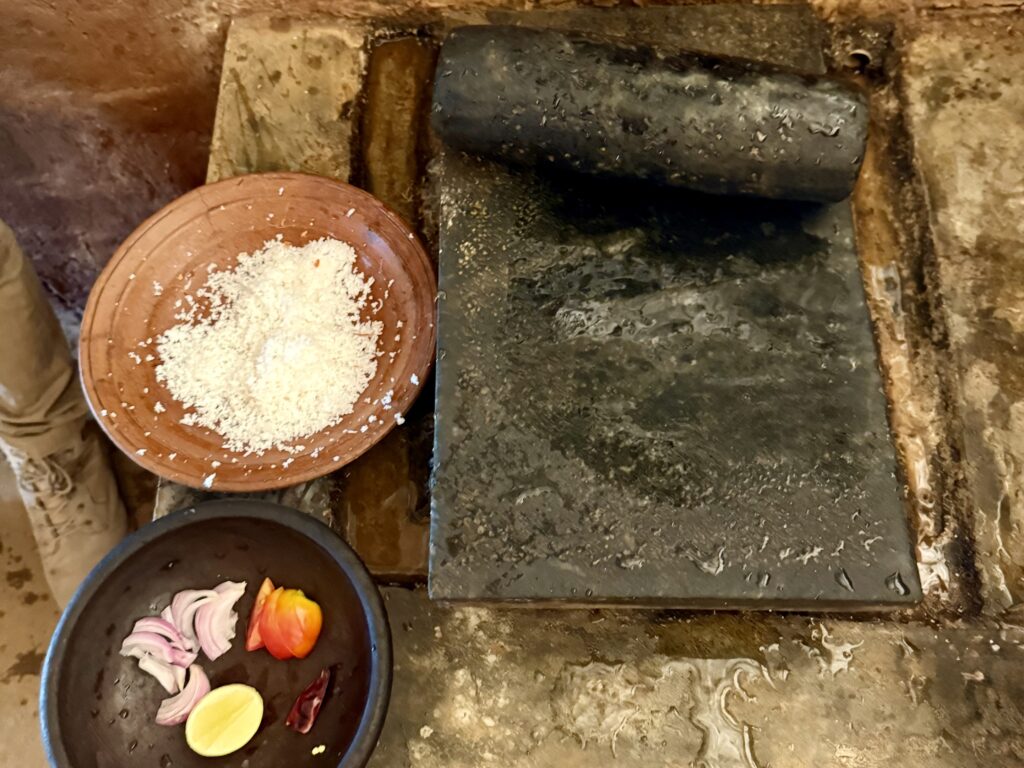
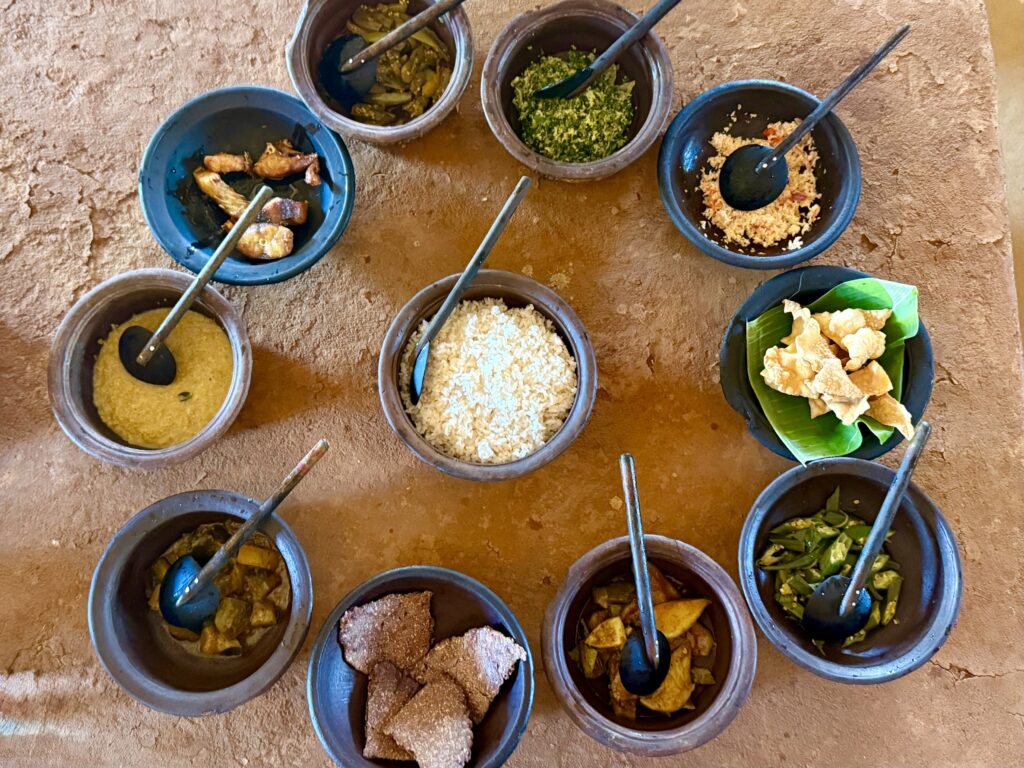
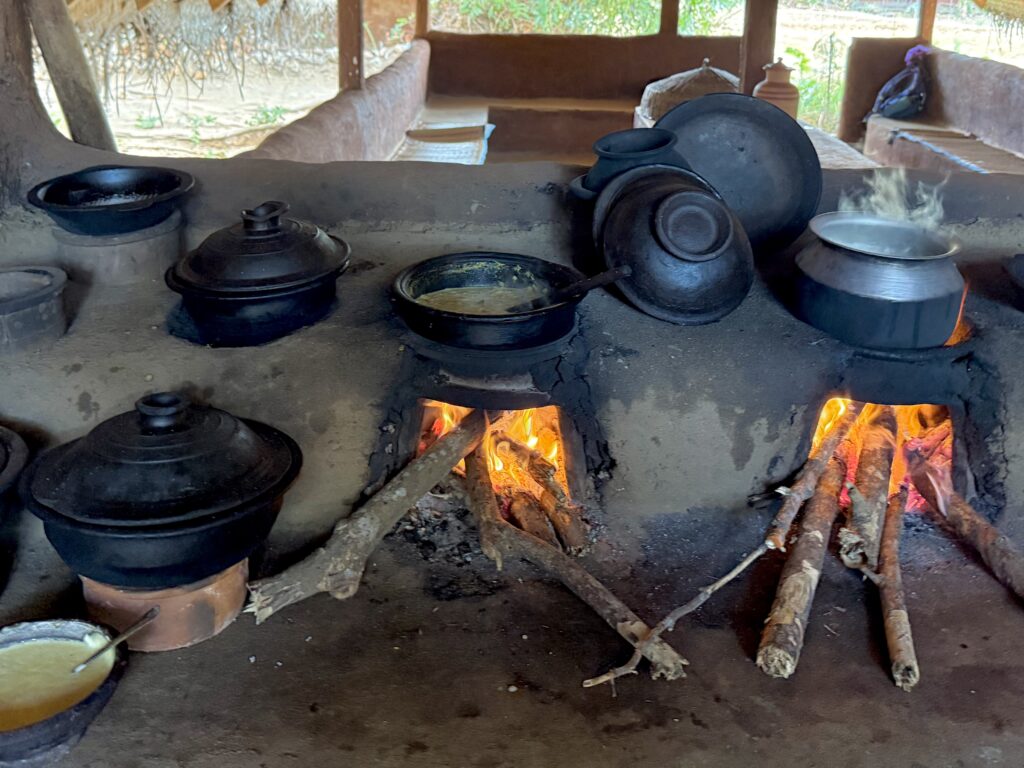
With Brian a bit under the weather, I visit a local village, accessed by a bullock cart and a lake crossing, to learn Sri Lankan cooking by open flame. Our chef takes a Tom Sawyer approach, showing me how I should scrape the coconut, grind the millet, and pound the rice, all of which I fail, but I can do the dishes! The corresponding meal is extraordinary with a kaleidoscope of colors and flavors, topped off by a tuk tuk ride back.
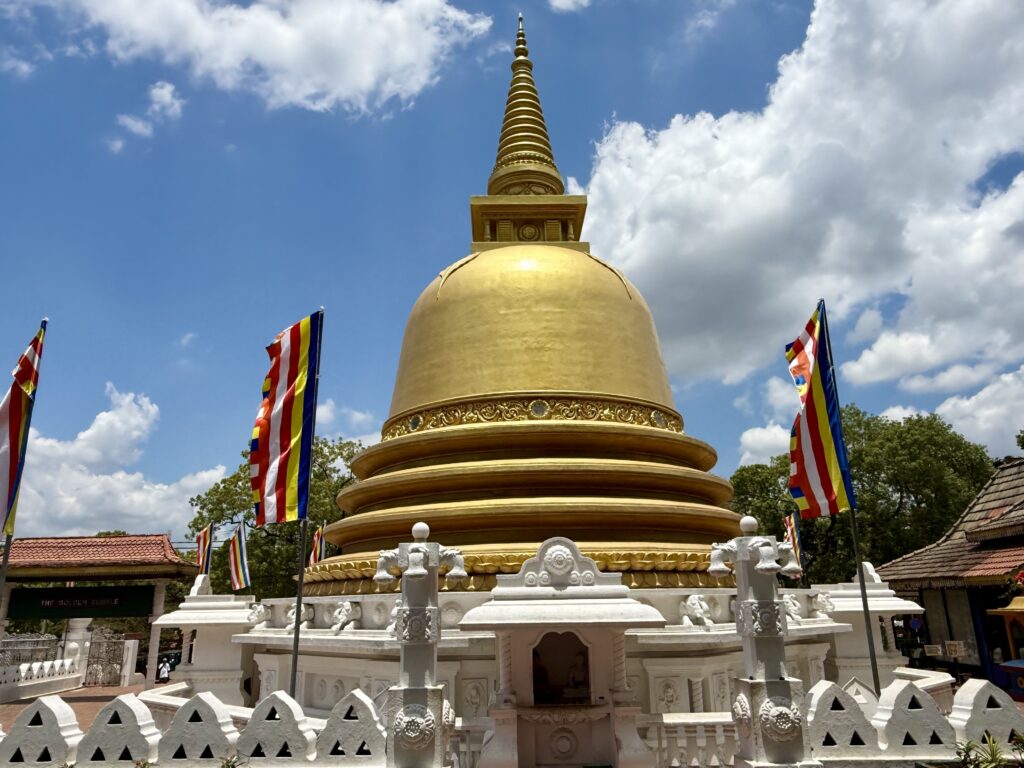
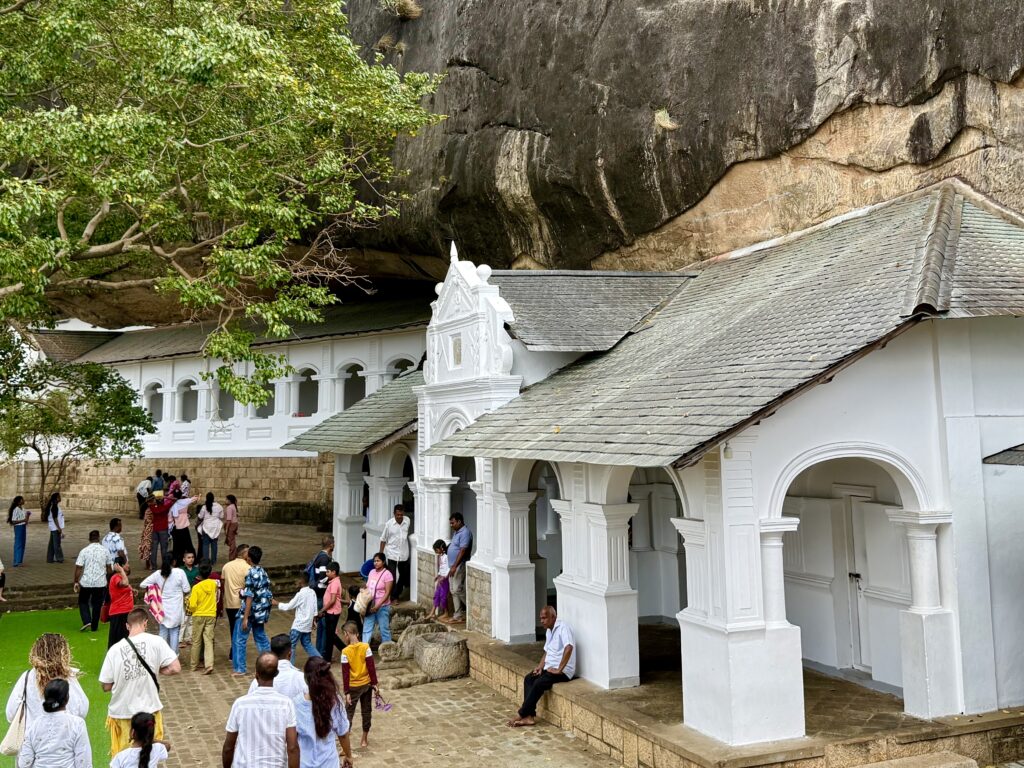
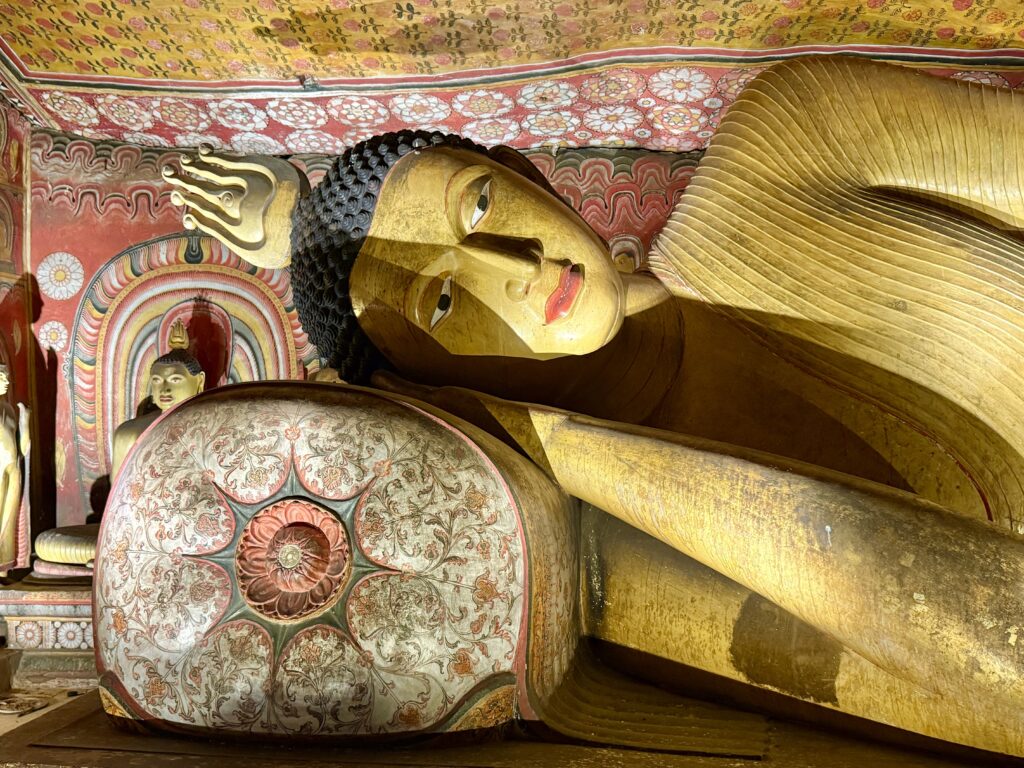
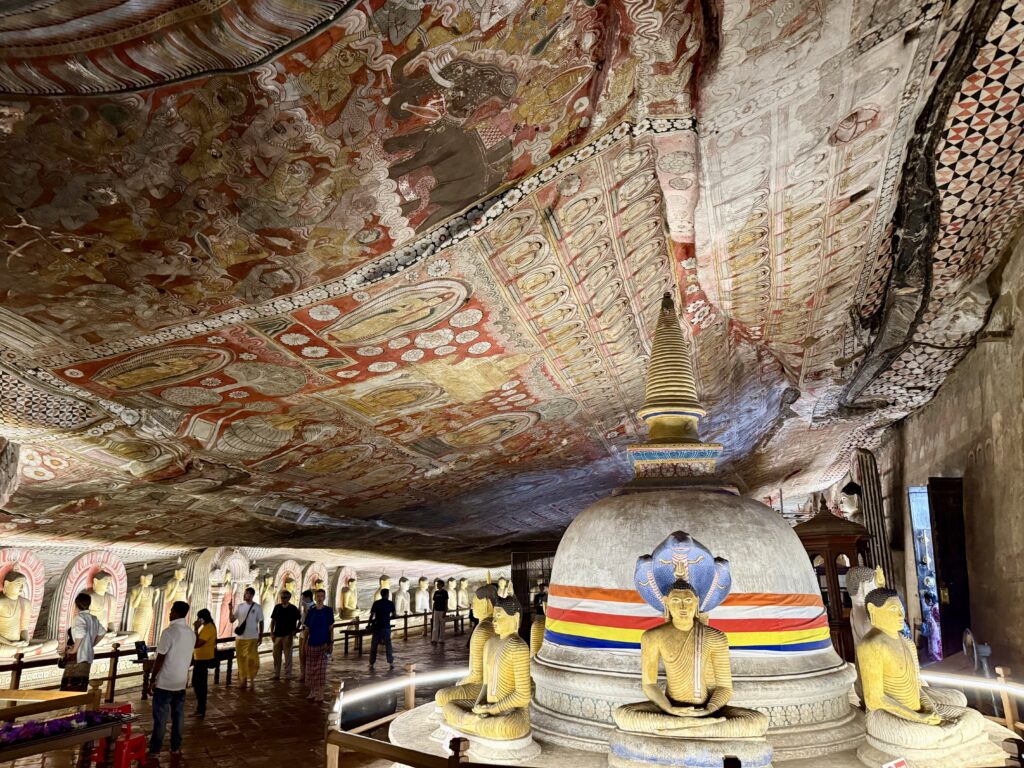
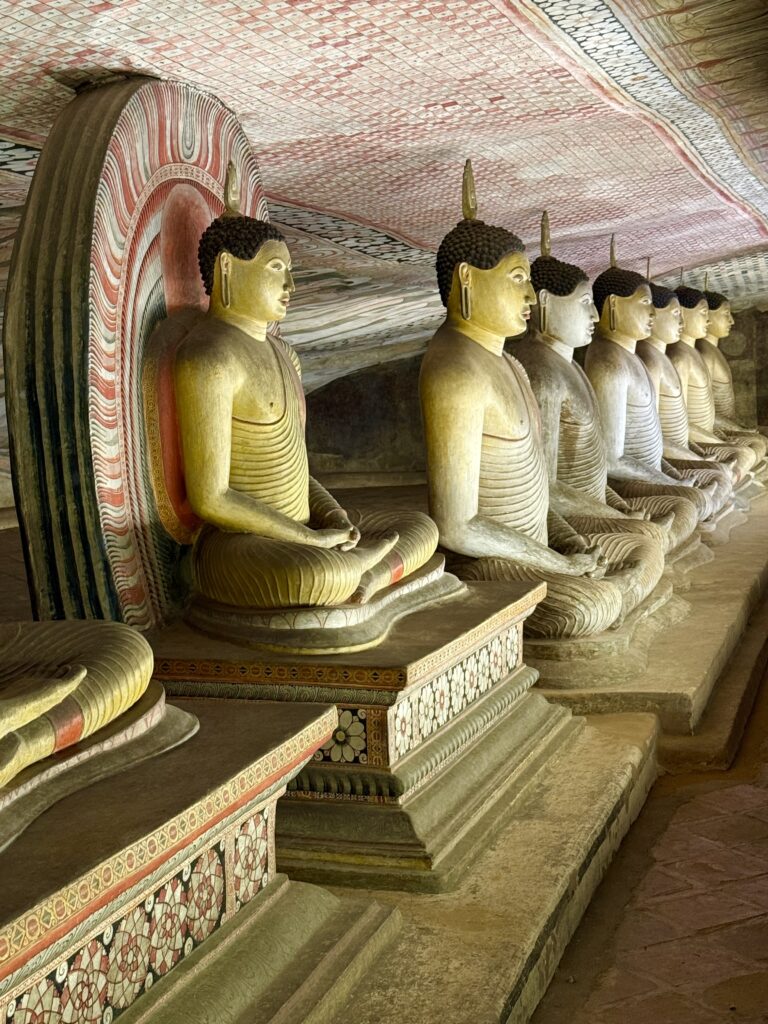
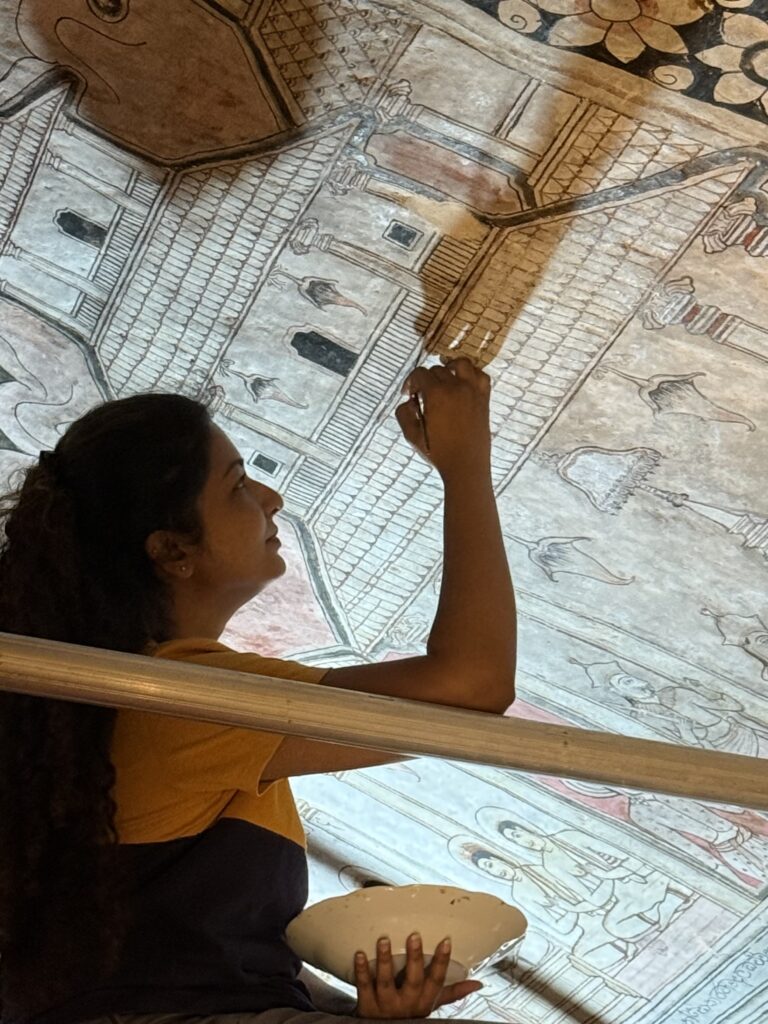
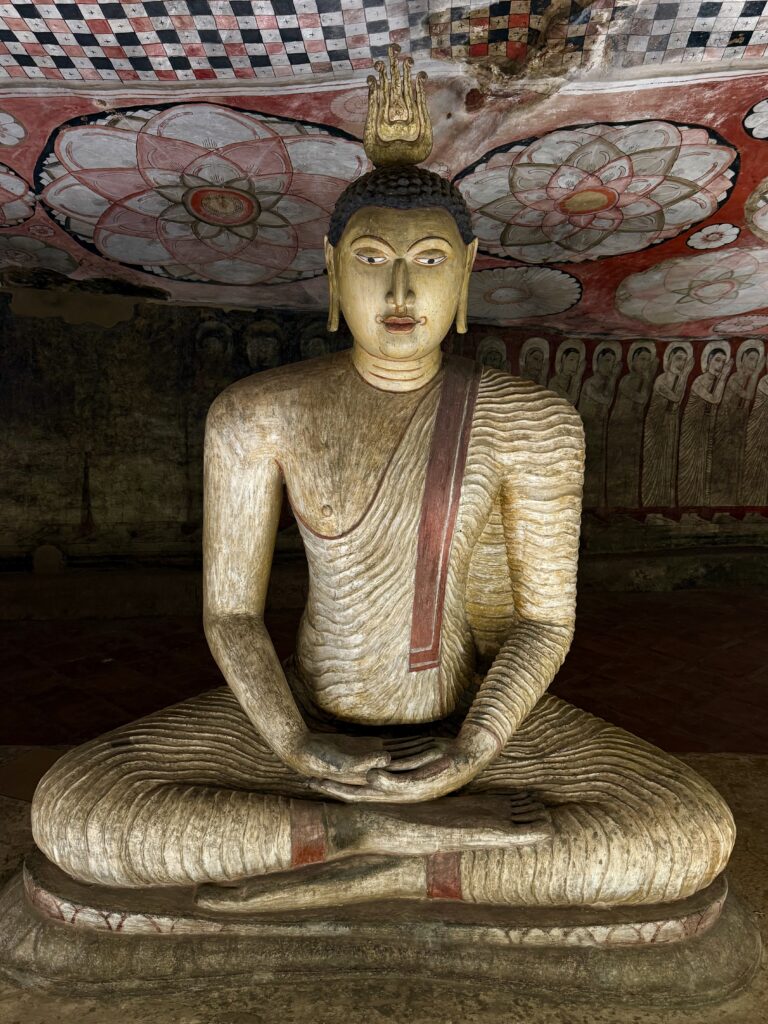
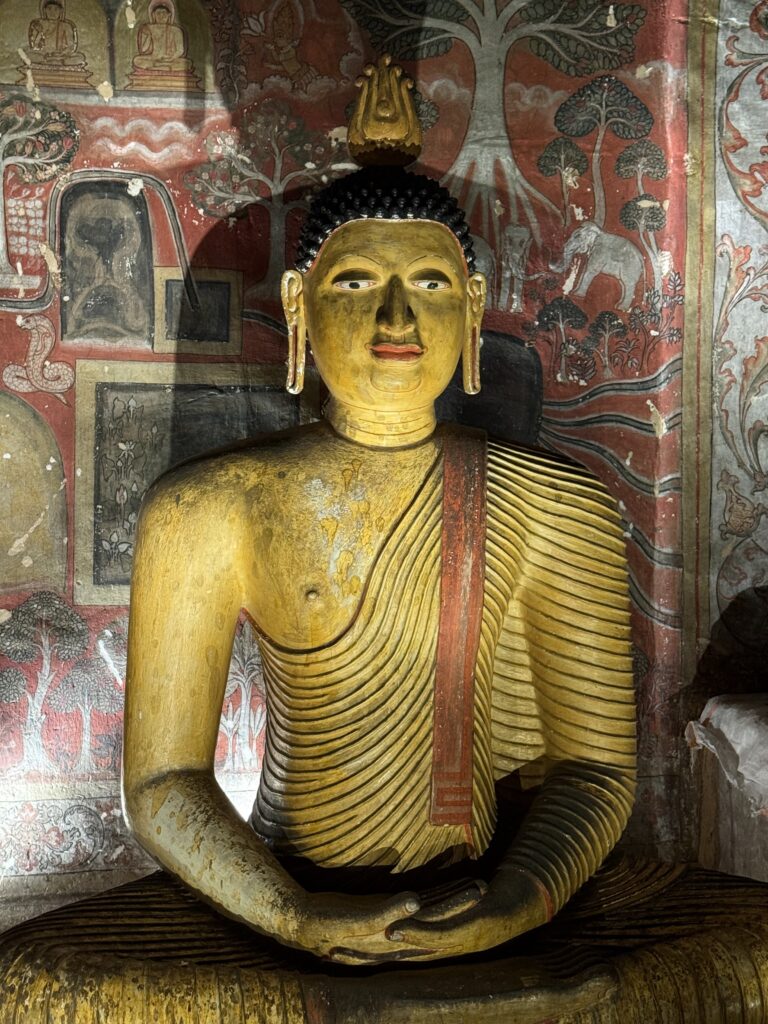
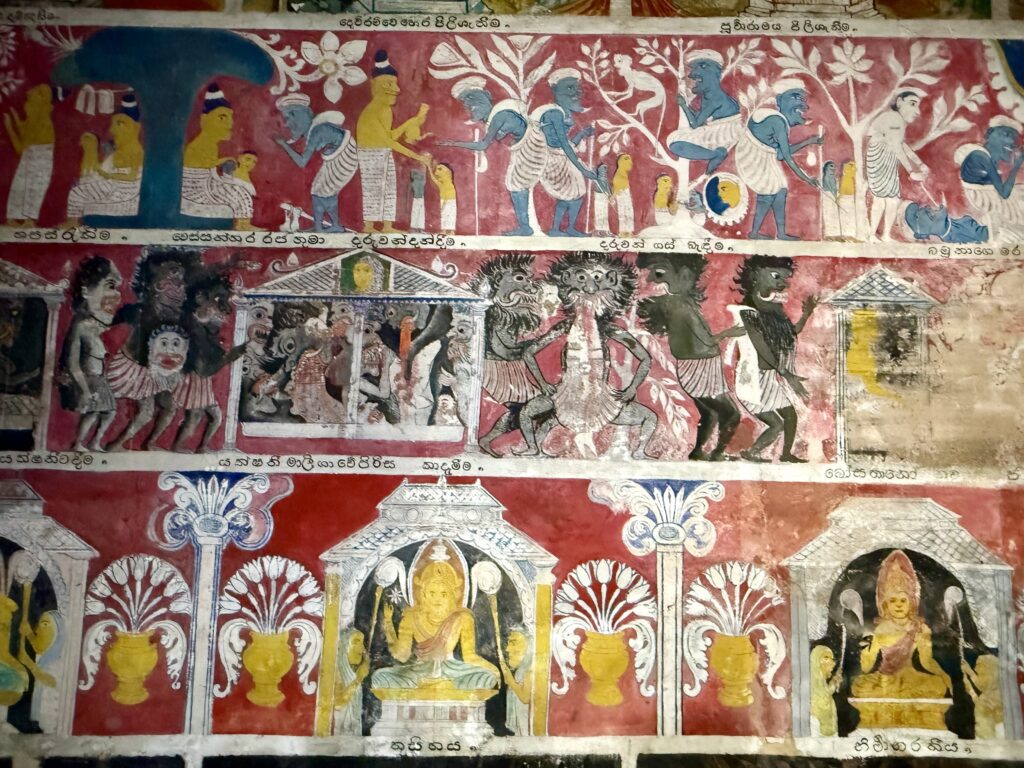
The Dambulla cave temple, another UNESCO site, dates back to the 1st century BC when it was built by King Valagamba of Anuradhapura. Legend states that the king was fleeing invaders from India, the nation’s frenemies to this day, so the Queen exited the cart, lightening the load, thus saving his life and sacrificing her own. Hiding in the forest, the king encountered a monk who helped him survive and taught him about Buddhism. After regaining his kingdom, the king built monasteries throughout the land, including a stupa in Dambulla for his beloved wife. Entering the cave temple is breathtaking, with many statues of the Buddha including reclining buddhas carved out of rock and previously covered in gold. On the rock ceiling are frescoes including over 1,500 buddhas, with artists retouching the artwork using natural paints, a labor of love. Offerings of fruit and flowers grace the statues, thought to attract the gods with their scents. Outside a large Bo tree, frequently found at Buddhist temples, provides shade and tranquility, with the wind rustling the heart-shaped leaves encouraging enlightenment through meditation.
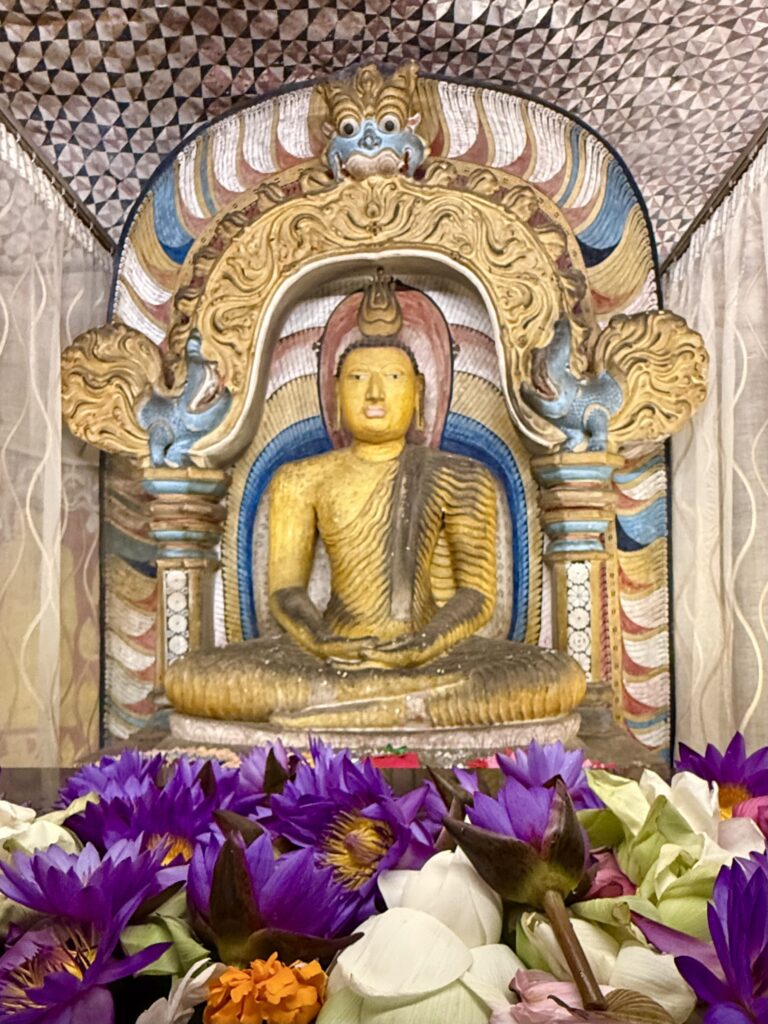
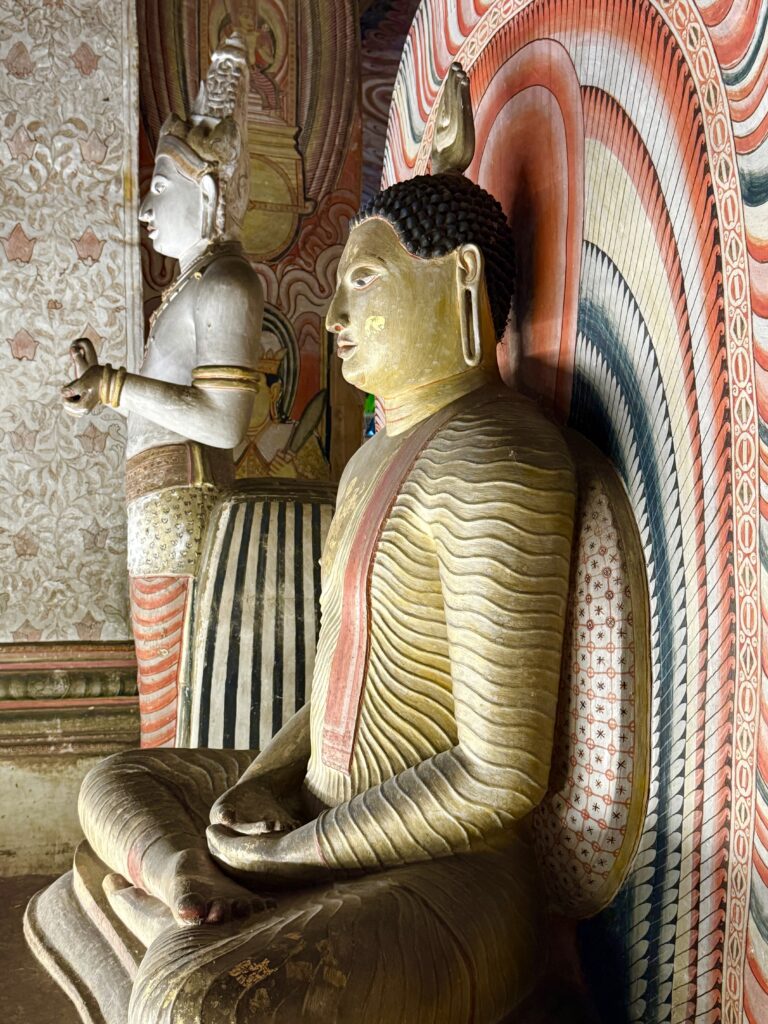
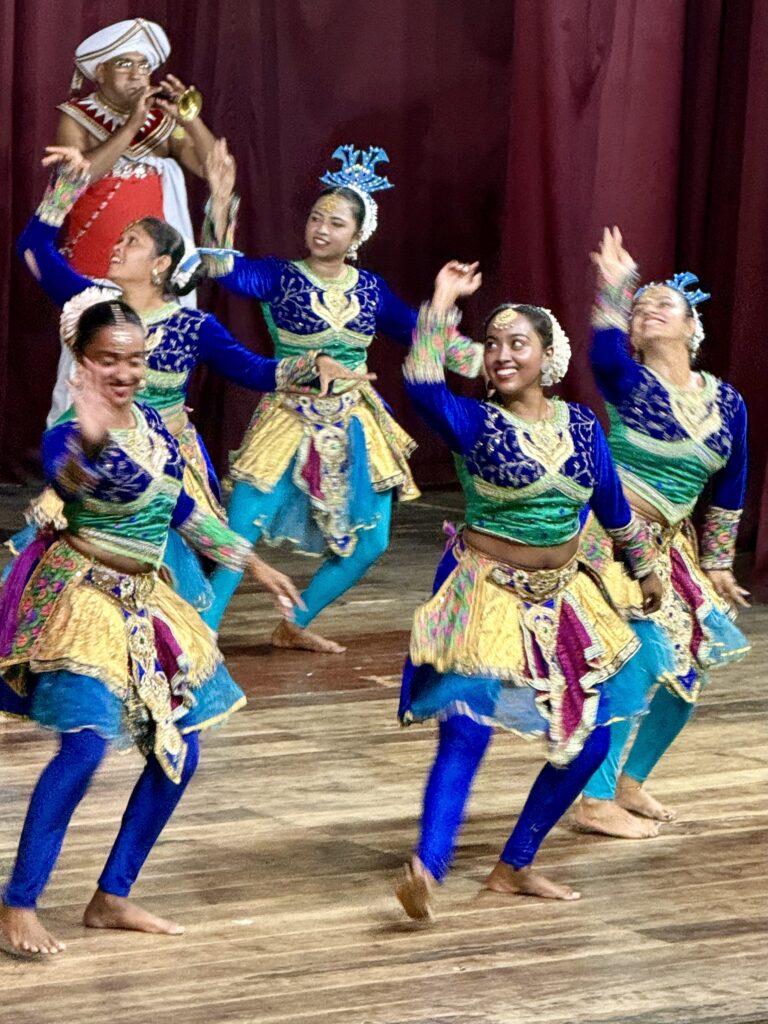
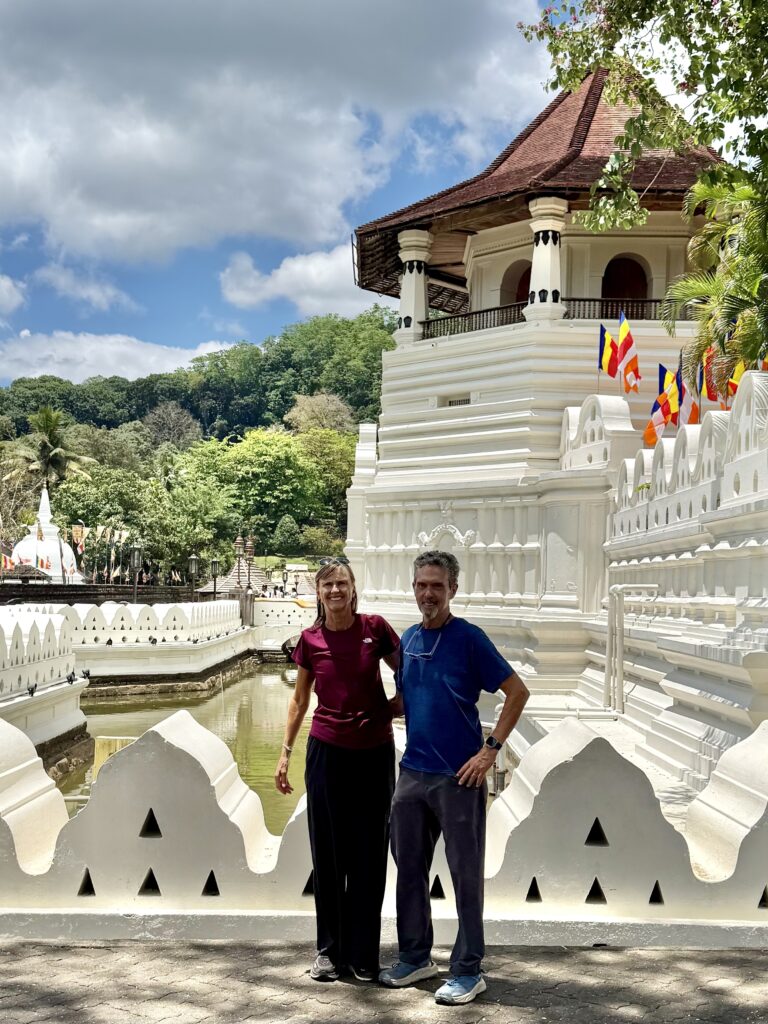
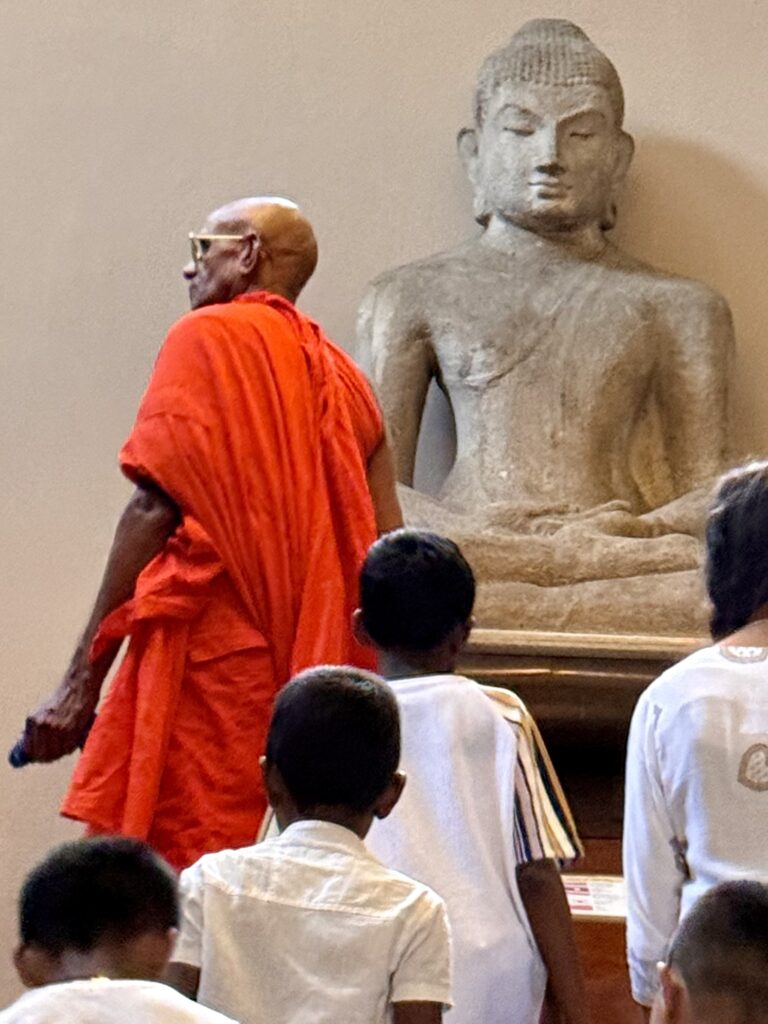
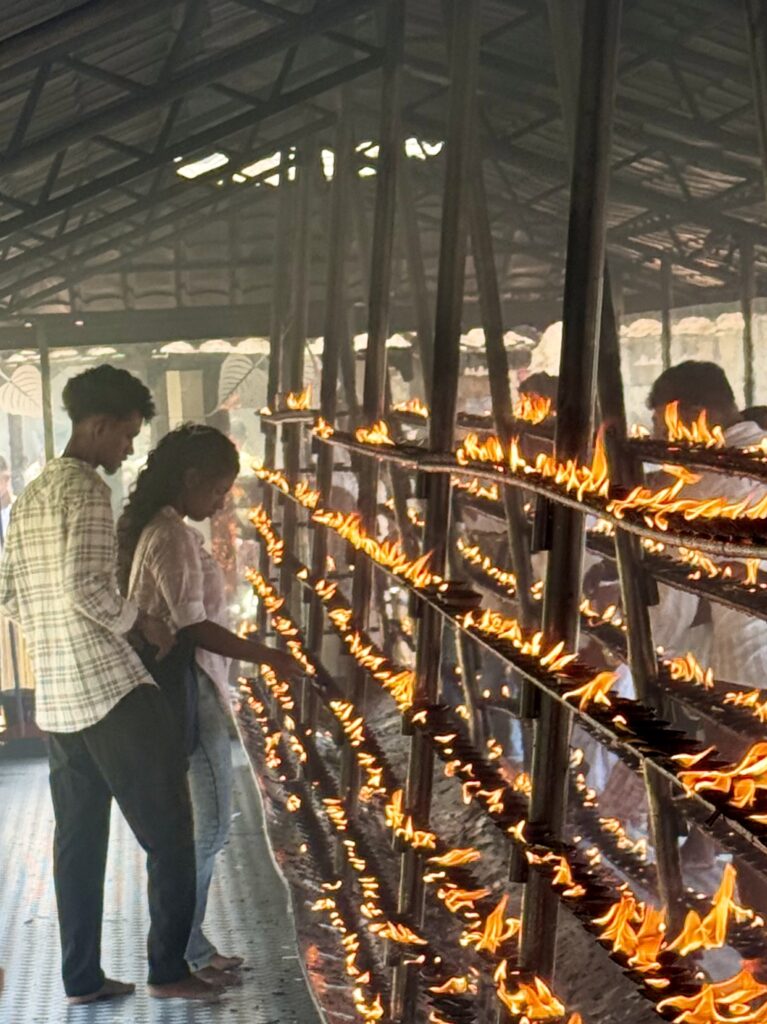
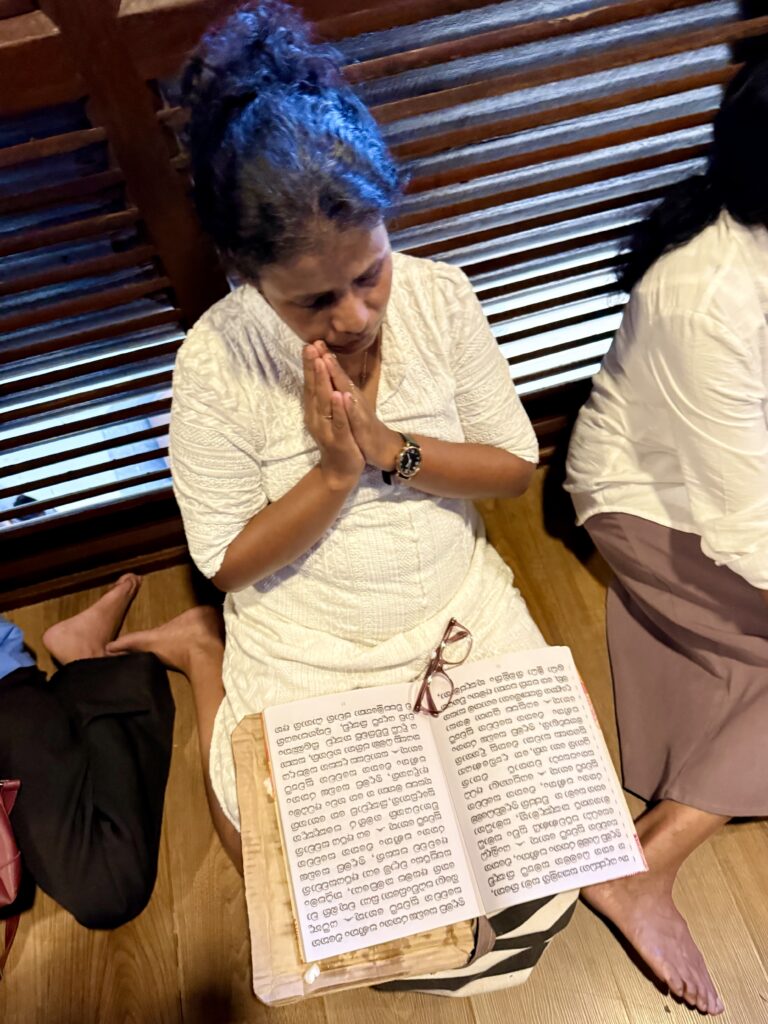
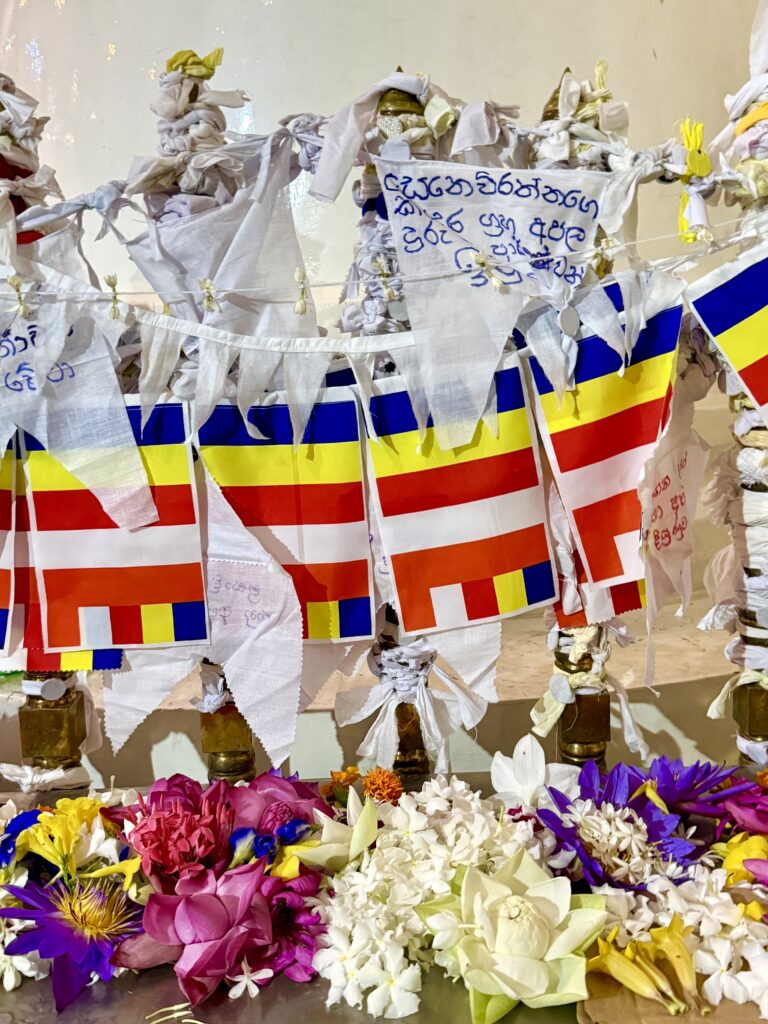
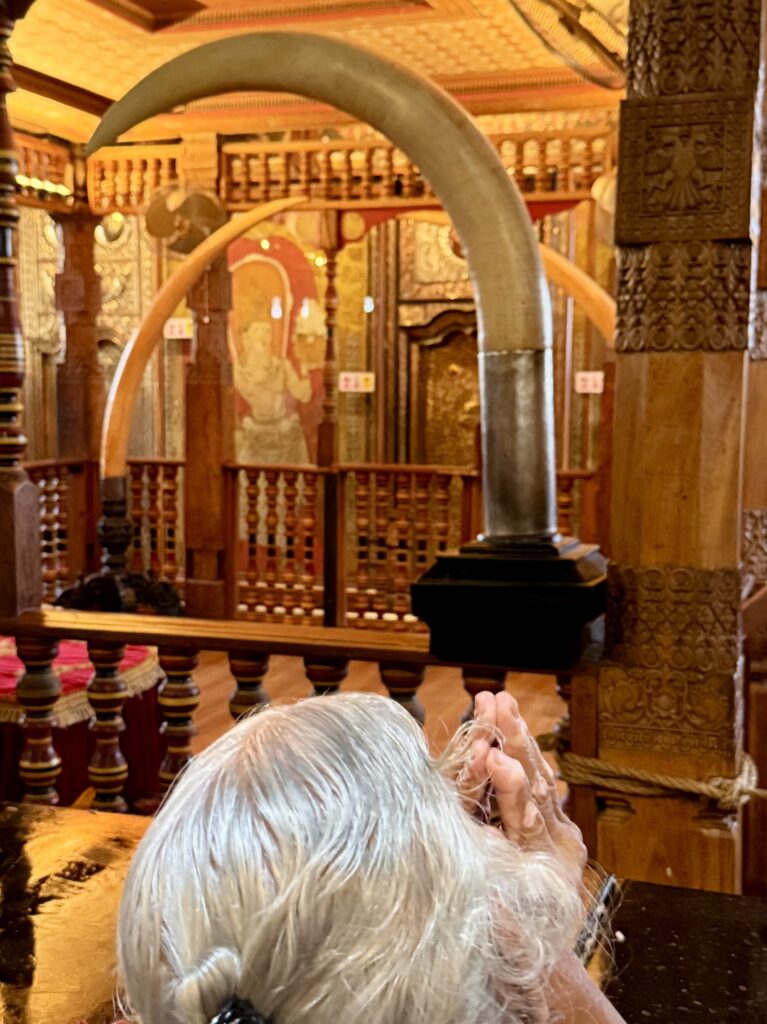
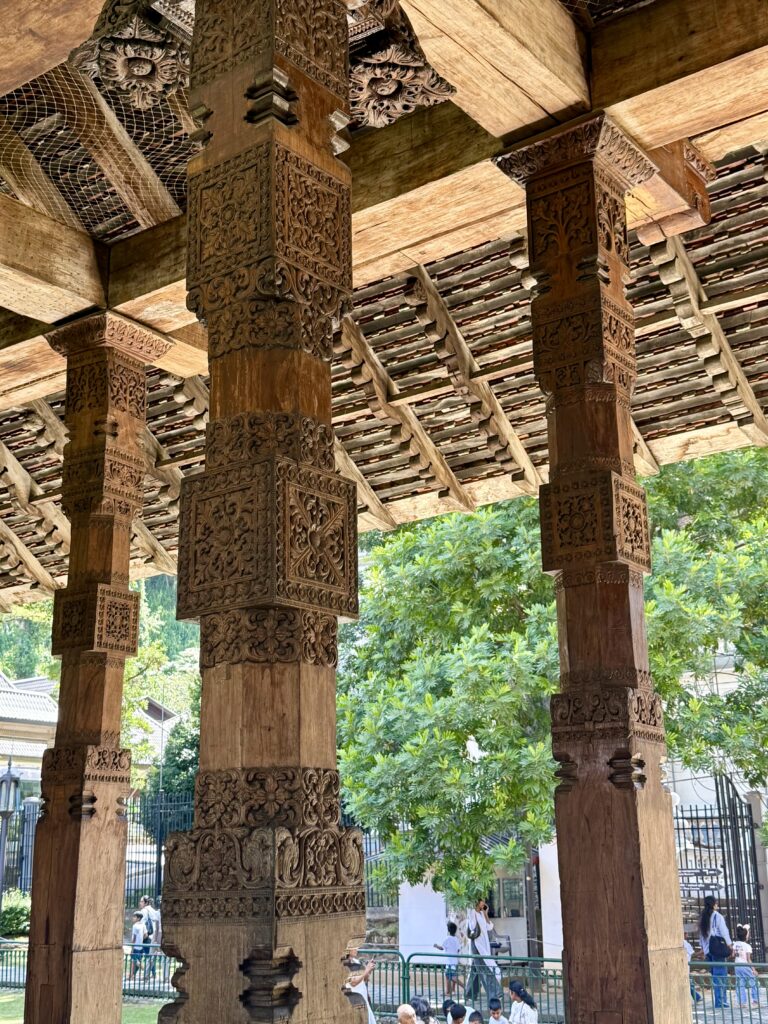
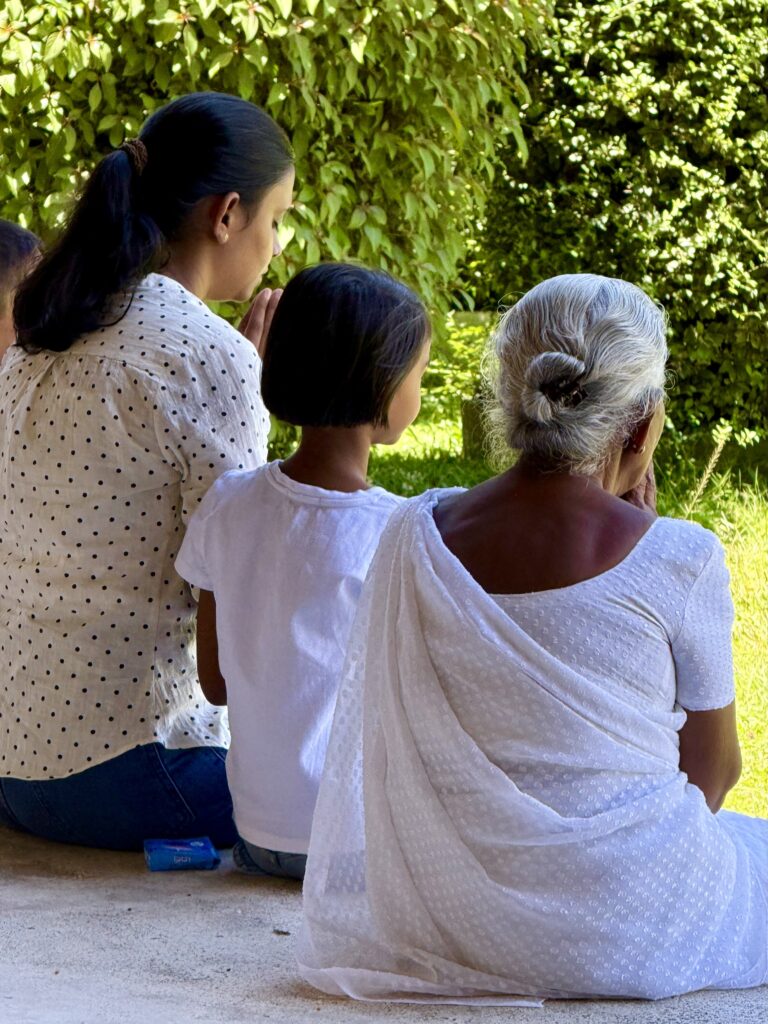
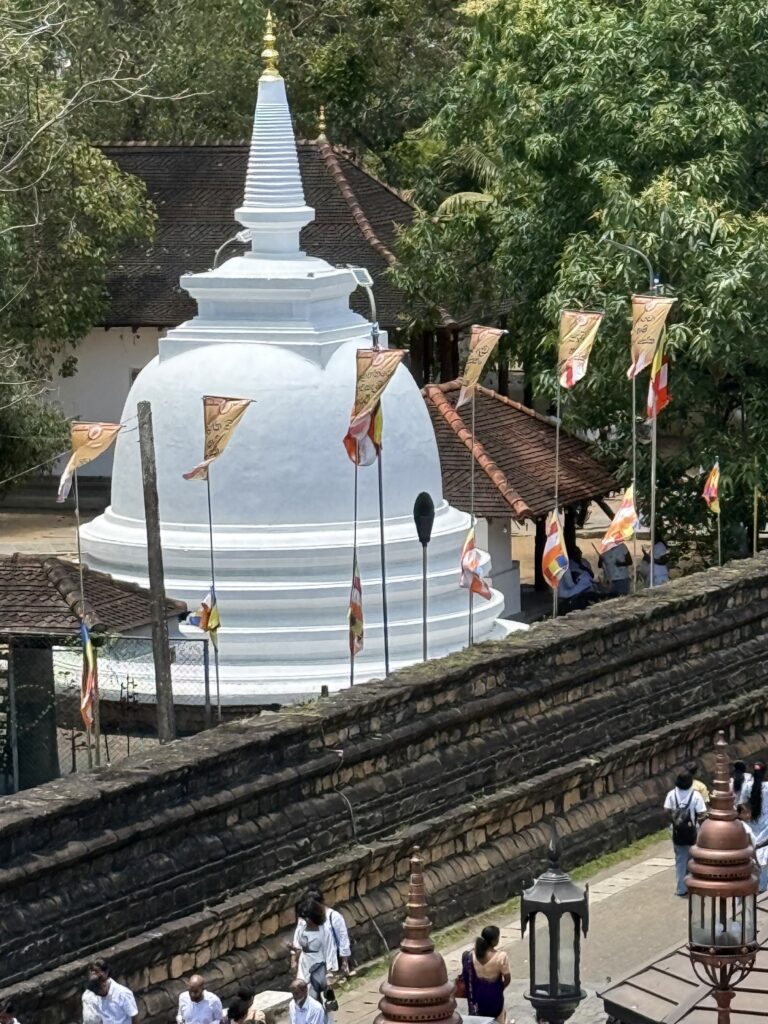
In Kandy we visit the Temple of the Sacred Tooth Relic, a highly revered treasure in a former palace, now a UNESCO site. Teeth are considered memory cards of all the good and bad vibes released through our mouths, and this tooth belonged to the Buddha himself. This sacred relic is protected by and brings power to the king and thus is housed in the palace. The Sinhalese monarchy started in 543 BC and ended when the Kingdom of Kandy was overthrown by the British in 1818. After visiting the Buddhism museum, the elephant stables, and the wax museum honoring the final monarchy, we shuffle with the devotees towards the tooth which is safely enshrined within seven nested, gold-encrusted caskets behind an archway of elephant tusks. The devout are lining the walkway reading scripture, praying, and providing offerings in a display of deep faith. A few weeks prior was the annual Festival of the Tooth, a ten-day ceremony including elephant parades, dancers, and fire breathers, bringing the tooth out of captivity under tight security as a request to the gods for rainfall.
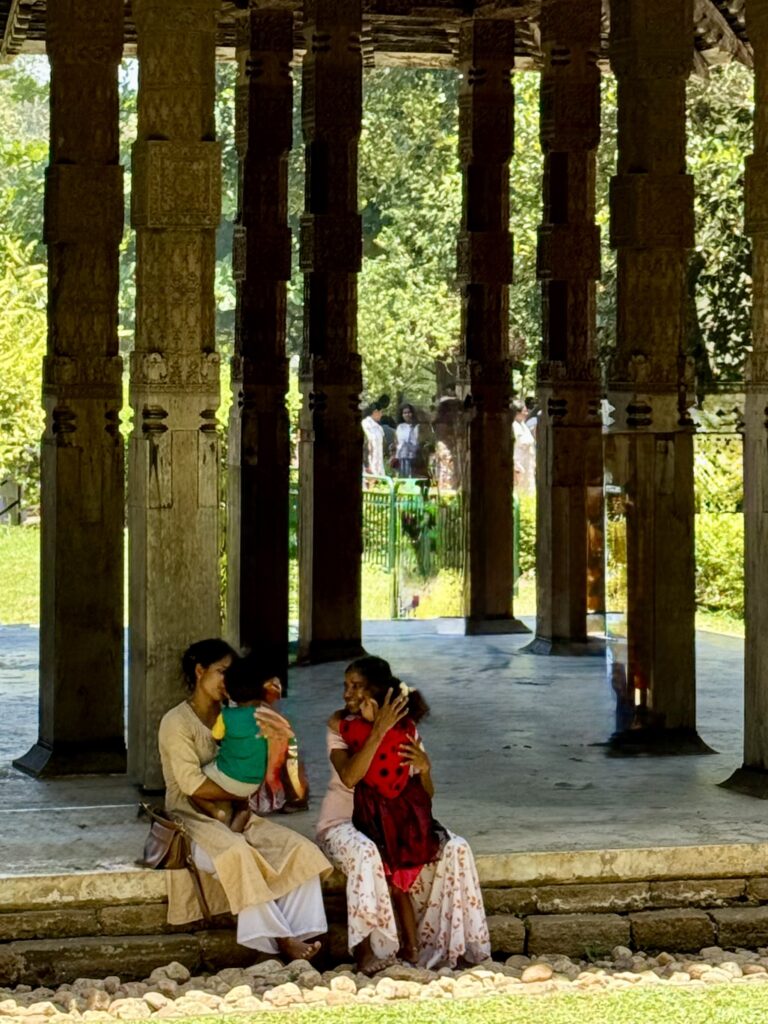
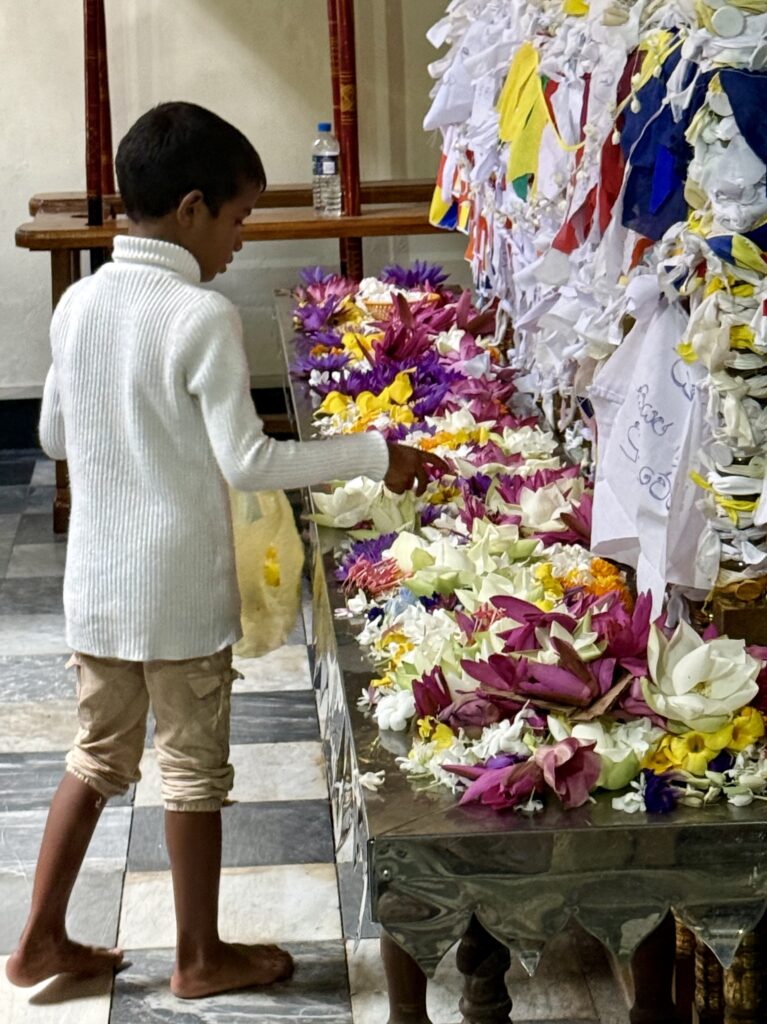
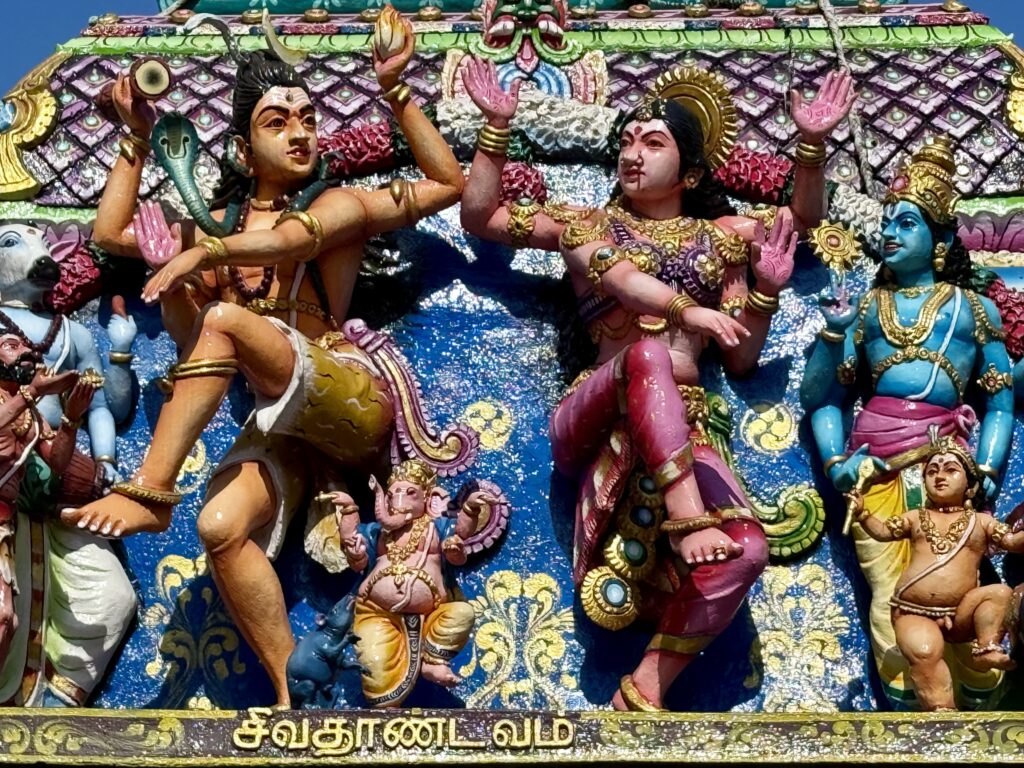
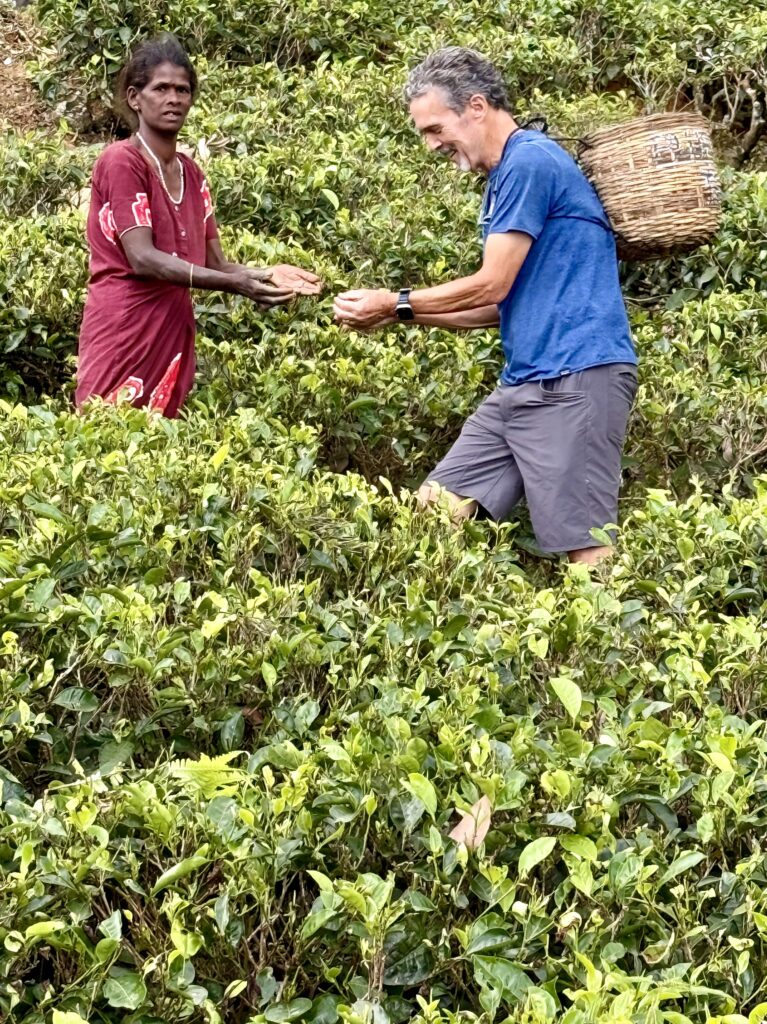
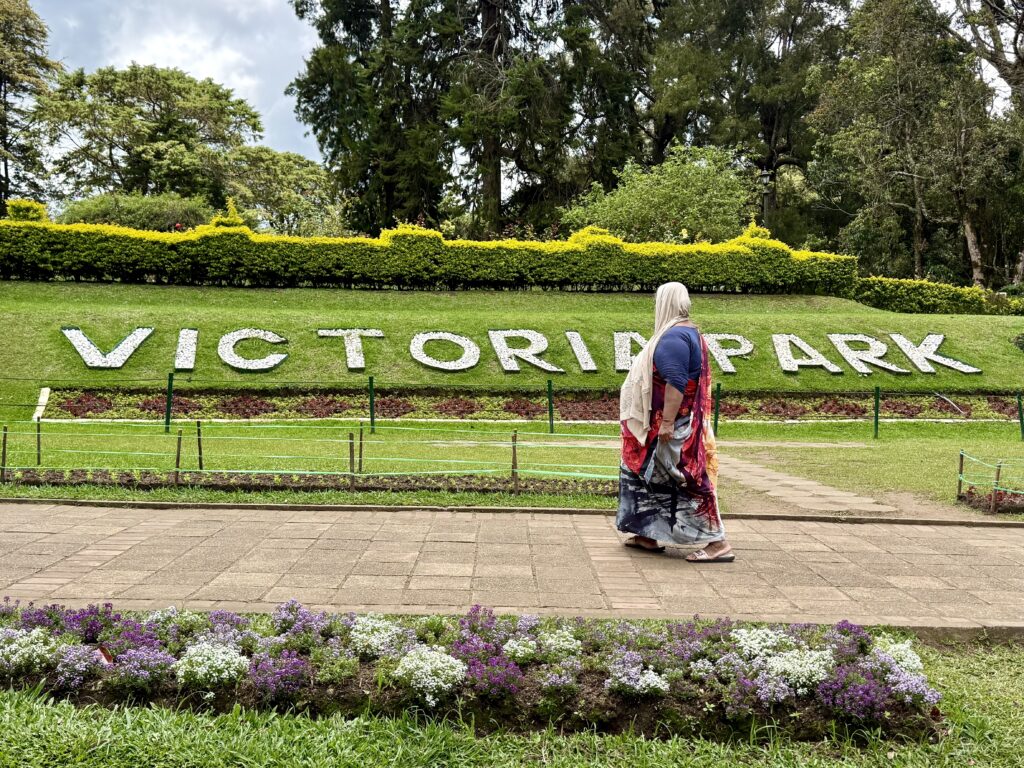
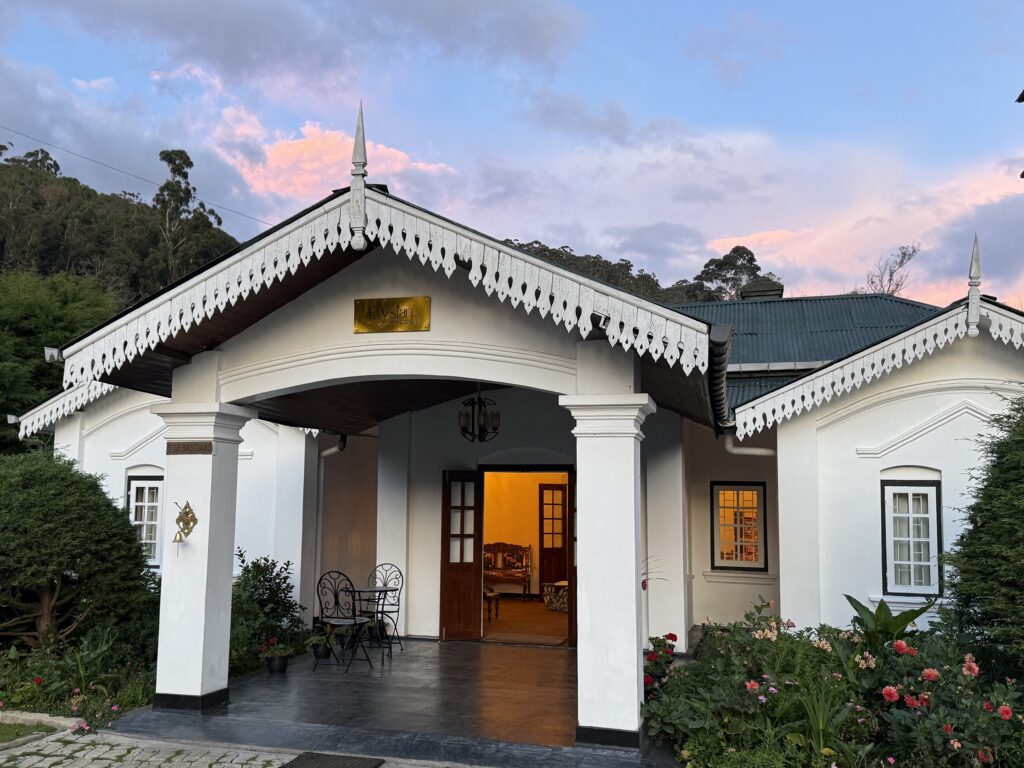
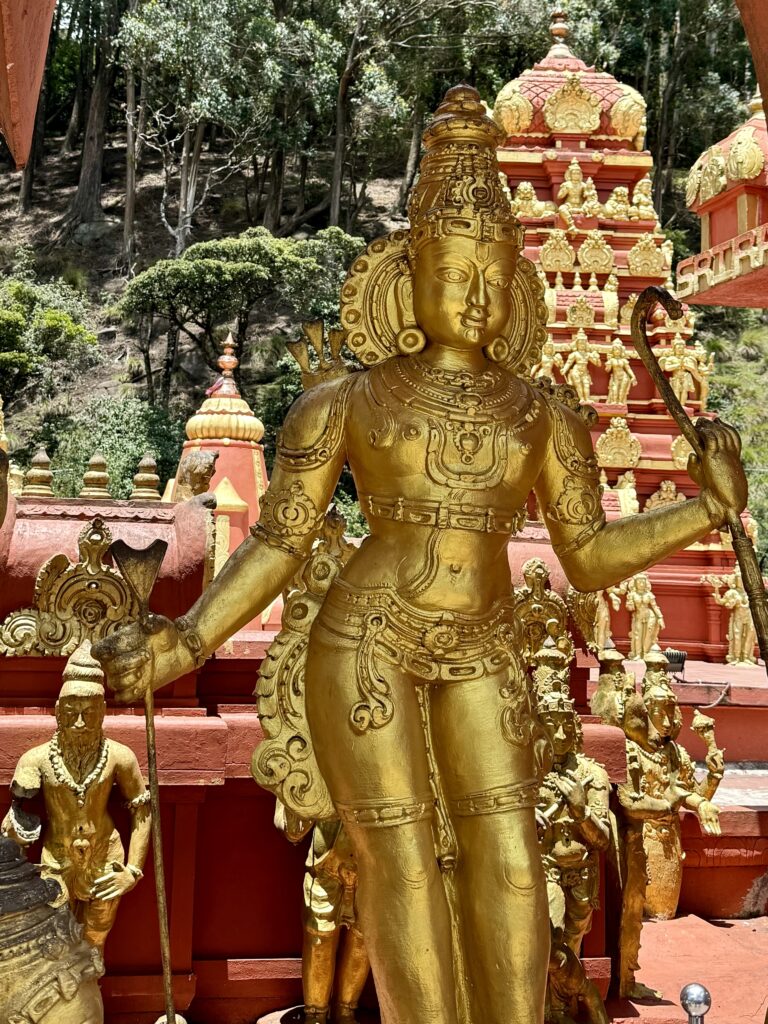
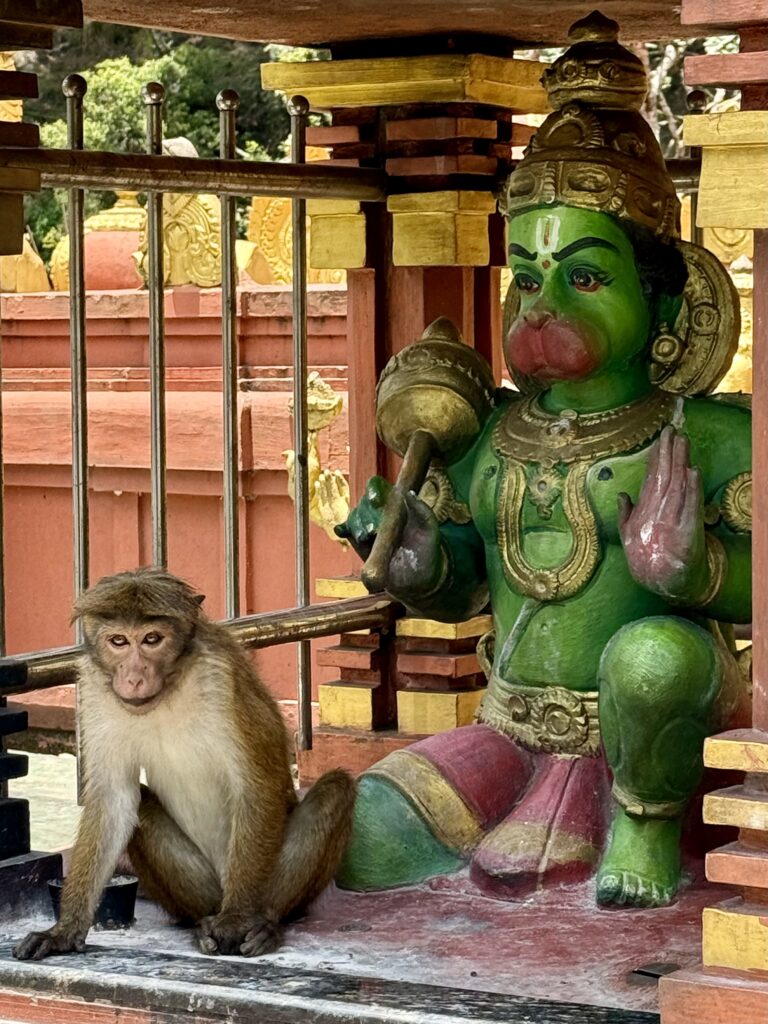
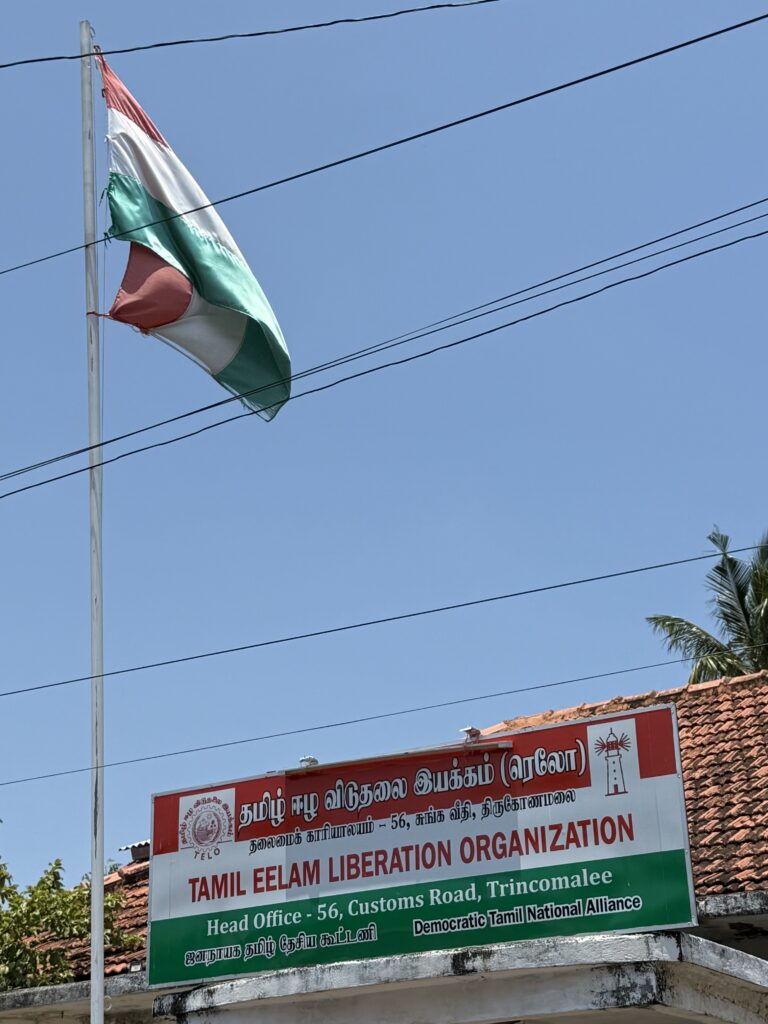
We drive up winding roads to Nuwara Eliya, a former British hill town at over 6,000 feet elevation, providing cooler temps and tea profits. Donning historical clothing, we learn how to pluck tea leaves at the Bluefield tea plantation, getting tips from a pro Tamil plucker helping tourists as a side gig. The dark skinned Tamils were imported from India for tea plucking slave labor by the British, among other trades, and stayed behind post independence, gravitating towards the north and east of Sri Lanka. The separatist group, the Tamil Tigers, fueled a civil war against the Sinhalese-majority government for 26 years until 2009, nearly destroying the country in the process. Our guide almost lost his life when a Tamil bomb exploded just 10 meters away and another friend lost both parents at age 6 due to the conflict. Back on the plantation, we learn that pluckers need to pick a minimum of 10 baskets per day, which is daunting especially when there’s wind, and this plantation, founded in 1841, continues to use some processing machinery that is over a century old, with their tea being purchased by Lipton, Twinings, and other name brands. Nearby we visit the Hindu Seethaiamman Temple where it’s believed King Ravana brought Princess Sita after her abduction, creating the nearby Hakgala Botanical Garden for her exile entertainment, and the devotees’ faith is palpable in this temple, demonstrated by full body prostrations and deep prayer.
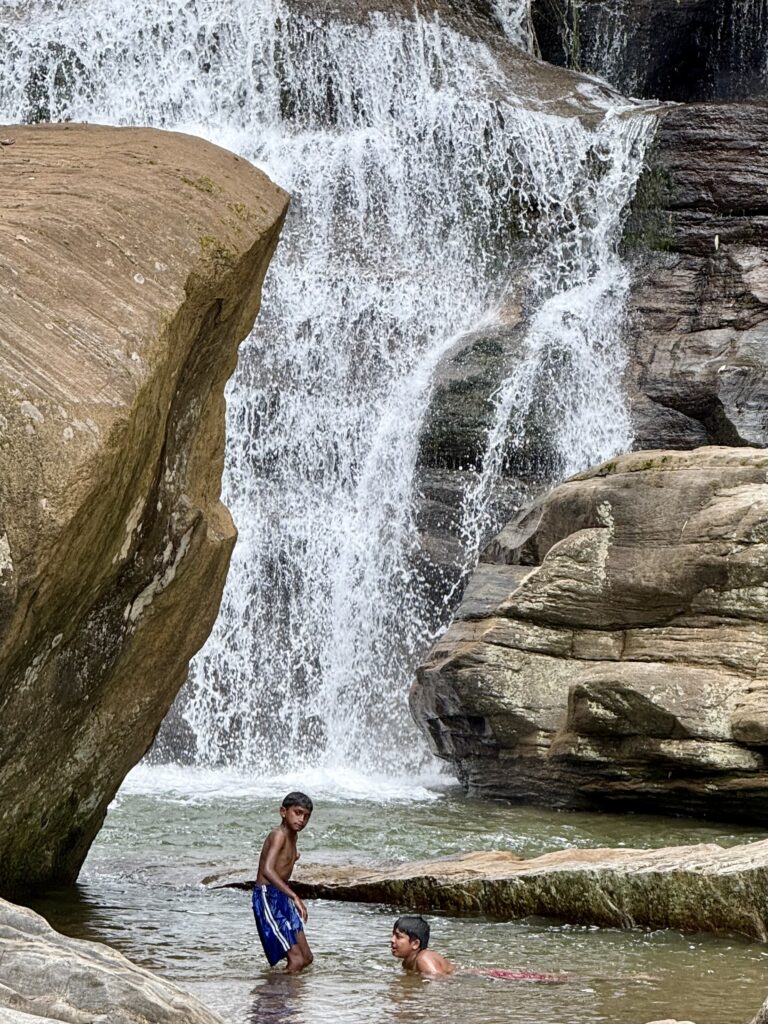
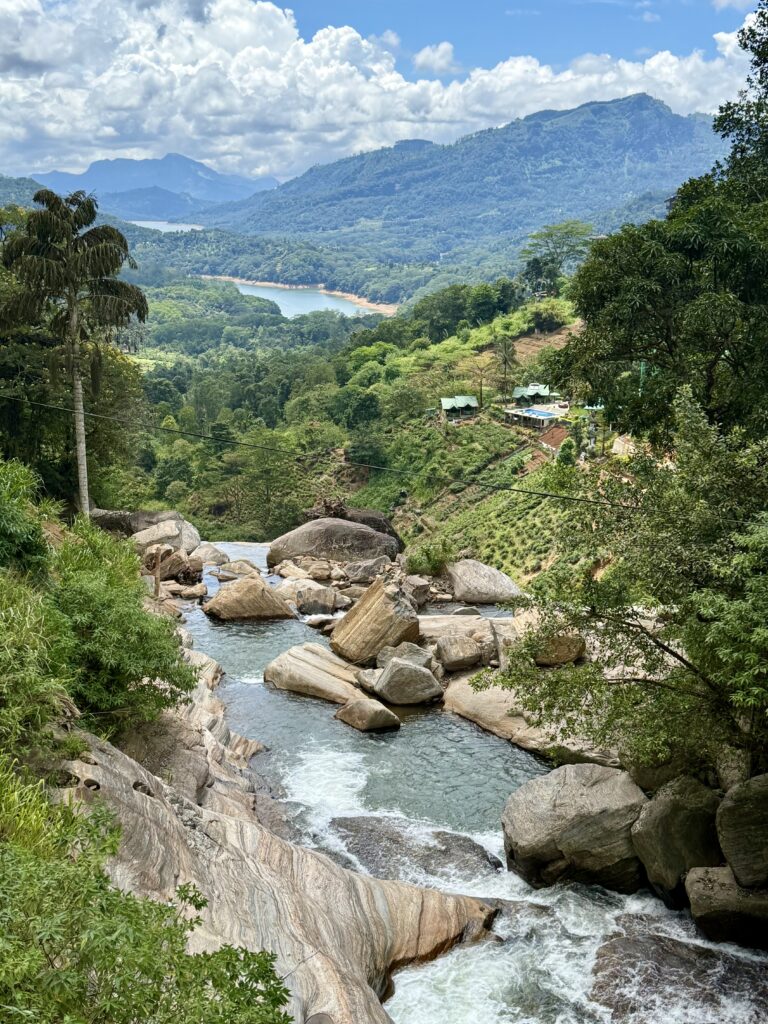
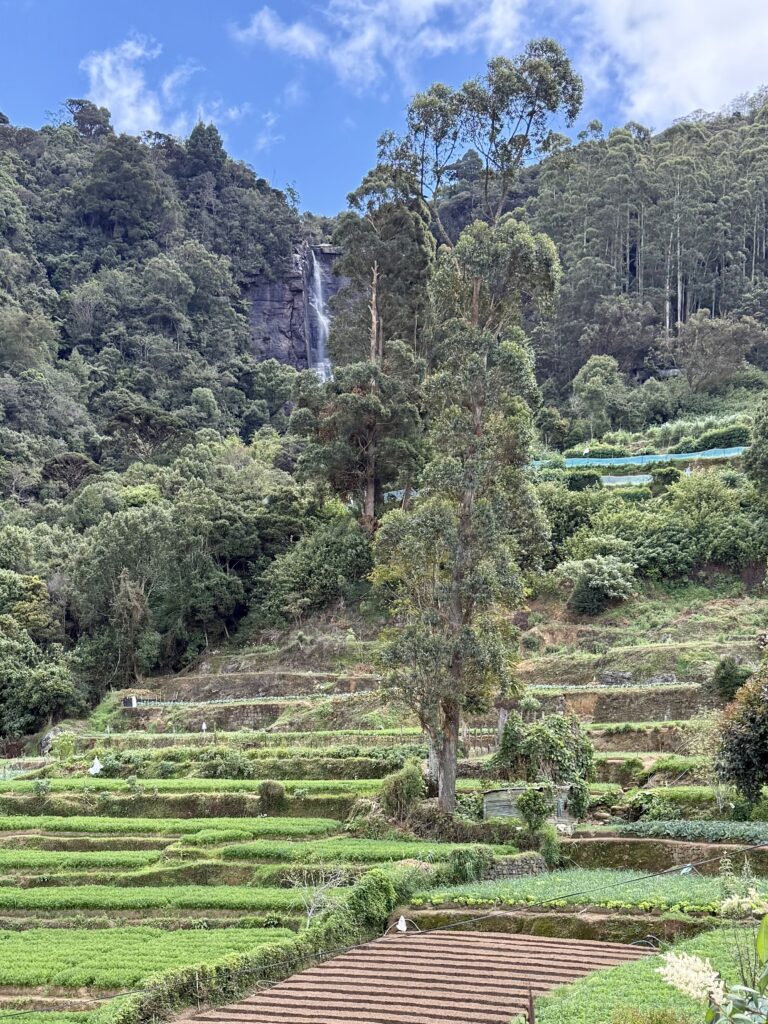
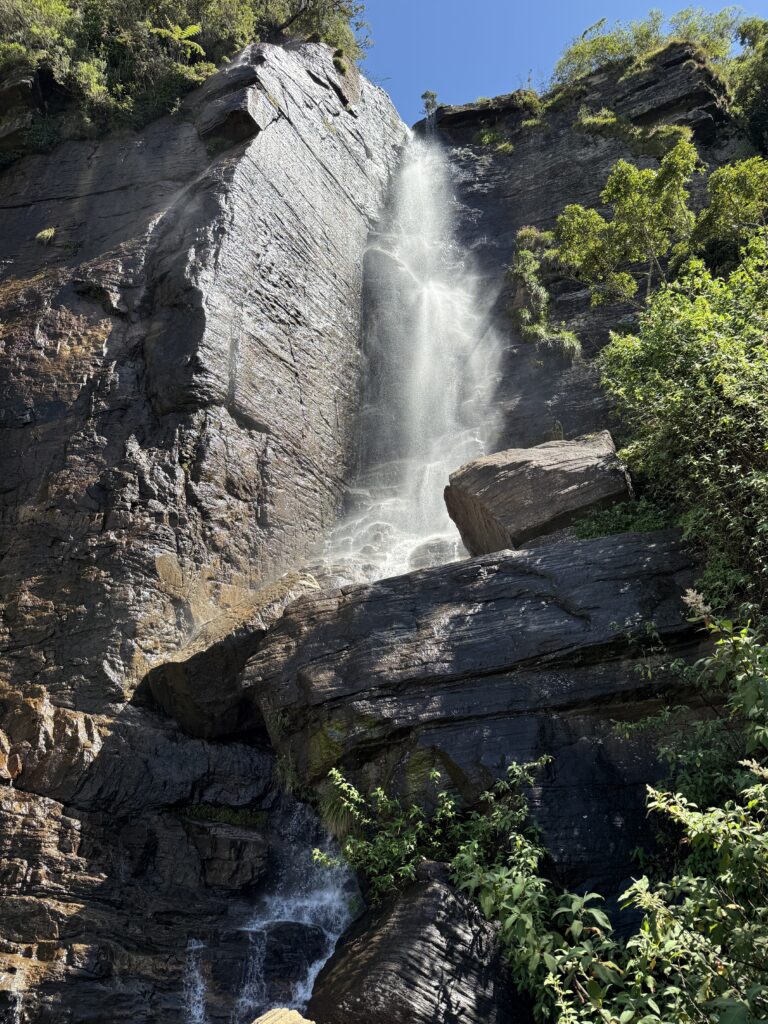
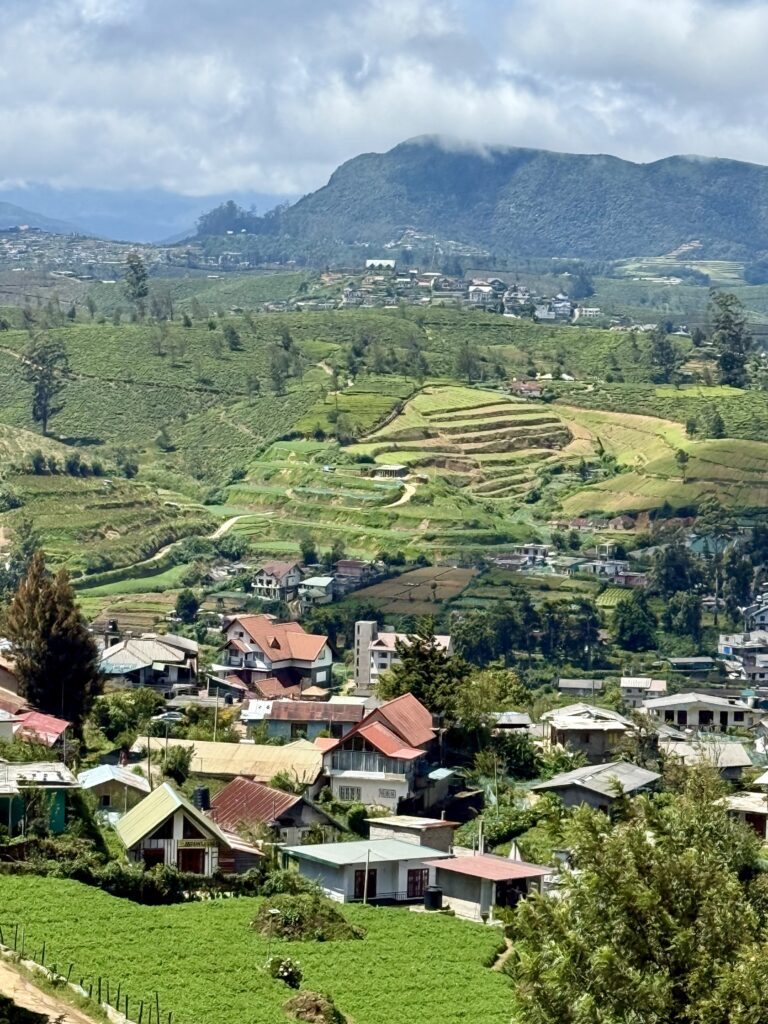
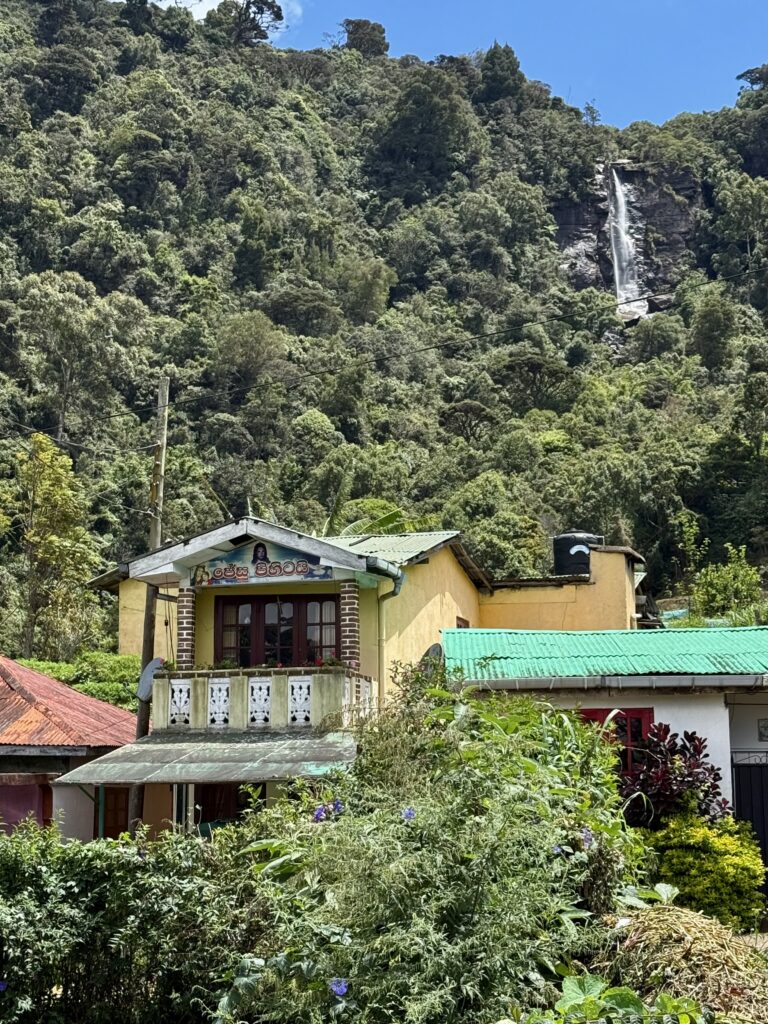
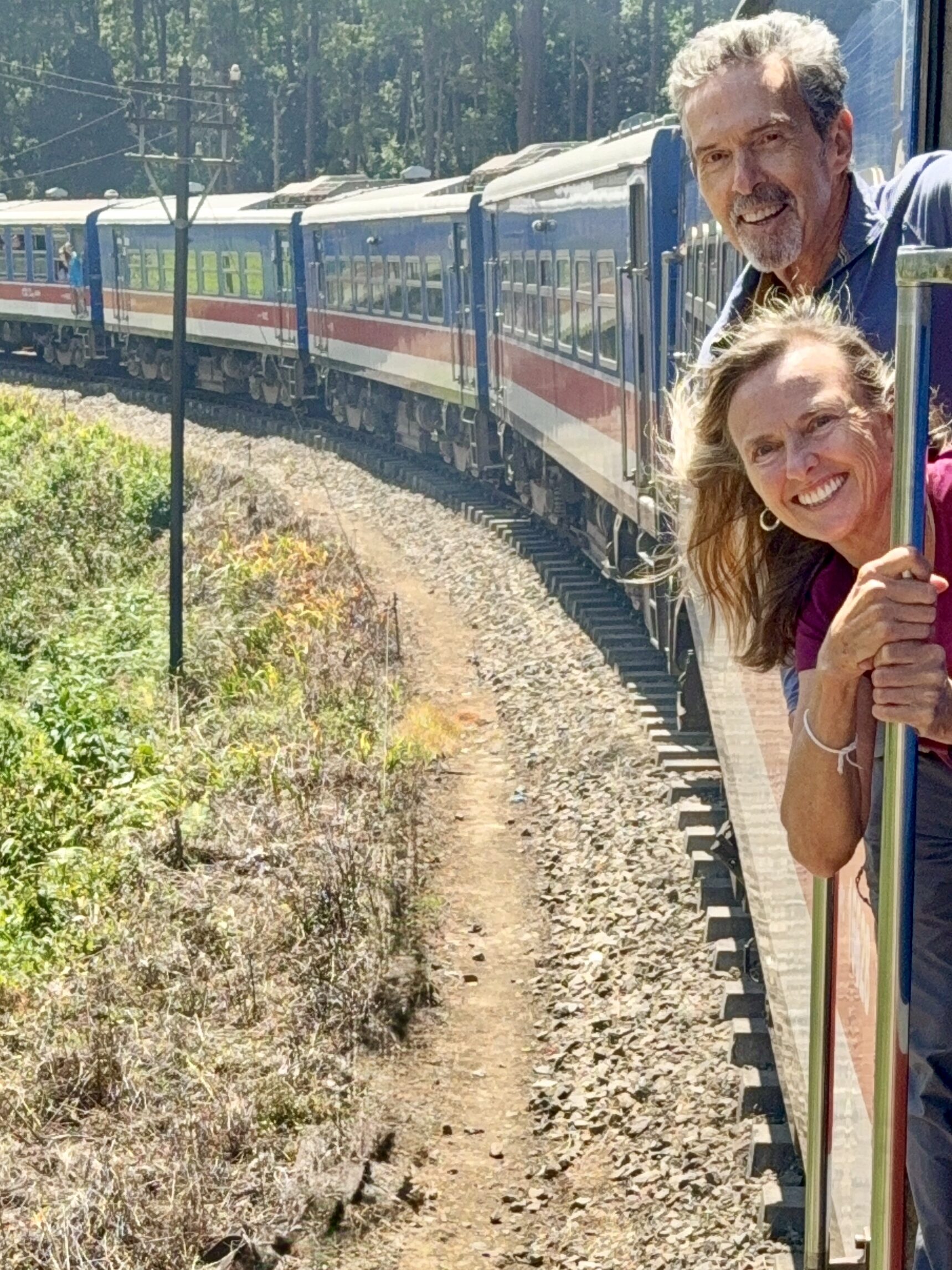
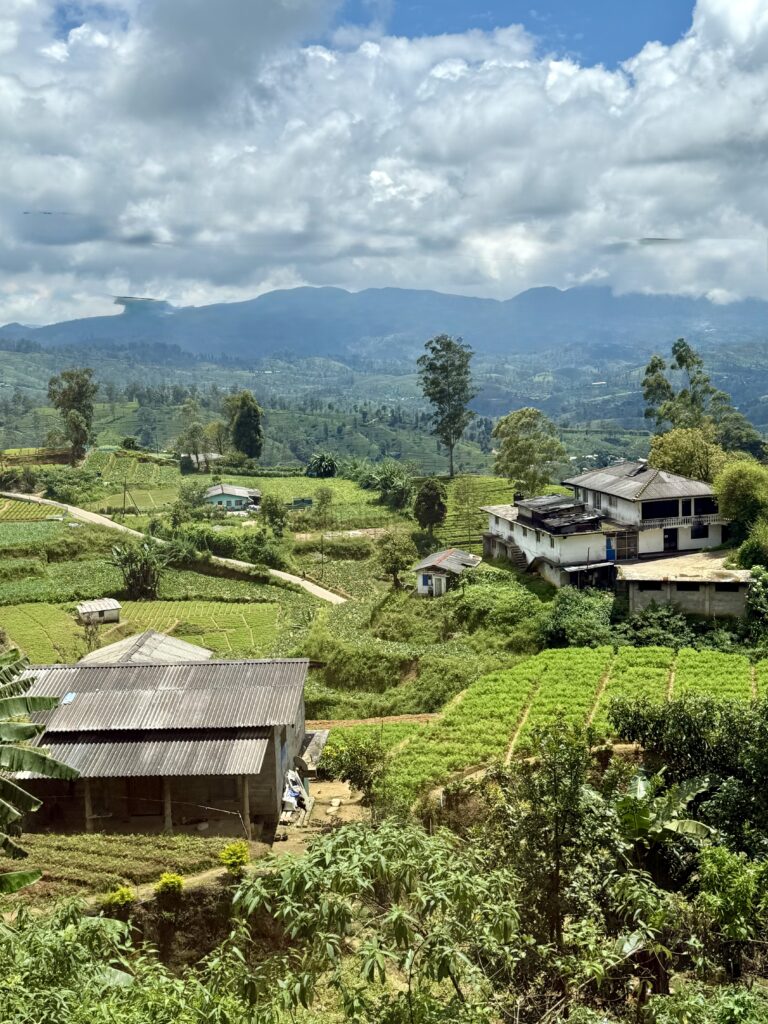
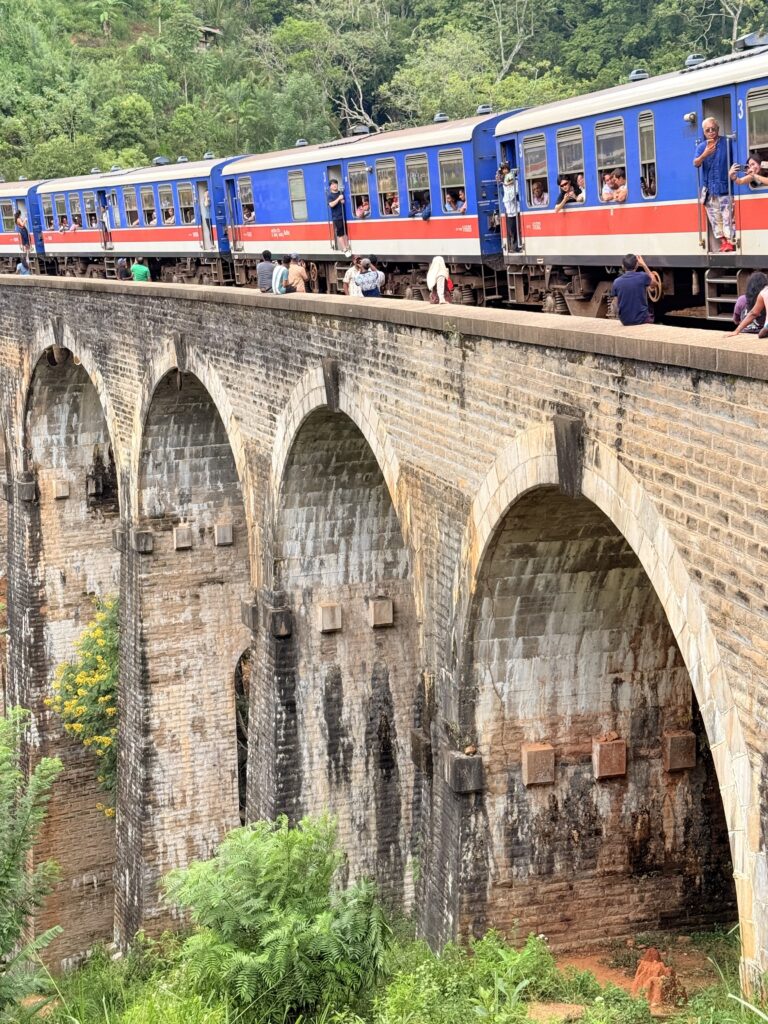
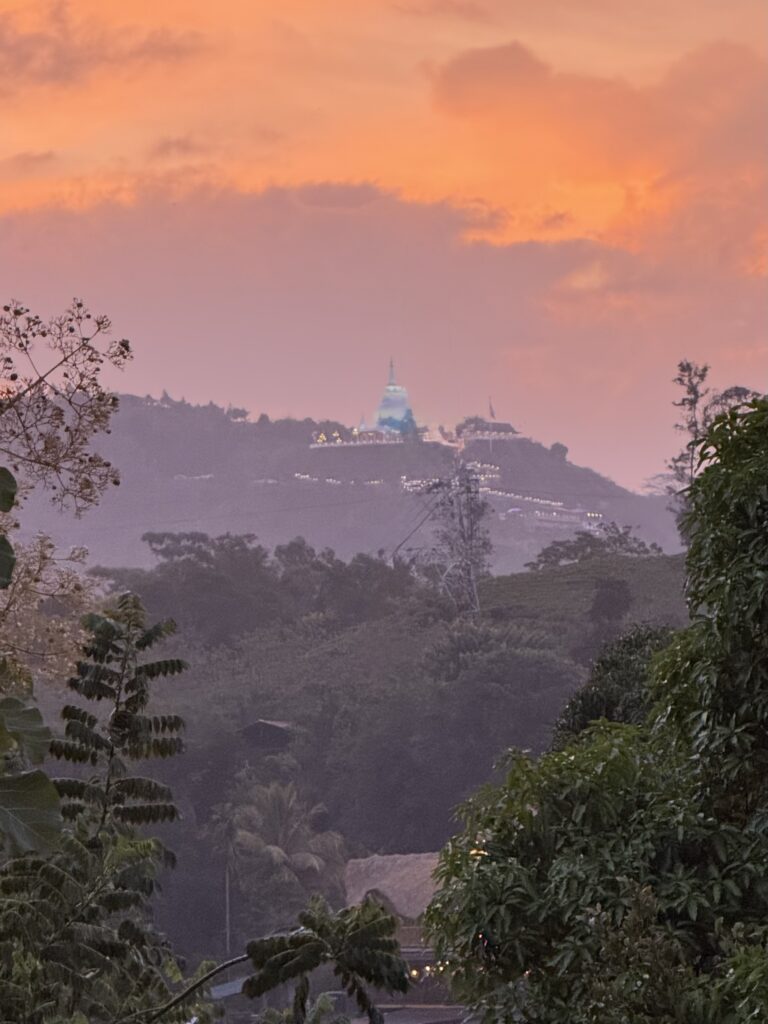
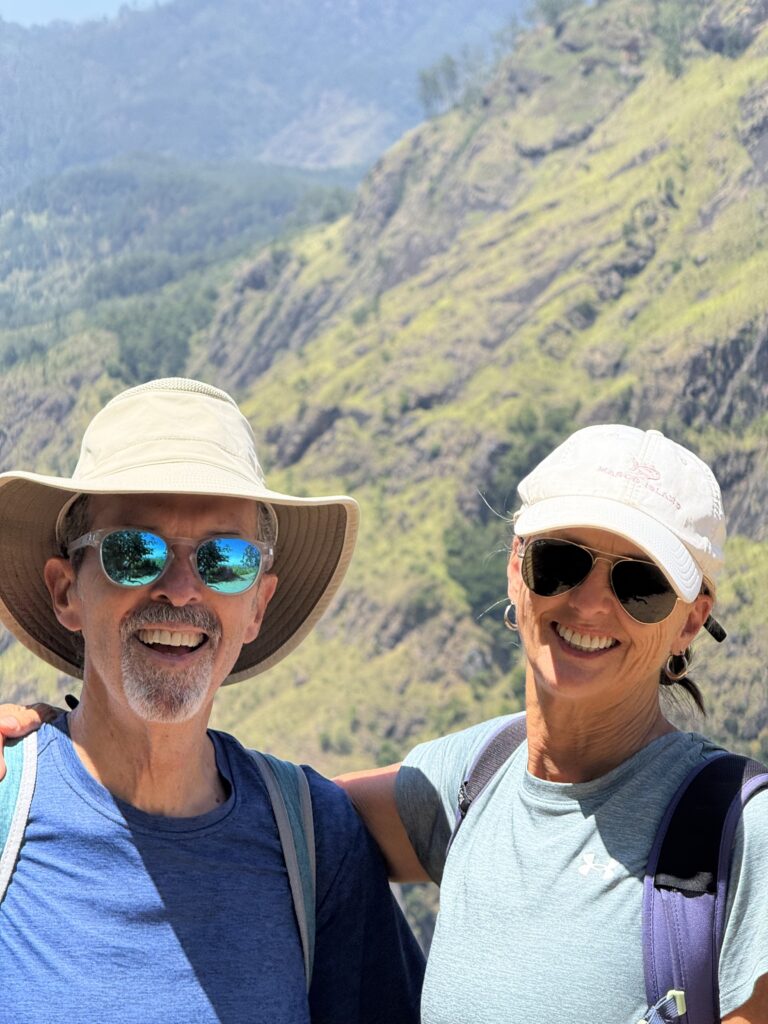
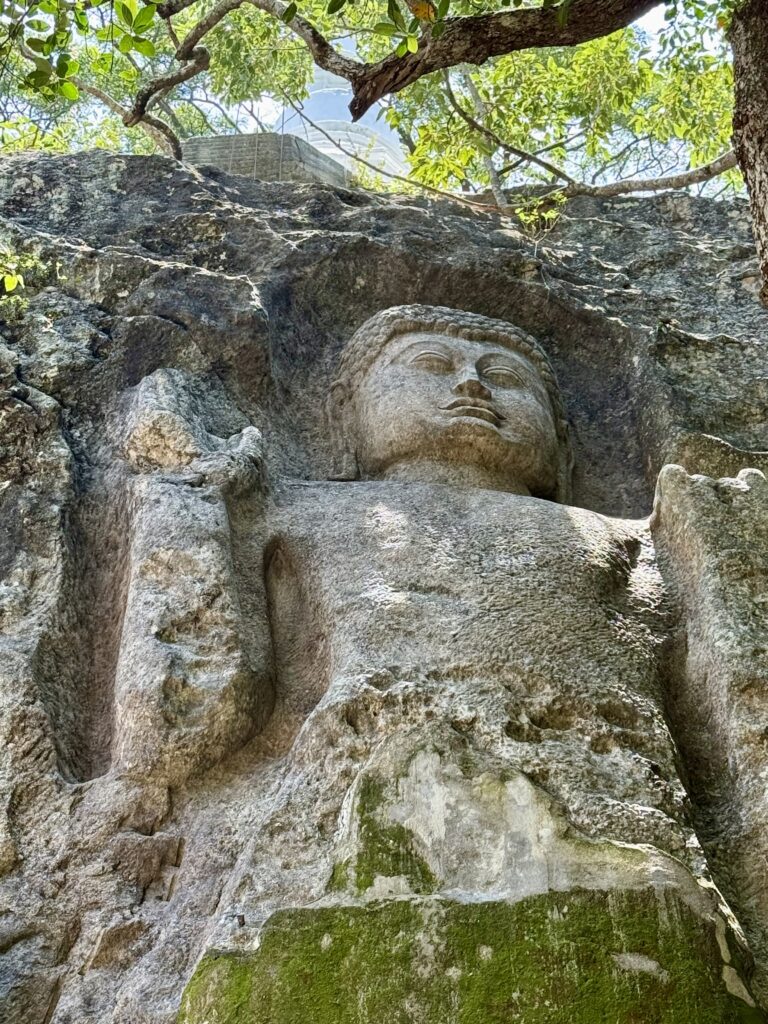
Next we ride the train through terraced landscapes and past plunging waterfalls, most entertained by the steady flow of tourists grabbing shots of themselves leaning out the open train doors, assisted by the train staff lining their pockets as photographers, despite warnings on the train screens of tourist injuries and deaths from such activity. We join the crowd with subdued poses then land in the valley town of Ella, enjoying the backpacker vibe with a steady beat. We hike for stellar views from Little Adam’s Peak and visit Dhowa Temple dating over 2,000 years old, built as well by King Valagamba of Anuradhapura. The impressive cave temple includes a tunnel supposedly leading to Ravana’s Cave where he hid Sita, and features a 36-foot Buddha image carved vertically into the rock face.
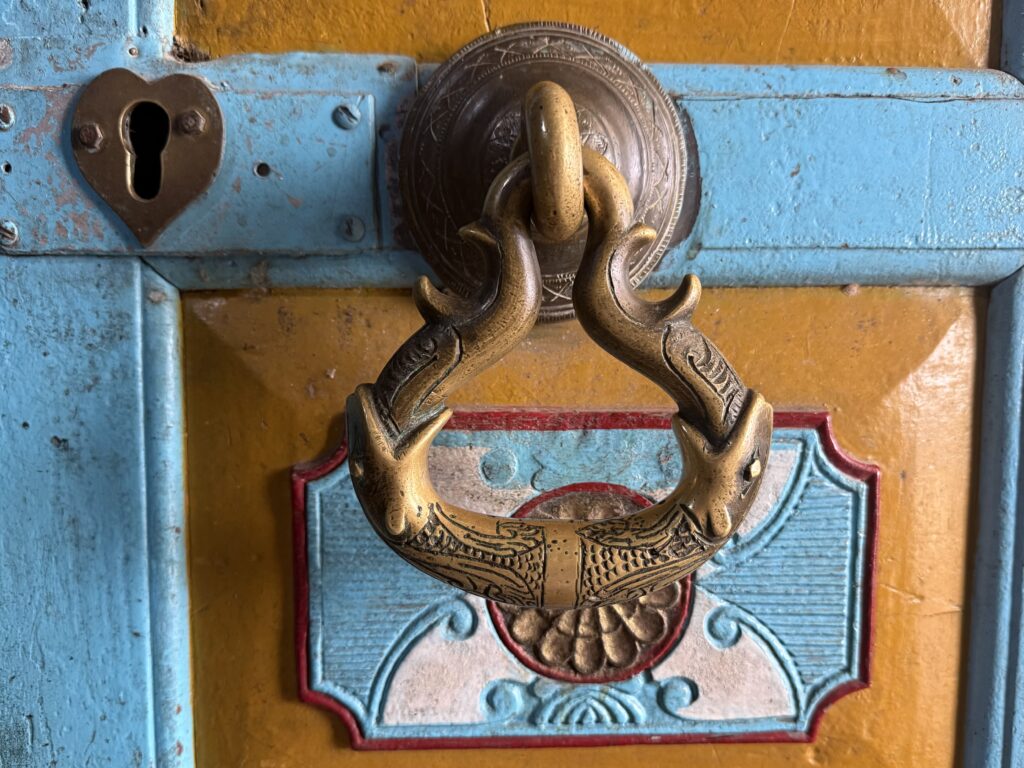
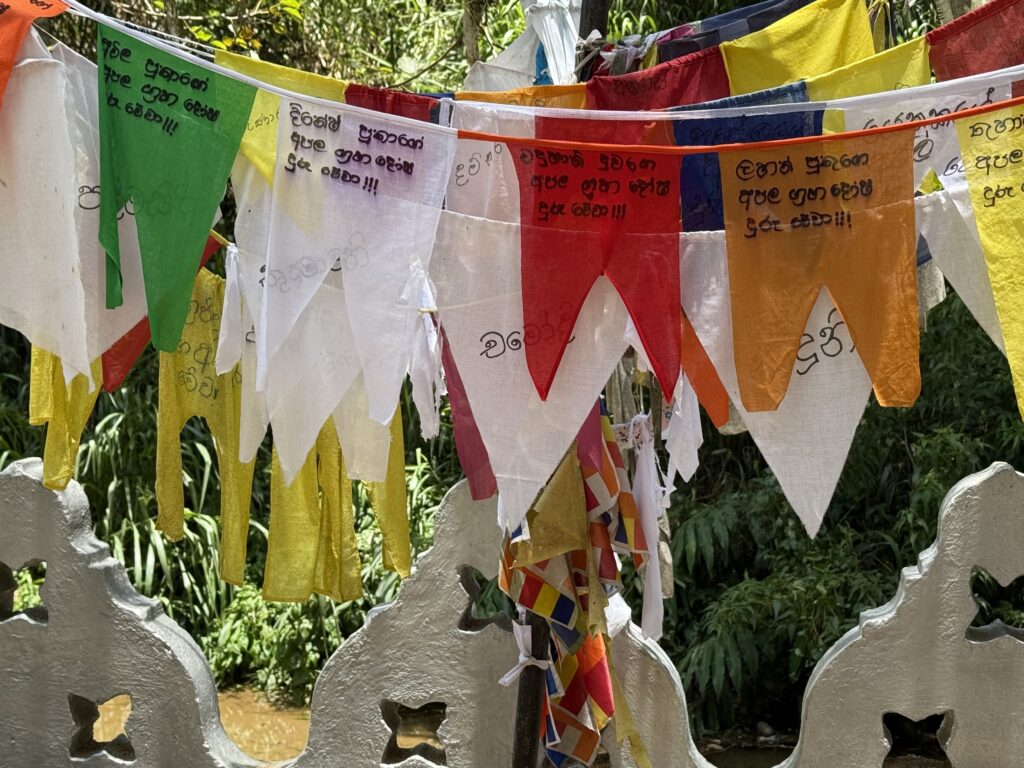
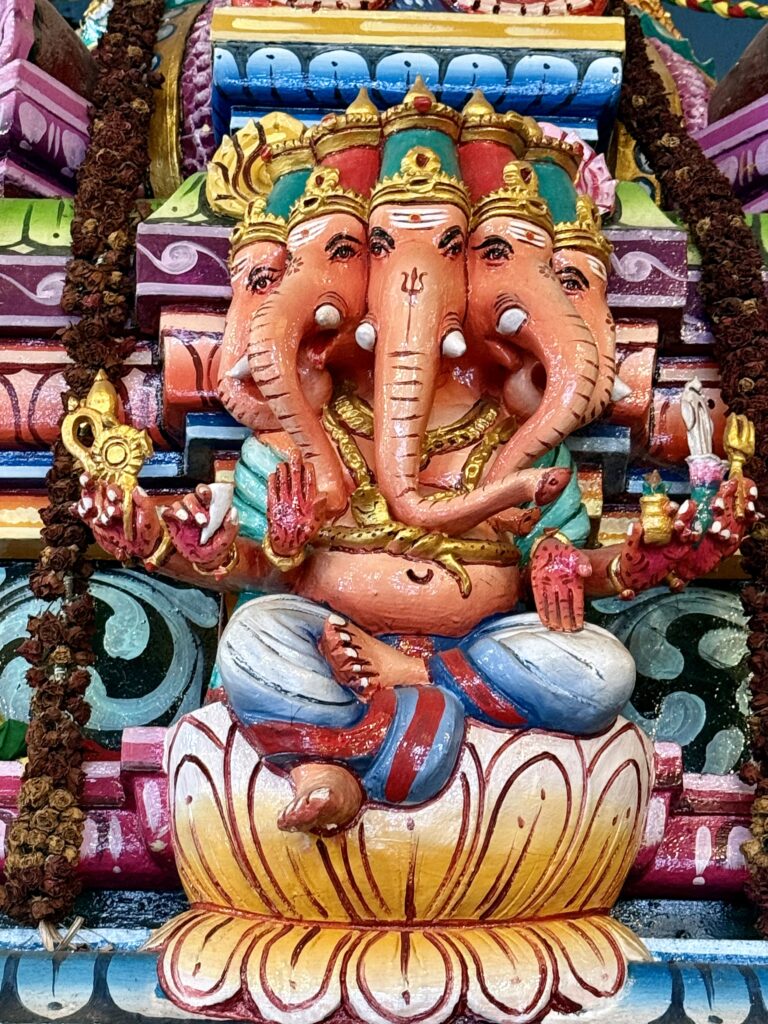
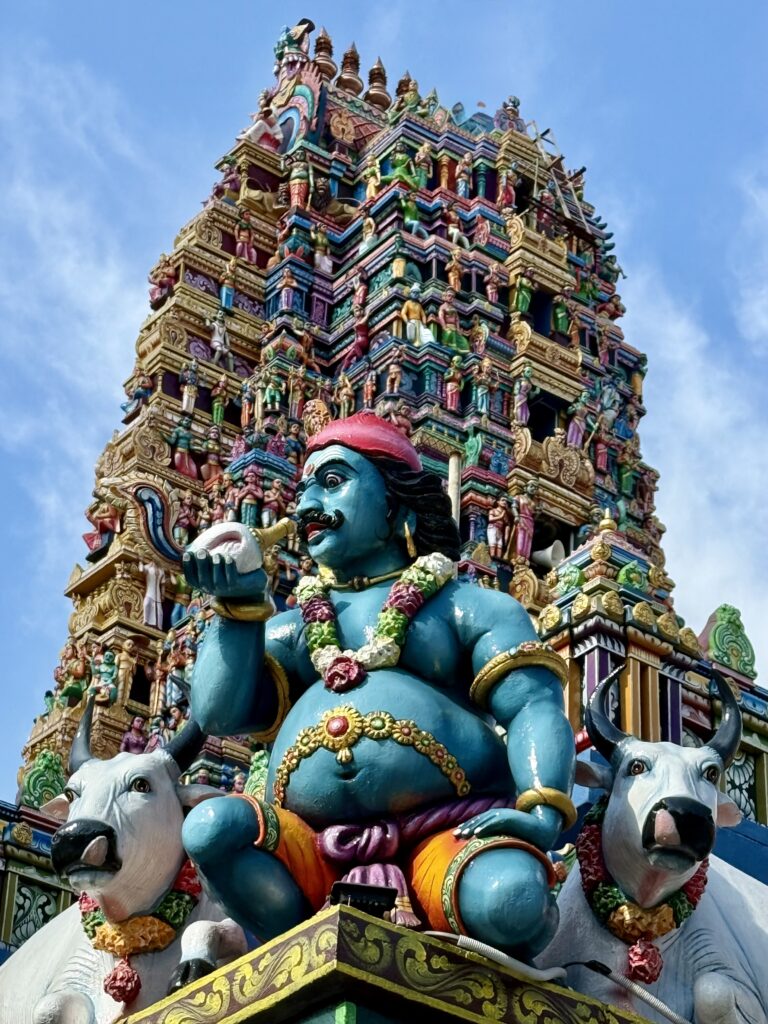
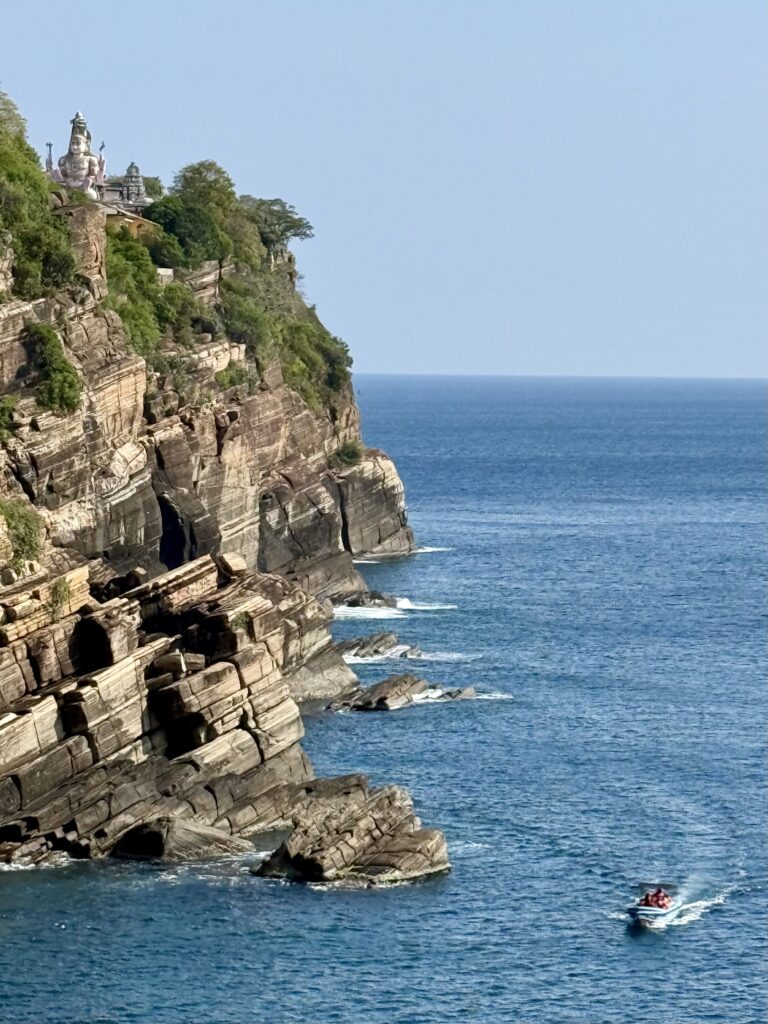
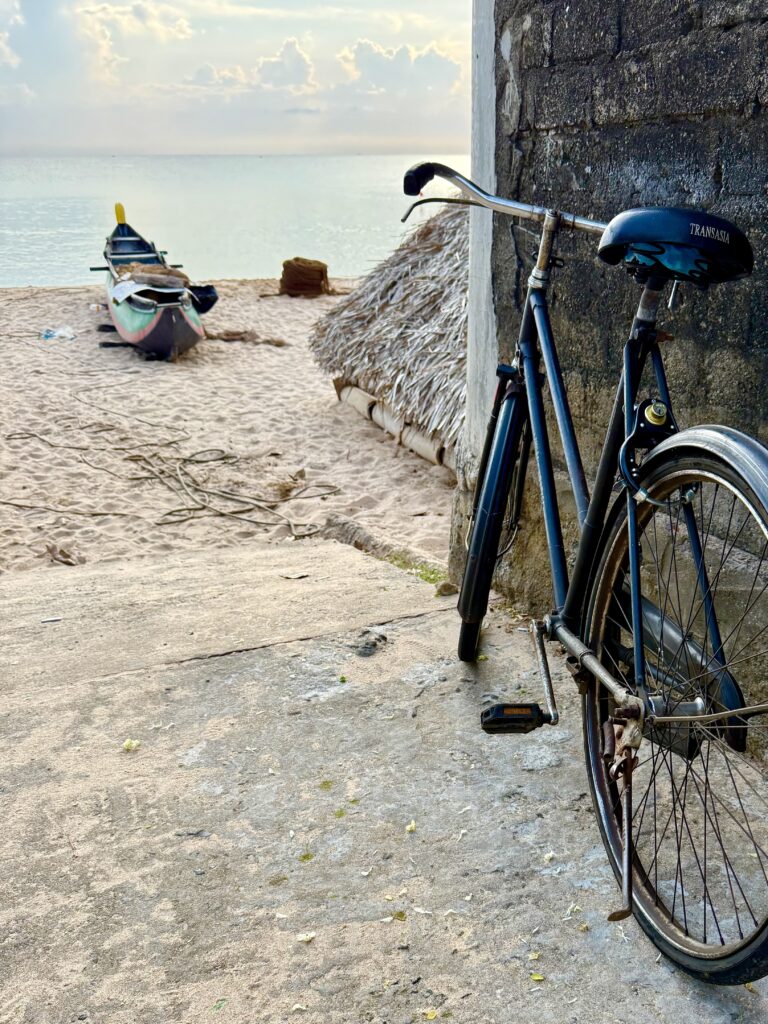
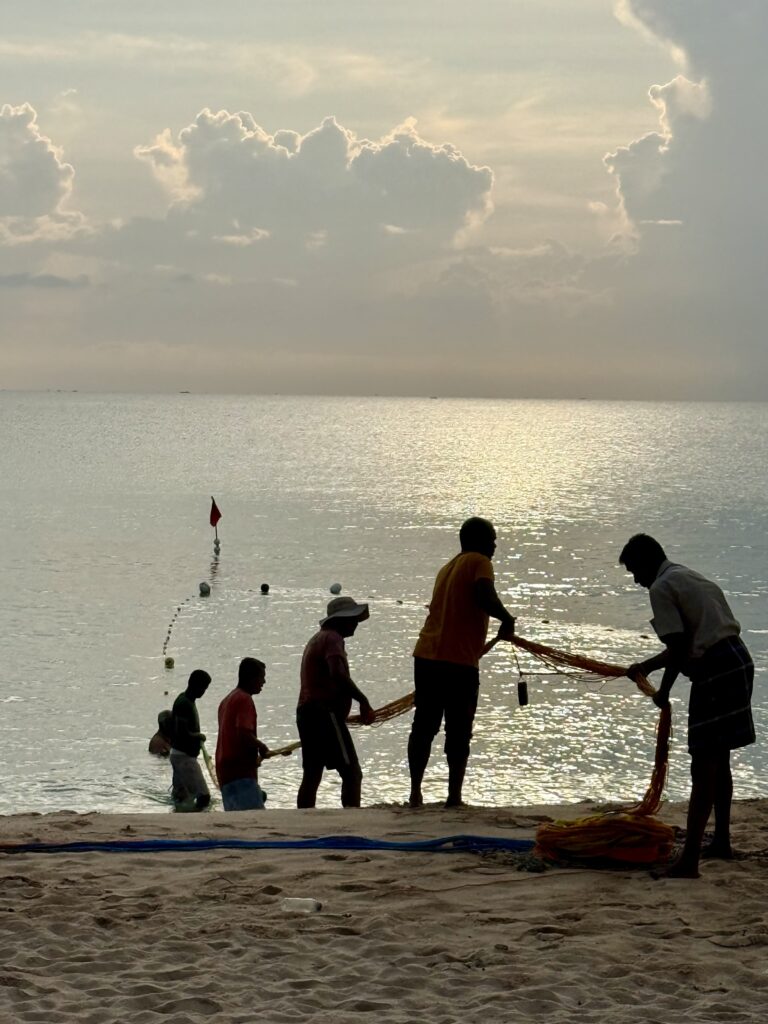
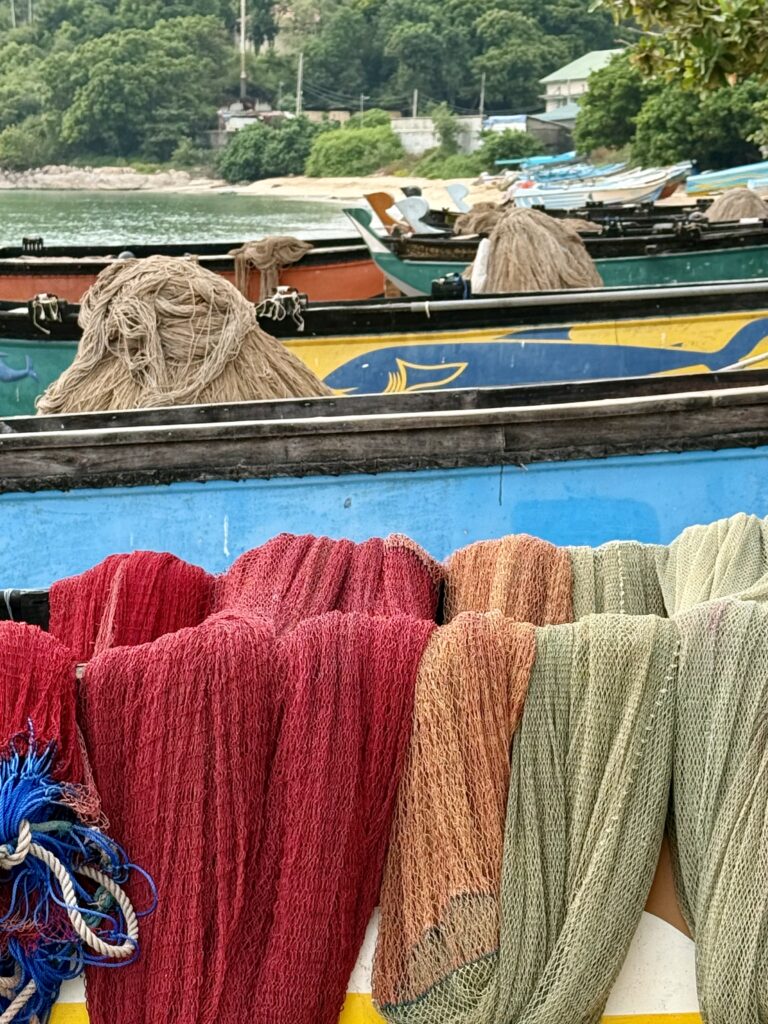
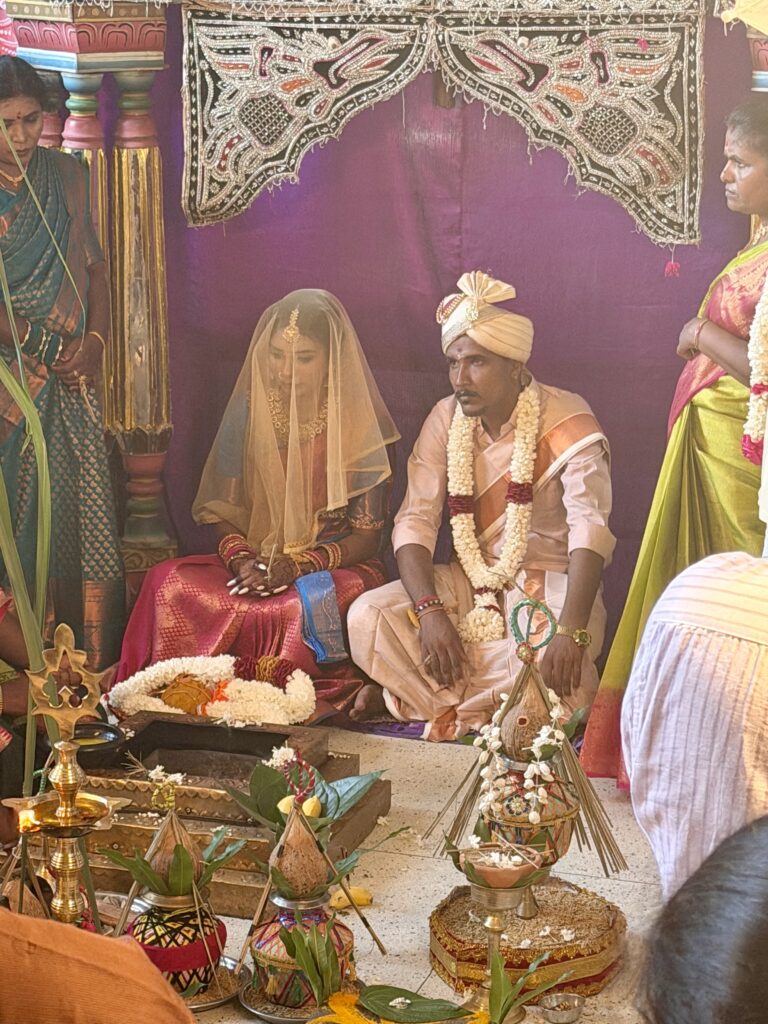
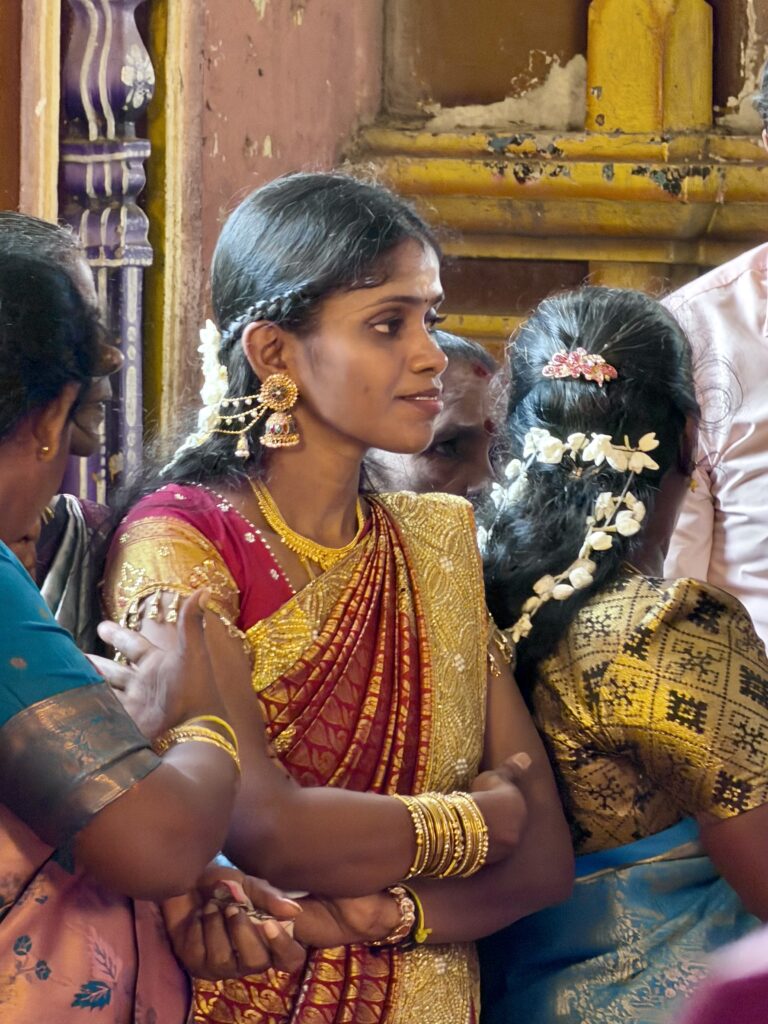
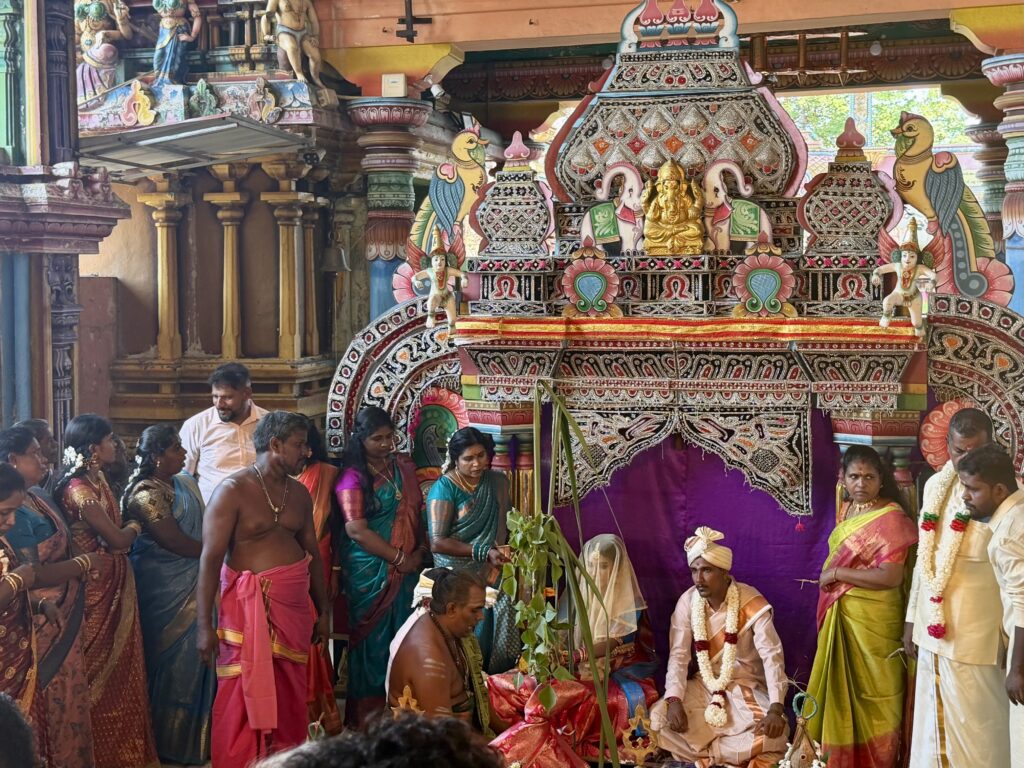
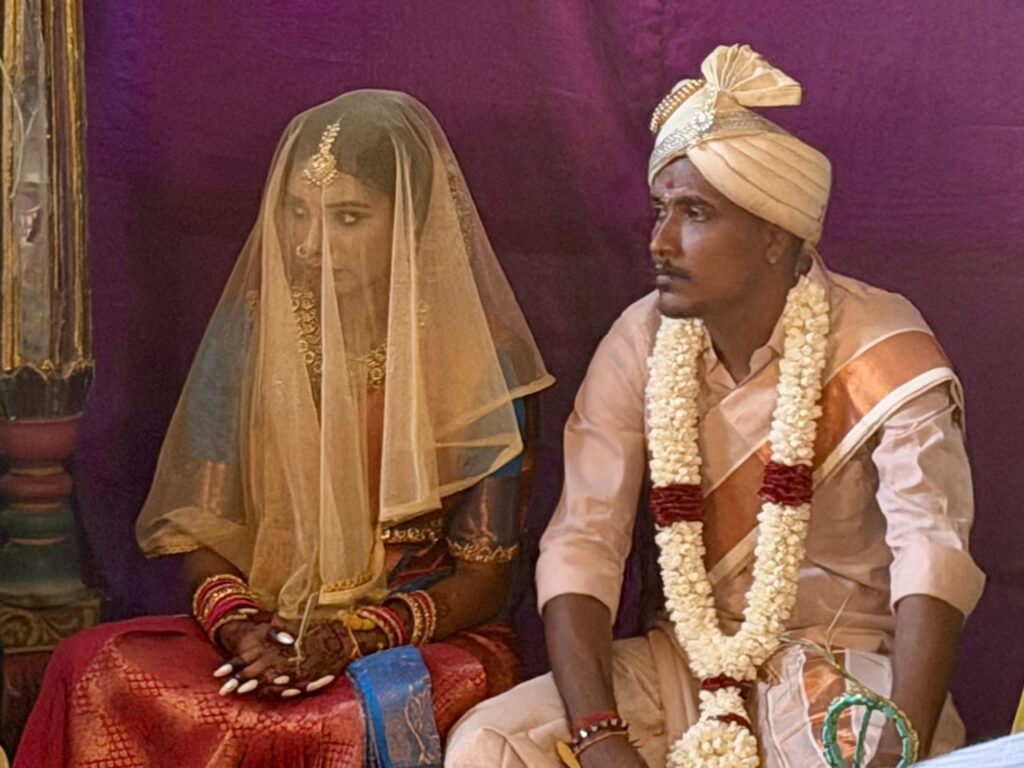
We end our visit on the East coast in the town of Trincomalee, with its sandy beaches and aquamarine waters. Taking our daily dip in the salty, warm Indian Ocean, we watch the fishermen collectively pull in their catch in the soft morning light. At the nearby Thirukoneswaram Kovil temple, we witness a Hindu wedding where brightly colored saris accented with gold jewelry and jasmine hair decorations add splashes of color to the already colorful temple, watching sacred rituals performed by bare chested priests. We zip around in tuk tuks and spend our days walking the soft beach. It’s a relaxing topper to our tour of Sri Lanka, and we are grateful for all the smiles and head waggles from this generous country that gives far more than it takes.
Next up: Bhutan