
“Uganda is the pearl of Africa!” declared Winston Churchill from his visit in 1907 and he was not exaggerating. Uganda has it all – exceptional wildlife viewing including the Big 5 (elephant, lion, rhino, leopard, Cape buffalo) + gorillas, what I call the Big 6; endless activities such as hiking, zip lining, whitewater rafting, quad biking, and horseback riding, to name a few; varied vistas from dry savannah, lush terraced hillsides, bowl-shaped crater lakes, and jagged peaks shrouded in clouds; and the friendliest people so gracious and welcoming, with children waving hello at us throughout. All of this goodness wrapped up in a country less traveled harkening back to a tourist experience from the 20th century, a true hidden gem.
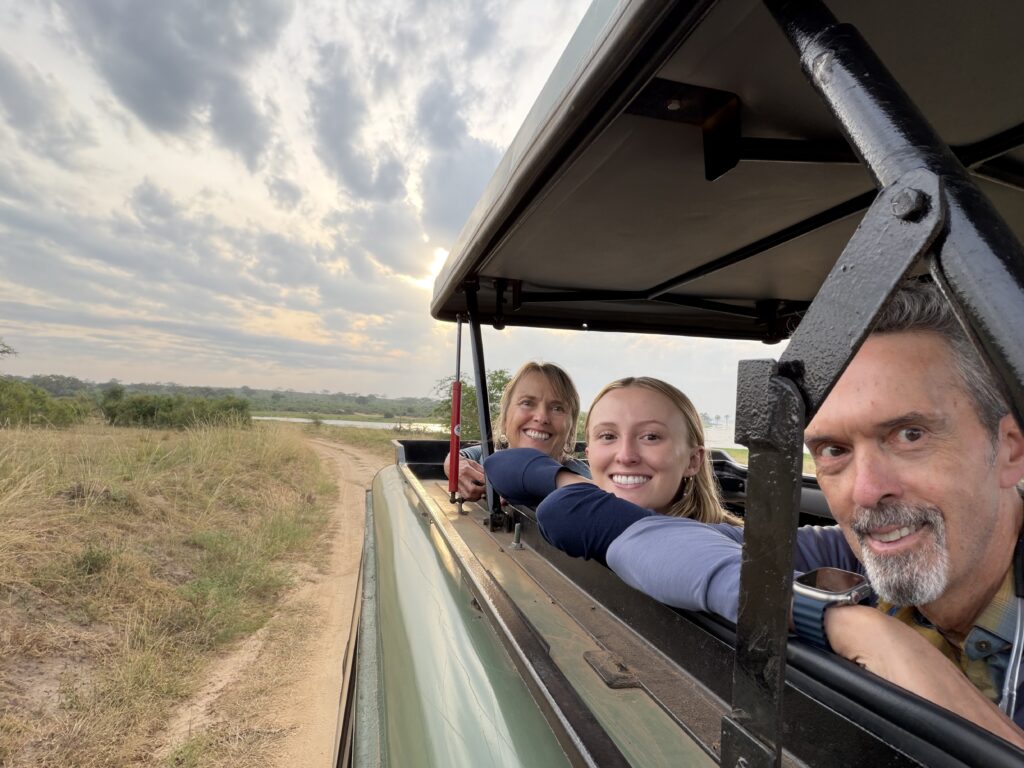
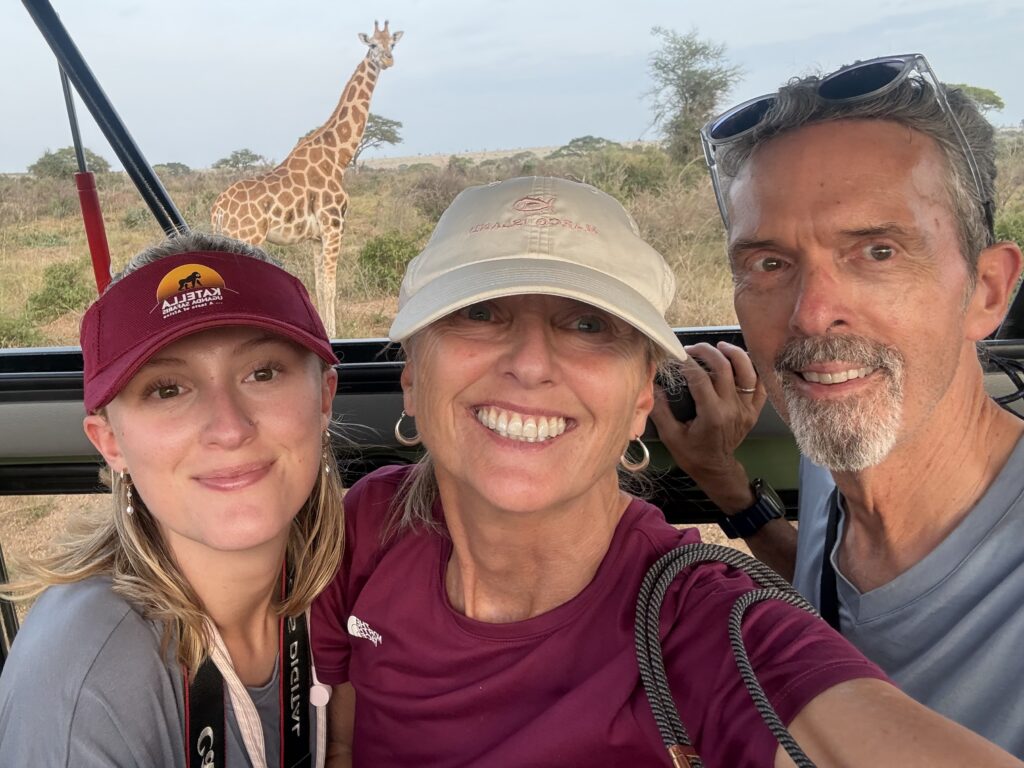
Our private trip, organized by Katella Uganda Safaris, is blessed by our youngest daughter Sydney joining the fun from San Francisco, our first family connection from beyond the screen. Before her arrival we research the crippling outbreak of Ebola in neighboring Congo. Uganda was bundled in the tragedy by the western media due to some cases having crossed the border then infecting healthcare workers in the capital, a total of 20 cases out of a population of 55 million. We feel safe moving forward with good hand sanitation. We talk with the US-based Samaritan’s Purse, assembling supplies and healthcare workers to cross into the Congo to address the crisis, and are impressed by their courage and faith.
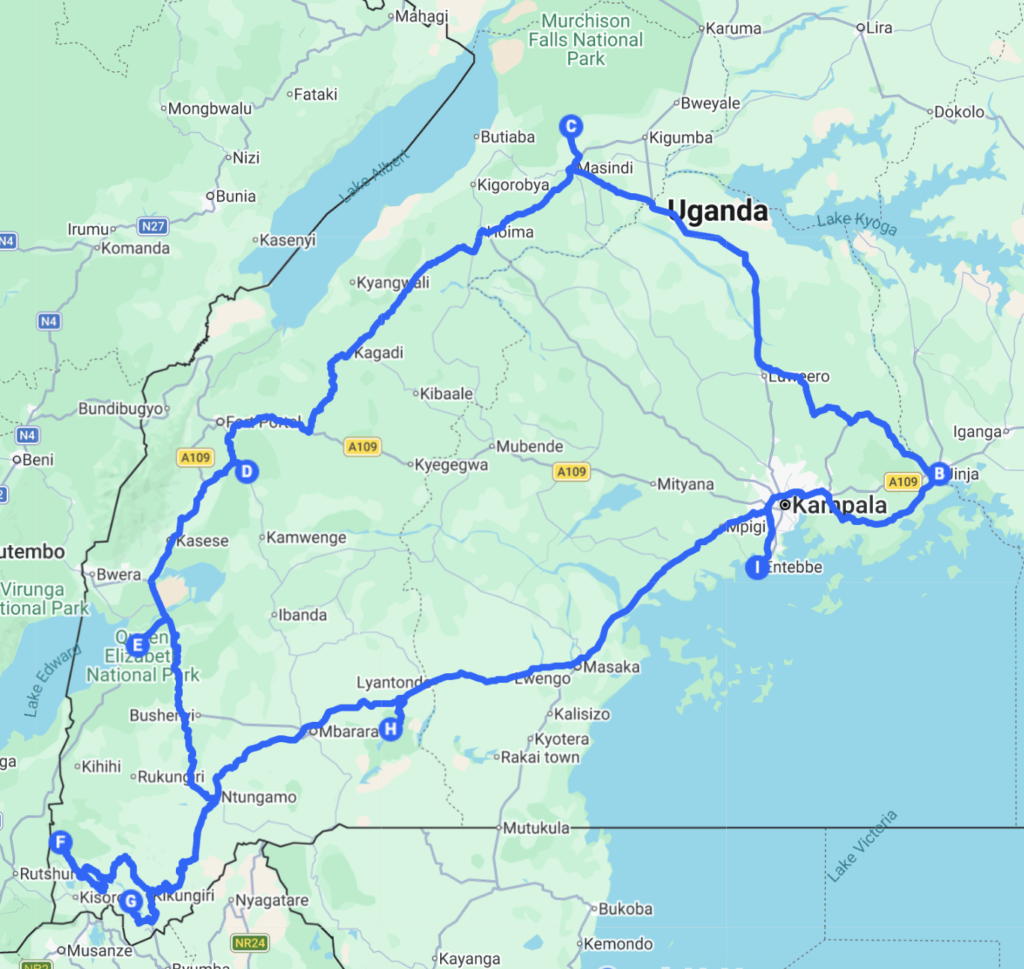
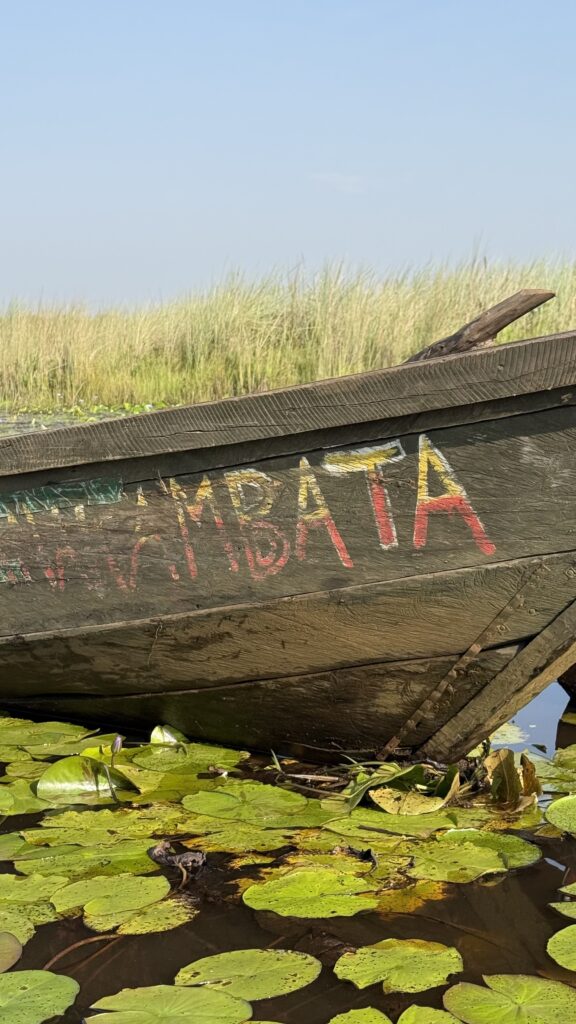
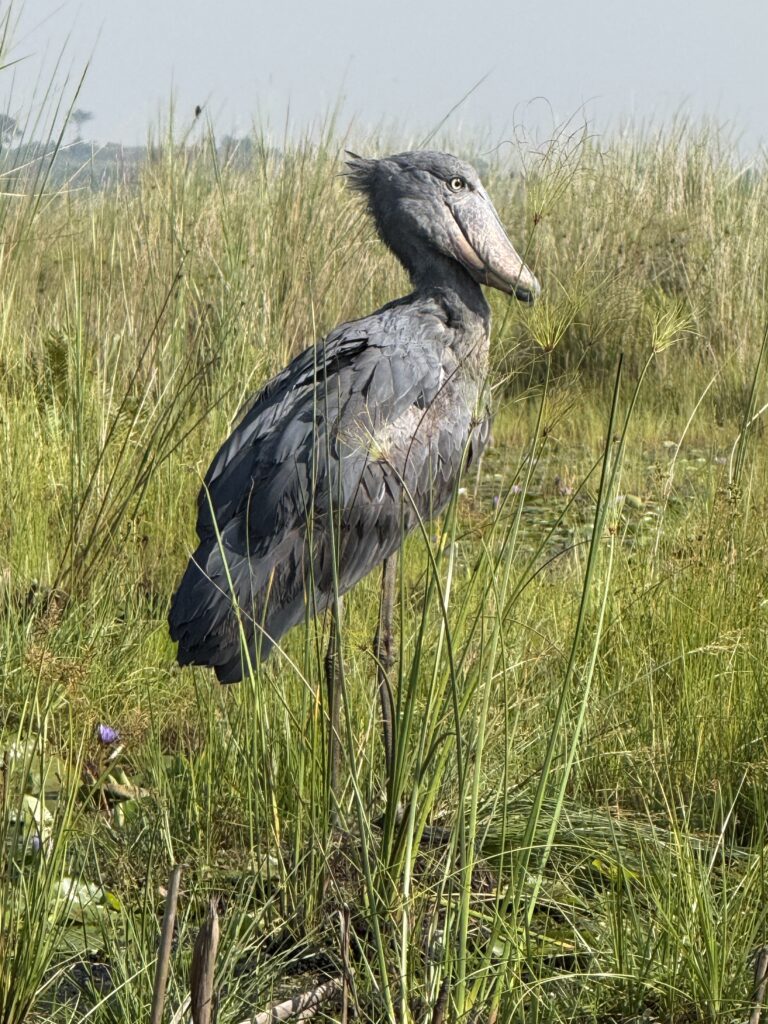
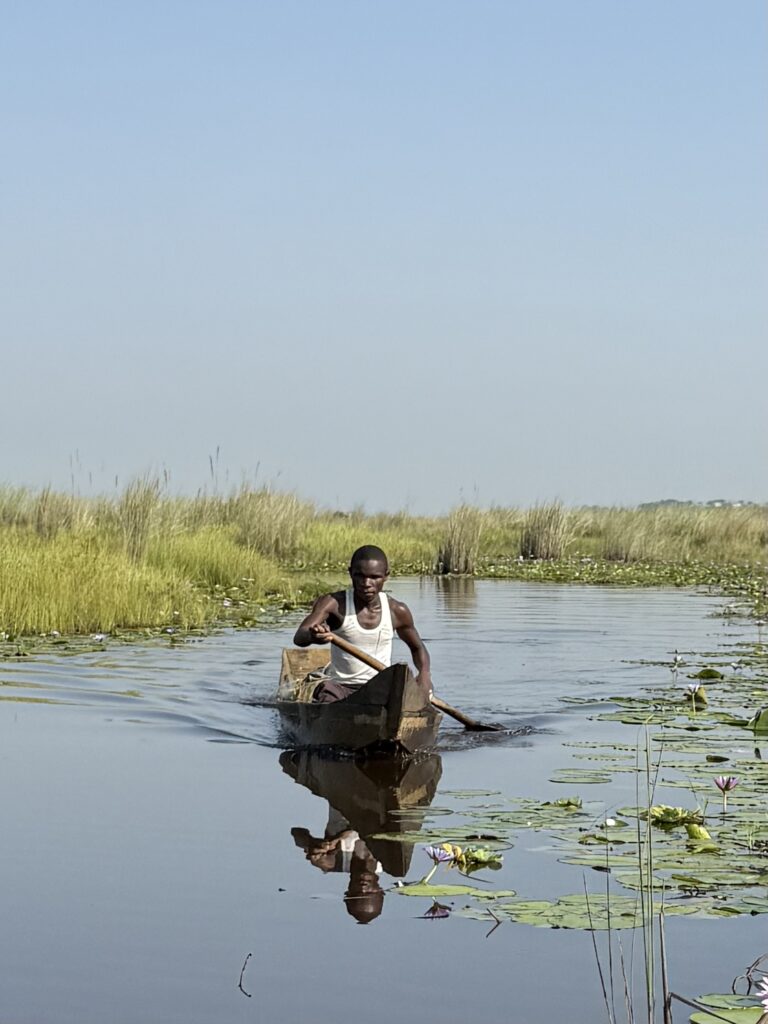
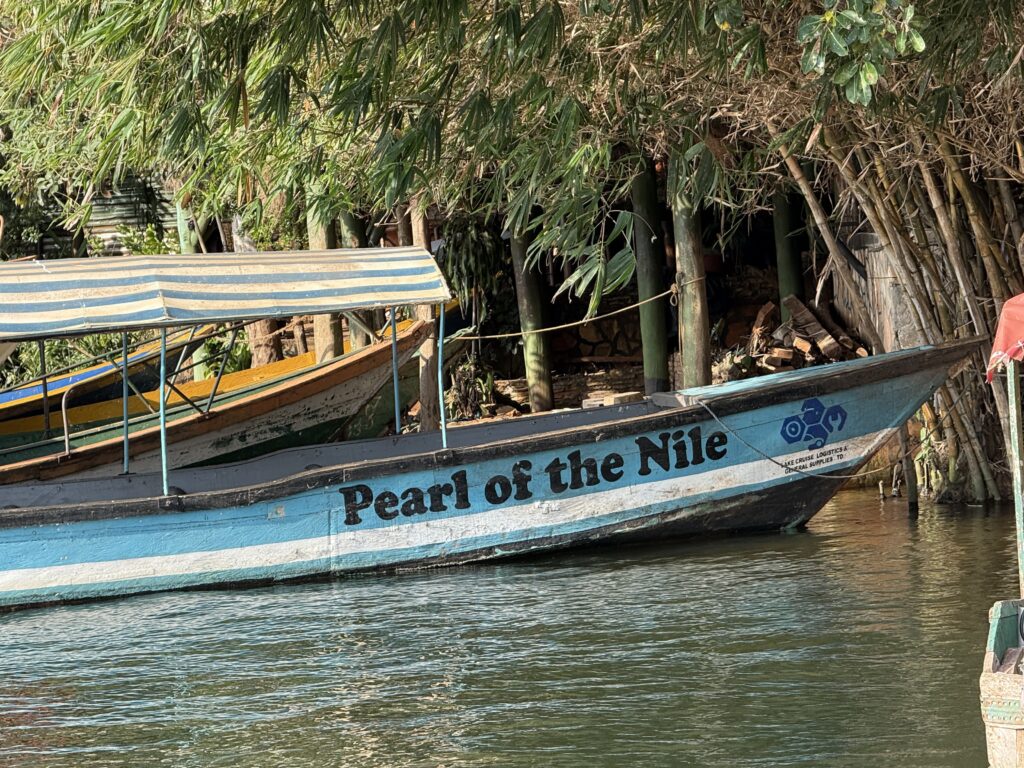
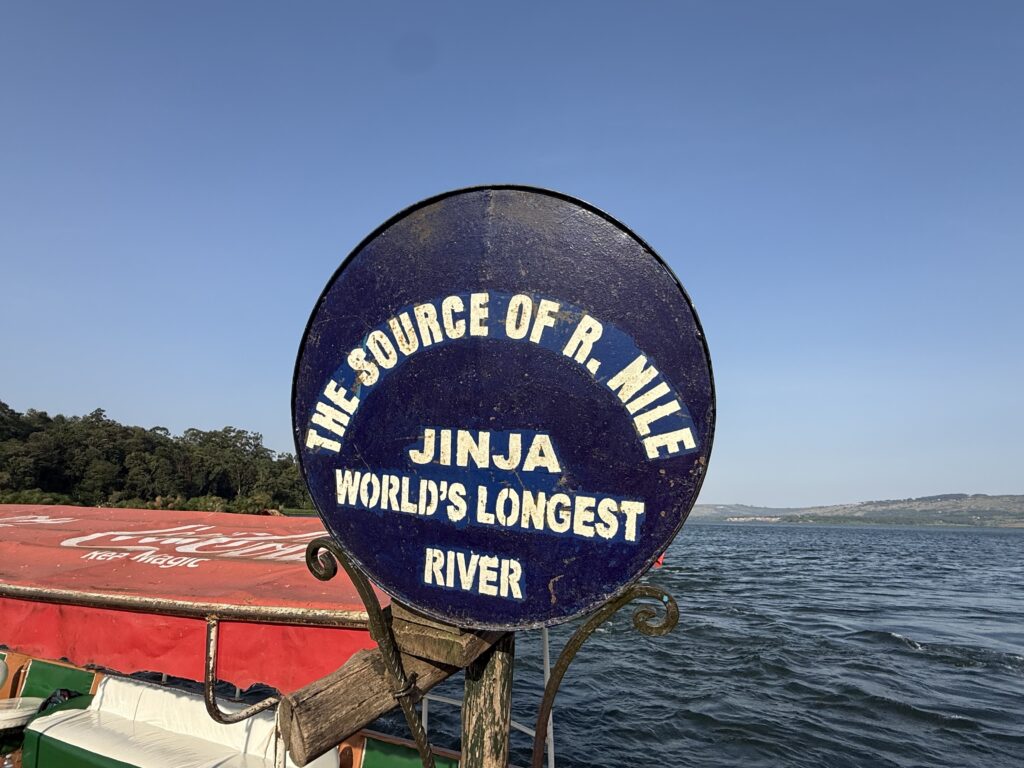
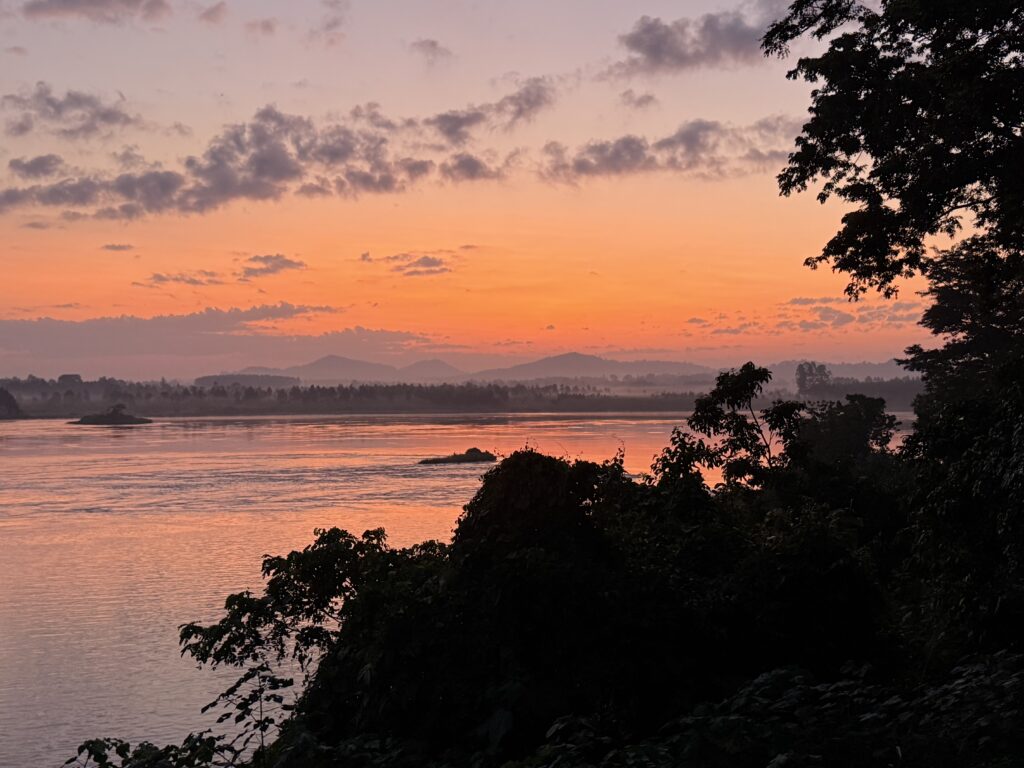
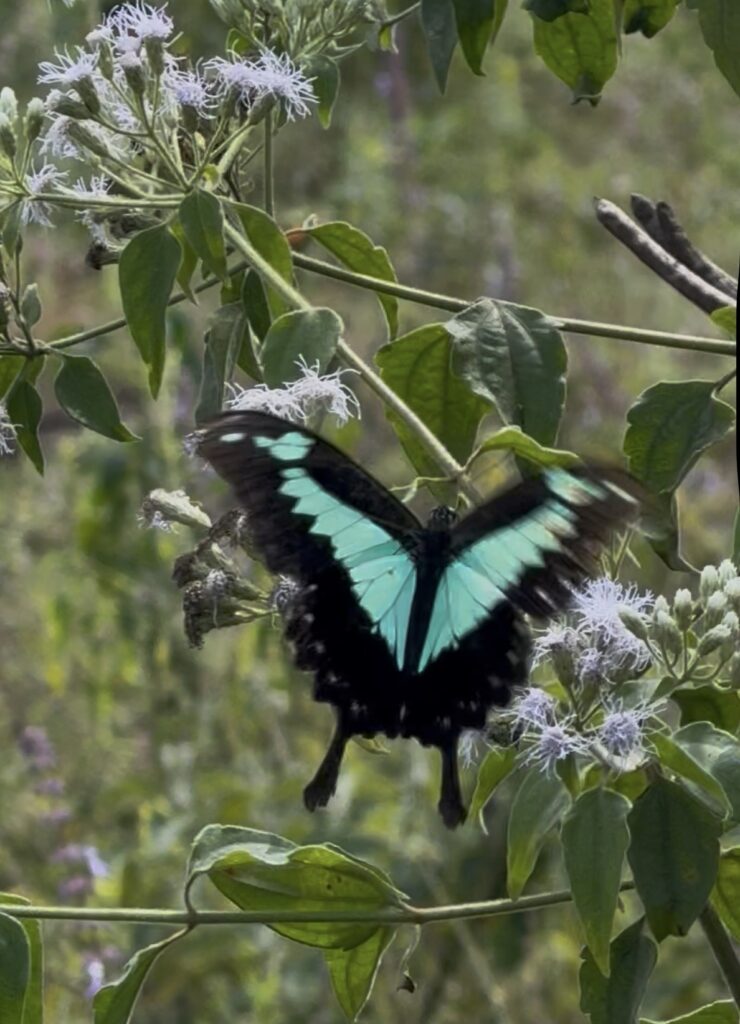
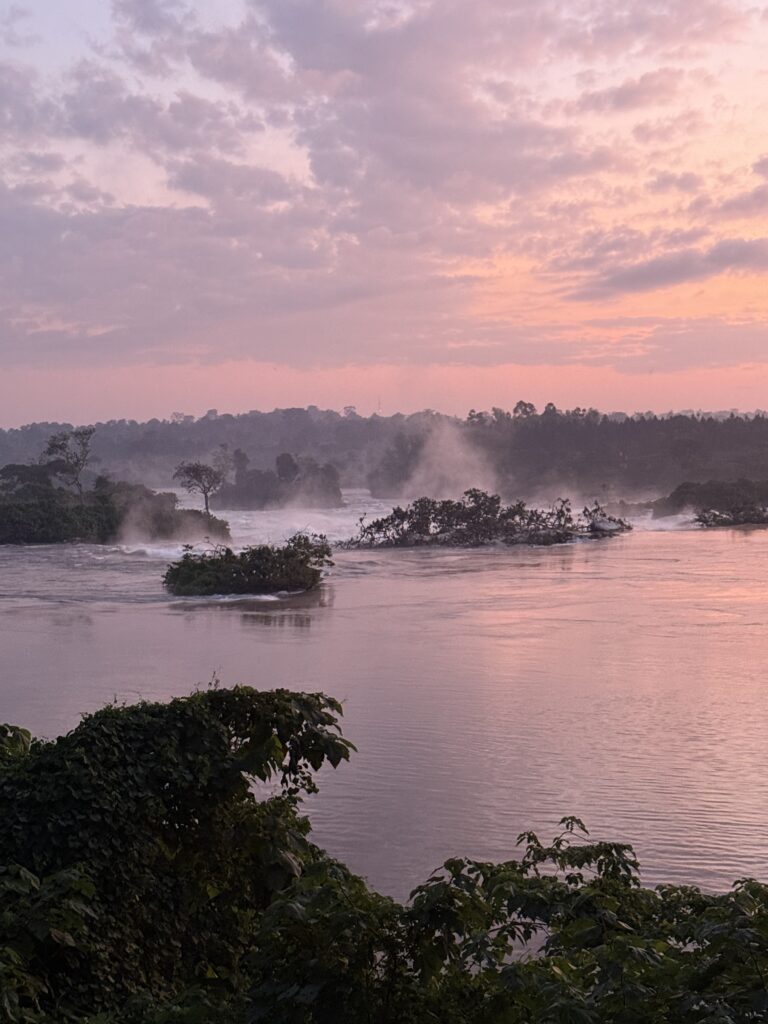
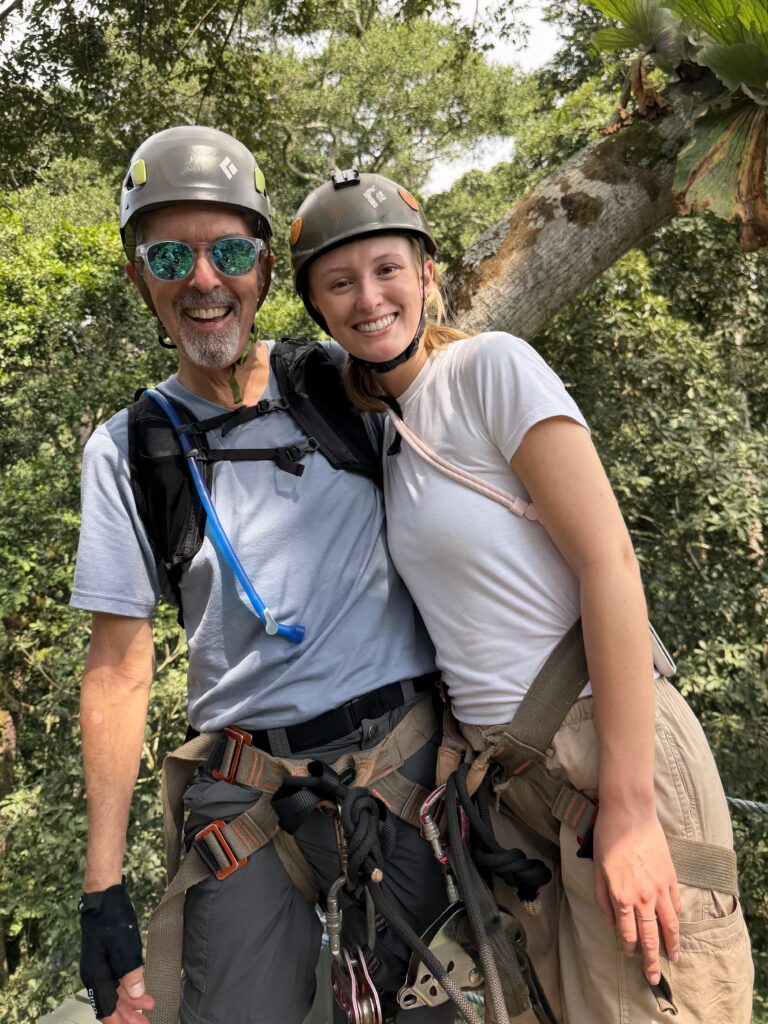
We start in Entebbe, the former capital which moved nearby to Kampala in 1962 with independence, the country having been a British Protectorate since the turn of the century ruled mostly by their local kingdoms. In the nearby Mabamba Swamp, we pose as birders to view the impressive shoebill stork, a 3 foot tall bird with a 6 foot wingspan and a shoe-shaped beak, one of only 20 in the swamp. We drive to Jinja, the adventure capital of East Africa, passing tea, coffee and sugar plantations, the top agricultural products from this region. Uganda is known as the food basket of central Africa with agriculture being the backbone of their economy. Our boat cruise on the White Nile, named for its rapids, takes us to the source of the Nile, “discovered” by John Speke in 1862 which was harder than it sounds since 30% is fed by underground water and 70% is fed by Lake Victoria blending into a turbulent wash bowl to kick off the 6,650 kilometer flow to the Mediterranean, a 3-month journey down the longest river on Earth. We hike in the Mabira Forest, the largest forest in Central Africa, passing village boys porting firewood while a troop of red-tailed monkeys swing above us, marveling at fig trees which can live up to 200 years, and passing sugar cane fields during harvest. We tuck our pant bottoms into our socks to thwart safari ants which manage to get in a few bites regardless. Brian and Sydney scamper 20 meters up a tree to zip line along 7 exhilarating runs including a river crossing, and we end in a field of butterflies of every shape, size and color. From our lodge patio we are mesmerized by the churning Nile rapids with a circus of monkeys leaping along the forest’s edge.
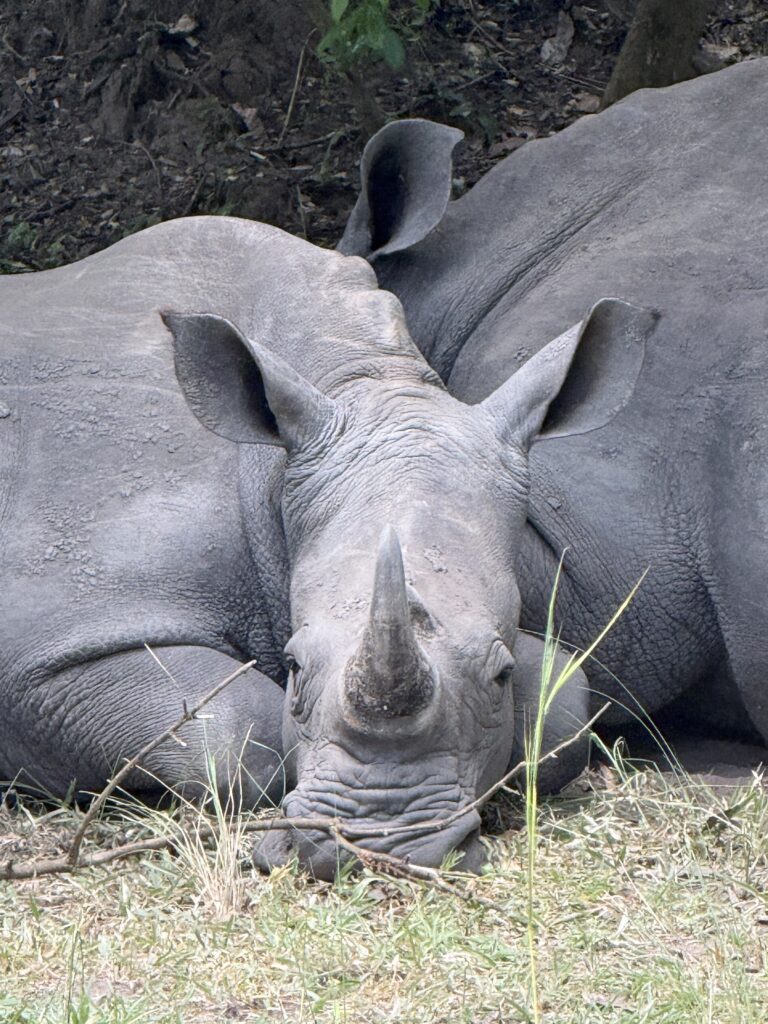
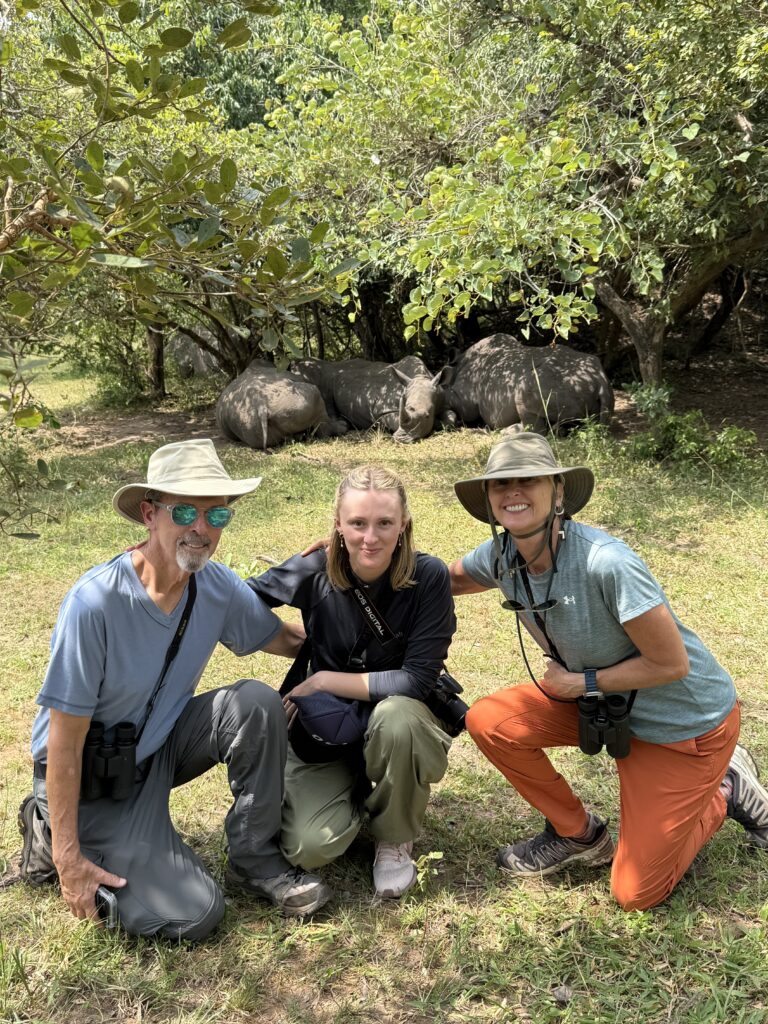
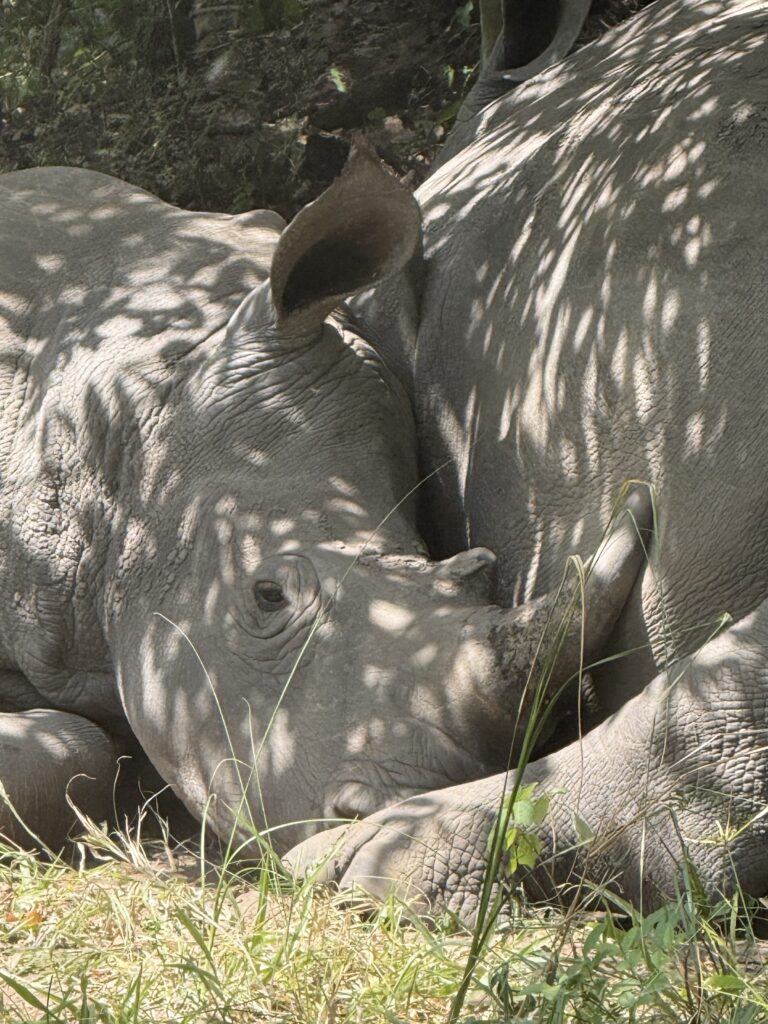
We visit the Ziwa Rhino Sanctuary where a former cattle ranch was transformed into a breeding ground for relocated rhinos with the goal of providing sanctuary for breeding and rehabilitation. Founded in 2005 with the donation of a male rhino from Kenya and a female from the US, their offspring was named Obama, kicking off a program which now manages 60 rhinos. When a female gives birth, she pushes away her young son to make room for the newborn, enabling the son’s relocation to the wild to bond with other juvenile males for self defense against alpha males who will fight them to death. It’s nap time at the sanctuary where we get to within 10 meters of a crash of rhinos including an alpha male, Obama’s son, his multiple females and even a suckling baby in this devoted family structure.
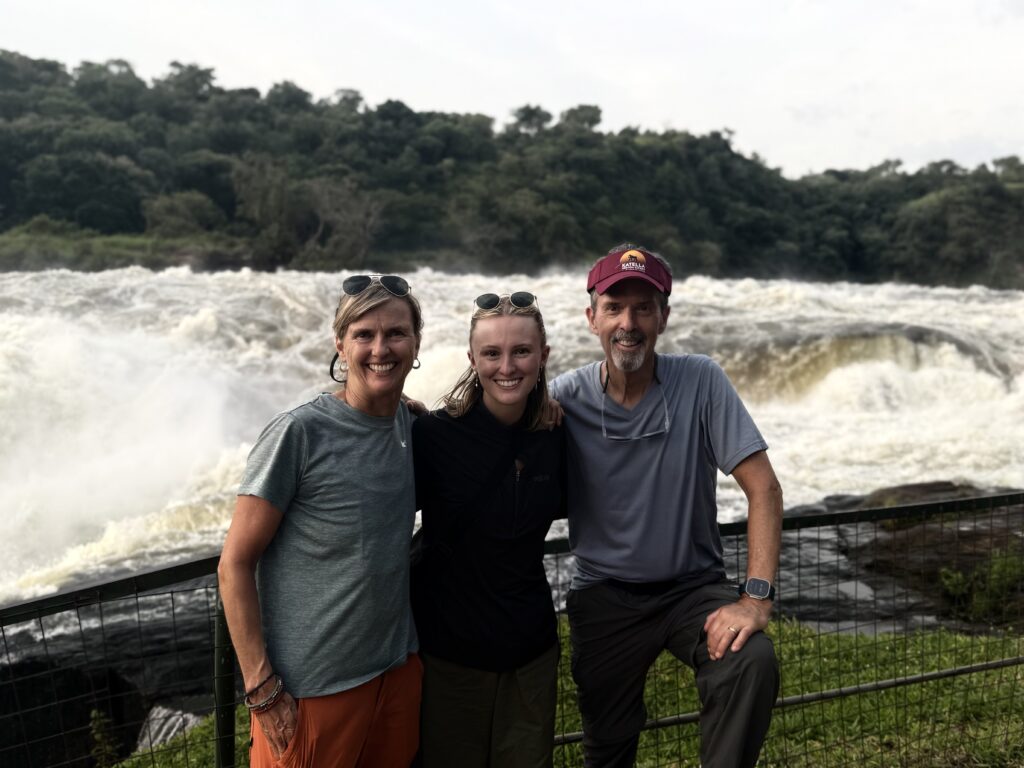
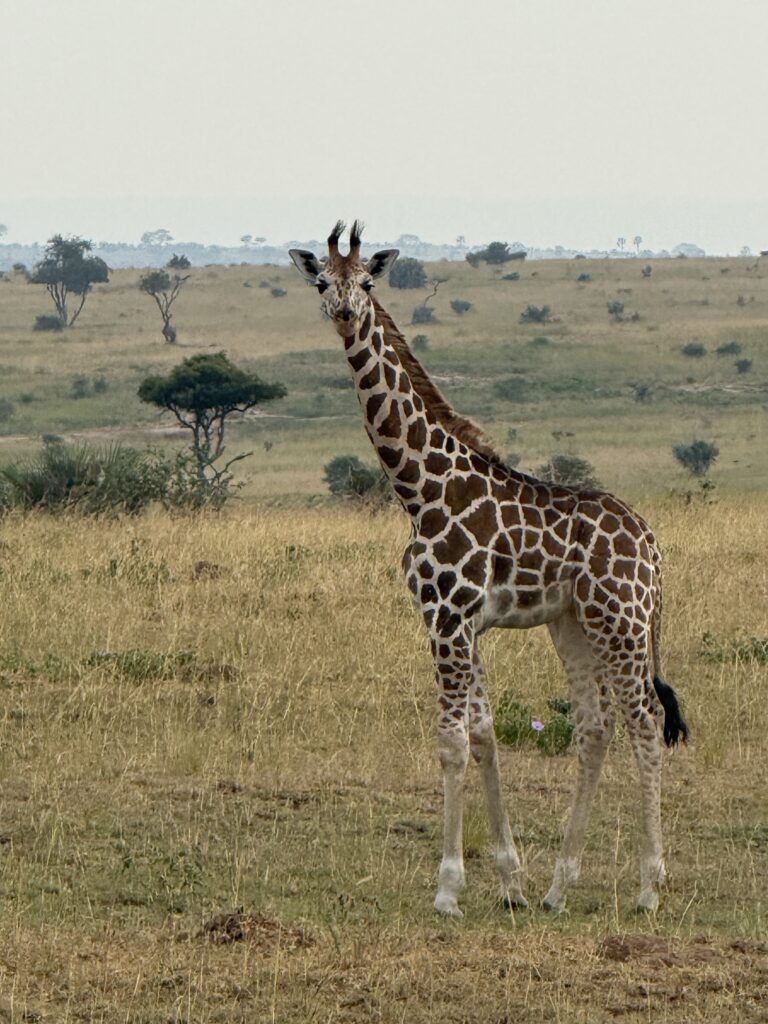
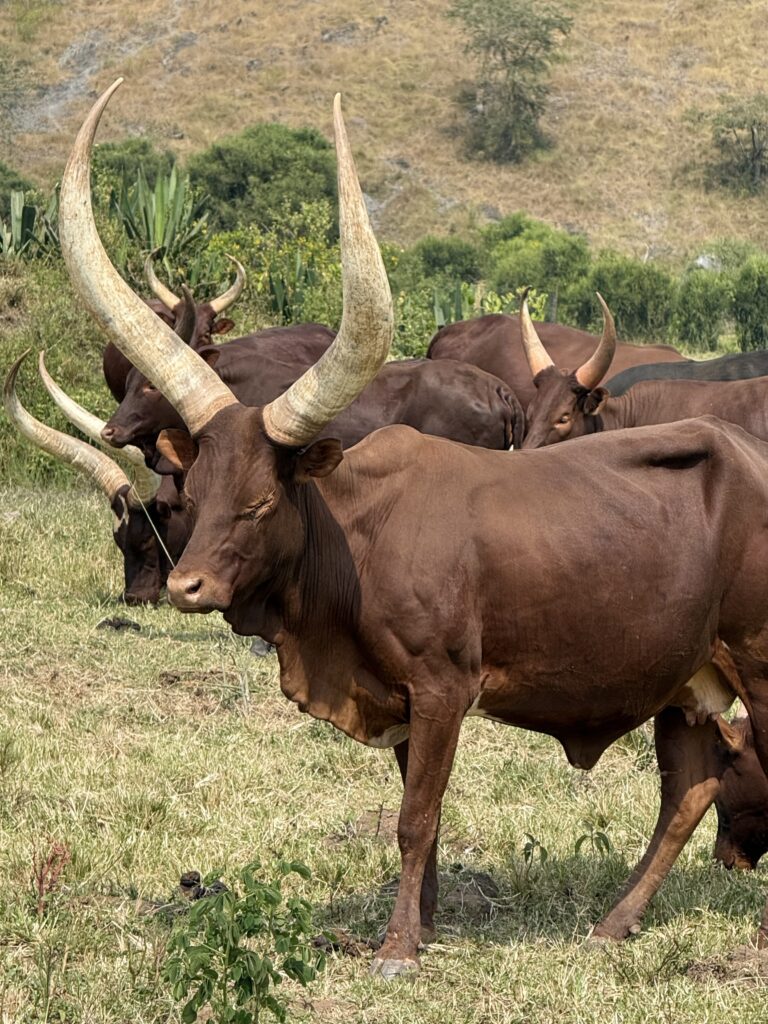
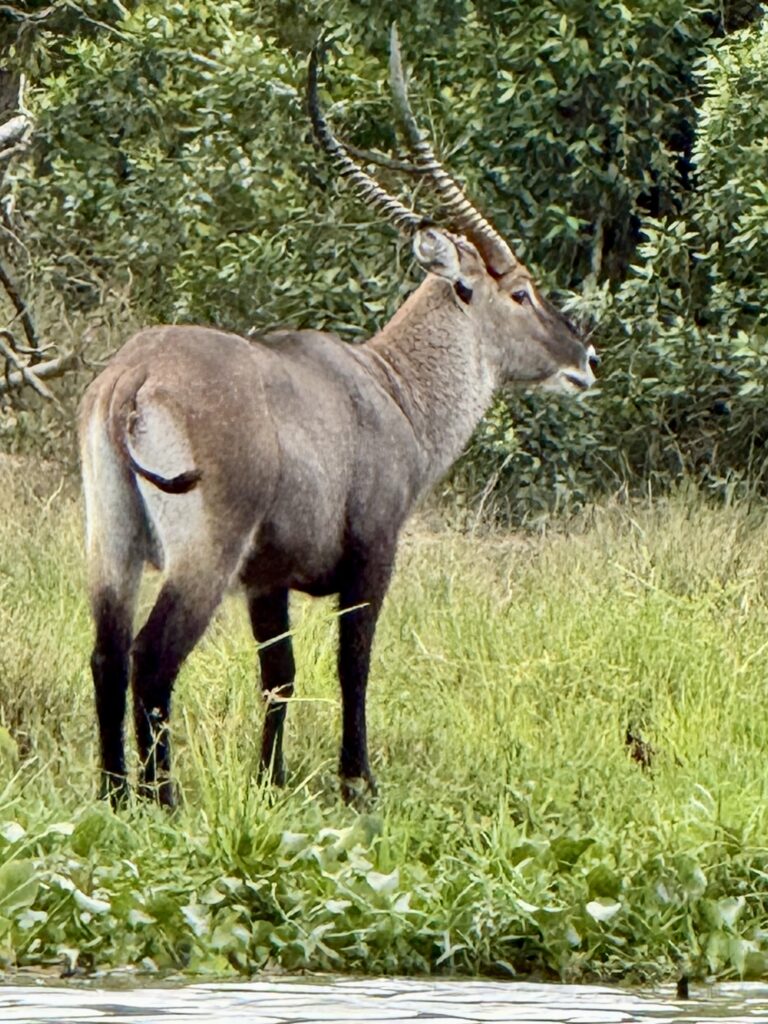
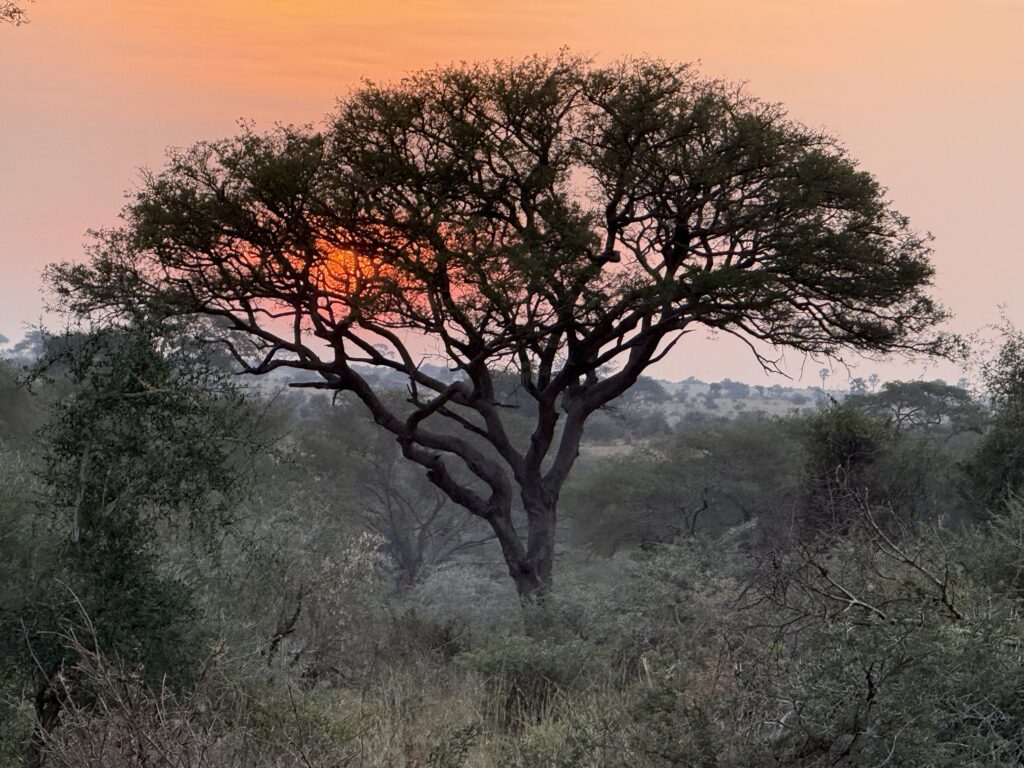
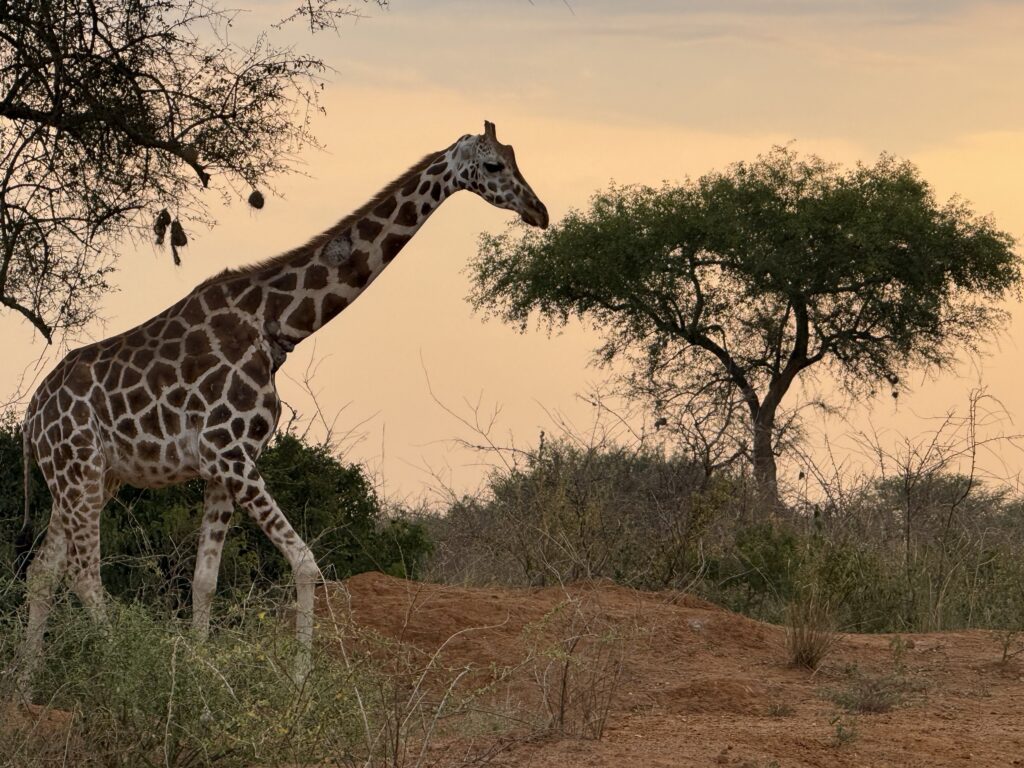
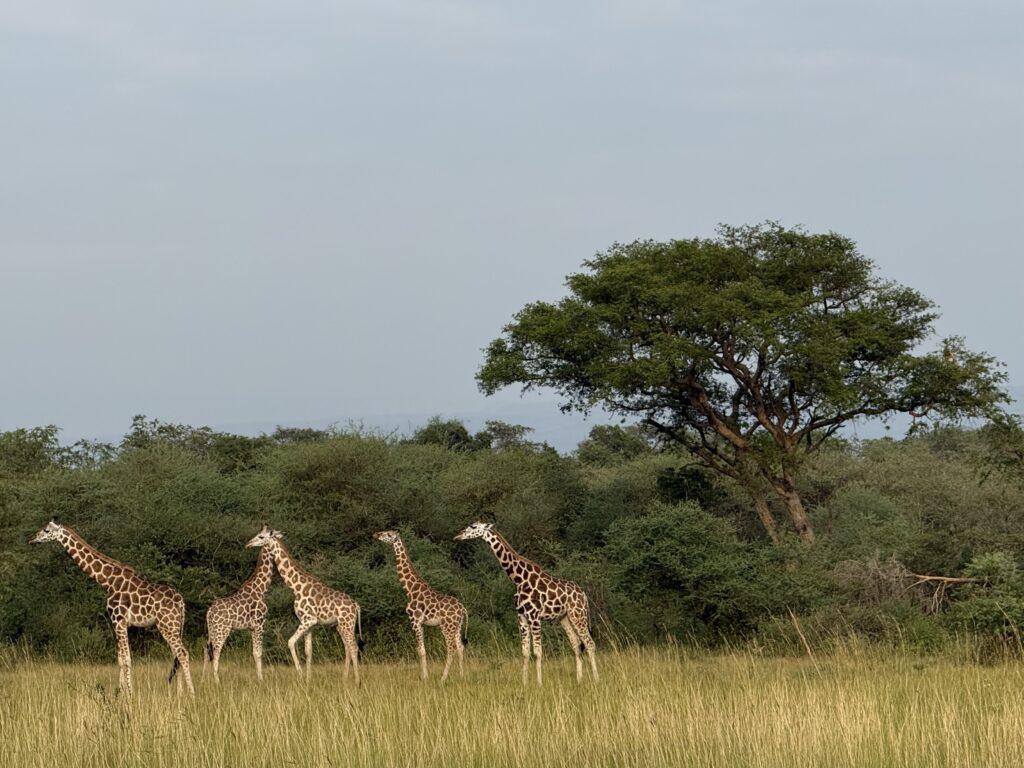
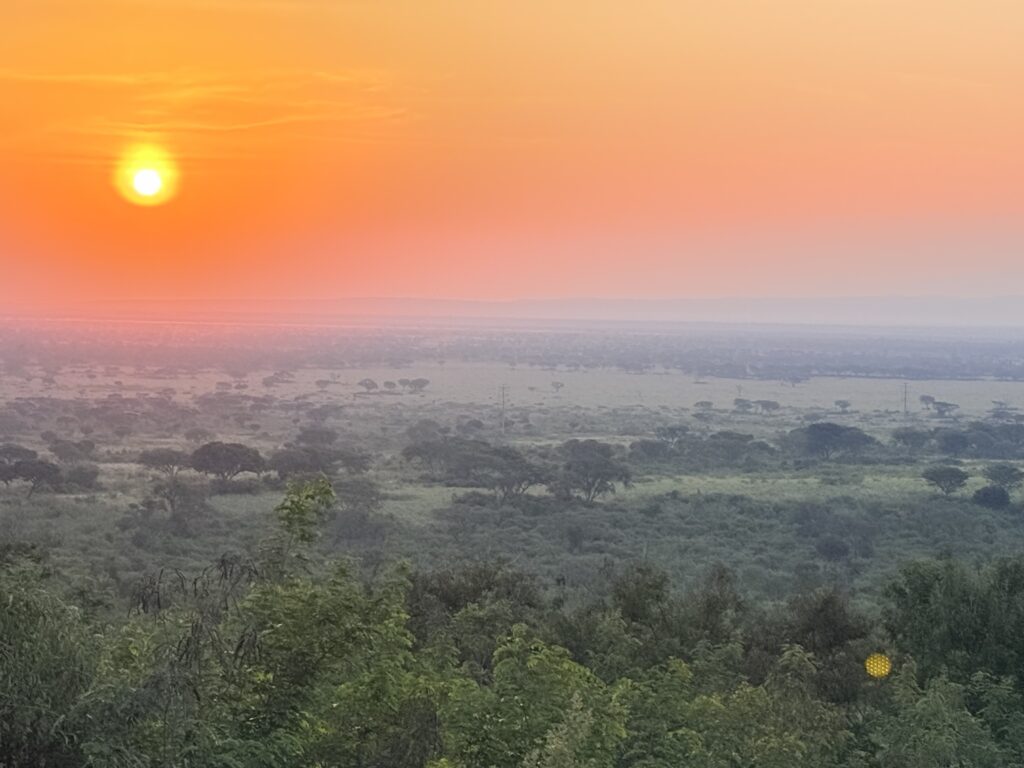
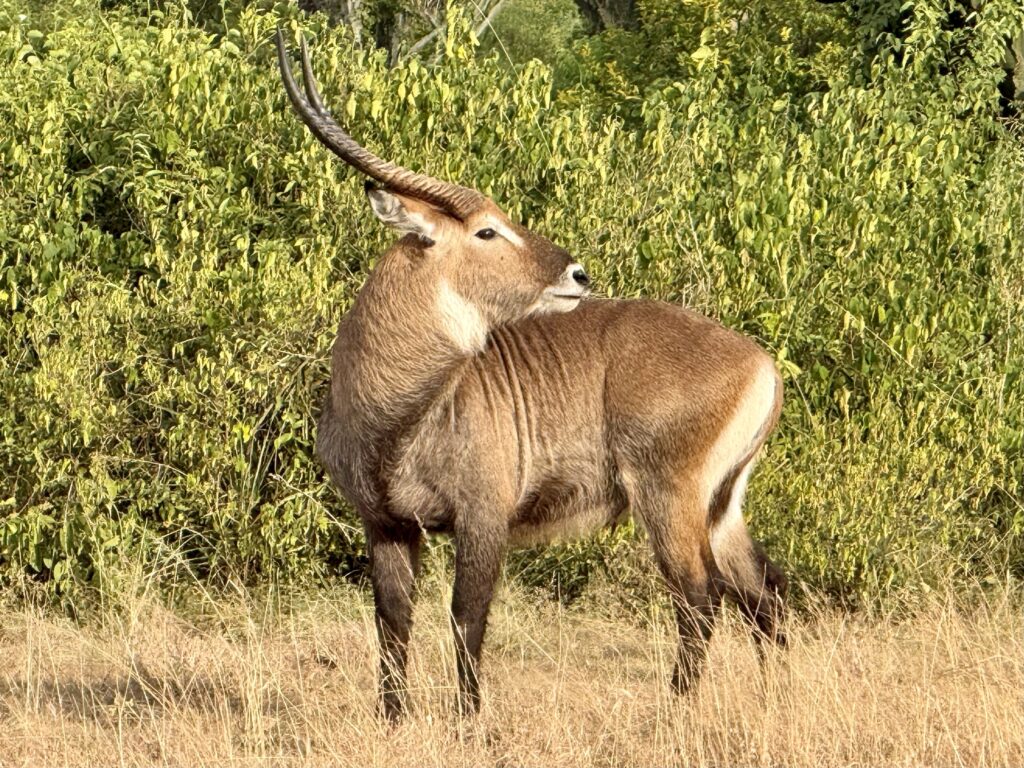
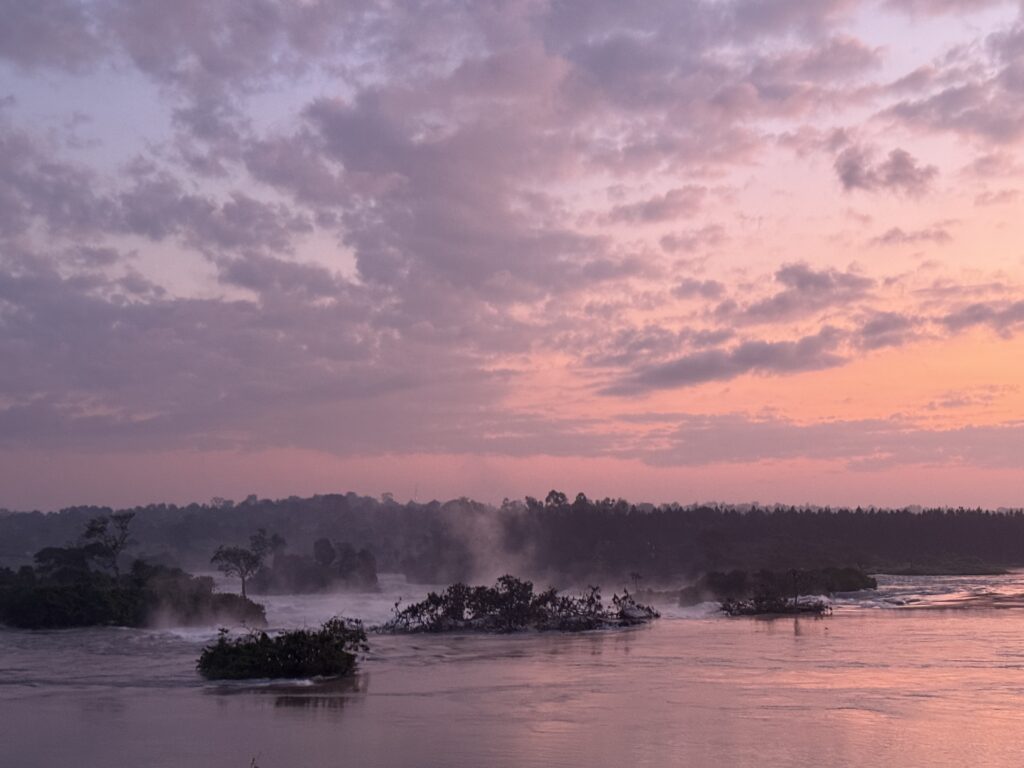
Driving past magnificent long horned Ankole-Watusi cattle and through villages where sellers flood our car windows 3 deep hawking homegrown fruits, we head next to Murchison Falls where the 300 meter wide Nile constricts down to just 7 meters at the falls, making it the strongest waterfall in the world, with a powerful surge and heavy mist that has us in awe. Our guide Isaac has seen unsuspecting hippos locked in battle roll down the 45 meter drop to their death. In the dry savannah of the northern park region, our pre-sunrise game drive yields a plethora of wild animals to Sydney’s delight: a tower of Nubian giraffe, with this park hosting the largest population of this species; herds of kob, the national mammal of Uganda; warthogs running with their antennae tails announcing danger to the rest of the sounder; water buck with a black dot behind their ear which excretes a spray when attacked making their meat taste sour; and hartebeest with such poor memory that they forget why they’re running and stop, with often fatal results. Giraffes act as the watch towers of the savannah, with shorter animals staying close for predator warning, and they love eating acacia, of which there are over 40 types. When eaten the plant sends a warning scent to other acacias causing them to turn sour in taste, which is why giraffes eat every third bush or so, avoiding the sour ones.
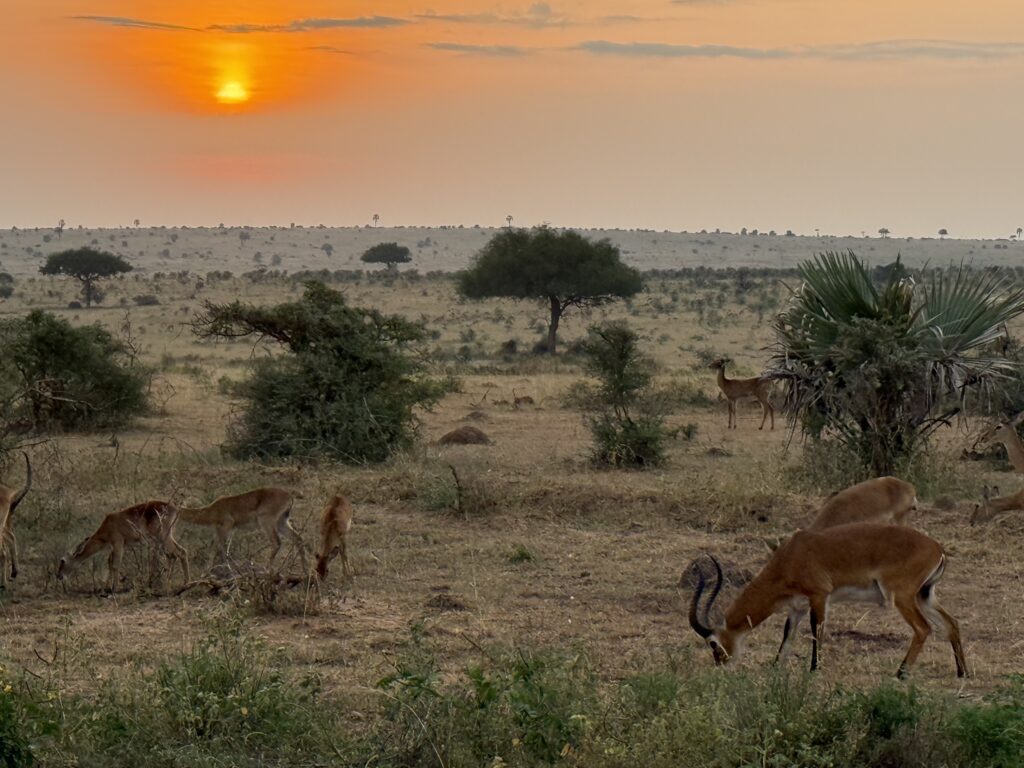
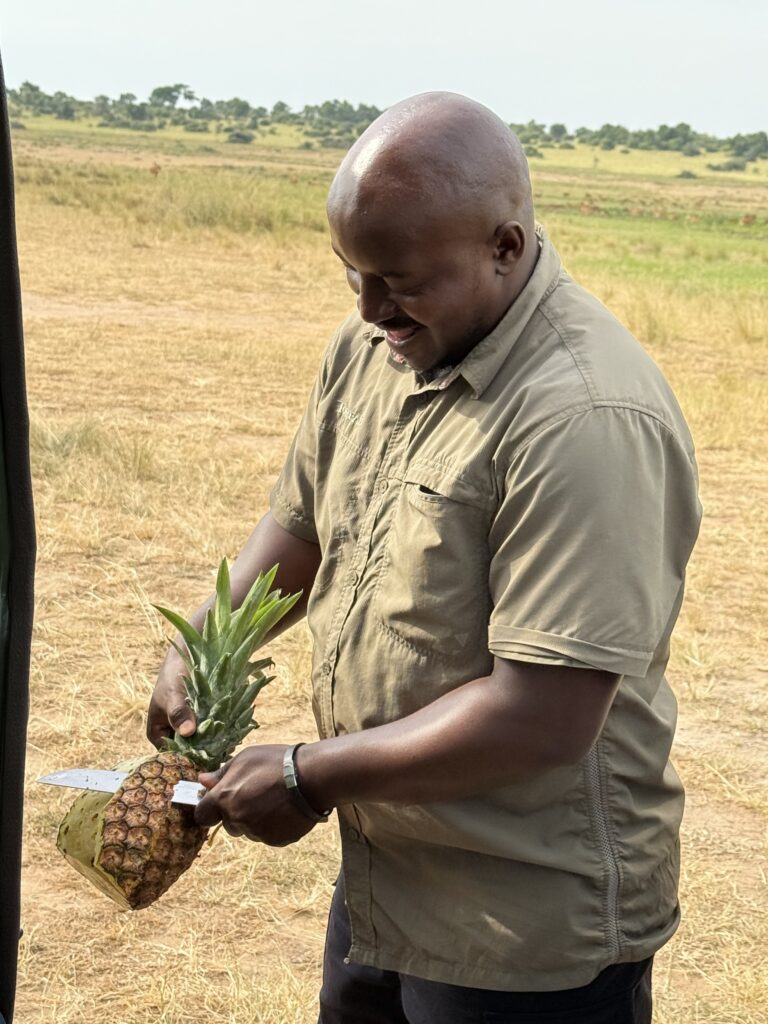
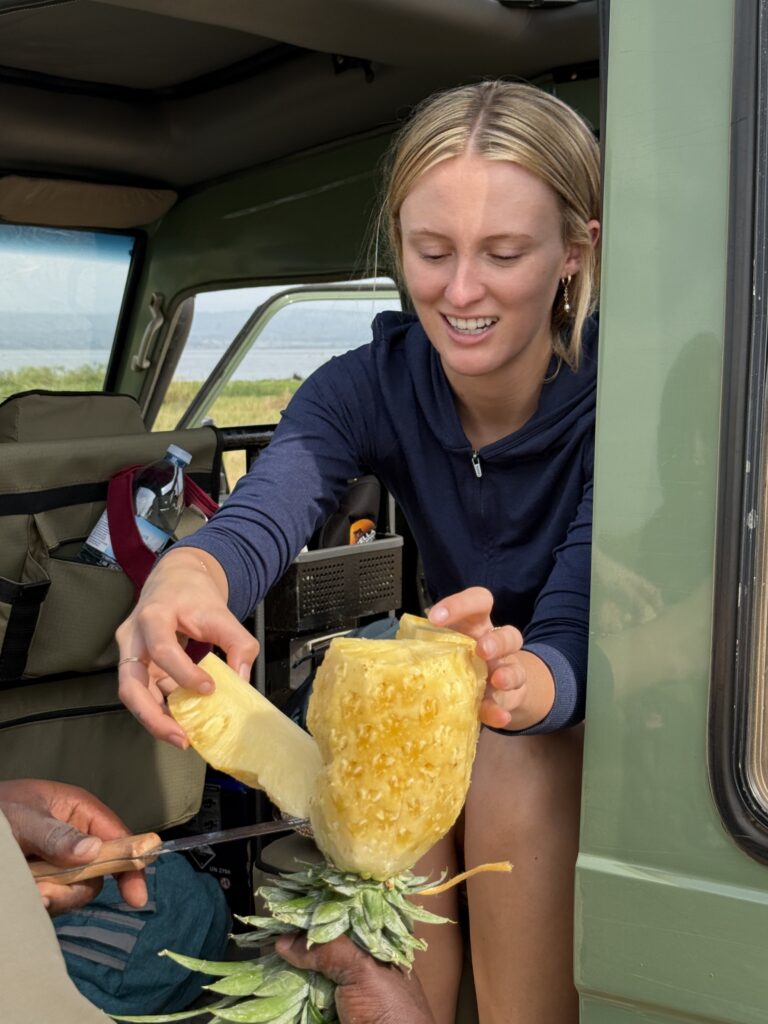
During a break, Isaac slices up a pineapple like a samurai with one hand and a sharp machete, and the sweetness and freshness of the fruit is intoxicating. Another pre-dawn game drive rewards us with a leopard crossing the road with its kill just in front of us, tail curled to offset the weight imbalance and avoid dragging the carcass. Safari viewing is a bit like skiing powder days, with the best experiences achieved through frequency and strategy, requiring patience and persistence.
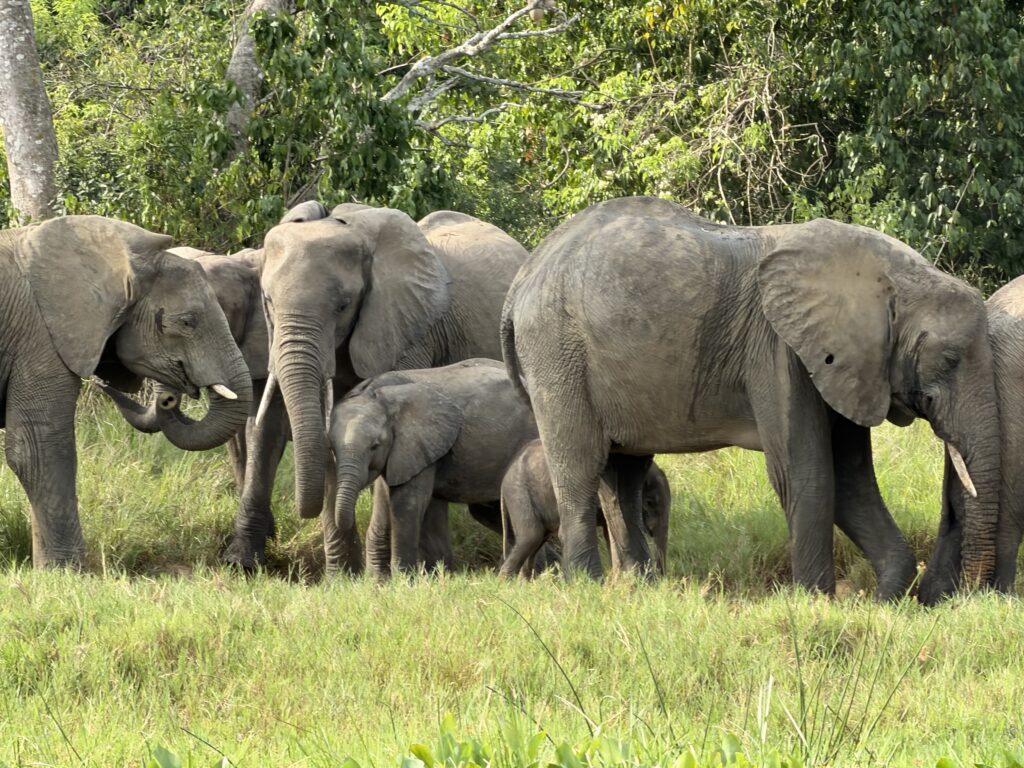
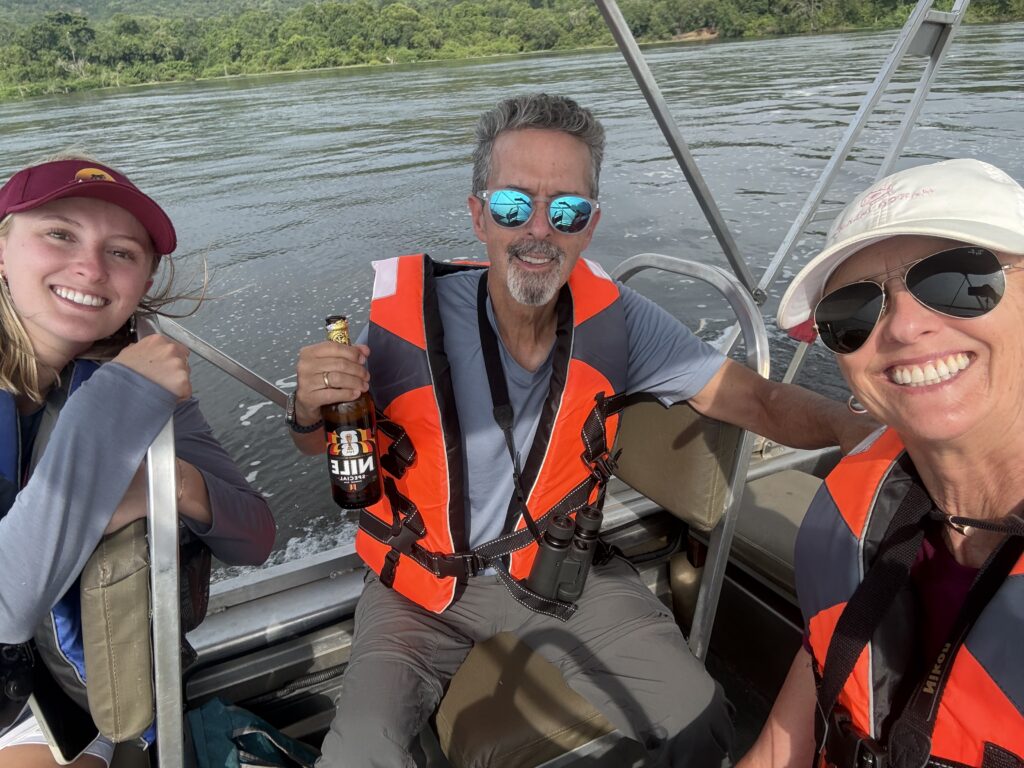
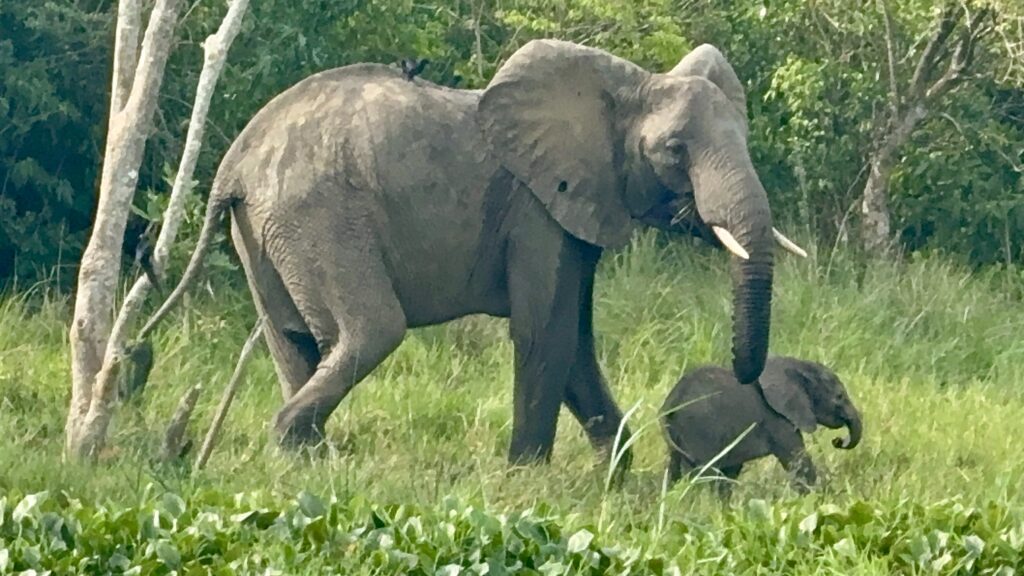
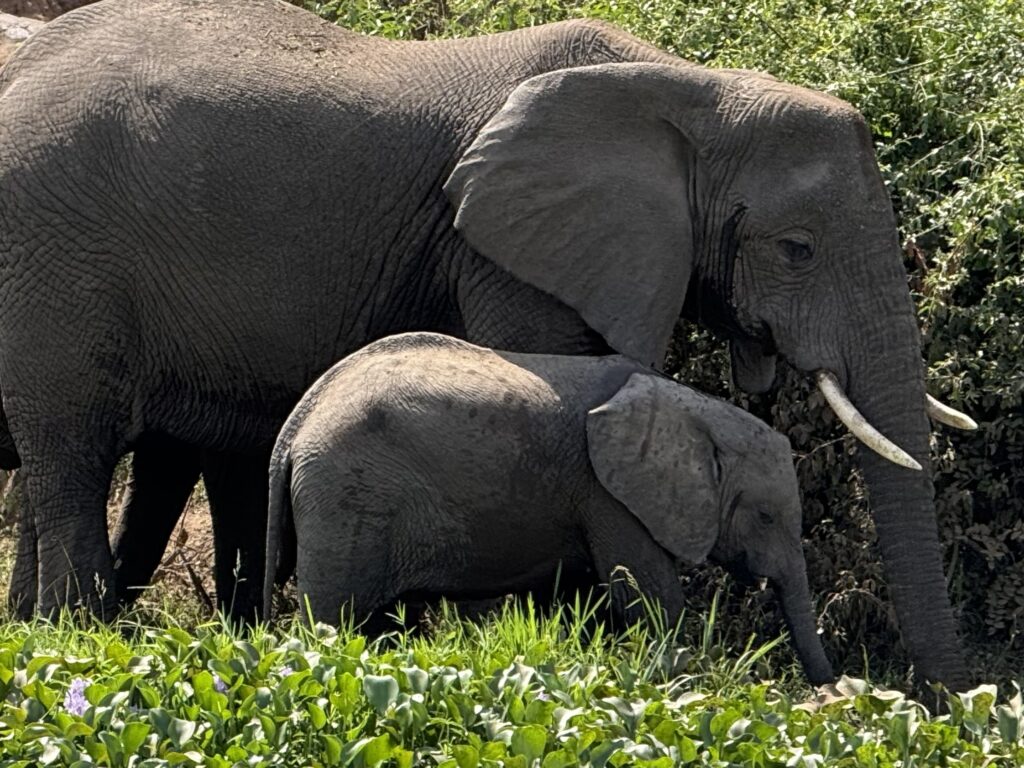
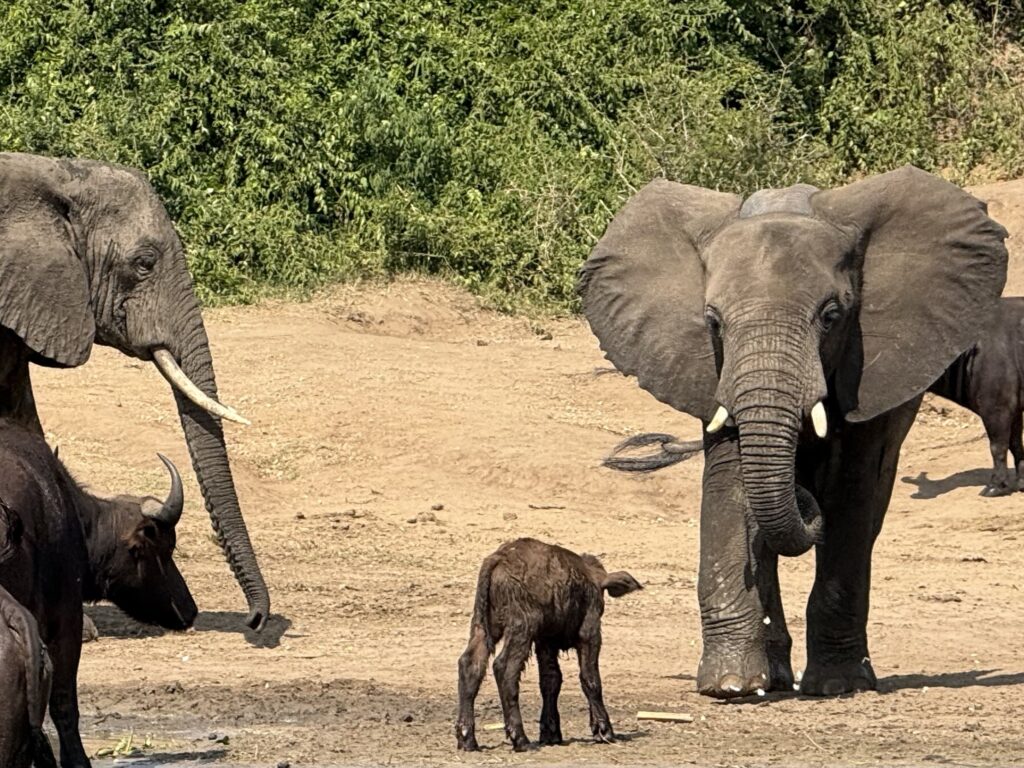
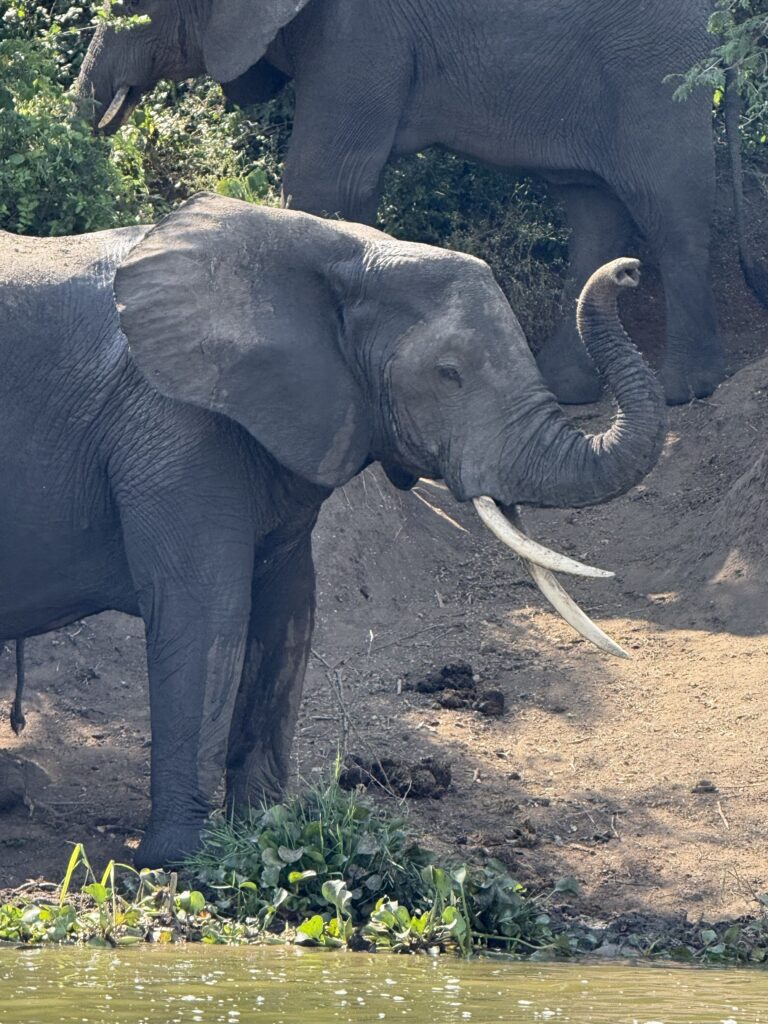
Highlights of our private boat cruise on the Nile include a herd of dozens of elephants, ages ranging from one month to 60 years old, drinking, eating, scratching, and dusting their bodies for sunscreen, then to a massive bask of 25 or so crocodiles, with jaws open for sweating in the heat, lying puppy pile on the banks. A croc snaps his jaws trying to catch a bird which rivets a massive croc to slip stealthily into the water and under our boat – queue Jaws soundtrack! Our guide charges against the stiff current to get close to the base of the falls, feeling their massive power, then we pop open a Nile beer to celebrate our cruise on the Nile in style.
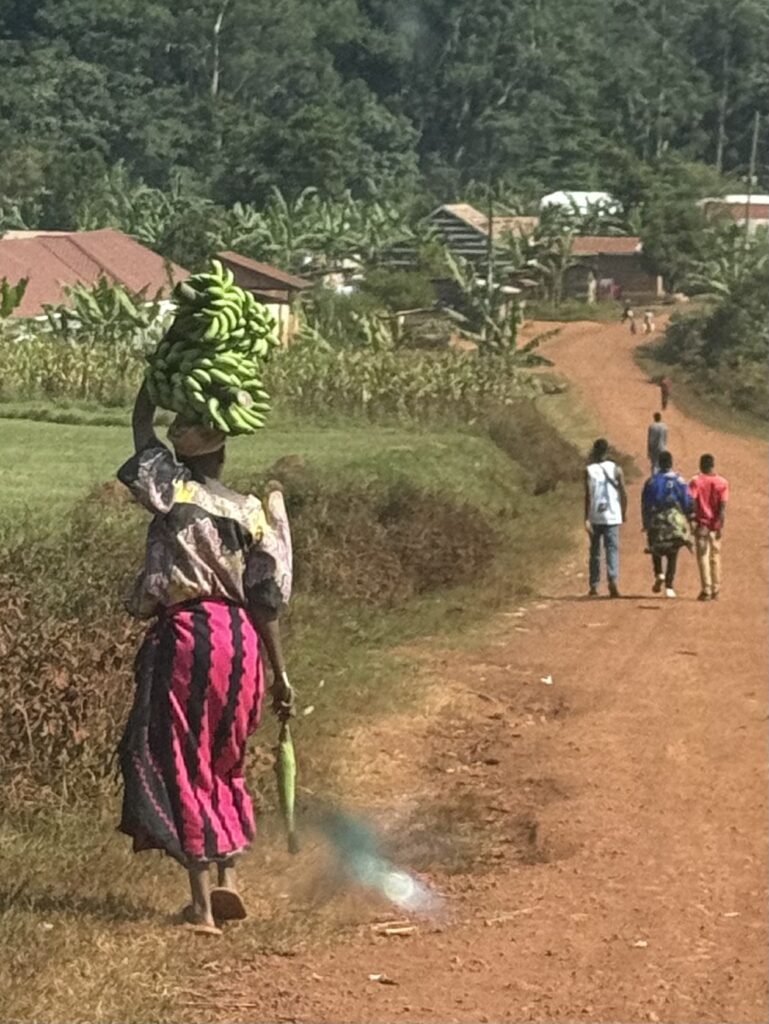
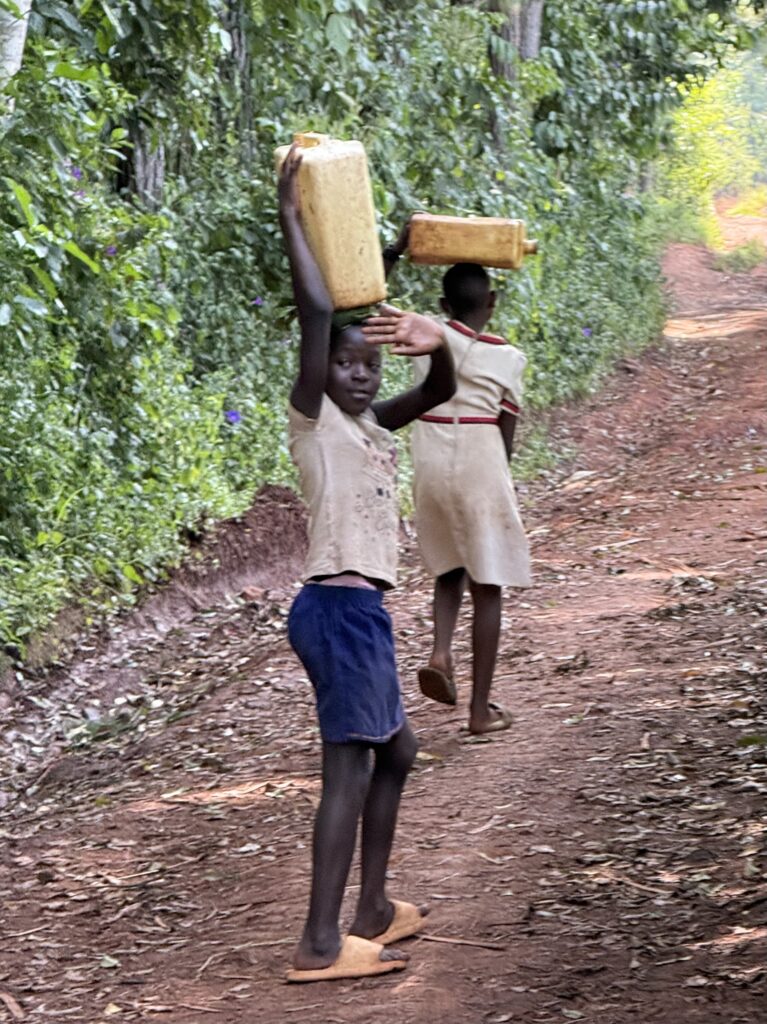
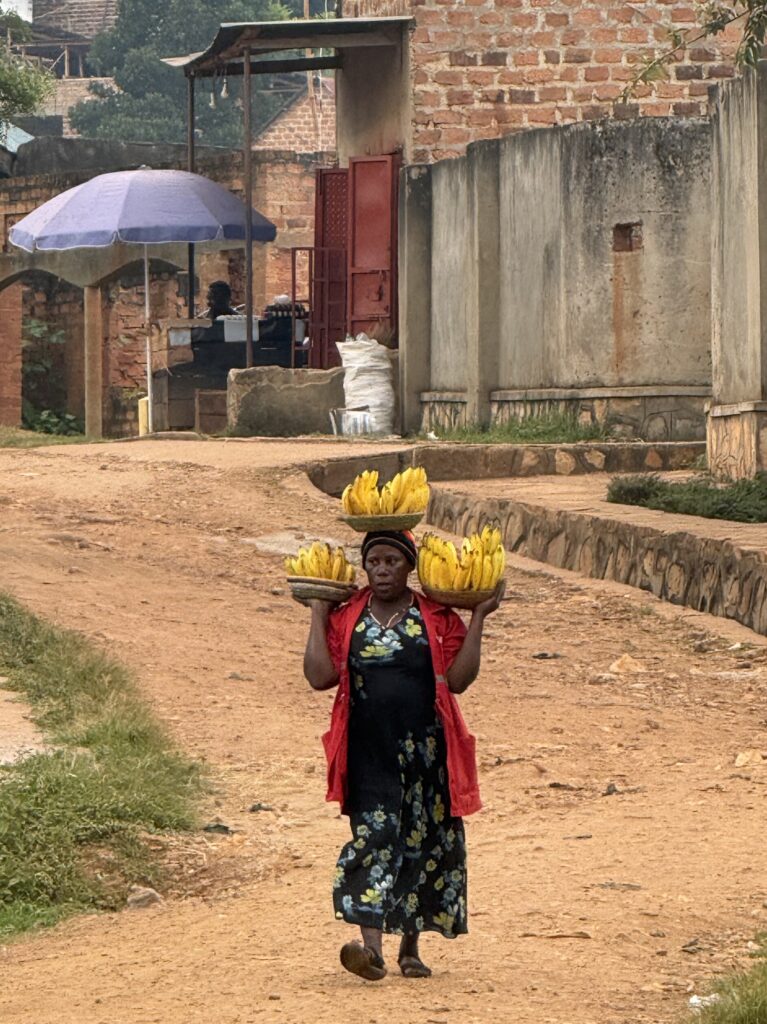
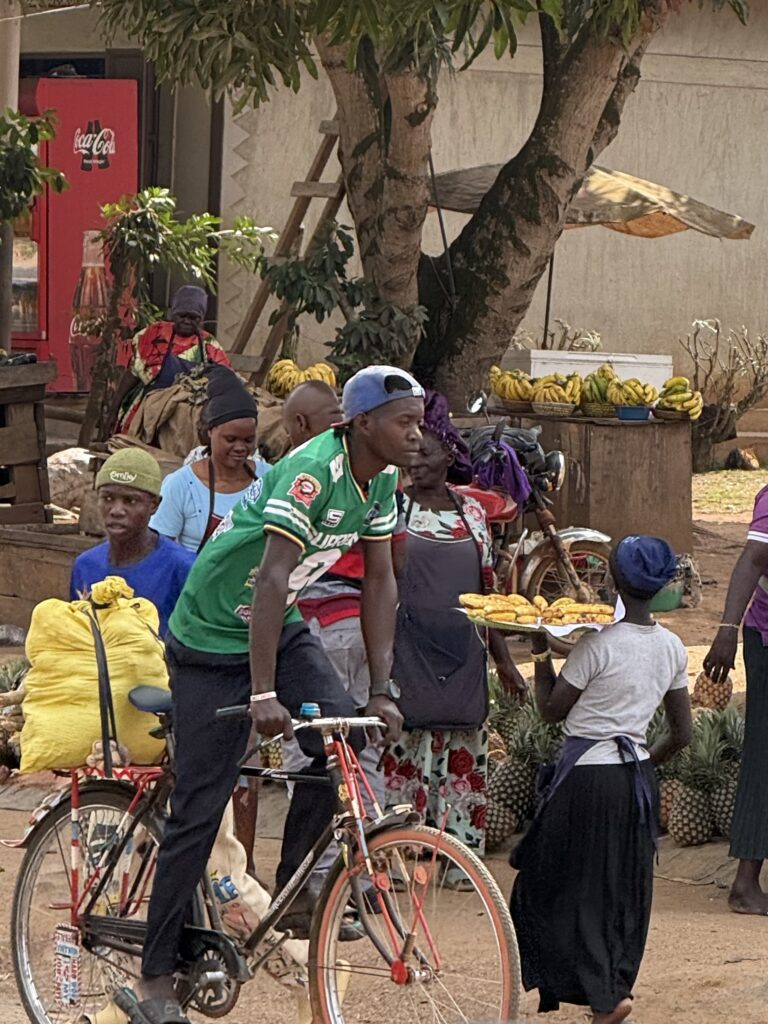
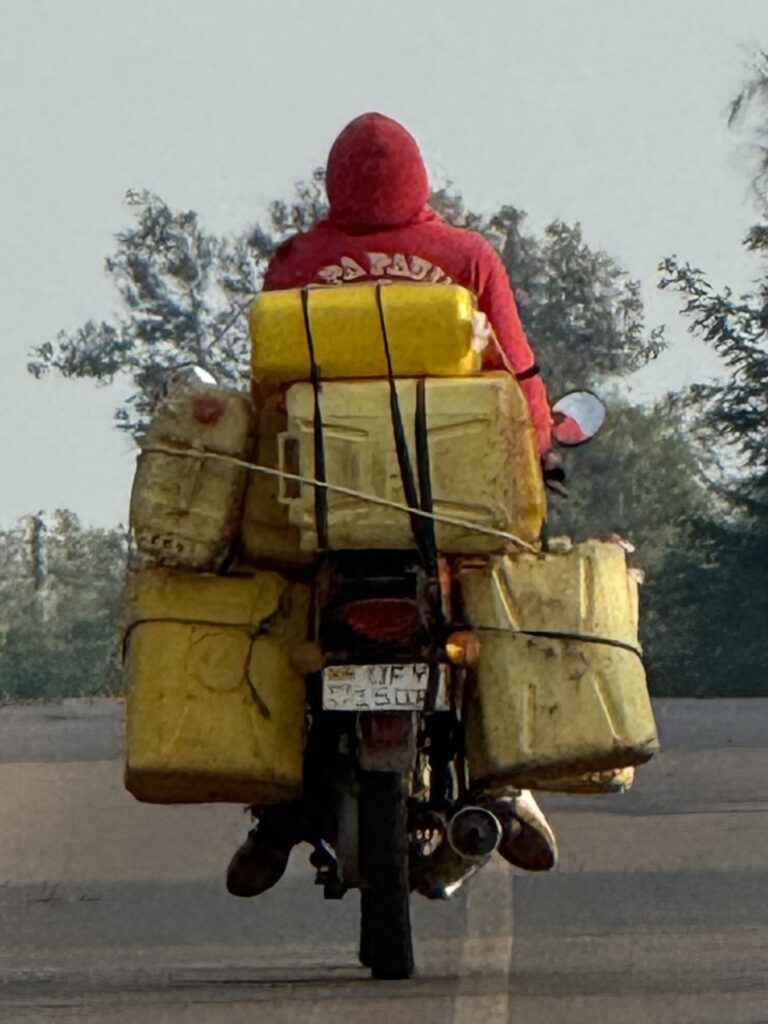
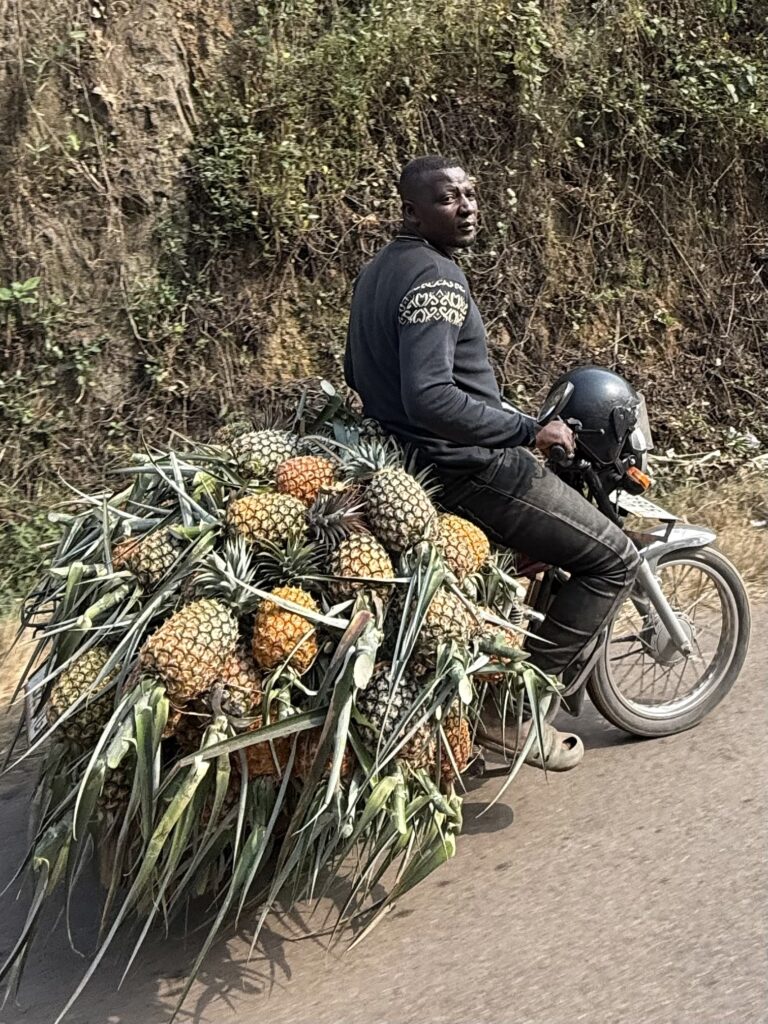
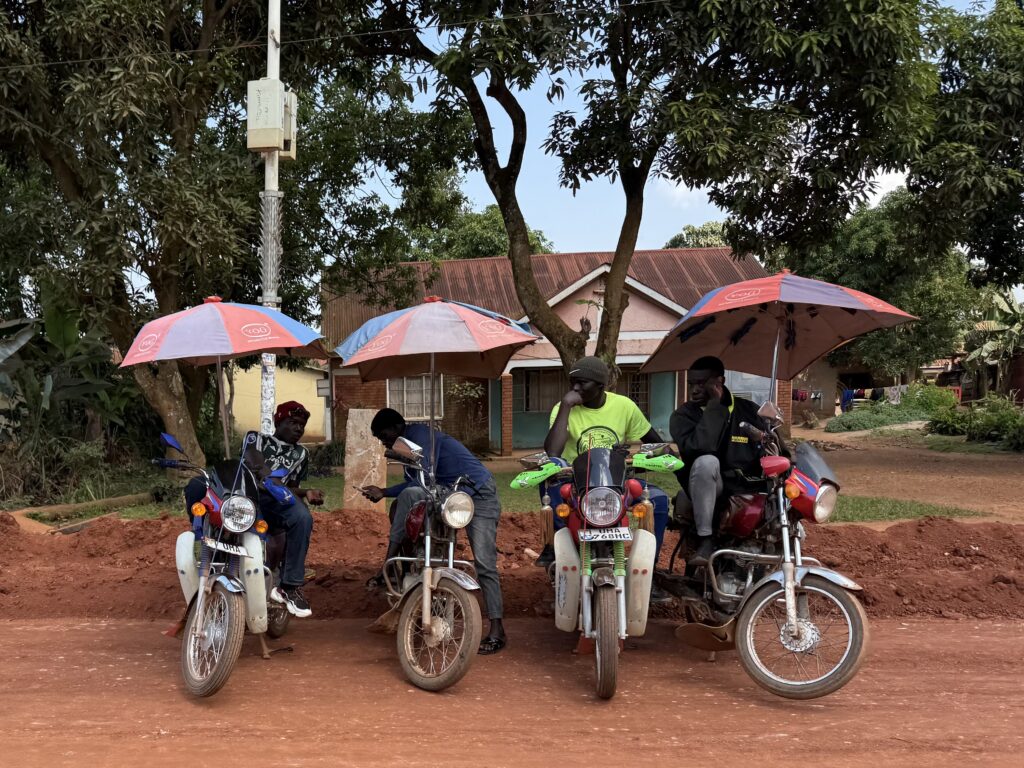
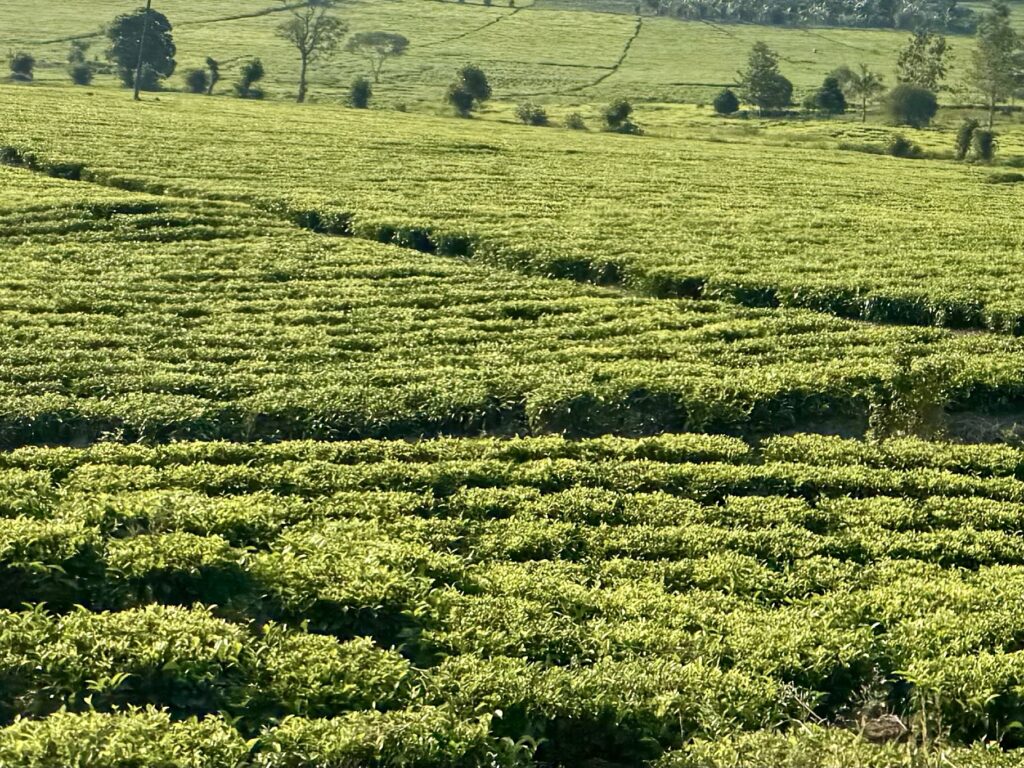
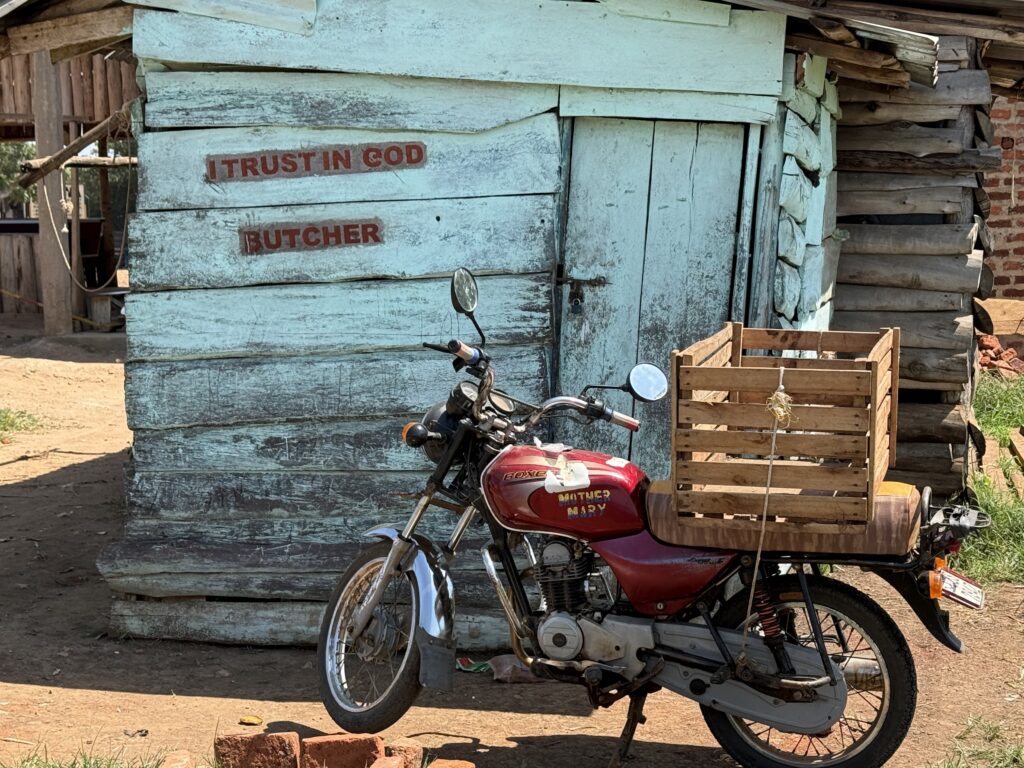
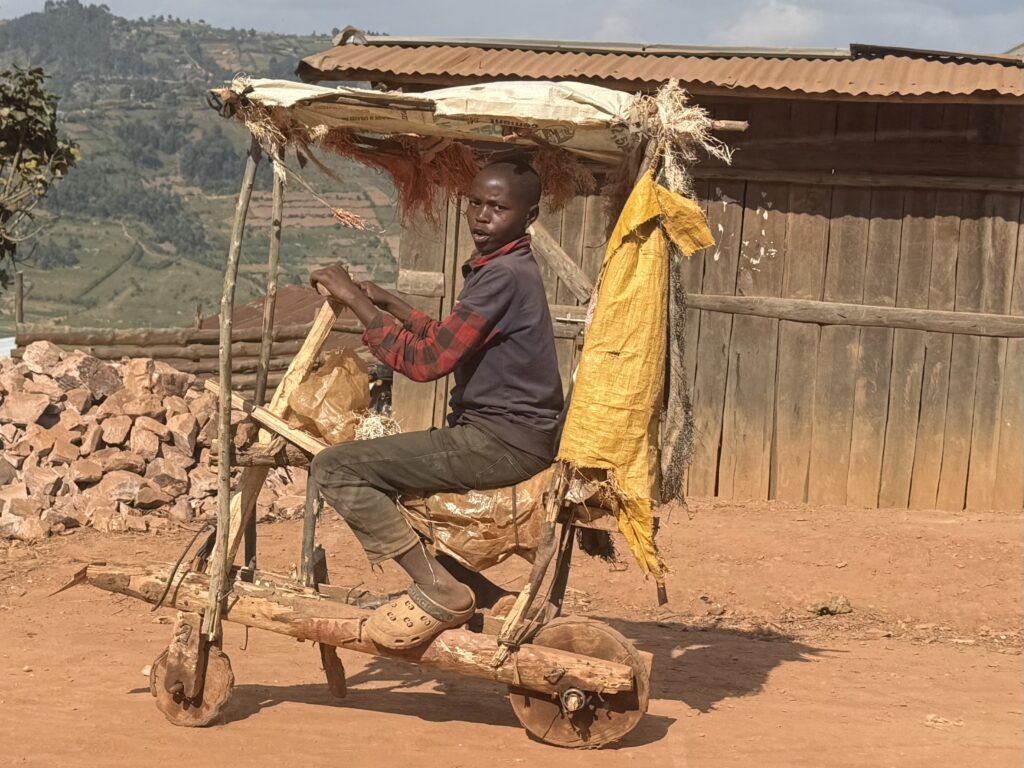
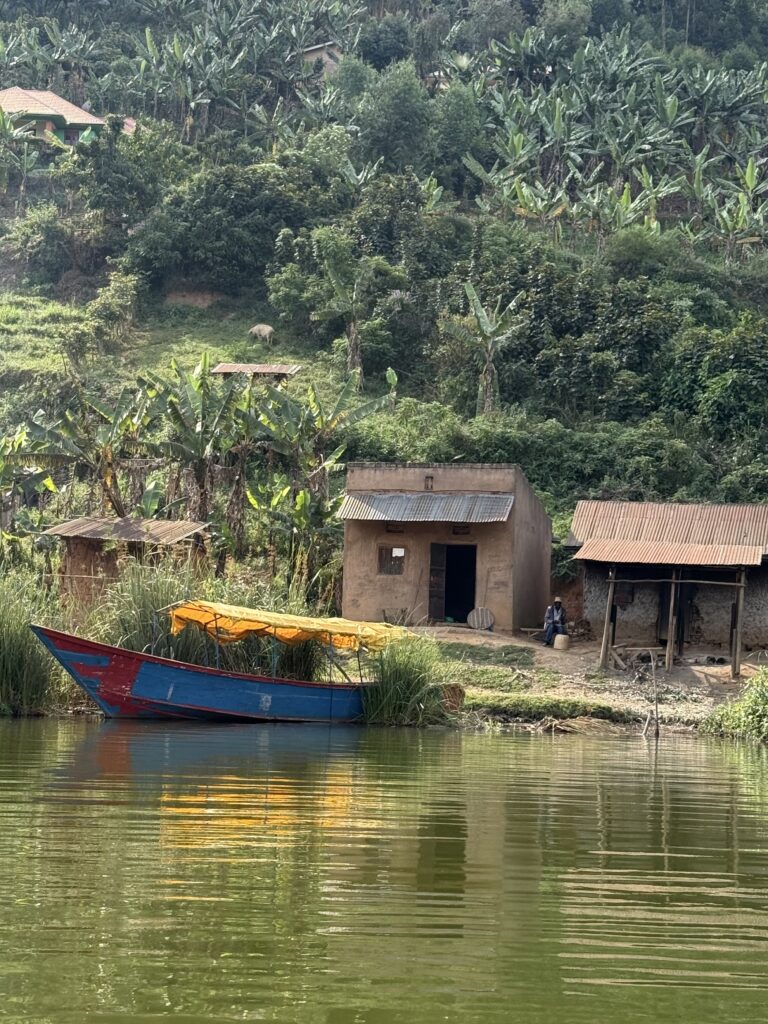
Driving between parks takes us through innumerable villages, vibrant with commerce: drying coffee beans on roadside tarpaulins, sides of beef dangling for sale, wooden stalls stuffed with fruits and vegetables galore, and motorcycles acting as taxis hosting up to 5 abreast or burgeoning with bananas, onions, pineapples, peanuts, potatoes, charcoal, and everything else imaginable headed to market. There’s the constant trek for water, the ubiquitous yellow Jerry cans in hand to be filled at wells and streams hopefully nearby. The book Thirst by Scott Harrison is a great read on his mission to address the global water crisis and we witness the challenges first hand. We pass fields of maize, coffee grown in the shade of bananas, papyrus, and tea, which was introduced by the British and decorate the rolling hills in hues of green. The plantations can be over 100 years old since the bushes produce for decades with trimming. Eucalyptus is the preferred sustainable fuel source for tea processing and the fast growing trees are used for a myriad of other applications throughout the country, with the young groves decorating hillsides with their straight, tall trunks. As we drive through towns large and small, children and some adults wave with smiles welcoming us warmly. We never saw any acts of aggression in this fluid society where the concept of Ubuntu reigns. Ubuntu translates loosely as ‘I am because we are,” meaning a person is defined through their relationships with others, creating a compassionate and supportive society which is palpable. This concept is exemplified in the book The Boy Who Runs about the Ugandan Julius Achon who evolved from boy soldier to Olympic middle distance runner, grappling with an ever-present desire to care for his hometown despite living in Oregon.
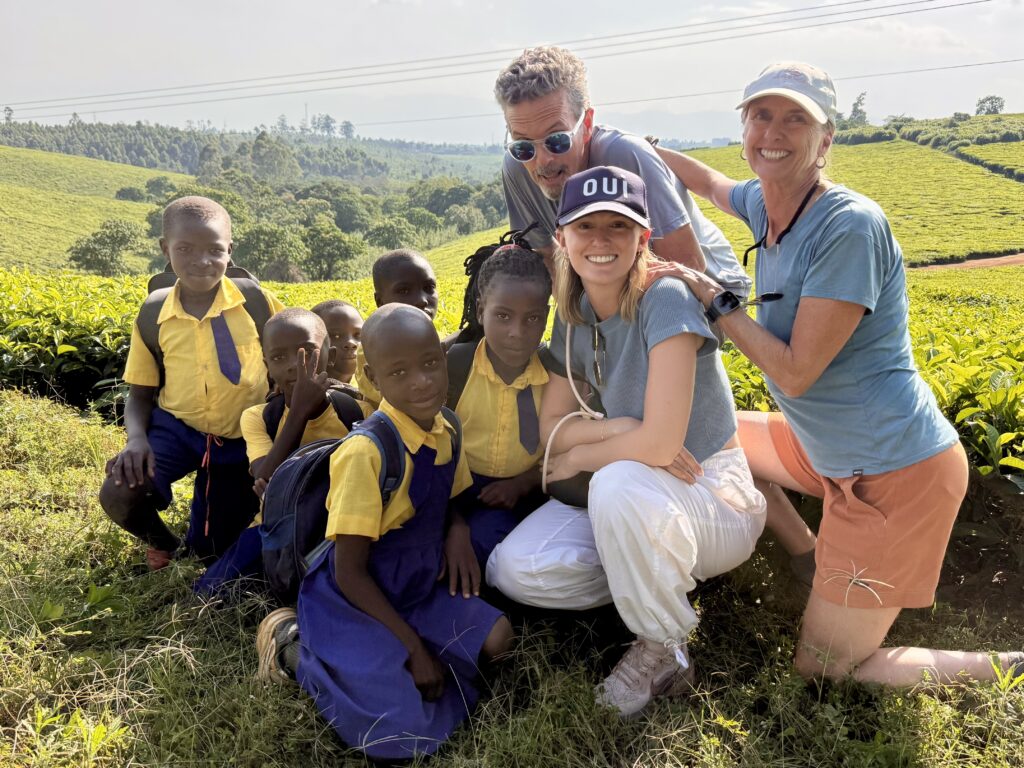
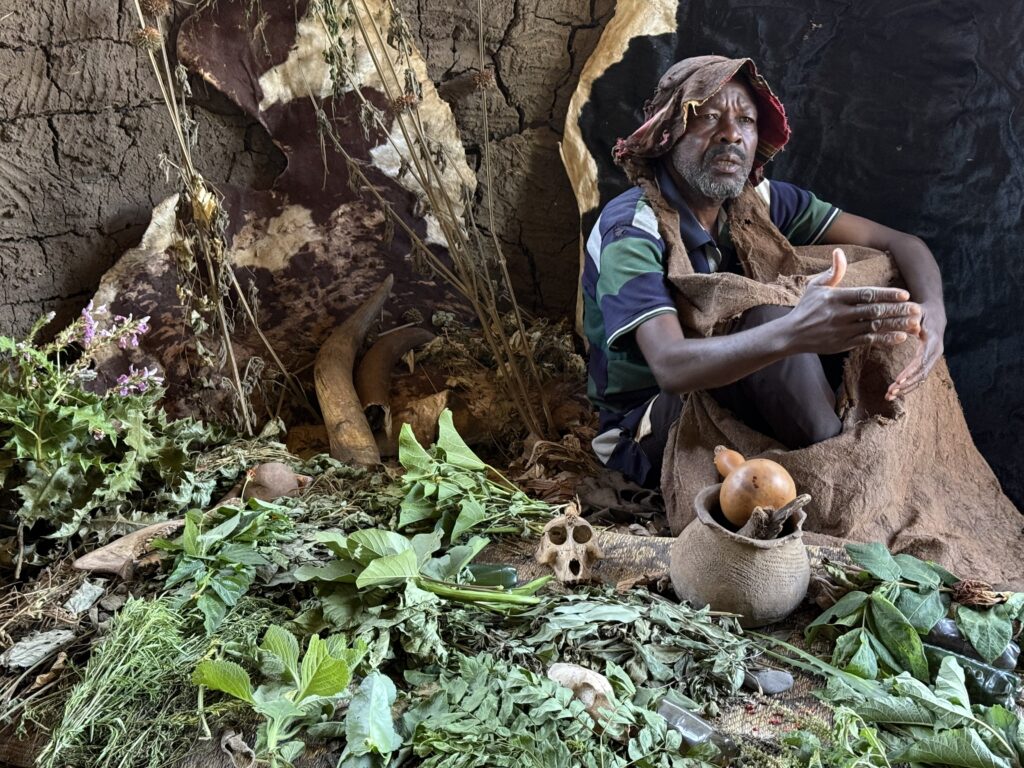
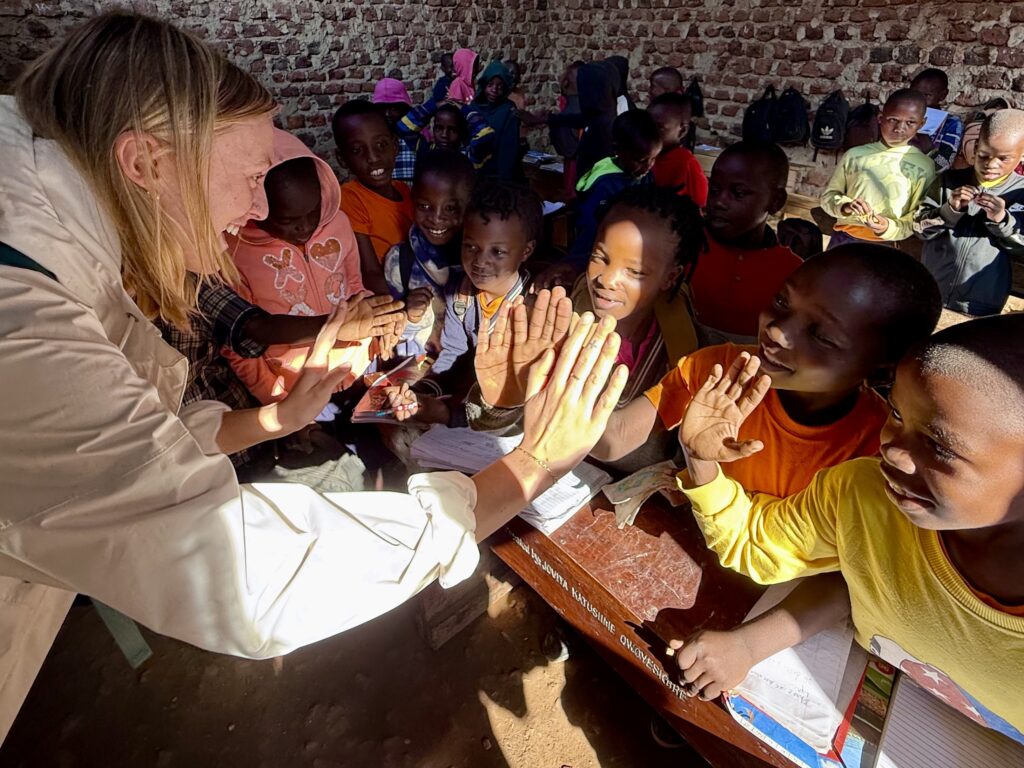
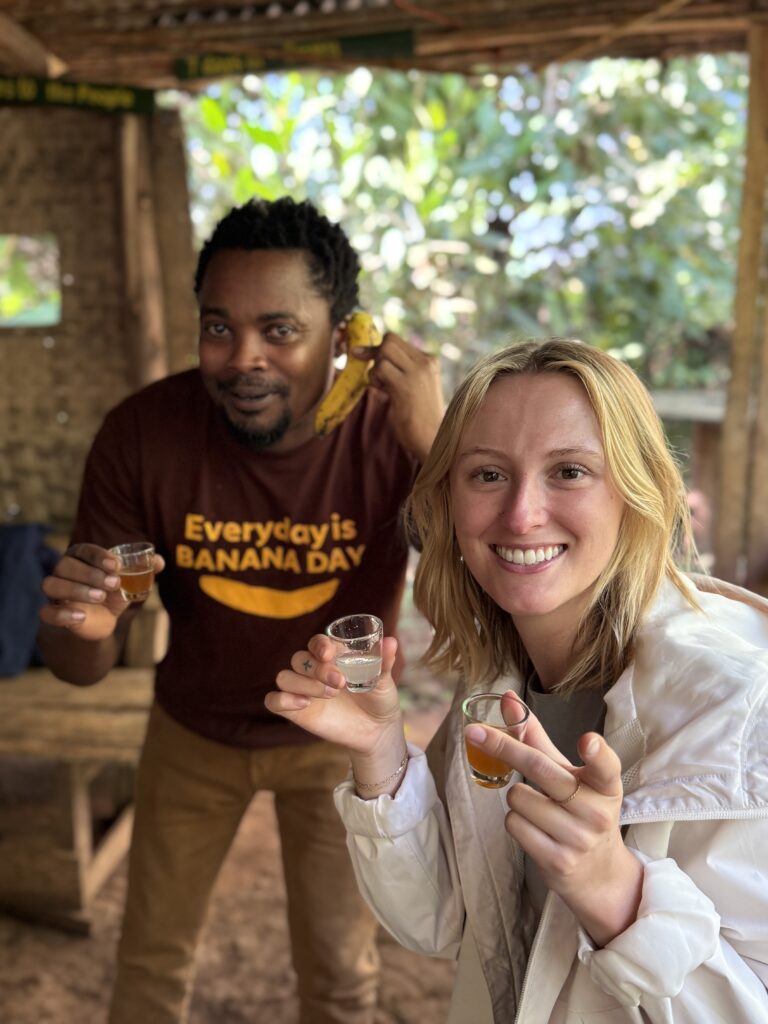
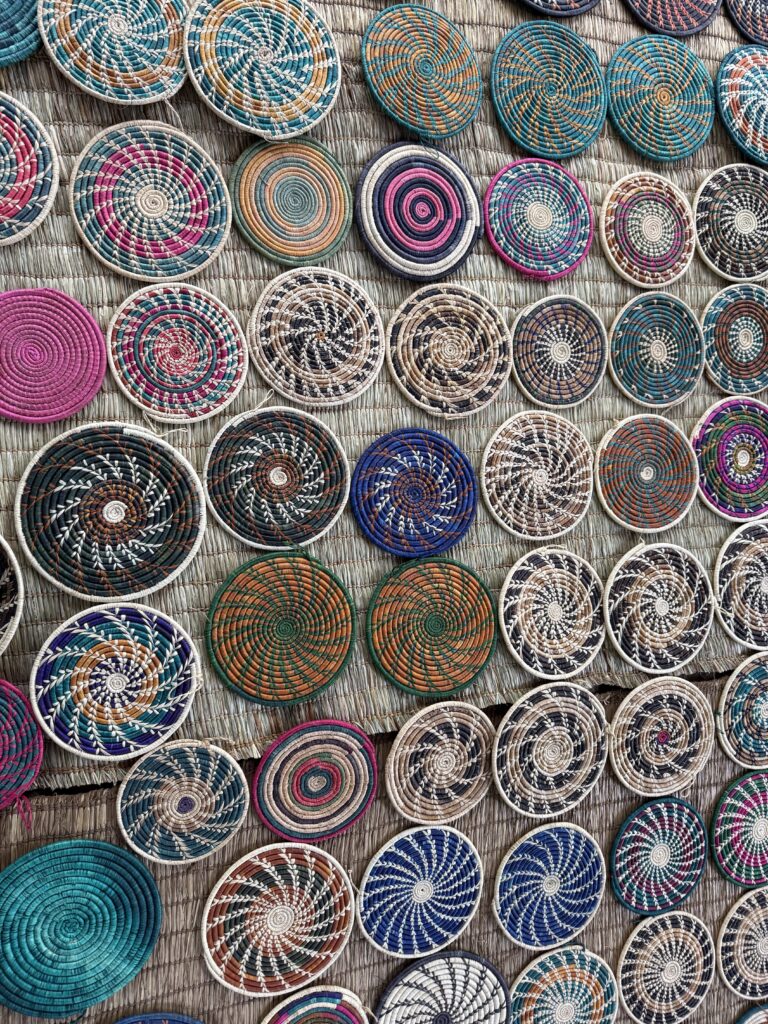
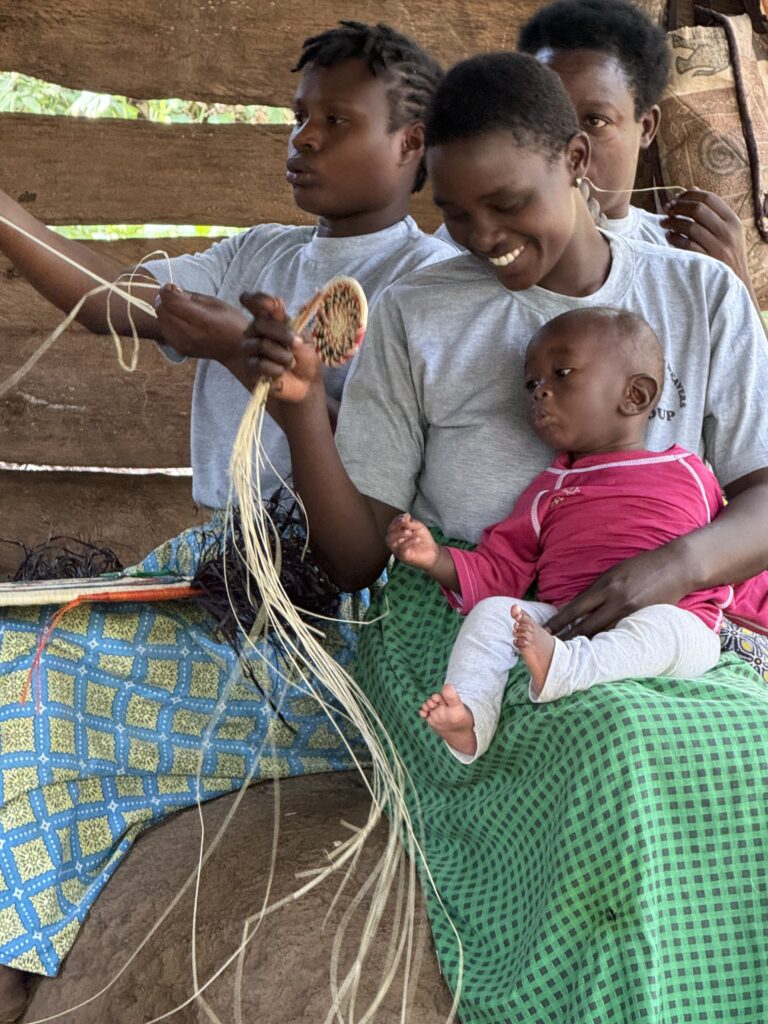
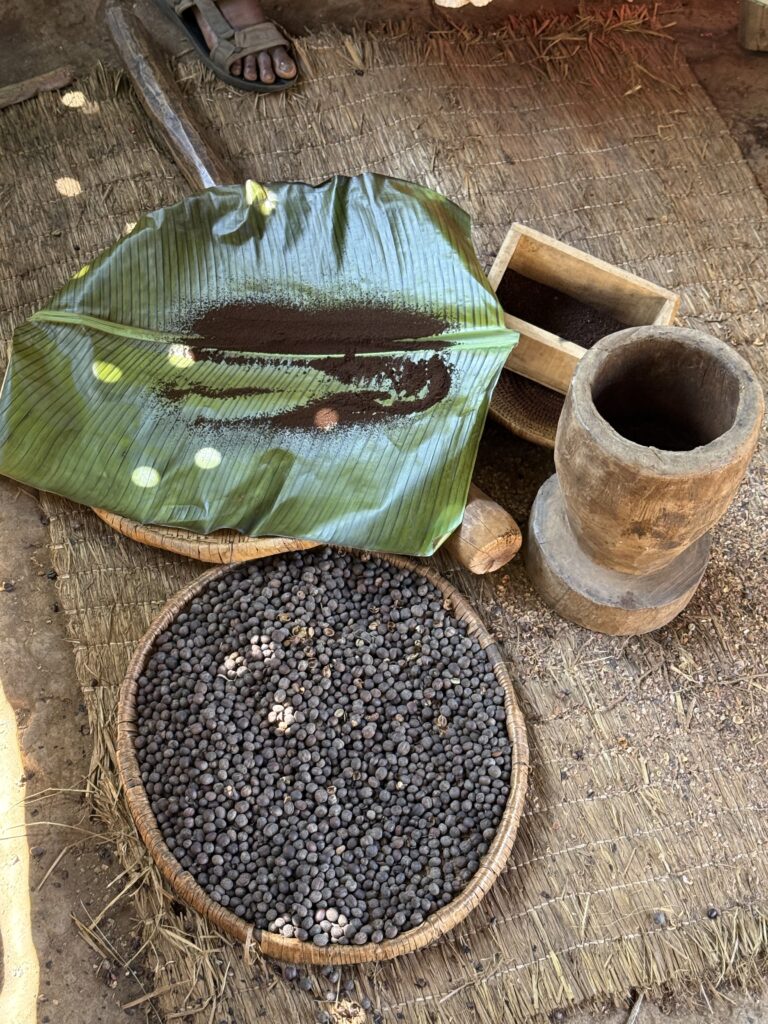
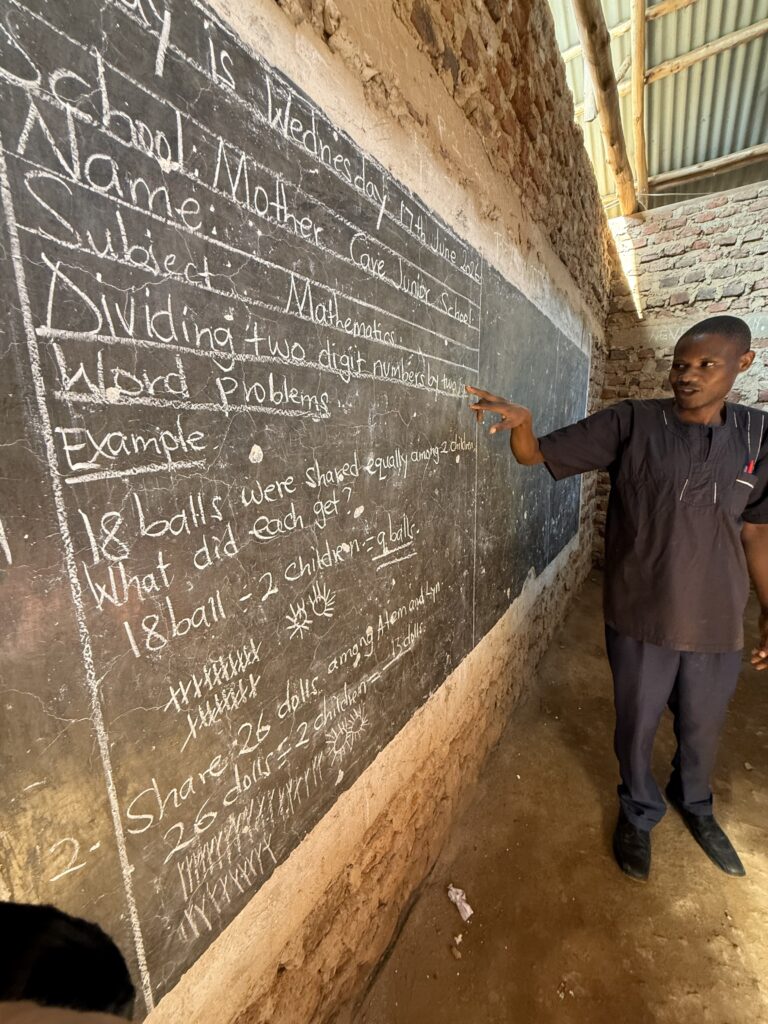
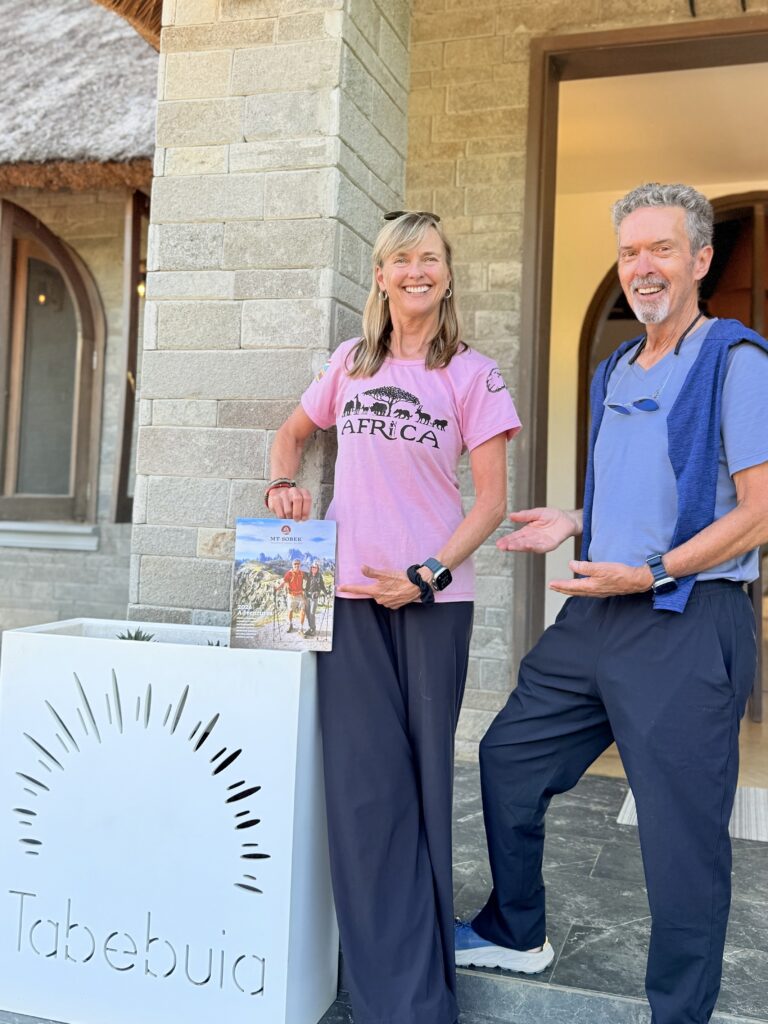
We head next towards Kibale National Park, the Primate Capital of the World, nestled among stunning hillsides dotted with 52 crater lakes. The remarkable lodge Tabebuia, where we are the only guests for 2 nights feeling like we’ve landed on Richard Branson’s private island, has the 2026 Mountain Travel Sobek catalogue in their lobby which is a thrill. In the nearby town of Bigodi, we visit a primary school which breaks out in song for us, then meet with the self-proclaimed Banana Man, who says he has yellow blood, to learn how to make banana gin and banana beer. To sober up, we next learn about household coffee production and enjoy a flavorful cup, followed by a visit with the resident medicine man, learning how he treats snakebites, malaria, and tooth pain plus how to get a nasty neighbor to move or rid yourself of demons, using plants, herbs, bones, horns, and blood from sacrificed animals. A good contact to have. Finally we learn weaving from a group of women who get us dancing and shopping their handmade products with natural dyes. We appreciate this town opening their doors to us so warmly.
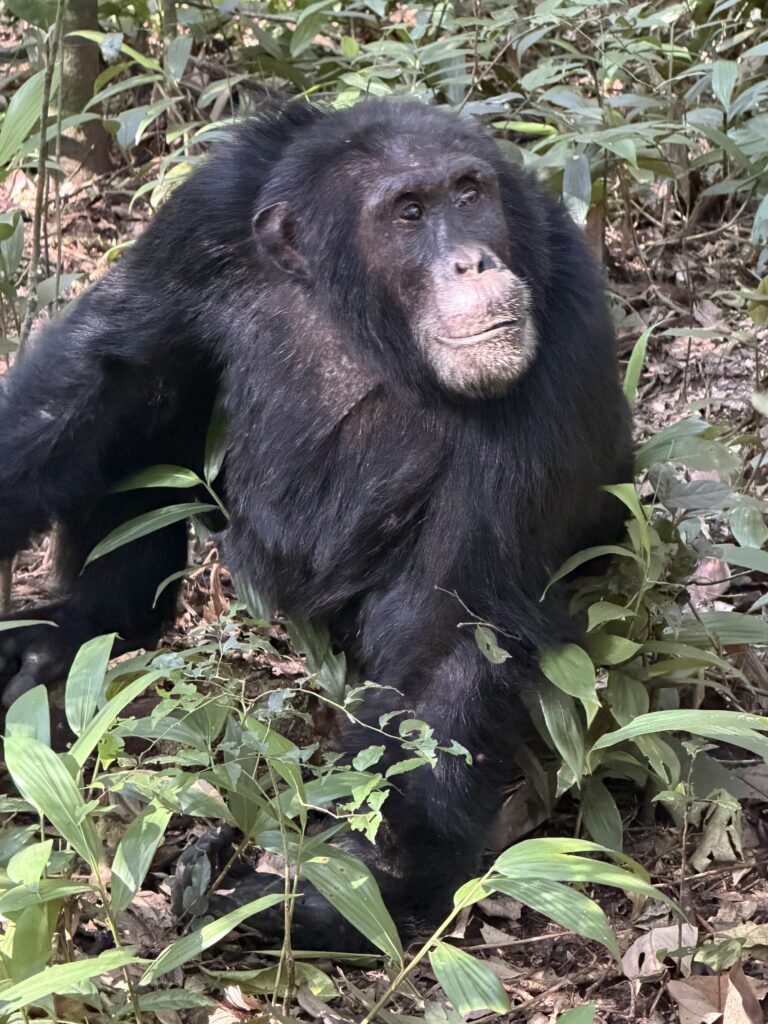
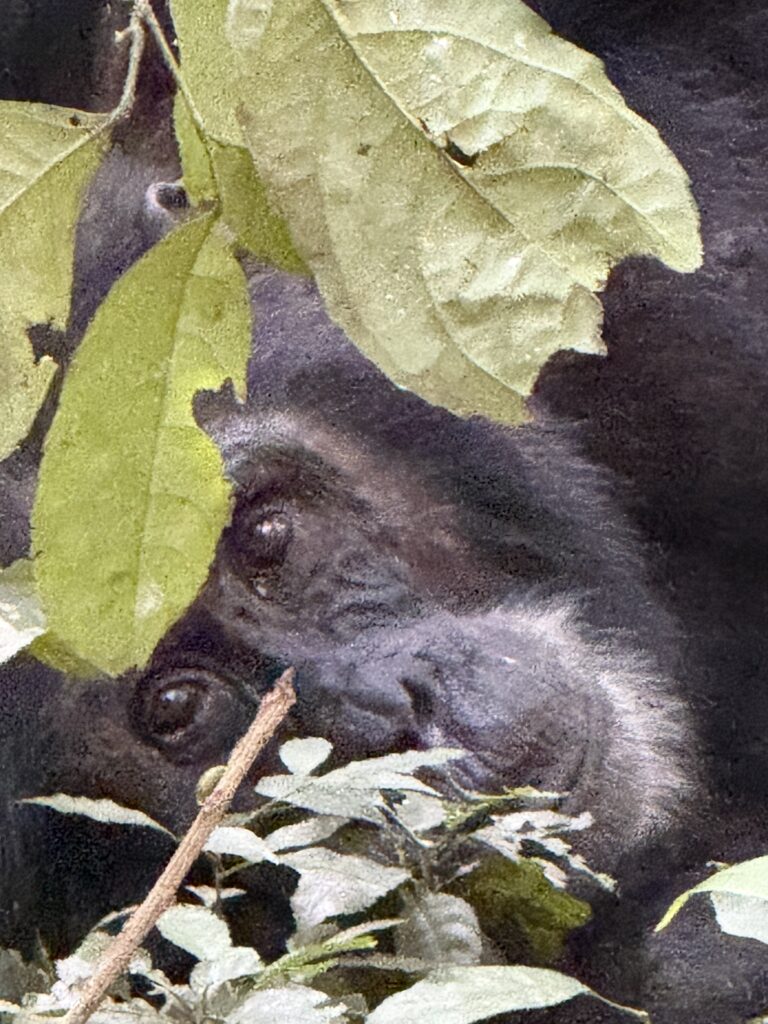
Kibale National Park has 120 habituated chimpanzees across 15 communities, with human habituation taking 4-5 years. We crane our necks towards the canopy watching the dark shapes scampering across the tree tops when we encounter a chimp resting peacefully on the ground, rescuing my aching neck. Mr Sir, as he’s named, is about 35 years old and has been habituated for 30 years, so he considers us part of his community and lounges casually in our presence. To find his community he uses a fig tree to call out, throwing his feet at the trunk with momentum, and chimp calls resound through the jungle in response before he scampers up a tree to reconnect.
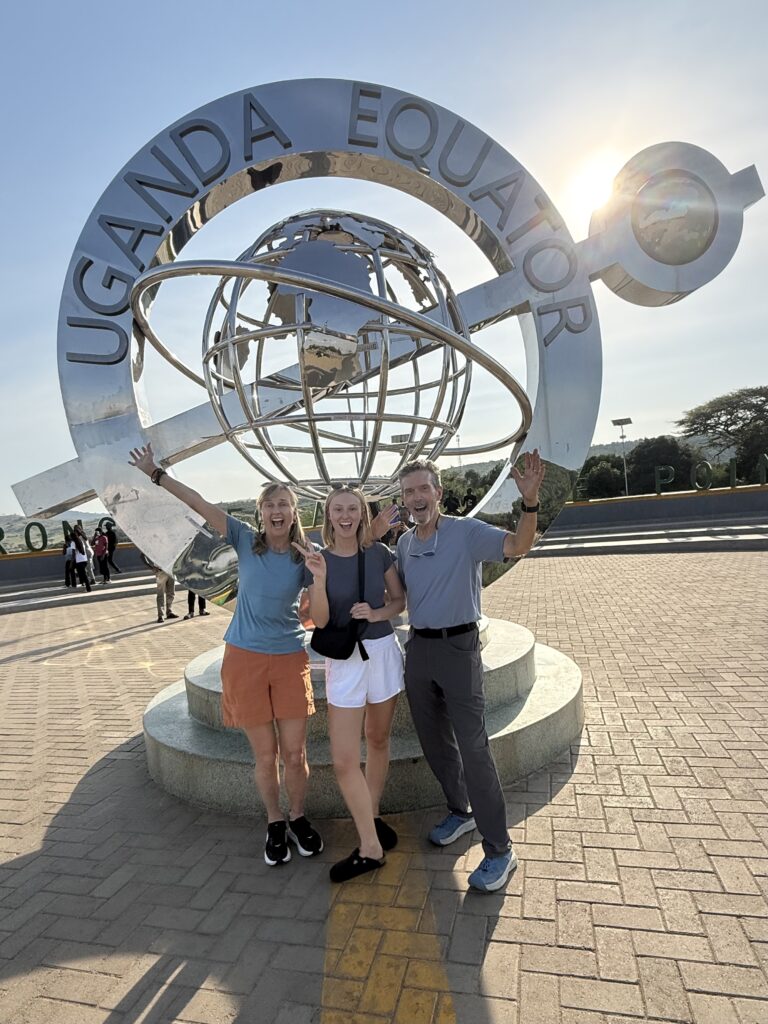
Continuing south we cross the equator where we receive a still puzzling demonstration of water swirling directions: clockwise (north) and counter clockwise (south) then directly down (on the equator). Throughout the country we have seen residue posters from their January presidential elections, reinstating the current regime with rigged results. President Museveni has been in power for 45 years, assigning his son as the head of the military to dictate his successor. The country has watched their neighbors modernize while their development has lagged, and they hope that his son will be more progressive as they are hungry for change.
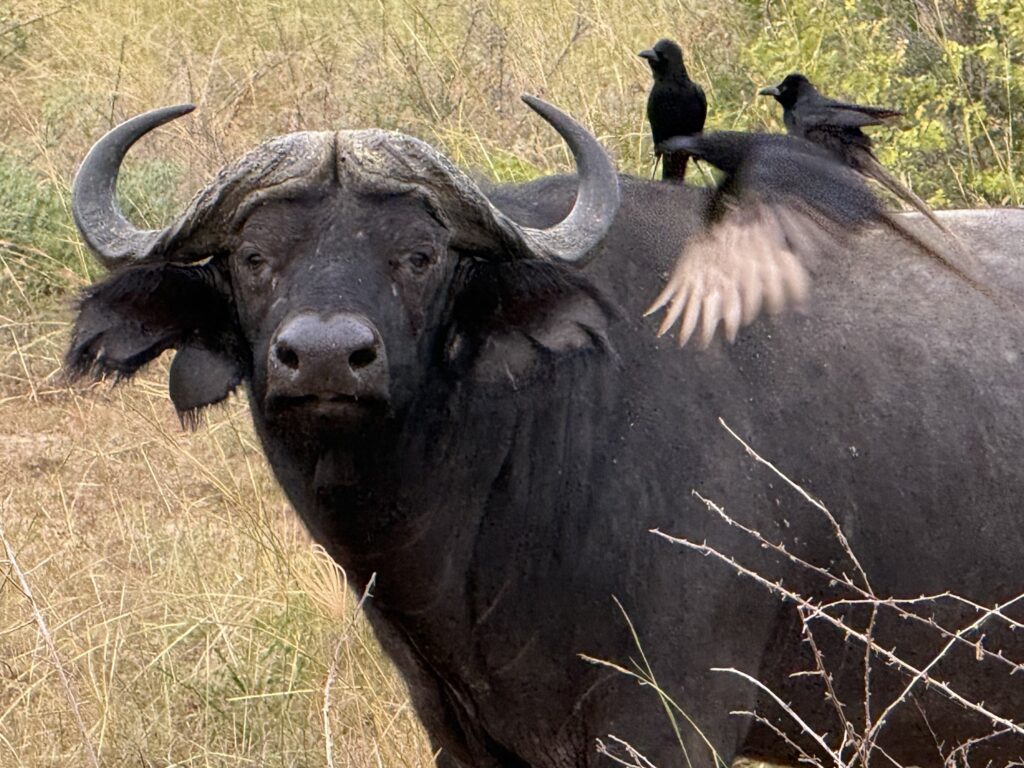
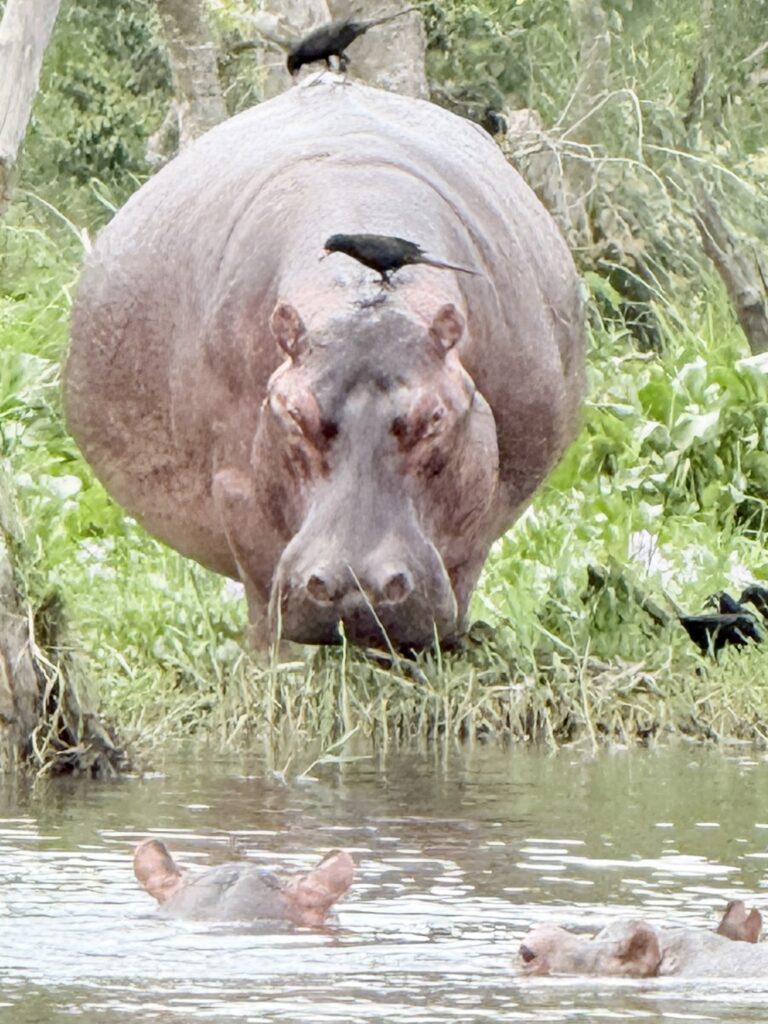
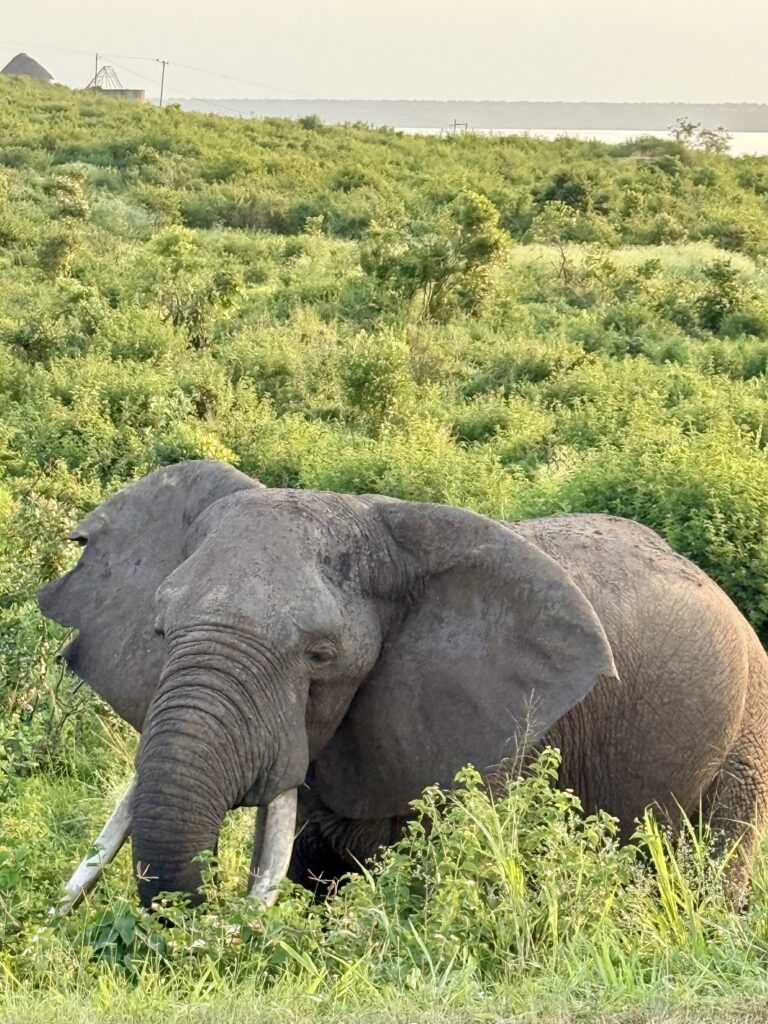
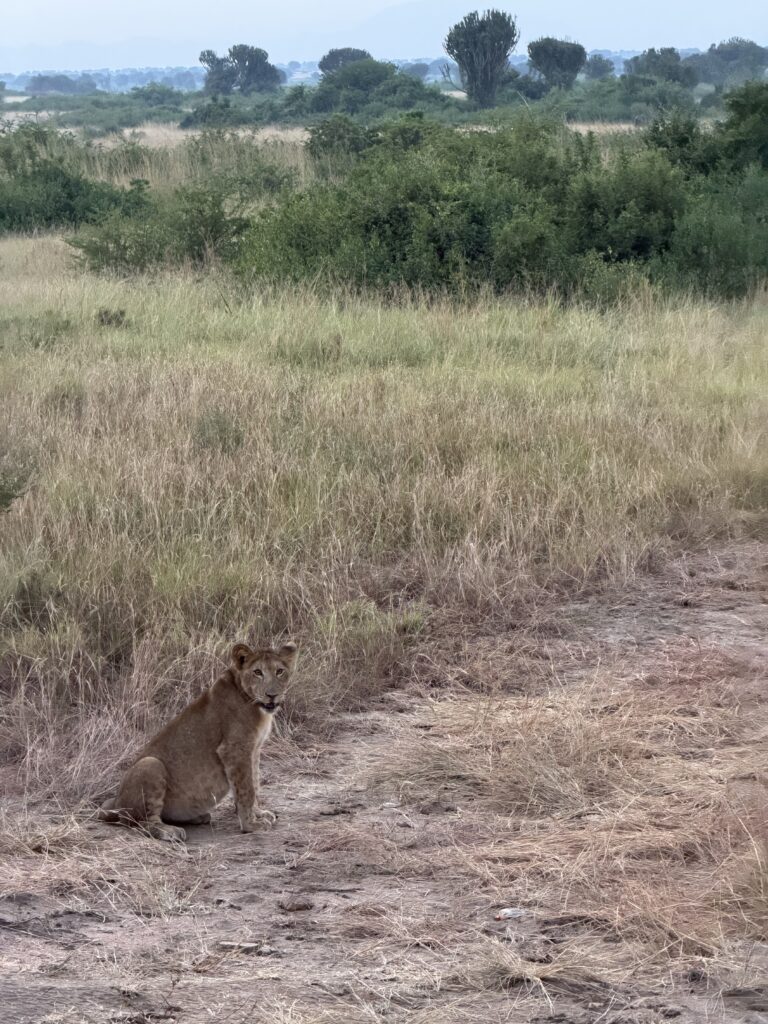
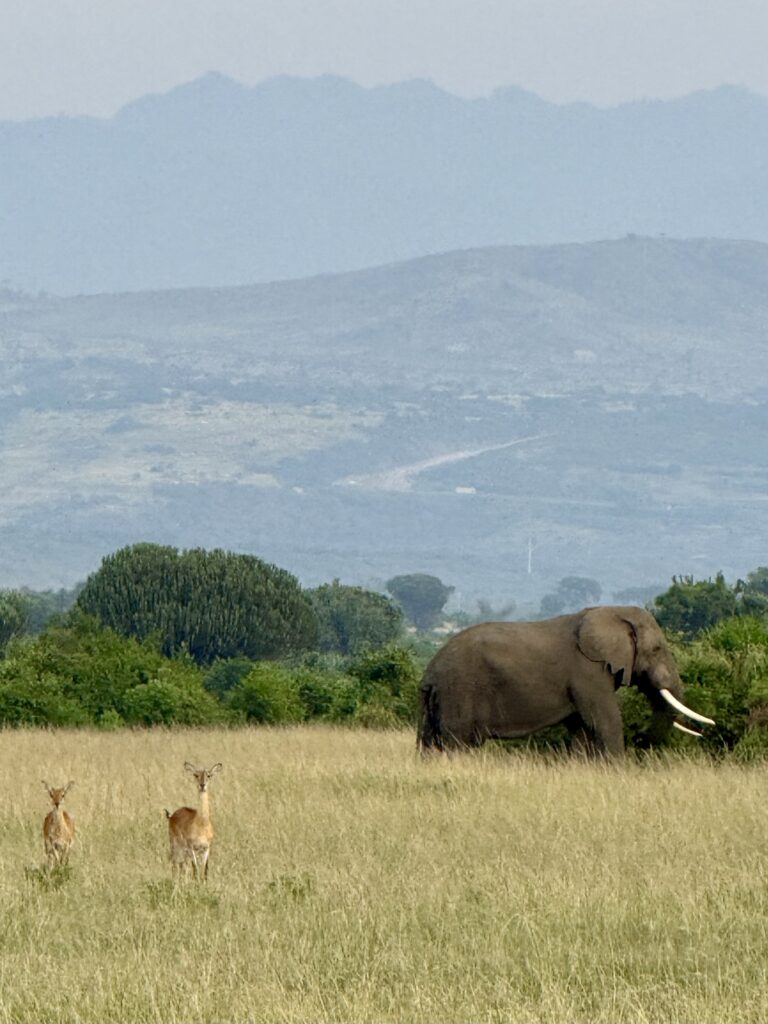
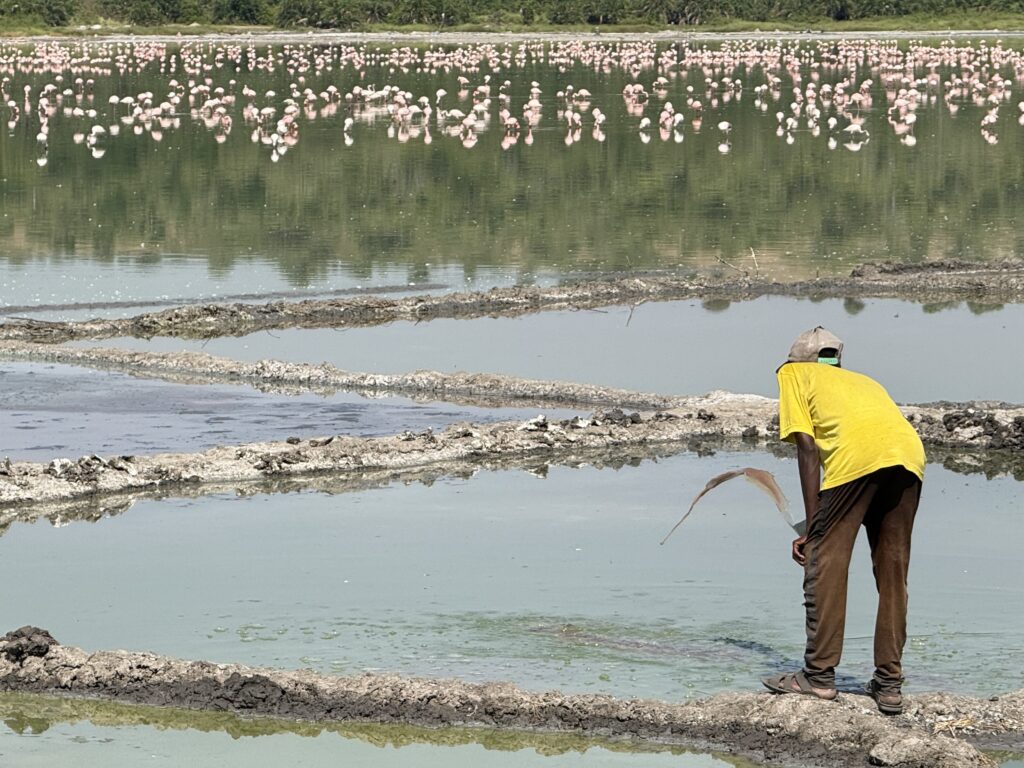
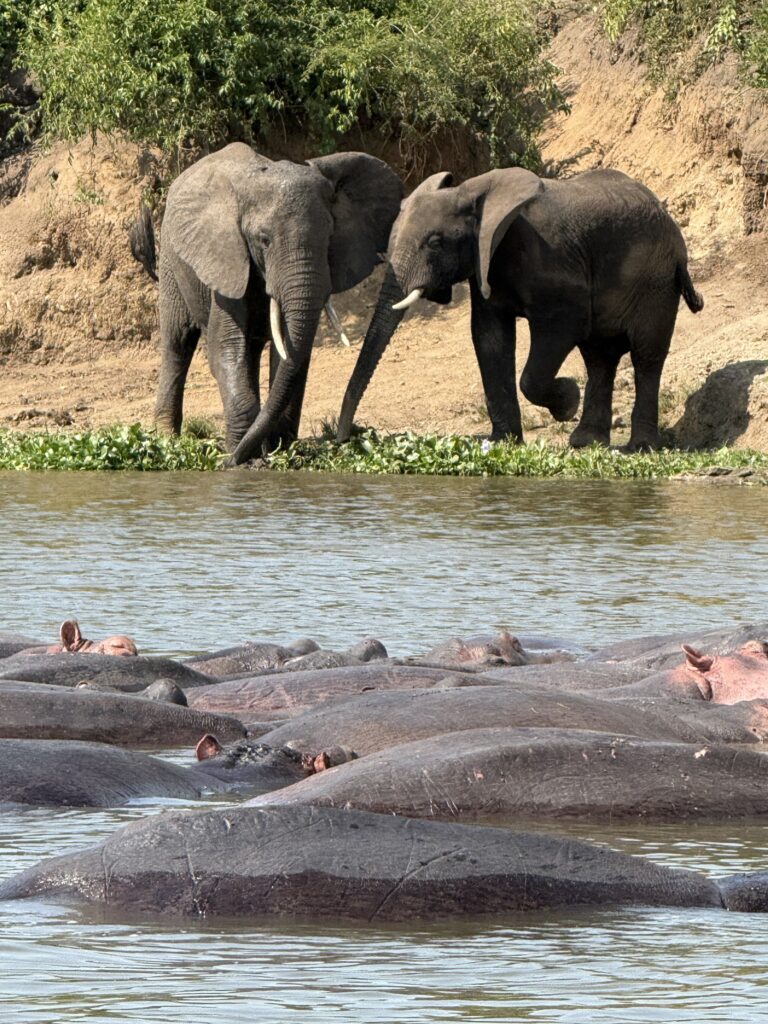
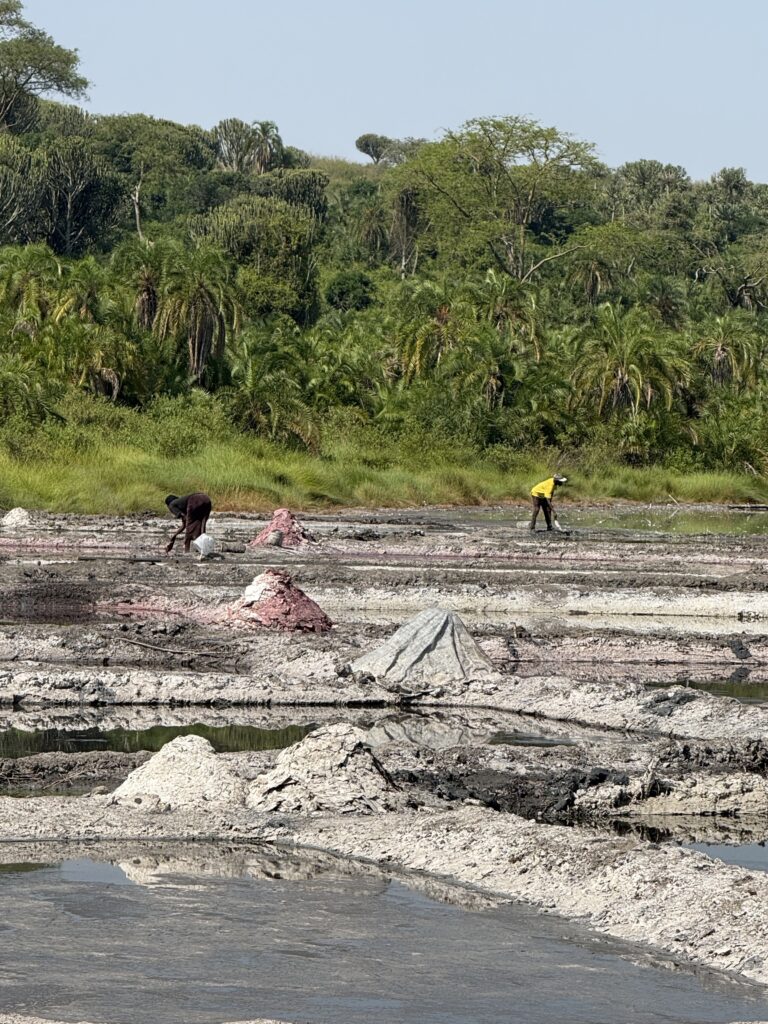
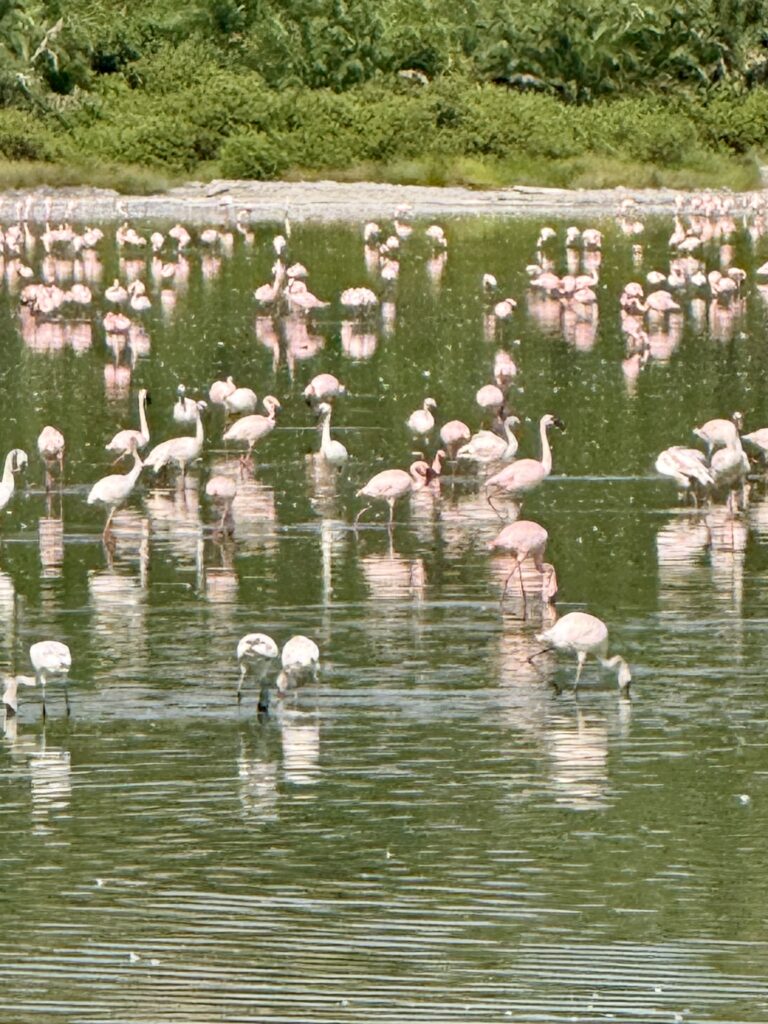
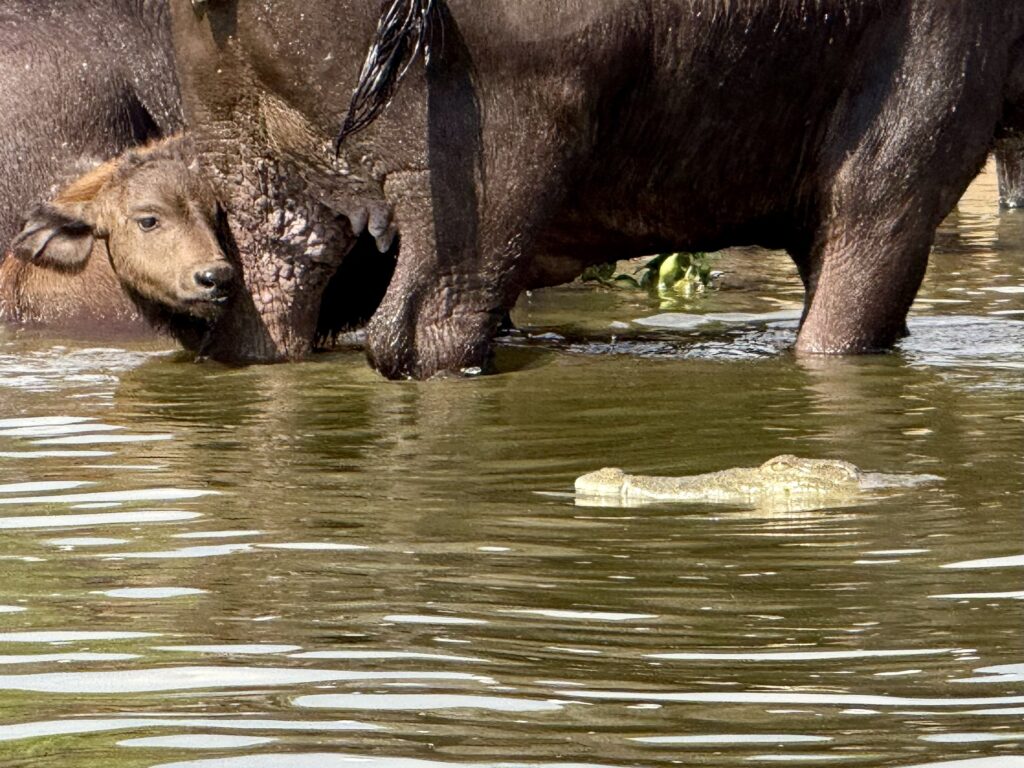
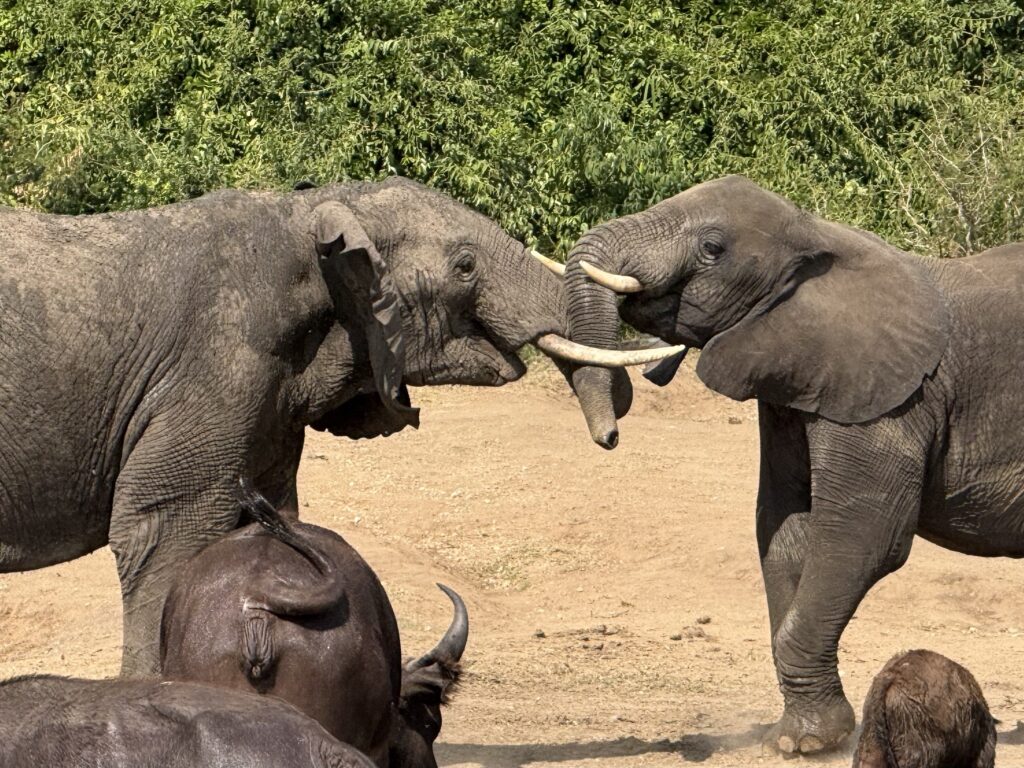
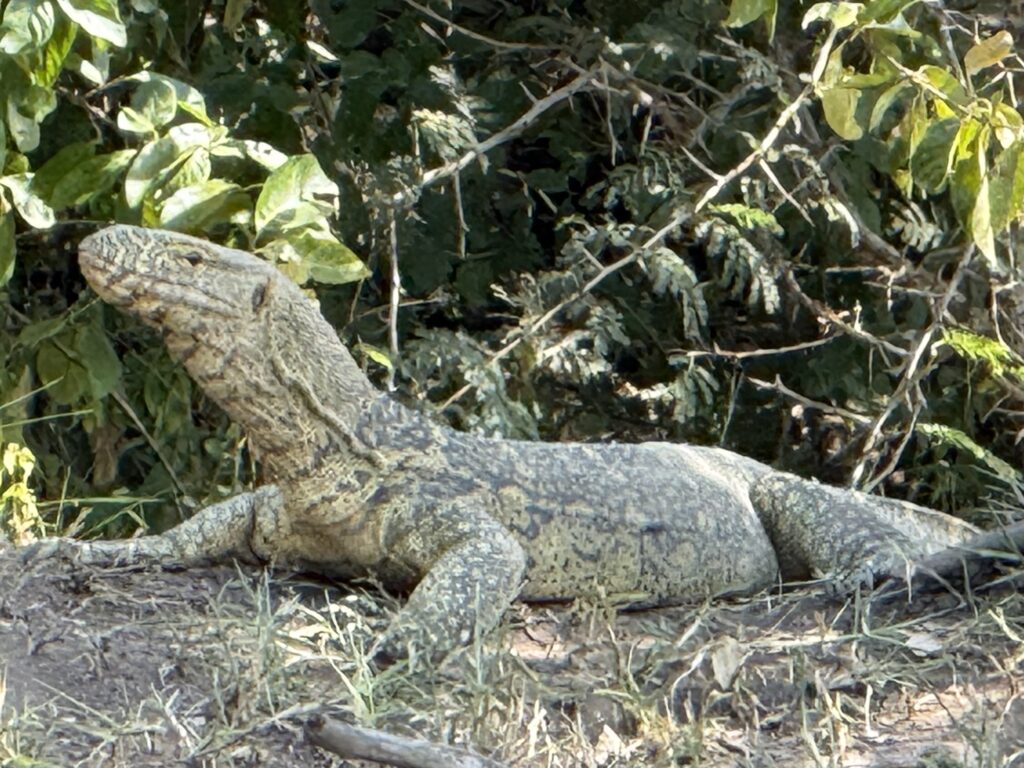
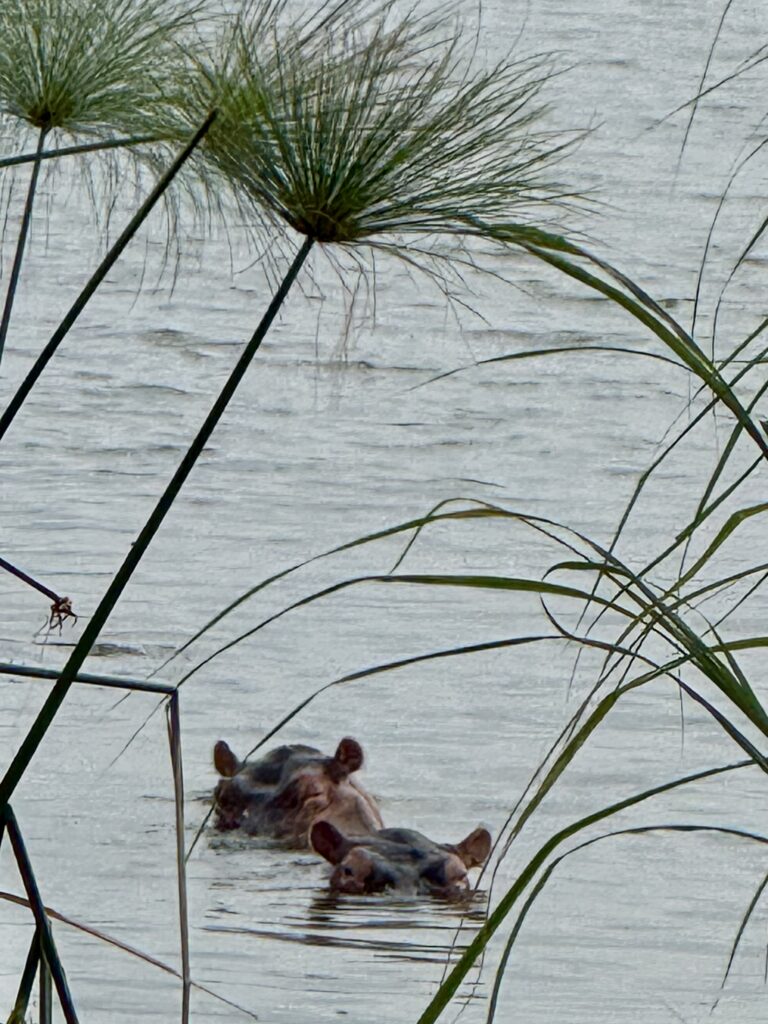
Queen Elizabeth National Park is the second largest game park in Uganda with 618 bird species and an abundance of mammals including tree climbing lions, which sadly we weren’t able to cross off our Bingo cards. But we did observe two young lionesses lounging and tussling after feasting on a Cape buffalo carcass, clinching Sydney’s Big 5. Scanning the savannah from our pop up roof, we observe Cape buffalo waking up in a circular formation with calves in the interior and males on watch along the perimeter, a massive bull elephant over 40 years old with impressive tusks, a field of male kob each about 50’ apart putting themselves on display for breeding to the few sought-after females who come shopping for a mate, and a family of warthogs who are fierce enough to fend off a lion. The nearby Katwe Salt Pans owe everything to the plankton in the lake which turns the resident flamingoes and the salt pink. The flamingoes migrate annually from Lake Nakuru in Kenya to eat the plankton, turning the birds from white to pink in about 3 months. The salt pans are a cooperative, handed down over generations, to harvest both white salt, for animal consumption, and pink salt, for human consumption, with the black magma basin speeding up the evaporation process. Our boat ride on the Kazinga Channel, a 40 km long umbilical cord between Lakes George and Edward (isn’t it time to remove the colonial names?), yields an unprecedented number of animal species in close proximity. Hippos are the second most dangerous animal in Africa, ceding to mosquitos, and there are over 5,000 on this body of water, popping up to the surface twirling their ears and blowing their nostrils to expel water before submerging again. Monitor lizards, the largest lizard in Africa growing up to 3 meters (10 feet) in length, bask on the banks giving a Jurassic Park feel. In one section the river is layered with animals: a pod of hippos wallow in the shallows their heads resting on each other to keep from submerging, a herd of Cape buffalo lounge between the hippos and shore keeping a close eye on the lingering crocodile targeting the calves, and some feisty juvenile elephants break up the party with trumpets and ear flaps, clearing the beach for their entertainment, all being watched by baboons on the hillside practically eating popcorn during the show.
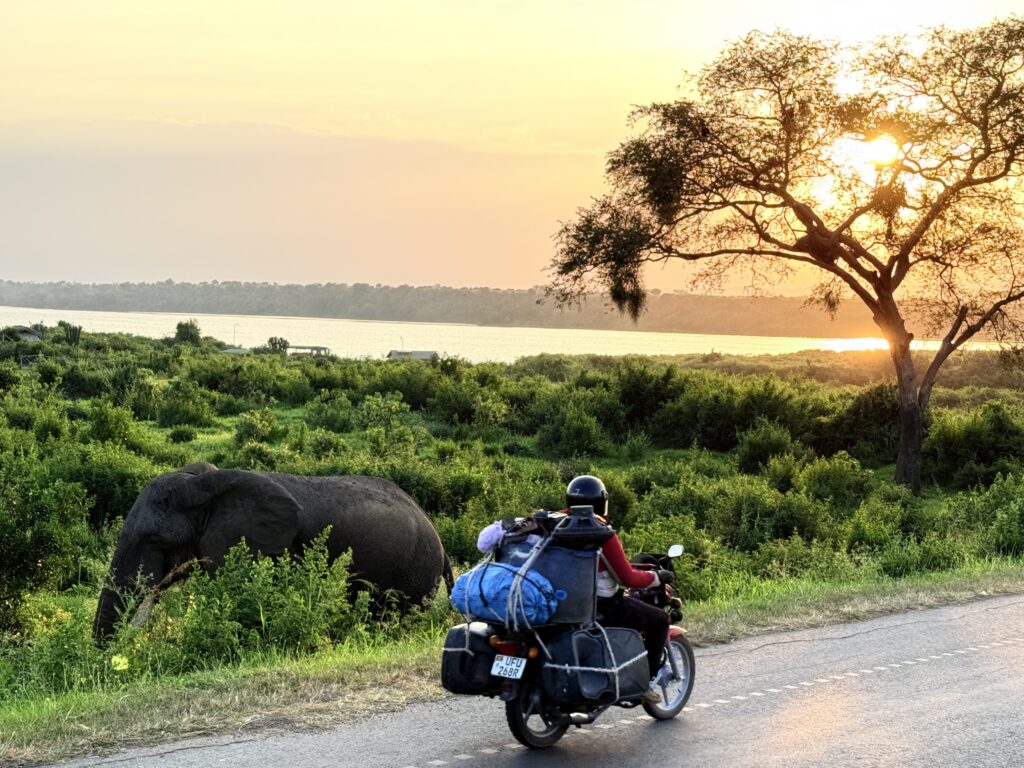
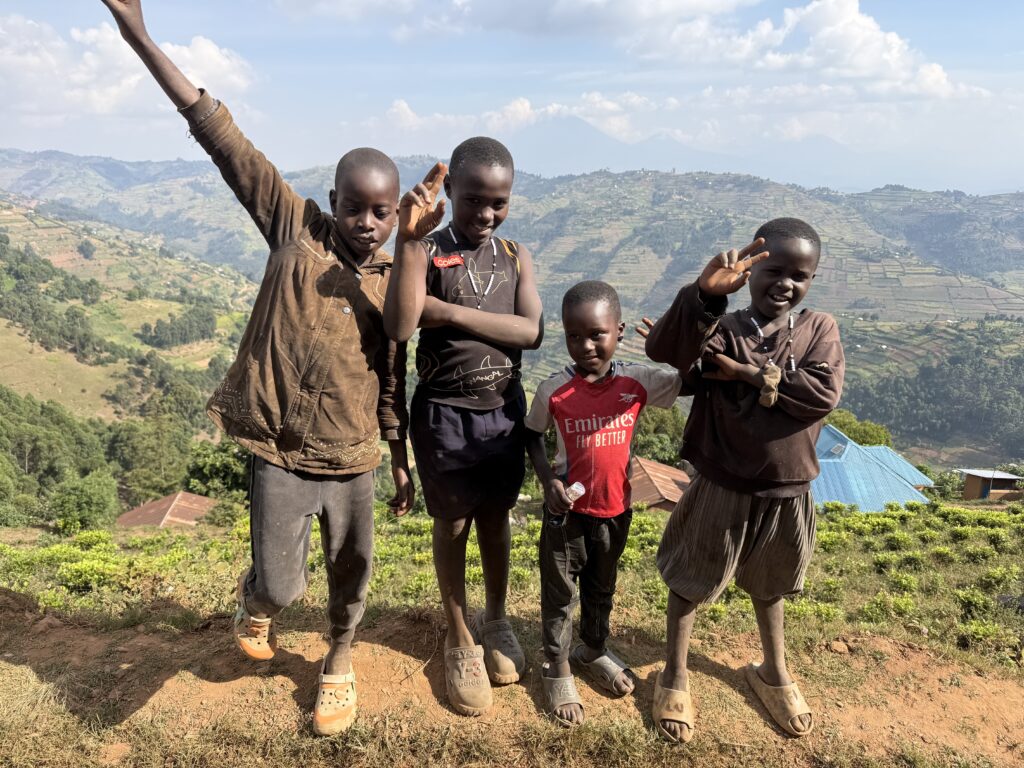
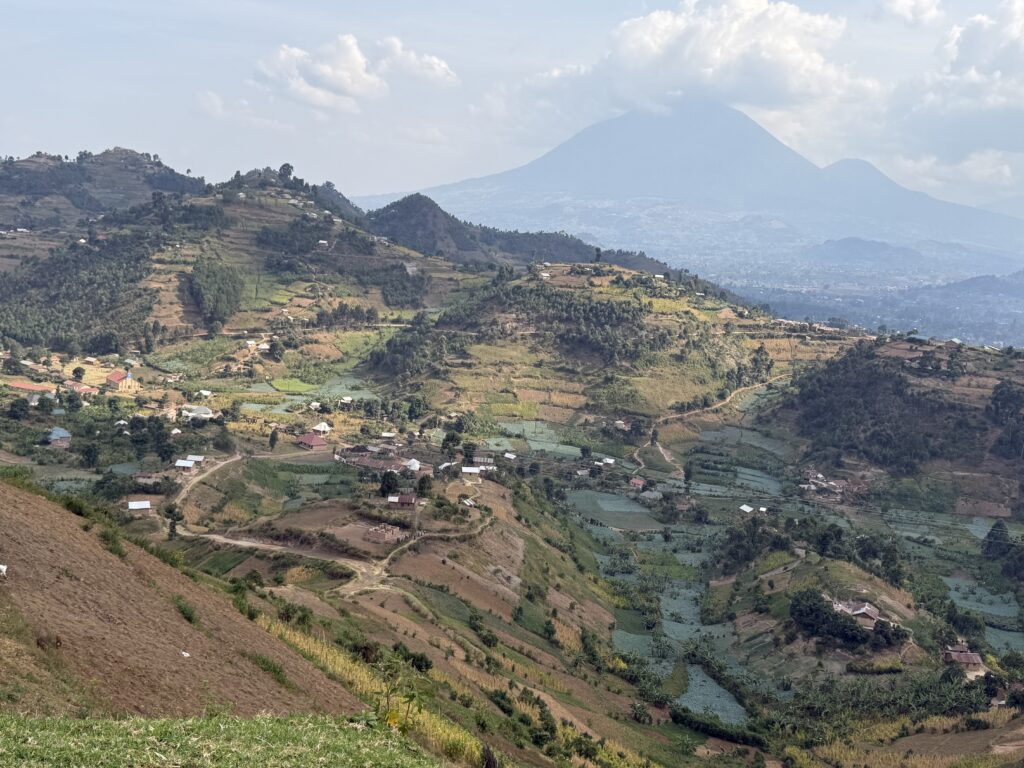
As we head into the Virunga Range, the dirt roads crawl up steep hillsides with square-inch terraced farming like patchwork to feed the masses. Many roads beyond the Ugandan highways can be considered Class 3-5 (think whitewater rafting) which Isaac navigates with grace, passing kids of all ages, wandering livestock and the occasional wildlife, ladened down motorcycles, pedestrian commuters sharply dressed, bicycles with sideways loads heavy grasses, women in colorful clothing balancing large bundles on their heads, and uniformed school children with notebooks in hand. The self-driving option is not for us here – these roads are for professionals – and our motto becomes In Isaac We Trust. A photo stop in this picturesque area elicits kids scrambling up the hillsides to watch Tourist TV.
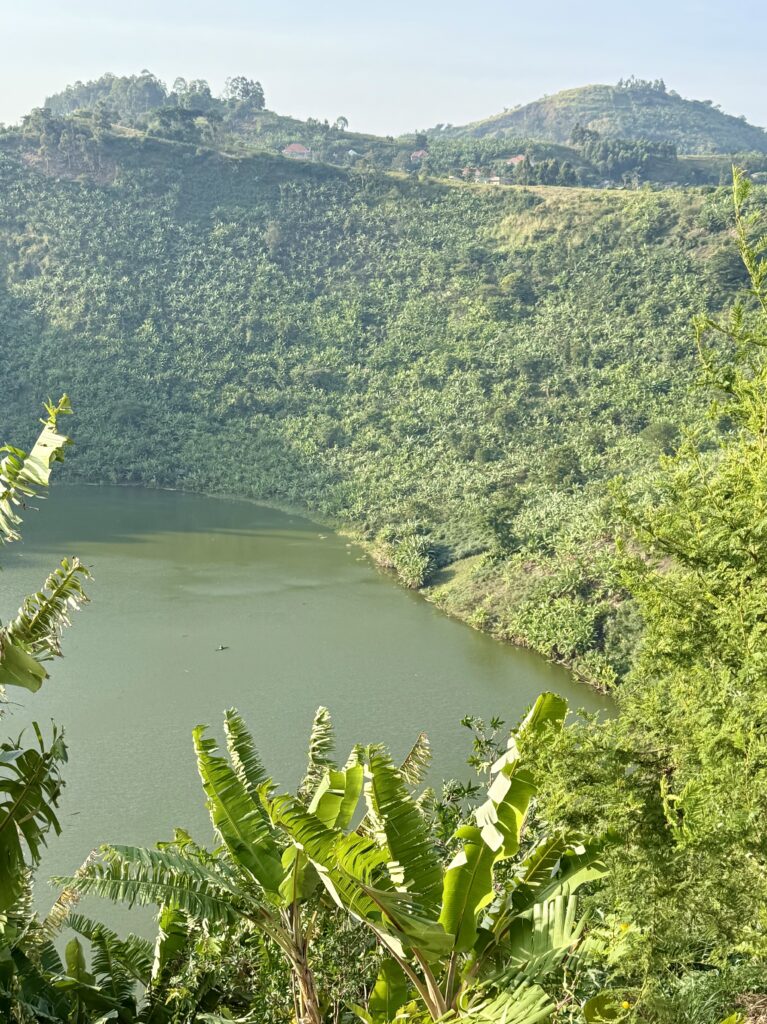
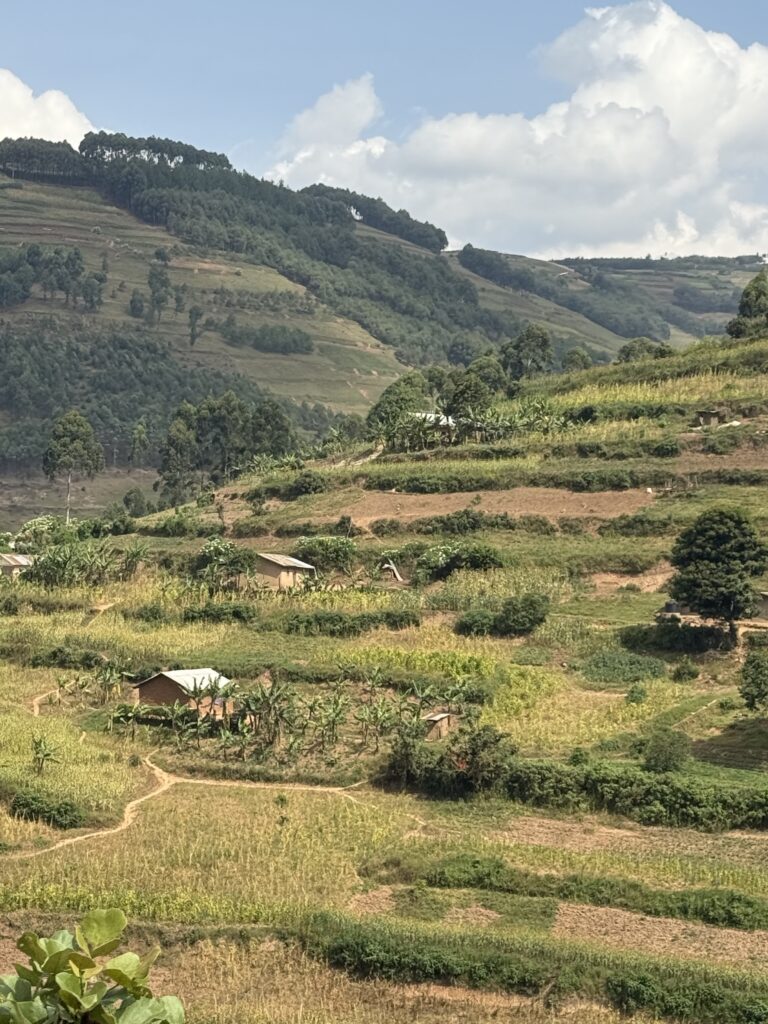
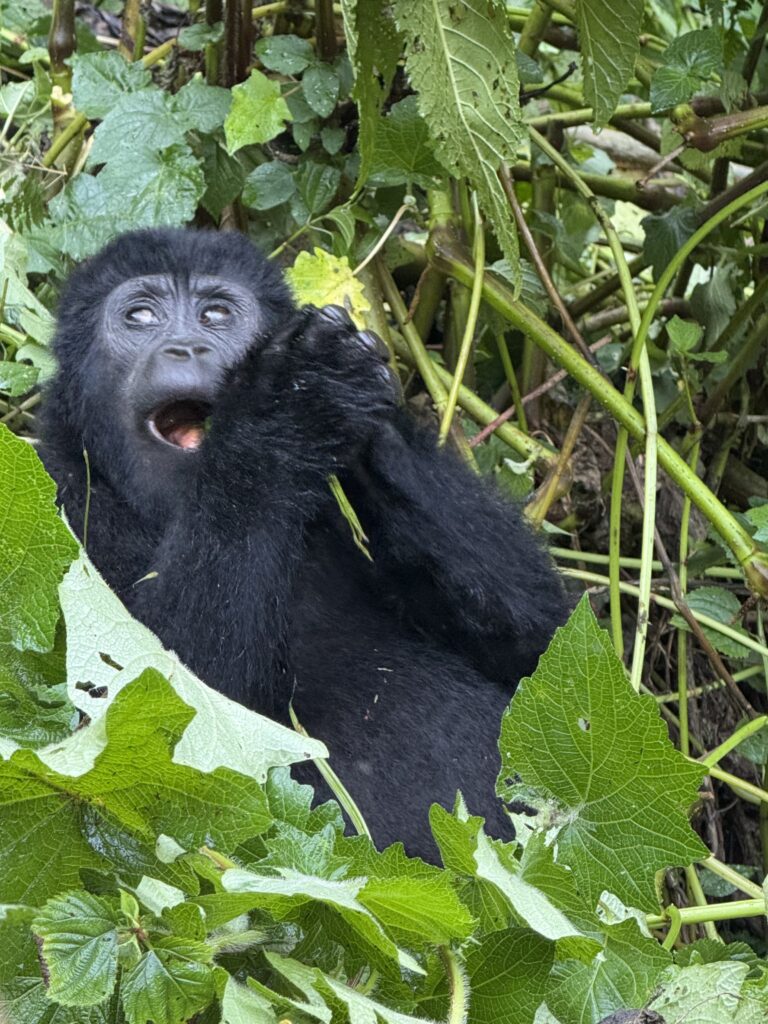
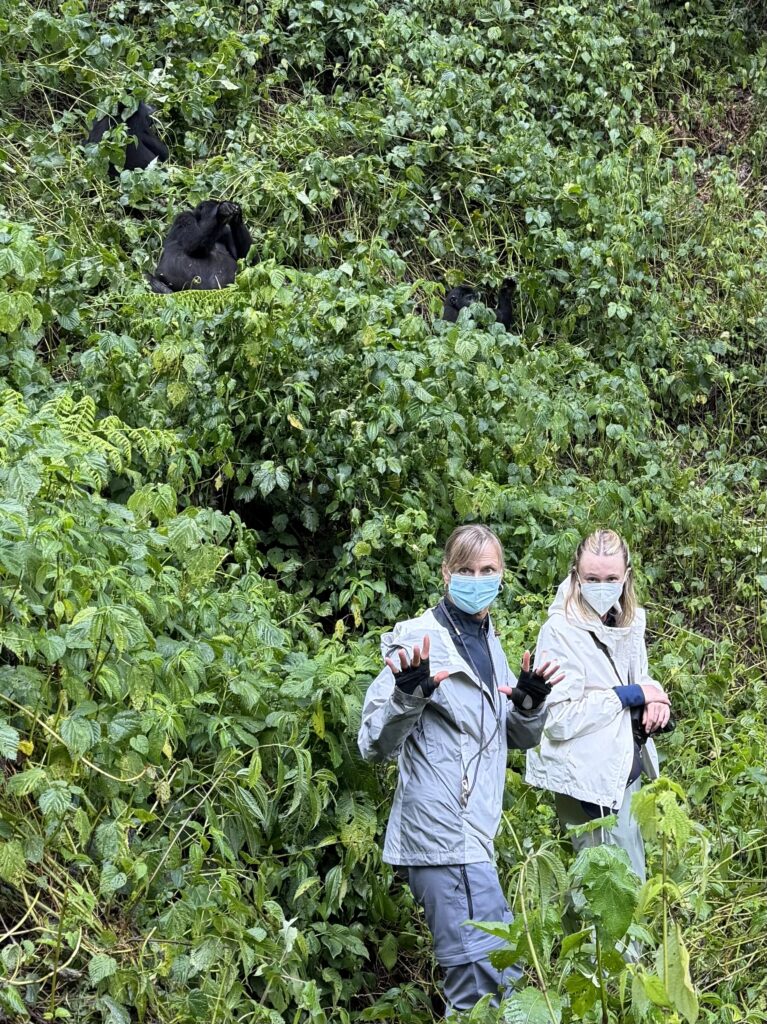
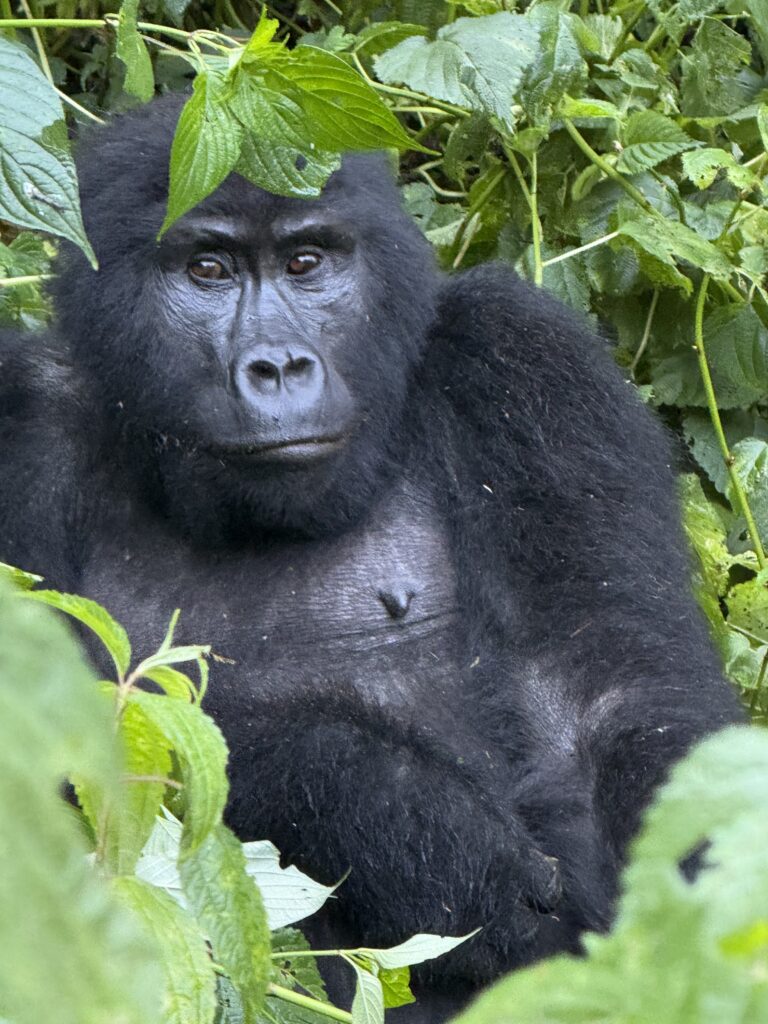
Bwindi National Park is part of the Virunga Mountains which host 694 gorillas in Rwanda, Uganda, and the Congo, with the countries coordinating to support their success. Gorilla tracking, the main draw for Uganda tourism holding over half of the world’s gorilla population, requires a $800 per person permit which is distributed 20% towards local communities, 40% towards conservation, and 40% towards government coffers and tourism development, significantly reducing poaching and allowing the gorillas to thrive. Dian Fossey was virulently against gorilla tourism but it seems to be working. The key is the gorilla trackers who stay with the gorilla family until they build their nightly nests, returning early the next morning before they wake in order to keep an eye on each family, ensuring their health and wellness plus their location for tourist visits. Tracking can take hours to get to a gorilla family, over tricky terrain of steep hillsides and slippery thick vegetation. We luck out being surrounded by gorillas in under a half hour. Being habituated, they come close, setting up a perch from which they devour food within arms reach, mostly leaves, shoots and stems. We have an hour to observe them, soaking in their human characteristics and their gentle giant presence.
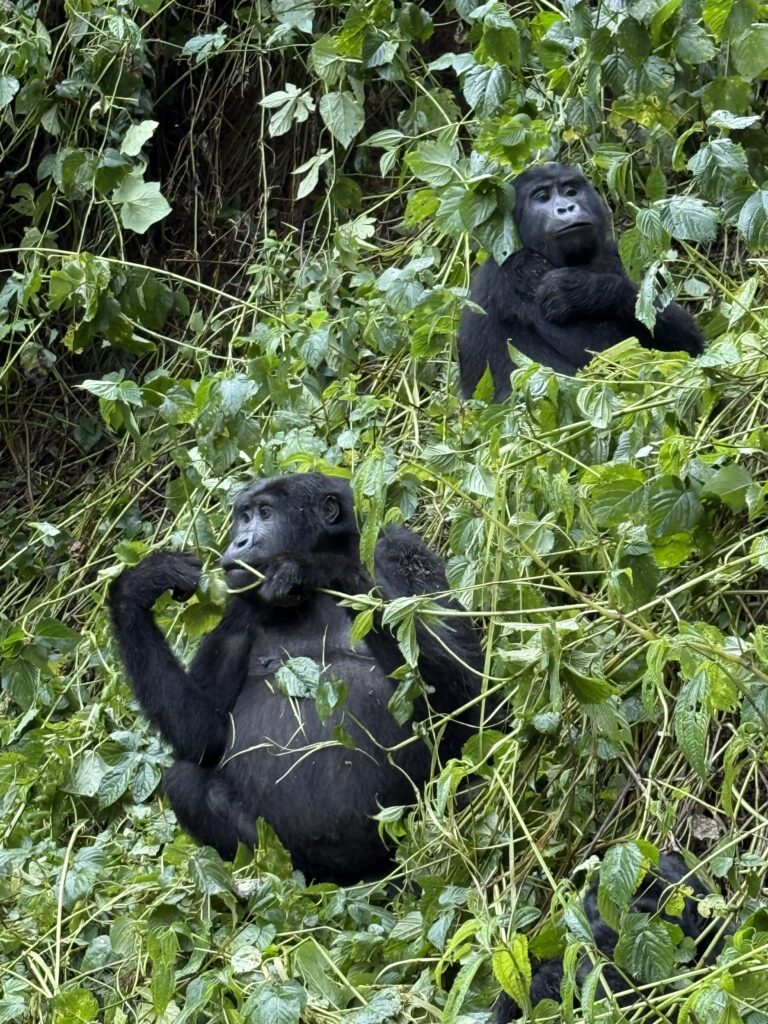
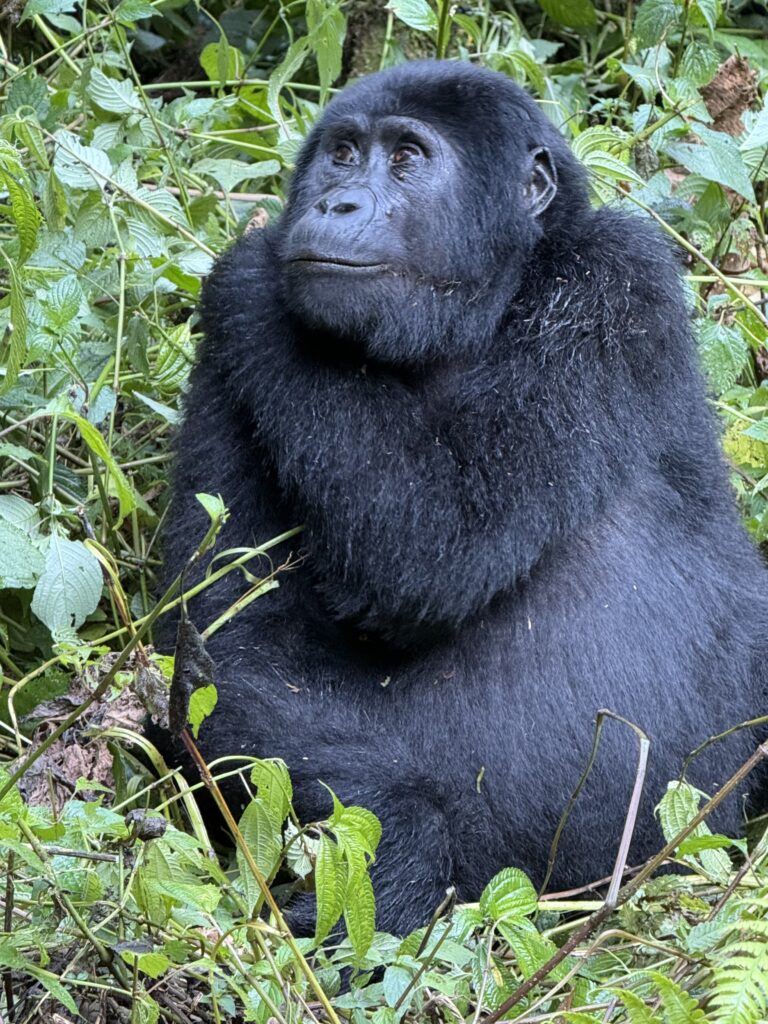
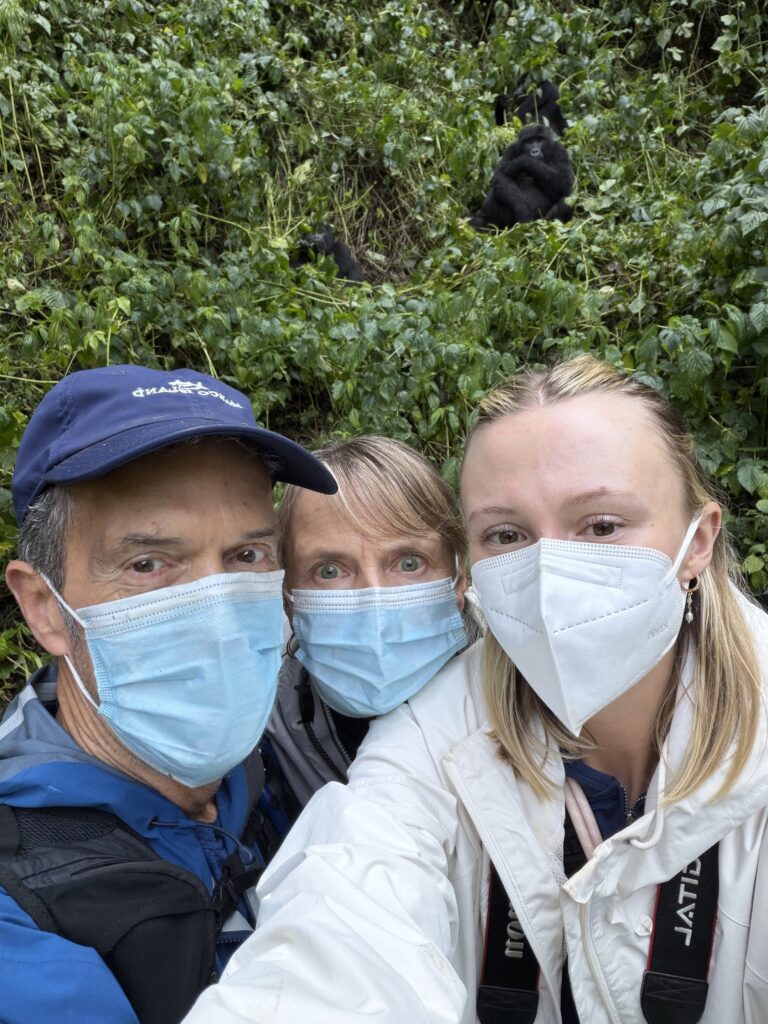
We visit the local Batwa community, one of 22 settlements of Batwa relocated from the park by the government in 1991 due to conflicts with conservation efforts such as their setting traps for hunting. As hunter gatherers where the forest provided, their transition has not been easy as they’ve had to learn farming and how to earn a living, with mixed results. A group of Batwa welcomes us with song and dance and show us some of their former forest survival techniques. The Batwa Development Foundation has built the Rushaga School, serving 208 students currently, to help put the next generation on a more successful path. Having a local school significantly improves attendance as some students, including our Batwa guide growing up, have to walk 15 km each way to attend, this message being reinforced the next morning as we see kids walking to school in the dark in their uniforms at 6am.
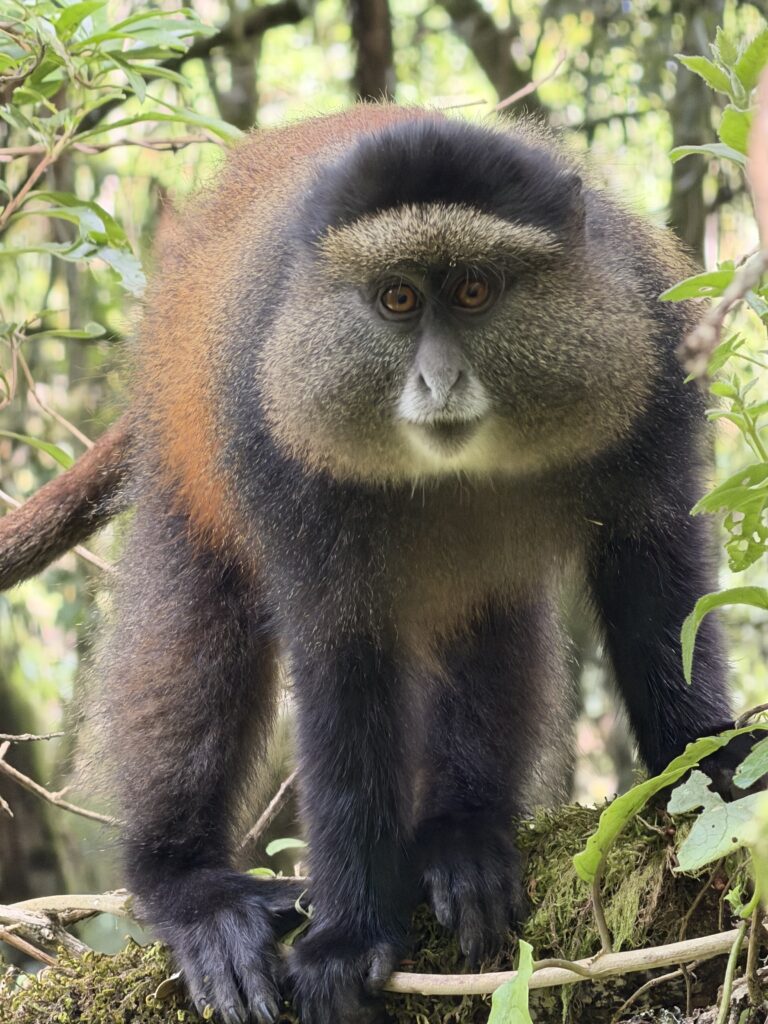
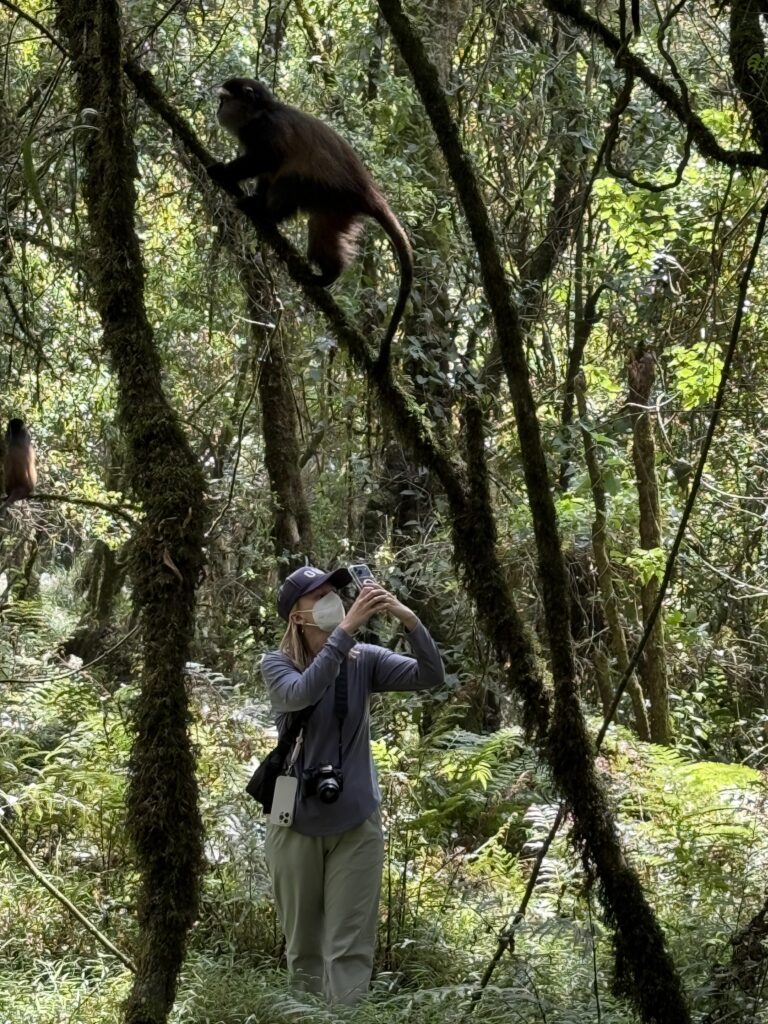
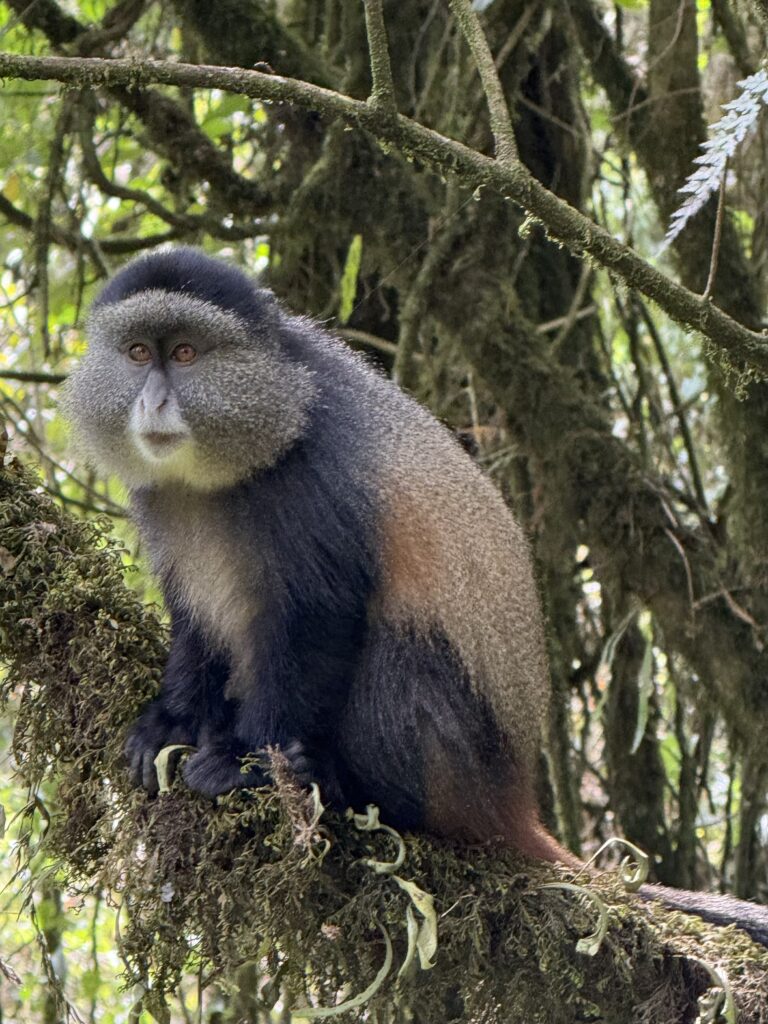
Mgahinga National Park, the smallest park in Uganda, is referred to as Where Gold meets Silver because the park is home to both golden monkeys and silverback gorillas. We’re here to track the former which we encounter after hiking a couple of miles in the easy terrain. The troop of about 120 monkeys surround and again mostly ignore us, frolicking and eating in the low branches and on the ground. Of the primates we’ve seen, these are the most entertaining and we laugh out loud at their circus gestures. At one point the forest looked like a bar room brawl had broken out with clusters of monkeys wrestling in clumps and switching adversaries with abandon.
We see evidence everywhere of hard work in this country, from farming the insanely steep fields, to backbreaking sugarcane harvesting, to cracking rocks to create high value stones by hand, to making and selling handicrafts, to guarding livestock from high speed traffic, to private enterprises offering 24/7 solutions, to handmade bricks sunbaked then kiln finished, to motorcycles operating as taxis round the clock, to pushing bikes ladened with water-logged Jerry cans up the steep dirt roads, to sidewalk pop up shops selling homegrown fruits and vegetables, to restaurants offering menus beyond their capabilities and infilling in collaboration with neighboring kitchens, and so many more examples of honest hustle.
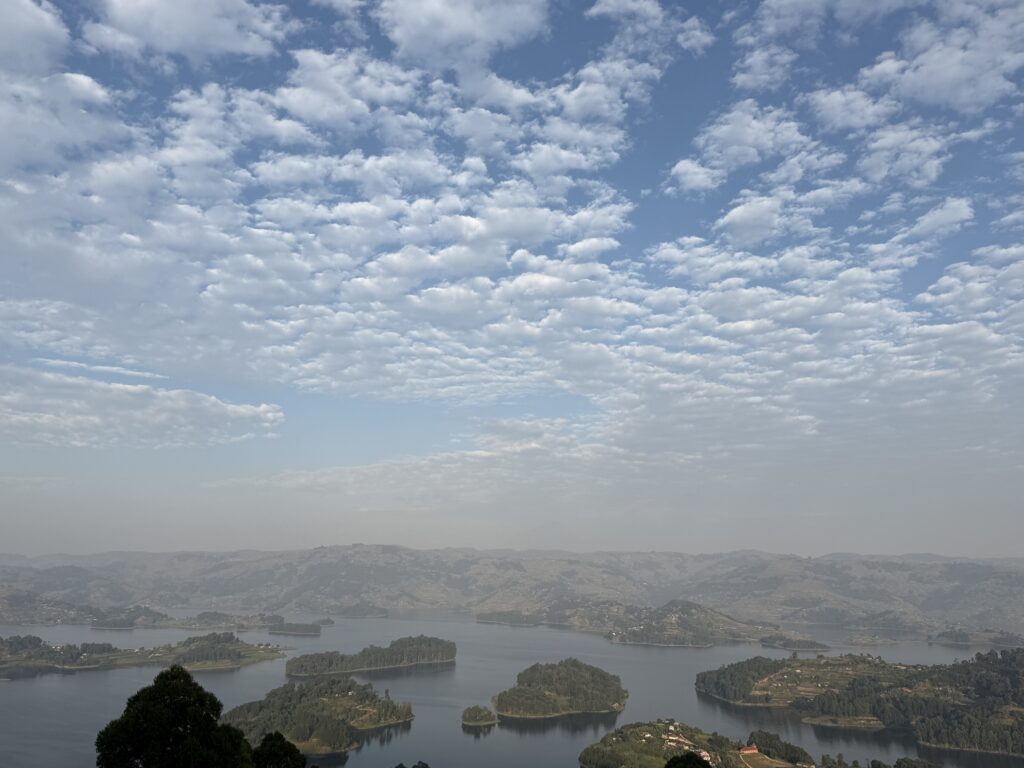
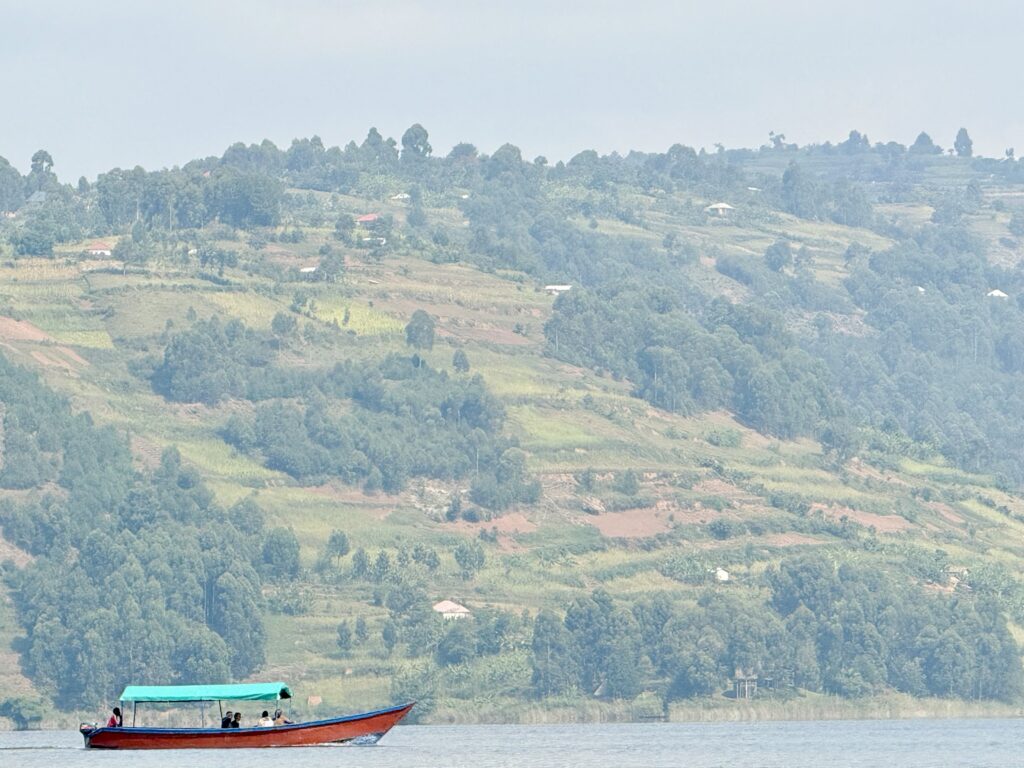
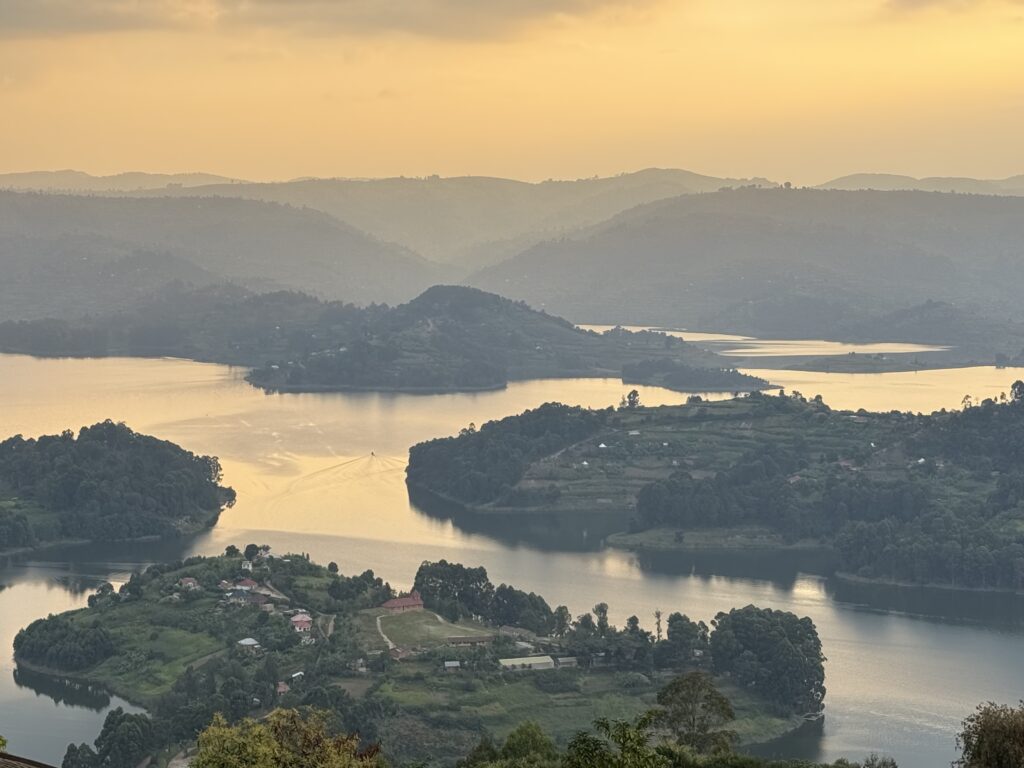
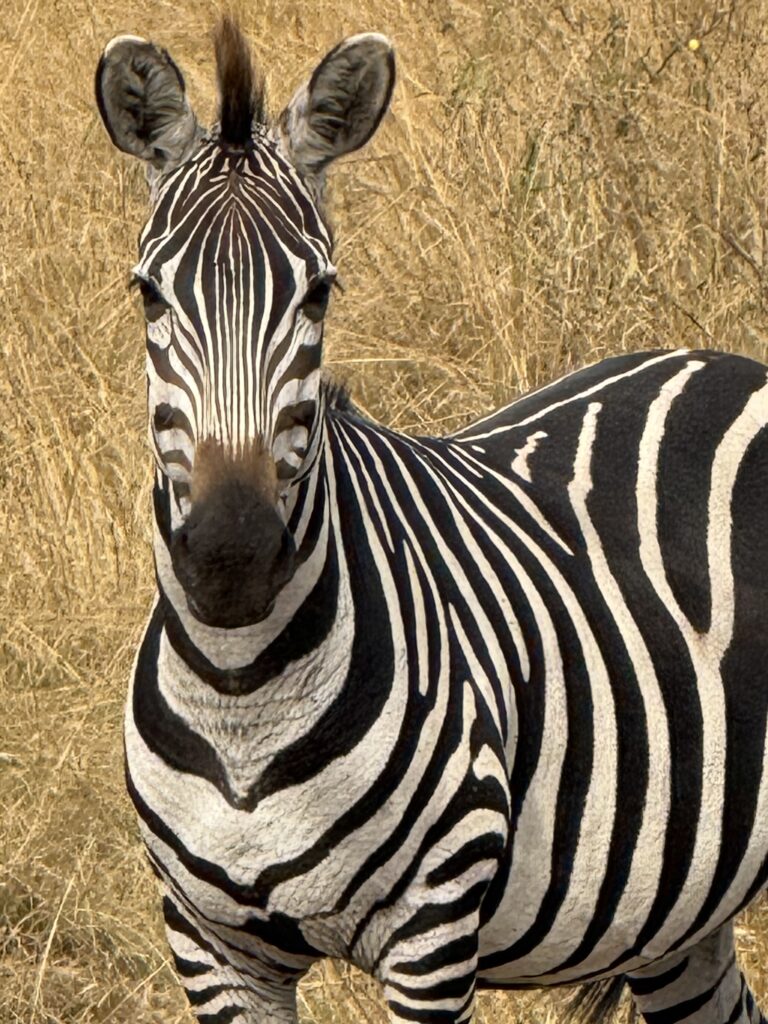
We relax at Lake Bunyonyi, dotted with 29 islands looking like a movie backdrop, think Avatar, before heading to Lake Mburo National Park where we check off sightings of zebras with their metronome tails, topi with their burnished coats, and the elusive eland as the largest antelope. During a walking safari with our badass, gun toting ranger Jessica, we have the privilege of observing a tower of giraffes on foot, amazed at their scale and grace.
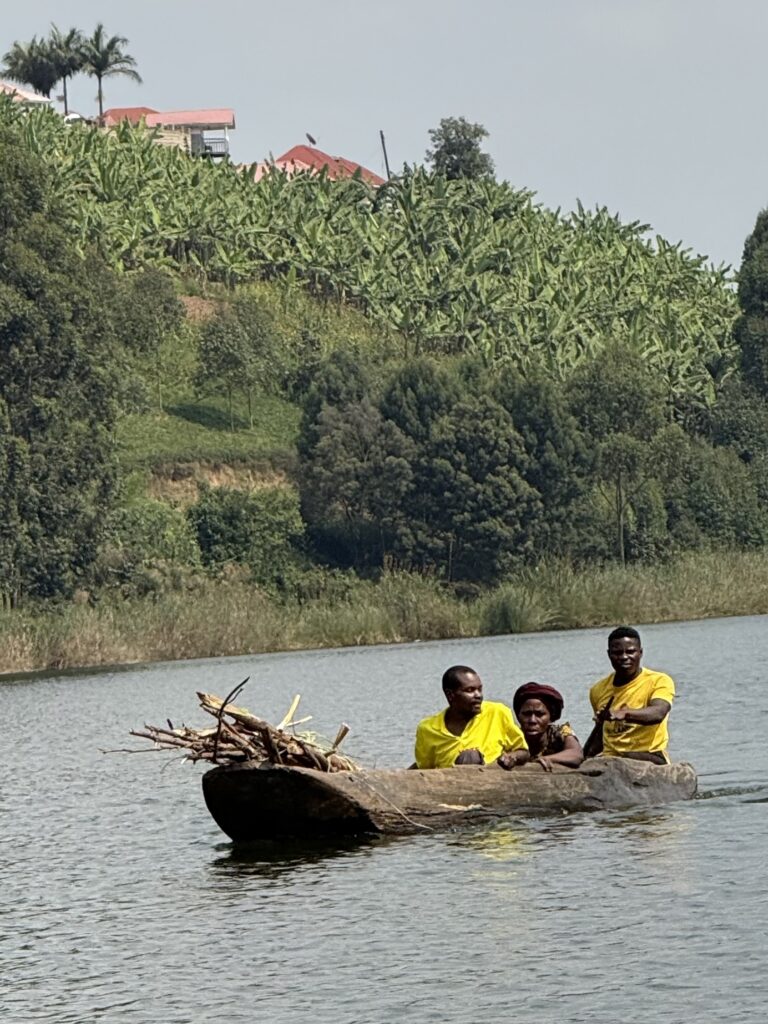
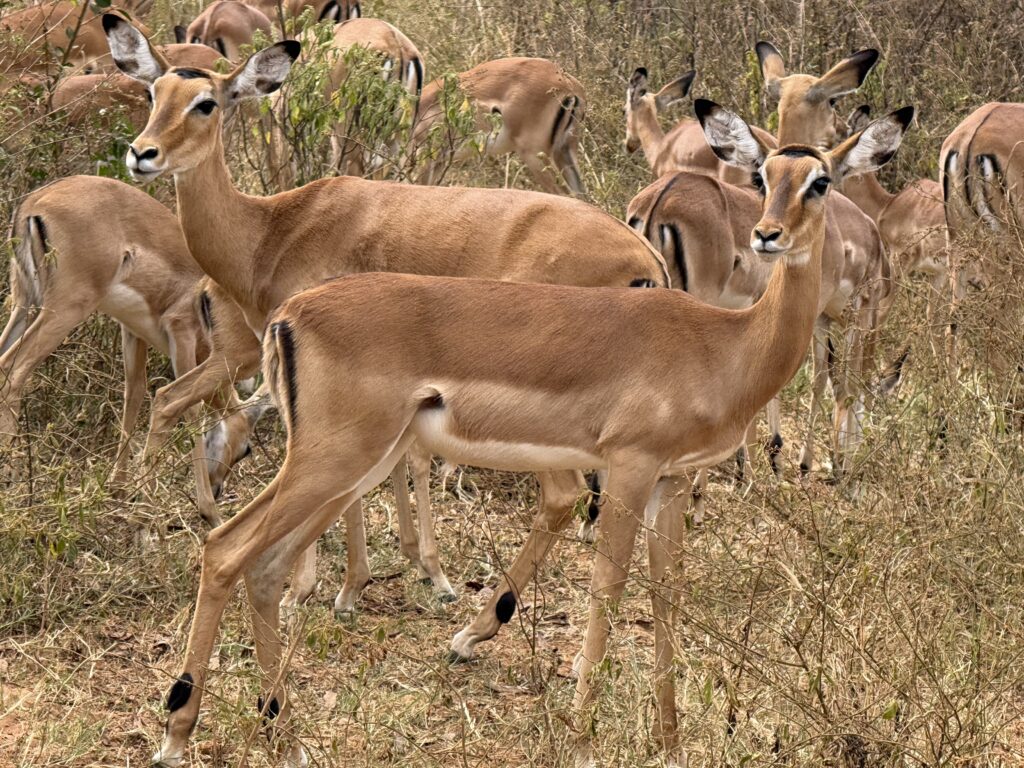
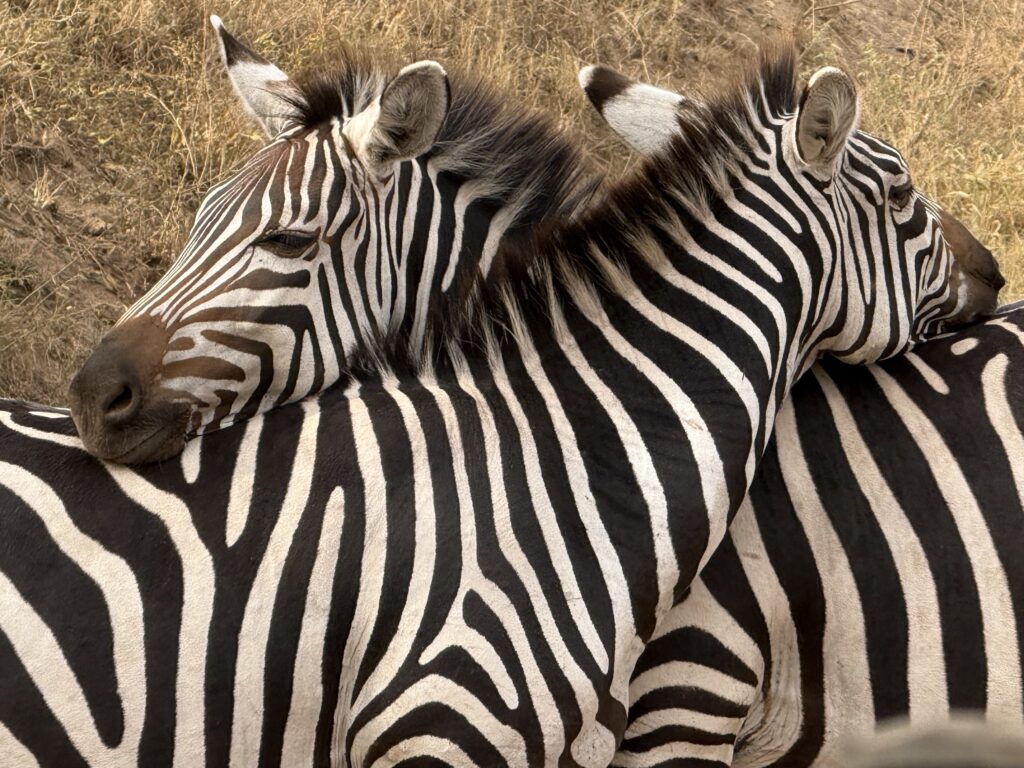
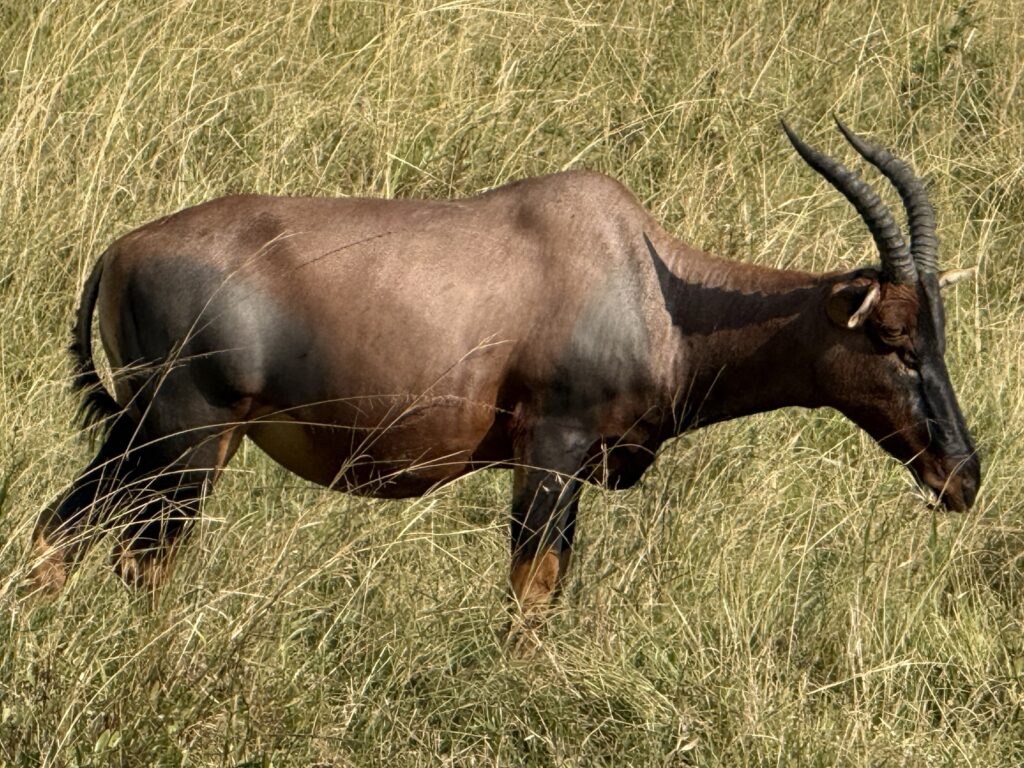
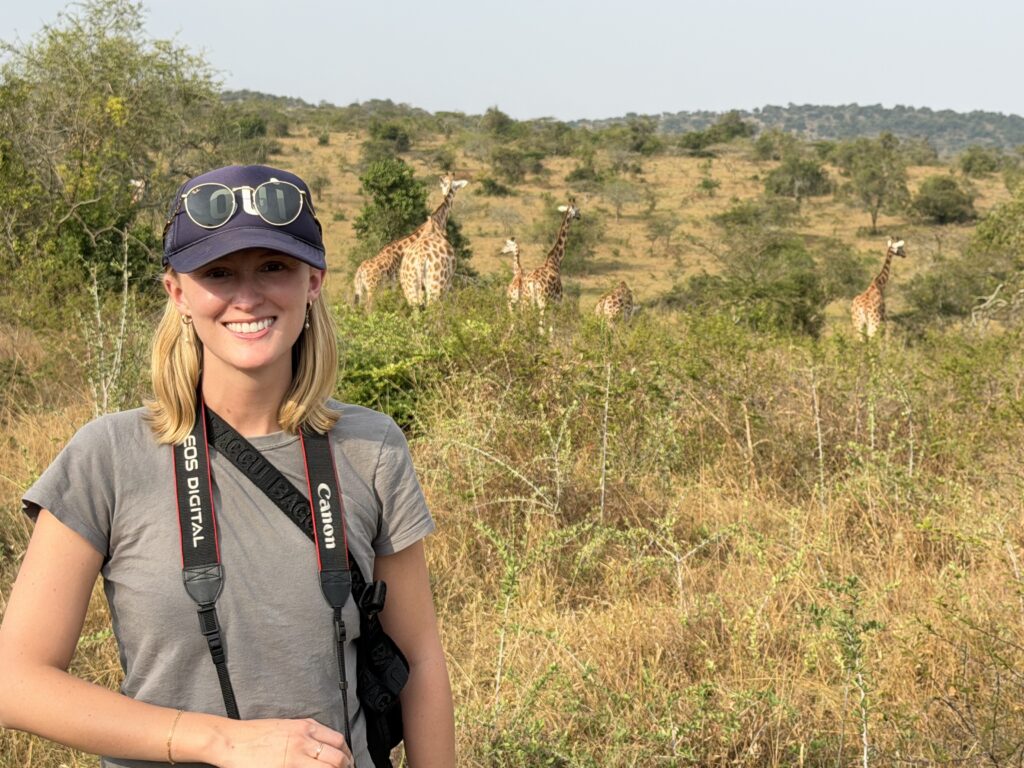
Uganda has been a soul satisfying adventure, enhanced by sharing it with Sydney watching her face light up with new, awesome experiences. This is an untapped destination which is raw and authentic, full of vibrancy and variety, warmth and wonder. It has fulfilled all of our expectations and beyond.
Next Up: Kenya
Another marvelous description of your epic journey. Thank you for sharing these experiences, with your vivid details and spectacular photos. Very special to see Sydney with you too. Love and admiration from afar, Ashley & Ken
Thanks Ashley! Glad you’re enjoying our blog updates! Traveling with Sydney was a special gift, trip of a lifetime. Big hugs to you both! xo Susan
Another Sunday morning spent vicariously enthralled with the Rambling Reeds! What an amazing journey you’re having and to be able to share it with Sydney must be so special. You’re stoking the fires of my own wanderlust and the desire to return to Africa. Continued joy and happy adventuring!
Beth – great to hear from you! Glad we’re stoking the travel frenzy – happy to answer any questions if you choose one of our destinations! I remember when our paths crossed in Fairfax and you were off to India the next day I believe – I may tap you for info when we head there, though not during this journey. Sending you hugs! xo
I’m thrilled that you all had such a great experience in Uganda, one of my favorite countries on earth. How special for you and Brian to share it with Sydney. xoxo
Thanks CAT – it was off-the-charts special to experience it all with Sydney! Thanks for all of your help and input! xo
Watching the videos, I had a flashback to our visit to that quirky safari park near Santa Rosa, on Brian’s birthday in 2007.
I’m loving these regular reports and photos and videos… this is the adventure of a lifetime.
Marco YES! Safari West when the girls were young – your Polaroid of us decorated our kitchen cork board for decades! Glad you’re enjoying our blog – FYI most pics taken with my iPhone 16 and a few with Brian’s 17. Nothing fancy but getting the job done! xoxo
Beautifully written and photographed!! You make it hard to decide where to go…. So many amazing places! I love the way you all embrace the varied experiences in Africa
Thanks Erik! Having visited countries in north, south, and central Africa, I’m impressed by how different each country is and the vast variety of cultures and landscapes. We’re spending 6 months in Africa and it was the right decision for all these is here to see and do. Hoping our blog provides you with inspiration – feel free to reach out directly for details. xo
Great content! Keep up the good work!